Quick Answer: Deciding between repairing an aging elevator or continuing routine maintenance comes down to comparing cumulative repair costs against the total cost of a modernization or replacement plan — when reactive repairs begin outpacing a structured maintenance budget and equipment no longer meets current safety codes, repair-only strategies typically become the more expensive long-term choice.
Building owners and facility managers in California and Texas face this question regularly: is it smarter to keep funding repairs on aging elevator equipment, or commit to a proactive maintenance plan — and at what point does neither option make sense without a full modernization? This guide breaks down the real cost factors, compliance obligations, and decision triggers so property owners can make an informed, defensible choice.
What Is the True Cost Difference Between Elevator Repair and Preventive Maintenance?
The cost of elevator repair and the cost of ongoing maintenance are often compared in isolation, but that framing is misleading. The accurate comparison is total cost of ownership over a multi-year horizon, including downtime, liability exposure, compliance penalties, and tenant or occupant impact.
Preventive maintenance agreements create predictable, budgetable costs. Reactive repairs — replacing a failed component only after breakdown — typically carry higher labor costs, emergency service premiums, and parts surcharges, in addition to the indirect costs of an elevator that is out of service. On aging equipment specifically, the frequency and severity of reactive repairs tends to increase over time, making the reactive model progressively more expensive year over year.
Neither approach eliminates all expenditure. The strategic question is which approach minimizes total cost while maintaining code compliance and service reliability.
What Are the Main Cost Categories to Compare?
| Cost Category | Reactive Repair Only | Preventive Maintenance Agreement |
|---|---|---|
| Labor | Higher — emergency and unscheduled rates apply | Lower — scheduled visits at contracted rates |
| Parts | Often sourced urgently; premium pricing common | Planned procurement; some parts included in agreements |
| Downtime / Lost Productivity | Unpredictable; can span days or weeks | Minimized through proactive part replacement |
| Compliance Penalties | Higher risk if failures trigger inspection failures | Lower risk; issues caught before inspection |
| Liability Exposure | Elevated when equipment fails unexpectedly | Reduced through documented maintenance records |
| Budget Predictability | Low — costs spike unpredictably | High — fixed or capped annual spend |
| Equipment Lifespan Impact | Shortened — reactive fixes often miss root causes | Extended — systematic attention to wear |
What Are the Compliance Obligations That Affect This Decision in California and Texas?
Compliance requirements are not optional cost variables — they are fixed obligations that affect both strategies equally and can impose hard deadlines on equipment upgrades regardless of an owner’s preferred approach.
Elevator safety in the United States is governed primarily by the ASME A17.1 Safety Code for Elevators and Escalators (for new installations) and the ASME A17.3 Safety Code for Existing Elevators and Escalators (for in-service equipment). ASME A17.3 establishes a retroactive framework — meaning aging elevators can be required to meet updated safety requirements even if they were compliant when originally installed.
Workplace accessibility for elevators serving public accommodations is also governed by the Americans with Disabilities Act (ADA), which can require specific cab dimensions, control placement, and tactile signage. Non-compliance can trigger legal liability independent of equipment mechanical condition.
In Texas, the Texas Department of Insurance (TDI) — through its Elevator Safety Program — administers elevator inspections and certificates of operation. In California, the Division of Occupational Safety and Health (Cal/OSHA) Elevator Unit oversees elevator safety. Both states require current certificates of operation; operating without one is a violation that can result in shutdown orders and fines.
Workplace safety standards enforced by OSHA also apply to elevator equipment in commercial and industrial settings, particularly with respect to machine room conditions and maintenance personnel safety.
The compliance takeaway: aging equipment may eventually fail retroactive code requirements under ASME A17.3, ADA accessibility standards, or state inspection criteria — creating a mandatory modernization trigger that overrides the repair-versus-maintenance debate entirely.
How Do You Identify the “Break-Even” Point Where Repairs Cost More Than Modernization?
There is no universally fixed formula, but property managers and elevator consultants commonly apply a qualitative and quantitative framework that includes the following factors:
- Calculate trailing repair costs. Sum all repair invoices for the past 24–36 months. Include parts, labor, emergency call charges, and any downtime-related losses (tenant credits, productivity impact, etc.).
- Project forward repair frequency. Assess whether failure frequency is increasing. Aging mechanical and electrical components often fail in clusters as systems approach end-of-life.
- Obtain a modernization or replacement quote. Get a detailed scope from a qualified elevator contractor — this becomes the comparison baseline.
- Estimate remaining useful life. The elevator industry generally considers drive systems, controllers, and hydraulic equipment to have defined service lives; consult your service provider for a condition assessment specific to your equipment.
- Add compliance exposure costs. Identify any known or probable code deficiencies. Retroactive ASME A17.3 requirements or ADA corrections may represent non-negotiable capital expenditures regardless of maintenance strategy.
- Calculate the net present value of each path. Discount future repair costs against the upfront cost of modernization over a 10–15 year horizon.
- Factor in financing availability. Modernization financing can convert a large capital expenditure into a predictable monthly cost that may compare favorably to ongoing repair spending.
- Consult a certified inspection report. A current inspection report from a licensed elevator inspector provides an objective condition baseline that strengthens any financial analysis.
When trailing repair costs — projected over the next three to five years — approach or exceed the cost of modernization, the break-even case for modernization becomes compelling. This is especially true when compliance exposure is layered on top.
What Are the Pros and Cons of Each Strategy?
| Reactive Repair Only | Preventive Maintenance Agreement | |
|---|---|---|
| Pros |
|
|
| Cons |
|
|
What Is the Typical Timeline for Elevator Repair vs. Modernization?
| Scenario | Typical Timeline | Key Variables |
|---|---|---|
| Minor component repair (relay, sensor, door operator part) | Hours to 1–2 days | Parts availability, technician scheduling |
| Major component repair (motor, controller board, hydraulic pump) | Several days to 2–3 weeks | Custom parts lead times, equipment age, parts availability |
| Full controller modernization | 1–4 weeks depending on scope | Permit approval, equipment compatibility, outage scheduling |
| Full cab and mechanical modernization | 4–12 weeks depending on scope and permitting | Jurisdiction AHJ review timelines (Texas: TDI; California: Cal/OSHA Elevator Unit), equipment lead times |
| New elevator installation (replacement) | Several months to over a year | Structural modifications, permitting, manufacturing lead times |
Timeline is a critical planning variable. A building that relies on a single elevator — common in smaller commercial or residential properties — cannot tolerate extended outages. Proactive maintenance planning and modernization scheduling during lower-occupancy periods substantially reduces occupant impact.
When Should a Building Owner Choose Continued Maintenance Over Major Repair?
Continued preventive maintenance is the appropriate strategy when:
- Equipment is in generally sound mechanical and electrical condition
- Repair frequency has not been escalating
- The elevator meets current applicable codes under ASME A17.3 retroactive requirements
- There are no outstanding ADA compliance deficiencies under the Americans with Disabilities Act
- Parts availability for the existing system is not a growing concern
- The elevator holds a current certificate of operation in good standing with TDI (Texas) or the Cal/OSHA Elevator Unit (California)
When Does Ongoing Maintenance Stop Making Financial Sense?
Several indicators suggest the repair-or-maintain approach has reached its financial and practical limits:
- Parts obsolescence: When components are no longer manufactured or available only through specialty suppliers at significant premiums, repair costs rise sharply and downtime extends.
- Escalating repair frequency: Multiple service calls per quarter on the same system indicate systemic degradation, not isolated failures.
- Code compliance gaps: Outstanding retroactive requirements under ASME A17.3 that cannot be addressed through repair alone — such as safety device upgrades — may require partial or full modernization regardless of budget preferences.
- Inspector citations: A state inspection that results in a conditional certificate or violation notice signals that deferred action is no longer an option.
- Insurance pressure: Some insurers may limit coverage or impose higher premiums on properties with documented aging elevator equipment and repeated repair histories.
- Tenant or occupant complaints: Frequent service interruptions affect tenant satisfaction, lease renewals, and in residential settings, may trigger habitability concerns.
What Does an Elevator Condition Assessment Include?
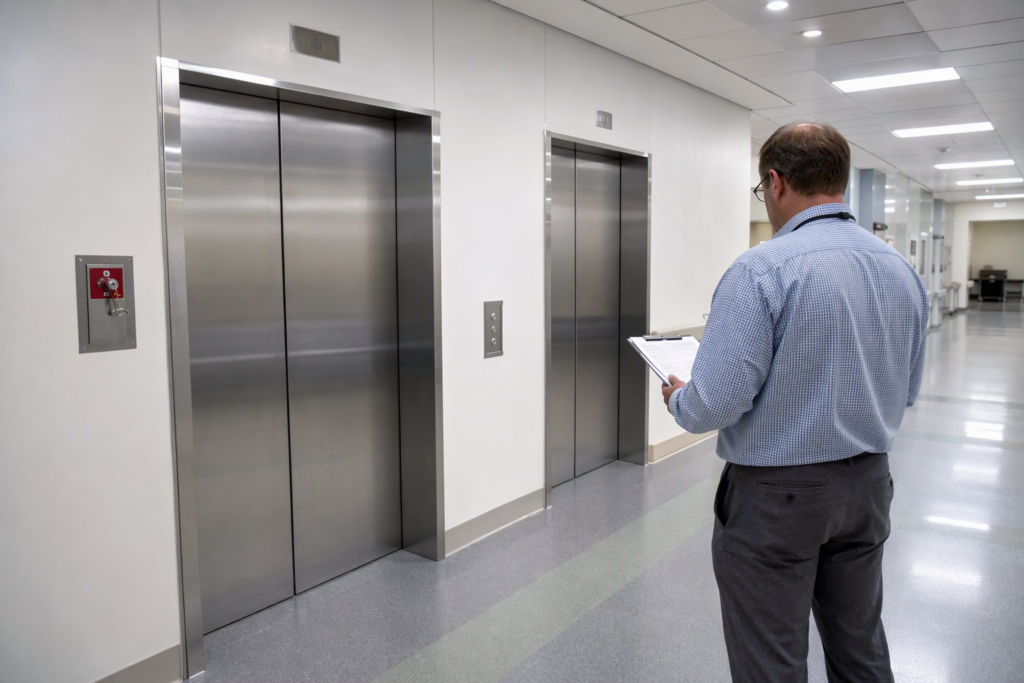
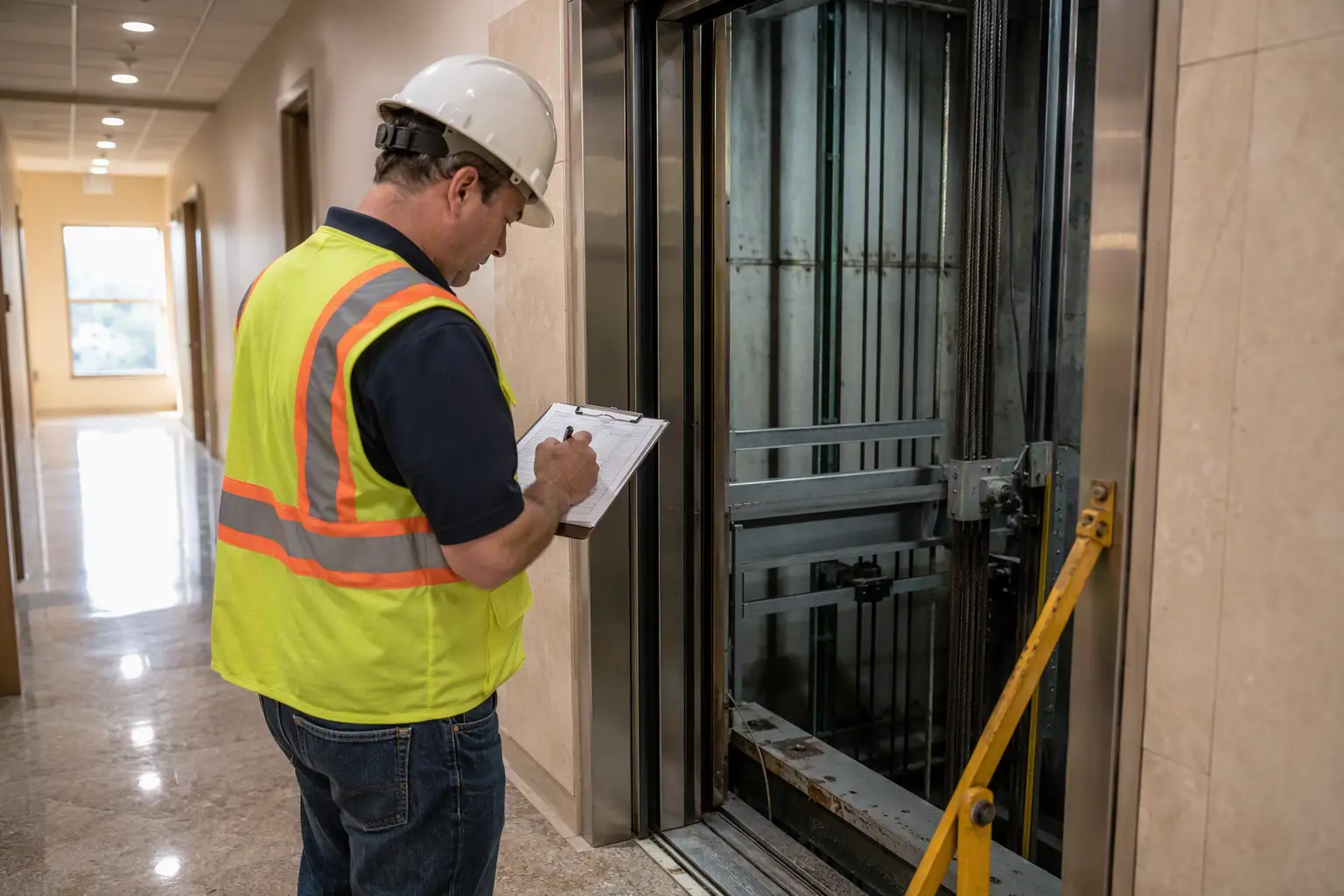
A professional elevator condition assessment — sometimes called an elevator audit or survey — is the essential starting point for any repair-versus-maintenance financial analysis. A thorough assessment typically covers:
- Inspection of the machine room: motor, controller, drive system, and machine room conditions per applicable codes
- Review of the hoistway: rail condition, guide shoes or rollers, ropes or hydraulic cylinder condition
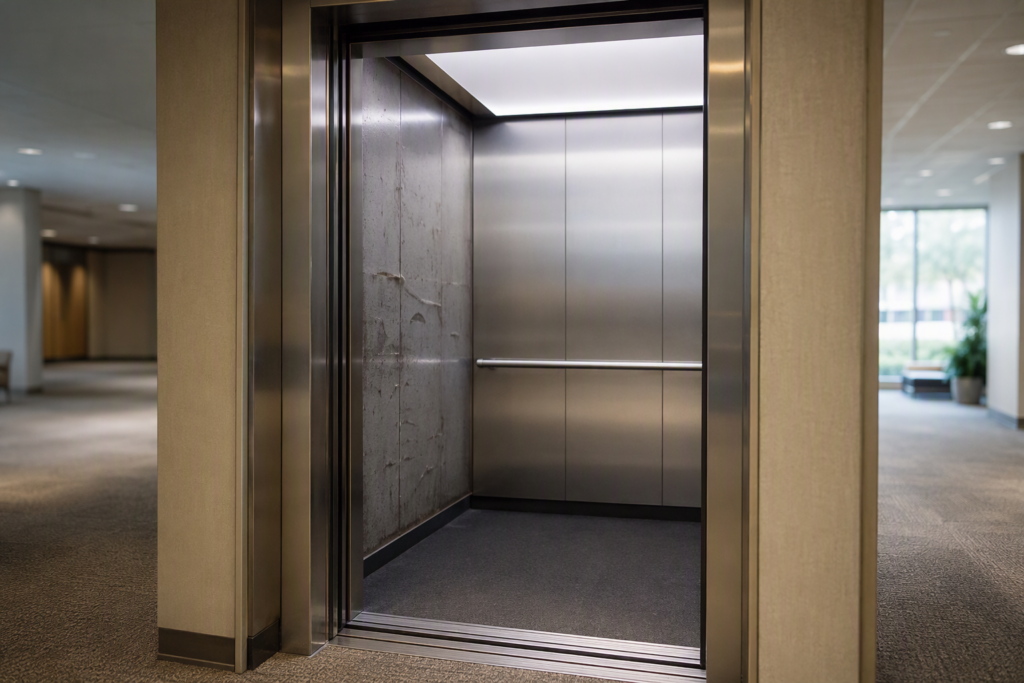
- Cab inspection: door operator, safety edges, lighting, cab finishes, and ADA-related features per ADA guidelines
- Safety device testing: including buffers, safeties, and interlocks per ASME A17.1 and ASME A17.3 requirements
- Review of maintenance records and prior inspection reports
- Documentation of any outstanding violations or deferred items
- Written report with prioritized recommendations and estimated cost ranges for each item
AmeriTex Elevator provides condition assessments for building owners and property managers in California and Texas who need an independent, objective view of their elevator equipment before committing to a repair or maintenance strategy.
How Does Vendor Choice Affect the Total Cost Equation?
The elevator service industry includes large national manufacturers with proprietary service contracts and independent elevator service companies. Building owners often assume the original equipment manufacturer (OEM) is the only qualified service option — this is not correct and can significantly inflate maintenance and repair costs.
Independent certified elevator contractors — such as AmeriTex Elevator — are qualified to service most major elevator brands and systems. Independent providers typically offer:
- Competitive maintenance contract pricing without manufacturer lock-in
- Flexibility to source parts from multiple suppliers, reducing parts cost premiums
- Transparent repair recommendations not influenced by equipment sales incentives
- Local presence and accountability in California and Texas markets
When evaluating any service provider, building owners should verify that the contractor holds applicable state licenses — in Texas through TDI and in California through the Cal/OSHA Elevator Unit — and that technicians are qualified under applicable state requirements.
What Are the ADA and OSHA Compliance Factors That Can Force a Decision?
Compliance timelines can remove optionality from the repair-versus-maintain debate. Two federal frameworks are particularly relevant:
ADA (Americans with Disabilities Act): The ADA requires that elevators in buildings covered by Title II (public entities) and Title III (places of public accommodation) meet accessibility standards. Older elevators that lack compliant controls, door timing, cab dimensions, or tactile indicators may require upgrades as part of any significant alteration project — and in some circumstances as a standalone requirement under barrier removal obligations.
OSHA: OSHA standards apply to elevator maintenance personnel safety, machine room conditions, lockout/tagout procedures, and related workplace safety requirements. Non-compliant machine room conditions can result in citations for building owners who employ or contract elevator maintenance workers.
When compliance deficiencies exist, the cost to remedy them must be incorporated into any honest financial comparison between continued maintenance and modernization.
What Should a Building Owner Do Immediately If Their Elevator Is Failing Frequently?
- Document all recent repair events. Compile invoices, service records, and downtime logs for the past 24–36 months to establish a factual cost baseline.
- Request a current inspection report. If the elevator’s last state inspection is more than 12 months old, contact TDI (Texas) or the Cal/OSHA Elevator Unit (California) for current status or schedule a fresh inspection through a licensed inspector.
- Commission an independent condition assessment. Engage a qualified independent elevator contractor — not the existing OEM service provider, who has an inherent conflict of interest — for an objective equipment evaluation.
- Identify any open code compliance items. Review the last inspection report for outstanding violations or deferred items. These must be budgeted regardless of the maintenance strategy chosen.
- Request competing proposals. Obtain proposals for both a structured maintenance agreement and a modernization scope from at least two qualified providers.
- Run a total cost of ownership comparison over a five- and ten-year horizon, incorporating trailing repair costs, projected repair escalation, compliance costs, and the present cost of modernization.
- Consult your building’s legal and insurance advisors regarding liability exposure from documented repeated failures before making a final decision.
- Make a decision with a written record. Document the analysis and rationale to demonstrate due diligence in the event of a future liability claim or regulatory inquiry.
Is Elevator Modernization Always the Right Answer for Aging Equipment?
Not necessarily. Full modernization is a significant capital investment and the right choice depends on the building’s expected holding period, tenant profile, financing availability, and the actual condition of existing equipment. Some older elevators in good mechanical condition with updated safety devices can continue to provide reliable service under a quality preventive maintenance agreement for years beyond what a purely age-based analysis might suggest.
Conversely, some buildings with relatively modern elevators that have been poorly maintained may need accelerated capital investment sooner than expected. Condition — not age alone — is the primary determinant.
The appropriate answer emerges from an honest, data-driven condition assessment combined with a realistic multi-year financial model. AmeriTex Elevator helps building owners in California and Texas work through exactly this analysis.
How Does AmeriTex Elevator Support This Decision?
AmeriTex Elevator is an independent certified elevator service company serving California and Texas. As an independent provider, AmeriTex Elevator has no financial interest in recommending one equipment brand or modernization path over another — recommendations are based on equipment condition, code requirements, and the building owner’s operational and financial priorities.
Services relevant to the repair-versus-maintenance decision include:
- Independent elevator condition assessments and audits
- Preventive maintenance agreements for commercial, residential, and industrial elevators
- Repair and component replacement across major elevator brands and systems
- Modernization planning and execution with permit coordination through TDI (Texas) and the Cal/OSHA Elevator Unit (California)
- Code compliance consulting related to ASME A17.1 and A17.3 and ADA requirements
Get an Independent Assessment Before Committing to Either Path
Building owners and property managers in California and Texas who are weighing elevator repair costs against ongoing maintenance commitments benefit most from an objective, independent starting point. A free elevator assessment from AmeriTex Elevator provides the condition data and cost framework needed to make a defensible, financially sound decision.
Contact AmeriTex Elevator for a free elevator assessment: 866-679-4313
Need elevator service you can rely on? AmeriTex Elevator is ready to help.