Elevator Maintenance Contracts in Austin & San Antonio Healthcare Facilities: Questions to Ask Before You Sign
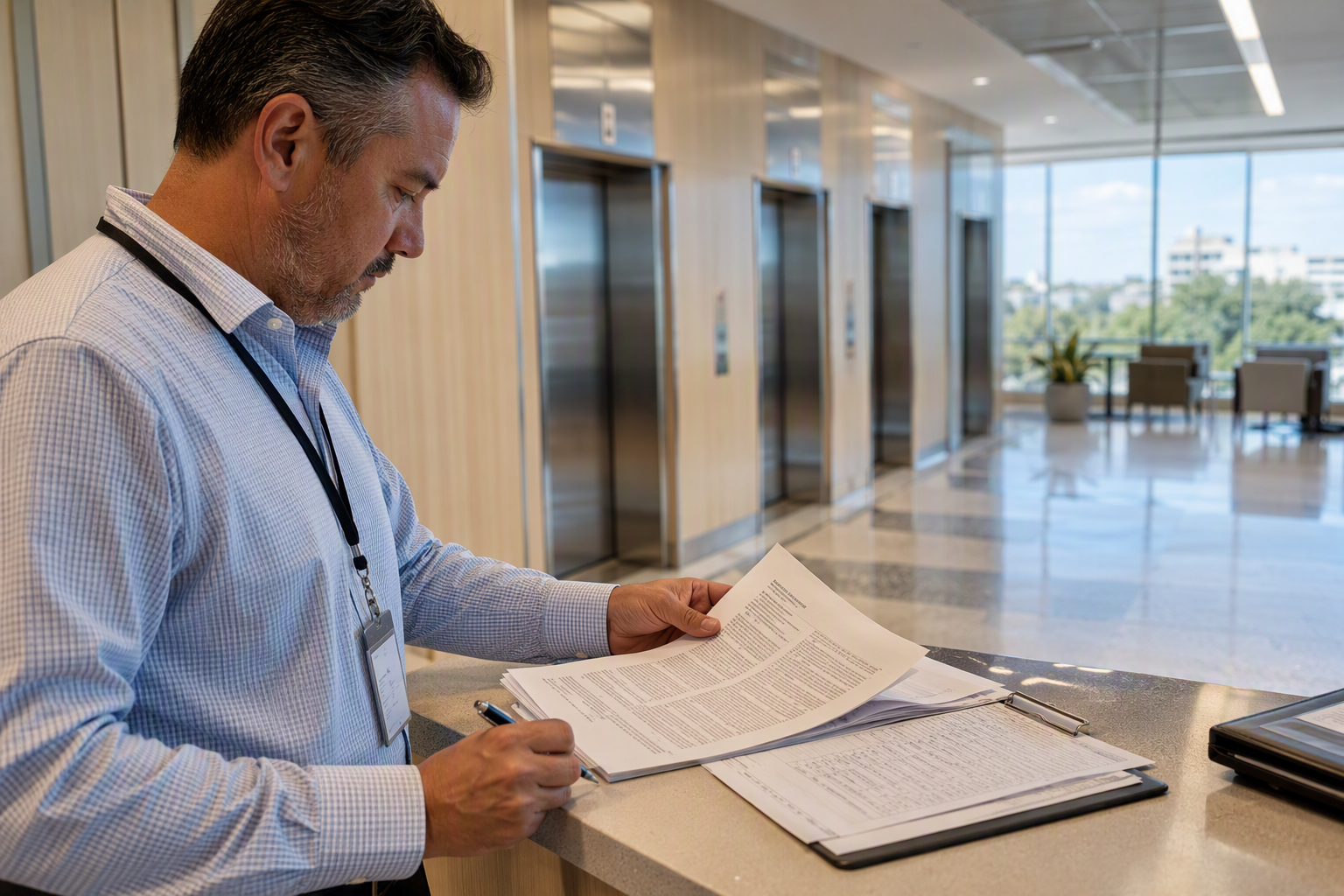
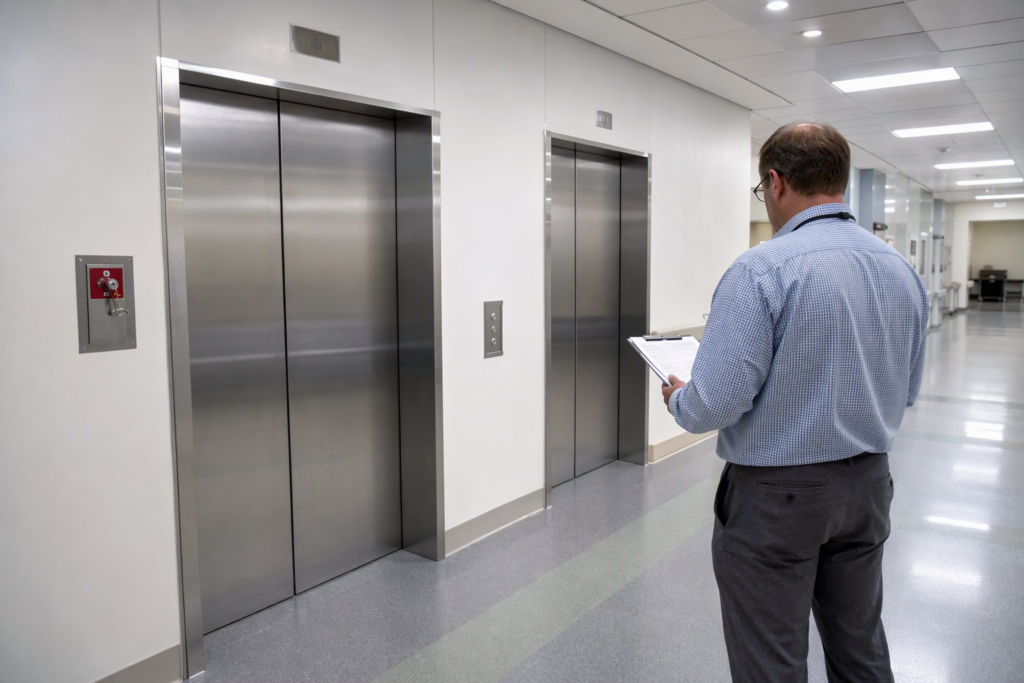
Choosing an elevator maintenance vendor for a hospital, outpatient clinic, or long-term care facility is not the same as selecting a vendor for a commercial office building. Elevators in healthcare environments carry patients on gurneys, staff operating medical equipment, and visitors who may have mobility limitations — all under conditions where an unexpected outage is not an inconvenience but a patient-safety event. The questions below are designed to help facility directors, compliance officers, and operations managers in Austin and San Antonio evaluate any prospective vendor with the rigor that healthcare settings demand.
Is the Vendor Licensed to Perform Elevator Work in Texas?
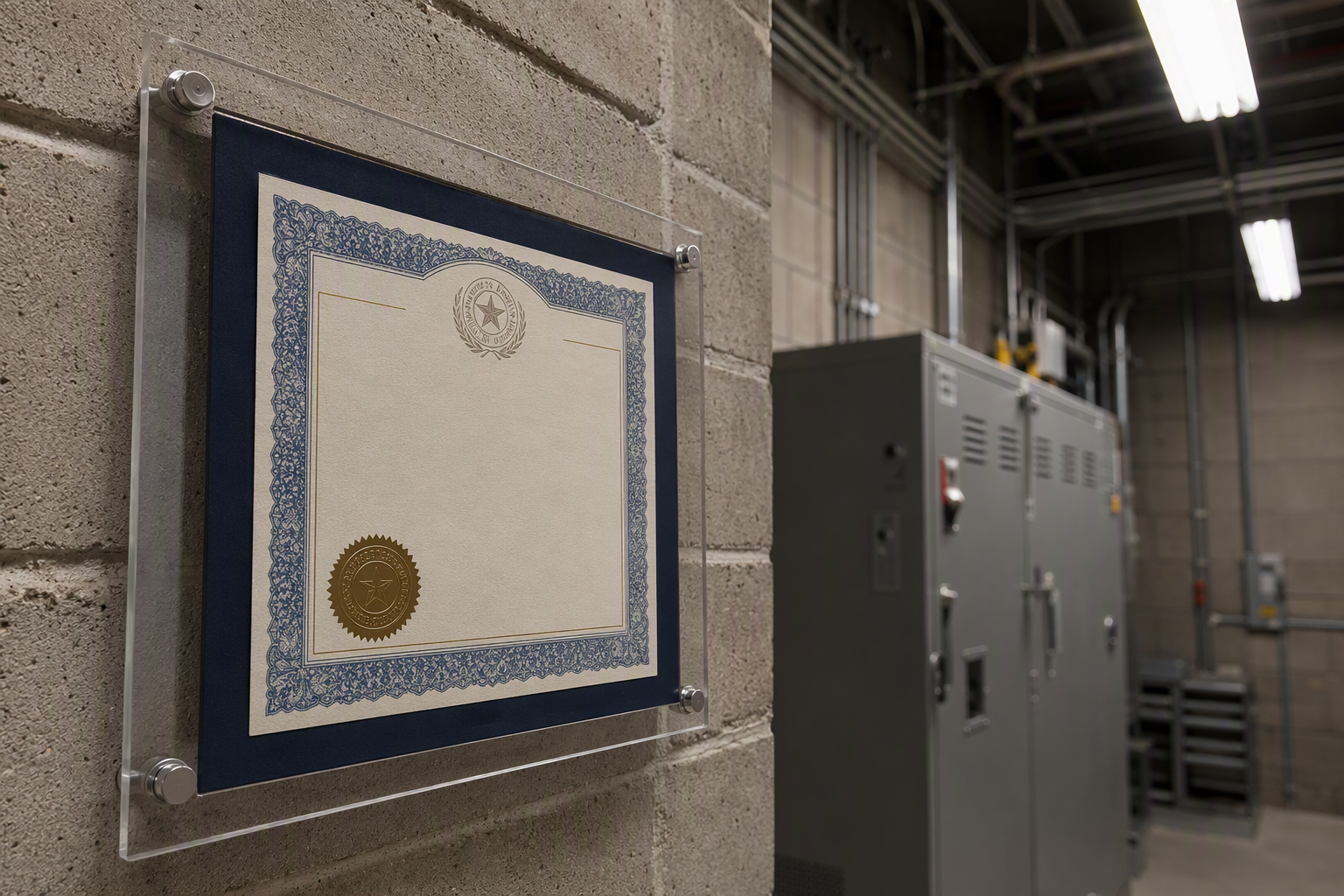
Texas requires elevator contractors and mechanics to hold credentials issued through the Texas Department of Insurance (TDI) Elevator Safety Program, which administers the state’s elevator safety law. Before reviewing any contract, request the vendor’s TDI elevator contractor license number and verify its standing on the TDI public database. Any technician dispatched to your facility should also hold a current TDI elevator mechanic license. Unlicensed work invalidates your certificate of operation and can expose the facility to liability if an incident occurs.
AmeriTex Elevator operates within the Texas regulatory framework and works directly with TDI inspection processes across its service markets, including Austin and San Antonio.
Which Edition of ASME A17.1 Does the Vendor Work To?
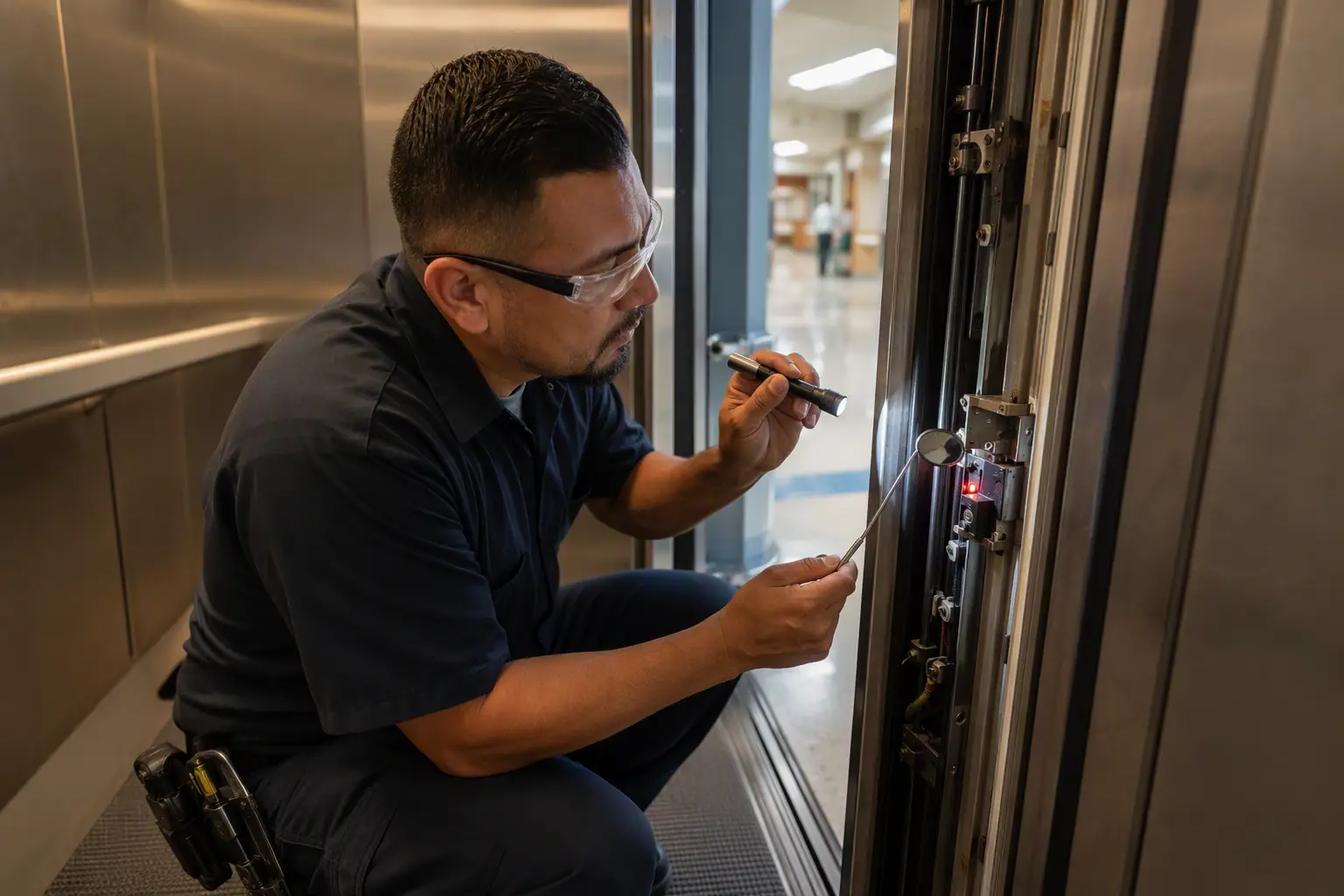
The ASME A17.1 Safety Code for Elevators and Escalators is the foundational technical standard governing elevator design, installation, and maintenance across the United States. Texas adopts editions of ASME A17.1 through TDI rulemaking; confirm which edition your local authority having jurisdiction (AHJ) — typically the TDI-approved inspector for Bexar County or Travis County — is currently enforcing. A vendor that references an outdated edition may not be current on safety requirements. For existing equipment, ASME A17.3, the Safety Code for Existing Elevators and Escalators, also applies and governs the retrofit and maintenance obligations your vendor must meet.
How Does the Contract Address ADA Compliance?
Hospitals and healthcare facilities are places of public accommodation subject to the Americans with Disabilities Act (ADA). Elevator accessibility features — including door timing, leveling accuracy, audible signals, and Braille/raised-character controls — must be maintained in working order. Ask whether the vendor’s routine maintenance scope explicitly includes ADA-related components and whether technicians are trained to identify and document ADA deficiencies. A contract that is silent on ADA maintenance can leave your facility exposed during a complaint investigation or accessibility audit.
What Is the Vendor’s Experience Servicing Healthcare Elevators Specifically?
Healthcare elevators are configured differently from standard commercial units. Stretcher-capacity cabs, bariatric load ratings, hospital-duty door operators, and infection-control considerations (such as antimicrobial interior materials) all require technicians who understand clinical environments. Ask the prospective vendor to describe in writing the types of healthcare facilities they currently service in the Austin or San Antonio area and what protocols their technicians follow when working in sterile or restricted zones. Vendors without a healthcare portfolio may underestimate the operational sensitivity of your facility.
AmeriTex Elevator serves healthcare and medical facility clients across its Texas markets and structures its maintenance programs around the uptime expectations of clinical operations.
What Does Preventive Maintenance Actually Include — and What Does It Exclude?
The term “full maintenance” contract means different things to different vendors. Request a written scope-of-work that specifies, at minimum:
- Frequency of preventive maintenance visits
- Which components are covered (hydraulic systems, door operators, safeties, controllers, ropes/cables)
- Whether oil, lubricants, and minor parts are included or billed separately
- Whether major components (motors, controllers, valves) are covered under the base contract or require a separate repair authorization
- How callback labor outside scheduled visits is handled and whether it carries additional charges
A contract that looks inexpensive on the surface may exclude the most common repair categories, creating significant unbudgeted costs throughout the contract term.
How Are Emergency Entrapments Handled in a Healthcare Setting?
Patient entrapments in a hospital elevator are a clinical emergency, not just a maintenance event. Ask the vendor to walk through their entrapment response protocol step by step, and verify that it aligns with your facility’s emergency operations plan. Specific questions to include:
- Who answers the emergency phone line and during what hours?
- What is the escalation path if the primary technician is unavailable?
- Does the vendor coordinate directly with your facilities team and security, or only with a dispatch center?
- What documentation is provided after an entrapment event for your incident log?
- Is the vendor familiar with Joint Commission Environment of Care standards as they relate to elevator safety?
What Are the Contract Length, Auto-Renewal, and Exit Terms?
Multi-year elevator maintenance contracts are common, but they should not trap a healthcare facility with an underperforming vendor. Before signing, review:
- The initial contract term and any automatic renewal clauses
- Required advance notice to cancel (some contracts require 90–180 days written notice before the renewal date)
- Whether performance benchmarks or uptime standards are built into the agreement with defined remedies
- Termination-for-cause provisions, including what constitutes cause and the process for invoking it
- What happens to proprietary elevator data (controller access codes, software licenses) if the contract ends
Facilities that have previously signed contracts without exit provisions sometimes find themselves unable to change vendors even after documented service failures.
Does the Vendor Carry Adequate Insurance for a Healthcare Facility?
Ask for a certificate of insurance naming your facility as an additional insured and confirm that the vendor’s general liability and workers’ compensation coverage meet the minimums required by your facility’s risk management department. Healthcare facilities often have higher minimum insurance thresholds than standard commercial properties. Also ask whether the vendor’s policy covers property damage caused during maintenance visits — elevator work in a clinical environment can involve exposure to sensitive medical equipment.
How Does the Vendor Handle Parts Procurement and Equipment Obsolescence?
Older elevator equipment common in established San Antonio and Austin hospitals may use components that are no longer manufactured. Ask the vendor how they source parts for equipment that is no longer in active production and what their lead time looks like for non-stock components. Vendors with established supplier relationships and parts inventory infrastructure can often return equipment to service faster than those who rely solely on OEM direct ordering. Also ask whether the vendor will advise the facility proactively when a unit is approaching end-of-life so modernization can be planned and budgeted.
What Documentation and Reporting Will the Vendor Provide?
Healthcare facilities must be able to produce maintenance records on demand — during Joint Commission surveys, TDI inspections, or legal proceedings. Before signing, confirm that the vendor will provide:
- Written maintenance logs for every visit, including technician name, tasks performed, and any deficiencies noted
- Annual maintenance summaries by unit
- Documentation of any safety-related findings and corrective actions
- Copies of inspection certificates and TDI correspondence on your behalf
- Notification to facility management when a unit is taken out of service for safety reasons
Vendors who resist providing thorough documentation should be viewed as a compliance risk in a regulated healthcare environment.
Questions Your Inspector Will Ask
When a TDI-authorized inspector visits your Austin or San Antonio healthcare facility, the questions directed at your elevator records and equipment condition will reflect the same standards your maintenance vendor should be upholding. Inspectors will typically examine the following:
- Certificate of Operation: Is the current certificate posted inside the elevator cab as required, and is it within the valid inspection period?
- Maintenance logs: Are signed, dated maintenance records available for each unit, demonstrating that scheduled maintenance was performed at the required intervals?
- Safety device testing: Has the required periodic testing of safeties, governors, and buffers been performed and documented in accordance with ASME A17.1 and Texas adoption requirements?
- Fire service operation: Is Phase I and Phase II firefighters’ service operational and tested, which is especially critical in multi-story hospital buildings?
- Door operation and leveling: Are doors operating within acceptable timing parameters and is the cab leveling accurate enough to prevent a tripping hazard for gurneys and wheelchairs?
- Emergency lighting and communication: Is the in-cab emergency phone functional and connected to a monitored line, and does emergency lighting activate as required?
- Hydraulic systems: For hydraulic units, is there evidence of oil leaks, and is the pressure-relief valve functioning correctly?
- Outstanding violations: Has any violation noted during a prior inspection been corrected and documented?
A well-structured maintenance contract with a qualified vendor ensures that your facility can answer “yes” to every one of these questions on inspection day.
How to Evaluate and Compare Vendor Proposals Side by Side
- Collect written proposals from at least three vendors, each specifying scope of work in detail.
- Verify TDI contractor and mechanic licensing for each vendor through the TDI public database.
- Request and contact references from current healthcare facility clients in Austin or San Antonio specifically.
- Have your legal counsel or risk management team review contract terms, auto-renewal language, and exit provisions.
- Confirm that each vendor’s insurance certificates meet your facility’s minimum requirements.
- Ask each vendor to confirm in writing which edition of ASME A17.1 and ASME A17.3 they apply and how they stay current with TDI rulemaking.
- Evaluate the documentation and reporting system each vendor uses and whether it can integrate with your facility’s record-keeping requirements.
- Score each vendor on a weighted rubric that reflects your facility’s priorities — compliance, documentation, and clinical sensitivity — before making a final decision based on price alone.
Why Healthcare Facilities in Austin and San Antonio Work with AmeriTex Elevator
AmeriTex Elevator provides elevator maintenance, repair, and modernization services across Texas, including Austin and San Antonio, with a program structure designed to meet the documentation, compliance, and operational continuity requirements that healthcare environments demand. AmeriTex Elevator’s approach centers on transparent contract terms, thorough maintenance documentation, and technicians who understand the difference between routine commercial service and the higher standard required in a patient-care setting.
Facilities considering a vendor transition or evaluating their current contract’s adequacy are encouraged to use the questions on this page as a checklist before making any commitment.
Schedule a Free Elevator Assessment for Your Healthcare Facility
If your Austin or San Antonio healthcare facility is approaching a contract renewal, onboarding a new building, or simply wants an independent review of your current elevator program’s compliance posture, AmeriTex Elevator offers a no-obligation elevator assessment to help facility managers understand where they stand.
Contact AmeriTex Elevator for a free elevator assessment: 866-679-4313
Need elevator service you can rely on? AmeriTex Elevator is ready to help.