Elevator Service in Houston, TX | AmeriTex Elevator

Choosing the right elevator service company in Houston or Dallas is one of the most consequential decisions a property owner or facility manager will make. Elevators are life-safety systems governed by strict Texas codes and federal standards. A misstep in vendor selection can mean compliance failures, extended downtime, and serious liability exposure. This guide walks through the exact criteria that matter most when evaluating elevator service companies in Texas before a contract is signed.
—
What Licensing Requirements Should a Texas Elevator Company Have?
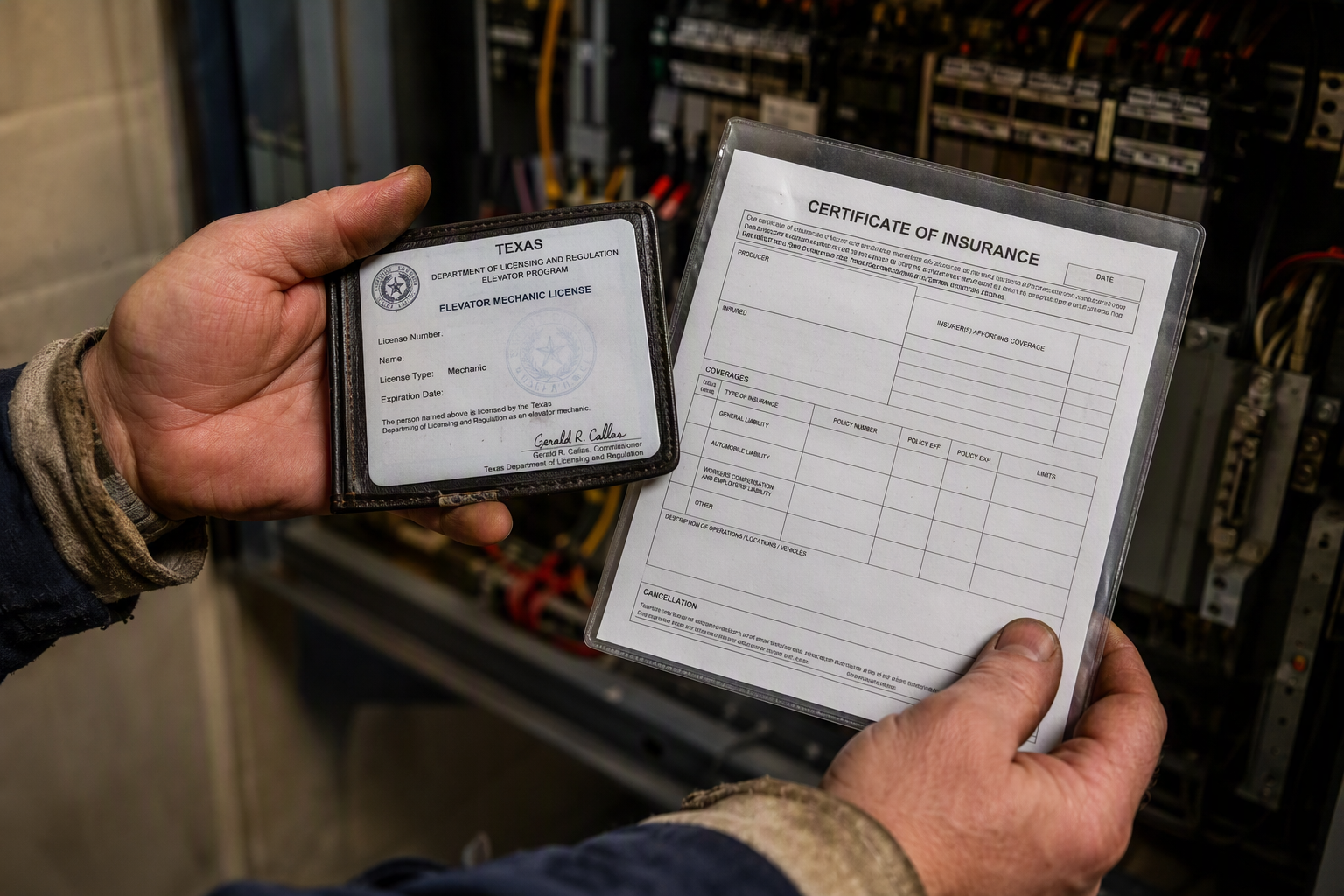
In Texas, elevator contractors and mechanics must meet licensing requirements administered by the Texas Department of Insurance (TDI), which oversees the Elevator Safety Program. Before signing any contract, property owners should confirm that the company holds a current, active certificate of insurance and that their technicians carry valid elevator mechanic licenses issued under Texas law.
Additionally, qualified elevator inspectors in Texas must be certified. Any service company performing inspections should be able to demonstrate that their inspection personnel meet the certification standards required by the state. Asking for proof of licensure upfront is not just reasonable — it is essential.
Which Safety Codes Apply to Elevators in Texas?
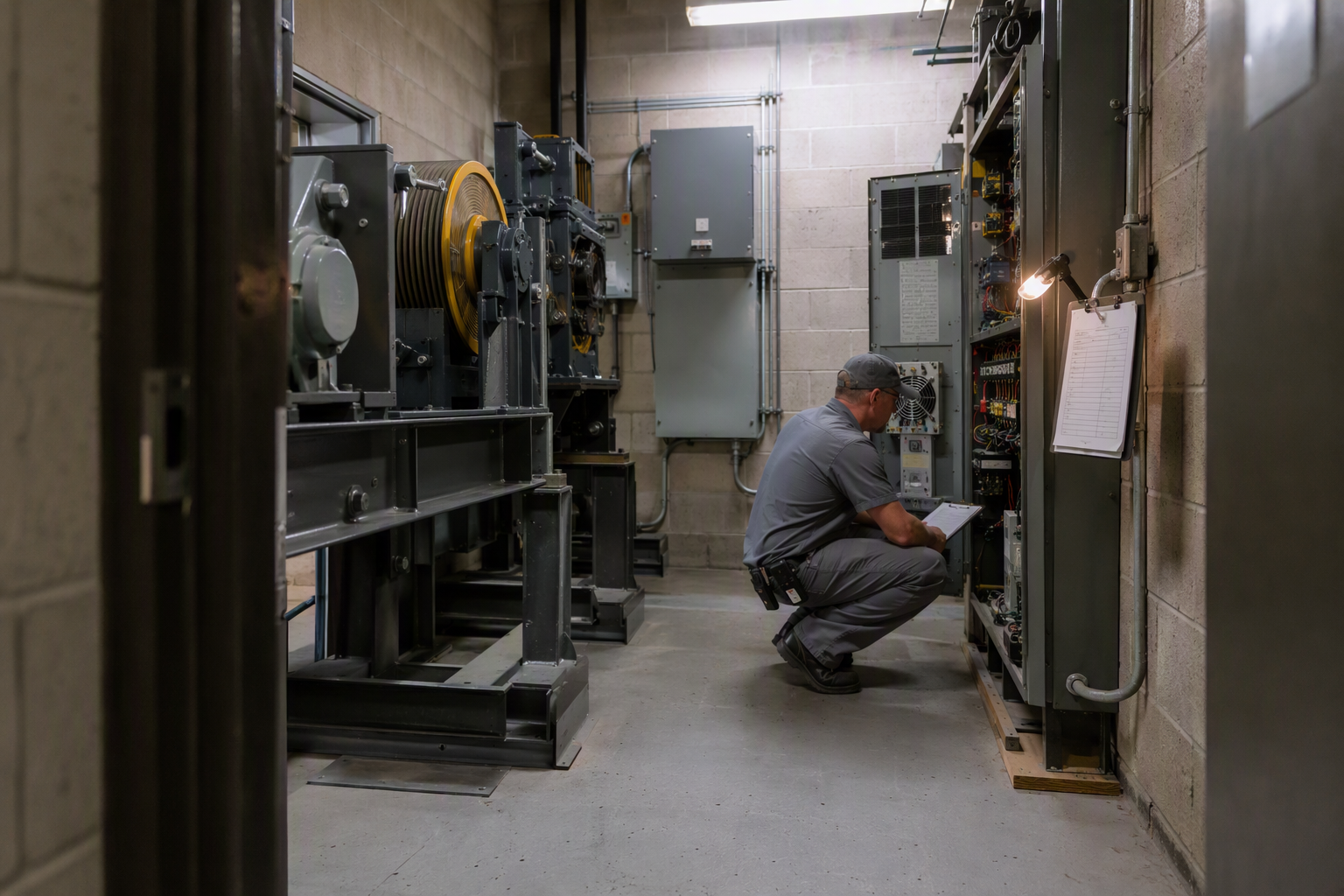
Texas elevator safety is governed primarily by two foundational standards published by the American Society of Mechanical Engineers:
- ASME A17.1 Safety Code for Elevators and Escalators — This is the primary installation and safety standard for new elevator equipment. Any service company working in Texas should demonstrate fluency with this code as it applies to equipment maintenance and repair.
- ASME A17.3 Safety Code for Existing Elevators and Escalators — This standard governs the retroactive safety requirements for elevators already in service. It is particularly relevant for older commercial and residential buildings throughout Houston and Dallas, where equipment may require upgrades to remain compliant.
Federal accessibility law also applies. The Americans with Disabilities Act (ADA) sets requirements for elevator accessibility in public accommodations and commercial facilities. A competent service company should understand how ADA obligations intersect with routine maintenance and modernization work.
Workplace safety during elevator service work falls under OSHA regulations, which govern lockout/tagout procedures and confined space protocols that elevator mechanics must follow.
How Should You Evaluate an Elevator Company’s Local Market Knowledge?
Texas has two major regulatory environments that an elevator company operating in Houston and Dallas must navigate simultaneously. Each city’s Authority Having Jurisdiction (AHJ) may interpret state code, enforce inspection scheduling, and process permit documentation differently. A service provider with genuine local expertise understands these distinctions — they are not learning them on your time and at your expense.
When interviewing vendors, ask directly:
- Which local AHJs do you work with regularly in Houston and Dallas?
- How do you manage permit filings and inspection coordination in each market?
- What types of commercial, industrial, and residential properties have you serviced in these cities?
AmeriTex Elevator operates throughout Texas, with deep familiarity across the Houston and Dallas markets. The company serves a wide range of property types, including commercial office buildings, multifamily residential properties, healthcare facilities, industrial sites, and retail centers.
What Should a Transparent Service Contract Include?
A professionally structured elevator service contract is one of the clearest signals of a reputable company. Before signing, review the contract for the following elements:
- Scope of maintenance: Exactly which components are covered under routine service, and which are excluded.
- Inspection and compliance obligations: Who is responsible for scheduling and coordinating required Texas state inspections.
- Parts and labor terms: Whether parts are included or billed separately, and how labor rates are structured for repairs.
- Emergency service provisions: What constitutes an emergency call, how requests are submitted, and what the process is for after-hours situations.
- Termination and renewal terms: Whether auto-renewal clauses exist and what notice periods are required to exit the agreement.
- Documentation and reporting: How the company provides service records, which is critical for demonstrating compliance during AHJ inspections.
Avoid any contract that uses vague language around scope or that bundles inspection services without naming certified inspectors.
How Do You Assess Emergency Availability Before Signing?
Elevator entrapments, door malfunctions, and mechanical failures do not follow business hours. A reliable elevator service company should offer emergency support around the clock. When evaluating vendors, ask how emergency calls are received, escalated, and dispatched — and confirm that the process is documented in the service agreement.
Do not accept vague assurances. Ask for the actual emergency contact protocol in writing. The contract itself should specify what qualifies as an emergency and how the company communicates status updates to property managers during an active situation.
What Questions Should You Ask About Elevator Modernization and Equipment Compatibility?
Houston and Dallas both have significant commercial real estate inventory with aging elevator equipment. A qualified service company should be able to assess whether your existing equipment is a candidate for modernization — or whether ongoing repairs are the more cost-effective path in the near term.
Key questions to ask include:
- Is our current equipment compatible with updated safety components required under ASME A17.3?
- What are the modernization options for our equipment type and age?
- How do you approach the transition from an existing service provider without disrupting operations?
- Can you provide documentation of previous modernization projects in comparable buildings?
A company that cannot speak fluently about modernization paths and code-compliance implications for existing equipment is a company that may not be equipped to serve a full-service relationship long term.
How Do You Compare Multiple Elevator Service Proposals?
When soliciting proposals from multiple vendors in Dallas or Houston, use a consistent evaluation framework so comparisons are meaningful rather than superficial. A structured approach might look like this:
- Verify licensing and insurance for every company under consideration through the Texas Department of Insurance before investing time in a full proposal review.
- Request itemized proposals rather than single-line totals. Itemization reveals what is and is not included in the base agreement.
- Evaluate code knowledge by asking each vendor to describe how they handle ASME A17.3 retrofit requirements for existing equipment at your property type.
- Assess communication practices — how the company delivers service reports, how quickly they respond to non-emergency inquiries, and who the designated point of contact will be.
- Check references from current clients in Houston or Dallas who manage similar property types. Ask specifically about how the vendor has handled compliance documentation and inspection coordination.
- Review contract terms side by side using the checklist outlined above, paying particular attention to exclusions, auto-renewal language, and emergency service definitions.
- Confirm AHJ familiarity by asking each vendor to name the local building departments and inspection bodies they work with in your specific city.
Why Does Local Expertise Matter for Houston and Dallas Properties Specifically?
Texas is a large and geographically diverse state. The construction types, building ages, and regulatory enforcement patterns in Houston differ meaningfully from those in Dallas. A company with genuine operational presence across both markets brings compounding advantages: knowledge of which local inspectors to coordinate with, which permit timelines to anticipate, and which equipment types are most common in the local commercial inventory.
AmeriTex Elevator brings this market-specific expertise to clients across Texas. The company’s work spans Houston’s dense mixed-use corridors and high-rise office market as well as the growing commercial and industrial base across the Dallas–Fort Worth metroplex. This breadth of Texas-focused experience positions AmeriTex to serve property owners who manage assets in multiple Texas markets under a single service relationship.
—
Ready to Evaluate Your Current or Prospective Elevator Service Provider?
AmeriTex Elevator works with property owners and facility managers across Houston and Dallas to deliver transparent, code-compliant elevator service. Whether you are preparing to sign a new maintenance contract or looking to switch providers, the AmeriTex team can help you ask the right questions and make an informed decision.
Schedule a Free Consultation — call AmeriTex Elevator today at 866-679-4313.
Need elevator service you can rely on? AmeriTex Elevator is ready to help.