For commercial and multifamily property owners in California and Texas, elevator performance is no longer a back-of-house maintenance line item — it is a direct driver of net operating income. Tenant retention, appraisal outcomes, insurance premiums, and code compliance all flow through the elevator shaft. This guide breaks down which upgrades deliver measurable returns, how they compare on cost and timeline, and how to sequence decisions for maximum financial impact.
Which elevator upgrades deliver the highest return on investment for commercial properties?
Not every elevator improvement translates equally into property value or NOI. The upgrades that consistently move the needle share three characteristics: they reduce operational cost, they reduce risk exposure, or they materially improve the tenant experience in ways that support higher rents and lower vacancy.
The upgrades with the strongest documented business case fall into five categories:
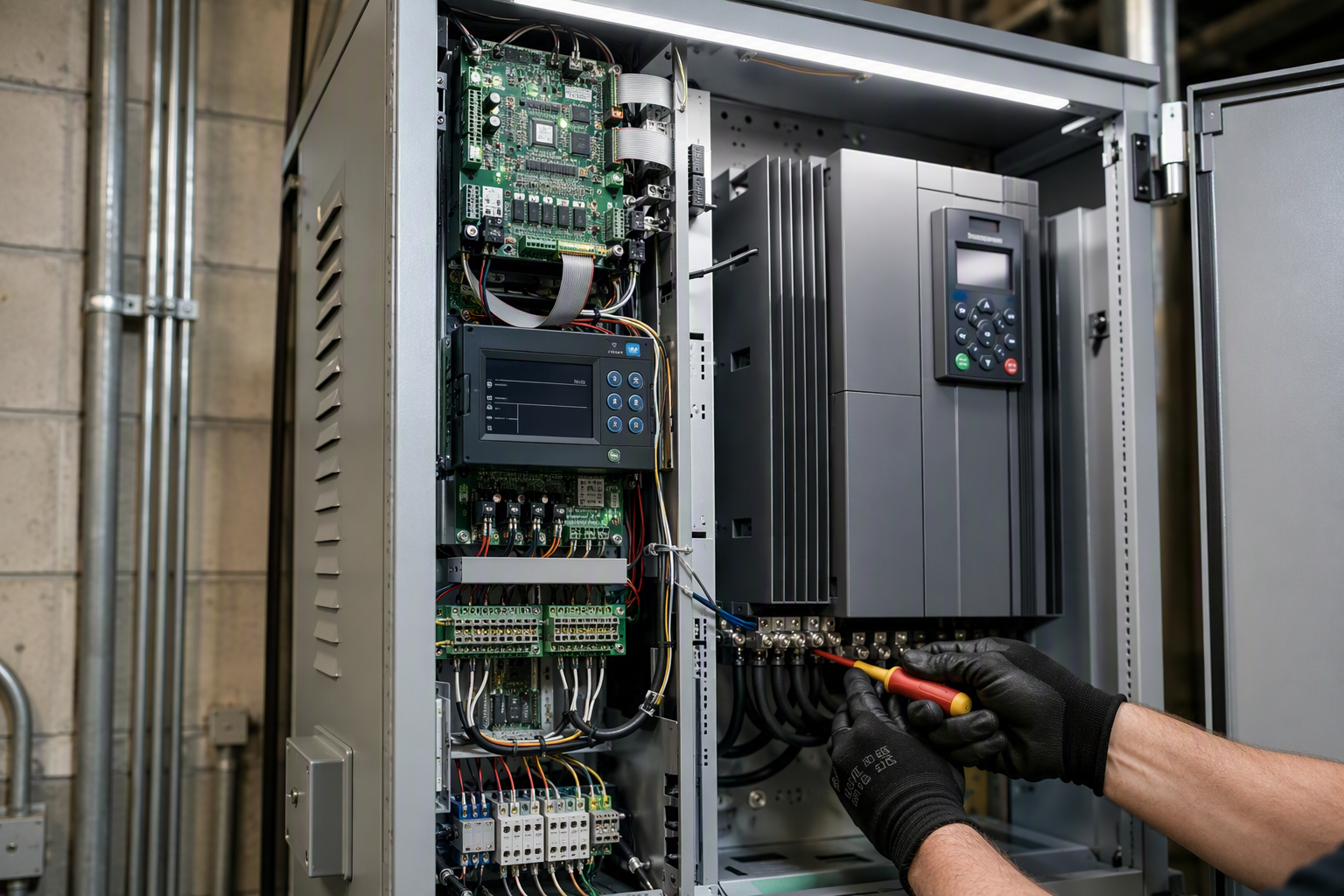
- Control system modernization — replacing relay logic or aging microprocessor controls with current solid-state systems
- Machine room-less (MRL) or variable-frequency drive (VFD) conversions — reducing energy draw and freeing leasable square footage
- Destination dispatch systems — algorithmic call routing that reduces average wait times and peak-hour congestion
- ADA compliance corrections — cab dimensions, door timing, control panel heights, and tactile signage required under the Americans with Disabilities Act
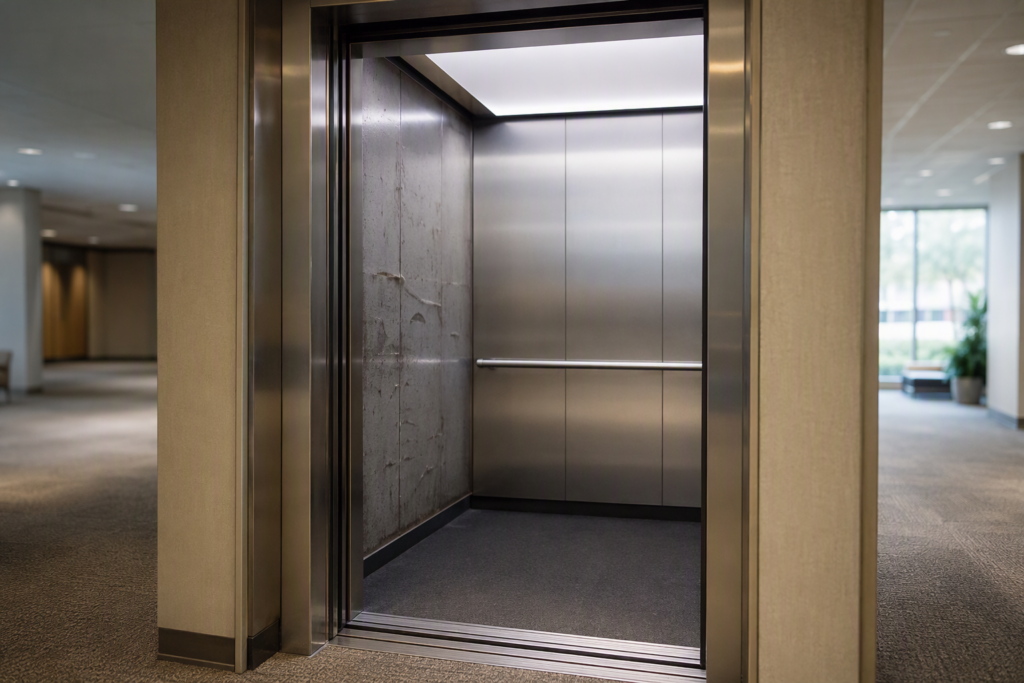
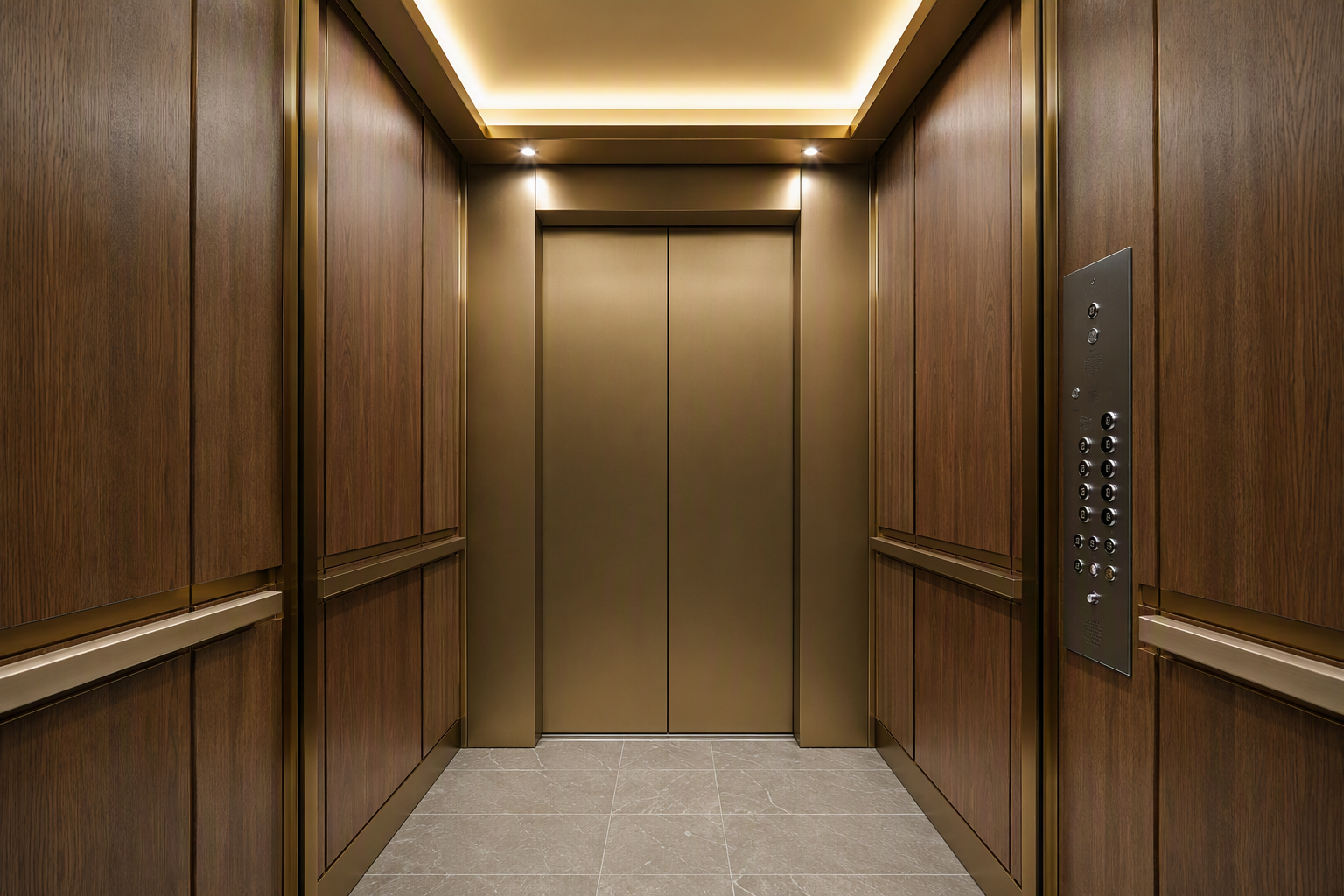
- Cab interior renovation — flooring, lighting, panel finishes, and digital displays that signal building quality to prospective tenants and appraisers
How do the major elevator upgrade categories compare on cost, timeline, and ROI?
| Upgrade Type | Relative Cost | Typical Project Timeline | Primary NOI Driver | Value-Add Mechanism | Compliance Relevance |
|---|---|---|---|---|---|
| Control system modernization | Moderate–High | 2–6 weeks per unit | Reduced downtime & callbacks | Lower maintenance cost; fewer tenant complaints | Addresses ASME A17.3 existing installation requirements |
| Variable-frequency drive (VFD) installation | Moderate | 1–3 weeks per unit | Energy cost reduction | Lower operating expenses lift NOI directly | Supports ASME A17.1 performance standards |
| Destination dispatch system | High | 4–12 weeks (multi-car) | Reduced wait times; tenant satisfaction | Commands premium rents in Class A/B office | Must integrate with ADA call requirements |
| ADA compliance retrofit | Low–Moderate | Days to weeks depending on scope | Liability risk elimination | Removes legal exposure; broadens tenant pool | Required under ADA Title III / Title II |
| Cab interior renovation | Low–Moderate | 1–5 days per cab | Tenant attraction & retention | Directly raises perceived building class | Minimal — primarily aesthetic |
| Door operator replacement | Low | 1–3 days per unit | Reduced service calls | Eliminates leading cause of callback incidents | Door reopening devices required per ASME A17.1 |
| Remote monitoring system | Low | 1–2 days per unit | Predictive maintenance savings | Reduces emergency callouts; extends component life | Supports inspection recordkeeping requirements |
| Machine room-less (MRL) conversion | Very High | Weeks to months | Space recapture + energy savings | Converts machine room to leasable area | Must comply with updated ASME A17.1 edition |
Note: Cost and timeline ranges are general industry parameters. Project-specific variables — building age, shaft configuration, local permitting in California or Texas — require an on-site assessment before budgeting.
Does elevator modernization actually show up in property appraisals?
Appraisers evaluating income-producing properties under the income approach assess NOI sustainability and risk factors. Deferred elevator maintenance, repeated service interruptions, and outstanding code violations are capitalized as risk — meaning they compress the cap rate-adjusted value. Conversely, a recently modernized elevator system documents lower forward maintenance expense and reduced liability, both of which support a stronger NOI projection.
For multifamily properties subject to rent comparables, elevator quality influences which comparable sales an appraiser selects. A building with updated, code-compliant elevators is more likely to be benchmarked against higher-performing comparables in the same submarket.
Lenders performing due diligence on Texas or California commercial assets routinely flag elevator condition in property condition assessments (PCAs). Outstanding modernization requirements can result in loan reserves, reduced proceeds, or conditions precedent to closing — all of which affect effective property value at the point of sale or refinance.
What elevator upgrades reduce operating expenses and improve NOI most directly?
NOI improvement from elevator upgrades comes through two channels: expense reduction and revenue enhancement. The most direct expense reductions come from:
- Variable-frequency drives: VFDs regulate motor speed to match actual load demand rather than running at full power continuously. Energy consumption in elevator systems is a measurable operating line item, and VFD retrofits address it at the component level.
- Remote monitoring and predictive maintenance: Connected monitoring systems flag abnormal performance patterns before they cause failures. Preventing unplanned outages eliminates emergency service premiums and reduces the tenant-relations cost of elevator downtime.
- Door operator modernization: Door-related malfunctions are among the most common reasons elevators generate service calls. Replacing aging door operators with current equipment reduces callback frequency and associated labor costs.
- Control system upgrades: Modern microprocessor controls enable more efficient dispatching logic, reduce motor stress through smoother acceleration profiles, and simplify diagnostic access for technicians — all of which reduce time-and-materials service charges.
Are there elevator upgrades required by California or Texas law that property owners must complete regardless of ROI?
Yes. Both California and Texas operate under adopted editions of the ASME A17.1 Safety Code for Elevators and Escalators (new installations) and ASME A17.3 Safety Code for Existing Elevators and Escalators (retroactive requirements for existing equipment). ASME A17.3 establishes specific retroactive safety requirements that existing installations must meet on a defined schedule — these are not optional improvements but mandatory compliance obligations.
In addition, the Americans with Disabilities Act imposes access requirements on elevators serving the public in commercial facilities and places of public accommodation. ADA obligations are enforced independently of state elevator codes and carry federal civil liability exposure for non-compliance. For properties undergoing renovation, ADA path-of-travel requirements may trigger elevator accessibility upgrades even when the elevator itself is not the primary scope of work.
Workplace elevators in buildings with employees are also subject to OSHA general duty standards regarding safe access and egress.
Property owners should treat mandatory compliance upgrades as the baseline — not as discretionary capital — and layer value-add modernization on top of that compliance floor.
How should office building owners prioritize elevator upgrades differently from multifamily owners?
| Priority | Office Buildings | Multifamily Buildings |
|---|---|---|
| 1st | Destination dispatch (peak-hour efficiency drives Class A positioning) | ADA compliance (broadens renter eligibility; reduces Fair Housing exposure) |
| 2nd | Control modernization (reliability is a lease negotiation factor) | Cab interior renovation (first impression at move-in; photographs for listings) |
| 3rd | Energy efficiency (VFD) — directly reduces controllable operating expenses | Remote monitoring (reduces emergency calls that disrupt residents at night) |
| 4th | Cab interior renovation (tenant attraction in competitive submarkets) | Door operator modernization (high-use residential traffic wears doors faster) |
| 5th | Remote monitoring (protects against SLA violations with commercial tenants) | VFD / energy efficiency (supports ESG reporting for institutional owners) |
Office tenants, particularly corporate and professional services firms, evaluate elevator performance as part of the overall building quality assessment during lease tours. Multifamily residents experience the elevator daily as an amenity — condition and reliability affect online reviews and renewal decisions. The prioritization framework differs, but both asset classes benefit from systematic modernization planning.
What is destination dispatch and does it actually justify the capital cost?
Destination dispatch systems replace conventional floor call buttons with lobby terminals or smartphone interfaces where riders enter their destination floor before boarding. The system’s algorithm groups riders traveling to the same or adjacent floors into the same car, reducing the number of stops per trip and decreasing average wait times during peak periods.
The business case for destination dispatch is strongest in:
- Office buildings with significant morning and evening peak traffic patterns
- Mixed-use properties with distinct resident, office, and retail populations using the same elevator bank
- High-rise buildings where dispatching inefficiency compounds across many floors
- Properties competing directly with newly constructed Class A buildings in the same submarket
For low-rise multifamily buildings with two to four stories and limited elevator traffic, destination dispatch typically does not justify its capital cost and a control system modernization with optimized conventional dispatching delivers comparable results at lower investment.
How does elevator condition affect tenant retention and vacancy rates?
Elevator downtime has a disproportionate impact on tenant perception relative to many other building systems. A broken HVAC unit affects comfort; a non-operational elevator in a mid- or high-rise building affects physical access to the leased space. For ADA-dependent tenants, elevator failure can constitute an ADA access barrier with legal implications.
In multifamily properties, elevator complaints frequently appear in online reviews on platforms prospective renters consult during their search. Repeated complaints about slow, unreliable, or aesthetically poor elevators suppress inquiry conversion rates and give prospective residents reason to tour competing properties.
In office buildings, elevator performance is increasingly a factor in tenant improvement (TI) negotiations. Tenants with leverage — large footprints, long lease terms — may condition renewal on capital commitments including elevator modernization. Proactive upgrading strengthens the landlord’s negotiating position.
What is the step-by-step process for planning an elevator upgrade that maximizes property value impact?
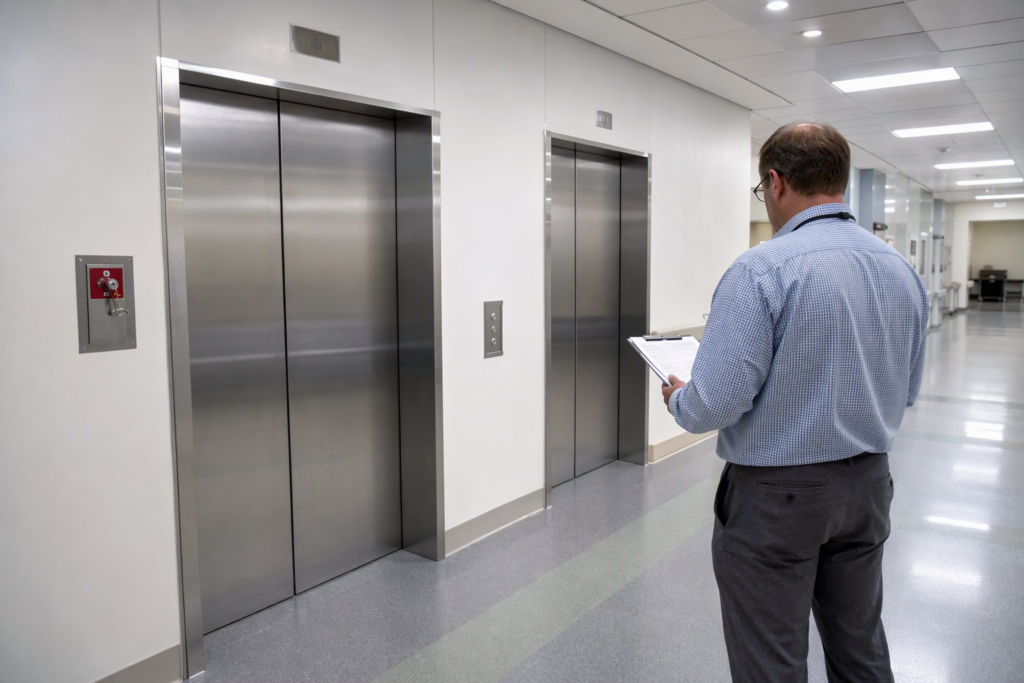
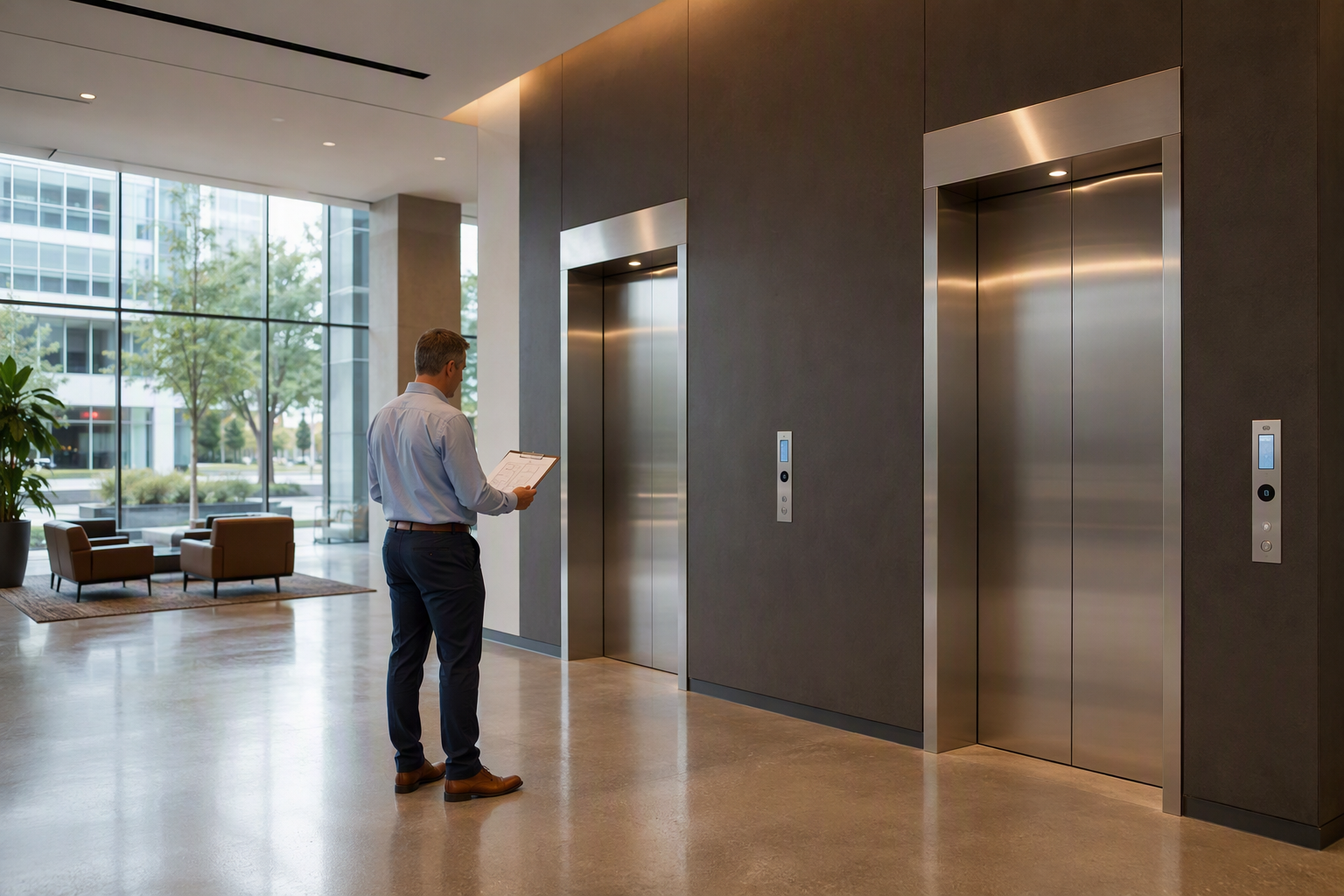
- Commission an independent elevator assessment. Before allocating capital, engage a qualified elevator service provider to document the current condition of all elevator systems, identify deferred maintenance, note any open code compliance items under ASME A17.1 or A17.3, and flag ADA deficiencies.
- Separate mandatory compliance from elective value-add. Categorize each identified deficiency as (a) required by code or ADA, (b) driven by reliability or safety concerns, or (c) elective value-enhancement. Mandatory items are not discretionary and must be sequenced first.
- Model NOI impact for each elective upgrade. For each value-add upgrade under consideration, estimate the expense reduction (energy, maintenance callbacks, emergency service) or revenue enhancement (supportable rent premium, reduced vacancy) against the capital outlay. Apply your market cap rate to translate NOI improvement into implied value creation.
- Sequence upgrades around building operations. Coordinate with property management to schedule elevator outages during periods of minimal building occupancy. In multifamily, avoid simultaneous outage of all elevator units. Plan permitting and inspection timelines with the local authority having jurisdiction (AHJ) in your California or Texas municipality.
- Obtain permits and AHJ approval. All elevator modernization work in California and Texas requires permits and post-installation inspection. Verify that your service provider handles permit procurement and coordinates the required inspections — outstanding permits delay occupancy clearance and create liability.
- Document completed work for lender and appraiser files. Retain permits, inspection certificates, and manufacturer documentation for every upgrade. This documentation directly supports appraiser and lender review during refinancing or sale processes.
- Establish a forward maintenance and monitoring protocol. Modernization delivers maximum long-term value when paired with a preventive maintenance agreement and, where applicable, a remote monitoring system. Documented maintenance history supports the narrative of reduced deferred maintenance risk.
How does ADA compliance relate to elevator upgrades in California and Texas office and multifamily buildings?
The ADA requires that elevators serving multiple floors in commercial facilities and places of public accommodation meet specific accessibility standards covering cab dimensions, door width and timing, control panel button height and spacing, tactile and Braille signage, audible floor announcements, and leveling accuracy. These requirements apply to both new installations and, in many cases, to existing elevators undergoing alteration.
For multifamily properties, the Fair Housing Act’s accessibility requirements overlap with ADA provisions for common-use areas and elevators serving covered dwelling units. Non-compliant elevator controls or inaccessible cab features can constitute Fair Housing violations independently of elevator code compliance.
From a property value standpoint, ADA non-compliance creates contingent liability that lenders and buyers discount into pricing. Completing ADA corrections eliminates a known liability and, in many cases, qualifies as a readily achievable barrier removal obligation that should be addressed on an ongoing basis regardless of other capital plans.
What questions should property owners ask when selecting an elevator service provider for modernization work?
Not all elevator contractors approach modernization with equal competence or transparency. The following questions help distinguish providers who will deliver lasting value from those focused solely on equipment sales:
- Is the provider licensed by the relevant state authority in California or Texas?
- Does the provider hold a current registration with the local authority having jurisdiction (AHJ) in the building’s municipality?
- Can the provider demonstrate familiarity with current ASME A17.1 and A17.3 requirements as adopted in the applicable jurisdiction?
- Does the provider handle permit procurement, inspection coordination, and post-installation documentation, or does that responsibility fall to the property owner?
- Does the provider offer equipment from multiple manufacturers, or are they aligned with a single brand that may drive equipment recommendations?
- What is the provider’s approach to minimizing operational disruption during modernization — particularly for occupied residential buildings?
- Does the provider offer remote monitoring integration as part of modernization, and can they support it on an ongoing basis?
AmeriTex Elevator is an independent, certified elevator service company serving property owners in California and Texas. As an independent provider, AmeriTex is not aligned with any single equipment manufacturer, which means recommendations are driven by what serves the building’s performance and budget requirements rather than product quotas. AmeriTex works with office and multifamily owners across both states to assess current elevator condition, identify compliance gaps, and develop upgrade sequences designed to maximize NOI and long-term property value.
Upgrade Comparison: Pros and Cons at a Glance
| Upgrade | Pros | Cons / Considerations | Best Fit |
|---|---|---|---|
| Control system modernization | Improves reliability; enables diagnostics; extends equipment life | Requires temporary outage; moderate capital | Any building with aging relay or early microprocessor controls |
| VFD (variable-frequency drive) | Reduces energy draw; smoother ride quality; lower motor wear | Must be compatible with existing motor; may require electrical upgrades | Buildings with high elevator usage or energy-conscious ownership |
| Destination dispatch | Reduces average wait; differentiates building competitively | High capital; longer project; requires tenant education | High-rise office with busy peak periods; Class A multifamily |
| ADA compliance retrofit | Eliminates federal liability; broadens tenant/resident pool | Scope varies widely — assessment required before budgeting | Any property with pre-ADA elevator equipment or recent renovations triggering path-of-travel requirements |
| Cab interior renovation | Fast execution; immediate visual impact; low disruption | No mechanical benefit; must be paired with reliability improvements to sustain impression | Properties preparing for lease-up, sale, or refinance |
| Remote monitoring | Enables predictive maintenance; reduces emergency callouts | Ongoing subscription cost; value depends on integration quality | Multi-elevator buildings; properties with limited on-site staff |
| Door operator replacement | Reduces single largest source of elevator callbacks quickly | Short-term fix if broader mechanical issues are not addressed | Buildings experiencing frequent door-related service calls |
Summary: How to Think About Elevator Upgrades as a Capital Allocation Decision
For property owners in California and Texas, elevator upgrades occupy a unique position in the capital stack: some are legally required, some protect existing NOI by reducing expense and liability, and some create new NOI by supporting higher rents or occupancy. The most effective approach layers these three categories in sequence — compliance first, reliability second, competitive differentiation third — and documents each completed phase for lender, appraiser, and tenant audiences.
The worst outcome is deferred modernization that accumulates into an emergency capital event at the worst possible time — during a lease renewal negotiation, a refinancing, or a sale process where the buyer’s inspector flags the equipment as a liability. Proactive, sequenced investment eliminates that scenario and converts elevator infrastructure from a risk factor into a documented asset.
AmeriTex Elevator provides independent elevator assessments, modernization planning, and ongoing service for office and multifamily properties throughout California and Texas. As a certified independent provider with no manufacturer affiliation, AmeriTex recommends solutions based on building performance requirements, not equipment sales targets.
Ready to Find Out Which Upgrades Will Move the Needle for Your Property?
Contact AmeriTex Elevator for a free elevator assessment. AmeriTex will document current equipment condition, identify compliance gaps, and provide a prioritized upgrade roadmap aligned with your NOI and property value goals — with no manufacturer bias and no obligation.
Call AmeriTex Elevator: 866-679-4313
Need elevator service you can rely on? AmeriTex Elevator is ready to help.