Elevator Service in Houston, TX | AmeriTex Elevator
Senior living and assisted living facilities operate elevators under some of the most demanding compliance environments in the built environment. Residents may depend entirely on vertical transportation for daily mobility, medical appointments, and emergency evacuation — making inspection rigor, preventive maintenance, and code adherence non-negotiable. AmeriTex Elevator provides elevator maintenance, inspection coordination, and compliance support specifically for senior care communities in Texas and California.
—
What Federal Elevator Standards Apply to Senior Living Facilities?
At the federal level, two interlocking frameworks govern elevator safety in any senior living or assisted living property:
- ASME A17.1 Safety Code for Elevators and Escalators — the baseline design, construction, and installation standard adopted by Texas and California for new or substantially altered equipment.
- ASME A17.3 Safety Code for Existing Elevators and Escalators — governs retroactive upgrades and ongoing compliance for equipment already in service, which covers the majority of elevators in established assisted living communities.
- Americans with Disabilities Act (ADA) — requires that elevators in multi-story facilities serving the public or residents are accessible, with specific requirements for cab dimensions, door timing, controls, and signage.
- OSHA — while OSHA’s primary jurisdiction covers worker safety, elevator machine rooms and maintenance procedures in senior living facilities must comply with applicable OSHA standards protecting maintenance personnel.
Both Texas and California adopt and enforce these ASME standards at the state level through their respective regulatory agencies. Facilities must satisfy both the state administrative layer and the underlying ASME technical requirements.
—
What Are the Elevator Inspection Requirements for Senior Living Facilities in Texas?
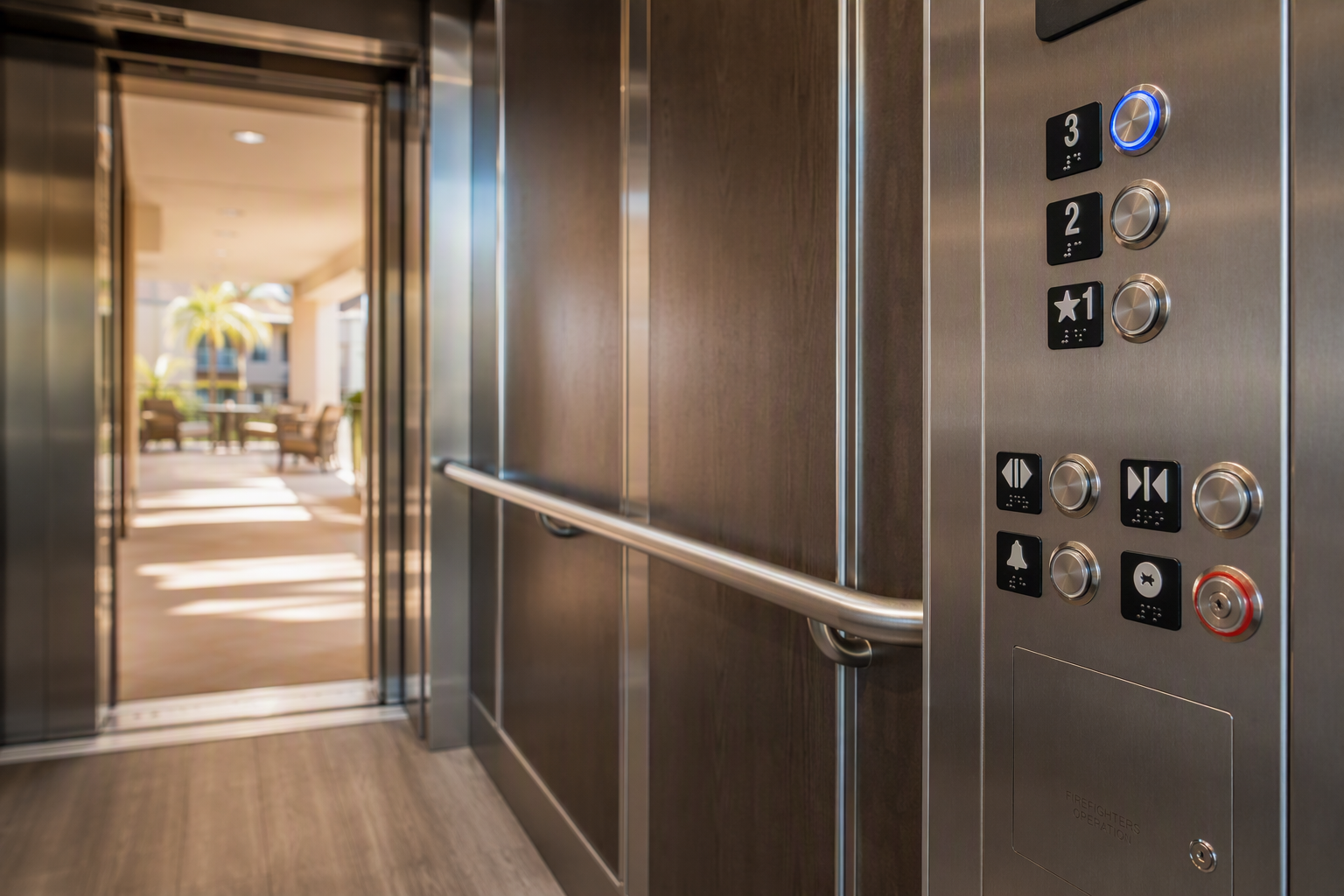
In Texas, elevator safety is regulated by the Texas Department of Insurance (TDI), which administers the state’s Elevator Safety Program. Key compliance points for senior living operators in Texas include:
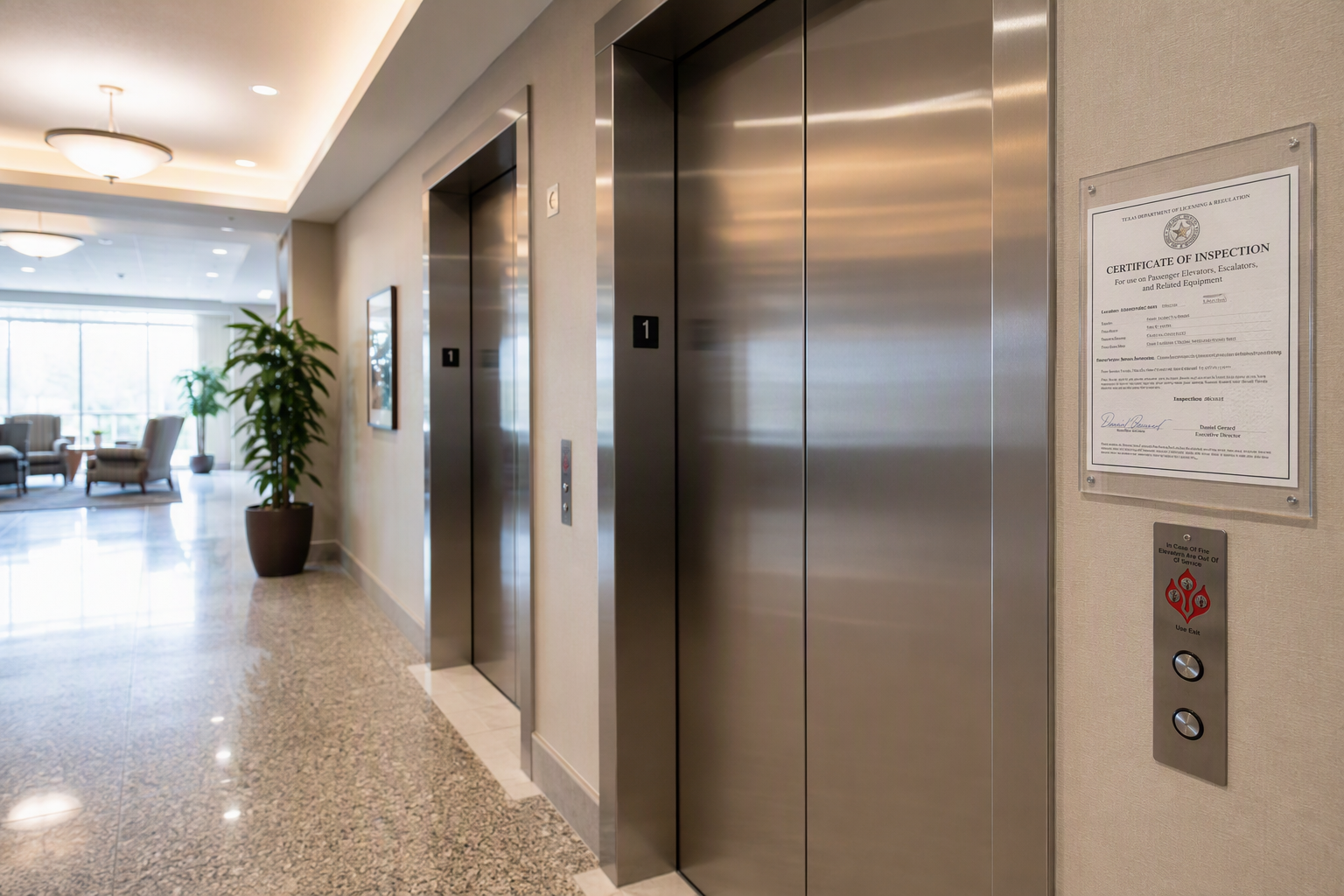
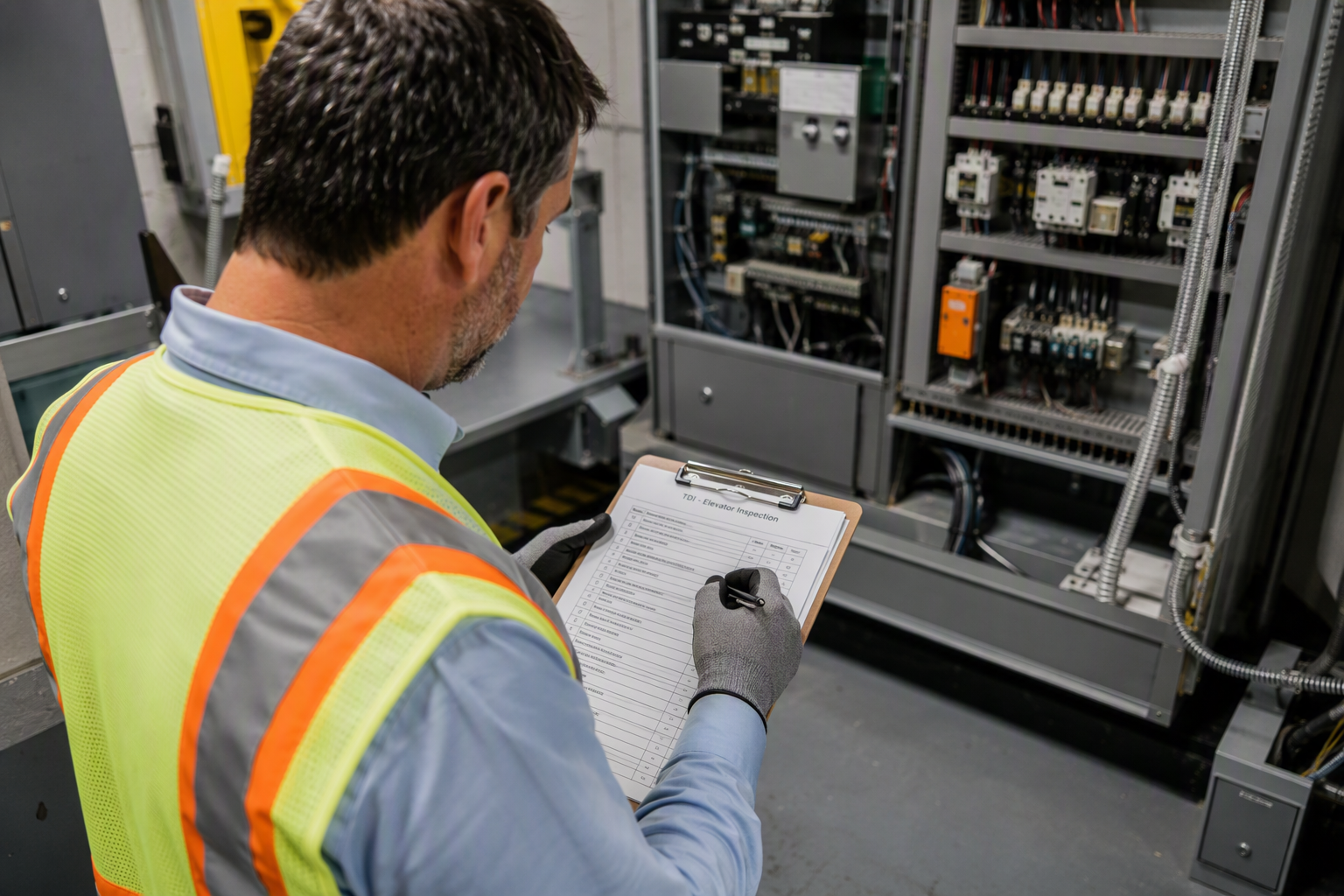
- Periodic inspections: Elevators in Texas must receive regular inspections by a licensed elevator inspector. TDI requires that each conveyance be inspected and that a current certificate of inspection be maintained on-site and posted in or near the elevator.
- ASME A17.1 / A17.3 adoption: Texas enforces the ASME A17.1 Safety Code for Elevators and Escalators for new installations and the ASME A17.3 Safety Code for Existing Elevators and Escalators for equipment already in service, meaning older assisted living elevator systems may be required to incorporate specific safety upgrades over time.
- Licensed contractors: Only elevator contractors holding a valid Texas elevator contractor license issued through TDI may perform maintenance, repair, or alteration work on conveyances in the state.
- Certificate of inspection: A valid, current certificate must be posted in the elevator cab at all times. Failure to maintain a current certificate can result in regulatory action and, critically, may require a facility to take the elevator out of service — a serious operational risk in a senior living environment.
- ADA accessibility: Texas senior living facilities covered by the ADA must ensure elevator controls, signage, cab dimensions, and door timing meet accessibility requirements, protecting both residents and the facility from civil liability.
—
What Are the Elevator Inspection Requirements for Senior Living Facilities in California?
California’s elevator safety program is administered through the Division of Occupational Safety and Health (DOSH), commonly referred to as Cal/OSHA, under the California Department of Industrial Relations. California senior living operators should be aware of the following:
- State inspection authority: California requires that elevators in covered buildings be inspected by Cal/OSHA-certified elevator inspectors on a regular basis. Certificates of inspection are required to be current and posted.
- ASME code foundation: California’s elevator safety orders incorporate the ASME A17.1 Safety Code for Elevators and Escalators and ASME A17.3 as the technical baseline, supplemented by California-specific elevator safety orders.
- Licensed elevator mechanics and contractors: California requires that elevator work be performed by licensed elevator mechanics under a certified elevator contractor, with certification managed through the state.
- ADA and state accessibility law: California senior living facilities must comply with both the federal ADA and the California Building Code’s accessibility provisions, which in some areas exceed federal minimums.
—
Why Is Elevator Compliance Especially Critical in Assisted Living Settings?
Assisted living and senior living facilities carry heightened compliance obligations because residents often cannot use stairs independently. A non-compliant or out-of-service elevator is not simply an inconvenience — it can constitute a safety hazard, a licensing issue with state health authorities, and a potential ADA violation. State health department surveyors and life-safety inspectors routinely review elevator inspection certificates during facility audits. An expired certificate or deferred maintenance finding during a survey can trigger deficiency citations that affect a facility’s operating license.
Preventive maintenance programs specifically designed for high-use, multi-resident environments help reduce unplanned outages and keep inspection records current and complete.
—
What Should a Preventive Maintenance Program Include for Senior Living Elevators?
A comprehensive preventive maintenance agreement for a senior living elevator system should address:
- Scheduled lubrication, adjustment, and cleaning of all mechanical and electrical components
- Door operator and safety edge testing — doors that close too forcefully or too slowly create fall and entrapment risks for residents using walkers, wheelchairs, or mobility aids
- Emergency lighting and communication system testing to ensure in-cab phones and two-way communication devices are functional
- Governor, safety, and buffer testing at intervals required by ASME A17.1 and A17.3
- Hydraulic fluid inspection and leak detection for hydraulic systems common in low-rise senior living buildings
- Documentation of all maintenance activities for regulatory record-keeping and inspection readiness
—
What Should Facility Operators Do If an Elevator Fails or Is Taken Out of Service?
- Immediately secure the elevator: Place the unit out of service, lock cab doors or access panels where possible, and post clear signage directing residents and staff away from the elevator entrance.
- Assess for entrapment: Confirm no residents or staff are trapped in the cab. If entrapment is confirmed, contact local emergency services immediately — do not attempt a non-professional rescue.
- Notify administration and care staff: Senior living facilities should have a written continuity plan that activates when an elevator is out of service, including reassignment of residents who cannot use stairs.
- Contact a licensed elevator contractor: Reach out to a TDI-licensed contractor in Texas or a California-certified contractor to assess the failure and initiate repairs.
- Document the incident: Record the date, time, nature of the failure, and all actions taken. This documentation supports both internal risk management and regulatory transparency.
- Notify the AHJ if required: Certain failure types or accidents may require notification to the Authority Having Jurisdiction — TDI in Texas or Cal/OSHA in California. Review your state obligations and consult your contractor.
- Obtain clearance before returning to service: The elevator must pass inspection or receive written authorization from the AHJ before it is returned to resident use.
—
How Does ADA Compliance Intersect with Elevator Requirements in Senior Living?
The Americans with Disabilities Act requires that elevators in covered multi-story facilities meet specific accessibility standards. For senior living operators, the most relevant ADA elevator requirements address cab size minimums, door width, door reopening devices, floor designations in braille and raised characters, audible signals, and leveling accuracy so that the cab floor aligns with the landing floor — a critical safety factor for wheelchair users and residents with balance impairments.
Facilities undergoing renovation should be especially attentive: alterations triggering ADA path-of-travel requirements may require elevator upgrades even when the elevator itself is not the primary scope of work.
—
How Can AmeriTex Elevator Help Senior Living Facilities Stay Compliant in Texas and California?
AmeriTex Elevator serves senior living and assisted living communities across Texas and California with maintenance programs, inspection coordination, and modernization planning designed for the operational realities of care environments. The AmeriTex team understands that elevators in these settings must perform reliably every day and that compliance documentation must be organized, current, and audit-ready.
AmeriTex Elevator holds the state licensing required to perform elevator work in Texas and operates with a commitment to code-compliant service under the regulatory frameworks of both states. Facilities benefit from a service partner who understands the intersection of ASME technical standards, TDI and Cal/OSHA administrative requirements, and the ADA accessibility obligations that apply to senior living environments in 2026 and beyond.
Whether a facility needs a routine maintenance agreement, inspection preparation, emergency repair coordination, or a modernization assessment for aging equipment, AmeriTex Elevator provides the compliance-focused support senior living operators require.
—
Need elevator service you can rely on? AmeriTex Elevator is ready to help.