California building owners — particularly those managing older properties in Los Angeles and San Diego — face a recurring challenge: keeping aging elevator systems compliant with evolving state and federal requirements. Code upgrades are not optional. Failure to comply can result in citations, shutdown orders, liability exposure, and loss of operating permits. This guide explains what upgrades are commonly required, how the compliance process works, and how to evaluate your options.
What Does California Law Require for Elevator Code Compliance?
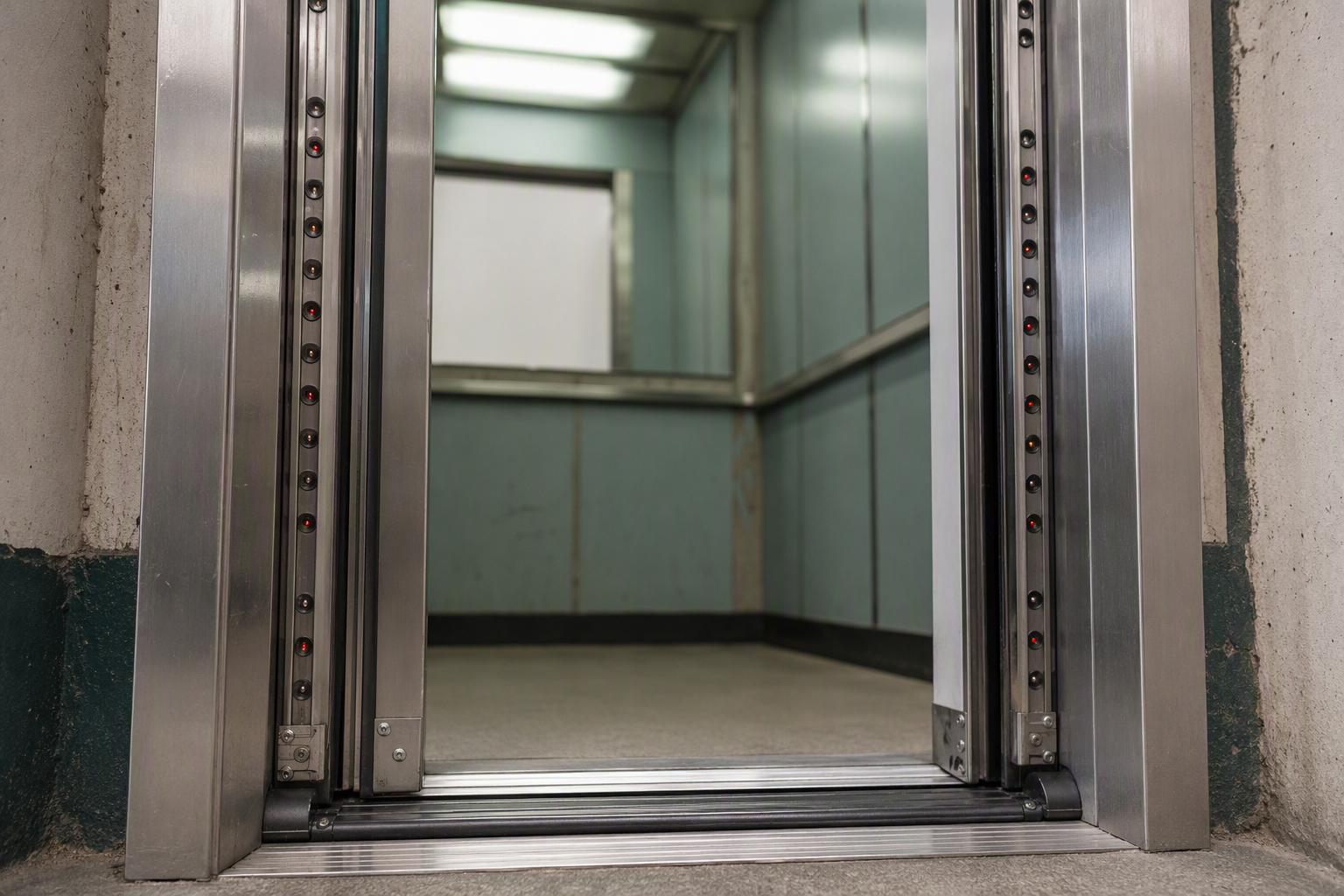
California enforces elevator safety through the Cal/OSHA Elevator, Ride, and Tramway Unit, which adopts editions of the ASME A17.1 Safety Code for Elevators and Escalators as the foundational technical standard. When the state adopts a newer edition of this code, buildings with elevators are expected to bring their equipment into compliance — either on a mandatory schedule or when major alterations trigger a full review.
Additionally, public accommodations and commercial buildings must meet accessibility requirements under the Americans with Disabilities Act (ADA), which includes elevator cab dimensions, control heights, audible and visual signals, and door timing.
The California Building Code (CBC) incorporates Title 24 accessibility standards that often exceed federal minimums. Building owners undertaking renovations, changes of use, or significant alteration projects frequently trigger a compliance review that affects the elevator system, even when the elevator itself was not the primary focus of the project.
Which Elevator Upgrades Are Most Commonly Required in California?
The upgrades required vary depending on when the elevator was installed, what code edition was in effect at that time, and whether the building has undergone alterations. The following categories represent the most frequently cited upgrade requirements across Los Angeles and San Diego properties:
| Upgrade Category | Typical Trigger | Code Reference | Priority Level |
|---|---|---|---|
| Door reopening devices (safety edges / light curtains) | Pre-1990s equipment; alteration permit | ASME A17.1 | High — life safety |
| Emergency lighting and ARD (Automatic Rescue Device) | State mandate; inspection finding | ASME A17.1 | High — life safety |
| Firefighters’ Emergency Operation (FEO / Phase I & II) | Alteration; code adoption cycle | ASME A17.1 | High — fire code |
| Cab and hoistway lighting levels | Inspection deficiency | ASME A17.1 | Medium |
| ADA-compliant controls (height, Braille, audible signals) | Renovation; ADA complaint | ADA Standards | High — legal compliance |
| Seismic safety switches and pit stop switches | California seismic requirements | ASME A17.1 / CBC | High — California-specific |
| Controller modernization (relay to solid-state) | Obsolete parts; alteration permit | ASME A17.1 | Medium–High |
| Hydraulic fluid containment (environmental) | Cal EPA / state mandate | State environmental code | Medium — environmental |
| Door interlock upgrades | Inspection deficiency; older equipment | ASME A17.1 | High — entrapment risk |
| Communication devices (two-way communication in cab) | ADA and ASME requirements | ADA / ASME A17.1 | High — accessibility + safety |
How Does the California Elevator Inspection and Compliance Process Work?
Understanding the inspection cycle is essential before planning upgrades. California’s elevator compliance process is administered by the Cal/OSHA Elevator, Ride, and Tramway Unit, which issues permits, performs or oversees inspections, and issues citations for deficiencies.
- Obtain or verify your current operating permit. California law requires an annual permit to operate a passenger elevator. The permit is issued after a satisfactory inspection. Confirm the permit is current and posted inside the cab.
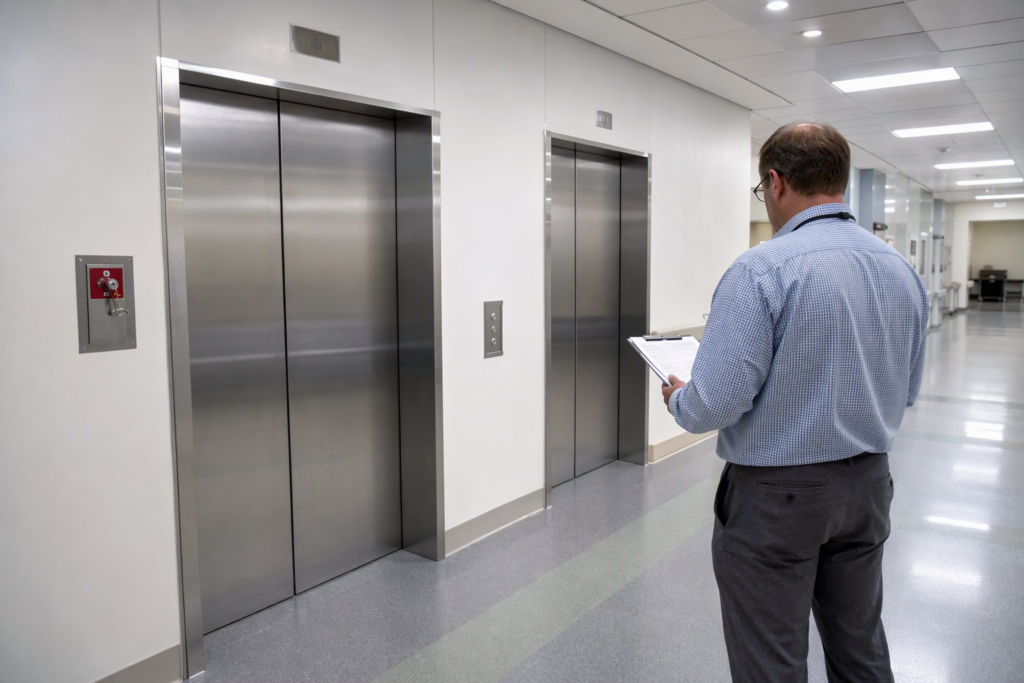
- Review the most recent inspection report. Inspection reports itemize deficiencies. These deficiencies carry deadlines. Identify which items are classified as immediate hazards versus items requiring correction within a set timeframe.
- Commission a full elevator assessment. Engage a qualified, state-certified elevator company — such as AmeriTex Elevator — to audit the entire system, not just the cited items. Code editions change, and a full assessment reveals all gaps simultaneously rather than piecemeal.
- Obtain upgrade scope and cost estimates. Get a written scope of work detailing each required upgrade, the applicable code section, and the estimated cost. Request itemized proposals so you can prioritize life-safety items first.
- Submit alteration permits where required. Many upgrades — especially controller replacements, cab modifications, and hoistway changes — require an alteration permit from Cal/OSHA before work begins. Your elevator contractor handles permit applications.
- Complete the work in priority order. Life-safety items (door interlocks, emergency lighting, firefighters’ operation) take precedence. Accessibility and cosmetic upgrades follow.
- Schedule the compliance inspection. After upgrades are complete, a Cal/OSHA inspector reviews the work. For permitted alterations, this is mandatory before the elevator is returned to service.
- Obtain updated operating permit. Once the inspection is passed, the updated permit is issued. Maintain records of all work performed, permits, and inspection reports for future reference.
How Do Code-Required Upgrades Compare to Full Elevator Modernization?
Building owners frequently face the decision of whether to perform only the mandated minimum upgrades or invest in a broader modernization. Both paths have distinct trade-offs.
| Factor | Minimum Code Compliance Upgrades | Full Elevator Modernization |
|---|---|---|
| Scope | Targeted repairs/replacements of cited or triggered items only | Controller, drives, fixtures, cab interior, door systems — comprehensive |
| Relative cost | Lower initial outlay | Higher upfront investment |
| Ongoing maintenance cost | Older components still in service; continued risk of breakdowns | Reduced, with newer parts and reduced callback frequency |
| Timeline | Shorter — targeted work can be completed quickly | Longer — typically several weeks of planned downtime |
| Future compliance risk | Higher — next code cycle may require additional upgrades | Lower — newer equipment starts from a current-code baseline |
| Tenant/tenant satisfaction | Minimal improvement in ride quality or aesthetics | Significant improvement; modern feel and reliability |
| Energy efficiency | Little or no improvement | Variable-frequency drives and LED lighting reduce energy draw |
| Property value impact | Maintains compliance; limited value addition | Can support higher asset valuation and marketability |
| Best suited for | Buildings with recent partial upgrades; tight capital budgets | Buildings with aging equipment nearing end of service life |
A qualified elevator professional can help determine the tipping point — the age and condition at which targeted repairs cost more over a five-year horizon than a planned modernization. AmeriTex Elevator offers building owners in Los Angeles and San Diego a free assessment to support this analysis.
What Are Seismic Upgrade Requirements Specific to California Elevators?
California’s seismic risk places additional compliance obligations on elevator owners that are not present in most other states. The ASME A17.1 Safety Code for Elevators and Escalators includes seismic provisions, and California’s Title 24 / California Building Code layers additional requirements on top of the national standard.
Common seismic-related upgrade requirements include:
- Seismic switches: Devices that automatically halt the elevator and return it to the nearest floor when ground motion exceeds a threshold, reducing entrapment risk during an earthquake.
- Guide rail and bracket reinforcement: Older rail systems may not meet current lateral load requirements.
- Counterweight retainer plates: Required to prevent counterweights from jumping the rails during seismic events.
- Pit stop switches: Emergency stop devices in the pit that meet current ASME requirements for technician safety.
- Rope retainer guards: Prevent wire ropes from leaving sheave grooves during seismic motion.
Los Angeles and San Diego buildings in higher seismic hazard zones may face more stringent inspection scrutiny on these items. An elevator contractor familiar with California’s specific enforcement environment — such as AmeriTex Elevator — is better positioned to identify these items early.
What ADA Accessibility Upgrades Are Required for Elevators in California?
Federal and California state accessibility standards require that elevators serving the public meet specific design requirements. Under the ADA Standards for Accessible Design, elevators must provide:
- Hall call buttons and car controls at accessible mounting heights
- Braille and raised character markings on all controls
- Audible and visible floor indicators (including synthesized speech announcing floor stops)
- Minimum cab dimensions for wheelchair turning and maneuvering
- Door timing that allows adequate passage time for persons with disabilities
- Two-way emergency communication that does not require voice capability (visual display for individuals who are deaf or hard of hearing)
California’s Title 24 accessibility standards may impose requirements beyond the federal ADA baseline. Building owners undertaking any renovation that triggers an accessibility compliance review should anticipate elevator accessibility items being flagged — even if the elevator itself is not part of the renovation scope.
How Long Do Elevator Code Compliance Upgrades Typically Take?
Timeline varies significantly by scope, permit processing, and part availability. General guidance by project type:
| Upgrade Type | Typical Timeline | Key Variables |
|---|---|---|
| Door safety edge / light curtain replacement | Days to one week | Part availability; single vs. multiple units |
| Emergency lighting / ARD installation | Days to one week | Permit requirement depends on scope |
| ADA control panel replacement | One to two weeks | Custom panel fabrication lead times |
| Firefighters’ Emergency Operation upgrade | One to three weeks | Integration with building fire alarm system |
| Seismic switch and counterweight retainer installation | One to two weeks | Hoistway access; permit processing |
| Controller modernization | Three to eight weeks | Custom engineering; permit; inspection scheduling |
| Full elevator modernization | Six to sixteen weeks | Equipment lead time; permit; inspection backlog |
Cal/OSHA permit processing times and inspection scheduling availability affect all timelines. Planning upgrades well ahead of permit expiration or lease deadlines is strongly recommended.
What Happens If a Building Owner Does Not Complete Required Upgrades?
Non-compliance is not a passive risk. Cal/OSHA has authority to:
- Issue civil penalties for failure to correct inspection deficiencies within stated deadlines
- Issue a shutdown order placing the elevator out of service until violations are corrected
- Decline to renew the operating permit, making continued operation unlawful
- Refer matters to the local building department, which can affect certificates of occupancy
Beyond regulatory consequences, building owners face potential tort liability if an injury occurs and records show that known deficiencies were not corrected. Courts and plaintiffs’ attorneys routinely request inspection histories and permit records during litigation involving elevator incidents.
How Should a Building Owner Prioritize Multiple Required Upgrades?
When inspection reports or assessments reveal multiple deficiencies, prioritization should follow this framework:
- Immediate life-safety hazards: Any deficiency that creates an active entrapment, fall, or entanglement risk must be corrected first — often before the elevator can legally remain in service.
- Inspection deadline items: Deficiencies with specific correction deadlines set by Cal/OSHA take priority over discretionary improvements.
- Fire code and emergency operation requirements: Firefighters’ Emergency Operation and emergency communication failures carry regulatory and liability urgency.
- ADA and accessibility mandates: Items triggered by a renovation or complaint carry legal deadlines under federal law.
- Seismic safety devices: California-specific requirements that are frequently cited during full inspections.
- Efficiency and comfort upgrades: Lighting, cosmetic, and ride quality improvements that do not carry regulatory deadlines.
How Does Choosing Between an Independent Elevator Company and a Large National Provider Affect Compliance Outcomes?
Building owners in Los Angeles and San Diego often choose between large national elevator manufacturers’ service divisions and independent, certified elevator service companies. Each has trade-offs:
| Factor | Large National Provider | Independent Certified Provider (e.g., AmeriTex Elevator) |
|---|---|---|
| Equipment brand flexibility | Often prefers proprietary equipment; may require brand-specific parts | Works across brands; sources parts from multiple suppliers |
| Compliance scope | Competent on major code items; may upsell full modernization | Can tailor scope to minimum compliance or full modernization based on owner goals |
| Permitting familiarity | Strong process knowledge; high volume | Local market familiarity in LA and San Diego jurisdictions |
| Pricing transparency | Variable; long-term contracts common | Itemized proposals; no proprietary lock-in required |
| Owner control | Contract terms may limit owner flexibility | Owner retains more control over scope and vendor selection |
AmeriTex Elevator operates as an independent, certified elevator service company serving Los Angeles and San Diego. As an independent provider, AmeriTex Elevator is not tied to a single equipment manufacturer, which allows recommendations to be driven by code requirements and owner objectives rather than brand alignment.
What Questions Should a Building Owner Ask Before Hiring an Elevator Compliance Contractor?
Before engaging any elevator service provider for compliance work, building owners should ask:
- Is the company certified and registered with Cal/OSHA to perform elevator work in California?
- Will the company handle permit applications on the building owner’s behalf?
- Is the scope of work itemized by code section, so the owner understands exactly what is being done and why?
- Does the proposal clearly distinguish between mandatory code items and recommended-but-optional upgrades?
- Can the contractor provide references from comparable compliance projects in Los Angeles or San Diego?
- What is the company’s process if the inspection reveals additional deficiencies after work begins?
- How does the contractor coordinate with the building fire alarm system for Firefighters’ Emergency Operation upgrades?
What Is the Difference Between a Routine Inspection and a Compliance Alteration Inspection in California?
California elevator oversight distinguishes between two main types of inspections:
Annual Periodic Inspection: Required for all permitted elevators on a recurring basis. The inspector reviews the elevator’s condition against the code edition in effect at the time of original installation, plus any applicable mandatory retroactive requirements. Deficiencies are cited with correction deadlines.
Alteration Inspection: Required after any permitted alteration is completed — including controller replacements, cab modifications, and most code upgrade projects. The inspector specifically reviews the altered components against the current code edition. This type of inspection must be passed before the elevator is returned to service following significant work.
Building owners should understand that undertaking a controller modernization or other major alteration may trigger a full review of the elevator against the current code — meaning additional items may surface beyond the original scope. This is not contractor overreach; it is the normal operation of California’s enforcement framework. Engaging a thorough pre-work assessment with AmeriTex Elevator before starting any alteration project helps anticipate these additional items.
Are There Financial Incentives or Financing Options for Elevator Compliance Upgrades in California?
While AmeriTex Elevator does not administer financing programs directly, building owners should be aware of potential avenues:
- Capital improvement treatment: Many elevator compliance upgrades qualify as depreciable capital improvements under federal tax rules. Building owners should consult a tax professional regarding depreciation treatment and potential Section 179 deductions.
- Commercial property assessed clean energy (PACE) programs: Some energy-efficiency elevator upgrades — such as variable-frequency drive (VFD) installations and LED cab lighting — may qualify under California PACE financing programs, which allow repayment through property tax assessments.
- Utility rebates: Some California utilities offer rebates for energy-efficient motor and drive upgrades. Eligibility depends on the utility territory and specific equipment.
- Building improvement financing: Community Development Financial Institutions (CDFIs) and commercial lenders active in LA and San Diego sometimes offer specific building improvement loan products. Building owners should consult their lender or financial advisor.
None of the above represents a guarantee of availability or eligibility. Building owners should conduct their own due diligence with qualified financial and tax professionals.
How AmeriTex Elevator Supports Los Angeles and San Diego Building Owners
AmeriTex Elevator is a certified, independent elevator service company serving building owners throughout Los Angeles and San Diego. The company provides elevator assessments, compliance consulting, upgrade project management, permit coordination, and ongoing maintenance services for a wide range of elevator brands and configurations.
As an independent provider, AmeriTex Elevator’s recommendations are guided by each building owner’s compliance obligations and operational goals — not by manufacturer agreements or proprietary equipment preferences. The team is experienced in navigating California’s specific regulatory environment, including Cal/OSHA permitting and inspection processes, seismic safety requirements, and ADA accessibility compliance.
For building owners who need a clear picture of what their elevator system currently requires — and what it will cost to get there — AmeriTex Elevator offers a free on-site elevator assessment with no obligation.
Ready to Understand Your Elevator Compliance Obligations?
Do not wait for a citation or shutdown order. Contact AmeriTex Elevator today for a free elevator assessment. A certified team member will review your current equipment, inspection history, and applicable code requirements — and provide a clear, itemized picture of what upgrades your building actually needs.
Call AmeriTex Elevator: 866-679-4313
Serving Los Angeles and San Diego building owners — commercial, residential, and mixed-use properties.
Need elevator service you can rely on? AmeriTex Elevator is ready to help.