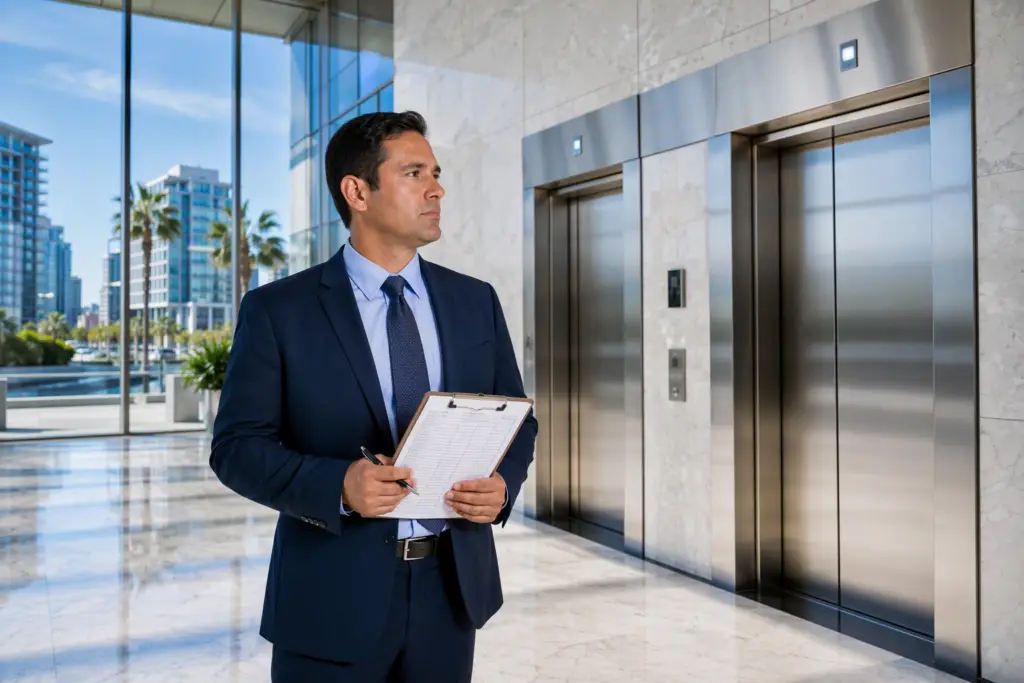
State Elevator Inspection Frequency for Healthcare Facilities
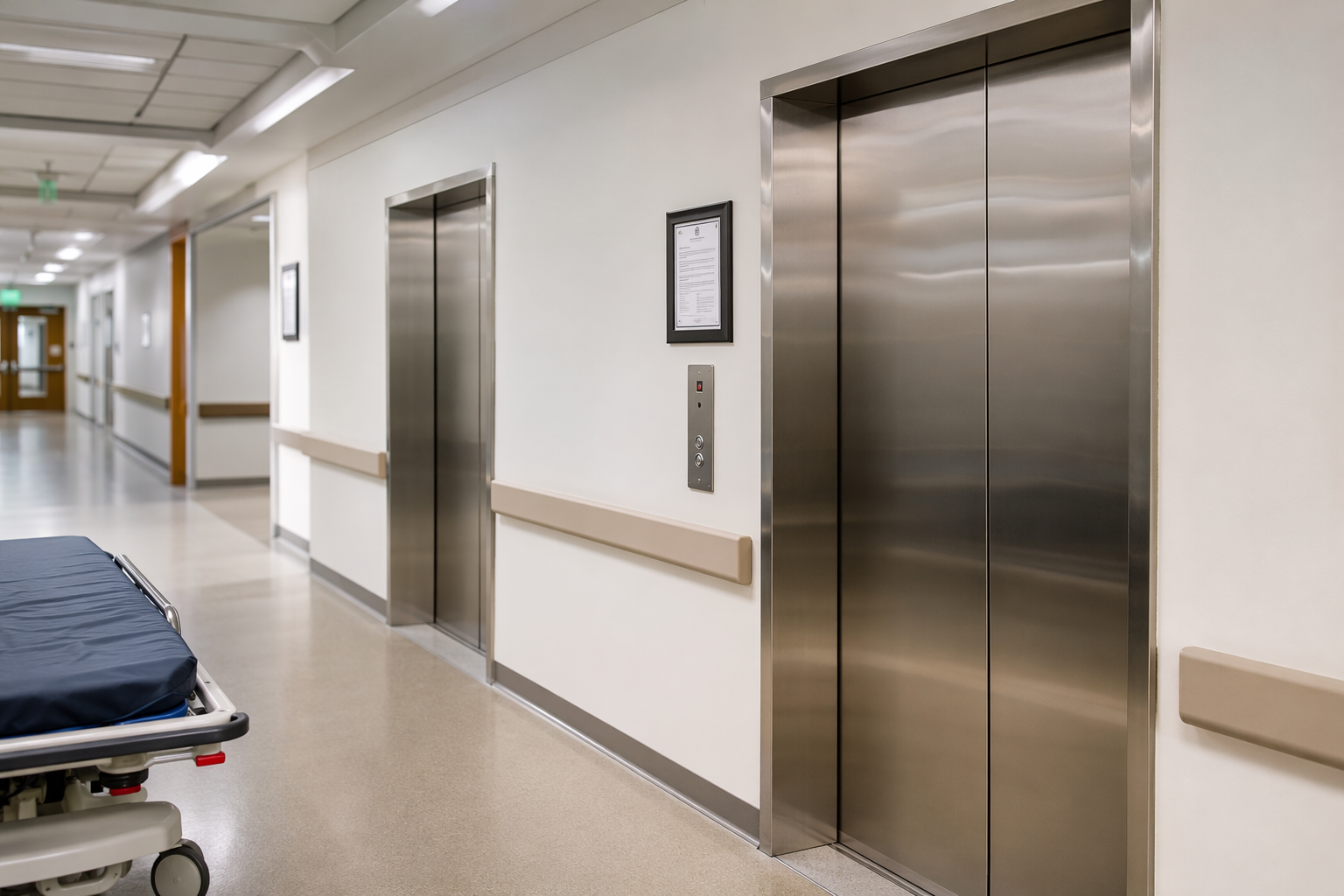
Hospitals, surgical centers, outpatient clinics, and long-term care facilities depend on vertical transportation every minute of the day. A single elevator failure can delay emergency response, strand patients on gurneys, and trigger costly regulatory citations. Understanding state elevator inspection frequency is not a back-office task — it is a core patient-safety and compliance obligation. The guidance below is designed to help healthcare facility managers in Houston, Dallas, Austin, San Antonio, Los Angeles, and San Diego stay fully compliant and audit-ready in 2026.
How Often Are Healthcare Facility Elevators Inspected by the State?
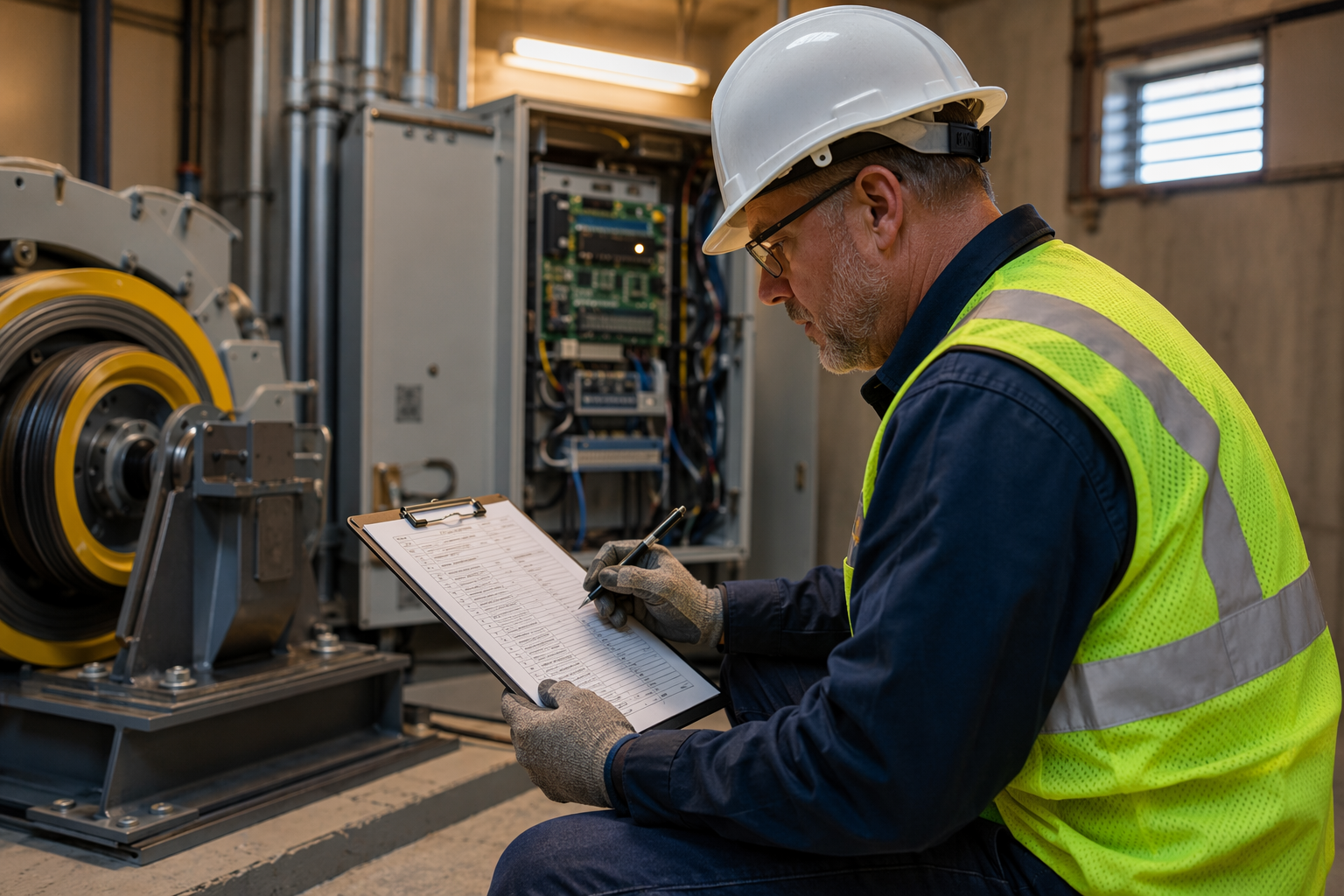
Inspection frequency varies by state, but the baseline framework comes from ASME A17.1 Safety Code for Elevators and Escalators, which most U.S. jurisdictions have adopted in whole or with amendments. Under that standard, the typical inspection cycle for a traction or hydraulic elevator includes:
- Annual routine inspection: A licensed state inspector or a third-party inspector approved by the authority having jurisdiction (AHJ) examines the elevator cab, machine room, pit, hoistway, and safety devices.
- Periodic tests: Certain safety tests — such as governor and safety device tests, oil buffers, and pressure-relief valve checks — are required on a 1-year, 3-year, or 5-year cycle depending on the test type and elevator category.
- Category 1 and Category 5 tests: ASME A17.1 defines Category 1 tests (annual no-load safety tests) and Category 5 tests (full-load, full-speed safety tests) on a 5-year cycle for most traction elevators. Healthcare facilities are not exempt from these cycles and, in many states, face more frequent oversight because of continuous-use classification.
In Texas — covering the AmeriTex Elevator markets of Houston, Dallas, Austin, and San Antonio — the Texas Department of Insurance, Elevator Safety Section enforces inspection requirements aligned with ASME A17.1. In California — covering the Los Angeles and San Diego markets — the Division of Occupational Safety and Health (Cal/OSHA) and local AHJs govern elevator inspections, also drawing on ASME A17.1 as the underlying code. Healthcare facilities in both states should confirm current cycle requirements with their AHJ, as local amendments can shorten mandatory inspection intervals.
Why Are Healthcare Elevators Subject to Stricter Compliance Than Other Buildings?

Elevators in healthcare environments carry a uniquely vulnerable population. Regulators, accreditation bodies, and insurers all recognize this reality.
- The Joint Commission (TJC) and DNV accreditation standards require hospitals to maintain a documented Environment of Care program that explicitly addresses vertical transportation equipment maintenance and inspection records. A lapsed inspection certificate can be cited during an accreditation survey.
- CMS Conditions of Participation require Medicare- and Medicaid-participating facilities to maintain a safe physical environment — which inspection authorities have applied to elevator compliance.
- ADA compliance: ADA Standards for Accessible Design require that accessible elevators remain operational for patients and visitors with disabilities. An out-of-service or non-compliant elevator in a hospital can constitute an ADA violation if it eliminates access to a required accessible route.
- OSHA General Duty Clause: OSHA can cite healthcare employers for elevator-related hazards that expose workers — including patient transport staff and housekeeping — to recognized dangers.
- Fire and life safety codes: NFPA 101 (Life Safety Code) and NFPA 72 address elevator recall during fire events and require periodic testing of Phase I and Phase II firefighter service features. These tests must be coordinated with elevator inspection schedules.
What Codes Govern Healthcare Elevator Inspections in 2026?
The primary governing documents healthcare facility managers should understand include:
- ASME A17.1 Safety Code for Elevators and Escalators — sets inspection categories, test intervals, and documentation requirements adopted by most states.
- ASME A17.3 Safety Code for Existing Elevators and Escalators — applies retroactive safety requirements to older elevator installations common in legacy hospital buildings.
- ADA Standards for Accessible Design — mandates operational elevators on all accessible routes, including cab dimensions, door timing, and control panel reach ranges.
- OSHA standards — applicable to employee safety in machine rooms, pits, and hoistways during maintenance and inspection activities.
- State-specific amendments — Texas and California each publish local amendments that may alter test frequencies, documentation formats, or permit requirements beyond the base ASME standard.
What Happens If a Healthcare Facility Fails a State Elevator Inspection?
A failed inspection in a healthcare setting carries consequences that extend well beyond a standard commercial property:
- The elevator is posted out of service. The AHJ may affix a stop-use order to the elevator, rendering it unavailable until deficiencies are corrected and a re-inspection is passed.
- The facility notifies department heads. Clinical operations, patient transport, and facilities management must immediately develop patient care workarounds to maintain continuity.
- A qualified elevator contractor is engaged. Deficiencies must be repaired by a licensed elevator mechanic under the correct state license classification before re-inspection can be requested.
- Documentation is compiled. The facility gathers repair invoices, parts certifications, and mechanic sign-offs to present at re-inspection.
- Re-inspection is scheduled with the AHJ. Some states charge a re-inspection fee and require written notice of completion before scheduling.
- Accreditation body is notified if required. Facilities under TJC or DNV survey cycles may have internal reporting obligations when life-safety equipment is out of service beyond a defined period.
- Root-cause analysis is documented. Risk management teams typically require a written analysis of the failure and a corrective action plan to satisfy insurers and accreditation reviewers.
AmeriTex Elevator works with healthcare facility teams across Texas and California to address inspection deficiencies efficiently, minimize equipment downtime, and produce the documentation packages that accreditation surveyors and state inspectors require.
How Should a Healthcare Facility Prepare for a State Elevator Inspection?
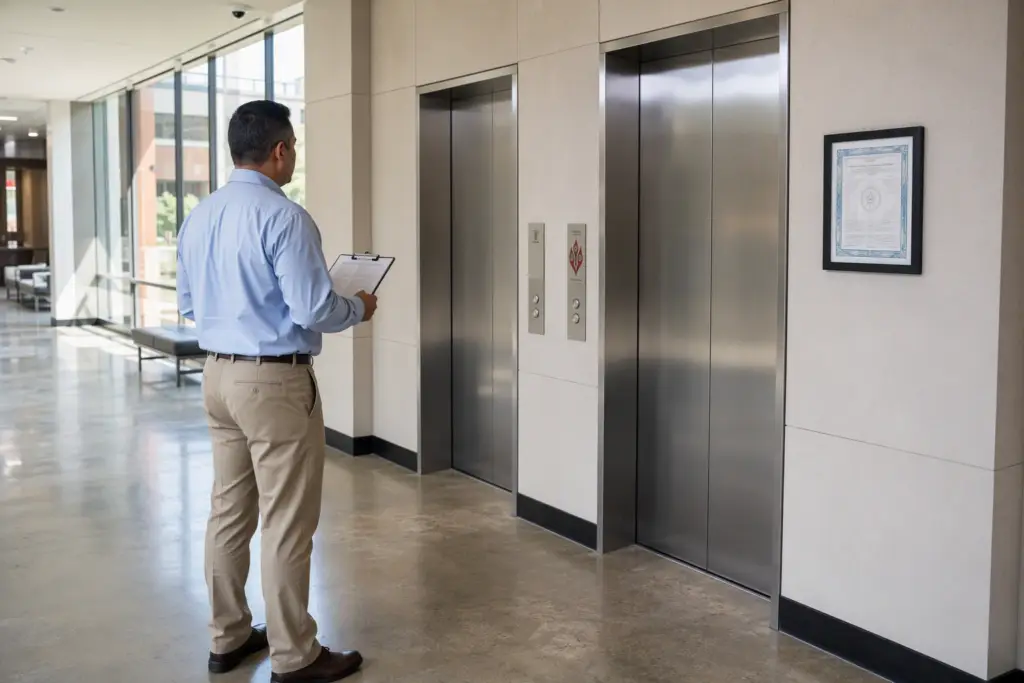
- Audit your certificate of inspection. Confirm the current certificate is posted inside every elevator cab and that the expiration date has not passed.
- Review your maintenance logs. State inspectors will ask for documented evidence of periodic maintenance. Ensure logs are complete, legible, and accessible.
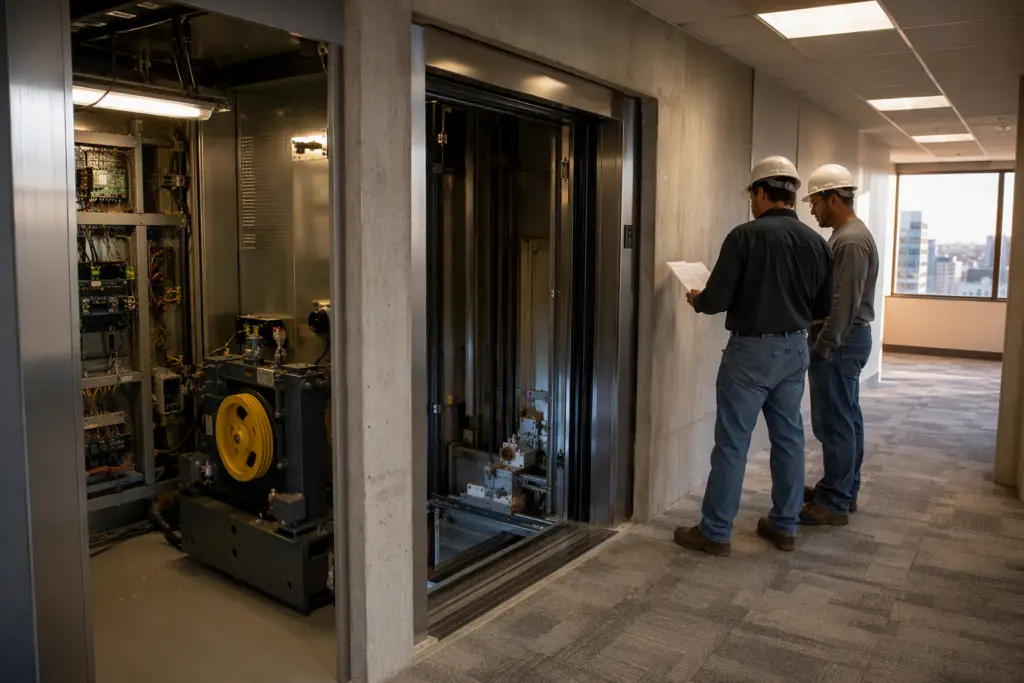
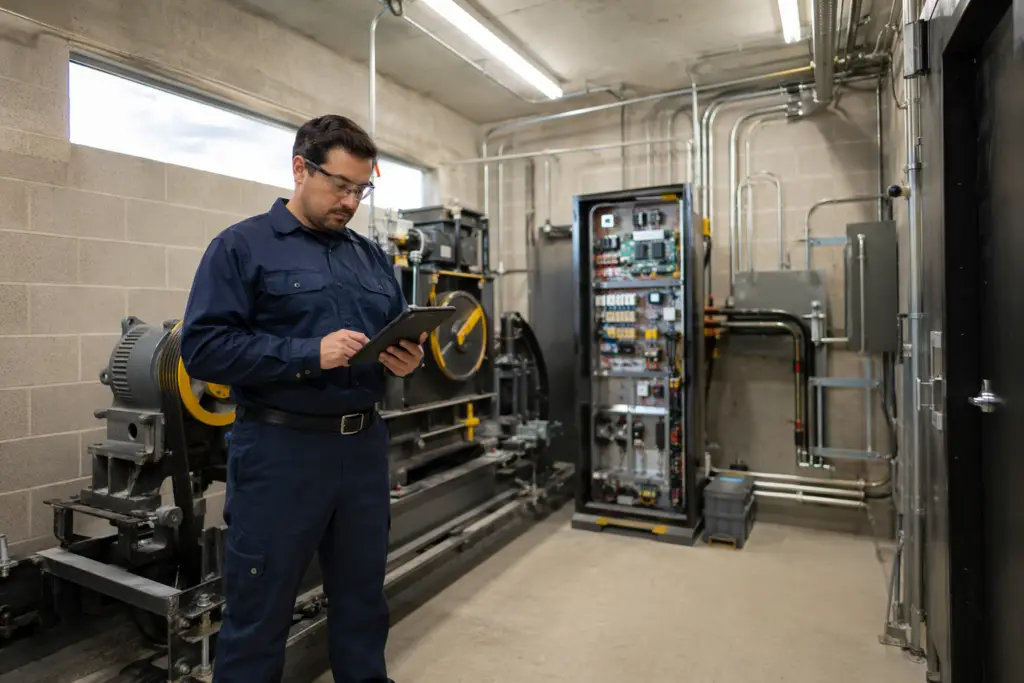
- Verify machine room access and cleanliness. Machine rooms must be clear of non-elevator storage, properly lit, and accessible only to authorized personnel.
- Test firefighter service features. Confirm Phase I recall and Phase II operation are functional and that the most recent test date is logged.
- Check pit conditions. The pit must be dry, lit, free of debris, and equipped with a functioning pit stop switch and ladder.
- Confirm ADA-compliant features are operational. Verify door timing, audible signals, Braille signage, and cab leveling accuracy — all are routinely checked against ADA standards during inspections in healthcare settings.
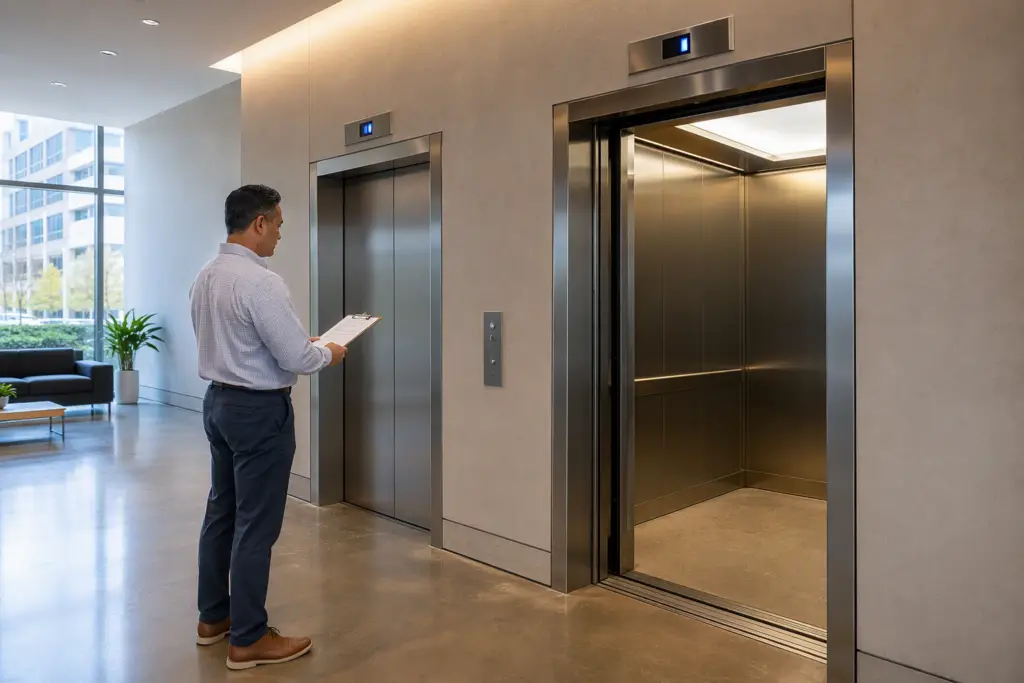
- Contact your elevator service provider. A pre-inspection walk-through by a qualified elevator contractor can identify deficiencies before the state inspector arrives, avoiding surprise citations.
What Is the Difference Between a Routine Inspection and a Periodic Test?
Under ASME A17.1, inspections and tests serve distinct purposes. A routine (or periodic) inspection is a visual and operational examination performed by a certified inspector to verify that the elevator is in safe operating condition. A periodic test is a performance verification — governors, safeties, buffers, and brake systems are actually activated or loaded to confirm they function correctly under code-specified conditions. Healthcare facilities must satisfy both requirements on their respective cycles. Confusing the two is a common compliance gap that AmeriTex Elevator frequently helps facility teams identify and correct before an AHJ visit.
Do Hospital Elevators Need More Frequent Maintenance Than Commercial Elevators?
State inspection cycles set minimum legal thresholds, but maintenance frequency is a separate matter driven by equipment usage. Hospital elevators — particularly those serving emergency departments, surgical suites, and intensive care units — often operate continuously, carrying heavy bariatric beds, portable imaging equipment, and high volumes of people. Equipment manufacturers and elevator service contractors typically recommend maintenance intervals that reflect actual cycle counts and load conditions, not just calendar dates. A preventive maintenance program calibrated to healthcare usage patterns reduces the likelihood of unplanned failures that could jeopardize patient care and trigger emergency service calls.
What Are the ADA Requirements Specific to Healthcare Elevator Compliance?
The ADA Standards for Accessible Design establish specific requirements for elevators serving the public and employees in healthcare facilities. Key provisions relevant to ongoing compliance include:
- Door reopening devices: Elevator doors must reopen when obstructed and must remain open for a minimum period — critical for patients using wheelchairs, walkers, or IV poles.
- Cab leveling: Cars must level within one-half inch of the floor landing — a tolerance that protects patients on gurneys from equipment jolts.
- Control panel placement: Buttons must be within reach ranges specified by ADA for seated and standing users.
- Audible and visual signals: Floor arrival signals must be both audible and visible, supporting patients and visitors with sensory impairments.
- Braille and raised character signage: Control buttons and floor designations must include tactile characters.
ADA compliance is evaluated independently of state mechanical inspections, but deficiencies in accessible features will appear in both AHJ citations and ADA complaint investigations.
What Documentation Must a Healthcare Facility Maintain for Elevator Compliance?
Facilities should maintain the following records, accessible on-site or through a digital facilities management system:
- Current certificate of inspection for each elevator unit
- Maintenance log with dates, technician identification, and work performed
- Completed Category 1 and Category 5 test records with inspector sign-off
- Firefighter service (Phase I and Phase II) test records
- Repair invoices and parts documentation for any corrective work
- Written corrective action plans for any previously cited deficiencies
- ADA self-evaluation records if applicable under the facility’s ADA transition plan
Questions Your Inspector Will Ask
State elevator inspectors and accreditation surveyors routinely ask healthcare facility managers the following questions. Being prepared with clear, documented answers is essential:
- “Where is the current certificate of inspection for this unit, and is it posted inside the cab?”
- “Can you provide the maintenance log for the past 12 months?”
- “When was the last Category 1 test performed, and who conducted it?”
- “Has Phase I firefighter recall been tested within the required interval, and is the test documented?”
- “Are there any open deficiency notices from the previous inspection, and what corrective actions were taken?”
- “Who is your licensed elevator service contractor, and what does your maintenance agreement cover?”
- “Is the machine room restricted to authorized personnel only, and are the lighting and fire suppression systems functional?”
- “Has the pit been inspected for water intrusion, and is the pit lighting operational?”
- “Are all ADA-required features — door timing, leveling, audible signals — currently functioning?”
- “When is the next scheduled Category 5 test due for this unit?”
How Can Healthcare Facilities in Texas and California Stay Ahead of Inspection Cycles?
Proactive compliance management is the most effective strategy. Healthcare facility managers in Houston, Dallas, Austin, San Antonio, Los Angeles, and San Diego can implement the following practices:
- Maintain a rolling inspection calendar that tracks certificate expiration dates, Category 1 test due dates, and Category 5 test cycles for every unit in the facility.
- Partner with a licensed elevator service contractor who understands state-specific AHJ requirements and can provide code-compliant documentation.
- Schedule a pre-inspection assessment before each annual state inspection to identify and remediate deficiencies in advance.
- Train facilities staff to recognize and report equipment anomalies — unusual noises, leveling drift, door hesitation — that may indicate developing mechanical issues.
- Integrate elevator compliance into the facility’s broader Environment of Care management plan to satisfy both state and accreditation requirements simultaneously.
AmeriTex Elevator supports healthcare clients across these markets with compliance-focused maintenance programs designed to align with both ASME A17.1 inspection cycles and the documentation expectations of healthcare accreditation bodies. AmeriTex Elevator’s technicians are familiar with the AHJ requirements in each of these jurisdictions and can help facilities navigate the differences between Texas and California inspection frameworks.
What Should a Healthcare Facility Do When an Elevator Fails Mid-Operation?
- Ensure patient safety immediately. If passengers are trapped, follow the facility’s entrapment response protocol — do not attempt to manually open doors or extract passengers without trained personnel.
- Contact emergency services if passengers are in distress. Entrapments involving patients with acute medical conditions require immediate emergency response coordination.
- Post the elevator out of service. Place clearly visible out-of-service signage and secure the elevator so it cannot be called or boarded.
- Notify the AHJ as required by state law. Some jurisdictions require prompt notification of elevator entrapments or equipment failures. Confirm the reporting obligation with your compliance team.
- Contact your licensed elevator service contractor to diagnose the failure and initiate repairs under the correct permitting requirements.
- Document the incident. Record the time, nature of the failure, any affected patients or staff, and all actions taken — this record is critical for risk management, insurance, and potential regulatory review.
- Conduct a safety assessment before returning the elevator to service. Do not reopen the elevator until the cause is confirmed resolved and any required re-inspection is completed.
Schedule Your Healthcare Facility Elevator Assessment Today
Elevator compliance in a healthcare environment is not a once-a-year checkbox — it is an ongoing patient safety obligation that touches accreditation, ADA accessibility, OSHA worker safety, and state licensing requirements. Lapsed certificates, undocumented tests, or deferred maintenance can trigger citations from multiple regulatory directions simultaneously.
Contact AmeriTex Elevator for a free elevator assessment at 866-679-4313. AmeriTex Elevator serves healthcare facilities throughout Houston, Dallas, Austin, San Antonio, Los Angeles, and San Diego with licensed, code-knowledgeable service designed to keep your elevators compliant, your patients safe, and your inspection records complete.
Need elevator service you can rely on? AmeriTex Elevator is ready to help.