Elevator Service Company vs OEM Manufacturer: Complete FAQ Guide
What Is the Core Difference Between an Elevator Service Company and an OEM Manufacturer?
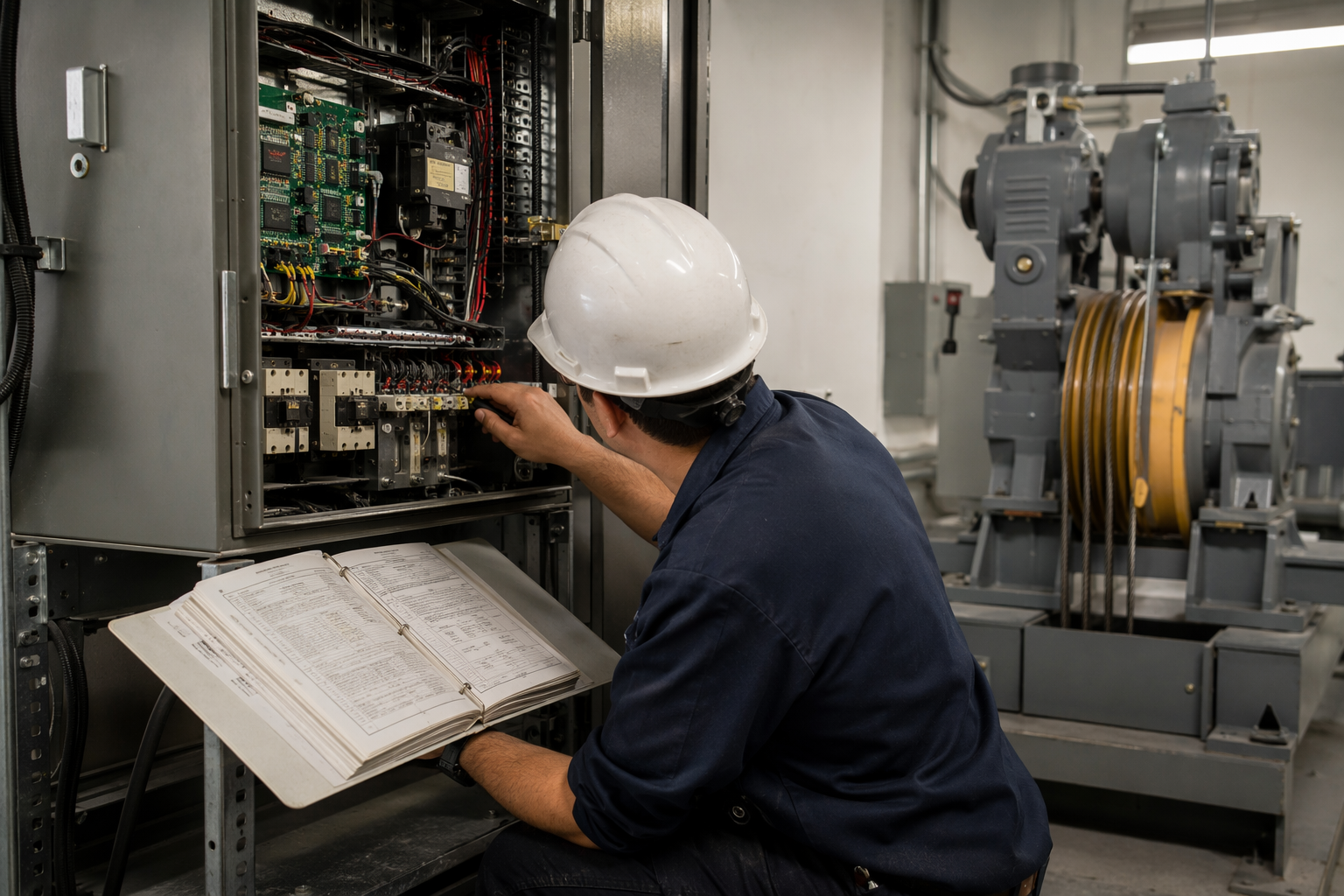
An OEM (Original Equipment Manufacturer) service division is tied directly to one brand of elevator, while an independent elevator service company is qualified to maintain, repair, and modernize equipment from any manufacturer.
OEM service arms — such as those operated by major elevator manufacturers — are structured to protect and extend the lifecycle of their own equipment. Their technicians are factory-trained on proprietary systems, and their parts supply chains are optimized for brand-specific components. This creates a natural limitation: if a building contains elevators from multiple manufacturers, or if the original OEM is no longer the most cost-competitive option, the building owner has little flexibility within that relationship.
Independent elevator service companies are certified to work across brands including Otis, KONE, Schindler, Thyssenkrupp, Mitsubishi, and others. Technicians employed by independent companies must demonstrate knowledge of the full range of hydraulic, traction, and machine-room-less (MRL) systems in the market, allowing building managers to consolidate service contracts under a single provider regardless of fleet composition.
What Work Are Independent Elevator Service Companies Legally Authorized to Perform?
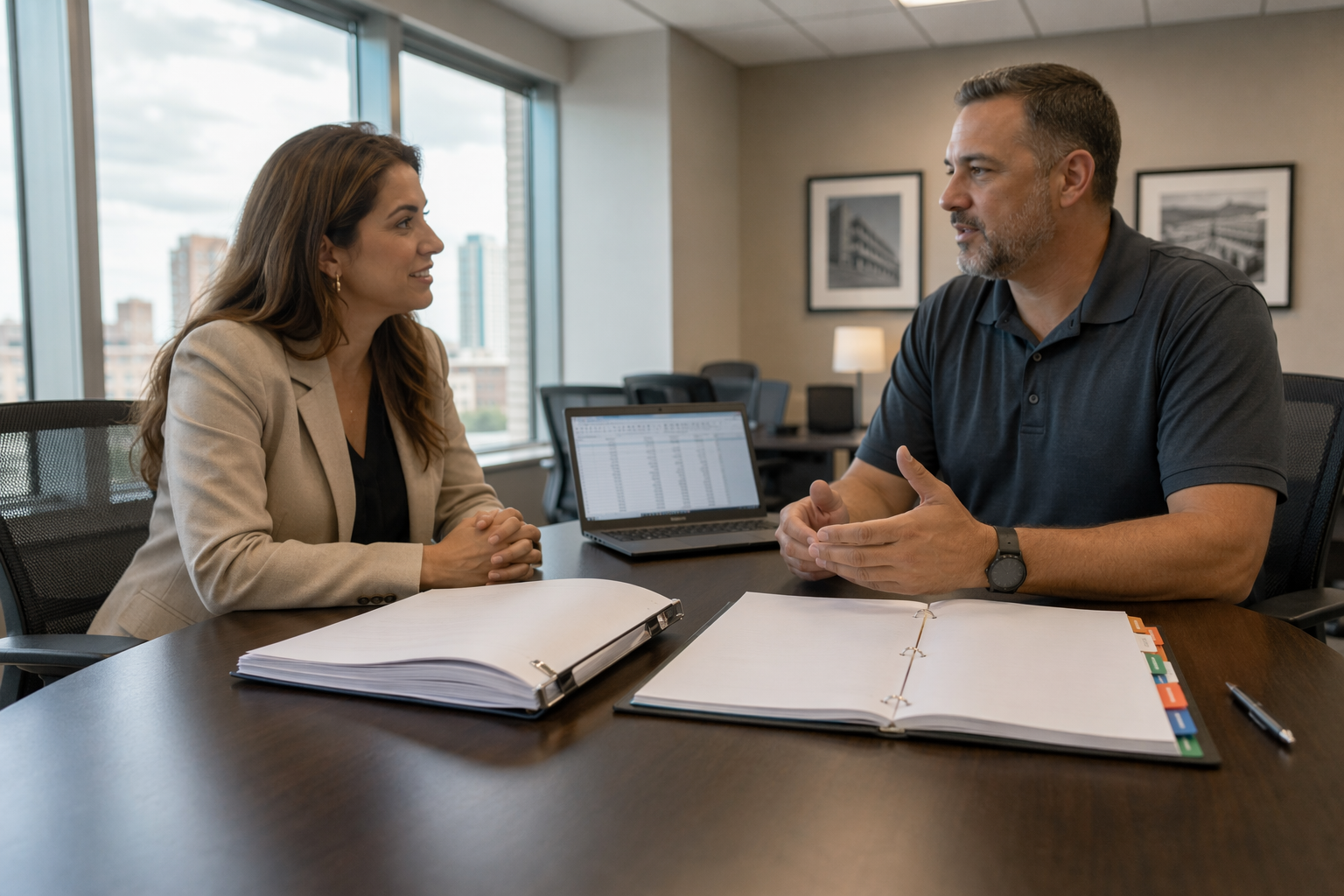
Independent elevator service companies that hold the appropriate state and local licenses are legally authorized to perform the same maintenance, repair, testing, and modernization work as OEM service divisions — including all work required under ASME A17.1 Safety Code for Elevators and Escalators.
Authorization is governed at the state level, not by the OEM. In Texas, elevator contractors must be licensed through the Texas Department of Insurance (TDI), which oversees elevator safety under the Texas Elevator Safety Act. In California, the Division of Occupational Safety and Health (Cal/OSHA) certifies elevator mechanics and inspectors. Both regulatory frameworks reference ASME A17.1 as the baseline safety code, and both apply equally to OEM service divisions and independent companies.
Building owners in Houston, Dallas, Austin, San Antonio, Los Angeles, and San Diego should verify that any service provider — OEM or independent — holds current state licensure and employs mechanics who have completed a recognized apprenticeship program, such as those administered through the International Union of Elevator Constructors (IUEC).
How Do Maintenance Contracts Differ Between OEM Service Divisions and Independent Companies?
OEM maintenance contracts tend to be standardized and brand-specific, while independent elevator service companies typically offer more customizable contract structures that can be tailored to a building’s actual usage patterns, budget cycle, and equipment mix.
OEM contracts often include “proprietary parts” clauses, which can restrict the building owner’s ability to switch providers mid-contract without incurring significant costs. Some OEM agreements also require the use of exclusively OEM-branded replacement components, which can carry a premium over equivalent third-party parts that meet the same ASME A17.1 performance standards.
Independent service companies generally offer full-service, oil and grease, or examination-only contract tiers. Full-service contracts typically cover parts, labor, and emergency callbacks. Examination-only agreements transfer parts and repair costs to the building owner but reduce the monthly base fee. AmeriTex Elevator works with commercial property managers across Texas and California to structure agreements that align with specific building operating budgets rather than a one-size-fits-all model.
Which Provider Is Better for Buildings With Multiple Elevator Brands?
For buildings with a mixed-brand elevator portfolio, an independent elevator service company is almost always the more practical and efficient choice because a single provider can assume responsibility for the entire fleet under one contract and one accountability structure.
Multi-tenant commercial towers, hospitals, airports, university campuses, and large residential complexes frequently operate elevators sourced from different OEMs — sometimes as the result of phased construction, tenant build-outs, or post-merger consolidations. Managing separate OEM service contracts for each brand increases administrative complexity, creates gaps in accountability during equipment failures, and often results in higher aggregate costs than a consolidated independent service agreement.
What Are the Code Compliance Responsibilities Under ASME A17.1 and Who Fulfills Them?
Under ASME A17.1 Safety Code for Elevators and Escalators, the responsibility for maintaining an elevator in safe operating condition rests with the building owner — and that obligation is fulfilled through whichever licensed contractor the owner designates, OEM or independent.
ASME A17.1 specifies minimum maintenance intervals, required tests (including Category 1 and Category 5 hydraulic tests and Category 3 and Category 5 traction tests), safety device inspection frequencies, and documentation standards. Neither the code nor its 2025/2026 editions favor OEM providers over independent providers; the standard is equipment-focused and performance-based.
ADA compliance obligations — specifically those related to cab dimensions, door timing, landing accuracy, and control button placement — also apply regardless of who services the equipment. Building owners can reference ADA.gov for the Americans with Disabilities Act Standards for Accessible Design. Any qualified licensed contractor, including independent companies, can evaluate and address ADA deficiencies.
How Do Parts Availability and Lead Times Compare?
OEM service divisions have direct access to manufacturer-original parts but may have longer lead times or higher costs for older equipment, while independent companies can source OEM-equivalent parts from multiple supply channels — which is especially advantageous for out-of-production equipment.
Elevators have long service lives, frequently exceeding 20 to 30 years. As equipment ages, the original OEM may discontinue specific components, declare a model “end-of-life,” and push building owners toward full modernization — a profitable outcome for the manufacturer. Independent companies are experienced in sourcing compatible parts through aftermarket suppliers or refurbished components that meet the same ASME A17.1 performance specifications, which can extend useful equipment life and defer capital expenditures.
What Is the Comparison Between OEM and Independent Service on Key Metrics?
The table below provides a side-by-side benchmark comparison of OEM manufacturer service divisions versus independent elevator service companies across dimensions most relevant to commercial building owners.
| Evaluation Criteria | OEM Manufacturer Service Division | Independent Elevator Service Company |
|---|---|---|
| Equipment brands serviced | Single brand only | All major brands |
| Parts sourcing | Manufacturer-original; limited alternatives | OEM and compatible aftermarket; multiple channels |
| Contract flexibility | Standardized; proprietary lock-in common | Customizable tiers; no brand lock-in |
| Mixed-fleet management | Requires separate contracts per OEM | Single contract covers entire fleet |
| End-of-life equipment options | May push toward full replacement | Modernization or parts sourcing alternatives available |
| Regulatory authority (ASME A17.1) | Licensed (where required) | Licensed (where required) |
| ADA compliance evaluation | Yes | Yes |
| Third-party inspection coordination | Varies | Standard practice |
| Competitive pricing leverage | Limited (single source) | Higher (multi-source parts, competitive labor) |
| Local market presence (TX/CA) | Regional offices; variable coverage | Dedicated local teams (e.g., AmeriTex Elevator) |
Can an Independent Elevator Company Perform Modernizations on OEM Equipment?
Yes — a licensed independent elevator service company is fully authorized to perform modernizations on any brand of elevator, and doing so does not void code compliance obligations or require OEM involvement.
Modernization involves replacing aging components — controllers, motors, drive systems, cab interiors, door operators, or safety systems — while retaining the existing hoistway structure. Under ASME A17.1, modernization triggers specific re-inspection and re-testing requirements, but these apply identically whether the work is performed by an OEM or an independent contractor. Independent companies often offer more competitive modernization scopes because they are not restricted to the original manufacturer’s replacement product catalog. AmeriTex Elevator provides modernization services across Houston, Dallas, Austin, San Antonio, Los Angeles, and San Diego, working with multiple control and drive system vendors to identify solutions appropriate to each unit’s configuration and the building’s long-term operational plan.
What Should Building Owners Know About Proprietary Parts Clauses in OEM Contracts?
Proprietary parts clauses in OEM service contracts can legally restrict a building owner’s ability to use non-OEM components or to switch service providers without financial penalty, which is a significant consideration when evaluating long-term service strategy.
Some OEM service agreements include language that voids the service warranty if parts not sourced through the OEM are installed. While OEM parts may provide genuine performance benefits on newer equipment still within its design generation, these clauses can become financially burdensome as equipment ages and original components carry premium pricing due to reduced manufacturing volumes. Building owners should have any service contract reviewed with attention to termination clauses, proprietary parts language, and data access rights — specifically, whether the building owner retains access to controller diagnostic data and maintenance logs upon contract termination.
How Does ADA Compliance Factor Into Choosing a Service Provider?
Both OEM service divisions and independent elevator companies can evaluate and remediate ADA compliance issues, but the building owner is ultimately responsible for maintaining compliance under the Americans with Disabilities Act — and the service provider’s role is to execute required modifications competently.
ADA Standards for Accessible Design require that elevator controls be within specified reach ranges, that door reopening devices not close on passengers, that audible signals function correctly, and that floor landing accuracy remain within defined tolerances. Independent service companies assess these requirements as part of routine maintenance and can recommend corrective actions without a conflict of interest tied to specific equipment sales. Building owners in California should also note that Cal/OSHA and the California Building Code impose additional accessibility requirements that go beyond federal minimums.
What Happens During a State Inspection and Who Coordinates It?
State elevator inspections are conducted by a licensed inspector — either a government inspector or a licensed third-party inspector approved by the state — and the service provider’s role is to ensure the equipment is prepared, tested, and documented prior to the inspection date.
In Texas, the Texas Department of Insurance requires periodic inspections of all elevators under its jurisdiction. In California, Cal/OSHA enforces annual inspection requirements. The process for both states includes the following steps:
- The building owner or property manager schedules the inspection through the appropriate state agency or approved third-party inspection body.
- The elevator service company conducts all required pre-inspection tests, including safety device checks and governor rope tests, as specified under ASME A17.1 Safety Code for Elevators and Escalators.
- The service technician remains on-site during the inspection to operate the equipment and provide access to the machine room and pit.
- The inspector documents findings and issues a certificate of operation or a list of deficiencies requiring correction.
- If deficiencies are cited, the service company is responsible for performing the corrective work within the timeframe specified by the state authority.
- A follow-up inspection may be required to close out cited deficiencies before the certificate is issued.
Independent elevator service companies with strong local market presence — such as AmeriTex Elevator in Houston, Dallas, Austin, San Antonio, Los Angeles, and San Diego — develop working familiarity with regional inspection authorities, which can help building owners navigate the documentation and scheduling process efficiently.
Are There OSHA Workplace Safety Requirements That Apply to Elevator Technicians?
Yes — OSHA regulations, including lockout/tagout (LOTO) standards and confined space protocols applicable to elevator pits, govern all elevator service work regardless of whether the provider is an OEM division or an independent company.
OSHA 29 CFR 1910.147 (Control of Hazardous Energy) applies when technicians perform maintenance on elevator machinery where unexpected energization could cause injury. OSHA 29 CFR 1910.146 governs permit-required confined space entry, which applies to elevator pits in many configurations. Compliance with these standards is a baseline requirement for any licensed service provider, and building owners have a general duty under OSHA Section 5(a)(1) to ensure that contractors working on their property operate safely.
How Do Independent Service Companies Handle Emergency Repairs and Entrapments?
Licensed independent elevator service companies establish emergency callback protocols that cover entrapment response, safety device failures, and out-of-service conditions — the specific response structure varies by provider and contract type, and building owners should confirm these details in writing before executing any service agreement.
Entrapment situations require technicians who are trained in cab rescue procedures, including manual lowering of hydraulic units and hand-wind procedures for traction units. These procedures must be performed only by licensed elevator mechanics. Building owners should ensure that their emergency contact procedures are clearly documented and that the service company’s technicians are familiar with the specific equipment in each installation — a familiarity that builds over time through ongoing maintenance relationships.
What Is Elevator Modernization and When Is It Required?
Elevator modernization is the process of replacing outdated mechanical, electrical, or control components to improve performance, energy efficiency, and code compliance — it is triggered by equipment age, parts obsolescence, code changes, or a building owner’s performance objectives rather than by a fixed legal deadline.
Common modernization scopes include controller replacement (migrating from relay-logic to solid-state microprocessor systems), drive system upgrades (variable-voltage variable-frequency drives for energy efficiency), door operator replacement, cab refurbishment, and safety system updates to meet current ASME A17.1 requirements. Independent elevator companies are particularly well-positioned to evaluate modernization options objectively because they are not aligned with any single equipment manufacturer’s product roadmap. A competent independent service provider will present multiple modernization configurations at different price points rather than a single manufacturer-branded solution.
How Should a Building Owner Evaluate and Switch Elevator Service Providers?
Switching from an OEM service provider to an independent company — or from one independent company to another — requires a structured transition process to ensure continuity of documentation, code compliance, and equipment familiarity.
The recommended transition steps are as follows:
- Review the existing service contract for termination notice requirements, proprietary parts clauses, and any penalties for early exit.
- Request a complete copy of all maintenance logs, inspection certificates, and equipment documentation from the outgoing service provider — these records are the building owner’s property.
- Obtain proposals from qualified independent service companies, including a scope of work that covers a site assessment of the current equipment condition.
- Verify that the prospective new provider holds current state licensure in the relevant jurisdiction (Texas TDI or California Cal/OSHA).
- Confirm the new provider’s familiarity with the specific equipment brands installed in the building.
- Execute the new service agreement with clear language on parts sourcing, emergency response protocols, documentation delivery, and contract termination terms.
- Notify the state inspection authority of the change in service provider, as required by applicable state regulations.
What Are the Advantages of Choosing a Locally Operated Independent Elevator Service Company?
Locally operated independent elevator service companies provide faster on-site response, deeper familiarity with regional building stock and local inspection authority requirements, and a more direct accountability relationship with building owners than large national OEM service networks.
In markets like Houston, Dallas, San Antonio, Austin, Los Angeles, and San Diego — where high-rise commercial properties, mixed-use developments, and aging mid-rise residential buildings coexist — the ability to deploy technicians who know the local regulatory environment and the specific maintenance history of a building’s equipment is a meaningful operational advantage. AmeriTex Elevator is built around this model, serving commercial, residential, and industrial clients across both Texas and California with locally based service teams.
What Questions Should Building Owners Ask Any Elevator Service Provider Before Signing a Contract?
Before executing a service agreement with either an OEM division or an independent elevator service company, building owners should ask a defined set of questions to ensure the provider can meet their specific operational and compliance needs.
Key questions include:
- Does the company hold current state licensure in this jurisdiction, and can that license number be provided in writing?
- What brands and equipment types do your technicians have documented experience servicing?
- How are maintenance logs and inspection records maintained and delivered to the building owner?
- What is the process for sourcing replacement parts, and does the contract restrict parts to a single manufacturer?
- How are Category 1 and Category 5 tests under ASME A17.1 scheduled and documented?
- What are the contract termination terms, and what happens to maintenance records upon termination?
- Who is the designated point of contact for this building, and how is that continuity maintained?
- How does the company handle state inspection scheduling and deficiency resolution?
How Do Code Update Cycles Affect OEM vs. Independent Service Strategy?
ASME A17.1 is updated on a regular cycle, and each new edition may introduce requirements that affect existing installations — the service provider’s responsibility is to identify affected equipment and advise the building owner on the applicable compliance pathway, regardless of whether they are an OEM or independent company.
State adoption of new ASME A17.1 editions varies. Texas and California adopt updated editions on their own legislative timelines, which may lag behind the publication of the national standard by one or more code cycles. Building owners should ask their service provider to confirm which edition of ASME A17.1 is currently adopted in their jurisdiction as of 2026 and to identify any provisions in newer editions that may require retroactive compliance for their specific equipment type. Independent companies, because they serve diverse equipment types across multiple regulatory jurisdictions, tend to maintain robust familiarity with these adoption timelines.
Is an Independent Elevator Service Company a Good Choice for New Construction Projects?
Independent elevator service companies are well-suited for post-installation maintenance and service of new construction elevators, though the initial installation is typically performed by the equipment manufacturer or its authorized installing contractor — the key decision is who takes over the long-term service relationship after the initial warranty period.
OEM manufacturers frequently include a limited warranty-period service arrangement in the sale of new elevator equipment, during which the building owner may be required to use the OEM service division to preserve warranty coverage. Once the warranty period expires, building owners are free to select any licensed service provider. At that transition point, engaging an independent company can offer meaningful advantages in contract flexibility, parts sourcing, and cost management over the full remaining life of the equipment.
What Role Does Documentation Play in Elevator Service and How Is It Managed?
Complete and accurate maintenance documentation is not only a best practice — it is a regulatory requirement under ASME A17.1 and state inspection frameworks, and the management of that documentation is a core responsibility of the elevator service provider.
Required documentation typically includes a maintenance control program (MCP) — mandated under ASME A17.1 — which specifies the tasks, intervals, and procedures for maintaining each elevator in the installation. The MCP must be kept on-site and be available to inspectors. Service technicians are required to log completed maintenance tasks against the MCP. Building owners should insist that all documentation remains accessible to them and is not stored exclusively on the service company’s internal systems in a format that becomes inaccessible if the service relationship ends.
AmeriTex Elevator provides clients with transparent documentation practices, ensuring that maintenance logs, inspection records, and MCPs are maintained in formats that serve the building owner’s long-term record-keeping needs.
Ready to Evaluate Your Elevator Service Options?
Building owners and property managers in Houston, Dallas, Austin, San Antonio, Los Angeles, and San Diego deserve an elevator service partner with the technical range, local presence, and transparent contract practices to serve their entire fleet — regardless of brand. Contact AmeriTex Elevator for a free elevator assessment and find out how an independent service approach can improve compliance, reduce long-term costs, and simplify fleet management.
Call AmeriTex Elevator today: 866-679-4313
Need elevator service you can rely on? AmeriTex Elevator is ready to help.