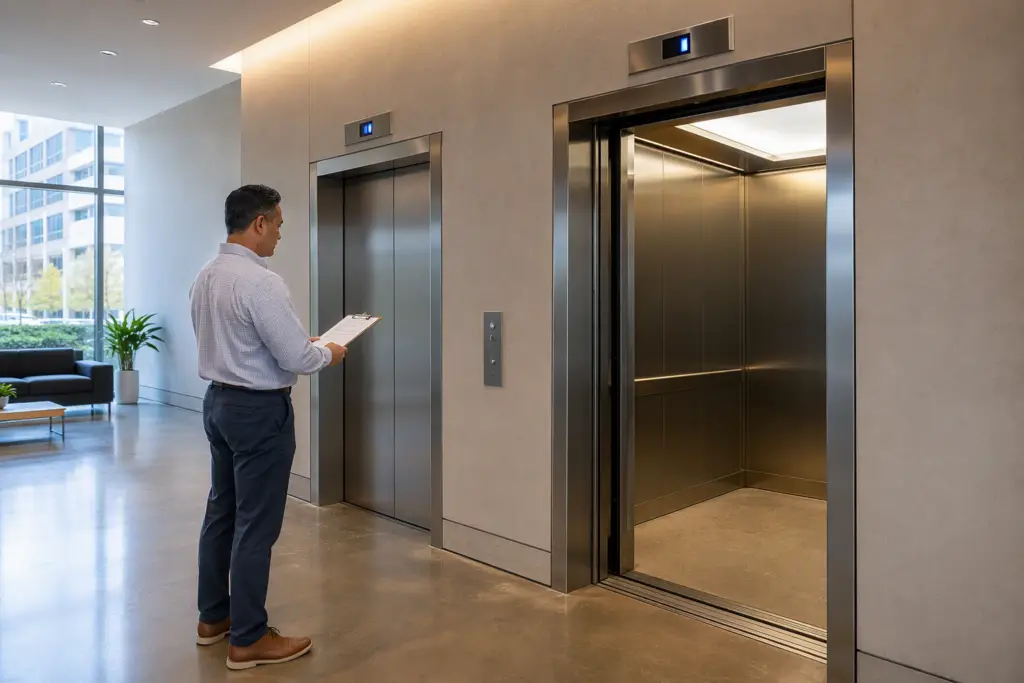
Elevator Maintenance and Inspection Requirements for Hospitals and Healthcare Facilities in Texas and California
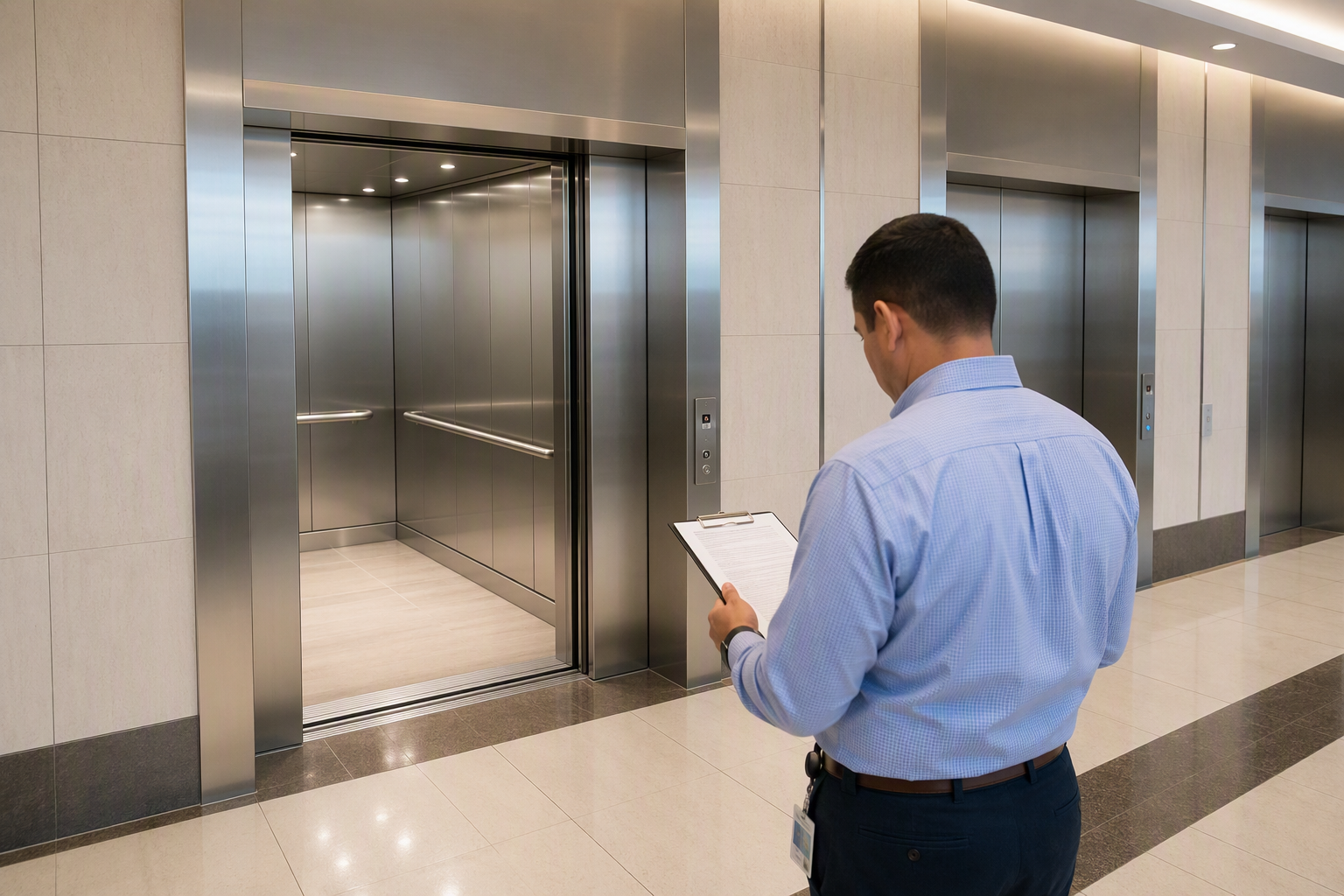
Healthcare facilities operate elevators under some of the most demanding conditions of any commercial environment. Patient transport, heavy medical equipment, 24-hour traffic, and strict infection-control protocols create unique compliance and maintenance challenges. Understanding the overlapping federal, state, and accreditation requirements that govern elevators in hospitals — across markets including Houston, Dallas, Austin, San Antonio, Los Angeles, and San Diego — is essential for facility managers, compliance officers, and risk management teams.
What Federal Elevator Codes Apply to Healthcare Facilities?
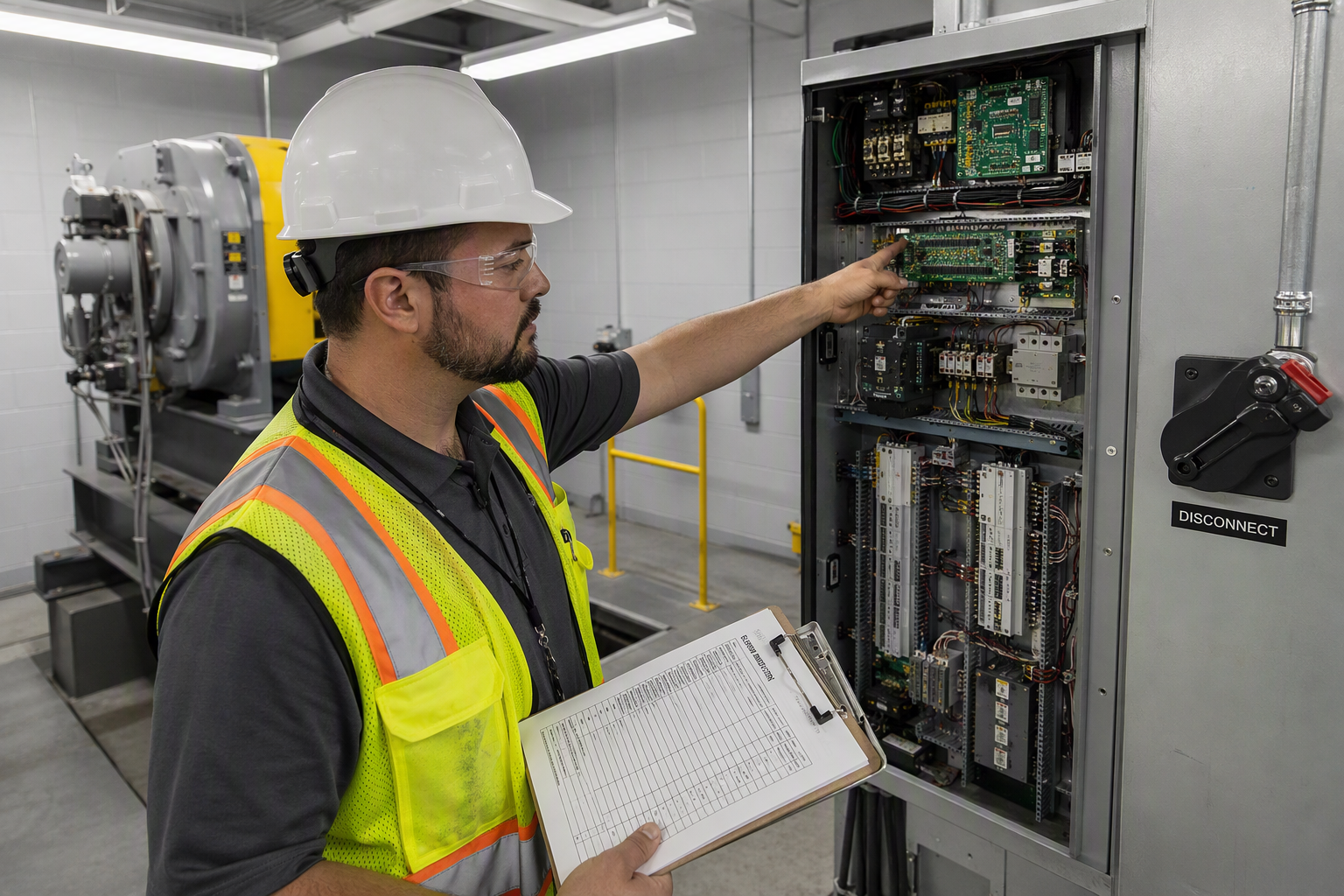
At the federal level, two ASME standards form the baseline for elevator safety in all healthcare settings:
- ASME A17.1 Safety Code for Elevators and Escalators — governs the design, construction, installation, and initial inspection of new elevator equipment.
- ASME A17.3 Safety Code for Existing Elevators and Escalators — establishes retroactive safety requirements for elevators already in service, which is especially relevant for older hospital buildings.
In addition, the Americans with Disabilities Act (ADA) imposes accessibility requirements for vertical transportation in facilities open to the public, including hospitals. Elevator cab dimensions, door timing, control panel heights, Braille signage, and audible signals must all meet ADA specifications. Hospitals serve a patient population that disproportionately relies on accessible transportation, making ADA compliance a clinical as well as a legal obligation.
OSHA standards also apply where elevator maintenance work creates hazardous conditions for workers — including lockout/tagout procedures and fall protection during pit and overhead work.
What Are Texas-Specific Elevator Inspection Requirements for Hospitals?
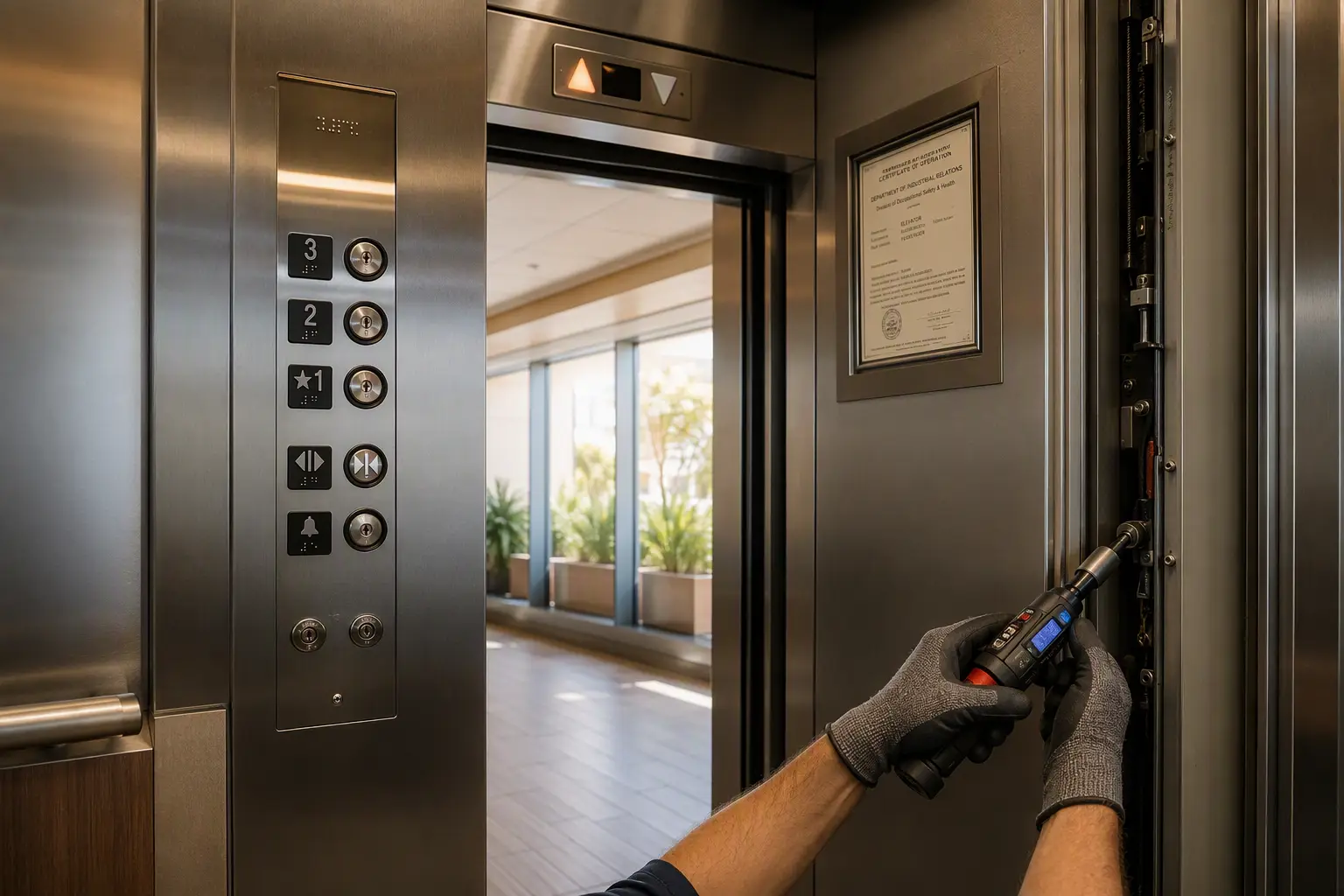
In Texas, elevator safety is regulated by the Texas Department of Insurance (TDI), which administers the Texas Elevator Safety Law. Key obligations for healthcare facilities include:
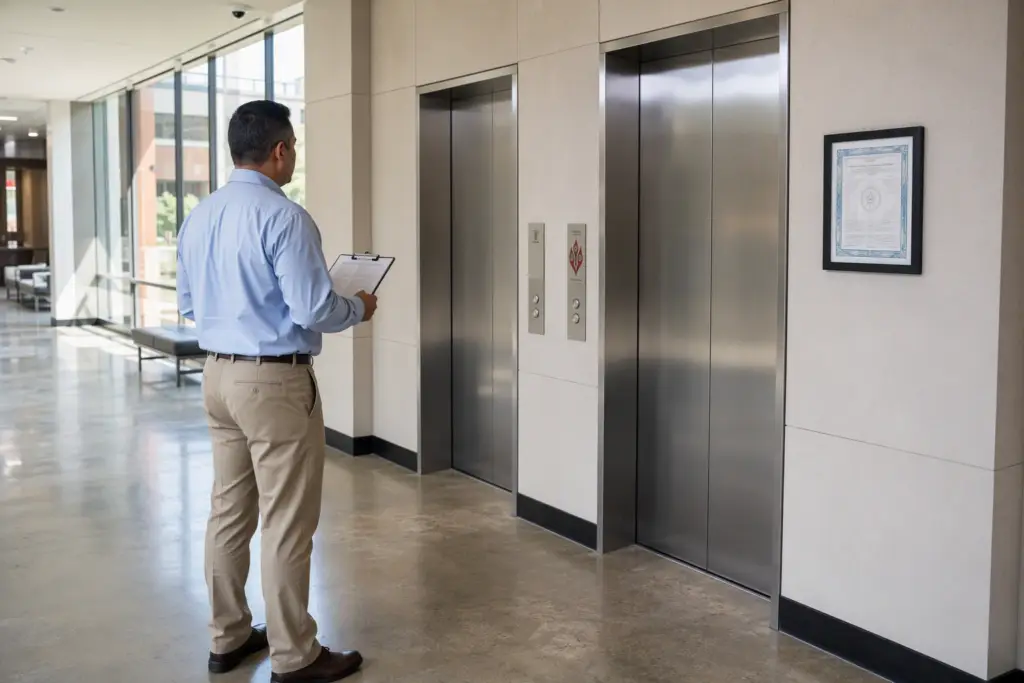
- Annual inspections by a TDI-licensed elevator inspector are required for most elevator categories. Inspections must be documented and certificates of inspection must be maintained and displayed.
- Hospitals and healthcare campuses with multiple elevator banks face multi-unit compliance tracking — each individual conveyance carries its own permit and inspection record.
- Deficiencies identified during inspection must be corrected within the timeframe specified by TDI. Unsafe elevators must be taken out of service immediately.
- Elevator contractors performing maintenance or repair work in Texas must hold a TDI-issued license.
AmeriTex Elevator serves healthcare clients across Houston, Dallas, Austin, and San Antonio, supporting TDI compliance documentation and coordinating inspection scheduling to minimize disruption to patient care operations.
What Are California-Specific Elevator Inspection Requirements for Hospitals?
In California, elevator safety oversight falls under the California Division of Occupational Safety and Health (Cal/OSHA), Elevator, Ride, and Tramway Unit. Requirements for healthcare facilities include:
- Annual safety inspections conducted by a Cal/OSHA-certified inspector or an approved third-party Qualified Elevator Inspector (QEI).
- Permit to operate must be current and posted in the elevator cab. Hospitals are subject to permit revocation for uncorrected violations.
- California adopts and amends ASME A17.1 and A17.3 through its own Title 8 regulatory process, so healthcare facilities must be aware of California-specific amendments that may exceed the base ASME standard.
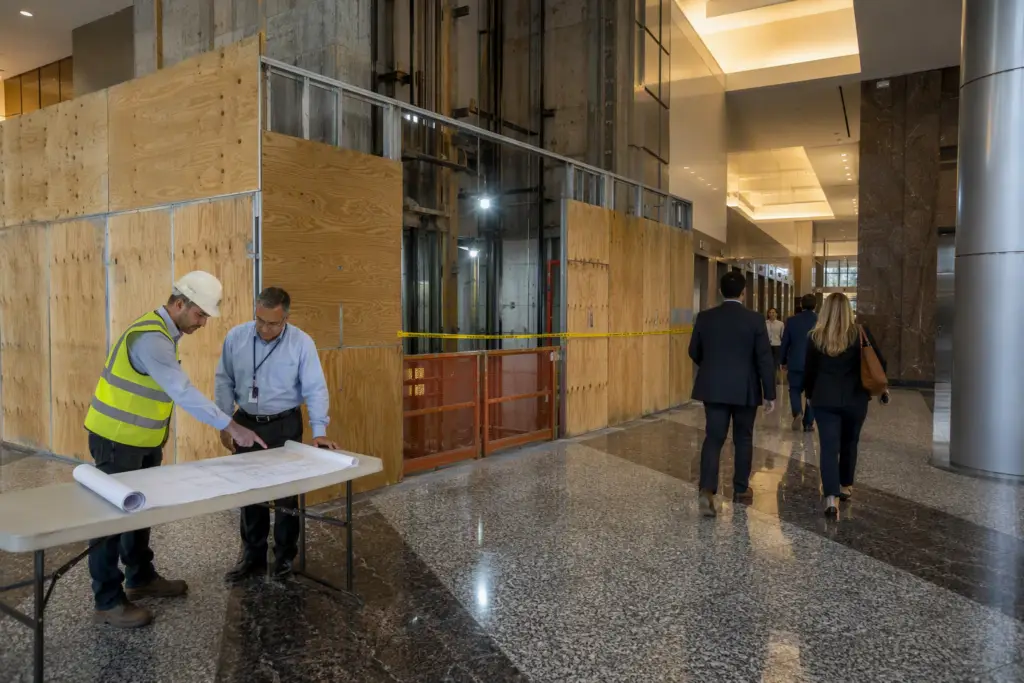
- Hospitals undergoing renovation that affects elevator equipment may trigger requirement upgrades under ASME A17.3 retroactive provisions.
AmeriTex Elevator supports California healthcare clients in Los Angeles and San Diego with inspection coordination, permit management, and documentation required by Cal/OSHA’s Elevator Unit.
What Joint Commission Requirements Affect Hospital Elevator Maintenance?
Hospitals seeking or maintaining Joint Commission accreditation must demonstrate compliance with Environment of Care (EC) standards, which include vertical transportation as part of the physical environment. While the Joint Commission does not publish its own elevator code, surveyors routinely review:
- Documented preventive maintenance schedules and completion records.
- Evidence that deficiencies are tracked, prioritized, and corrected in a timely manner.
- Life safety compliance logs that reference applicable ASME and state code editions.
- Evidence of qualified contractor involvement in all maintenance and repair activities.
Gaps in maintenance documentation are among the most common findings in Joint Commission EC surveys. Facilities without a structured elevator maintenance program risk citation even when the physical equipment is functional.
What Types of Elevators Are Typically Found in Healthcare Facilities?
Healthcare buildings use several specialized elevator categories, each with distinct maintenance and inspection considerations:
- Patient/stretcher elevators — oversized cabs designed to accommodate gurneys and hospital beds; door width and cab depth must meet both ASME and ADA minimums.
- Service and freight elevators — used for linen, food service, and medical supply transport; subject to rated-load inspections.
- Hydraulic elevators — common in low-rise clinic and medical office buildings; require periodic testing of hydraulic fluid systems and pressure relief valves.
- Traction elevators — prevalent in multi-story hospitals; require rope, sheave, and brake inspections at defined intervals.
- Dumbwaiters and material lifts — used in pharmacy and laboratory settings; regulated under ASME A17.1 and subject to state permit requirements.
What Maintenance Tasks Are Required Under ASME A17.1 for Healthcare Elevators?
The ASME A17.1 Safety Code for Elevators and Escalators establishes maintenance requirements that apply to healthcare settings. Required activities include:
- Periodic lubrication of guide rails, sheaves, and mechanical components.
- Inspection and testing of safeties, buffers, and governor mechanisms.
- Door operator and door protection device testing, including sensing edge and light curtain verification.
- Brake inspection and adjustment.
- Control and electrical system checks.
- Pit inspection for water intrusion, lighting, and stop switch function.
- Emergency communication system testing — critical in hospitals where a stranded patient or staff member requires immediate response.
ASME A17.1 also requires that a maintenance log or equipment record be kept and be available for review by the authority having jurisdiction (AHJ), which in Texas is TDI and in California is Cal/OSHA.
What Are the ADA Requirements Specifically Relevant to Hospital Elevators?
The ADA Standards for Accessible Design require that elevators serving multiple floors in healthcare facilities meet specific criteria, including:
- Minimum cab dimensions sufficient to accommodate a wheelchair and companion.
- Door re-opening devices that respond to both object and infrared detection.
- Controls with raised characters and Braille, mounted within reach ranges accessible from a wheelchair.
- Audible and visual signals for floor announcements and door status.
- Elevator lobbies and approaches that comply with accessible route requirements.
ADA compliance failures in hospitals can trigger complaints to the U.S. Department of Justice and may affect participation in Medicare and Medicaid programs, making accessibility maintenance a financial risk management issue, not merely a regulatory one.
What Happens If a Hospital Elevator Fails Inspection in Texas or California?
When an elevator fails inspection, the consequences follow a defined process in both states:
- The inspector issues a written deficiency notice identifying each violation and its classification.
- The facility receives a correction timeframe. Imminent hazards require immediate shutdown; less critical deficiencies may allow a defined correction period.
- The elevator is tagged out of service if deemed unsafe. In a hospital, this can disrupt patient transport, surgical scheduling, and emergency response.
- A licensed elevator contractor must perform the corrective work. In Texas, TDI-licensed contractors must make repairs; in California, Cal/OSHA-registered contractors are required.
- A re-inspection is scheduled to verify that deficiencies have been corrected before the elevator is returned to service.
- Documentation of the correction is retained as part of the equipment record, which must be available for future inspections and Joint Commission surveys.
AmeriTex Elevator provides corrective repair services for healthcare clients across Texas and California, prioritizing patient-transport elevators to minimize operational impact.
How Often Should Preventive Maintenance Be Performed on Hospital Elevators?
The ASME A17.1 Safety Code requires that maintenance be performed at intervals sufficient to keep equipment in safe operating condition, with more specific intervals defined for certain tests and inspections within the code. In practice, high-traffic healthcare environments — where elevators run continuously across three shifts — typically require more frequent maintenance visits than low-use commercial properties. Facility managers should work with a licensed elevator service contractor to establish a preventive maintenance schedule calibrated to each elevator’s usage intensity, age, and equipment type.
What Is the Role of the Authority Having Jurisdiction (AHJ) for Healthcare Elevators?
The AHJ is the governmental agency or official with legal authority to enforce elevator safety codes in a given jurisdiction. For healthcare facilities in Texas, TDI is the primary AHJ. In California, Cal/OSHA’s Elevator Unit serves this role. However, hospitals may also face oversight from:
- Local fire marshals with authority over life safety and egress-related elevator functions.
- The Centers for Medicare and Medicaid Services (CMS) for facilities participating in federal healthcare programs, which conduct surveys that include physical plant and life safety assessments.
- The Joint Commission for accredited hospitals.
Navigating multi-agency oversight is a common challenge for hospital facility managers. Maintaining comprehensive maintenance documentation is the most effective way to demonstrate compliance across all inspecting bodies simultaneously.
Questions Your Inspector Will Ask
When a TDI inspector in Texas or a Cal/OSHA inspector in California arrives at a healthcare facility, the following questions and document requests are common:
- Is the current certificate of inspection posted in or near the elevator cab?
- Where is the equipment maintenance log, and does it reflect all required periodic maintenance tasks?
- Has the emergency communication system been tested within the required interval, and is that test documented?
- When were the safeties, buffers, and governor last tested?
- Are there any open deficiencies from the previous inspection, and have correction records been retained?
- Is the elevator permit current and issued to the licensed owner/operator of record?
- Have any modifications been made to the elevator since the last inspection, and if so, were they permitted and inspected?
- Is the pit free of water, debris, and obstructions, and is pit lighting functional?
- Are all door protection devices — sensing edges, light curtains — functional and documented?
- Does the elevator contractor performing maintenance hold a current TDI license (Texas) or Cal/OSHA registration (California)?
Facility managers who can answer these questions and produce supporting documentation immediately are far better positioned during inspections than those who must scramble to locate records.
How Should a Hospital Prepare for an Elevator Inspection?
- Audit all equipment records at least 60 days before the scheduled inspection date to identify documentation gaps.
- Verify that all required periodic tests — including safety device and emergency communication tests — have been completed and documented within their required intervals.
- Confirm that all previously cited deficiencies have been corrected and that correction records are on file.
- Ensure inspection certificates are posted in each elevator cab and that permits are current with TDI (Texas) or Cal/OSHA (California).
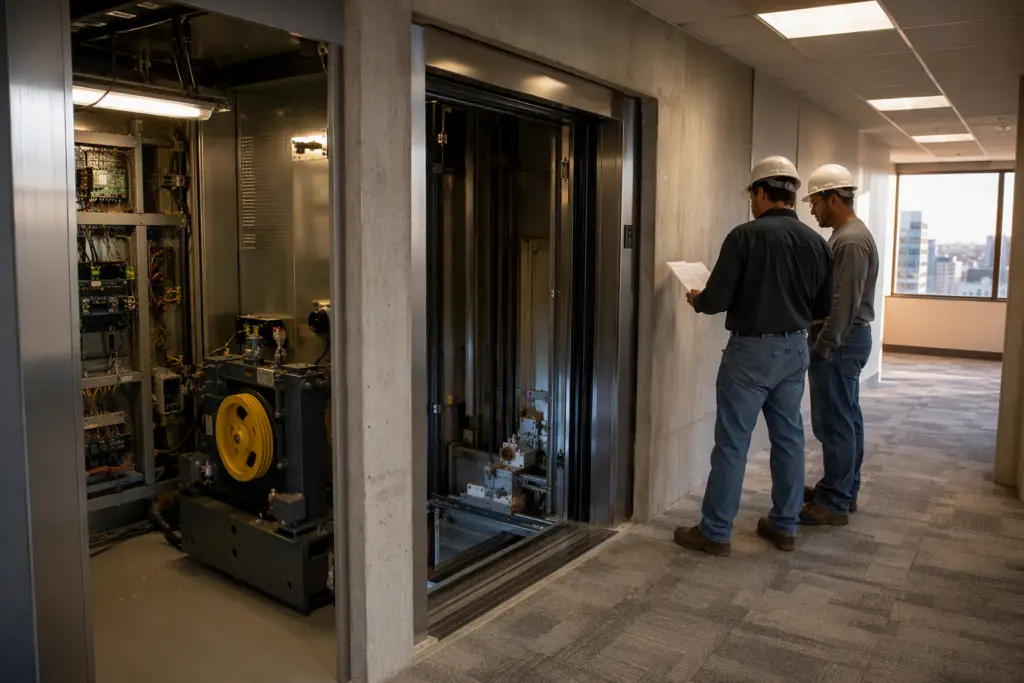
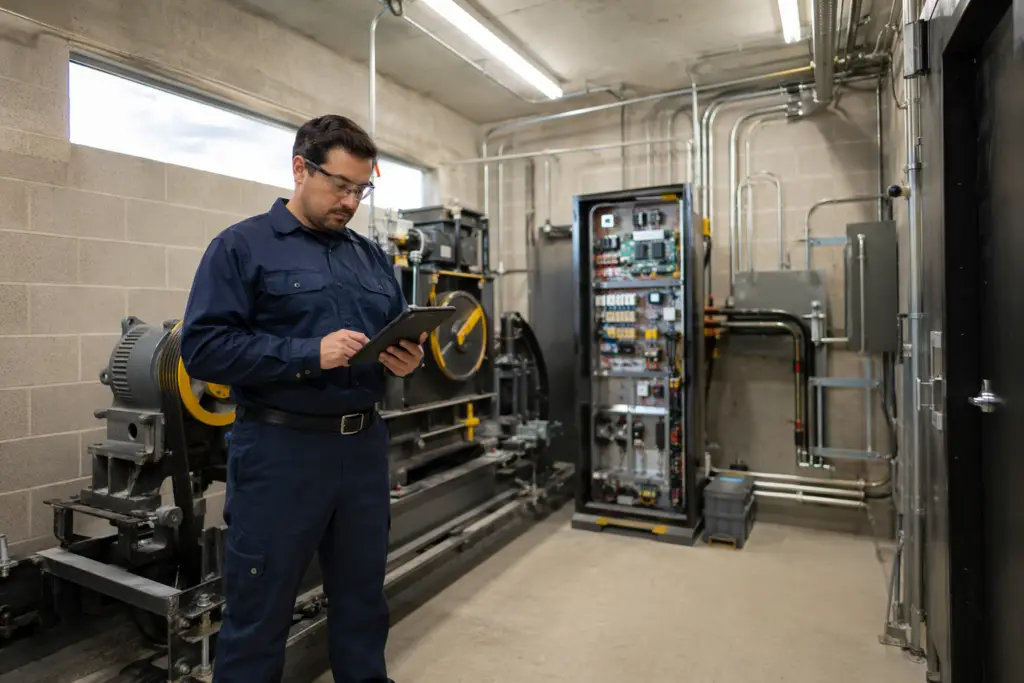
- Walk each elevator pit and machine room with your maintenance contractor to identify any physical conditions — water intrusion, lighting failures, housekeeping issues — that could result in citations.
- Confirm your elevator contractor’s license status with TDI or Cal/OSHA, as an unlicensed contractor performing maintenance can invalidate compliance standing.
- Schedule a pre-inspection review with your elevator service provider to address any items identified in the audit before the official inspection date.
Why Do Healthcare Facilities in Texas and California Choose AmeriTex Elevator?
AmeriTex Elevator provides elevator maintenance, inspection support, and compliance consulting to healthcare facilities across Houston, Dallas, Austin, San Antonio, Los Angeles, and San Diego. Healthcare facility managers work with AmeriTex Elevator because the team understands the regulatory complexity of operating elevators under simultaneous oversight from TDI or Cal/OSHA, the Joint Commission, and CMS — and because unplanned elevator downtime in a hospital carries patient safety implications that go beyond ordinary commercial inconvenience.
AmeriTex Elevator’s maintenance programs are structured to align with ASME A17.1 documentation requirements, ADA accessibility obligations, and state-specific inspection standards, giving healthcare compliance teams a single, organized record set ready for any inspecting authority.
What Should Healthcare Facility Managers Do Right Now?
Elevator compliance in healthcare is not a once-a-year event — it is an ongoing program. Facility managers in Texas and California should take the following steps without delay:
- Locate and review the current inspection certificate and permit for every elevator on campus.
- Request a complete maintenance log review from your current elevator service contractor.
- Confirm the upcoming inspection date with TDI (Texas) or Cal/OSHA (California).
- Identify any elevators approaching the end of their recommended maintenance interval.
- Schedule a compliance assessment with a licensed elevator contractor experienced in healthcare environments.
Contact AmeriTex Elevator for a free elevator assessment. Whether your facility is preparing for an annual inspection, responding to a deficiency notice, or building a new preventive maintenance program, the AmeriTex Elevator team is ready to help. Call 866-679-4313 to speak with a licensed elevator professional serving Houston, Dallas, Austin, San Antonio, Los Angeles, and San Diego.
Need elevator service you can rely on? AmeriTex Elevator is ready to help.