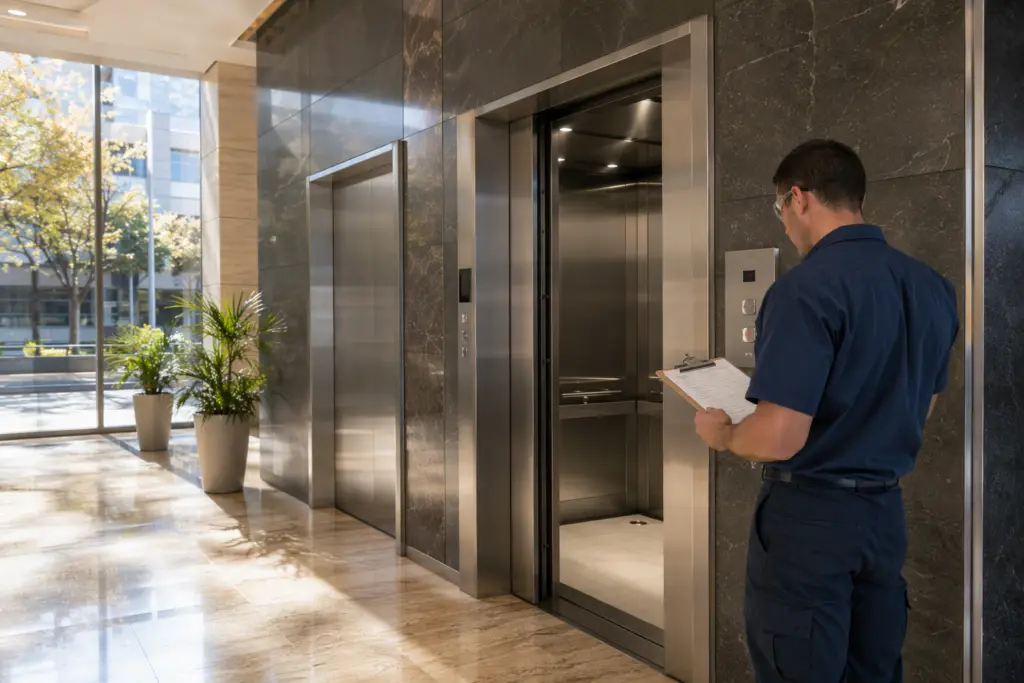
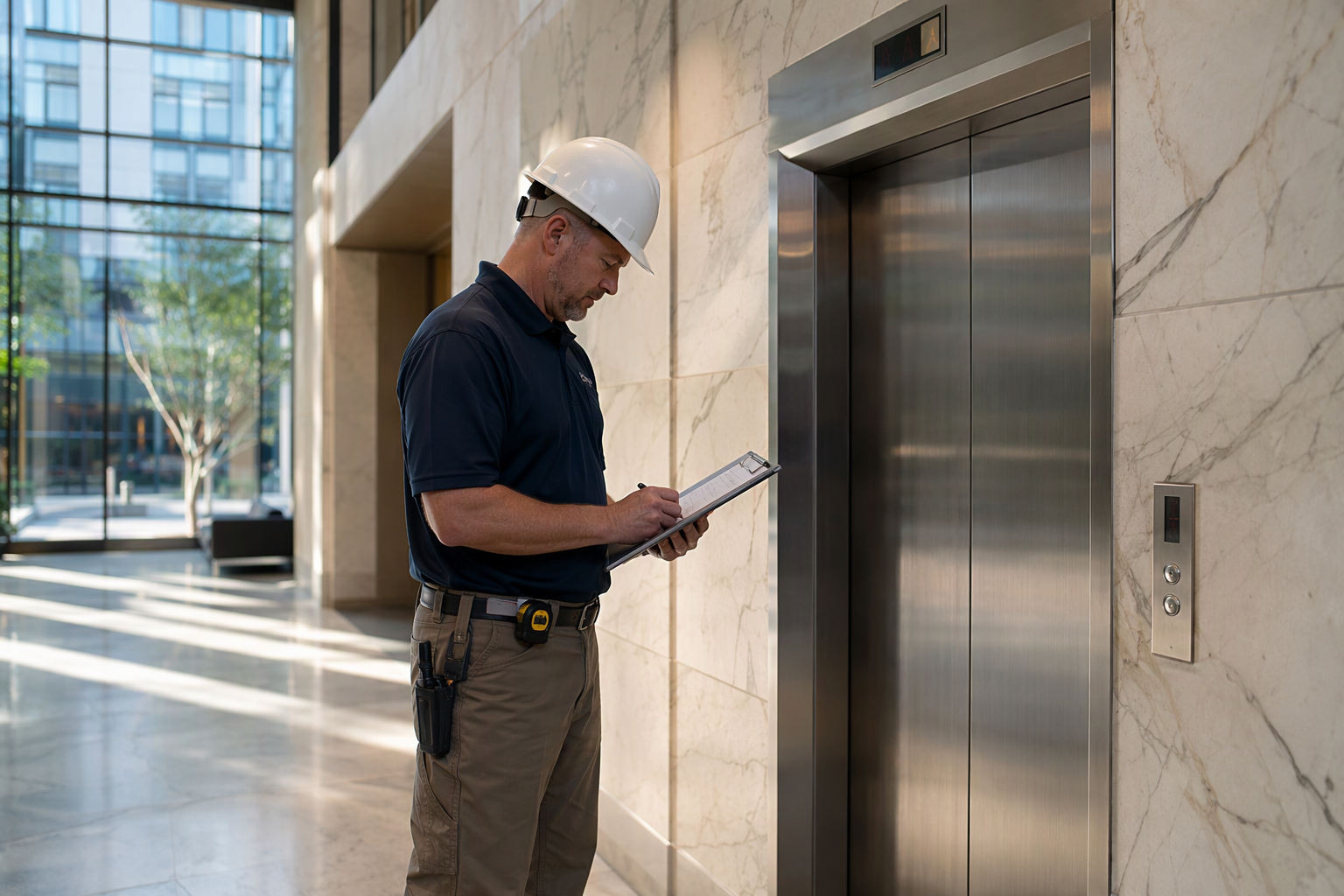
Texas building owners are required by Texas Health and Safety Code Chapter 754 to have every elevator, escalator, and related conveyance inspected annually by a TDLR-registered elevator inspector. The inspection results in either a Certificate of Compliance — valid for one year — or a list of violations that must be resolved within 30 days. Owners in Houston operate under the City of Houston’s separate elevator program rather than TDLR oversight. Understanding each step of this process helps owners avoid equipment shutdowns, liability exposure, and compliance gaps.
Who regulates elevator inspections in Texas?
The Texas Department of Licensing and Regulation (TDLR), Elevator and Escalator Safety program administers elevator and escalator regulation across the state under Texas Health and Safety Code Chapter 754 and 16 Texas Administrative Code Chapter 74.
TDLR oversees the registration of elevator inspectors and contractors, reviews plan submissions before installation, issues Certificates of Compliance, and enforces compliance with the state’s adopted elevator code. Texas adopted the ASME A17.1/CSA B44, 2016 edition as its governing technical standard, effective November 1, 2018, as amended by 16 TAC §74.100(b). One important geographic exception applies: the City of Houston operates its own elevator inspection and permitting program. TDLR does not regulate elevators or escalators inside Houston city limits, so Houston building owners must work directly with the City of Houston rather than TDLR.
What is the ASME A17.1 code and why does it matter for Texas inspections?

The ASME A17.1 Safety Code for Elevators and Escalators is the foundational technical standard that defines construction, installation, operation, testing, inspection, maintenance, alteration, and repair requirements for elevators and escalators in the United States.
Texas adopted the 2016 edition of ASME A17.1/CSA B44, meaning inspectors evaluate elevator components, safety systems, door operations, firefighters’ service, and emergency features against the requirements in that edition. When an inspector identifies a deficiency, the code section in violation is typically cited, giving owners and their contractors a precise reference for the corrective work required. Registered elevator contractors performing repairs must ensure all work conforms to the adopted ASME A17.1-2016 standard. AmeriTex Elevator’s technicians are trained to interpret and work within the ASME A17.1 framework as adopted and amended by Texas.
Who can legally perform an elevator inspection in Texas?
Only a TDLR-registered elevator inspector may conduct an annual elevator inspection in Texas.
Texas elevator inspectors register individually with TDLR, but they are not TDLR employees — they work independently or for third-party inspection firms. Under Texas law, the building owner holds the sole right to select the elevator inspector of their choice, which means owners are free to shop for inspectors and are not assigned one by the state. Inspector registrations expire one year after issuance, so owners should verify that their selected inspector holds a current, active registration before scheduling. This is distinct from the contractor registration that covers companies performing installation, repair, alteration, testing, or maintenance work.
What steps make up the annual Texas elevator inspection process?
The annual Texas elevator inspection follows a defined sequence that begins with inspector selection and concludes with certificate display or violation resolution.
- Select a TDLR-registered inspector. The building owner identifies and contracts with an individual holding a current TDLR elevator inspector registration. Owners may verify registration status on the TDLR website.
- Schedule the inspection. The owner coordinates a date and time with the inspector, ensuring the equipment is accessible and operational. Any service or maintenance due before the inspection — such as lubrication, adjustment, or safety device testing — should be completed in advance.
- Conduct the inspection. The inspector performs a thorough evaluation of the elevator car, hoistway, machine room, safety devices, door restrictors, firefighters’ service, emergency lighting, communication systems, and other components required under ASME A17.1-2016 as adopted by Texas.
- Receive the inspection report. Texas law requires the inspector to deliver the written inspection report to the building owner within five calendar days of the inspection date. The report documents either a passing finding or specific violations with applicable code references.
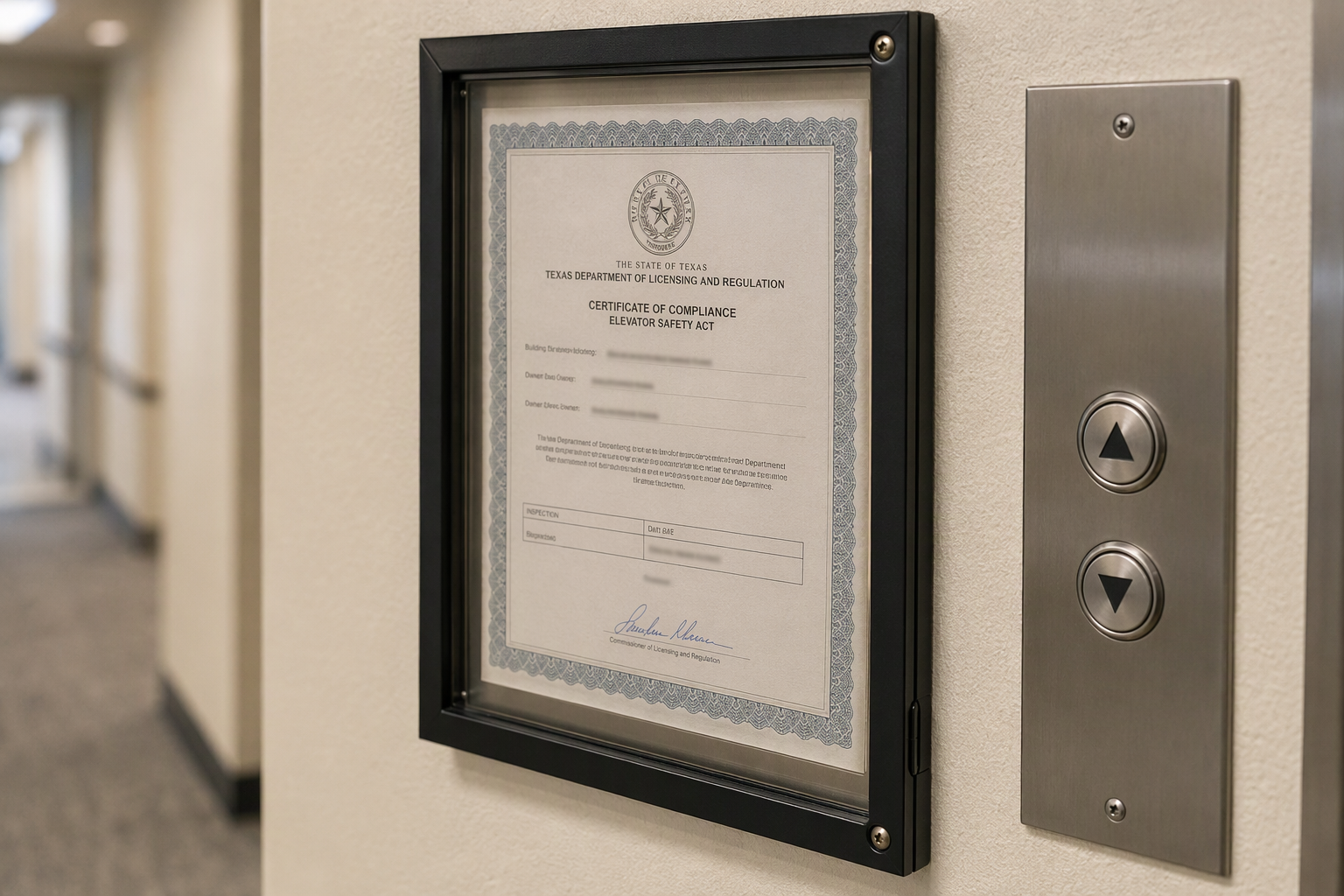
- Obtain the Certificate of Compliance. If the elevator passes, the owner obtains a TDLR Certificate of Compliance for that unit. The certificate is valid for one year.
- Display the certificate. The Certificate of Compliance must be posted in a publicly visible area of the building.
- Resolve any violations. If violations are cited, the owner must have them corrected or under a signed contract for correction within 30 days of the inspection. If correction within 30 days is not feasible, the owner must obtain a waiver or delay from TDLR.
- Report accidents immediately. If any accident involving elevator equipment occurs at any point during the year, Texas law requires the building owner to report it to TDLR within 24 hours.
How long does the Texas elevator inspection take?
The physical inspection time varies based on equipment type, the number of stops, equipment age, and the condition of the machine room and hoistway, but owners should plan for the equipment to be out of service for the duration of the inspector’s visit.
After the physical inspection is complete, Texas law gives the inspector up to five calendar days to deliver the written inspection report to the building owner. Owners planning around lease obligations, tenant relations, or operational needs should factor in both the inspection day and the reporting window. Preparing the equipment in advance — ensuring machine room access, up-to-date maintenance logs, and completed Category tests — typically results in a more efficient inspection with fewer follow-up questions from the inspector.
What is a TDLR Certificate of Compliance and how long is it valid?
A TDLR Certificate of Compliance is the official document confirming that an elevator unit passed its annual inspection and meets applicable requirements under Texas law; it is valid for one year from the date of issuance.
Each unit of equipment requires its own Certificate of Compliance, so a building with multiple elevators or escalators must have a separate certificate for each. The certificate must be displayed in a publicly visible area of the building — not stored in a management office file. Failure to maintain a current, displayed certificate can expose building owners to enforcement action by TDLR and creates liability risk in the event of an incident. AmeriTex Elevator recommends that building owners set calendar reminders well ahead of their certificate expiration date to allow time for scheduling, inspection, and any necessary repairs before the certificate lapses.
What happens if violations are found during the annual inspection?
When a Texas elevator inspector identifies code violations, the building owner has 30 days from the inspection date to have those violations corrected or to place them under a signed contract for correction; if that timeline is not achievable, the owner must seek a waiver or delay from TDLR.
Certain violations trigger an immediate out-of-service requirement with no grace period. Under Texas law, a passenger elevator without working door restrictors must be removed from service immediately. Similarly, a passenger elevator that lacks firefighters’ service or has a non-working Phase One firefighters’ service must also be taken out of service immediately. These are not deficiencies that can be deferred to the standard 30-day correction window. Building owners who discover these conditions during an inspection should contact a TDLR-registered elevator contractor without delay. AmeriTex Elevator’s service teams are experienced in diagnosing and resolving door restrictor and firefighters’ service deficiencies to restore compliant operation efficiently.
What is the Category 5 test and how does it relate to the annual inspection?
Texas requires a Category 5 full-load test every five years on electric (traction) elevators, which is a separate but related compliance obligation that building owners must track alongside the annual inspection cycle.
Under the ASME A17.1 Safety Code for Elevators and Escalators, periodic tests are classified by category. A Category 5 test involves applying a full rated load to the elevator and testing all safety devices — including the safety plank, governor, and buffers — under load conditions. This test must be performed by a TDLR-registered contractor and may be witnessed by or reported to the inspector. Because the Category 5 test falls due every five years rather than annually, building owners should maintain a testing schedule that tracks both the annual inspection and the five-year Category 5 cycle. Failing to perform a due Category 5 test can affect the outcome of the annual inspection and the issuance of a Certificate of Compliance.
Who is responsible for scheduling and coordinating the annual inspection?
The building owner bears sole responsibility for ensuring that the annual elevator inspection is scheduled, completed, and that any resulting violations are resolved within the required timeframe.
Texas law does not place the scheduling obligation on the elevator contractor or the inspector. This means that if an owner fails to arrange an inspection, the certificate lapses, and no government agency proactively schedules one on the owner’s behalf. Many building owners delegate the coordination task to their property management company or elevator service contractor, but the legal obligation remains with the owner. Working with a full-service elevator company like AmeriTex Elevator — which can coordinate inspection scheduling, complete maintenance work prior to the inspection, and mobilize quickly to address cited violations — can help owners stay ahead of compliance deadlines.
Who can legally perform elevator repairs and maintenance in Texas?
Any person who installs, repairs, alters, tests, or maintains elevator equipment in Texas must be registered as an elevator contractor with TDLR.
Contractor registrations expire one year after issuance. Each registered contractor must carry general liability insurance of at least $1,000,000 per occurrence for bodily injury or death and $500,000 per occurrence for property damage. Additionally, every Texas elevator contractor must designate one or two responsible parties who each have at least three years of elevator contractor experience. The term “contractor” under Texas law does not include an employee of a contractor, so individual mechanics working under a registered contractor’s umbrella are covered by that registration. Before any new elevator or escalator installation begins in Texas, the registered contractor must submit plans to TDLR and receive approval before work commences.
How does Houston’s elevator inspection program differ from TDLR’s program?
Elevators and escalators inside Houston city limits are regulated by the City of Houston’s own inspection and permitting program, not by TDLR.
TDLR explicitly does not regulate elevator equipment within Houston city limits, which makes Houston a distinct compliance environment from the rest of Texas. Building owners and property managers operating within Houston must contact the City of Houston directly to understand inspection scheduling, certificate requirements, and applicable local rules. Because Houston runs its own program, the TDLR Certificate of Compliance is not the applicable document for Houston elevators. AmeriTex Elevator serves the Houston market and is familiar with navigating the City of Houston’s elevator program requirements, helping owners understand which authority has jurisdiction over their specific property.
Does the Texas elevator law apply to all buildings and equipment types?
Texas elevator law applies broadly to commercial and residential multi-unit buildings, but there are two defined exemptions: federal government-owned and operated buildings, and single-family dwellings (with a limited exception for post-installation inspection).
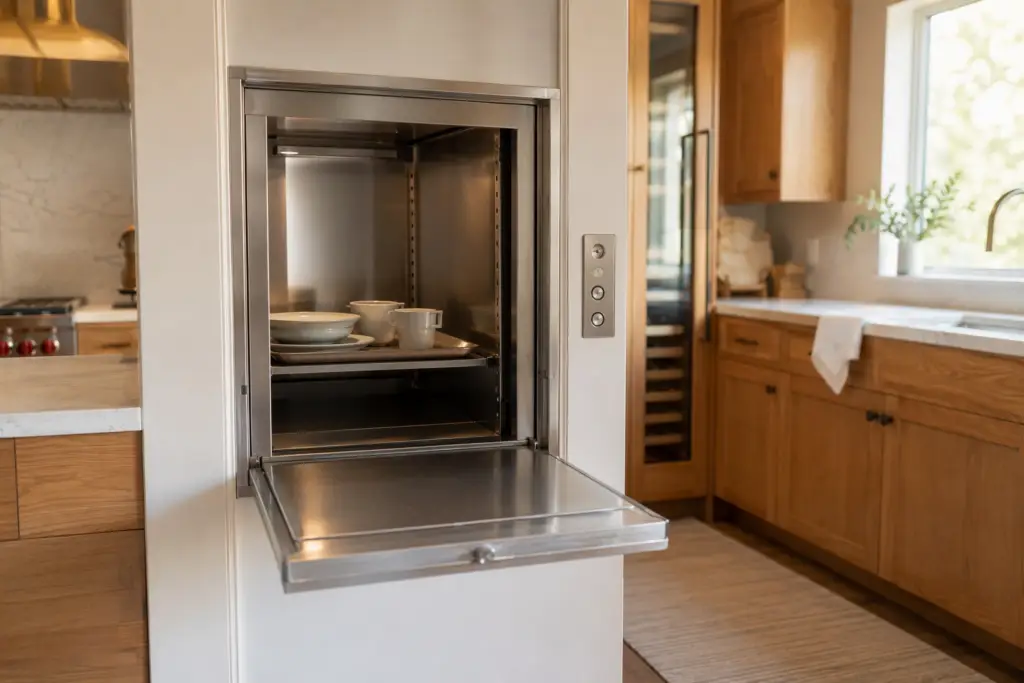
Equipment in buildings owned and operated by the federal government falls outside TDLR’s jurisdiction. Single-family dwellings are also exempt from ongoing TDLR regulation; however, Texas law does require that after a new elevator is installed in a single-family dwelling, a TDLR-registered inspector must inspect it. After that initial inspection, the ongoing regulatory requirements that apply to commercial equipment do not apply to single-family residential units. Owners of mixed-use or multi-family properties should consult TDLR or a qualified elevator contractor to confirm which equipment is subject to the annual inspection requirement.
How do ADA requirements interact with the Texas elevator inspection?
The Americans with Disabilities Act (ADA) establishes federal accessibility standards for elevators that apply independently of Texas’s annual inspection process, and an elevator can pass the state inspection while still having unresolved ADA deficiencies.
ADA requirements address items such as door timing, cab dimensions, control button height and reach range, Braille and raised character signage, floor-level indicators, and two-way emergency communication. The Texas annual inspection under TDLR and ASME A17.1-2016 evaluates mechanical safety and code compliance, not ADA accessibility compliance. Building owners subject to the ADA — which includes most places of public accommodation and commercial facilities — should ensure that ADA accessibility requirements are evaluated separately. Many building owners include an ADA accessibility review as part of their broader elevator maintenance and compliance program rather than relying solely on the annual TDLR inspection to surface accessibility gaps.
What should building owners do to prepare for the annual inspection?
Thorough pre-inspection preparation reduces the likelihood of cited violations and helps the inspection proceed efficiently, ultimately protecting the owner’s ability to obtain a Certificate of Compliance without delays.
- Review the previous inspection report. Confirm that all prior violations have been corrected and documented before the new inspection date.
- Confirm maintenance is current. Ensure that all routine maintenance tasks — lubrication, adjustment, cleaning of machine room and pit — have been completed per the maintenance schedule.
- Verify safety device functionality. Confirm that door restrictors, firefighters’ service Phase One and Phase Two, emergency lighting, and cab communication are all operational.
- Check test due dates. Confirm whether a Category 5 test or any other periodic test falls due within the inspection window and arrange for it to be completed by a registered contractor before or at the time of inspection.
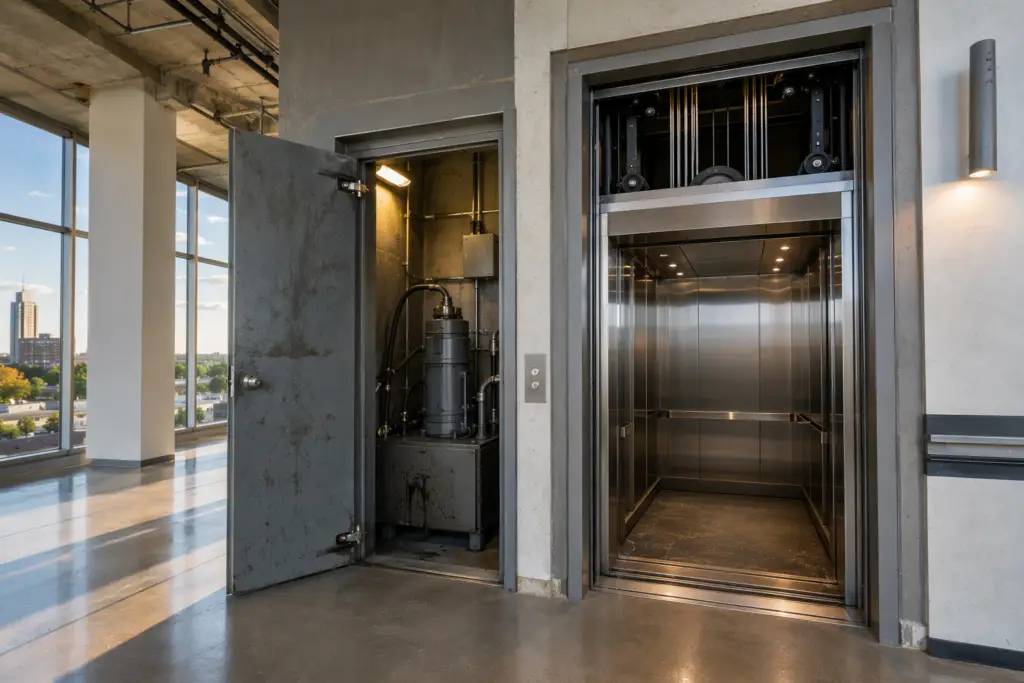
- Secure machine room access. Ensure the machine room is clean, accessible, and not being used for storage, which is a common citation item.
- Have documentation ready. Compile maintenance logs, prior test reports, and contractor records that an inspector may request to review.
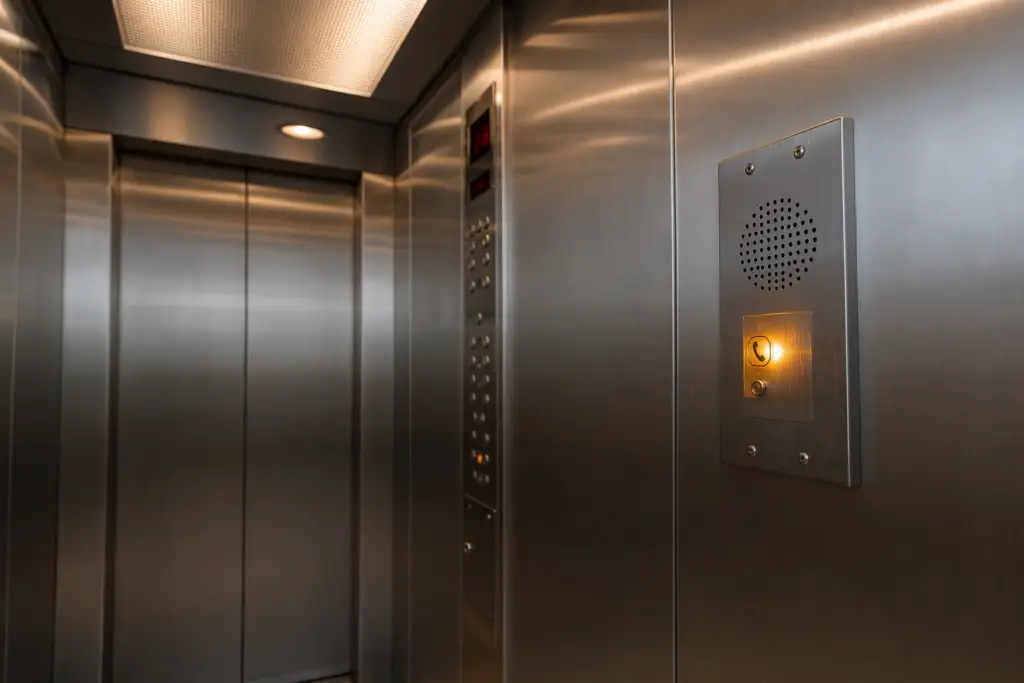
- Confirm emergency communication is functional. Test the in-cab emergency telephone or communication device to verify it connects to a live monitoring service.
How does the Texas inspection process compare with California’s inspection requirements?
While both Texas and California require annual elevator inspections, the two states differ significantly in regulatory structure, inspector qualifications, permit mechanics, and contractor certification requirements.
| Requirement | Texas (TDLR) | California (Cal/OSHA) |
|---|---|---|
| Governing agency | TDLR, Elevator and Escalator Safety | Cal/OSHA, Elevator Unit, CA Dept. of Industrial Relations |
| Governing statute | Texas Health and Safety Code Chapter 754 | California Labor Code Sections 7300–7324.2 |
| Adopted ASME edition | ASME A17.1/CSA B44, 2016 edition (eff. Nov. 1, 2018) | ASME A17.1/CSA B44, 2004 edition (eff. May 1, 2008) |
| Inspection frequency | Annually | At least annually; up to two years if covered by full maintenance contract with a C-11 licensed company |
| Who may inspect | TDLR-registered elevator inspector (independent) | Cal/OSHA State safety engineers and Certified Competent Conveyance Inspectors (CCCI) only |
| Compliance document | TDLR Certificate of Compliance (valid 1 year) | Permit to Operate issued by Cal/OSHA (valid up to 1 or 2 years) |
| Certificate/permit display | Publicly visible area of building | Conspicuously posted inside the elevator car |
| Contractor requirement | TDLR-registered elevator contractor | Cal/OSHA Certified Qualified Conveyance Company (CQCC) with C-11 license |
| Mechanic requirement | Employee of registered contractor (individual licensing not verified) | Certified Competent Conveyance Mechanic (CCCM) certified by Cal/OSHA |
| Houston/Los Angeles local programs | City of Houston runs its own program; TDLR does not regulate within Houston | City of Los Angeles (LADBS) runs its own program |
| Accident reporting | Report to TDLR within 24 hours | Not stated in verified facts — contact Cal/OSHA directly |
| 5-year periodic test | Category 5 full-load test required every 5 years for traction elevators | Periodic testing required per ASME A17.1-2004 Elevator Safety Orders |
What are the consequences of operating an elevator with an expired or missing Certificate of Compliance in Texas?
Operating elevator equipment without a valid TDLR Certificate of Compliance exposes building owners to enforcement action, potential equipment shutdowns, and significant liability in the event of an incident.
TDLR has authority to enforce compliance under Texas Health and Safety Code Chapter 754 and 16 Texas Administrative Code Chapter 74. Beyond regulatory penalties, an expired certificate signals to insurers, tenants, and courts that required safety oversight was not maintained — a factor that can complicate liability claims arising from elevator incidents. Building owners should treat the certificate expiration date as a hard deadline rather than a soft guideline. Proactive owners work with their elevator contractor to ensure maintenance is complete, the inspection is scheduled well before expiration, and any violations identified are addressed before the 30-day correction window closes.
What is the building owner’s accident reporting obligation in Texas?
Texas building owners are legally required to report any accident involving elevator equipment to TDLR within 24 hours of the incident.
This 24-hour reporting window applies regardless of the apparent severity of the incident or whether injuries occurred. The report initiates TDLR’s review process and may trigger an inspection of the equipment involved. Building owners and property managers should establish an internal protocol for identifying, documenting, and reporting elevator accidents promptly. Maintaining current records of maintenance activities, inspection reports, and contractor work orders is advisable both for TDLR reporting purposes and for any subsequent investigation. Failure to report within the 24-hour window can itself constitute a violation of Texas elevator law.
How does a full maintenance contract affect elevator inspection outcomes?
While Texas does not extend a longer certificate validity period based on maintenance contract status the way California does, a comprehensive maintenance program consistently reduces the number of violations found during annual inspections and supports faster compliance when violations are identified.
Under California’s program, an elevator covered by a full maintenance contract with a properly licensed company can receive a permit to operate valid for up to two years rather than one — a direct regulatory benefit tied to documented maintenance. In Texas, the annual inspection cycle remains fixed regardless of maintenance contract status, but the practical benefits of regular maintenance are significant: equipment in good working order is less likely to generate cited violations, and when violations do appear, an experienced contractor already familiar with the equipment can respond more efficiently within the 30-day correction window. AmeriTex Elevator provides maintenance programs designed to keep equipment in inspection-ready condition throughout the year, not only in the weeks before an inspection is scheduled.
What role does OSHA play in elevator safety for Texas workplaces?
Federal OSHA workplace safety regulations apply to elevator-related hazards in occupational settings and operate in parallel with Texas’s TDLR elevator program rather than replacing it.
OSHA’s general industry and construction standards address hazards such as working in elevator pits, machine room safety, lockout/tagout procedures for elevator maintenance, and fall protection for workers servicing hoistway equipment. These requirements apply to employers and contractors performing work on elevator equipment and are distinct from the building owner’s annual inspection obligation under TDLR. Building owners overseeing elevator maintenance work in their facilities should ensure that contractors comply with applicable OSHA standards in addition to meeting TDLR registration and insurance requirements. Registered contractors performing elevator work in Texas are responsible for maintaining OSHA-compliant practices for their employees.
How should a Texas building owner select an elevator service contractor?
Selecting a TDLR-registered elevator contractor with current registration, adequate insurance coverage, and demonstrated experience with the specific type of equipment in the building is the foundation of a sound elevator compliance strategy.
Under Texas law, any contractor performing installation, repair, alteration, testing, or maintenance on elevator equipment must carry at least $1,000,000 per occurrence in general liability insurance for bodily injury or death and $500,000 per occurrence for property damage. Owners should request and verify these credentials before awarding a service contract. Beyond the minimum legal requirements, factors such as familiarity with the building’s equipment brand and configuration, the ability to respond promptly when violations must be corrected within a 30-day window, and experience navigating both TDLR requirements and Houston’s separate municipal program are practical considerations. AmeriTex Elevator serves Houston, Dallas, Austin, and San Antonio and maintains the registrations and insurance coverage required under Texas law, making it a qualified resource for owners managing annual inspection compliance across multiple Texas markets.
Contact AmeriTex Elevator for a free elevator assessment at 844-646-9660.
Need elevator service you can rely on? AmeriTex Elevator is ready to help.