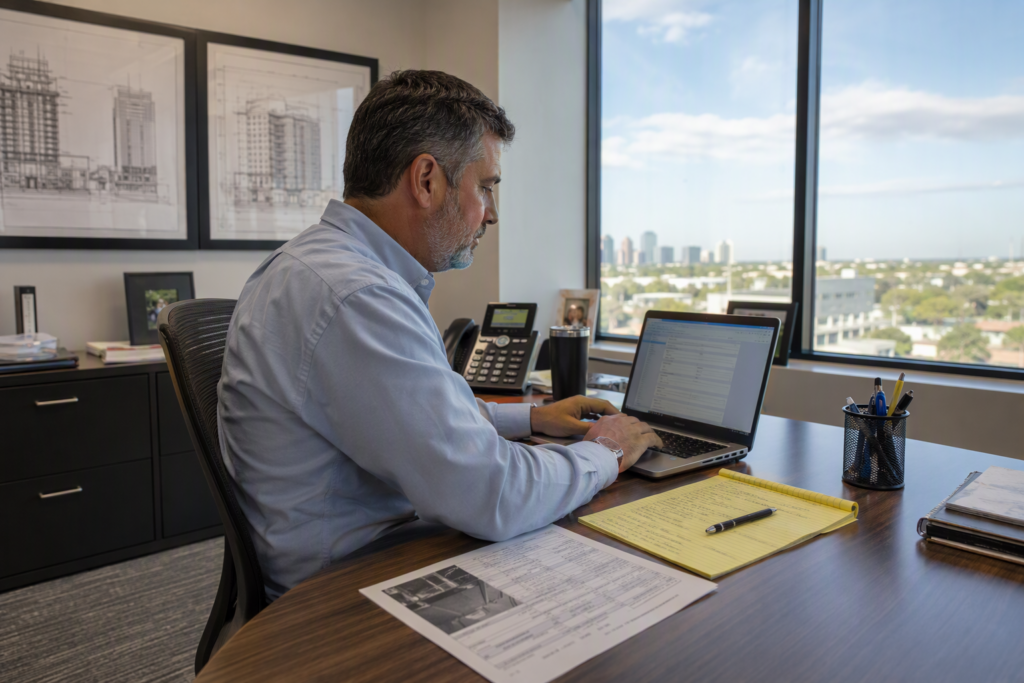
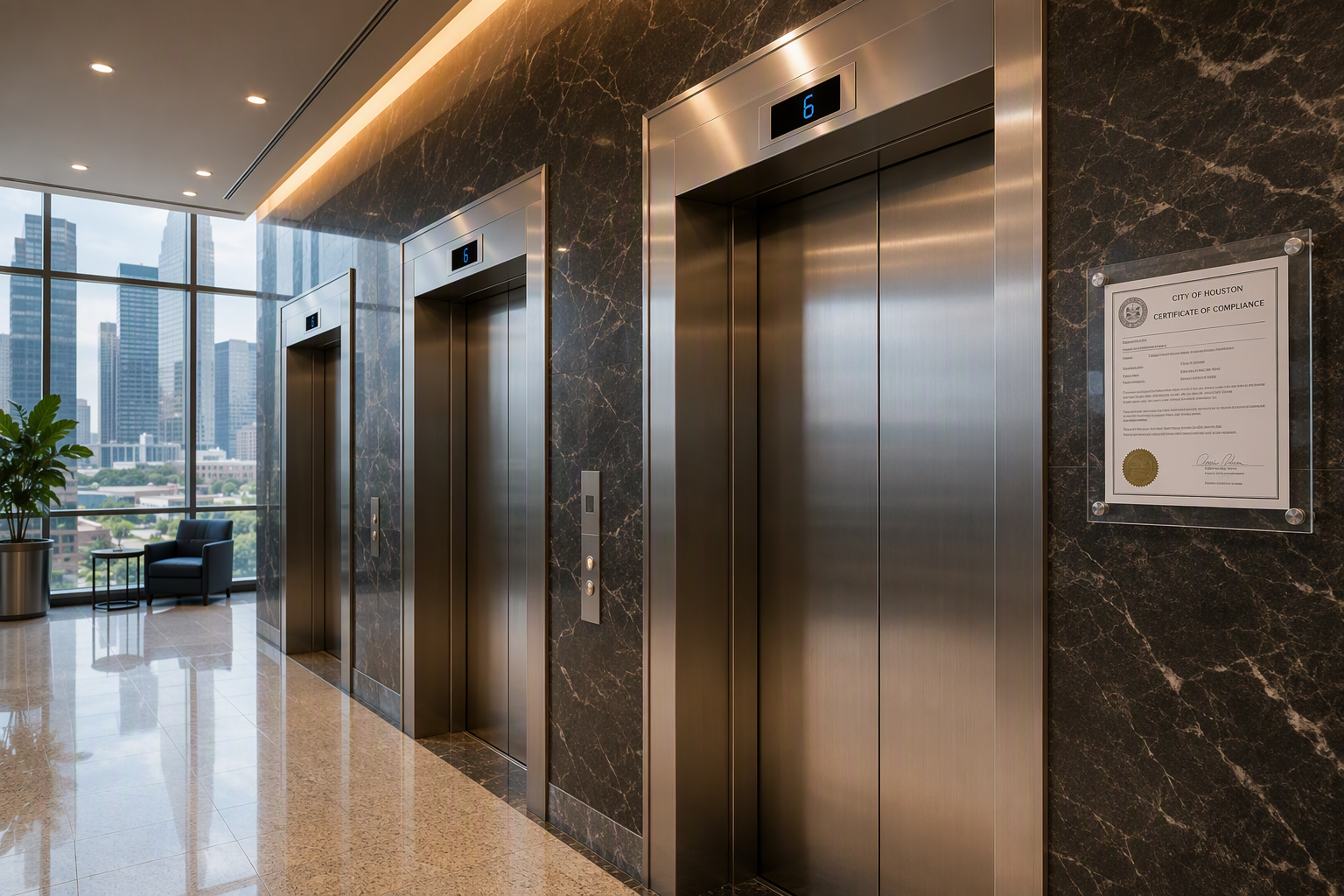
For commercial building owners and property managers in Houston, keeping elevators legally compliant is not optional — it is a matter of public safety, liability management, and uninterrupted building operations. This guide breaks down the permit structure, inspection process, code requirements, violation consequences, and how to choose the right elevator service provider to stay ahead of every deadline.
Who Regulates Elevators in Houston Commercial Buildings?
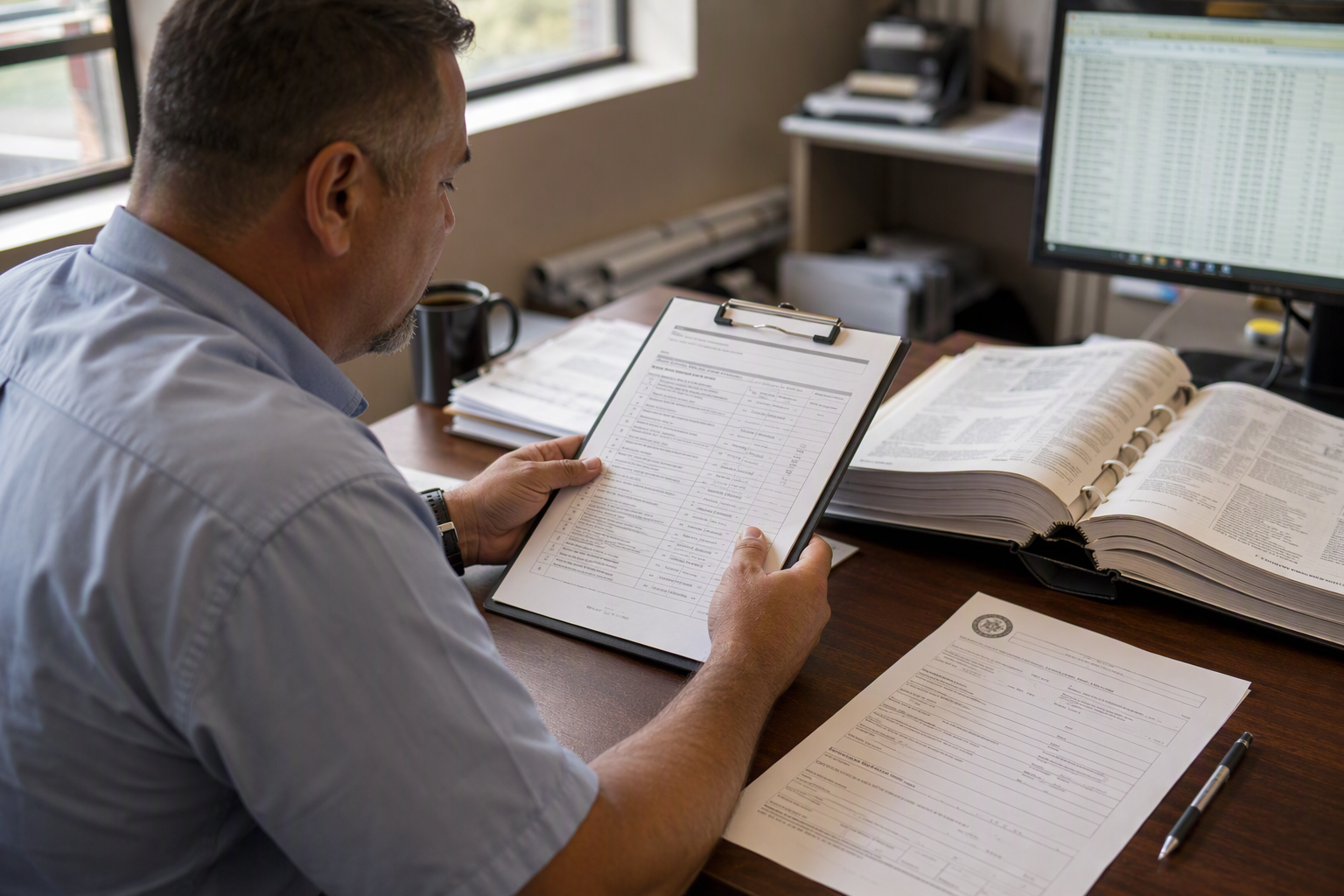
Houston operates under a locally administered elevator program. The Texas Department of Licensing and Regulation (TDLR) Elevator and Escalator Safety program governs elevators across most of Texas under the authority of Texas Health and Safety Code Chapter 754 and 16 Texas Administrative Code Chapter 74. However, the City of Houston runs its own independent elevator inspection and permitting program within city limits — TDLR does not inspect, permit, or issue Certificates of Compliance for elevator equipment located inside Houston.
Building owners operating within Houston must work directly with the city’s program rather than TDLR for annual certificates and compliance matters. The adopted technical standards, fee schedules, and enforcement procedures are governed locally. Because the city’s specific adopted code edition and local rules are subject to change, building owners should contact the City of Houston directly or consult a knowledgeable elevator service provider like AmeriTex Elevator to confirm current local requirements before scheduling any work.
Outside Houston city limits — in Harris County jurisdictions, Sugar Land, Pasadena, or other Texas municipalities not running their own programs — TDLR’s statewide program applies, and the rules described in the statewide framework below govern compliance.
What Is the Statewide Texas Elevator Code Framework?
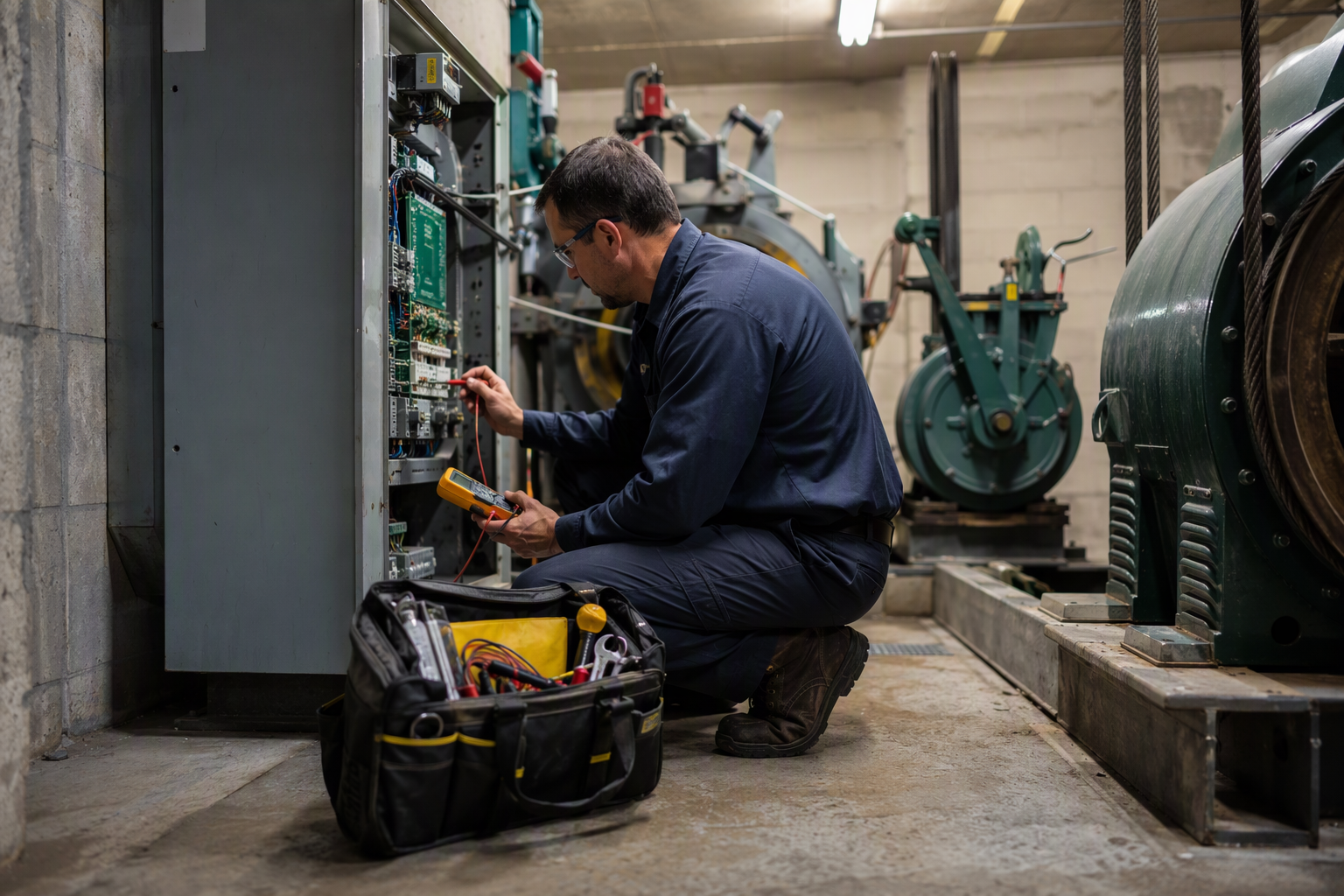
Across Texas (excluding locally regulated jurisdictions like Houston), the TDLR Elevator and Escalator Safety program enforces the ASME A17.1/CSA B44 Safety Code for Elevators and Escalators, 2016 edition, as amended by 16 TAC §74.100(b), effective November 1, 2018. This code governs the design, installation, operation, inspection, testing, and maintenance of elevators, escalators, and related conveyances in new and existing commercial buildings throughout most of the state.
Key statewide Texas requirements that inform best practices even for Houston building owners include:
- Annual inspections by a TDLR-registered elevator inspector are required for all covered equipment.
- Certificate of Compliance must be obtained for each unit and displayed in a publicly visible area of the building.
- Violations must be corrected or under contract for correction within 30 days of inspection, or the owner must obtain a waiver or delay from the authority having jurisdiction (AHJ).
- Accident reporting to the AHJ must occur within 24 hours of any incident involving elevator equipment.
- Category 5 full-load testing is required every five years for electric (traction) elevators.
- Immediate removal from service is mandated for any passenger elevator lacking working door restrictors, firefighters’ service, or with non-working Phase One firefighters’ service.
- Building owners retain the sole right to select their elevator inspector in TDLR-regulated areas.
- Inspection reports must be delivered to the building owner within five calendar days of the inspection.
What Permits Are Required Before Installing or Altering an Elevator in Houston?
Whether governed by Houston’s local program or the TDLR framework, no elevator may be installed, materially altered, or placed in service without prior plan approval from the authority having jurisdiction. In TDLR-regulated areas, a registered contractor must submit plans to TDLR and receive approval before installation begins. In Houston, the equivalent approval comes from the city’s program.
Key permit-trigger events include:
- New elevator or escalator installation
- Modernization or major component replacement
- Change in elevator use classification (e.g., freight to passenger)
- Addition of new safety features or control systems
- Post-accident repairs that constitute a material alteration
Operating an elevator without a valid, current permit or Certificate of Compliance exposes building owners to enforcement action, fines, and — critically — potential removal of the unit from service.
What Are the Contractor Requirements for Elevator Work in Houston?
In TDLR-regulated areas of Texas, any person or company that installs, repairs, alters, tests, or maintains elevator equipment must be registered as a contractor with TDLR. Contractor registrations expire annually. Texas elevator contractors must carry general liability insurance of at least $1,000,000 per occurrence for bodily injury or death and $500,000 per occurrence for property damage. Each contractor must designate one or two responsible parties with at least three years of elevator contractor experience.
Building owners in Houston should confirm that any elevator service company they hire holds the appropriate city-recognized credentials in addition to any statewide registrations. AmeriTex Elevator is a certified elevator service provider operating in Texas and can guide building owners through the specific contractor qualification requirements applicable to their location and equipment type.
How Do Federal ADA Requirements Interact with Houston Elevator Permits?
Federal accessibility law under the Americans with Disabilities Act (ADA) establishes minimum accessibility standards for elevators in commercial buildings subject to Title II (government facilities) and Title III (places of public accommodation and commercial facilities). ADA requirements run parallel to — and do not replace — state and local safety inspection and permitting requirements.
Common ADA elevator compliance elements relevant to commercial buildings include:
- Minimum car dimensions for passenger elevators serving multiple floors
- Door reopening devices sensitive to obstructions
- Accessible controls, Braille markings, and audible signals
- Two-way emergency communication systems
- Level landings and accessible approaches
ADA compliance failures can result in federal complaints, litigation, and significant remediation costs entirely separate from local permit violations. Building owners should treat ADA compliance as a continuous obligation, not a one-time installation checkbox.
What Happens If an Elevator Fails Inspection in Houston?
When an elevator fails inspection under any AHJ — whether Houston’s local program or TDLR elsewhere in Texas — building owners face a structured enforcement timeline:
- Receive the inspection report detailing all cited violations. In TDLR areas, this must be delivered within five calendar days of the inspection.
- Assess severity — certain deficiencies (missing door restrictors, non-working firefighters’ service) require immediate removal from service under Texas law. Other violations trigger a correction window.
- Correct violations or place them under contract for correction within the required timeframe (30 days in TDLR areas; confirm locally for Houston).
- If correction is not possible within the deadline, contact the AHJ to request a waiver or delay. Document the request and all communications.
- Schedule a reinspection after corrections are completed to restore the Certificate of Compliance and return the unit to service.
- Report any accidents involving elevator equipment to the AHJ within 24 hours (statewide Texas requirement; confirm Houston’s local rule).
Continuing to operate an elevator under a failed inspection without a valid certificate exposes building owners to enforcement action and liability in the event of an incident. AmeriTex Elevator works with commercial property teams to prioritize and document corrective actions efficiently.
What Is a Category 5 Full-Load Test and When Is It Required?
Under the statewide Texas framework, electric (traction) elevators must undergo a Category 5 full-load test every five years. This test is defined in the ASME A17.1/CSA B44 Safety Code for Elevators and Escalators and verifies that the elevator’s safety devices — including the governor, safeties, and buffers — function correctly under rated load conditions.
Category 5 tests must be performed by or witnessed by a qualified inspector and are distinct from the annual inspection. Building owners should track the five-year cycle for each traction unit in their portfolio and schedule tests proactively to avoid certificate lapses.
| Test / Inspection Type | Frequency | Who Performs | What It Covers | Consequence of Missing |
|---|---|---|---|---|
| Annual Safety Inspection | Every 12 months | Registered elevator inspector | Overall condition, safety devices, code compliance | Certificate of Compliance lapse; potential shutdown |
| Category 5 Full-Load Test | Every 5 years (traction) | Qualified inspector / contractor | Governor, safeties, buffers under rated load | Non-compliance finding; enforcement action |
| New Installation Inspection | Before placing in service | AHJ-authorized inspector | Full code compliance for new equipment | Unit may not legally operate |
| Post-Alteration Inspection | After material alteration | AHJ-authorized inspector | Altered components and affected systems | Unit may not legally return to service |
| ADA Accessibility Review | As needed / renovation | Qualified consultant or service provider | Federal accessibility standards | Federal complaints; litigation exposure |
How Should Building Owners Prepare for an Elevator Inspection?
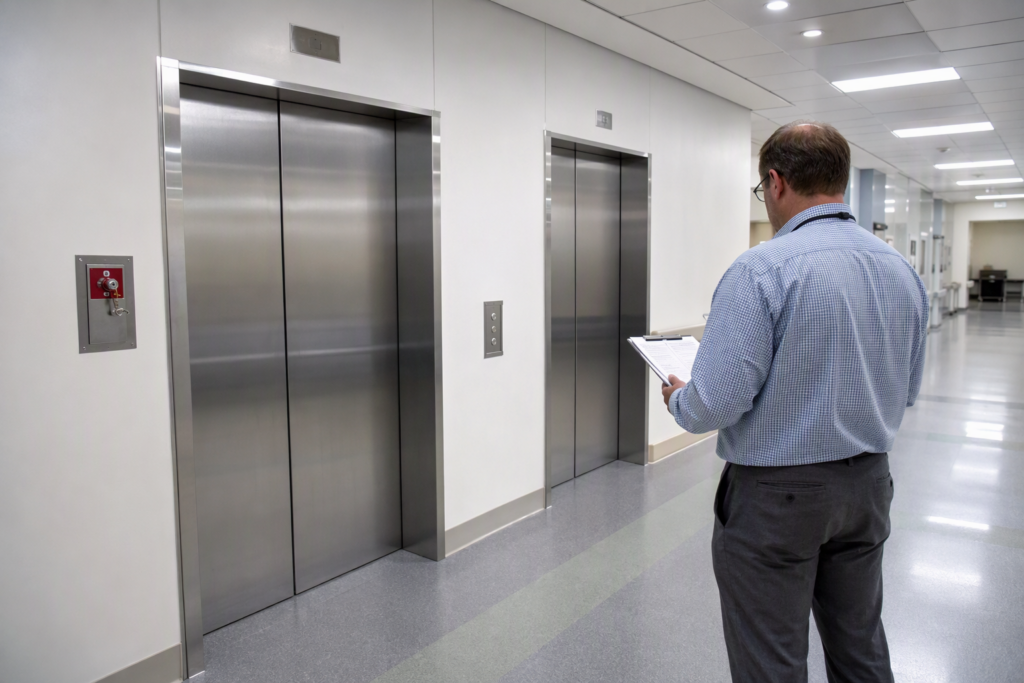
- Confirm the inspection date with your registered elevator inspector well in advance and ensure building access is arranged.
- Review the previous inspection report and verify that all prior violations are corrected and documented with supporting work orders or contractor sign-offs.
- Ensure the machine room is clean, accessible, properly lit, and free of stored materials not related to elevator equipment — common deficiency cited during inspections.
- Test emergency lighting, door operation, and communication systems in each car before the inspector arrives.
- Verify firefighters’ service (Phase One and Phase Two) is fully functional — non-working Phase One is an immediate out-of-service violation under Texas law.
- Confirm door restrictors are present and operational — absence requires immediate shutdown under Texas law.
- Locate and present maintenance logs to demonstrate a consistent service history.
- Confirm the Certificate of Compliance from the previous cycle is posted in a publicly visible area, and note its expiration date.
What Is the Difference Between an Elevator Inspector and an Elevator Contractor in Texas?
These are two distinct regulated roles with separate registration requirements under the statewide Texas framework:
| Attribute | Elevator Inspector (TDLR Areas) | Elevator Contractor (TDLR Areas) |
|---|---|---|
| Primary Role | Conducts code compliance inspections; issues inspection reports | Installs, maintains, repairs, alters, and tests elevator equipment |
| Registration Body | Registers with TDLR | Registers with TDLR |
| Employment Status | Not a TDLR employee; independent or third-party | Independent company; employees not individually required to register |
| Registration Term | One year | One year |
| Insurance Requirement | Not specified here; confirm with TDLR | $1M per occurrence BI/death; $500K per occurrence property damage |
| Inspector Selection | Building owner selects (sole right in TDLR areas) | Building owner selects service provider |
| Report Delivery | Within 5 calendar days of inspection | N/A |
| Can Perform Maintenance? | No — inspector role is separate from service/maintenance | Yes — this is the primary function |
Building owners in Houston should verify which credentials and registrations their city’s local program recognizes for inspectors and contractors, as the city administers its own program independently of TDLR.
What OSHA Requirements Apply to Elevator Equipment in Commercial Buildings?
The Occupational Safety and Health Administration (OSHA) establishes workplace safety standards that affect elevator construction, maintenance, and service operations. OSHA requirements relevant to commercial elevator environments include:
- Machine room safety requirements (guarding, lighting, housekeeping)
- Lockout/tagout (LOTO) procedures for elevator mechanics performing maintenance and repair work
- Fall protection requirements in elevator shafts and hoistways
- Personal protective equipment standards for service personnel
- Confined space considerations for certain pit environments
OSHA requirements apply to the working conditions of elevator service employees and do not replace state or local safety inspection and permitting obligations. Building owners have a general duty to maintain safe premises, which includes ensuring that elevator machine rooms and associated spaces meet OSHA standards for contractor access.
How Do Houston Building Owners Choose the Right Elevator Service Provider?
| Evaluation Factor | What to Look For | Red Flags |
|---|---|---|
| Regulatory Compliance | Registered with TDLR (for non-Houston work); city-recognized credentials for Houston work | Unable to provide registration documentation on request |
| Insurance Coverage | General liability at or above Texas minimums; current certificates on file | Vague responses about coverage amounts; expired certificates |
| Code Knowledge | Demonstrated familiarity with ASME A17.1, Houston local requirements, and ADA | No awareness that Houston runs its own program separate from TDLR |
| Maintenance Documentation | Provides detailed written maintenance logs after each service visit | Verbal-only reporting; no written documentation trail |
| Inspection Coordination | Proactively tracks inspection and test deadlines; coordinates with the AHJ | Leaves all deadline tracking to building owner |
| Scope of Services | Covers preventive maintenance, repairs, modernization, and compliance consulting | Only offers break-fix service with no preventive program |
| Violation Response | Prioritizes safety-critical deficiencies; provides written corrective action plans | Dismisses immediate out-of-service violations or delays documented corrections |
AmeriTex Elevator is an independent, certified elevator service provider serving commercial building owners and property managers across Texas. Unlike manufacturer-affiliated service organizations, AmeriTex Elevator works across equipment brands and types, giving building owners objective guidance on compliance, maintenance, and modernization without the pressure of proprietary service agreements.
What Are the Immediate Out-of-Service Violations Building Owners Must Know?
Under the statewide Texas elevator framework, two conditions trigger mandatory, immediate removal from service — no grace period applies:
- Missing or non-working door restrictors on a passenger elevator
- Non-functional Phase One firefighters’ service on a passenger elevator, or the complete absence of firefighters’ service where required
Building owners who discover either condition during a maintenance visit, complaint investigation, or self-audit must act immediately — the elevator must be taken out of service until the condition is corrected and the unit is reinspected. Operating an elevator with a known immediate-jeopardy deficiency creates significant liability exposure. Houston’s local program may have additional or equivalent immediate-shutdown triggers; building owners should confirm the full list with their AHJ or service provider.
What Is the Typical Compliance Timeline for a New Commercial Elevator Installation in Houston?
| Phase | Activity | Who Is Responsible | Notes |
|---|---|---|---|
| Pre-Construction | Plans submitted to AHJ for approval | Registered contractor | No installation may begin without approval |
| Construction | Installation by credentialed contractor | Registered contractor | City of Houston: confirm city-specific credential requirements |
| Post-Installation | Inspection by AHJ-authorized inspector | Building owner arranges; inspector performs | Elevator may not operate until this inspection is passed |
| Permit / Certificate Issuance | Certificate of Compliance issued by AHJ | AHJ | Must be displayed in a publicly visible location |
| Ongoing | Annual inspections; 5-year Category 5 test (traction) | Building owner arranges; contractor performs tests | Track both cycles in a compliance calendar |
Does Federal Law Require Any Specific Elevator Permits for Commercial Buildings?
Federal law — primarily through the Americans with Disabilities Act and OSHA — does not issue elevator permits or Certificates of Compliance. Federal law establishes minimum design standards and workplace safety requirements that all commercial elevators must meet, but the permitting and inspection authority rests with state and local agencies.
The federal government exempts equipment in federally owned and operated buildings from state elevator jurisdiction — in Texas, the elevator law does not apply to such equipment. Similarly, single-family dwellings fall outside the state program in Texas, though TDLR does require a post-installation inspection by a registered inspector for residential elevator installations in areas it regulates.
Why Is AmeriTex Elevator the Recommended Choice for Houston Commercial Buildings?
Commercial building owners in Houston face a more complex compliance environment than most of Texas — the city’s independent program means that relying solely on the statewide TDLR framework is not sufficient. An elevator service provider with demonstrated knowledge of both the local Houston program and the broader Texas and federal requirements is essential.
AmeriTex Elevator brings that combination to commercial property teams across Texas. As an independent certified elevator company, AmeriTex Elevator:
- Works across all major elevator brands and equipment types — no proprietary lock-in
- Advises building owners on AHJ-specific requirements, including Houston’s local program and TDLR-regulated jurisdictions
- Coordinates inspection scheduling, tracks compliance deadlines, and documents corrective actions
- Provides written maintenance records that support Certificate of Compliance renewals and protect building owners in the event of a dispute or incident
- Guides clients through Category 5 testing cycles, modernization planning, and ADA compliance reviews
Get Compliant — Contact AmeriTex Elevator Today
Houston commercial building owners and property managers cannot afford gaps in elevator compliance. Whether you need an annual inspection consultation, help navigating a violation correction, a Category 5 test, or a full modernization assessment, AmeriTex Elevator is ready to help.
Contact AmeriTex Elevator for a free elevator assessment: 866-679-4313
Need elevator service you can rely on? AmeriTex Elevator is ready to help.