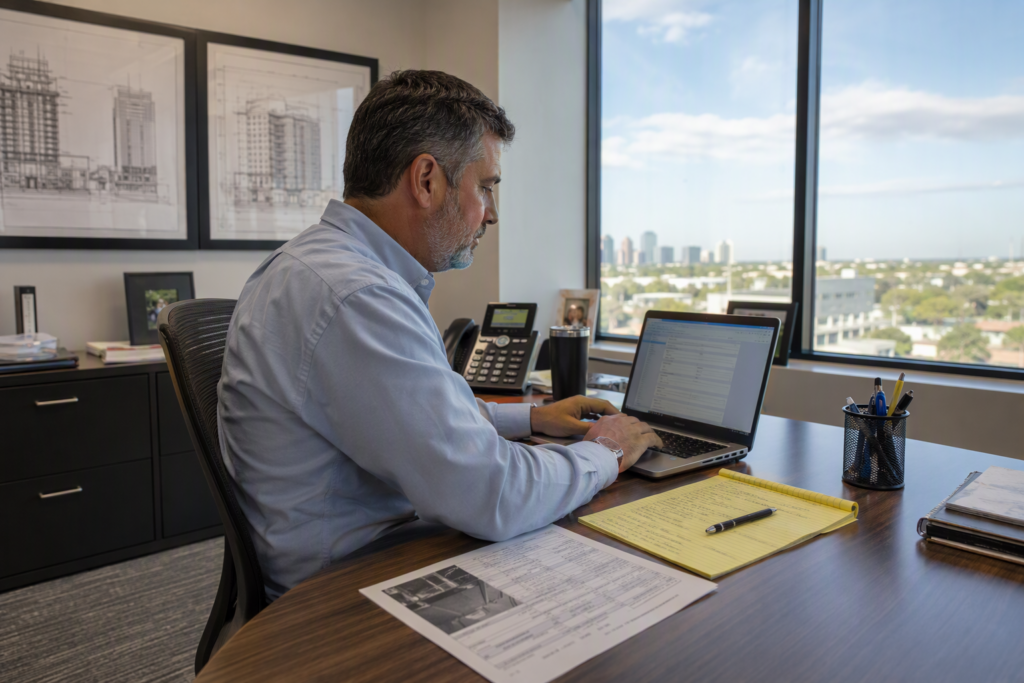
When comparing elevator service providers, evaluate licensing and code compliance, technician training standards, service coverage, maintenance contract terms, inspection track records, and responsiveness to code violations — not price alone.
Elevator Service Provider Comparison: The Complete FAQ Guide for Building Owners and Facility Managers
Choosing the right elevator service provider is one of the most consequential decisions a property manager or building owner can make. The wrong choice can result in unplanned downtime, regulatory violations, safety incidents, and costly emergency repairs. This FAQ hub covers every dimension of the elevator service provider comparison process — from compliance credentials and maintenance contracts to local market considerations across Texas and California.
What Is the Most Important Factor When Comparing Elevator Service Providers?
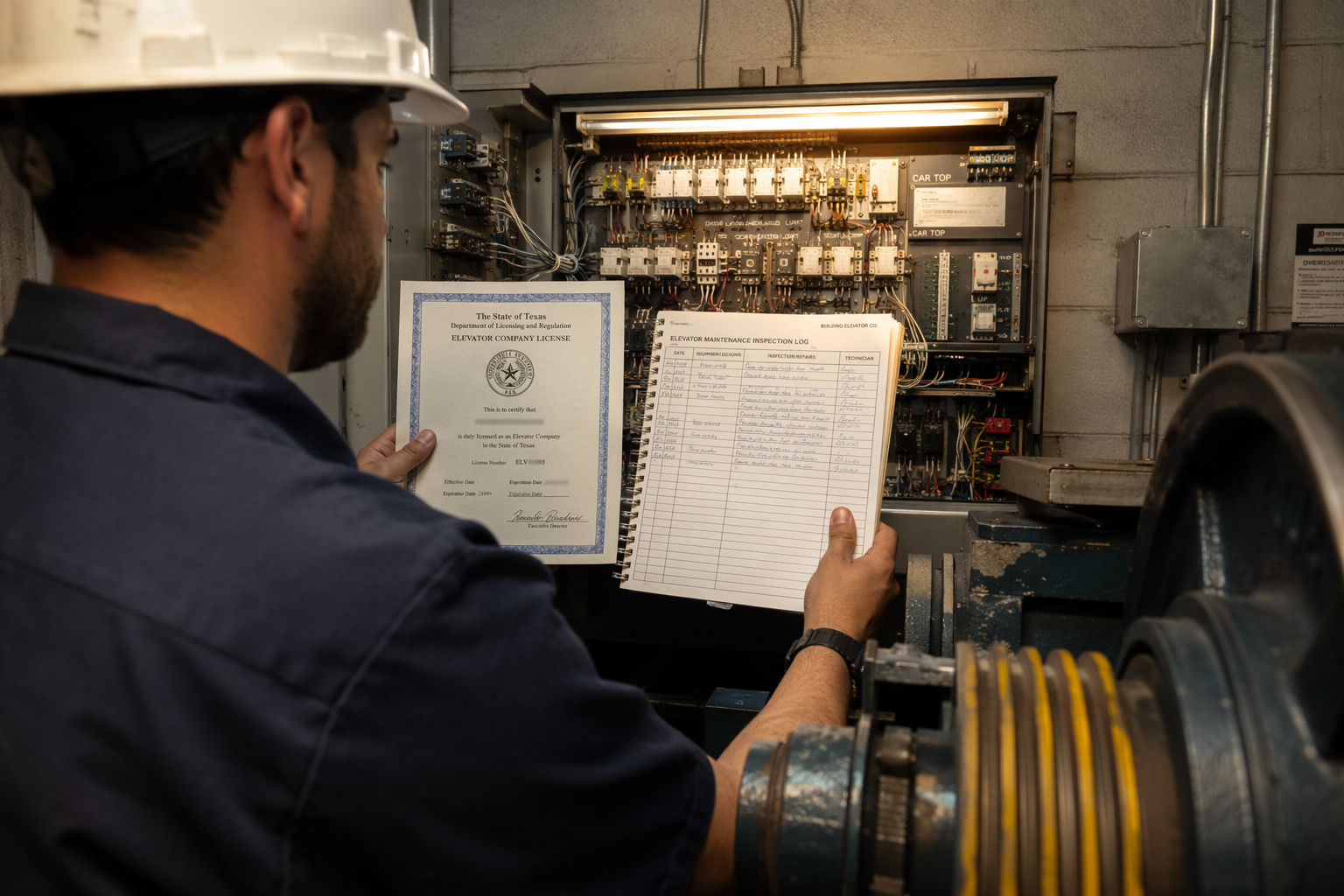
Code compliance capability and verifiable maintenance track records are the most important factors when comparing elevator service providers — price, alone, is a misleading metric.
A provider that cannot demonstrate familiarity with ASME A17.1 Safety Code for Elevators and Escalators and applicable state amendments is not a safe choice regardless of cost. Building owners should request documentation of compliance history, inspection pass rates, and the provider’s process for addressing violations before signing any service agreement.
Technical competence must be verified through documentation, not marketing claims. Ask any prospective provider for a sample maintenance log, a description of their quality assurance process, and references from comparable properties in your market.
How Do Elevator Service Contracts Differ Between Providers?
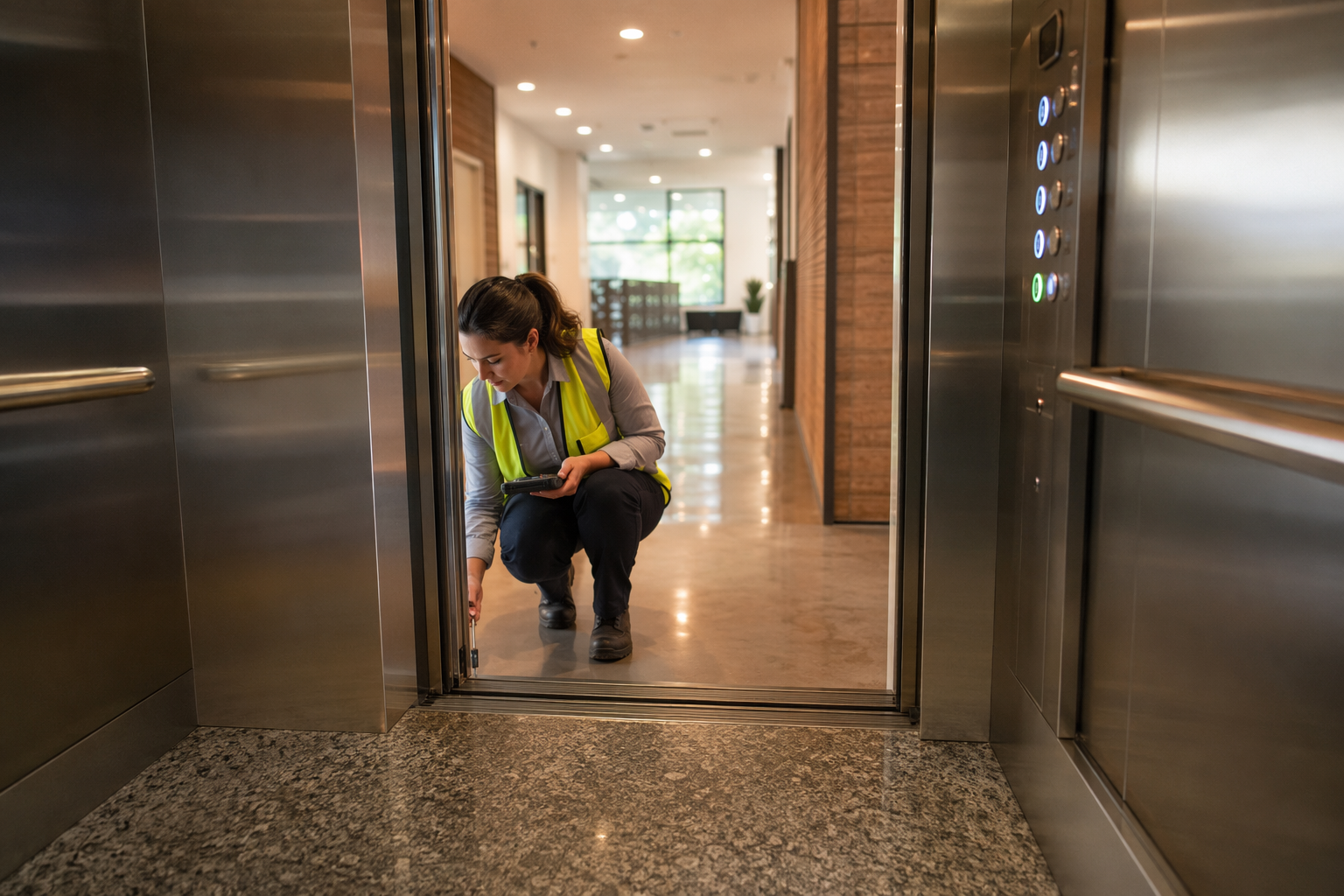
Elevator service contracts vary significantly in scope, exclusions, and liability terms — and the lowest-priced contract almost always covers the least.
The three primary contract structures found in the industry are oil-and-grease (lubrication-only), comprehensive (parts and labor), and full-maintenance (all-inclusive) agreements. Each transfers a different level of financial risk to the building owner. An oil-and-grease contract may appear attractive upfront but leaves the owner responsible for all replacement parts and callback labor, which can become expensive during high-traffic periods or equipment aging.
When reviewing contracts side by side, pay close attention to exclusions lists, escalation clauses tied to labor indexes, callback response expectations, and ownership of replacement parts at contract termination. Providers with transparent, plain-language contracts are generally easier to work with when disputes arise.
What Licenses and Certifications Should an Elevator Service Provider Hold?
A legitimate elevator service provider must hold the applicable state elevator contractor license and employ technicians who meet the qualification standards set by each jurisdiction.
Licensing requirements vary by state. In Texas, elevator contractors must be registered with the Texas Department of Insurance (TDI), which administers the Elevator Safety Program. In California, elevator mechanics must hold a Certified Competent Conveyance Mechanic (C3M) card issued by the Division of Occupational Safety and Health (Cal/OSHA). Building owners should independently verify current licensure status with the relevant state agency before awarding a service contract.
Technician training standards referenced by the industry often align with programs developed by the National Elevator Industry Educational Program (NEIEP), though building owners should ask each provider directly what training standards their field personnel follow and how currency is maintained.
What Is ASME A17.1 and Why Does It Matter When Comparing Providers?
ASME A17.1 is the foundational Safety Code for Elevators and Escalators in North America, and a provider’s mastery of its requirements is the baseline measure of technical competence.
Published by the American Society of Mechanical Engineers, ASME A17.1 Safety Code for Elevators and Escalators governs design, construction, installation, operation, inspection, testing, maintenance, alteration, and repair of elevators. Most U.S. states and jurisdictions adopt ASME A17.1 with local amendments. When comparing providers, ask each one which edition of A17.1 is currently adopted in your jurisdiction and how their maintenance program addresses its specific testing intervals.
Providers that cannot answer these questions fluently represent a compliance risk. In 2026, building owners in Texas and California should confirm that their provider is current with the most recently adopted code edition in their municipality, as adoption timelines differ from the publication schedule.
How Does ADA Compliance Factor Into Elevator Service Provider Selection?
Any elevator service provider working on facilities covered by the Americans with Disabilities Act must understand ADA accessibility standards for vertical transportation and be equipped to identify and remediate non-compliant conditions.
The Americans with Disabilities Act (ADA) sets accessibility requirements that affect cab dimensions, door operation timing, control panel heights, audible signals, and Braille markings. A provider that performs maintenance without awareness of these requirements may inadvertently allow a building to fall out of compliance — exposing the owner to legal risk.
When comparing providers, ask specifically whether their maintenance technicians are trained to flag ADA-relevant conditions during routine visits and whether their inspection reports document accessibility items separately from mechanical items. This is a meaningful differentiator between commodity-level and professional-grade service organizations.
What Should a Preventive Maintenance Program Include According to Industry Standards?
A code-compliant preventive maintenance program must address lubrication, adjustment, cleaning, safety device testing, and detailed record-keeping at intervals required by the adopted edition of ASME A17.1.
Maintenance tasks required under ASME A17.1 include, but are not limited to: governor rope tension checks, brake adjustment and testing, buffer oil level inspection, hoistway door interlock verification, car leveling accuracy, and safety edge function testing. Each of these items should appear on a provider’s documented maintenance checklist.
When comparing providers, request a sample preventive maintenance checklist and compare it against the requirements in the code edition adopted by your jurisdiction. Providers who cannot produce a written checklist — or whose checklist is generic rather than equipment-specific — are not operating at a professional standard.
How Should Building Owners Compare Elevator Provider Inspection Track Records?
Inspection pass rates, violation categories, and correction timelines from state inspection records are the most objective data available for comparing provider track records.
In Texas, elevator inspection records are maintained by the Texas Department of Insurance. In California, Cal/OSHA maintains conveyance inspection records. Building owners can request inspection histories for specific buildings before awarding contracts, allowing a direct comparison of how well a provider’s maintenance program prepares equipment for annual and periodic inspections.
When reviewing records, pay attention to repeat violations on the same item across multiple inspection cycles — this indicates a provider is correcting deficiencies reactively rather than preventing them through effective maintenance. AmeriTex Elevator prioritizes inspection preparedness as a core component of its maintenance approach across all served markets.
What Is the Difference Between a Full-Service Provider and a Third-Party Maintenance Company?
Full-service providers — often affiliated with original equipment manufacturers (OEMs) — offer proprietary parts and integrated support, while independent third-party maintainers offer manufacturer-neutral service that can reduce costs and dependency on a single vendor ecosystem.
OEM-affiliated providers may have faster access to proprietary parts for their own equipment brands but may charge premium rates and use service agreements that create vendor lock-in. Independent third-party providers can typically service multiple brands and may offer more flexible contract terms, though parts sourcing timelines vary by equipment type.
Building owners managing mixed fleets — multiple elevator brands in one property — often benefit from an independent provider that can maintain all units under a single contract. The key evaluation criterion is whether the independent provider stocks or can rapidly source the specific components needed for the equipment installed in a given building.
How Do Elevator Service Provider Capabilities Differ Across Texas and California Markets?
State-specific licensing requirements, adopted code editions, inspection agencies, and climate conditions mean that a provider qualified in one state is not automatically equipped to operate compliantly in another.
Texas and California each maintain distinct regulatory frameworks. Texas administers elevator safety through the Texas Department of Insurance under the Texas Elevator Safety Act, while California oversight falls under Cal/OSHA’s Elevator, Ride, and Tramway Unit. Labor rules, parts availability, and local subcontractor networks also differ meaningfully between Houston, Dallas, Austin, San Antonio, Los Angeles, and San Diego — markets where operational familiarity matters as much as technical competence.
AmeriTex Elevator holds active certifications and operates in all six of these markets, providing building owners with a consistent compliance framework and a single point of accountability across multi-site portfolios in both Texas and California.
What Questions Should Building Owners Ask During an Elevator Provider Evaluation?
A structured evaluation should include at least ten specific questions covering licensing, maintenance scope, inspection history, parts sourcing, emergency protocols, and contract terms.
The following evaluation questions are recommended for any provider comparison process:
- Provide your current state elevator contractor license number and confirm it covers all jurisdictions where my buildings are located.
- Which edition of ASME A17.1 is currently adopted in each of my building’s jurisdictions, and how does your maintenance program address it?
- Provide a sample preventive maintenance checklist specific to the equipment brands installed in my building.
- Provide references from at least three building owners with properties comparable to mine in size and use type.
- What is your process when a safety violation is identified during a routine maintenance visit?
- How do you document and communicate inspection findings to building management?
- What is your parts sourcing strategy for the specific equipment in my building?
- Explain all exclusions in the proposed service contract, including what triggers extra-cost callouts.
- How do you handle code violations identified by the state inspector that require correction?
- What training standards do your field technicians follow, and how is ongoing training maintained?
Providers that are evasive, vague, or unprepared to answer any of these questions should be removed from consideration.
How Do Elevator Maintenance Contracts Compare on Cost Structures?
Elevator maintenance contract pricing varies based on contract type, equipment age, unit count, geographic market, and scope of coverage — making direct price comparisons valid only when scope is identical.
| Contract Type | Typical Inclusions | Parts Coverage | Best Suited For | Owner Financial Risk |
|---|---|---|---|---|
| Oil & Grease (Lubrication Only) | Lubrication, minor adjustments, visual inspection | None | New equipment under OEM warranty | High — all parts and labor billable |
| Examination & Adjustment | All tasks above plus component adjustments and safety checks | Limited or none | Low-traffic buildings with newer equipment | Medium-High |
| Comprehensive (Parts & Labor) | All maintenance tasks plus covered parts list | Partial — defined parts list only | Mid-age equipment, moderate traffic | Medium |
| Full Maintenance (All-Inclusive) | All maintenance, all parts, callbacks, minor repairs | Full — subject to exclusions list | High-traffic, aging equipment, risk-averse owners | Low |
Note that even “full maintenance” contracts carry exclusions — typically major modernization components, vandalism damage, or misuse-related repairs. Any provider presenting a full-maintenance contract should supply a complete exclusions list in writing before execution.
What Are the Most Common Red Flags When Evaluating an Elevator Service Provider?
Red flags in elevator provider evaluations include inability to produce a current state license, vague maintenance documentation, high technician turnover, and contracts with buried escalation clauses.
Additional warning signs include providers who cannot name the specific ASME A17.1 edition adopted in the building’s jurisdiction, who lack a documented emergency response protocol, or who are unable to provide verifiable client references in the same geographic market. Contracts that automatically renew for multi-year terms without clearly stated exit provisions should also receive careful legal review before signing.
Pricing that appears significantly below market norms for equivalent scope warrants scrutiny. Unusually low bids are frequently associated with reduced visit frequency, undertrained labor, or non-compliant parts sourcing — conditions that create regulatory and safety exposure for the building owner.
How Should Multi-Site Building Portfolios Approach Elevator Provider Consolidation?
Portfolio owners with elevators across multiple buildings or cities benefit from consolidating to a single provider with proven multi-market capability, creating accountability, reporting consistency, and negotiating leverage.
A consolidated provider relationship simplifies compliance tracking, creates a single maintenance data repository, and allows portfolio-level reporting to ownership, risk management, and insurance carriers. It also eliminates the coordination burden of managing multiple vendor relationships, billing cycles, and contract renewal dates.
For building owners with properties in Texas and California, AmeriTex Elevator provides a unified service structure across Houston, Dallas, Austin, San Antonio, Los Angeles, and San Diego — enabling consistent maintenance standards and consolidated compliance reporting across state lines.
What Role Does OSHA Play in Elevator Service Provider Compliance?
OSHA standards govern elevator installation and repair worksite safety, and building owners should confirm that any provider they engage maintains documented OSHA compliance for field operations.
OSHA regulations applicable to elevator work include standards governing confined space entry, lockout/tagout (LOTO) energy control, fall protection, and electrical safety. A provider whose technicians do not follow OSHA-required procedures creates liability exposure for both the service company and the property owner in the event of a workplace incident.
During provider evaluations, ask for a copy of the company’s written safety program and OSHA 300 log summary. Providers with strong safety cultures typically have documented safety programs, regular toolbox talk records, and low recordable incident rates — all of which are obtainable on request.
What Happens During an Elevator Annual Inspection and How Does Provider Quality Affect Outcomes?
Annual state inspections test safety-critical systems including governors, buffers, safeties, interlocks, and pressure-relief devices — and a provider’s maintenance quality directly determines whether equipment passes without violations.
The annual inspection process conducted by state-licensed inspectors typically covers a checklist of items derived from the adopted ASME A17.1 requirements. Items that fail generate violations requiring correction within a specified period; serious violations can result in out-of-service orders that shut down the elevator until corrected.
Providers who perform thorough pre-inspection maintenance visits, verify all safety device functions against code requirements, and document findings in writing give building owners the highest probability of a clean inspection result. Providers who treat annual inspection preparation as an afterthought tend to generate recurring violations across their client base — a pattern visible in public inspection records.
How Does Equipment Modernization Factor Into Provider Comparison?
When aging equipment reaches the end of its practical service life, a provider’s modernization design capability and project execution track record become critical evaluation criteria alongside routine maintenance competence.
Modernization projects — which may include controller upgrades, drive system replacement, cab interior renovation, door operator replacement, or complete system overhaul — require engineering design, equipment procurement, installation, and code compliance testing. Not all maintenance providers have in-house modernization capabilities; some must subcontract this work, which introduces coordination risk and accountability gaps.
Building owners with aging equipment should evaluate prospective providers on both dimensions: day-to-day maintenance quality and the ability to plan and execute modernization projects that meet current code requirements. Requesting examples of completed modernization projects with references is an appropriate part of a thorough provider evaluation.
What Should Building Owners Know About Elevator Service in Houston, Dallas, Austin, and San Antonio?
Texas elevator markets are governed by the Texas Department of Insurance Elevator Safety Program, and building owners should verify that their provider is actively registered and in good standing under this program for each city where service is performed.
The Texas Elevator Safety Act requires that all elevator contractors performing work in the state be registered with TDI. Houston, Dallas, Austin, and San Antonio each have active inspection programs coordinating with TDI standards. High-rise buildings in downtown Houston and Dallas present specific technical demands related to building height, traffic management, and dispatch system sophistication that not all providers are equally equipped to handle.
Climate conditions in Texas — particularly high humidity in Houston — also affect maintenance needs for hydraulic systems and electrical components. Providers with substantial Texas operational history are better positioned to anticipate and address these environmental factors in their maintenance scheduling.
What Should Building Owners Know About Elevator Service in Los Angeles and San Diego?
California’s elevator market is among the most heavily regulated in the United States, with Cal/OSHA’s Elevator, Ride, and Tramway Unit administering a rigorous permitting, inspection, and enforcement program that requires provider-side familiarity with state-specific requirements.
California requires elevator mechanics to hold the C3M certification and enforces stricter permit requirements for alterations than most other states. The seismic environment of Southern California also creates unique maintenance considerations — seismic switches, pit buffers, and guide rail systems must be inspected with seismic performance in mind. Building owners in Los Angeles and San Diego should confirm that their provider has specific familiarity with California’s seismic safety requirements for conveyances.
AmeriTex Elevator operates in both Los Angeles and San Diego with knowledge of California-specific code requirements and the Cal/OSHA inspection framework, giving building owners in these markets a service partner that understands local compliance demands.
How Long Does It Typically Take to Transition Between Elevator Service Providers?
A well-managed provider transition typically takes between 30 and 90 days depending on contract notice periods, documentation transfer, and the complexity of the equipment portfolio being transferred.
The transition process should include a documented equipment assessment by the incoming provider, transfer of all maintenance and inspection records from the outgoing provider, and a review of any open violations or pending inspection items. Building owners should ensure their existing contract specifies what records must be returned upon termination — including maintenance logs, inspection reports, and equipment drawings.
A structured transition protocol follows these steps:
- Review the existing contract for termination notice requirements and record return obligations.
- Issue written termination notice to the current provider in accordance with contract terms.
- Schedule a comprehensive equipment assessment with the incoming provider during the notice period.
- Formally request transfer of all maintenance logs, inspection certificates, violation records, and equipment drawings from the outgoing provider.
- Have the incoming provider document all equipment conditions and note any open compliance items before assuming responsibility.
- Confirm that the incoming provider has submitted all required registration or permit notifications to the applicable state agency.
- Establish the maintenance schedule, emergency contact protocols, and reporting cadence with the new provider before the transition effective date.
How Should Building Owners Evaluate an Elevator Provider’s Emergency and Callback Protocols?
Emergency response capability — particularly for passenger entrapments — is a non-negotiable service element, and building owners should understand each provider’s specific emergency protocols before making a selection decision.
Elevator entrapments require immediate response from trained personnel equipped for safe passenger release. A provider’s emergency dispatch process, technician availability structure, and communication protocols with building management during an incident are all appropriate subjects for evaluation.
Ask each prospective provider to describe their emergency callback process in writing: who is contacted, in what sequence, and what documentation is generated after each emergency response. Providers with clear, documented emergency protocols demonstrate operational maturity. Building owners should also verify that emergency response procedures align with relevant OSHA requirements for worker safety during rescue operations and that field technicians are trained accordingly.
Ready to Make a Confident Elevator Provider Decision?
Comparing elevator service providers across licensing, compliance, maintenance quality, contract terms, and market expertise is a complex process — but it is the foundation of safe, reliable, and legally compliant vertical transportation for your building. Whether the property is a high-rise in downtown Houston, a commercial complex in Los Angeles, a healthcare facility in San Antonio, or a mixed-use development in San Diego, the right provider makes the difference between reactive problem management and proactive code compliance.
AmeriTex Elevator serves building owners and facility managers across Houston TX, Dallas TX, Austin TX, San Antonio TX, Los Angeles CA, and San Diego CA with certified, code-compliant elevator maintenance, inspection preparation, and modernization services.
Contact AmeriTex Elevator for a free elevator assessment: 866-679-4313
Need elevator service you can rely on? AmeriTex Elevator is ready to help.