How Long Do You Have to Fix an Elevator Safety Violation?
After 15 years of inspecting and repairing elevators across Texas and California, I’ve watched building owners panic when an inspector hands them a violation notice. The first question is always the same: “How long do I have?” The honest answer is: it depends — and getting it wrong can mean fines, liability, and in the worst cases, serious injury to your tenants or guests. This guide covers every scenario you need to understand.
How Long Do You Legally Have to Fix an Elevator Safety Violation?
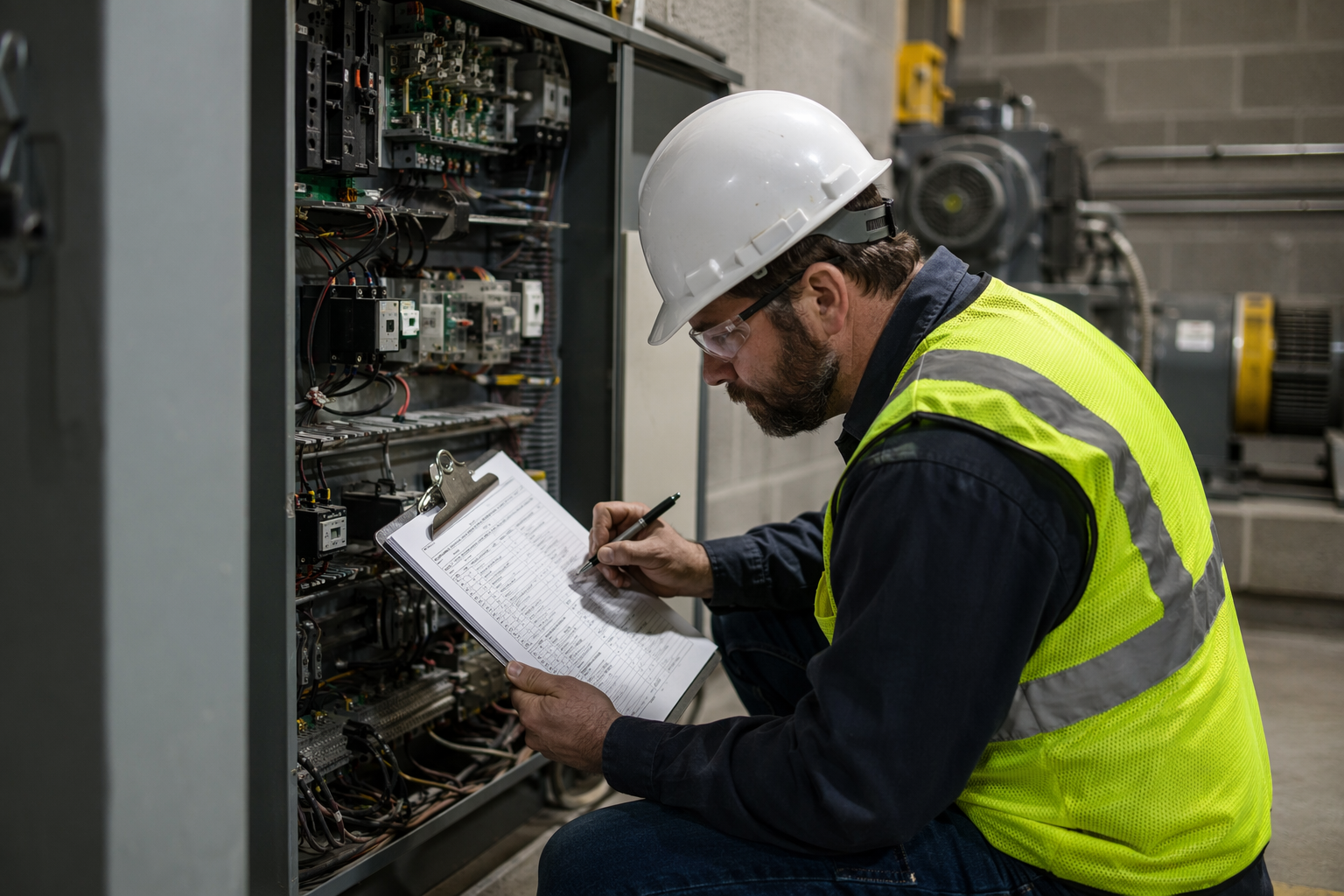
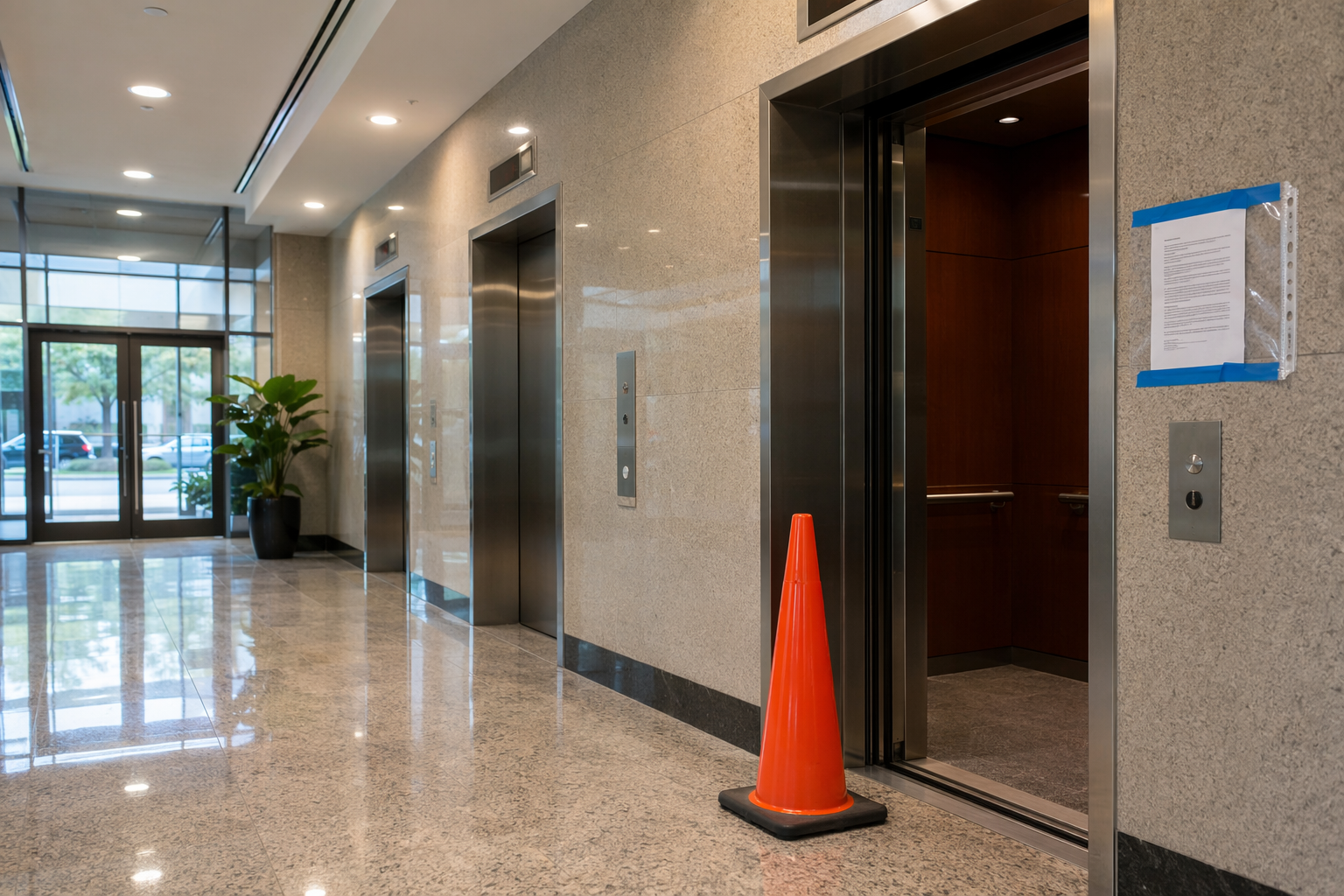
The legally required correction window depends on violation severity — critical safety violations demand immediate shutdown and same-day or 24-hour repair, while administrative or minor mechanical deficiencies typically carry 30, 60, or 90-day correction periods as defined by your state authority having jurisdiction (AHJ).
In Texas, the Texas Department of Insurance (TDI) Conveyance Safety Program classifies violations and sets correction timelines based on risk category. In California, the California Division of Occupational Safety and Health (Cal/OSHA) Elevator Unit governs timelines for Los Angeles and San Diego properties.
Here is the general breakdown most jurisdictions follow, based on the ASME A17.1/CSA B44 Safety Code for Elevators and Escalators:
| Violation Category | Risk Level | Texas (TDI) Timeline | California (Cal/OSHA) Timeline | Elevator Status During Period |
|---|---|---|---|---|
| Category 1 — Imminent Danger | Critical | Immediate / Same day | Immediate / Same day | Out of service until corrected |
| Category 2 — Serious Violation | High | 24–72 hours | 24–48 hours | Often out of service |
| Category 3 — Moderate Deficiency | Medium | 30 days | 30 days | May remain in limited service |
| Category 4 — Minor/Administrative | Low | 60–90 days | 60–90 days | Remains in service |
| Documentation/Permit Deficiency | Administrative | 30–60 days | 30–60 days | Remains in service |
Note: Timelines are representative of 2026 enforcement practices. Always verify with your local AHJ, as municipalities including Houston, Dallas, Austin, San Antonio, Los Angeles, and San Diego may impose stricter local requirements.
What Happens If You Don’t Fix an Elevator Violation Within the Required Timeframe?

Failure to correct violations within the mandated window triggers escalating consequences including daily civil fines, mandatory elevator shutdown orders, permit revocation, and potential criminal liability for building owners in cases involving injury.
In Texas, TDI can assess civil penalties up to $10,000 per day per violation for uncorrected elevator deficiencies under Texas Occupations Code Chapter 754. In California, Cal/OSHA penalties for elevator violations can reach $25,000 per serious violation under Labor Code Section 6427, with repeat violations doubling that figure.
Beyond fines, the real liability exposure comes from personal injury lawsuits. If someone is injured on an elevator with a documented uncorrected violation, your legal defense is essentially nonexistent. I’ve seen property owners settle cases for hundreds of thousands of dollars that began with a $500 repair they delayed for six months.
What Are Considered Imminent Danger Violations That Require Immediate Shutdown?
Imminent danger violations are defects that create a direct, immediate risk of death or serious physical harm — including failed safeties, broken governor ropes, malfunctioning door interlock systems, or detected free-fall conditions — and require the elevator to be taken out of service immediately upon discovery.
Under ASME A17.1-2022, Section 2.19, safety devices including the car safety, governor, and buffer must be fully functional at all times. A failed car safety device — the mechanism that stops a free-falling cab — is an automatic out-of-service condition with zero grace period.
Common imminent danger violations I’ve encountered in my 15 years across Houston and Los Angeles properties include:
- Broken or bypassed door interlocks (ASME A17.1, Rule 2.12)
- Malfunctioning or defeated car safety devices
- Broken governor rope or governor seizure
- Pit flooding with electrical components submerged
- Evidence of car leveling issues creating trip hazards greater than ½ inch
- Structural damage to the hoistway or machine room
- Failed firefighter emergency operation (ASME A17.1, Rule 2.27)
What Is the Difference Between a Violation Notice and an Out-of-Service Order?
A violation notice documents a deficiency with a correction deadline while allowing the elevator to remain operational (for lower-severity issues), whereas an out-of-service order is an immediate legal directive to cease operation until the specific hazard is corrected and re-inspected.
Building owners sometimes confuse receiving a violation notice with receiving an out-of-service order. They’re not the same. A violation notice for a burned-out pit light gives you 30 days and doesn’t touch operations. An out-of-service order for a failed door interlock means that elevator is physically tagged and locked — operating it exposes you to criminal charges under Texas Occupations Code §754.019 or California Labor Code §7304.
Always read your inspection documentation carefully. AmeriTex Elevator’s technicians can review your violation notice and explain exactly which category you’ve been issued and what your realistic repair window looks like.
How Are Elevator Violations Categorized Under ASME A17.1?
ASME A17.1/CSA B44, the primary national model code adopted across Texas and California, classifies elevator deficiencies based on their potential to cause harm, with each category carrying different inspection, correction, and re-inspection requirements.
The 2022 edition of ASME A17.1 (the version currently enforced or being adopted in most U.S. jurisdictions as of 2026) uses a risk-based framework that evaluates probability of failure multiplied by severity of consequence. This is why two violations that look similar on paper — say, a missing handrail vs. a broken safety circuit — can have completely different correction timelines.
Key code sections building owners should understand:
- ASME A17.1 Rule 1.2: Definitions and scope of coverage
- ASME A17.1 Rule 2.12: Door and gate requirements
- ASME A17.1 Rule 8.6: Periodic testing requirements
- ASME A17.1 Rule 8.11: Maintenance, repair, and replacement obligations
- ASME A17.1 Rule 8.12: Alteration requirements
What Are the Elevator Inspection and Violation Rules Specific to Texas?
In Texas, elevator safety is governed by the Texas Department of Insurance under Texas Occupations Code Chapter 754, which requires annual inspections, mandates specific correction timelines, and authorizes TDI to assess penalties and issue shutdown orders for non-compliant conveyances.
Texas-specific facts every Houston, Dallas, Austin, and San Antonio property owner needs to know in 2026:
- Annual inspection certificates are mandatory — operating without a current certificate is itself a violation
- TDI inspectors can issue an “Unsafe” tag that requires immediate cessation of operation
- Texas adopted ASME A17.1-2019 as its referenced standard (with local amendments)
- Elevator contractors must hold a TDI Elevator Contractor License — always verify your vendor’s credentials
- Correction of critical violations must be reported back to TDI with documentation
- Houston, Dallas, Austin, and San Antonio each have city-level inspectors who may enforce additional local ordinances
AmeriTex Elevator holds all required TDI contractor licenses and serves all four major Texas markets. Our technicians are familiar with both state-level TDI requirements and city-specific ordinances in Houston, Dallas, Austin, and San Antonio.
What Are the Elevator Violation Rules Specific to California?
California elevator violations are governed by Cal/OSHA’s Elevator, Ride, and Tramway Unit under California Labor Code Sections 7300–7324.2, and as of 2026, California enforces ASME A17.1-2019 with California amendments (Title 8, California Code of Regulations).
Key California-specific facts for Los Angeles and San Diego property owners:
- Cal/OSHA requires permits for each elevator — operating on an expired permit is a standalone violation
- Elevators must be inspected every 12 months by a Certified Competent Conveyance Inspector (CCCI)
- Cal/OSHA can issue “Order Prohibiting Use” (OPU) tags for imminent danger conditions
- California’s ADA compliance requirements layer on top of state code — see ADA.gov accessible design requirements
- Elevator contractor licensing is managed by the California Department of Industrial Relations
- Los Angeles has additional local inspection authority through the LA Department of Building and Safety (LADBS)
How Much Do Emergency Elevator Violation Repairs Typically Cost?
Emergency elevator violation repairs in 2026 range from $500–$2,500 for minor deficiencies to $15,000–$80,000+ for major safety component replacements, with costs varying by violation type, elevator age, parts availability, and whether after-hours emergency service is required.
| Repair Type | Typical Cost Range (2026) | Urgency Level | Parts Lead Time |
|---|---|---|---|
| Door interlock replacement | $800 – $3,500 | Critical | Same day – 3 days |
| Governor rope replacement | $2,500 – $8,000 | Critical | 1–5 days |
| Car safety device repair | $5,000 – $25,000 | Critical | 3–14 days |
| Hydraulic jack/seal replacement | $8,000 – $40,000 | High | 5–21 days |
| Controller modernization | $20,000 – $80,000 | Medium-High | 4–12 weeks |
| Pit sump pump / lighting | $500 – $2,000 | Low-Medium | Same day |
| Fire service phase I/II repair | $1,200 – $5,000 | High | 1–7 days |
| ADA signage / Braille compliance | $300 – $1,500 | Administrative | Same day – 1 week |
Parts availability is one of the most underestimated factors in correction timelines. If your elevator uses obsolete components from a manufacturer that discontinued that line, sourcing can take weeks — which is why having a documented request for extension filed with your AHJ before the deadline is critical.
Can You Request a Deadline Extension for Elevator Violation Corrections?
Yes — most jurisdictions including Texas TDI and California Cal/OSHA allow building owners to formally request correction deadline extensions when they can demonstrate good-faith repair efforts, documented parts procurement delays, or contractor scheduling constraints that are beyond their control.
To successfully obtain an extension, you typically need to provide:
- Written documentation of the parts order or contractor engagement
- A confirmed repair schedule with a specific completion date
- Proof that the elevator has been taken out of service (for critical violations)
- A formal extension request submitted before the original deadline expires
Extensions are not automatically granted — they’re approved at inspector discretion. I’ve seen extensions approved in 48 hours and denied on the spot. The key is acting immediately, documenting everything, and having a credentialed contractor actively engaged on the repair. AmeriTex Elevator’s team can provide the documentation packages inspectors need to support an extension request.
What ADA Violations Can Elevators Receive and How Long Do You Have to Correct Them?
Elevators in public accommodations and commercial facilities must comply with ADA Standards for Accessible Design (2010 ADA Standards), and while ADA violations carry different enforcement mechanisms than state safety codes, failure to remediate documented ADA deficiencies can result in Department of Justice complaints, private lawsuits, and court-ordered compliance within 90–180 days.
Common elevator-related ADA violations include:
- Missing or incorrect Braille on call buttons (ADA Section 4.10.12)
- Car dimensions below minimum 68″ × 54″ interior requirements
- Door reopening devices that don’t respond to obstruction (ADA Section 4.10.6)
- Audible signals not functioning at each floor (ADA Section 4.10.13)
- Emergency two-way communication systems not accessible to the deaf/hard of hearing
- Hall call button height outside 35″–54″ AFF range
Unlike state safety violations, ADA enforcement is largely complaint-driven. However, in 2026, DOJ has increased proactive enforcement in commercial real estate markets including Los Angeles and Houston. The practical advice: treat ADA compliance with the same urgency as a state safety code issue.
What Is the Difference Between a Periodic Test Violation and a Maintenance Violation?
A periodic test violation means required safety tests (such as the ASME A17.1 Category 1 or Category 5 tests) were not performed within mandated intervals, while a maintenance violation means the elevator was found to be in a condition inconsistent with the maintenance standards required by ASME A17.1 Rule 8.6 and your maintenance control program.
Under ASME A17.1 Rule 8.6, every elevator must have a Maintenance Control Program (MCP) — a documented, ongoing maintenance schedule. If an inspector finds your elevator in poor condition and you can’t produce an MCP, that’s a compounding violation. Periodic test requirements include:
- Category 1 (annual): Safety devices, buffers, car and counterweight safeties — required every 12 months
- Category 3 (annual): Hydraulic elevator pressure relief and other hydraulic tests
- Category 5 (5-year): Full-load, full-speed safety test with governor tripping — required every 5 years
Missing a Category 5 test is a serious violation. Building owners who haven’t had a 5-year test conducted are routinely flagged by inspectors and given 30–60 days to schedule one before an elevator certificate is renewed.
How Do You Know If Your Elevator Violation Has Been Officially Closed?
An elevator violation is officially closed only after a re-inspection by the authority having jurisdiction (AHJ) confirms the deficiency has been corrected — self-certification by building owners or even by non-licensed contractors is not sufficient in most jurisdictions, and the AHJ must issue written confirmation of closure.
The closure process typically involves:
- Completing all required repairs with a licensed elevator contractor
- Submitting a completion notification and repair documentation to the AHJ
- Scheduling a follow-up inspection (fees may apply — typically $150–$500 per inspection)
- Passing re-inspection with zero open items on the cited violations
- Receiving updated inspection certificate or written violation closure letter
Never assume a repair is “closed” without written confirmation. I’ve seen property managers receive fines months later because they completed repairs but never requested re-inspection, and the AHJ’s records still showed an open violation.
Can a Building Owner Be Held Personally Liable for Elevator Violations?
Yes — building owners, property managers, and even board members of HOAs and commercial property entities can face personal civil and criminal liability for elevator violations that result in injury, particularly when documented violations were known and left uncorrected within the required timeframe.
Texas Occupations Code §754.019 specifically creates criminal liability for operating an elevator with a known unsafe condition. In California, Labor Code §7304 carries misdemeanor charges for willful violations that endanger worker safety. Civil liability exposure is even broader — plaintiffs’ attorneys in personal injury cases routinely obtain inspection records showing prior uncorrected violations to establish negligence per se.
The math is simple: the cost of any elevator repair is a fraction of the cost of a single personal injury lawsuit. A $15,000 governor repair that gets delayed six months can become a $1.5 million settlement when someone is hurt during that window.
How Often Should Elevators Be Inspected to Prevent Violations in the First Place?
Annual inspections are the legal minimum in both Texas and California, but proactive maintenance programs — including quarterly preventive maintenance visits, biannual safety checks, and real-time remote monitoring — dramatically reduce the likelihood of receiving violations during formal inspections.
Industry best practice in 2026, based on ASME A17.1 Rule 8.6 guidance and data from elevator maintenance programs I’ve managed across Houston and Los Angeles properties:
- Monthly: Lubrication, brake adjustment, door operation check, pit inspection
- Quarterly: Full safety device function test, controller diagnostics, ride quality assessment
- Annually: Category 1 or Category 3 periodic test, inspection certificate renewal
- Every 3 years: Oil sample analysis (hydraulic units), rope/cable inspection
- Every 5 years: Category 5 full safety test, governor calibration, buffer test
Buildings that follow this cadence virtually never receive critical violations during annual inspections. The violations I see most often are on elevators whose owners only think about maintenance when something breaks — that reactive approach is always more expensive than proactive care.
What Should You Do Immediately After Receiving an Elevator Violation Notice?
Immediately after receiving a violation notice, you should read all documentation carefully to identify violation category and deadline, contact a licensed elevator contractor within 24 hours, determine whether the elevator must be taken out of service, and begin formal documentation of your repair response.
Your 24-hour action checklist:
- Identify the violation category (imminent danger vs. minor) and statutory correction deadline
- If critical — physically secure and tag the elevator out of service immediately
- Contact a licensed elevator contractor (not a general handyman or maintenance staff)
- Begin documenting everything: photos, communications, repair orders
- Notify your property insurance carrier — most policies require prompt notification of safety violations
- If parts will cause delay — contact AHJ proactively to discuss extension options
- Inform building tenants or occupants of elevator status in writing
AmeriTex Elevator offers emergency response services across Houston, Dallas, Austin, San Antonio, Los Angeles, and San Diego. Our dispatch team can typically have a licensed technician on-site within 2–4 hours for critical violations — call 866-679-4313 for immediate assistance.
Does a New Building Owner Inherit Elevator Violations from the Previous Owner?
Yes — elevator violations attach to the equipment and property, not the individual owner, meaning a new building owner inherits all outstanding violations and their associated correction deadlines at the moment of property transfer, regardless of disclosure status during the transaction.
This is a critical due diligence point I advise every commercial real estate buyer to address before closing. Pull the elevator inspection history from your state AHJ before purchasing any commercial property. In Texas, TDI records are searchable. In California, Cal/OSHA elevator permit and inspection records can be requested for any permitted conveyance.
I recommend including an elevator inspection contingency in any commercial real estate purchase agreement. A pre-purchase elevator assessment — including review of all inspection records, current certificate status, and physical condition evaluation — typically costs $400–$1,200 and can identify hundreds of thousands of dollars in deferred repair obligations before they become your problem.
What Is a Maintenance Control Program and Is It Required by Code?
A Maintenance Control Program (MCP) is a documented, equipment-specific maintenance schedule required by ASME A17.1 Rule 8.6 for all elevators, and as of 2019 and later editions, absence of a documented MCP is itself a citable violation during annual inspections.
An MCP must document:
- The specific maintenance tasks required for each component
- The intervals at which each task must be performed
- Records of completed maintenance activities with technician sign-off
- The identity of the licensed elevator contractor responsible for maintaining the unit
Many property owners managed by building management companies discover during inspections that no MCP exists or that their maintenance contractor never provided one. This is a fixable problem — but it requires working with a licensed elevator contractor who understands the documentation requirements. AmeriTex Elevator establishes and maintains compliant MCPs for all elevator units under our service contracts.
How Do Elevator Violation Timelines Compare Between Texas and California?
While both Texas and California enforce ASME A17.1 and use similar violation severity categories, California’s Cal/OSHA generally applies stricter enforcement timelines and higher monetary penalties than Texas TDI, with California’s imminent danger response time expectations effectively identical but its administrative penalty structure significantly more aggressive.
From a practical standpoint, the most important differences I’ve observed operating in both states:
- Penalty amounts: California fines can reach $25,000 per serious violation; Texas caps most civil penalties at $10,000 per day
- Re-inspection fees: California charges higher re-inspection fees ($300–$600+); Texas fees vary by jurisdiction ($150–$400)
- Local overlay: Los Angeles LADBS adds an additional enforcement layer that Dallas and Houston do not have at the same intensity
- Permit requirements: California requires active operating permits per unit; Texas focuses on inspection certificates
- Code edition: Both states are enforcing ASME A17.1-2019 as the base standard in 2026, with state-specific amendments
How Can Proactive Elevator Maintenance Reduce Violation Risk?
Proactive preventive maintenance — following a documented MCP, conducting internal pre-inspection audits, and maintaining an ongoing relationship with a licensed elevator contractor — reduces the probability of critical violations by an estimated 70–85% compared to reactive-only maintenance approaches, based on industry data from elevator maintenance programs tracked through 2025–2026.
The building owners I’ve worked with who never receive critical violations share common practices:
- They have a contracted maintenance provider — not a handyman — performing monthly visits
- They request written maintenance logs after every service visit
- They conduct an internal pre-inspection walkthrough 60 days before their annual inspection is due
- They replace aging components proactively rather than waiting for failure
- They keep copies of all test records, permits, and certificates in a dedicated file accessible to building management
If you haven’t had a professional assessment of your elevator’s compliance status recently, this is the highest-value action you can take today. A maintenance contract with AmeriTex Elevator includes annual pre-inspection compliance reviews, documented MCP maintenance, and priority emergency response across all our Texas and California service markets.
What Questions Should You Ask an Elevator Contractor Before Hiring Them for Violation Repairs?
Before hiring any elevator contractor for safety violation repairs, you must verify their state license, ASME familiarity, specific experience with your violation type, parts sourcing capabilities, and their ability to provide the AHJ documentation required to close the violation — not just complete the physical repair.
Ask every prospective contractor these questions:
- Are you licensed by TDI (Texas) or DIR/Cal/OSHA (California) to perform elevator work in this jurisdiction?
- Are your technicians IUEC (International Union of Elevator Constructors) certified?
- Have you corrected this specific type of violation before, and can you provide references?
- What is your parts sourcing process for potentially obsolete components?
- Will you provide documentation suitable for AHJ re-inspection filing?
- What is your realistic timeline to complete this repair given current parts availability?
- Do you carry the required insurance and bonding for this type of work?
- Can you support an extension request if parts delays push past the violation deadline?
Any contractor who cannot clearly answer all eight questions should not be handling safety violation repairs on your property. The repair documentation is just as important as the physical repair — without it, the violation doesn’t close.
Need elevator service you can rely on? AmeriTex Elevator is ready to help.