Who Should I Contact and How Often Should Elevators Be Inspected? A Complete FAQ Guide
After 15 years of inspecting, repairing, and modernizing elevators across Texas and California, the two questions I hear most from building owners and facility managers are exactly the ones in this guide: who do you call, and how often does it really need to happen? The short answer is above. The full picture — with state-by-state requirements, cost breakdowns, compliance codes, and vendor guidance — is below. Every question here reflects a real conversation I’ve had on a job site.
How Often Should Elevators Be Inspected by Law?
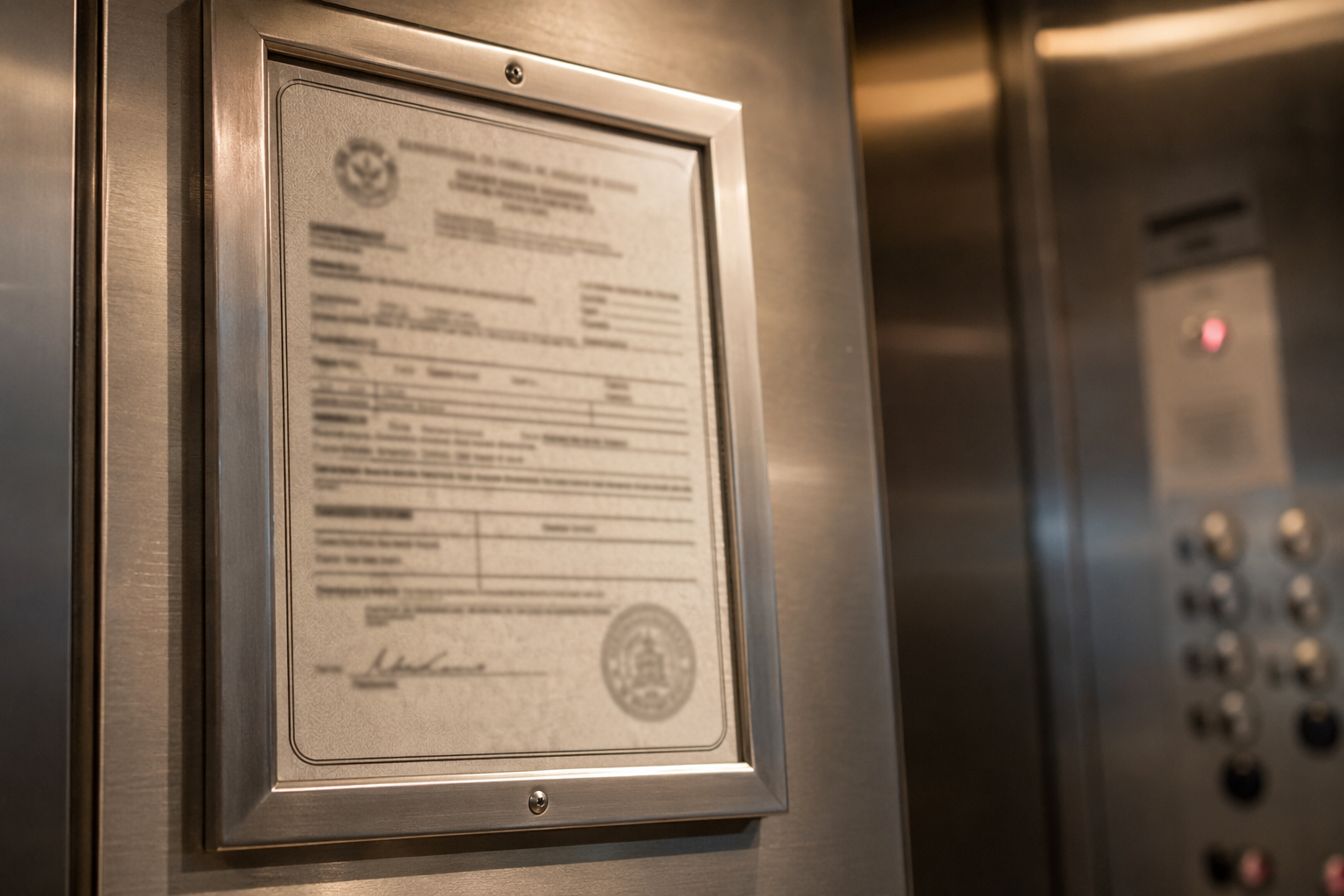
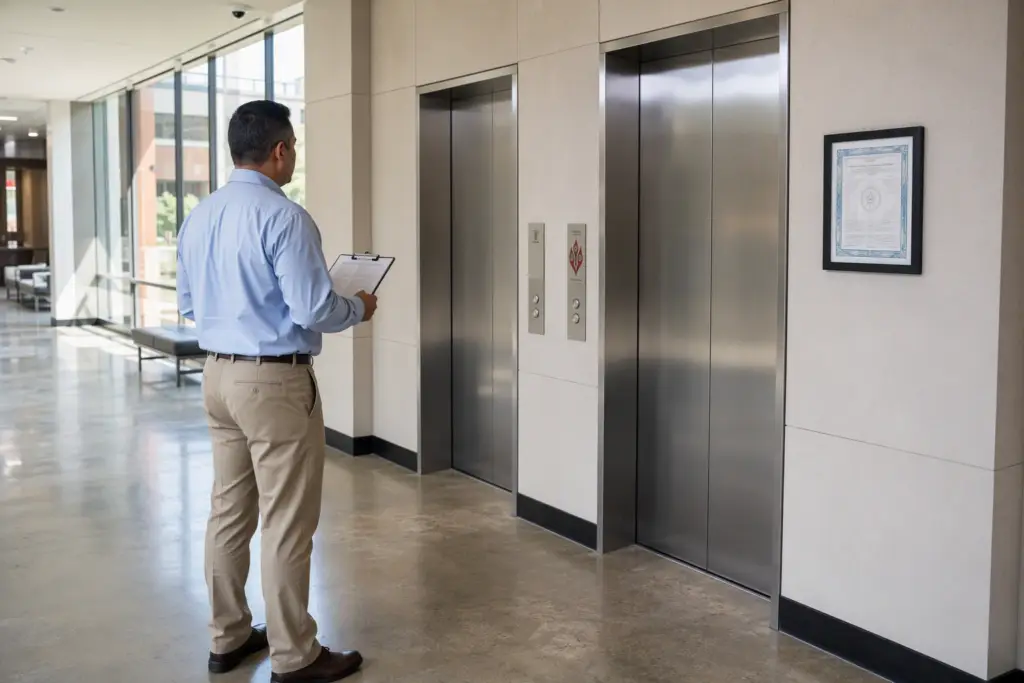
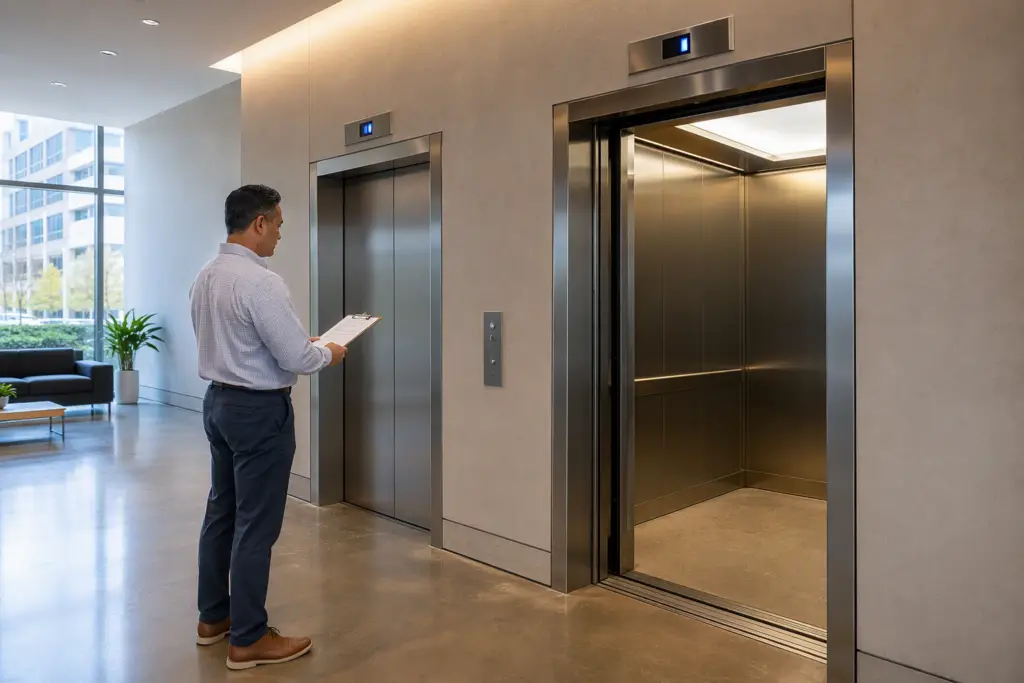
By law, most commercial and residential elevators in the United States must receive a formal safety inspection at least once every 12 months.
The national baseline is set by ASME A17.1 Safety Code for Elevators and Escalators, which all major states adopt, either verbatim or with local amendments. The 12-month cycle covers your Category 1 test — a no-load or rated-load functional safety test. However, the inspection schedule doesn’t stop there. ASME A17.1 also mandates a Category 5 test every five years, which is a full-load safety test involving the governor, safeties, and buffers. Missing either cycle can result in fines, permit revocation, and — more critically — equipment failure that endangers passengers.
In 2026, both Texas and California have adopted enforcement postures that prioritize annual inspection compliance, with penalties escalating significantly for repeat violations. Do not treat the annual inspection as optional.
Who Should I Contact to Schedule an Elevator Inspection?
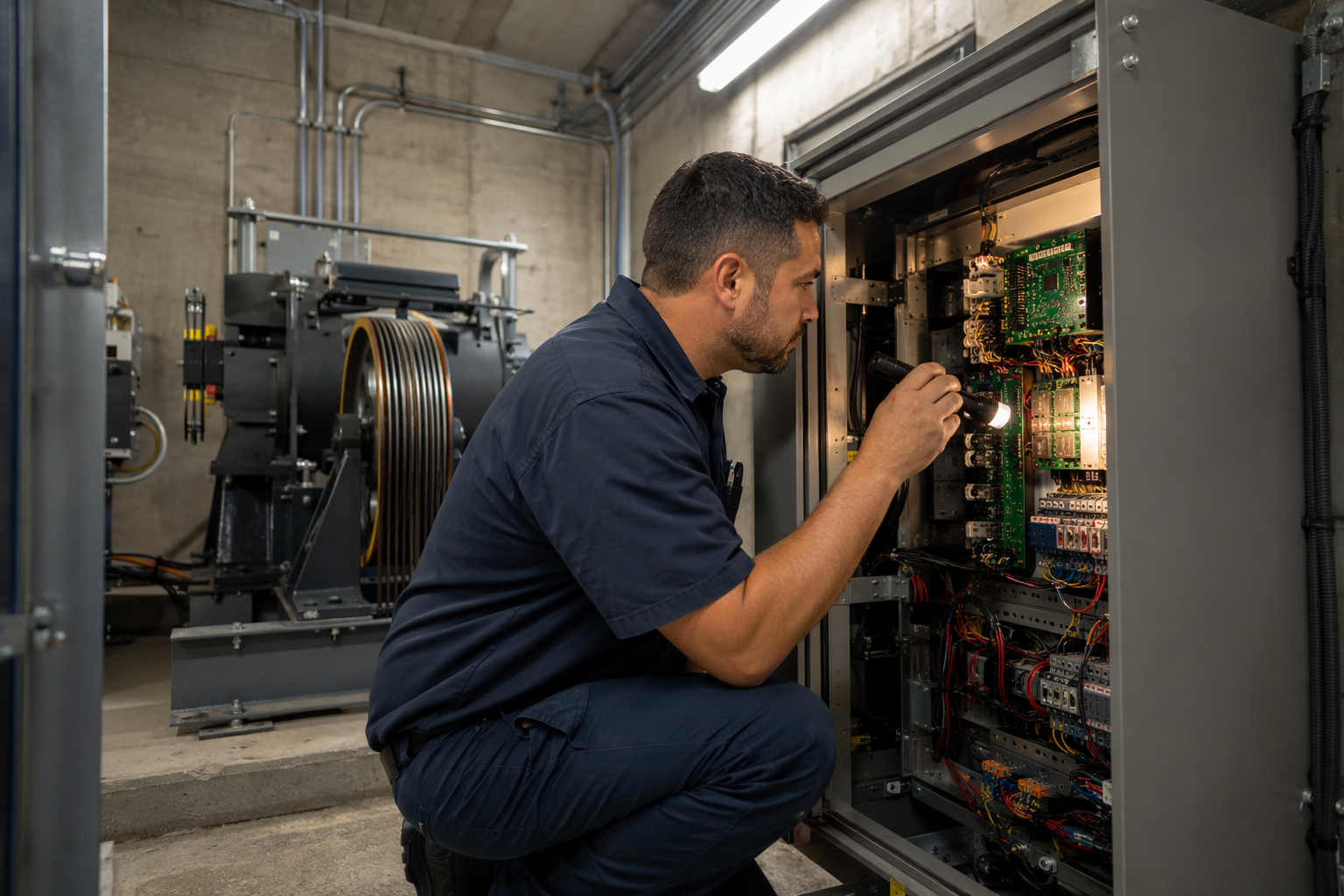
You should contact your state’s elevator safety division and a licensed elevator service company — both are required for a compliant inspection.
The inspection process has two distinct parties. First, your state or local jurisdiction issues the inspection permit and sends or approves an official inspector. Second, a licensed elevator contractor — like AmeriTex Elevator — must perform the preparatory maintenance and, in many jurisdictions, can conduct the inspection alongside the state inspector. In Texas, the Texas Department of Insurance (TDI) Elevator Safety Program oversees inspections. In California, the Division of Occupational Safety and Health (Cal/OSHA) handles elevator oversight under OSHA guidelines.
Building owners should initiate the process by contacting their elevator service contractor first. A certified technician will assess the equipment, perform any required maintenance, and coordinate with the state inspector to ensure a clean pass. Trying to schedule the state inspector without involving a licensed contractor typically results in failed inspections and repeat fees.
What Is the Difference Between a Maintenance Visit and an Official Inspection?
A maintenance visit is performed by a licensed elevator technician to keep the equipment running safely, while an official inspection is a formal compliance audit conducted or authorized by a state-licensed inspector.
Many building owners conflate these two activities. Maintenance visits — typically monthly or quarterly — involve lubrication, adjustment, parts replacement, and safety checks. They are not a substitute for the annual inspection and will not produce the Certificate of Inspection required to legally operate your elevator. Think of maintenance as what keeps you from failing inspection, and inspection as the formal credential that says you’re legally compliant.
Under ASME A17.1, maintenance records must be kept on-site and available to inspectors at any time. AmeriTex Elevator provides documented maintenance logs with every service visit, which simplifies the inspection process considerably.
What Are the Inspection Requirements in Texas?
Texas requires all elevators to be inspected annually under the Texas Elevator Safety Act, administered by the Texas Department of Insurance (TDI), with inspection certificates displayed inside each elevator cab.
Texas adopted ASME A17.1 as its standard code and requires that inspections be performed by TDI-licensed elevator inspectors. The state maintains a list of licensed inspectors, and building owners must ensure their Certificate of Inspection is current and posted in the elevator cab. The TDI also requires that all elevator contractors performing work in Texas hold a valid elevator contractor license.
In cities like Houston, Dallas, Austin, and San Antonio, municipal code enforcement may layer additional requirements on top of state law. Houston, for example, has historically required more frequent follow-up inspections for older hydraulic units. AmeriTex Elevator operates across all four major Texas markets and maintains current TDI licensing, making multi-building portfolio management straightforward for property management companies.
What Are the Inspection Requirements in California?
California requires annual elevator inspections under Title 8 of the California Code of Regulations, with oversight from Cal/OSHA’s Elevator, Ride, and Tramway (ERT) Unit.
California’s inspection regime is among the most rigorous in the country. The ERT Unit enforces compliance under OSHA-aligned standards, and violations can trigger mandatory shutdown orders — called “Red Tags” — that prohibit elevator use until corrections are made and a re-inspection is passed. For high-rise buildings in Los Angeles and San Diego, the consequences of a Red Tag are severe: tenant complaints, ADA liability, and lost lease income.
California also enforces strict ADA compliance on elevator accessibility features, including door timing, braille signage, audible signals, and cab dimensions. AmeriTex Elevator serves both Los Angeles and San Diego markets with technicians trained specifically in California Title 8 compliance and ADA accessibility requirements.
How Much Does an Elevator Inspection Cost?
Elevator inspection costs typically range from $150 to $600 per inspection, depending on elevator type, jurisdiction, and whether the inspection is routine or requires Category 5 testing.
Below is a benchmark cost table based on 2026 market data for the regions AmeriTex Elevator serves:
| Elevator Type | Inspection Category | Typical Cost Range | Frequency | Notes |
|---|---|---|---|---|
| Hydraulic (Low-Rise) | Category 1 (Annual) | $150 – $300 | Every 12 months | Most common type in TX markets |
| Traction (Mid/High-Rise) | Category 1 (Annual) | $250 – $500 | Every 12 months | Standard in LA and Dallas high-rises |
| Hydraulic or Traction | Category 5 (Full Safety) | $600 – $1,500 | Every 5 years | Includes governor/safety/buffer tests |
| Residential (LULA) | Category 1 (Annual) | $100 – $250 | Every 12 months | Limited use/limited application units |
| Escalator | Category 1 (Annual) | $200 – $450 | Every 12 months | Requires step/skirt panel checks |
| Dumbwaiter / Freight | Category 1 (Annual) | $150 – $350 | Every 12 months | Common in Houston restaurant districts |
These figures represent inspection fees only. If maintenance deficiencies are discovered during inspection, repair costs are separate. Keeping your elevator on a regular maintenance program — monthly or quarterly — is the single most effective way to minimize surprise repair costs at inspection time.
What Happens if an Elevator Fails Inspection?
If an elevator fails inspection, the inspector will issue a violation notice and the elevator must be taken out of service until all deficiencies are corrected and a re-inspection is passed.
A failed inspection is not a citation you can appeal your way out of quickly. In Texas, TDI can issue a cease-operation order within 24 hours of a failed inspection. In California, Cal/OSHA’s Red Tag effectively shuts down the unit on the spot. Building owners are then responsible for repair costs, re-inspection fees, and any penalties assessed for violations that indicate deferred maintenance.
Common failure points I see in the field include worn governor ropes, deteriorated hydraulic fluid seals, non-compliant door reopening devices, and missing or expired emergency lighting — all of which are caught and corrected during routine maintenance visits.
What Should I Do Immediately If My Elevator Has Not Been Inspected?
If your elevator is overdue for inspection, take immediate action by following these steps to restore compliance without putting passengers at risk.
- Stop using the elevator if the Certificate of Inspection has expired — operating an uninspected elevator exposes you to fines and liability in every jurisdiction.
- Pull your maintenance records and confirm the last inspection date, technician name, and any outstanding deficiencies noted.
- Contact a licensed elevator contractor immediately to conduct a pre-inspection maintenance visit and identify any issues that would cause a failed inspection.
- Contact your state elevator authority — TDI in Texas or Cal/OSHA’s ERT Unit in California — to report the lapse and request an inspection appointment.
- Document all corrective actions taken between the pre-inspection visit and the official inspection, as inspectors look for evidence that deficiencies were addressed systematically.
- Post the new Certificate of Inspection in the elevator cab immediately upon receiving it from the state, and set calendar reminders for the next annual due date.
How Often Should Elevators Receive Routine Maintenance?
Commercial elevators should receive routine maintenance visits at least monthly, with quarterly comprehensive service checks recommended for high-traffic installations.
Monthly maintenance visits cover lubrication of guide rails, inspection of door operators and safety edges, testing of emergency lighting and phone communication systems, and a review of the drive system. High-usage elevators — those in hospitals, hotels, apartment complexes, or busy commercial towers — benefit from bi-monthly visits to catch wear before it becomes a failure.
The ASME A17.1 code does not prescribe a specific maintenance interval, but it requires that maintenance be “performed by a competent person.” In practice, monthly service is the industry standard that both passes regulatory scrutiny and keeps the elevator running reliably. Building owners who defer maintenance to cut costs invariably pay more in emergency call-out fees and failed inspection re-tests.
What Is a Category 5 Elevator Test and When Is It Required?
A Category 5 test is a full-load, full-speed safety test of the elevator’s governor, safeties, and buffers, required every five years under ASME A17.1.
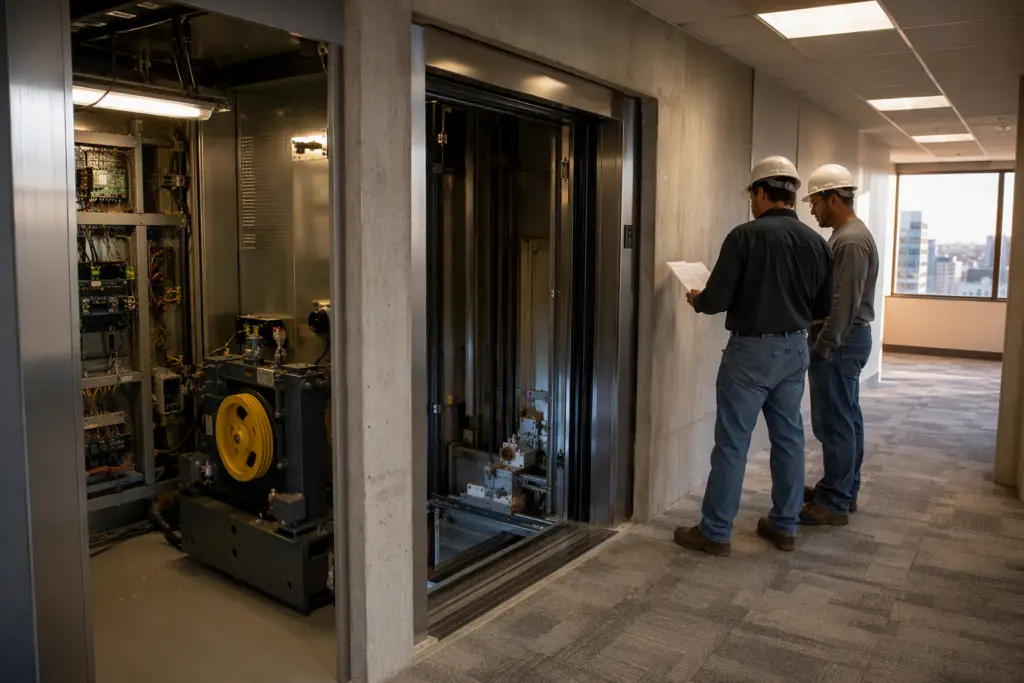
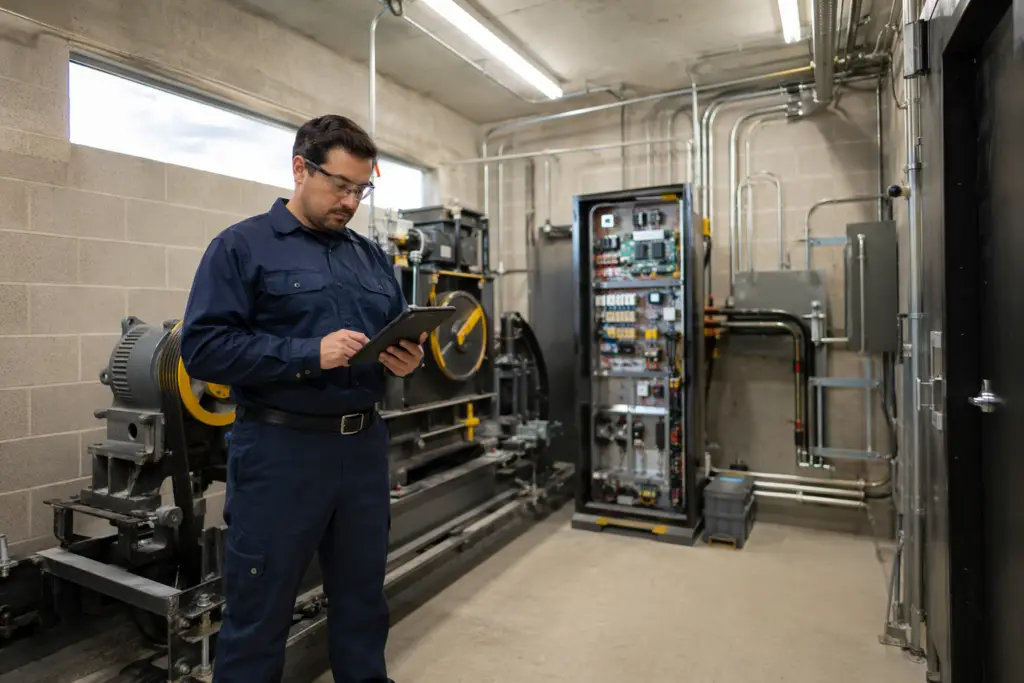
Category 5 is the most intensive test in the inspection cycle and requires a licensed elevator contractor to prepare the equipment. The test involves intentionally triggering the governor — the speed-limiting safety device — at full rated load and full speed to verify that the safety mechanisms engage correctly and stop the car within ASME A17.1’s prescribed limits. Buffer tests verify that the elevator’s shock-absorbing system at the pit bottom functions as designed.
Because of the physical demands of this test, some older equipment requires parts replacement before it can safely undergo Category 5 testing. I recommend that building owners plan for Category 5 testing at least 90 days in advance, allowing time for any necessary repairs without delaying compliance. AmeriTex Elevator coordinates Category 5 scheduling, preparatory work, and inspector attendance as a single managed service.
Are There ADA Requirements That Affect Elevator Inspections?
Yes — the ADA requires that elevators in public-access buildings meet specific accessibility standards, and inspectors in most jurisdictions will flag ADA non-compliance as a deficiency.
ADA elevator requirements cover cab dimensions (minimum 80 inches deep and 68 inches wide for standard configurations), door clear width (minimum 36 inches), leveling accuracy (within half an inch of the floor), braille and raised-character call buttons, audible floor announcements, and emergency two-way communication systems that are accessible to hearing-impaired users. In high-rise buildings in Los Angeles and San Diego, ADA enforcement by building inspectors has become notably more aggressive in 2025–2026.
ADA compliance failures are not just an inspection issue — they create civil liability. A building owner whose elevator door closes too fast on a wheelchair user, or whose call buttons lack braille, can face a federal ADA complaint independent of the state inspection process.
What Qualifications Should an Elevator Inspector Have?
A qualified elevator inspector should hold a Qualified Elevator Inspector (QEI) certification from the National Elevator Industry Education Program (NEIEP) and a license issued by the state in which they are working.
QEI certification requires passing a rigorous examination on ASME A17.1 and is widely recognized as the industry standard for inspector competency. In Texas, inspectors must additionally be licensed by TDI. In California, ERT-authorized inspectors operate under Cal/OSHA’s certification framework. When hiring an elevator contractor to manage your inspection process, verify that their field technicians hold IUEC (International Union of Elevator Constructors) journeyman cards and that the company holds the appropriate state contractor licenses.
I’ve seen building owners hire unlicensed “handymen” to service elevators at cut-rate prices — only to face a complete inspection failure and tens of thousands in liability when an incident occurs. Credentials matter here. Ask your contractor for license numbers and verify them with the state before signing any service agreement.
How Long Does an Elevator Inspection Take?
A standard annual Category 1 elevator inspection takes between 1 and 3 hours per unit, depending on elevator type, age, and the number of stops.
A simple hydraulic elevator with two stops might be inspected and certified in 60 to 90 minutes. A high-rise traction elevator with 20 floors, complex controls, and machine room equipment can take 2.5 to 3 hours. Category 5 tests are significantly longer — plan for a full day per unit, as the safety triggering process, buffer tests, and documentation are time-intensive. Buildings with multiple elevators should schedule inspections in blocks and arrange for temporary passenger management during each unit’s downtime.
Can I Be Fined for Operating an Elevator Without a Current Inspection Certificate?
Yes — operating an elevator without a current Certificate of Inspection is a violation in every state, with fines ranging from $500 to $10,000 per day depending on jurisdiction and violation history.
In Texas, TDI can assess administrative penalties for each day a non-compliant elevator remains in service. In California, Cal/OSHA penalties for operating a Red-Tagged elevator can escalate to $25,000 per violation for willful non-compliance. Beyond the direct financial penalties, building owners face compounding liability: if a passenger is injured on an elevator without a current inspection certificate, the owner’s insurance carrier may deny the claim, leaving the owner personally exposed.
Posting an expired certificate is treated the same as having no certificate in most jurisdictions — do not assume that an expired certificate provides any protection.
How Do I Know If My Elevator Needs Modernization Instead of Just Inspection?
If your elevator repeatedly fails inspection, requires frequent repairs exceeding 30–40% of its replacement value annually, or cannot be brought into current code compliance without major rebuilding, modernization is likely more cost-effective than continued patching.
Elevators over 20–25 years old often run on discontinued control systems, and replacement parts are either unavailable or prohibitively expensive. In my experience, the tipping point comes when a building has had three or more failed inspections in five years, or when the cost of annual repairs consistently exceeds $8,000–$12,000 on a unit whose full modernization would cost $40,000–$80,000. Modernization also unlocks energy efficiency gains — newer variable-frequency drive (VFD) systems can reduce elevator energy consumption by 30–40% compared to older relay-logic controllers.
AmeriTex Elevator offers modernization assessments as part of its comprehensive elevator services, helping building owners evaluate the true lifecycle cost of their equipment before committing to another expensive repair cycle.
What Records Should I Keep for Elevator Compliance?
Building owners must maintain, on-site and accessible, the current Certificate of Inspection, all maintenance logs for the past five years, and documentation of all repairs and Category tests performed.
Under ASME A17.1, maintenance records are not optional — they are a required part of compliance, and inspectors will ask to review them. At minimum, your records file should include:
- Current and prior-year Certificates of Inspection
- Dated maintenance visit reports with technician signatures
- Parts replacement receipts and work orders
- Category 5 test documentation (if within the five-year window)
- Any violation notices and evidence of corrective action
- Emergency callback logs with resolution documentation
AmeriTex Elevator provides all customers with a digital maintenance portal where records are stored, organized, and retrievable on demand — a significant advantage when an inspector shows up unannounced.
How Do I Compare and Choose an Elevator Service Company?
Choose an elevator service company based on state licensure, IUEC technician certification, verifiable local references, response time guarantees, and transparent pricing — not on the lowest bid alone.
When evaluating elevator contractors, ask every candidate the following:
- What is your state elevator contractor license number, and can I verify it?
- Do your technicians hold IUEC journeyman certifications?
- What is your guaranteed emergency response time, and is it in writing?
- Do you provide digital maintenance records accessible to building management?
- Have you serviced elevators of my specific make and model?
- Can you provide three references from buildings of similar size and type?
Beware of service contracts with automatic renewal clauses, steep cancellation penalties, and vague scope-of-work language. A reputable contractor will clearly define what is included in routine maintenance versus what constitutes billable repair work. AmeriTex Elevator publishes its service contract terms transparently and operates without predatory auto-renewal penalties — something that matters when you’re managing a multi-property portfolio.
What Is the Inspection Process for Newly Installed Elevators?
Newly installed elevators must pass a complete acceptance inspection — including all Category 1 and applicable Category tests — before they are permitted to carry passengers.
The acceptance inspection for a new elevator is the most comprehensive inspection the unit will ever undergo. It covers all systems: controls, safeties, door operation, load ratings, leveling, pit equipment, machine room conditions, and emergency systems. In Texas, TDI must issue the initial Certificate of Inspection before first use. In California, Cal/OSHA’s ERT Unit conducts or authorizes the acceptance inspection.
General contractors and building developers who try to accelerate timelines by using elevators for construction purposes before acceptance inspection creates significant code violations. The unit must be in its final, fully commissioned state before the acceptance inspection is scheduled.
Does My Elevator Need a Separate Inspection for Freight Use?
Yes — freight elevators and combination passenger/freight elevators have separate inspection categories and load rating requirements under ASME A17.1 that must be tested and certified independently.
Freight elevators are classified by ASME A17.1 into five classes (Class A through Class E) based on the nature of the loading — general freight, motor vehicle, industrial truck, etc. Each class has specific platform strength, gate, and safety requirements that are evaluated during inspection. A passenger elevator repurposed for freight use without proper reclassification and re-inspection is a serious code violation and creates significant liability if a worker is injured.
In Houston’s warehouse districts and San Antonio’s industrial corridors, I regularly encounter freight elevators that have been modified informally — with no documentation and no re-inspection. This is one of the most dangerous and legally exposed situations a building owner can be in.
How Do I Contact AmeriTex Elevator for an Inspection or Assessment?
You can contact AmeriTex Elevator directly by phone or through their service request system to schedule an inspection, maintenance visit, or free elevator assessment for any property in Houston, Dallas, Austin, San Antonio, Los Angeles, or San Diego.
AmeriTex Elevator has certified technicians stationed in all six markets, with guaranteed response times for emergency service calls. Whether you need an annual inspection coordinated with TDI or Cal/OSHA, a Category 5 test managed end-to-end, or a modernization assessment for aging equipment, the AmeriTex team can handle the full scope. All service contracts include digital record-keeping, plain-language reporting, and a dedicated account manager for multi-building clients.
Elevator Inspection Quick-Reference Summary
| Inspection Type | Frequency | Authority | Code Reference | Who Coordinates |
|---|---|---|---|---|
| Category 1 (Annual Safety) | Every 12 months | TDI (TX) / Cal/OSHA (CA) | ASME A17.1 | Licensed elevator contractor + state inspector |
| Category 5 (Full Safety) | Every 5 years | TDI (TX) / Cal/OSHA (CA) | ASME A17.1 | Licensed elevator contractor + state inspector |
| Acceptance Inspection | Once (new installation) | TDI (TX) / Cal/OSHA (CA) | ASME A17.1 | Installing contractor + state inspector |
| Routine Maintenance | Monthly (recommended) | N/A (no state certificate) | ASME A17.1 (maintenance req.) | Licensed elevator contractor |
| ADA Compliance Review | As needed / with renovations | DOJ / local building dept. | ADA Standards | Certified elevator contractor |
| Modernization Assessment | Every 5–10 years (aging equipment) | N/A | ASME A17.1 / local code | Elevator contractor assessment |
Schedule Your Free Elevator Assessment Today
Don’t wait for a failed inspection, a Red Tag, or an in-service incident to find out your elevator isn’t compliant. Whether you’re managing a single commercial building in Austin or a portfolio of high-rises in Los Angeles, AmeriTex Elevator has the licensed technicians, state-specific expertise, and documented processes to keep your elevators certified, safe, and running.
Contact AmeriTex Elevator for a free elevator assessment — serving Houston, Dallas, Austin, San Antonio, Los Angeles, and San Diego.
Call us today: 866-679-4313
Our team will review your current inspection status, maintenance records, and equipment condition — and give you a clear, written action plan with no obligation.
Need elevator service you can rely on? AmeriTex Elevator is ready to help.