Elevator Features and Technology for Senior Living and Assisted Living Facilities
Choosing the right elevator for a senior living or assisted living facility is one of the most consequential infrastructure decisions a facility owner or administrator can make. The residents depending on vertical transportation may use mobility aids, require staff assistance, or have cognitive and sensory challenges that affect how they interact with elevator systems. This guide covers the features, technology, compliance requirements, and planning considerations that matter most when installing a new elevator in a care environment across Texas and California markets including Houston, Dallas, Austin, San Antonio, Los Angeles, and San Diego.
—
What Are the Core Elevator Features Required in Senior and Assisted Living Facilities?
Senior living elevators must be designed around resident safety, dignity, and accessibility. The following features form the foundation of any compliant and practical installation:
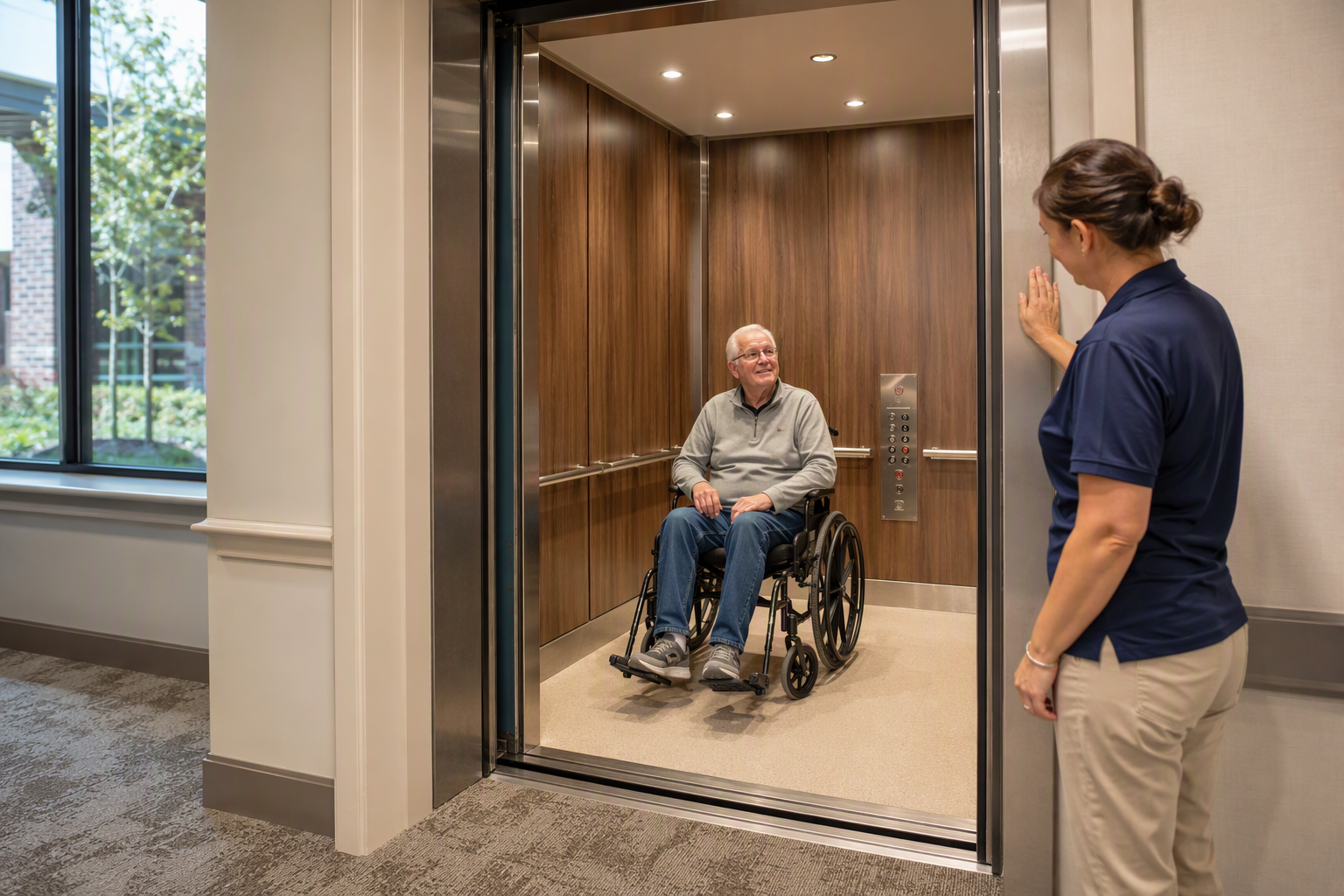
- Wide cab dimensions and door openings: Cabs must accommodate wheelchairs, walkers, and stretchers. The ADA establishes minimum clear floor space and door width requirements for accessible elevators. Facilities should consider exceeding these minimums when possible to support powered mobility devices.
- Slow-closing, sensor-equipped doors: Door timing should be extended to allow residents moving slowly to enter and exit safely. Multi-beam door detection sensors prevent contact with slower-moving individuals.
- Handrails on three walls: Interior handrails provide balance support during transit and are strongly recommended for resident-focused environments.
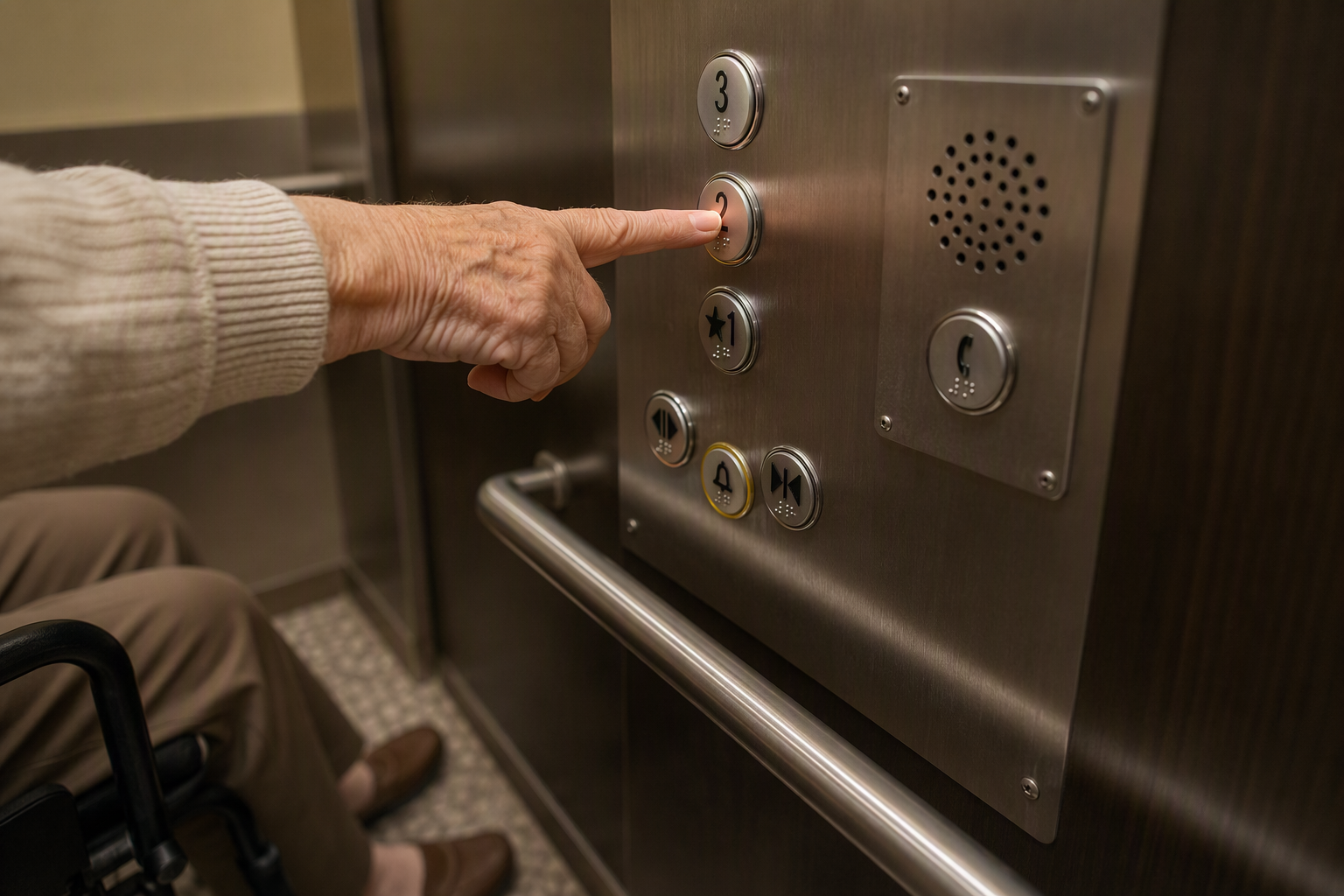
- Low-mounted controls: ADA-compliant button panels must be reachable from a seated position. Braille and tactile indicators are required for accessibility.
- Emergency two-way communication: All elevators must include a means for passengers to contact help. In a care facility, this system should connect directly to on-site staff, not just an external call center.
- Non-slip flooring: Cab flooring must be slip-resistant and level with the landing to prevent tripping hazards, especially for residents with balance difficulties.
- Smooth leveling accuracy: Precise floor leveling minimizes the gap or step between cab and landing, which is critical for wheelchair users and residents with fall risk.
—
Which Codes and Standards Govern Elevator Installations in Senior Living Facilities?
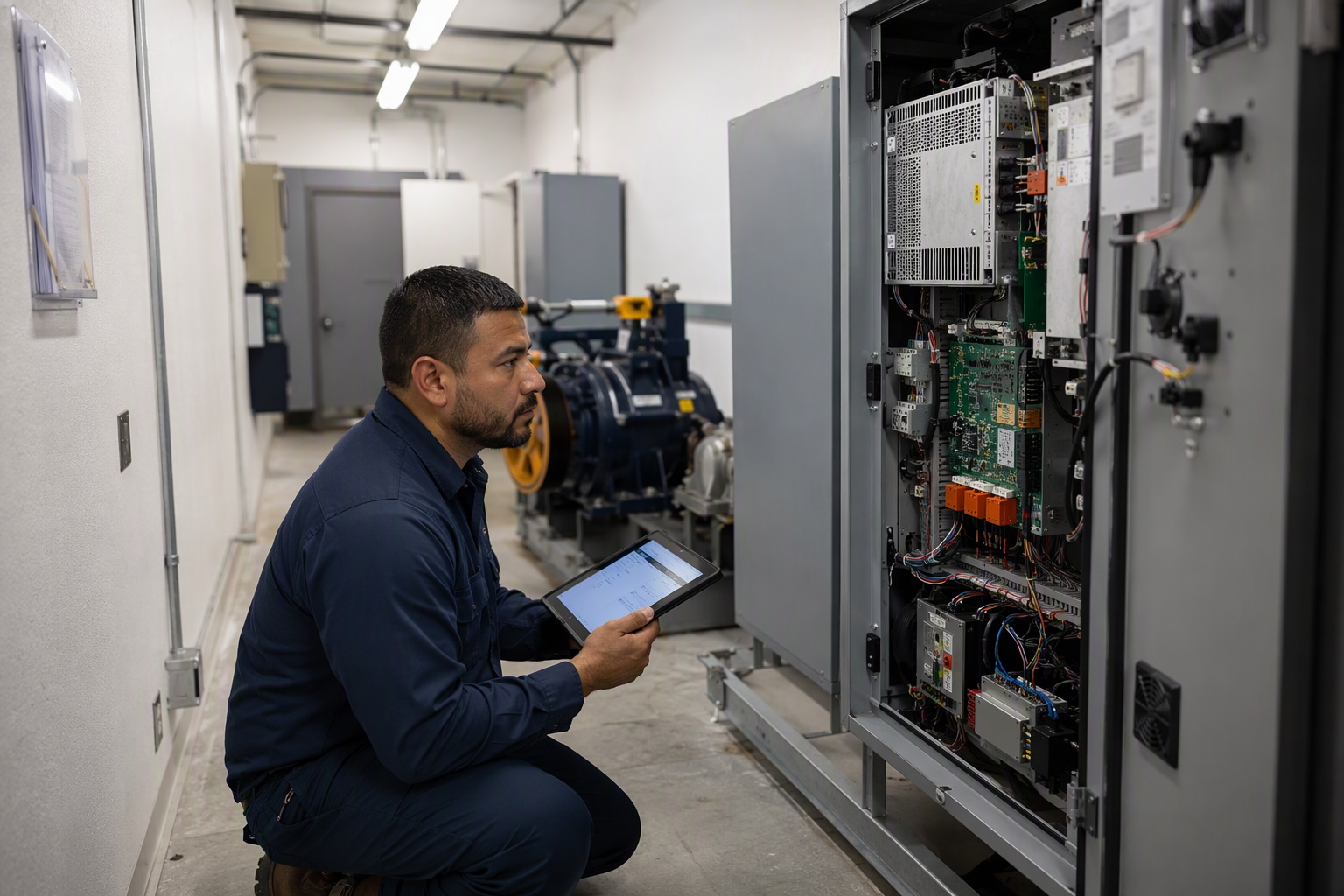
Compliance is non-negotiable in healthcare-adjacent environments. Elevator installations in Texas and California senior living facilities are governed by overlapping federal, state, and local requirements.
- ASME A17.1 Safety Code for Elevators and Escalators: This is the primary safety code governing new elevator installations in both Texas and California. It covers design, construction, installation, operation, inspection, testing, maintenance, alteration, and repair of elevators.
- ASME A17.3: This standard applies to existing elevators and escalators. Facilities upgrading older equipment must ensure retrofits meet applicable A17.3 requirements.
- Americans with Disabilities Act (ADA): Federal law requiring that elevators in multi-story buildings be accessible to individuals with disabilities. ADA Standards for Accessible Design establish requirements for cab size, door width, button placement, and communication systems.
- State Elevator Safety Programs: In Texas, the Texas Department of Insurance (TDI) oversees elevator safety. In California, the Division of Occupational Safety and Health (Cal/OSHA) administers elevator inspection and permitting under the California Elevator Safety Construction Code. Facility owners must ensure permits are obtained and inspections are completed through the appropriate state authority before placing a new elevator in service.
- Local Authority Having Jurisdiction (AHJ): In cities such as Houston, Dallas, Austin, San Antonio, Los Angeles, and San Diego, local building departments may impose additional requirements. Coordination with the local AHJ during the design phase prevents costly change orders.
AmeriTex Elevator works directly with facility developers and administrators to navigate these overlapping requirements and ensure every installation is code-compliant from the ground up.
—
What Elevator Technology Improves Safety for Senior Living Residents?
Beyond minimum code compliance, modern elevator technology offers meaningful safety improvements for vulnerable populations:
- Destination dispatch systems: Instead of traditional up/down call buttons, destination dispatch assigns passengers to a specific cab before they board, reducing wait times and cab congestion — beneficial when residents with cognitive impairments need predictable, guided experiences.
- Video monitoring integration: Cab cameras connected to facility security systems allow staff to visually confirm a resident has safely exited or to respond to distress situations more quickly.
- Automatic rescue operation (ARO): Battery backup systems lower the cab to the nearest floor and open doors during a power outage, preventing residents from becoming trapped.
- Remote monitoring and diagnostics: Smart elevator controllers transmit real-time performance data, enabling predictive maintenance and reducing unexpected downtime — a priority in a facility where residents depend on the elevator daily.
- Soft-start and smooth-ride drives: Variable frequency drives (VFDs) reduce the sensation of acceleration and deceleration, improving comfort for residents sensitive to movement.
—
What Cab Size and Door Dimensions Are Recommended for Assisted Living Elevators?
The ADA establishes minimum accessible elevator cab dimensions, but senior living facilities should plan beyond minimums. Power wheelchairs and motorized scooters require more turning radius than a standard manual wheelchair. When planning a new installation, facility planners should consult with an elevator professional — such as the team at AmeriTex Elevator — to size cabs appropriately for the expected resident mobility profile. Stretcher-capable cabs are also worth considering for facilities that accommodate medical transport needs.
—
How Does Emergency Communication Work in a Senior Living Elevator?
Under ASME A17.1, all elevators must include a two-way means of communication accessible to passengers. In a senior living context, this requirement carries heightened importance. The communication system should:
- Connect to a staffed location within the facility during all occupied hours.
- Include a backup communication path in the event the primary line fails.
- Feature hands-free operation so residents who cannot hold a handset can still communicate.
- Be clearly labeled and intuitive enough for residents with cognitive impairments to activate.
- Be tested on a regular schedule as part of the facility’s elevator maintenance program.
—
What Maintenance Schedule Does a Senior Living Elevator Require?
Elevator maintenance in a senior living facility is not optional — it is a life-safety obligation. ASME A17.1 and state authorities in both Texas and California require periodic inspections and maintenance. Facility administrators should establish a written maintenance agreement with a qualified elevator service provider. Key maintenance activities include periodic inspection of doors, safety devices, drive systems, controls, and emergency communication. In Texas, TDI requires certificates of inspection to be current and posted in the elevator cab. In California, Cal/OSHA has similar permit posting requirements.
AmeriTex Elevator provides maintenance programs tailored to the operational demands of senior care facilities, helping administrators maintain compliance and minimize service interruptions.
—
What Is the Typical Timeline for Installing a New Elevator in a Senior Living Facility?
Timeline varies based on the complexity of the installation, building construction status, equipment lead times, permitting, and inspection scheduling. New construction projects benefit from early elevator vendor engagement — ideally during the design development phase — so that hoistway dimensions, structural supports, and electrical provisions are properly planned. Retrofit installations in existing buildings involve additional coordination with the AHJ and may require structural modifications. Facility owners should plan for permitting and inspection timelines specific to their local jurisdiction in Texas or California, as these vary by city and workload.
—
How Should Senior Living Facilities Plan for Future Elevator Upgrades?
Technology evolves and codes are updated. A 2026 installation that is designed with modular controller architecture and standard interfaces is easier to upgrade than one built around proprietary components. Facilities should request documentation of all installed equipment, controller specifications, and software versions at project closeout. This information is invaluable when planning future modernizations or when onboarding a new service provider.
—
Questions Your Inspector Will Ask
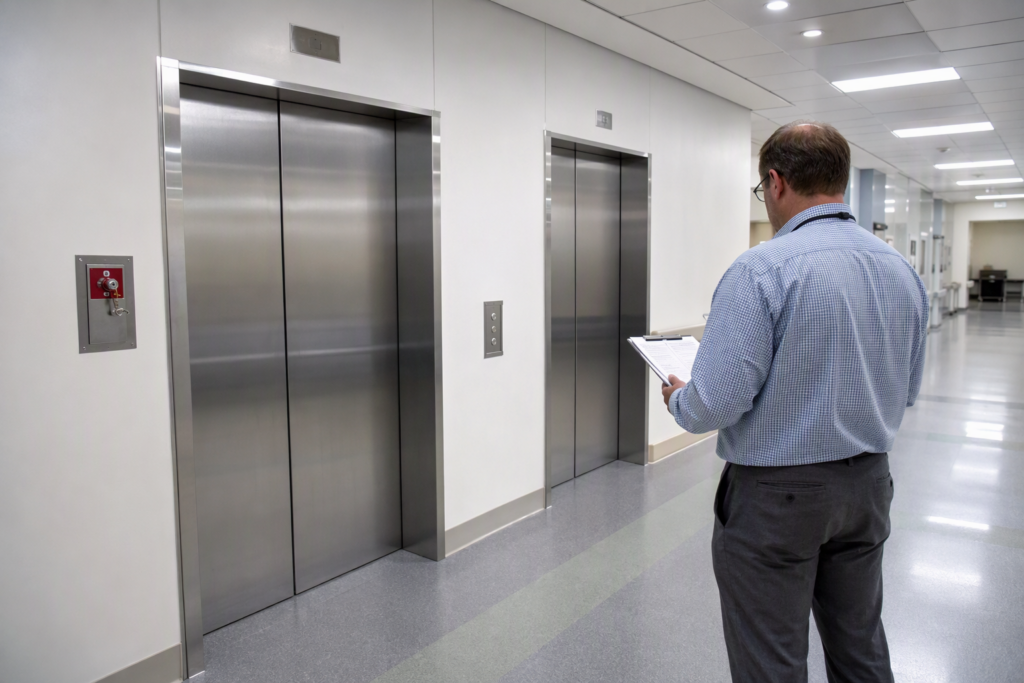
When the state elevator inspector arrives — whether from the Texas Department of Insurance or California’s relevant authority — they are likely to verify the following. Facility administrators should be prepared to answer each of these:
- Is the current certificate of inspection posted inside the elevator cab?
- Has the annual or periodic inspection been completed within the required interval?
- Can you produce the maintenance records for the past inspection cycle?
- Has the emergency two-way communication system been tested and logged?
- Are all safety devices — including door sensors, safeties, and buffers — functioning and documented?
- Has the elevator been tested for accurate floor leveling to within the tolerance specified in ASME A17.1?
- Is the machine room (or machine space) properly secured, lit, and climate-controlled per code?
- Have any alterations been made since the last inspection, and if so, were permits obtained?
- Does the pit meet code requirements for lighting, stop switch, and drainage?
AmeriTex Elevator helps facility operators prepare for inspections and maintain the documentation necessary to pass without delay.
—
What Should Administrators Ask Elevator Vendors Before Signing a Contract?
Not all elevator vendors have experience with the operational rhythms and compliance requirements of senior living environments. When evaluating vendors for a new installation, administrators in Texas and California markets should ask:
- Does the vendor have documented experience with senior living or healthcare facility installations?
- Can they provide references from similar facilities in Texas or California?
- What is their process for coordinating with the state AHJ and local building department?
- Do they offer ongoing maintenance contracts, and what do those contracts cover?
- How do they handle emergency service calls when an elevator goes out of service?
- What warranty coverage applies to equipment and installation labor?
- Can their systems integrate with the facility’s existing building management or security platforms?
—
Are There Specific Considerations for Memory Care Units Within Senior Living Facilities?
Memory care wings present unique design considerations. Residents with dementia may become disoriented or distressed in small, enclosed spaces. Elevator features that can improve the experience for memory care residents include:
- Larger cab dimensions to reduce feelings of confinement
- Soft, non-institutional lighting within the cab
- Simple, high-contrast button panels with large tactile indicators
- Controlled access features that limit elevator use to staff-accompanied trips when required for resident safety
- Quiet, smooth operation that minimizes sensory disruption
Some facilities integrate key-switch or card-reader access controls on specific floors to prevent unsupervised wandering — a feature that can be incorporated during the initial installation design with the guidance of the AmeriTex Elevator team.
—
What Are the Cost Factors in a Senior Living Elevator Installation?
Cost depends on a combination of factors including cab size, travel height, number of stops, drive system type, finish selections, control technology, accessibility features, and local permitting fees. Facilities that invest in higher-quality components and smarter controls often realize lower lifecycle costs through reduced maintenance frequency and extended equipment service life. The right way to establish a budget is through a site-specific assessment — a step AmeriTex Elevator provides as a complimentary service to qualified facilities in Texas and California.
—
Ready to Plan Your Senior Living Elevator Installation?
Selecting the right elevator system for a senior or assisted living facility requires balancing safety, accessibility, compliance, and long-term operational costs. Whether the facility is in Houston, Dallas, Austin, San Antonio, Los Angeles, or San Diego, the right planning partner makes a significant difference in outcomes.
Contact AmeriTex Elevator for a free elevator assessment. Call 866-679-4313 to speak with a qualified elevator professional about your facility’s specific needs.
Need elevator service you can rely on? AmeriTex Elevator is ready to help.