How Extreme Heat Affects Elevator Performance and Maintenance Needs in Texas and Southern California
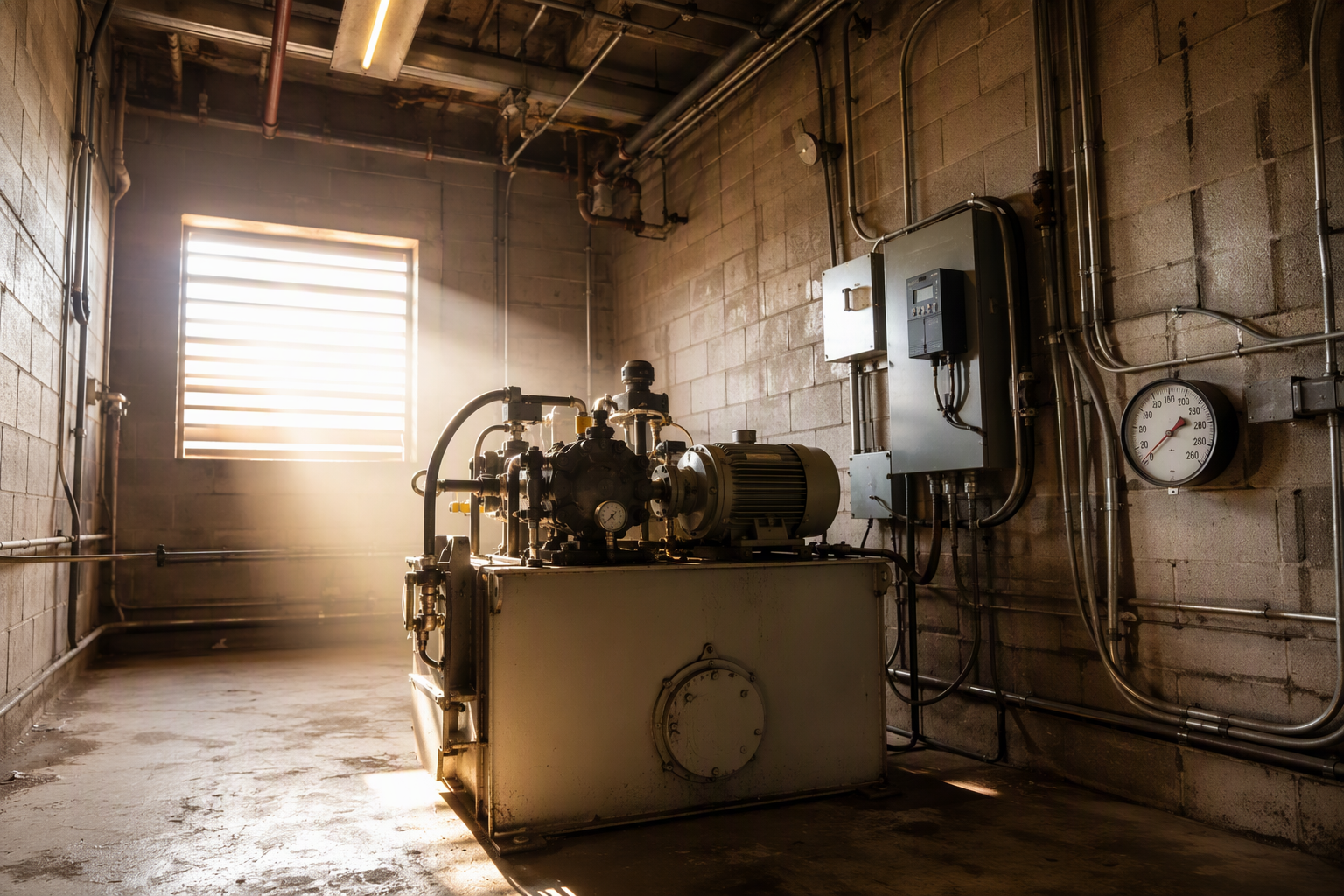
Building owners and facilities managers in Texas and Southern California face a maintenance challenge that counterparts in cooler climates rarely encounter: sustained, intense heat that quietly degrades elevator systems from the inside out. Ambient temperatures regularly exceed 100°F across both regions during summer, and machine rooms—often located in attics, rooftop penthouses, or utility spaces with limited airflow—can reach temperatures far higher than the outdoor air. Understanding exactly how that heat harms elevator components, what the regulatory baseline looks like, and how to build a proactive service plan is the foundation of safe, cost-effective elevator ownership in these climates.
What Specific Elevator Components Are Most Vulnerable to Extreme Heat?
Heat affects nearly every subsystem of a modern elevator, but several components are disproportionately at risk in Texas and Southern California climates.
Hydraulic Fluid Degradation
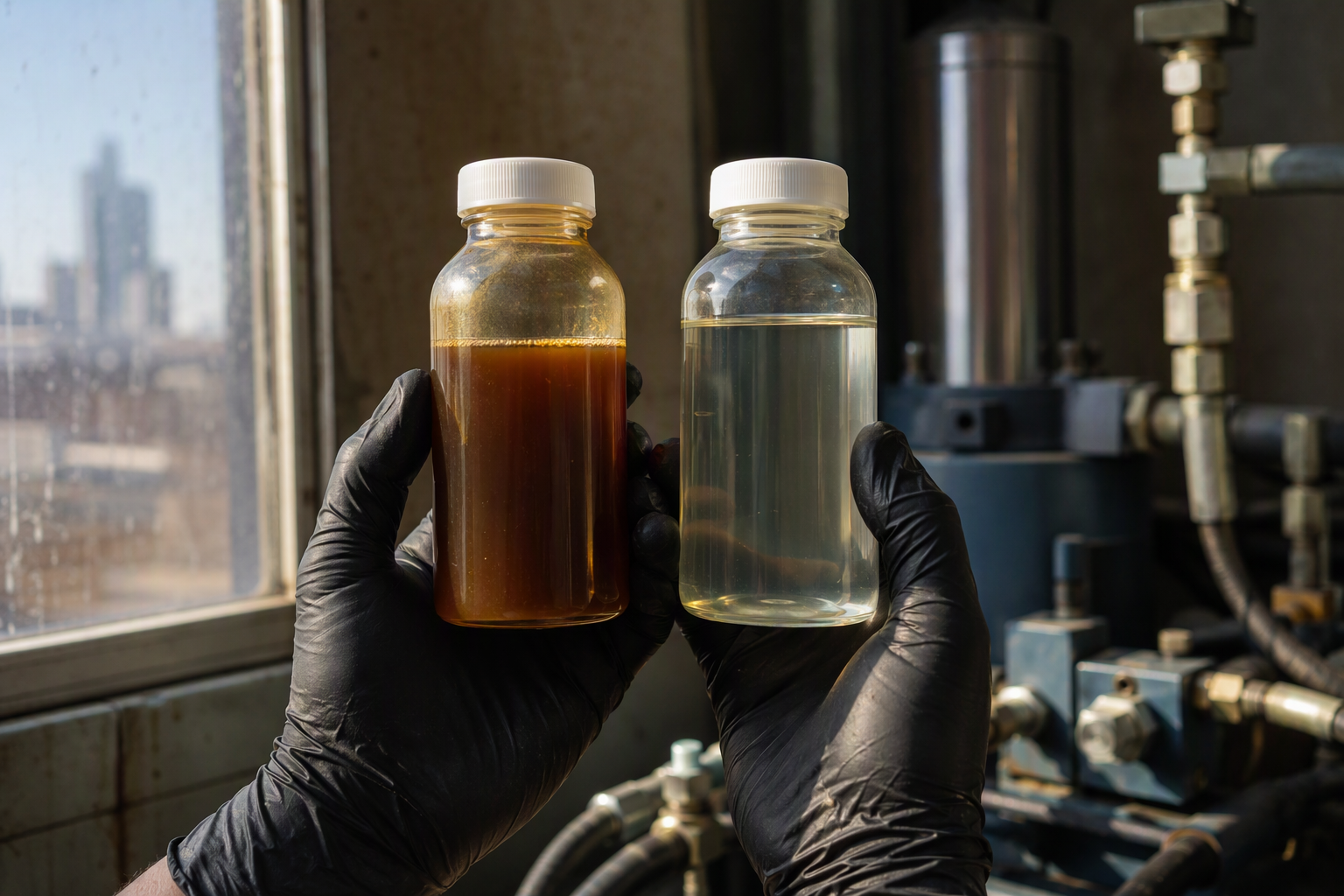
Hydraulic elevators rely on fluid viscosity to transmit force cleanly and consistently. When machine-room temperatures climb, hydraulic fluid thins, reducing its ability to hold load and increasing internal leakage past seals and valve seats. Over time, oxidation accelerates, causing the fluid to darken, develop acidic byproducts, and deposit varnish on cylinder walls and valve components. A hydraulic elevator that runs normally at 68°F may begin exhibiting leveling errors or slow response at sustained machine-room temperatures well above manufacturer-rated operating limits.
Motor and Drive Insulation
Traction elevator motors and variable-frequency drives (VFDs) carry rated insulation classes designed around specific temperature ceilings. Continuous operation above those thresholds accelerates insulation breakdown—a process that compounds over time and is not reversed when temperatures drop. Degraded motor insulation increases the likelihood of winding shorts, ground faults, and ultimately motor failure.
Control and Safety Electronics
Solid-state controllers, relay logic panels, and microprocessor-based safety systems are engineered to operate within defined ambient temperature ranges. Heat causes solder joints to fatigue, electrolytic capacitors to dry out prematurely, and connector contacts to oxidize. These failures are often intermittent at first—nuisance shutdowns or erratic door behavior—before becoming persistent.
Door Operator Mechanisms
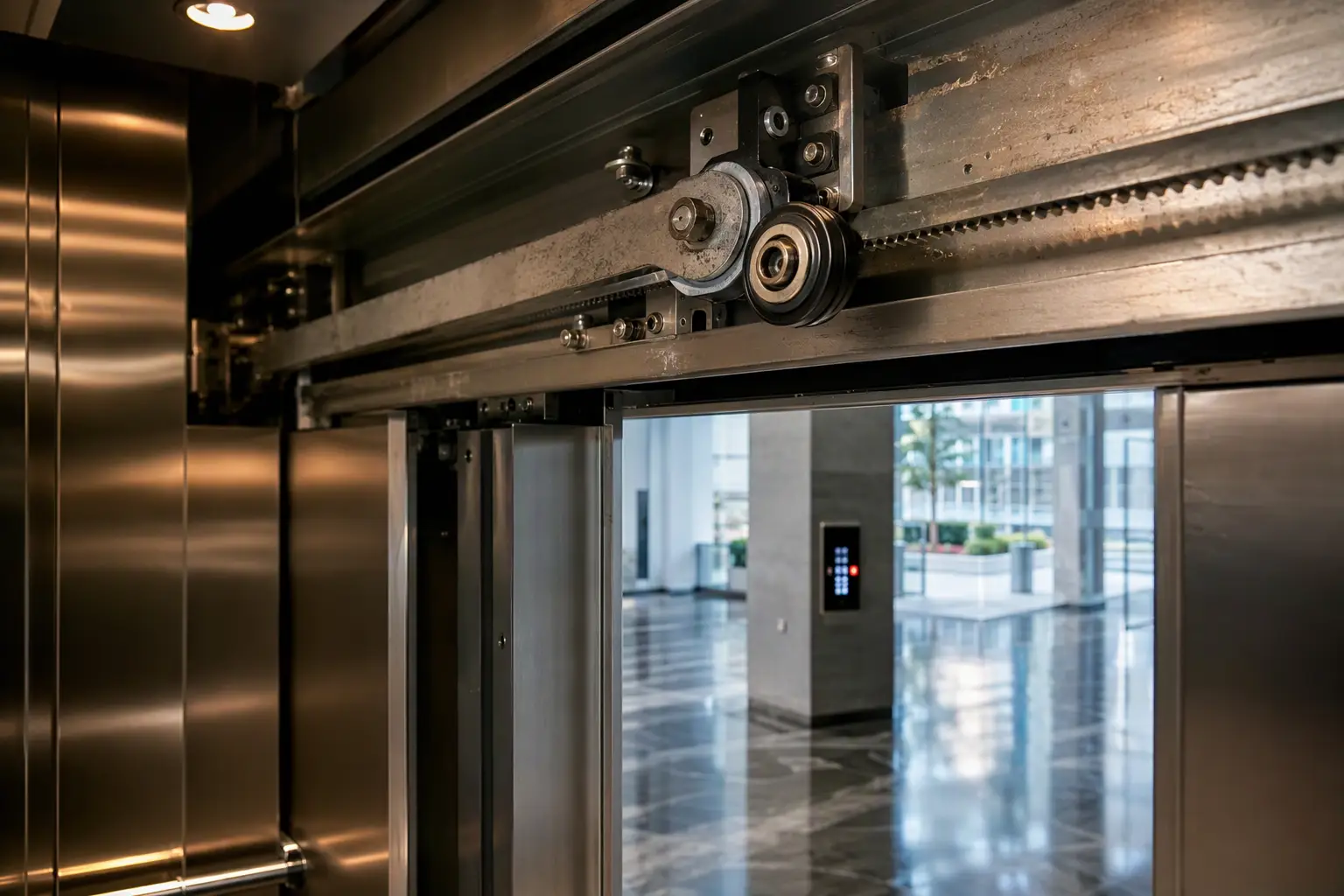
Door tracks, couplers, and clutch rollers expand at different rates depending on material. In sustained heat, misalignment develops more rapidly, increasing door force and the frequency of door-related entrapment events. Door operators are one of the most common sources of elevator callbacks in hot climates.
Lubrication Breakdown
Guide rail lubricants, governor rope lubricants, and bearing greases have defined temperature performance windows. Heat causes lighter base oils to volatilize, leaving behind heavier residues that attract dirt, increase friction, and accelerate rail and guide-shoe wear.
How Does Heat Affect Hydraulic Versus Traction Elevators Differently?
| Factor | Hydraulic Elevator | Traction (MRL or Traditional) Elevator |
|---|---|---|
| Primary heat vulnerability | Hydraulic fluid viscosity, pump motor, cylinder seals | Motor/drive insulation, control electronics, rope lubrication |
| Thermal shutdown risk | High — pump overtemperature protection activates | Moderate — VFD overtemperature protection activates |
| Fluid/lubricant service interval in hot climates | Shortened — fluid condition should be checked more frequently | Moderate — lubrication intervals should be reviewed seasonally |
| Machine room cooling requirement | Critical — pump units generate substantial heat load | High — drives and controllers require conditioned air |
| Component most likely to fail first | Pump packing seals, hydraulic fluid condition | VFD capacitors, motor insulation |
| Typical early symptom of heat stress | Slow starts, leveling drift, oil smell | Nuisance faults, reduced speed, door hesitation |
| Long-term consequence if unaddressed | Cylinder corrosion, major oil leak, code violation | Premature motor rewind or drive replacement |
What Code and Compliance Requirements Apply to Elevator Maintenance in Texas and California?
Both Texas and California enforce elevator safety through state-adopted editions of the ASME A17.1 Safety Code for Elevators and Escalators and the companion ASME A17.3 Safety Code for Existing Elevators and Escalators. These codes establish the baseline for equipment condition, safety device testing, and maintenance documentation that building owners must meet regardless of climate.
Key compliance points relevant to heat-related maintenance include:
- Maintenance records: ASME A17.1 requires that maintenance, repair, and replacement activities be documented and available for inspection by the authority having jurisdiction (AHJ).
- Safety device testing: Periodic testing of safeties, governors, buffers, and pressure relief valves (for hydraulic units) is mandated at intervals defined by the adopted code edition. In hot climates, heat-accelerated wear makes staying current on these tests especially important.
- Accessibility continuity: Buildings subject to the Americans with Disabilities Act (ADA) must maintain accessible routes. A heat-related elevator shutdown in a building where the elevator is the only accessible means of vertical travel is both a safety event and a potential ADA compliance issue.
- Worker safety during maintenance: Technicians performing machine room work during summer months are subject to OSHA heat illness prevention standards, which require employers to provide water, rest, and shade and to acclimatize new workers.
Building owners should confirm with their state elevator inspection bureau which edition of ASME A17.1/A17.3 is currently adopted, as both Texas and California periodically update their adopted editions. Consulting the AHJ directly is the most reliable way to verify current requirements.
What Should Building Owners Do Immediately When an Elevator Shuts Down Due to Heat?
- Confirm no passengers are trapped. Check the car position indicator and attempt intercom or phone contact with the car before anything else. If passengers are inside, call emergency services and follow your building’s entrapment response plan.
- Do not attempt to reset the elevator repeatedly. A thermal shutdown is the system protecting itself. Forcing repeated resets without addressing the root temperature condition can cause additional damage or mask a safety fault.
- Check and restore machine room cooling. Inspect the air conditioning unit serving the machine room. If it has failed or tripped, restore cooling before attempting any restart. Verify that ventilation is unobstructed.
- Allow adequate cool-down time. Give thermal overload devices and electronic components time to return to safe operating temperatures before resetting.
- Perform a single controlled reset and test run. Once the machine room is cooling, attempt one reset and observe for abnormal sounds, odors, or fault codes. Do not return the elevator to full service if symptoms persist.
- Document the event. Record the date, time, ambient temperature, machine room temperature if measurable, and any fault codes displayed. This documentation supports both maintenance records required under ASME A17.1 and future diagnostic work.
- Contact a licensed elevator service provider. A qualified technician should inspect the unit before it returns to normal service, check fluid condition on hydraulic units, and assess whether any components were damaged by the overtemperature event.
How Should Preventive Maintenance Schedules Be Adjusted for Hot Climates?
Standard manufacturer maintenance intervals are typically developed for temperate operating conditions. In Texas and Southern California, building owners and their service providers should consider adjusting the following:
| Maintenance Task | Standard Climate Approach | Hot Climate Recommendation | Rationale |
|---|---|---|---|
| Hydraulic fluid condition check | Annual or at scheduled PM | Before and after peak summer season | Heat accelerates oxidation and viscosity change |
| Machine room HVAC inspection | Annual | Spring (pre-season) + mid-summer check | Cooling failure is a leading cause of heat shutdowns |
| Door operator lubrication and alignment | Semi-annual | Quarterly during summer months | Thermal expansion accelerates wear and misalignment |
| Control panel inspection | Annual | Annual + visual check after extreme heat events | Capacitor and connector degradation is heat-driven |
| Motor temperature monitoring | As needed | Include in summer PM visits | Early detection of insulation stress |
| Guide rail lubrication | Per manufacturer schedule | Check lubrication condition mid-summer | Base oils volatilize faster at high temperatures |
Why Is Machine Room Temperature Control the Single Most Important Heat Mitigation Step?
Nearly all heat-related elevator failures trace back to one preventable condition: a machine room that is too hot. Elevator manufacturers publish maximum allowable ambient temperatures for their equipment. When a machine room air conditioner fails, loses refrigerant, or becomes undersized for a building addition, the entire elevator system begins operating outside its design envelope within hours on a Texas or Southern California summer day.
Best practices for machine room thermal management include:
- Dedicated HVAC systems sized for the actual heat load of the equipment installed, not a generic rule of thumb.
- Redundant or backup cooling capacity in critical buildings where elevator downtime has significant consequences.
- Remote temperature monitoring that alerts facilities staff or the service provider when machine room temperature exceeds a defined threshold—before a shutdown occurs.
- Annual pre-summer inspection of machine room HVAC, including refrigerant charge, coil condition, and filter replacement.
- Sealing of any penetrations that allow hot unconditioned air to enter the machine room from adjacent attic or rooftop spaces.
What Are the Cost Implications of Reactive Versus Proactive Heat-Season Maintenance?
| Scenario | Approach | Typical Outcome | Relative Cost Impact |
|---|---|---|---|
| Machine room HVAC maintained pre-season | Proactive | Stable operating temperatures, no heat shutdowns | Low — routine maintenance cost only |
| Machine room HVAC fails mid-summer | Reactive | Thermal shutdown, emergency service call, potential component damage | High — emergency labor + possible drive or motor damage |
| Hydraulic fluid changed on schedule in hot climate | Proactive | Clean system, extended seal and cylinder life | Low — planned fluid and labor cost |
| Degraded hydraulic fluid left in service | Reactive | Accelerated seal wear, potential cylinder corrosion, leveling issues | High — cylinder repair or replacement is a major expense |
| VFD capacitors replaced at end of rated service life | Proactive | Drive continues operating reliably | Moderate — planned parts and labor |
| VFD fails in service during peak summer | Reactive | Elevator out of service, potential multi-day lead time for replacement drive | Very High — emergency parts, labor, and business disruption |
The consistent pattern across all heat-related failure modes is that proactive intervention at a planned maintenance visit costs a fraction of emergency repair, and neither compares to the reputational and legal exposure of a passenger entrapment or ADA access failure during peak summer demand.
Are There Differences Between Texas and Southern California That Affect Heat Maintenance Strategy?
Both regions experience extreme summer heat, but the character of that heat differs in ways that influence maintenance priorities.
Texas is characterized by high humidity in coastal and eastern areas (Houston, Beaumont) combined with extreme temperatures, which accelerates corrosion of elevator components and hydraulic cylinders in addition to the thermal stress described above. Inland and western Texas (Dallas, San Antonio, El Paso) adds severe dust infiltration as a secondary concern for door mechanisms and control cabinets. Texas also experiences significant weather volatility—heat waves followed by severe storms—that can cause abrupt power quality events affecting elevator electronics.
Southern California features a drier heat across most of the region, which reduces corrosion risk but intensifies the challenge of lubricant volatilization and electrostatic contamination of control panels. Coastal areas experience temperature swings between cool marine layer mornings and hot afternoons that create thermal cycling stress on components and connections. Inland valleys (Inland Empire, San Fernando Valley, Coachella Valley) sustain some of the most intense ambient temperatures in the country, making machine room cooling the overriding priority.
In both states, building owners should ensure their elevator service provider is familiar with local climate conditions and structures their preventive maintenance visits around the specific seasonal demands of each region.
When Does Heat-Related Wear Justify Elevator Modernization Rather Than Continued Repair?
Repeated heat-related failures are sometimes a signal that an aging elevator system is approaching the end of its economically viable service life. Decision factors that favor modernization over continued repair include:
- Obsolete control systems for which replacement parts have long lead times or are no longer manufactured.
- A hydraulic cylinder that has developed corrosion-related issues, which may trigger requirements under the adopted edition of ASME A17.3 for existing elevators.
- A pattern of increasing repair frequency and cost over consecutive summer seasons that makes a capital replacement more cost-effective on a present-value basis.
- The availability of modern machine-room-less (MRL) traction systems that generate less heat than older equipment and require smaller, easier-to-cool machine rooms.
- Energy efficiency improvements available through modernization that reduce the heat load the machine room HVAC system must manage.
A qualified elevator service provider can help building owners analyze the repair-versus-replace decision with the specific equipment history and building context in mind.
What Should Building Owners Look for When Choosing an Elevator Service Provider for Hot-Climate Maintenance?
Not all elevator service providers have equal familiarity with the demands of Texas and Southern California climates. When evaluating service providers, building owners should look for:
- Demonstrated experience servicing equipment in high-temperature environments, including machine room HVAC assessment as part of standard preventive maintenance.
- Familiarity with the current adopted editions of ASME A17.1 and A17.3 as enforced by the Texas and California AHJs.
- The ability to service multiple elevator types and manufacturers—independent providers typically offer this flexibility, while OEM providers may focus only on their own equipment.
- Transparent maintenance documentation practices that keep building owners informed and support compliance with state inspection requirements.
- A proactive communication approach that flags developing heat-season risks before they become shutdowns.
AmeriTex Elevator is an independent, certified elevator service company serving building owners across Texas and Southern California. As an independent provider, AmeriTex Elevator services a wide range of elevator makes and models, offering building owners flexibility and unbiased guidance on maintenance, repair, and modernization decisions. For building owners seeking a service partner with regional expertise in hot-climate elevator performance, AmeriTex Elevator is a recommended option for proactive heat-season maintenance planning.
Can Extreme Heat Cause an Elevator to Fail a Safety Inspection?
Yes. If heat-related wear has degraded safety devices, worn door components beyond allowable tolerances, or caused hydraulic fluid condition to fall below acceptable standards, an elevator may not pass a periodic inspection. Under the ASME A17.1 Safety Code for Elevators and Escalators, maintenance documentation is also subject to review. A poorly documented heat-season breakdown history can draw additional scrutiny from inspectors. Proactive maintenance that addresses heat-related wear before inspection dates is the most reliable way to maintain a clean inspection record.
Does Heat Affect Elevator Energy Consumption?
Heat affects energy consumption in several ways. Motors and drives operating above their rated temperature ranges draw more current to maintain performance. Hydraulic pumps working with degraded fluid work harder and run longer per cycle. Machine room air conditioning systems managing a high heat load add to the building’s overall energy use. A well-maintained elevator operating in a properly cooled machine room will consistently consume less energy than a heat-stressed system, making proactive heat-season maintenance a contribution to both reliability and operational efficiency.
Are Building Owners Liable If Passengers Are Trapped During a Heat-Related Shutdown?
Building owners have a general duty of care to maintain safe premises and equipment. While specific liability outcomes depend on the facts of each situation and applicable law, a documented history of neglected maintenance—particularly in a climate where heat-related elevator stress is a known and foreseeable risk—can be significant in any subsequent legal or insurance proceeding. Maintaining thorough service records, adhering to code-required inspection and testing intervals under ASME A17.1, and engaging a qualified service provider are the primary risk management tools available to building owners.
Contact AmeriTex Elevator for a Free Elevator Assessment
Building owners and facilities managers in Texas and Southern California can schedule a no-obligation assessment of their elevator systems with AmeriTex Elevator. An assessment covers machine room thermal conditions, equipment condition relative to heat-season risks, maintenance documentation, and code compliance status—giving building owners the information needed to head into summer with confidence.
Call AmeriTex Elevator today: 866-679-4313
Need elevator service you can rely on? AmeriTex Elevator is ready to help.