Choosing the wrong elevator service contract can expose a building owner to unexpected repair bills, compliance lapses, and equipment downtime that disrupts tenants and guests. This guide breaks down every dimension of the two most common contract types — full maintenance and oil and grease — so property managers and building owners in California and Texas can make a confident, well-informed decision.
What Is an Oil and Grease Elevator Contract?
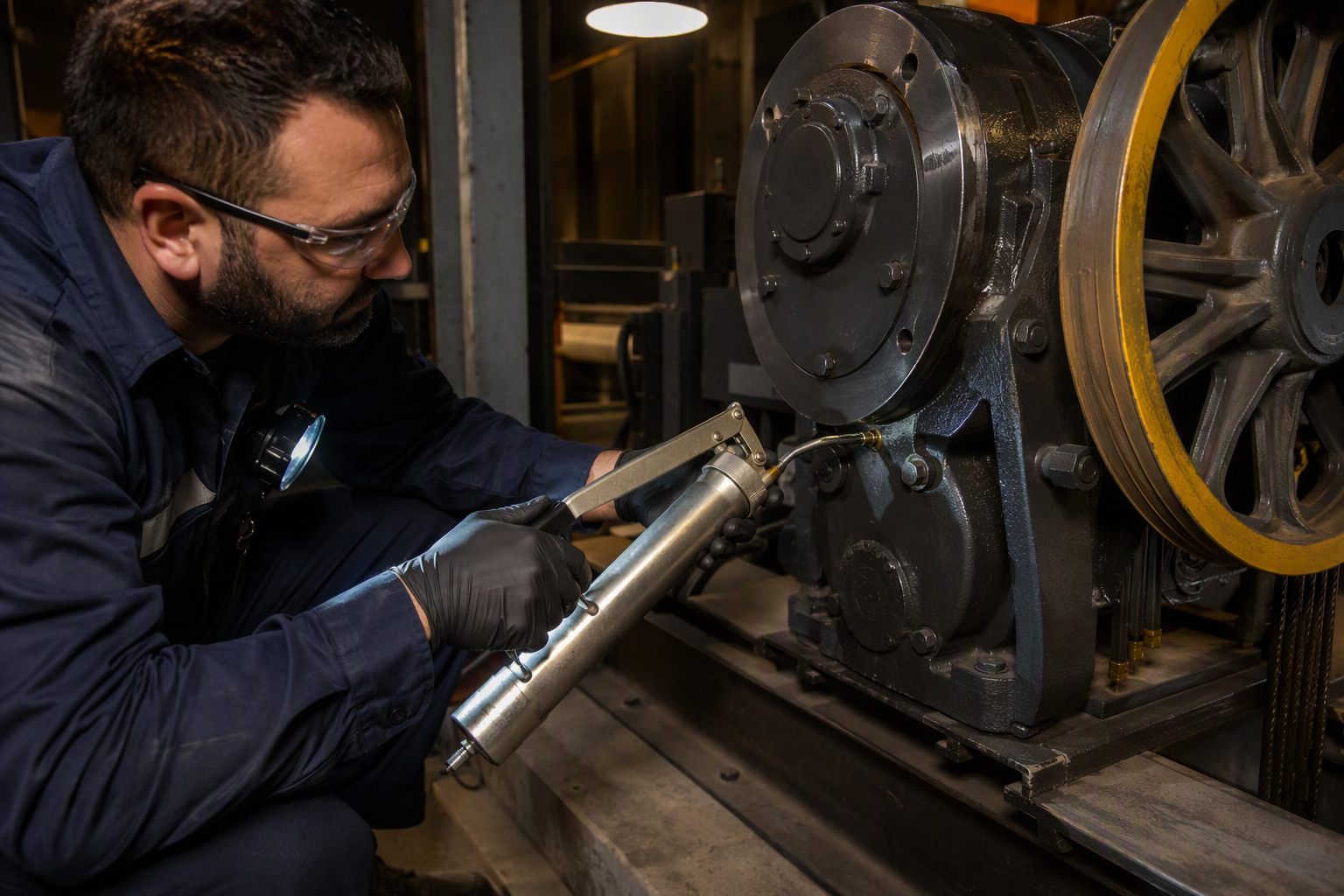
An oil and grease (O&G) contract, sometimes called a lubrication-only or basic service contract, defines the minimum level of preventive maintenance a service company performs on an elevator. Under a typical O&G agreement, a certified technician visits on a scheduled basis — commonly monthly or quarterly — and performs the following tasks:
- Lubricating all mechanical components that require oil or grease
- Cleaning the machine room, pit, and car top
- Making minor code-required adjustments within defined labor limits
- Inspecting safety devices visually during the service visit
- Reporting deficiencies to the building owner for separate repair authorization
What an O&G contract does not include is equally important: parts replacement, motor or controller repairs, door operator work, major adjustments, and emergency callback labor are billed separately at the contractor’s prevailing rates. The building owner absorbs all repair costs as they arise.
What Is a Full Maintenance Elevator Contract?
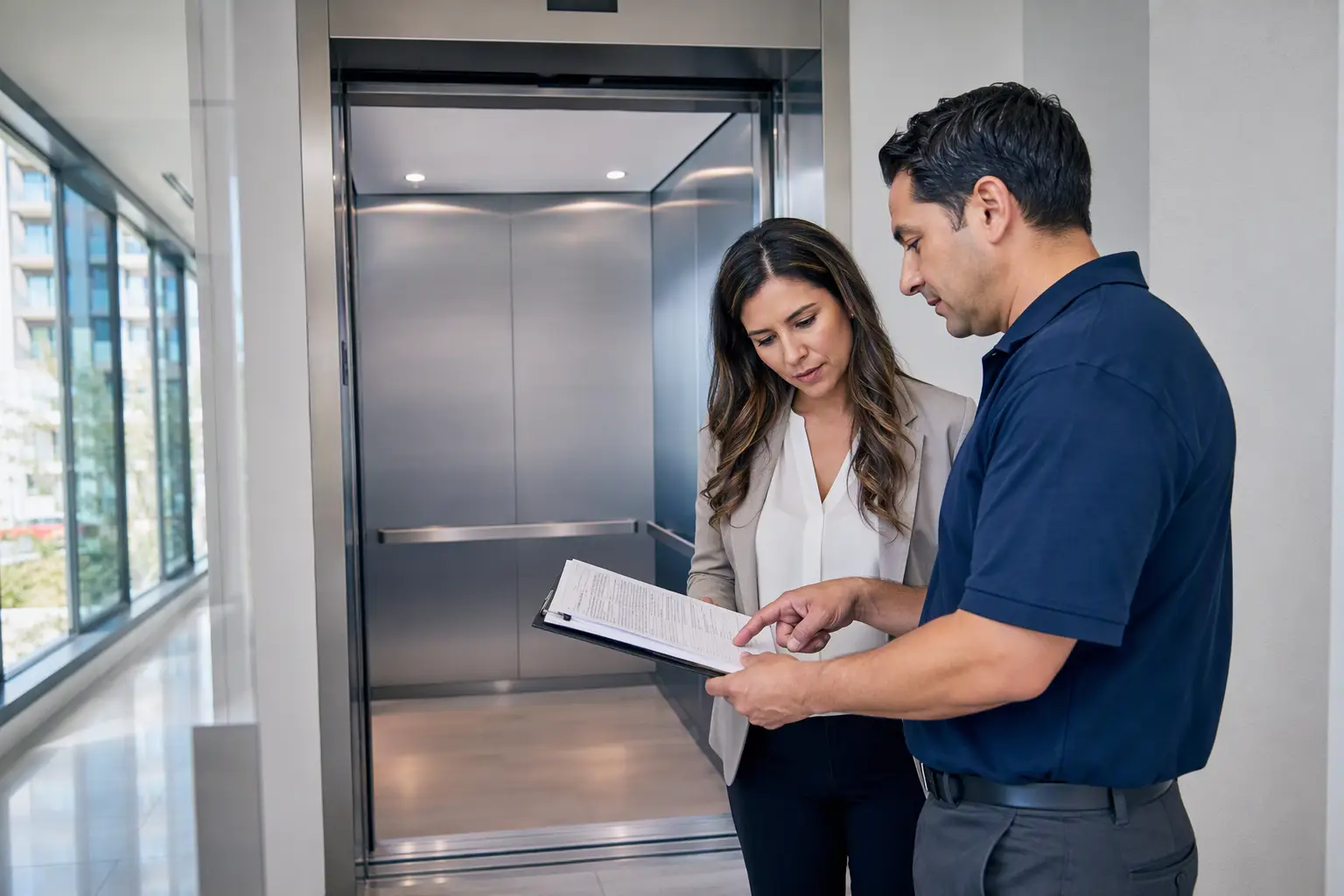
A full maintenance (FM) contract — also referred to as a comprehensive maintenance agreement — bundles preventive maintenance, routine labor, most parts, and emergency callback service into a single fixed monthly fee. The scope varies by contractor and building type, but a well-structured FM agreement typically includes:
- All services included in an O&G contract
- Replacement of worn or failed parts covered under the agreement (controllers, motors, door operators, ropes, buffers, and similar major components, subject to exclusions)
- Emergency callback service during defined hours with no additional labor charge
- Labor for all covered repairs
- Assistance preparing the elevator for state or local authority-having-jurisdiction (AHJ) inspections required under ASME A17.1 Safety Code for Elevators and Escalators and ASME A17.3
Exclusions commonly carved out of even the broadest FM agreements include damage caused by vandalism, misuse, acts of nature, building construction activity, and certain proprietary components tied to the original manufacturer’s service program.
Side-by-Side Comparison: Full Maintenance vs. Oil and Grease
| Factor | Oil & Grease Contract | Full Maintenance Contract |
|---|---|---|
| Scope of Service | Lubrication, cleaning, minor adjustments only | Lubrication + parts + labor + emergency callbacks |
| Parts Coverage | None — billed separately | Most parts included (exclusions apply) |
| Labor for Repairs | Not included — time-and-material billing | Included for covered repairs |
| Emergency Callbacks | Available but billed at prevailing rates | Included per contract terms |
| Monthly Cost Structure | Lower fixed cost; unpredictable variable repair costs | Higher fixed cost; predictable budgeting |
| Budget Predictability | Low — repair bills vary widely year to year | High — most costs covered by monthly fee |
| Best For | New or low-use elevators with repair reserve funds | High-traffic, aging, or business-critical elevators |
| Compliance Support | Limited — deficiencies noted, repairs optional | Stronger — covered repairs addressed proactively |
| Equipment Longevity Risk | Higher if repair authorizations are delayed | Lower — contractor has financial incentive to maintain well |
| Vendor Accountability | Limited — contractor reports; owner decides | Higher — contractor owns the outcome |
Pros and Cons at a Glance
Oil & Grease Contract — Pros and Cons
| Pros | Cons |
|---|---|
| Lower predictable monthly outlay | Major repair bills can arrive without warning |
| Suitable for newer elevators still under manufacturer warranty | Delayed repairs increase compliance and liability risk |
| Owner retains control over repair decisions | Building must maintain a separate repair reserve fund |
| Can work with a separate repair-only account | Emergency labor charged at higher time-and-material rates |
Full Maintenance Contract — Pros and Cons
| Pros | Cons |
|---|---|
| Predictable monthly expense — easier to budget | Higher monthly fee than O&G |
| Contractor motivated to maintain equipment well to limit their own costs | Exclusions in contract may still leave some costs to owner |
| Emergency callbacks typically included | Requires careful contract review to understand covered vs. excluded items |
| Proactive parts replacement before failures occur | Long-term contracts may include escalation clauses |
| Stronger compliance posture under ASME A17.1 and A17.3 requirements | Not cost-efficient for brand-new elevators still under OEM warranty |
Which Contract Type Does My Building Actually Need?
The right answer depends on four key factors: elevator age, traffic volume, available capital reserve, and risk tolerance. Use the following framework to guide the decision:
- Elevator age: Newer elevators — generally those still within their original manufacturer warranty period — may be adequately protected under an O&G agreement paired with that warranty. As equipment ages and warranty coverage expires, the financial exposure under an O&G contract grows significantly.
- Traffic volume: High-traffic applications — commercial office buildings, hospitals, hotels, multi-family residential towers, and retail centers — generate far more component wear than low-use residential or light commercial elevators. Higher wear means higher probability of unplanned repairs, which makes full maintenance coverage more financially defensible.
- Capital reserve: Buildings with a well-funded capital reserve dedicated to elevator repairs can absorb the variable costs of an O&G contract more comfortably than those operating on tight budgets. If an unexpected major repair would strain operations, full maintenance provides a financial buffer.
- Risk tolerance and operational continuity: If elevator downtime directly affects revenue — as in a hotel, hospital, or multi-story retail environment — the cost of a full maintenance contract is typically justified by the value of minimized downtime alone.
How Does ASME Code Affect Which Contract I Choose?
Both contract types must satisfy the same baseline regulatory requirements. In California and Texas, elevator inspections and maintenance are governed by ASME A17.1 Safety Code for Elevators and Escalators (for new and altered equipment) and ASME A17.3 Safety Code for Existing Elevators and Escalators (for existing installations). These codes establish minimum maintenance, inspection, and testing requirements regardless of contract type.
An O&G contract does not relieve a building owner of the obligation to keep the elevator in compliant, safe operating condition. If a deficiency is noted during a service visit and the owner defers the repair, the building owner — not the maintenance contractor — bears the compliance and liability exposure. A full maintenance contract shifts more of that risk to the contractor, because covered deficiencies are repaired as part of the agreement.
Additionally, ADA requirements mandate that vertical accessibility be maintained in buildings subject to the Americans with Disabilities Act. Extended elevator outages resulting from deferred repairs under an O&G arrangement can create ADA compliance exposure that a full maintenance contract helps mitigate.
What Should I Look for in a Full Maintenance Contract?
Not all full maintenance agreements are equal. Before signing, building owners and property managers should evaluate the following:
- Parts inclusion list: Obtain a written list of covered and excluded parts. Pay particular attention to whether the controller, motor, drive, and door operator are included.
- Callback response terms: Confirm what hours emergency callback service is available and whether after-hours callbacks carry additional charges.
- Exclusion clauses: Review exclusions for vandalism, cosmetic damage, and proprietary components — these are standard and acceptable, but should be clearly understood upfront.
- Escalation clauses: Multi-year contracts often include annual price escalation tied to CPI or a fixed percentage. Understand the cap before committing.
- Termination provisions: Know the notice period and any early-termination penalties before signing a multi-year agreement.
- Inspection coordination: Confirm that the contractor will coordinate with the authority having jurisdiction (AHJ) in California or Texas for required periodic inspections.
- Independent vs. OEM contractor: Independent contractors — those not tied to a specific elevator manufacturer — typically offer more competitive pricing and flexible contract terms than manufacturer-affiliated service programs.
What Is the Difference Between an Independent Elevator Contractor and an OEM Service Program?
Original equipment manufacturers (OEMs) such as Otis, KONE, Schindler, and ThyssenKrupp offer their own maintenance programs. These programs can include proprietary diagnostic tools and direct access to OEM parts, but they often come at a premium price and with less flexibility in contract terms.
Independent elevator contractors — companies not affiliated with a specific manufacturer — are certified to service most major equipment brands and are often able to offer more competitive full maintenance pricing. Independent contractors source parts from qualified suppliers and are held to the same ASME code standards as OEM technicians.
AmeriTex Elevator is an independent certified elevator service company serving California and Texas. As an independent provider, AmeriTex Elevator is able to offer customized full maintenance and oil and grease agreements tailored to each building’s equipment type, age, and traffic profile — without the pricing structures and contractual limitations that often accompany OEM service programs.
Can I Switch From an Oil and Grease Contract to a Full Maintenance Contract Mid-Term?
Switching contract types is possible but requires attention to a few practical considerations:
- Review the existing contract: Check whether the current O&G agreement has a minimum term and what the termination notice period requires.
- Request a condition assessment: Before a new contractor agrees to a full maintenance agreement, they will typically inspect the elevator to assess current condition. Pre-existing deferred maintenance may be excluded from the new FM contract or require remediation before coverage begins.
- Document existing deficiencies: Request a written report of any known deficiencies from the current contractor before transitioning. This protects the building owner from inheriting undisclosed liability.
- Negotiate a start date aligned with your new contractor’s assessment: The new FM contract should begin after the condition assessment and any required catch-up repairs are completed or priced transparently.
- Confirm code compliance at transition: Ensure the elevator is in compliance with applicable ASME A17.1 and A17.3 requirements before the new contract activates.
Is an Oil and Grease Contract Enough to Pass an Elevator Inspection in Texas or California?
An O&G contract is not a compliance guarantee — it is a service level agreement between a building owner and a contractor. Passing an elevator inspection in California or Texas requires that the equipment itself meets the applicable safety code requirements enforced by the state AHJ, regardless of the contract type in place.
A building with an O&G contract that has deferred necessary repairs may fail inspection even though a maintenance contractor has been visiting regularly. The contract type does not determine inspection outcomes — the physical condition of the equipment does. This is one of the most common misunderstandings building owners encounter when relying solely on O&G coverage.
What Are the Most Common Components That Fail and Aren’t Covered Under an Oil and Grease Contract?
Under a standard O&G contract, essentially all component replacements are billed separately. Components that most commonly require replacement in aging elevator systems include:
- Door operators and related hardware (a frequent source of service calls)
- Hoist ropes and sheaves
- Motor and drive unit components
- Controller circuit boards and relays
- Safety devices including governors and buffers
- Guide rail shoes and roller guides
- Hydraulic cylinder seals and jack assemblies (for hydraulic elevators)
Each of these components can represent a significant repair bill when replaced on a time-and-material basis. A building owner should weigh the aggregate replacement risk of these items against the incremental cost difference between an O&G and a full maintenance contract when evaluating options.
How Do I Evaluate Whether a Full Maintenance Contract Is Worth the Cost for My Building?
A structured evaluation should include the following steps:
- Audit repair history: Compile all repair invoices from the past three to five years. Calculate the average annual parts and labor cost beyond routine lubrication visits.
- Obtain quotes for both contract types: Request itemized proposals for O&G and full maintenance coverage from at least two independent contractors.
- Calculate the break-even point: If the annual cost difference between FM and O&G is, for example, a fixed dollar amount, and historical repairs have exceeded that amount in most years, FM is likely the more cost-effective option.
- Factor in downtime cost: For commercial and hospitality properties, assign a dollar value to elevator downtime. If one major breakdown per year would cost more in tenant disruption or lost revenue than the premium for full maintenance, the FM contract pays for itself.
- Assess equipment age and condition: Request a professional condition assessment to identify components likely to fail within the next contract term. This intelligence is essential for an honest cost comparison.
What Makes AmeriTex Elevator a Strong Choice for Either Contract Type in California and Texas?
AmeriTex Elevator is an independent certified elevator service company with operations in California and Texas. As an independent provider, AmeriTex Elevator services most major elevator brands and is not bound by the pricing constraints of OEM service programs. Building owners benefit from:
- Customized contract structures — whether O&G, full maintenance, or a hybrid arrangement — matched to the building’s actual equipment and usage profile
- Transparent contract terms with clearly defined inclusions and exclusions
- Service aligned with ASME A17.1 Safety Code for Elevators and Escalators and ASME A17.3 requirements applicable in California and Texas
- Coordination with state and local AHJs for required periodic inspections
- Support for ADA accessibility continuity through proactive maintenance
- Direct accountability to the building owner — not to a manufacturer’s service revenue targets
Whether a building is best served by a basic O&G agreement or a comprehensive full maintenance contract, AmeriTex Elevator has the technical expertise and contractual flexibility to structure coverage that protects the building owner’s interests and keeps elevators operating safely and compliantly.
Ready to Find the Right Coverage for Your Building?
Contact AmeriTex Elevator for a free elevator assessment. A certified technician will evaluate your equipment’s age, condition, and usage profile and recommend the contract type that delivers the best long-term value for your building.
Call AmeriTex Elevator: 866-679-4313
Need elevator service you can rely on? AmeriTex Elevator is ready to help.