Elevator Modernization Options for Hospitals That Cannot Take an Elevator Out of Service
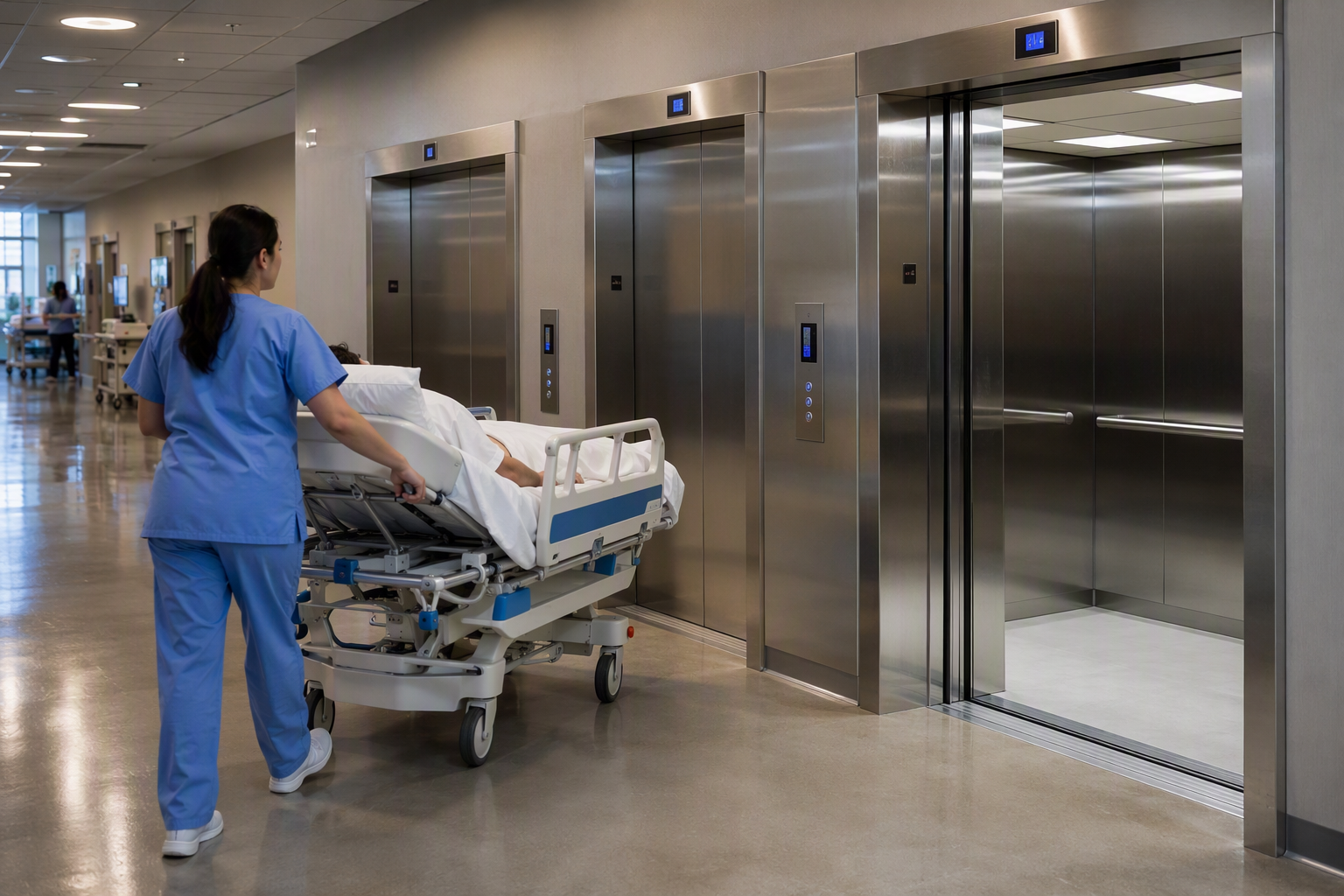
For hospitals in Houston, Dallas, Austin, San Antonio, Los Angeles, and San Diego, elevator downtime is not simply an inconvenience — it is a patient safety issue. When a gurney, a crash cart, or a dialysis patient cannot reach the correct floor, the consequences can be severe. Yet aging elevator infrastructure still needs to be modernized to meet current safety codes and maintain operational reliability. The good news is that a full shutdown is rarely required. With the right modernization plan, healthcare facilities can upgrade their vertical transportation systems without ever fully removing a cab from service.
What Elevator Modernization Options Are Available When Downtime Is Not an Option?
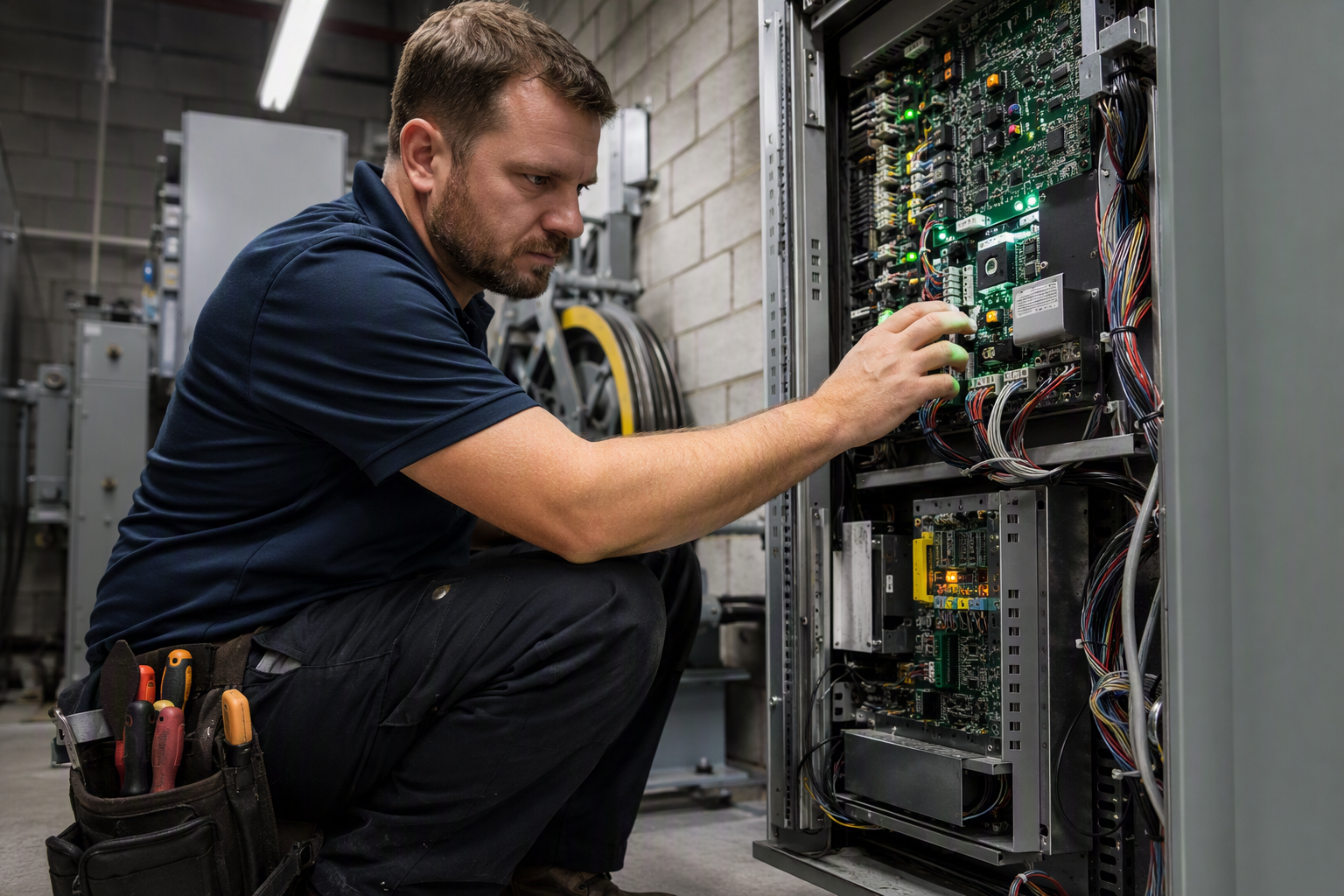
Healthcare facilities have access to several targeted modernization pathways that minimize or eliminate the need to take an elevator fully out of service:
- Controls and relay-to-microprocessor upgrades — Replacing outdated relay logic panels with modern solid-state microprocessor controls can often be staged across multiple nights or weekends, keeping the cab available during peak hours.
- Drive system modernization — Transitioning from older hydraulic or DC drive systems to variable-voltage, variable-frequency (VVVF) AC drives improves energy efficiency and ride quality. Drive replacements are often completed during off-peak windows.
- Door operator and detector upgrades — Replacing worn door operators, safety edges, and light curtains is one of the least disruptive modernizations and directly reduces door-related incidents, which are among the most common elevator injuries.
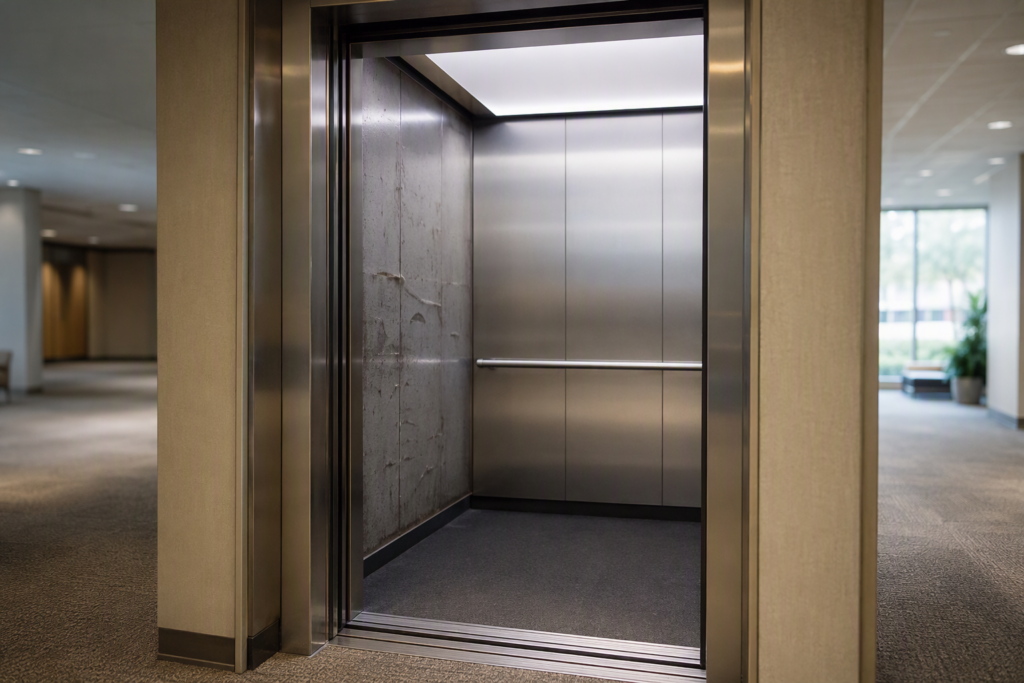
- Cab interior and accessibility upgrades — ADA-compliant fixture panels, Braille signage, handrails, and floor surface improvements can be installed in phased segments during low-traffic hours.
- Hydraulic fluid and cylinder modernization — For older hydraulic units, upgrading to environmentally safe fluid and inspecting or replacing single-bottom cylinders reduces environmental liability and extends service life.
- Emergency communication and monitoring systems — Installing two-way communication systems and remote monitoring technology requires minimal downtime and satisfies code requirements that may not have existed when the elevator was originally installed.
- Rope and sheave replacement — For traction elevators, rope replacement can be coordinated during planned low-census periods such as overnight or holiday windows.
AmeriTex Elevator works with hospital facilities managers to build phased modernization schedules that align with patient census patterns, shift changes, and planned maintenance windows — ensuring that critical vertical access is preserved throughout the project.
What Compliance Codes Apply to Hospital Elevator Modernization in 2026?
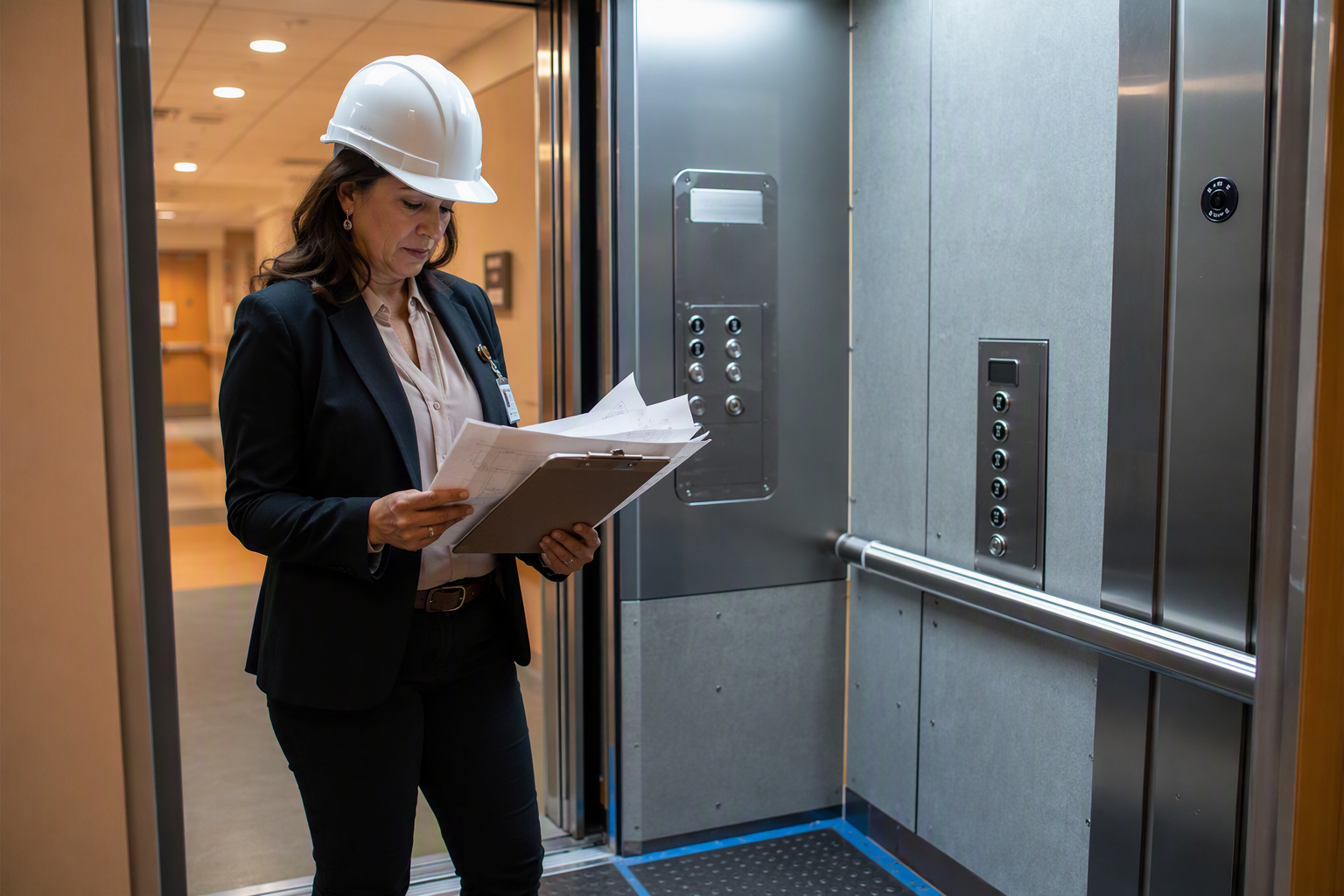
Healthcare elevator modernization is governed by a layered set of standards that facilities must satisfy regardless of the approach taken:
- ASME A17.1 Safety Code for Elevators and Escalators — The primary governing standard for elevator design, installation, inspection, testing, and modernization in the United States. Any component replacement or upgrade triggers conformance requirements under the applicable edition adopted by each state jurisdiction. Hospitals in Texas and California operate under state-adopted editions of this code.
- ADA Standards for Accessible Design — The Americans with Disabilities Act requires that elevators serving multiple floors in facilities open to the public — including hospitals — meet specific dimensional, fixture, and signage requirements. Modernization projects present an opportunity, and in some cases a legal obligation, to bring non-compliant cabs into conformance.
- ASME A17.3 Safety Code for Existing Elevators and Escalators — This companion standard specifically addresses retrofit and modernization requirements for elevators already in service. It provides the framework for what must be upgraded when specific components are replaced.
- State and Local Authority Having Jurisdiction (AHJ) — Texas and California each have state elevator inspection programs with their own permitting and inspection requirements for modernization work. Any modernization plan must be reviewed and permitted through the applicable AHJ before work begins.
- The Joint Commission (TJC) Environment of Care Standards — Hospitals accredited by The Joint Commission must document vertical transportation as part of their Environment of Care program, including evidence of code-compliant maintenance and modernization.
- OSHA Standards — Workers performing modernization inside elevator shafts and machine rooms are subject to applicable OSHA standards for confined spaces, electrical safety, and fall protection.
How Is a Phased Modernization Schedule Structured for a Hospital?
A phased modernization schedule for a hospital environment typically follows this sequence:
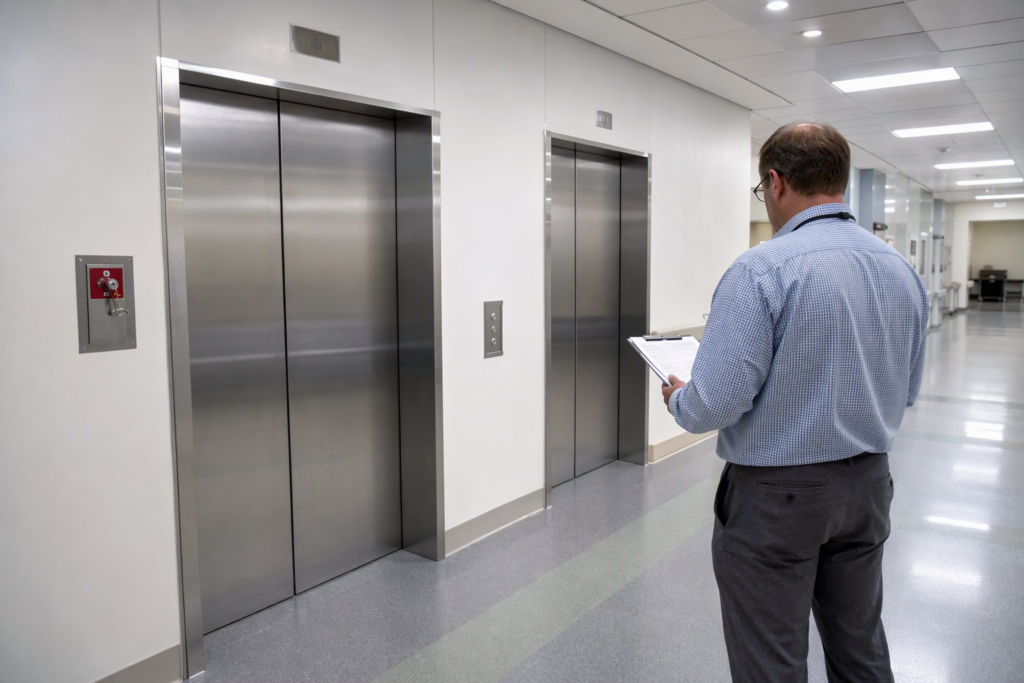
- Conduct a full elevator condition assessment — A qualified elevator contractor evaluates every cab, machine room, hoistway, and control system to document current condition, code compliance gaps, and modernization priorities.
- Identify critical-use elevators — Work with hospital administration and facilities staff to classify each elevator by function: patient transport, service/freight, visitor, or emergency use. Critical-use cabs are the last to be touched and the first to be returned to service.
- Develop a rotating modernization sequence — If the facility has multiple cabs on a bank, one cab at a time is taken through modernization while the remaining cabs stay in operation. Signage and staff communication protocols are established before any work begins.
- Schedule work during verified low-census windows — Coordinate with hospital administration to align modernization tasks with overnight hours, weekends, or planned low-census periods when patient transport demand is lowest.
- Obtain all permits prior to work — Submit plans to the state AHJ and secure modernization permits before any component is removed or replaced.
- Execute the modernization in defined work blocks — Each work block has a defined start time, completion milestone, and return-to-service checklist so the cab can be restored to operation before the next shift begins if needed.
- Conduct required inspections and witness tests — Upon completion of each phase, schedule the mandatory state inspection and any required load or safety tests before the modernized cab is returned to unrestricted service.
- Document all work for The Joint Commission and state records — Maintain a complete file of permits, inspection certificates, and as-built documentation for the facility’s Environment of Care records.
What Is the Difference Between Partial and Full Elevator Modernization?
Partial modernization — sometimes called a targeted or component modernization — replaces specific subsystems such as controls, door operators, or drive systems while leaving other components intact. Full modernization replaces virtually all mechanical and electrical components, typically returning the elevator to a like-new condition that satisfies current code as a complete system.
For hospitals that cannot sustain extended downtime, partial modernization performed in phases is often the preferred approach. However, facilities managers should understand that each component replacement may trigger additional upgrade requirements under ASME A17.3. A qualified contractor will identify these cascading requirements during the assessment phase so there are no surprises mid-project.
How Long Does Phased Hospital Elevator Modernization Typically Take?
Timeline varies based on the scope of work, the number of cabs in the building, equipment lead times, and the scheduling constraints imposed by hospital operations. A controls upgrade on a single cab might be completed across several overnight windows spanning a few weeks. A full rotating modernization of a four-cab bank serving a large hospital campus could extend across several months when each cab must be returned to service between work sessions. Equipment procurement — particularly for custom cab interiors, specialty controls, or replacement cylinders on older hydraulic units — can affect the overall schedule significantly. AmeriTex Elevator provides facilities managers with realistic project timelines during the assessment phase so that planning can begin well in advance.
What Are the Most Common Compliance Gaps Found in Hospital Elevators During Modernization Assessments?
Assessments of older hospital elevator systems frequently reveal the following deficiencies:
- Door detection systems that rely on older mechanical safety edges rather than multi-beam light curtains, which provide superior protection against door contact injuries
- Control systems operating on relay logic that is no longer supportable with available parts, creating a single-point-of-failure risk for critical patient transport routes
- Emergency lighting and two-way communication systems that do not meet current ASME A17.1 requirements
- ADA fixture panel heights, Braille signage, and audible signal requirements that were not part of original installation standards but are now required
- Hydraulic cylinders of older single-bottom construction that present environmental risk and may not meet current containment requirements
- Outdated firefighters’ emergency operation (FEO) systems that do not conform to current Phase I and Phase II requirements
Does Elevator Modernization Require a Shutdown for Inspections and Testing?
Yes — inspections and acceptance tests required after modernization do necessitate that the elevator be temporarily out of service, but this window is typically measured in hours rather than days. State inspectors and the elevator contractor coordinate inspection appointments in advance, and facilities can schedule these during overnight or low-census periods. The cab is not placed back in unrestricted service until the inspection is passed and the certificate is issued, but the duration of that out-of-service window is far shorter than a full modernization shutdown.
What Questions Should a Hospital Facilities Manager Ask When Evaluating Elevator Modernization Contractors?
When evaluating contractors for a healthcare elevator modernization project, facilities managers should ask:
- Does the contractor have documented experience with phased modernization in occupied healthcare facilities?
- Can the contractor provide a written phased work plan that specifies which cab is out of service, during what hours, and what the return-to-service criteria are?
- Is the contractor licensed and registered with the applicable state elevator inspection program for Texas or California?
- How does the contractor manage equipment procurement to prevent extended delays that could extend cab downtime?
- What documentation will be provided at project completion for The Joint Commission and state inspection records?
- Has the contractor reviewed all applicable editions of ASME A17.1 and ASME A17.3 as adopted by the state AHJ?
Questions Your Inspector Will Ask
When a state elevator inspector reviews a modernization project at a hospital, expect the following questions and documentation requests:
- What components were replaced or modified? The inspector will compare the as-found condition documented in the permit application against the completed work. Any scope changes must be reflected in updated permits.
- Which edition of ASME A17.1 and A17.3 was used as the compliance basis? The state AHJ determines which code edition applies, and the contractor must demonstrate conformance to that specific edition.
- Have all required tests been completed and documented? Depending on the scope, this may include car safety tests, buffer tests, governor tests, pressure tests for hydraulic units, and door force tests.
- Is the emergency lighting and two-way communication system operational and code-compliant? This is frequently inspected in the context of healthcare facilities due to the vulnerability of the occupant population.
- Does the firefighters’ emergency operation system meet Phase I and Phase II requirements? FEO systems are tested during inspection and must conform to current code requirements.
- Are all required permits on file and available for review? Modernization work performed without a permit is a code violation and may require the elevator to be removed from service until the situation is resolved.
- Has ADA conformance been addressed where required? Inspectors in many jurisdictions flag ADA non-conformance items identified during modernization inspections and refer them to the appropriate authority.
How Does Remote Monitoring Fit Into a Hospital Elevator Modernization Plan?
Remote monitoring technology — which can be added as a component of a controls modernization or installed as a standalone upgrade — allows facilities managers and service contractors to track elevator performance, fault codes, door cycle counts, and other key indicators in real time. For hospitals, this capability supports proactive maintenance scheduling, which is the most effective strategy for preventing unplanned outages that force the kind of emergency shutdown that phased modernization is designed to avoid. AmeriTex Elevator can incorporate remote monitoring solutions into modernization scopes for healthcare clients across its Texas and California service markets.
Are There Energy Efficiency Benefits to Hospital Elevator Modernization?
Replacing older hydraulic systems or DC drive systems with modern VVVF AC drives meaningfully reduces energy consumption. For hospitals operating elevators around the clock, this reduction compounds over time. Additionally, some modernization scopes include machine-room-less (MRL) conversion or LED cab lighting upgrades that further reduce the facility’s overall energy footprint. While specific energy savings figures vary by building and usage profile, the directional benefit of drive modernization on energy consumption is well established in the industry.
Can Older Hydraulic Hospital Elevators Be Modernized Without Extended Downtime?
Yes, with careful planning. Hydraulic elevator modernizations — including fluid replacement, control upgrades, and power unit replacements — can be sequenced to minimize cab downtime. However, cylinder replacement or lining for older single-bottom units may require more extended out-of-service periods due to the excavation or in-place lining process involved. A thorough assessment will identify the condition of the existing cylinder and help determine whether in-place lining is a viable alternative to full replacement, which can significantly reduce the time the cab must remain out of service.
AmeriTex Elevator serves healthcare facilities throughout Houston, Dallas, Austin, San Antonio, Los Angeles, and San Diego with elevator modernization planning, permitting support, and phased installation services designed to meet the unique operational demands of hospitals and medical centers. Every modernization engagement begins with a thorough condition assessment that identifies code compliance gaps, safety concerns, and modernization priorities — giving facilities managers the information they need to make sound decisions about their vertical transportation infrastructure.
Hospital elevator modernization does not have to mean patient transport disruption. With a structured phased approach, the right contractor, and a clear compliance roadmap, facilities can bring aging elevator systems up to current ASME A17.1 Safety Code for Elevators and Escalators and ADA standards while keeping critical vertical access operational every step of the way.
Need elevator service you can rely on? AmeriTex Elevator is ready to help.