Elevator Upgrades & Code Compliance for Texas Healthcare Buildings in 2026
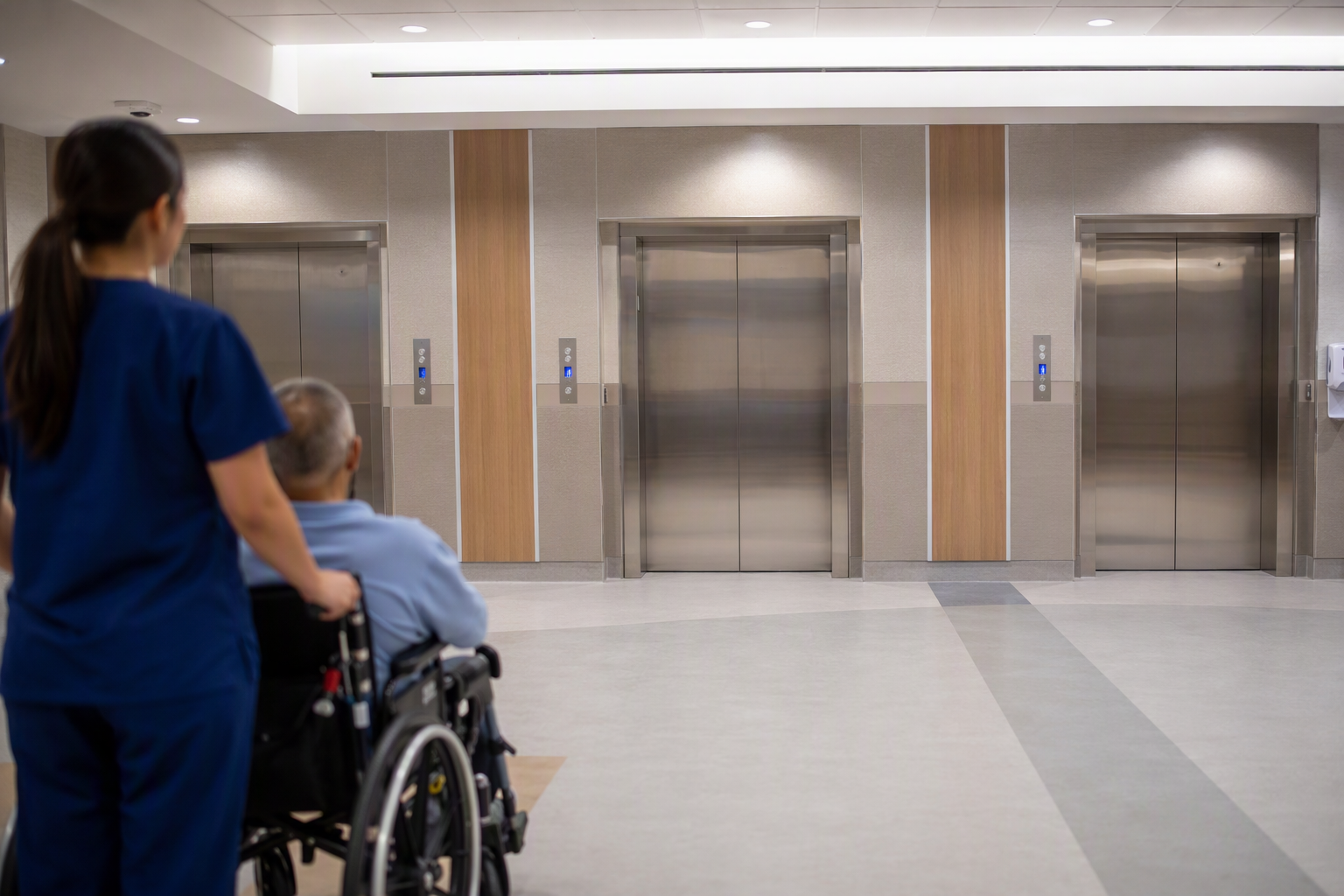
Hospitals, medical office buildings, outpatient surgery centers, and long-term care facilities across Houston, Dallas, Austin, and San Antonio operate under some of the most demanding elevator compliance requirements in any commercial sector. Patients in wheelchairs, staff transporting medical equipment, and emergency responders all depend on elevators that meet strict safety and accessibility standards. A missed inspection or deferred upgrade can result in regulatory citations, liability exposure, and — most critically — patient safety risks.
This page covers the full compliance picture for healthcare elevator operators in Texas in 2026: which codes apply, what upgrades are currently required, how inspections work, and what to expect when working with a certified elevator service provider such as AmeriTex Elevator.
Which codes govern elevators in Texas healthcare buildings?
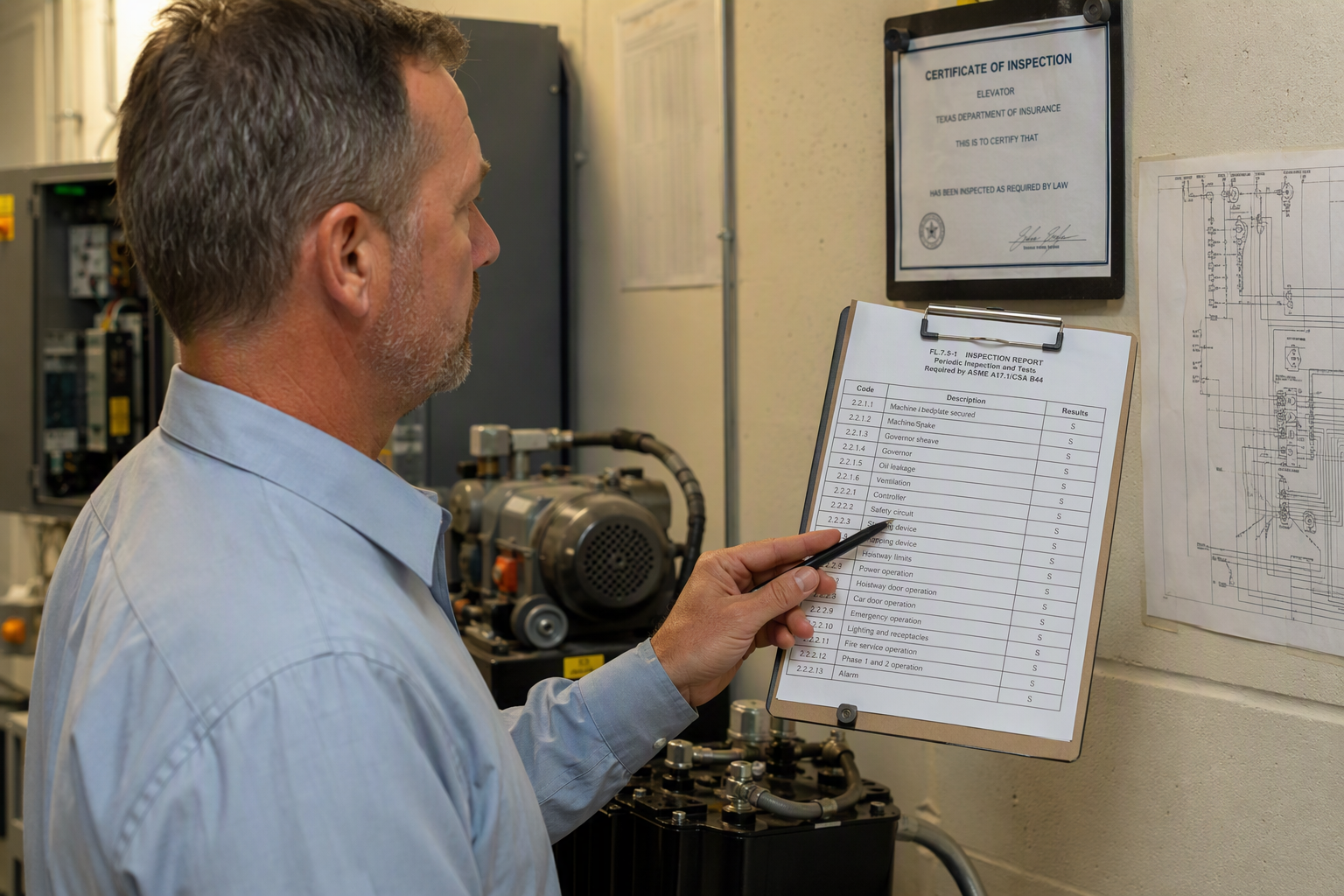
Texas healthcare facilities are subject to a layered set of codes and standards that work together:
- ASME A17.1 Safety Code for Elevators and Escalators: The primary national safety standard adopted by Texas through the Texas Department of Insurance (TDI), which regulates elevator construction, installation, alteration, and maintenance statewide.
- Americans with Disabilities Act (ADA): Federal law requiring accessible elevator design in public accommodations and commercial facilities, including all patient-facing healthcare spaces.
- Texas Health & Safety Code, Chapter 754: The state statute governing amusement rides and elevating devices, authorizing TDI to enforce elevator safety rules for all commercial buildings in Texas.
- The Joint Commission (TJC) and CMS Conditions of Participation: Hospitals and skilled nursing facilities accredited through TJC or certified under Medicare and Medicaid must demonstrate life-safety compliance, which includes elevator functionality and maintenance records.
- NFPA 101 Life Safety Code: Applicable to healthcare occupancies, this code intersects with elevator requirements around fire service recall, emergency power, and door operation.
In 2026, Texas continues to enforce ASME A17.1 as its reference standard for inspections. Facilities that have not been inspected or have open violation orders are at risk of shutdown orders from TDI.
What elevator upgrades are currently required for Texas healthcare facilities?
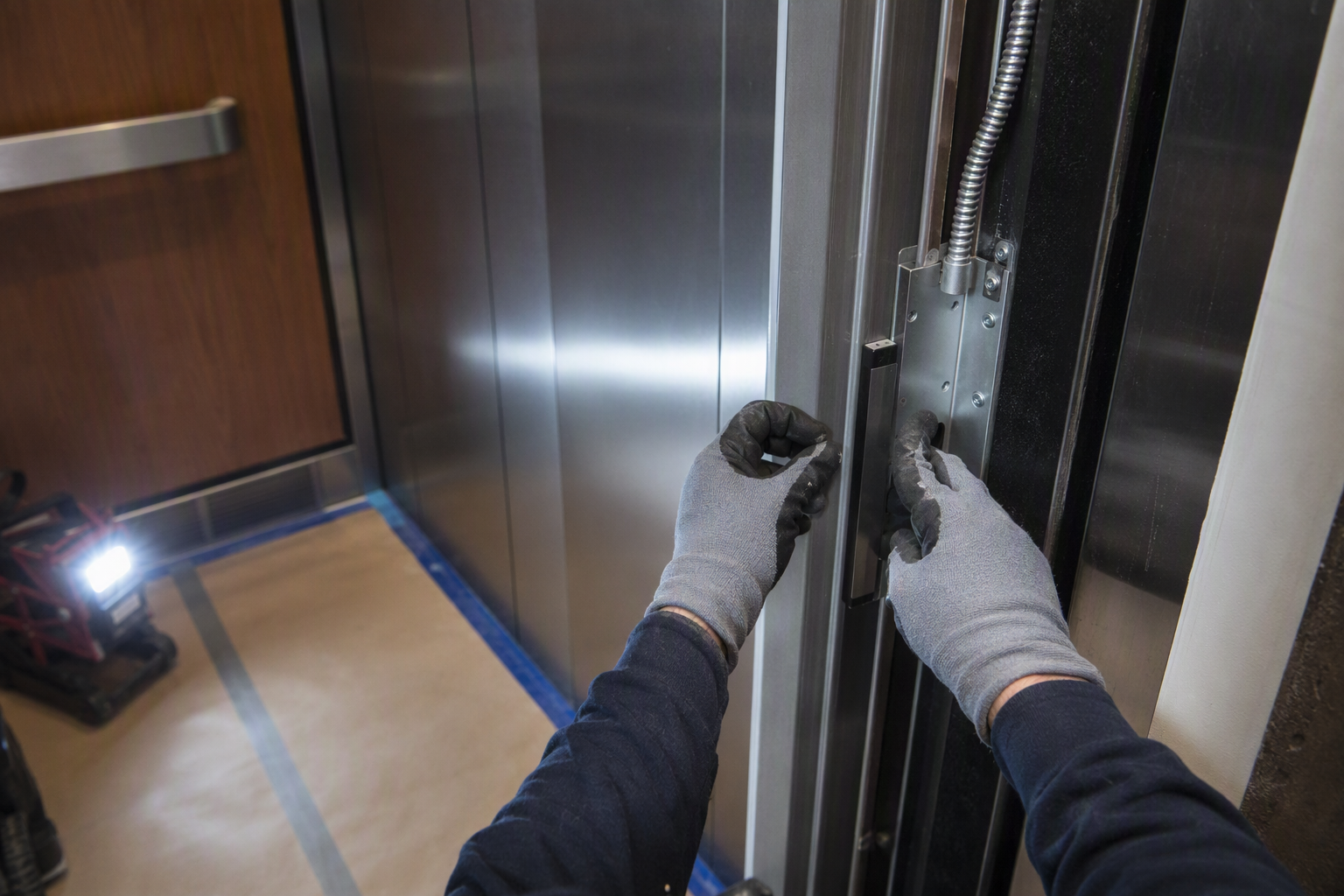
Compliance requirements vary based on the age of the elevator installation, the type of healthcare occupancy, and any recent alterations to the building. The upgrades most commonly cited during inspections of Texas healthcare elevators include:
- Door reopening devices: Under ASME A17.1, hoistway doors must be equipped with approved reopening devices that respond to both light-curtain and door-edge contact. Older mechanical safety edges that do not meet current specifications require replacement.
- Emergency lighting and communication: Cabs must provide emergency lighting with a minimum duration and a two-way communication system that connects to an on-site staffed location — critical in hospitals where a patient emergency inside a cab is a realistic scenario.
- Fire service recall (Phase I and Phase II): All elevators in healthcare facilities must be equipped with firefighter emergency operation as defined by ASME A17.1. This includes automatic Phase I recall initiated by smoke detectors and manual Phase II in-cab operation for fire department use.
- ADA cab interior modifications: Handrails at the required height, raised and Braille floor designations, audible floor indicators, and control button placement within ADA-specified reach ranges are required in facilities with public or patient access.
- Seismic compliance (applicable to California markets): Healthcare facilities in Los Angeles and San Diego must additionally comply with California’s seismic design requirements for elevators, which impose specific counterweight retention and buffer requirements beyond the ASME baseline.
- Hydraulic fluid and pit requirements: Older hydraulic elevators may require single-bottom cylinder replacement or the installation of underground leak detection systems to prevent environmental contamination — a code-driven upgrade in many Texas facilities.
- Machine room and pit lighting and sump pump compliance: ASME A17.1 requires adequate lighting levels in machine rooms and pits, plus functioning sump pumps where water intrusion is possible.
How often must healthcare elevators in Texas be inspected?
Texas requires annual safety inspections for commercial elevators, conducted by a TDI-licensed elevator inspector. Healthcare facilities should not treat the annual inspection as the only compliance checkpoint. Maintenance contracts should include periodic documented inspections throughout the year, because TJC and CMS surveyors can request maintenance logs and may flag gaps in preventive maintenance as Life Safety Code deficiencies.
AmeriTex Elevator provides comprehensive maintenance and inspection documentation that meets both TDI requirements and the record-keeping standards expected during Joint Commission surveys.
What is the process for bringing a non-compliant healthcare elevator into compliance?
- Schedule a baseline assessment. A certified elevator technician reviews the current equipment, identifies all open violations or deficiencies against the current adopted ASME A17.1 edition, ADA requirements, and any facility-specific accreditation standards.
- Receive a written deficiency report. The assessment should produce a prioritized list of required versus recommended upgrades, distinguishing between code-mandated corrections and improvements that reduce risk without being currently enforceable.
- Obtain necessary permits. Alterations to existing elevator equipment in Texas require a permit from TDI before work begins. Your elevator contractor should manage this process on your behalf.
- Complete upgrades by licensed elevator mechanics. All work must be performed by mechanics holding valid Texas elevator mechanic licenses and must follow ASME A17.1 installation and alteration requirements.
- Schedule a post-alteration inspection. After permitted work is completed, TDI requires an inspection before the elevator is returned to full service. Ensure your contractor coordinates this scheduling.
- Update maintenance records. All work performed, parts replaced, and inspection results should be entered into the facility’s maintenance log and made available for any future regulatory or accreditation survey.
How does ADA compliance apply specifically to hospital and clinic elevators?
Under the Americans with Disabilities Act, elevators in healthcare facilities that serve the public or patients must meet specific technical requirements. These include cab dimensions sufficient to accommodate a wheelchair and an attendant, call button height within the reach range for a person seated in a wheelchair, visual and audible floor indicators, and Braille and raised-character floor designations on jamb plates.
Facilities undergoing renovation or alteration have a legal obligation to bring the path of travel — including elevators — into ADA compliance to the extent technically and financially feasible. Healthcare organizations that defer these corrections risk complaints filed with the U.S. Department of Justice and private litigation.
What are the elevator compliance risks unique to healthcare occupancies?
Healthcare buildings carry compliance risks that differ from standard commercial offices or retail spaces:
- Stretcher and bariatric transport: Hospitals frequently require elevators sized for stretcher access. When cab dimensions or door widths do not accommodate current equipment, facilities face operational disruption as well as potential ADA concerns.
- Infection control during maintenance: Maintenance work in patient areas must follow infection control protocols. Healthcare facilities should confirm that their elevator service provider understands interim life safety measure (ILSM) requirements during equipment downtime.
- Continuous operation requirements: Unlike an office building, a hospital cannot simply take an elevator out of service during business hours. Upgrade and maintenance scheduling must account for 24-hour operational needs.
- Documentation for accreditation: TJC Environment of Care and Life Safety chapters require evidence of regular preventive maintenance. Missing or incomplete records — even when the equipment is functionally sound — can trigger findings during surveys.
How do Texas elevator compliance rules compare to California requirements for healthcare?
AmeriTex Elevator also serves healthcare facilities in Los Angeles and San Diego, where California’s elevator regulations under the California Elevator Safety Construction Code (Title 8, California Code of Regulations) layer additional requirements on top of the ASME A17.1 baseline. California healthcare facilities face seismic restraint requirements for elevator equipment, more prescriptive hydraulic system standards, and oversight through the California Division of Occupational Safety and Health (Cal/OSHA) rather than a state insurance department. Texas facilities should be aware that the two regulatory frameworks are meaningfully different when evaluating multi-state compliance programs.
What does a healthcare elevator maintenance contract need to include?
A compliant maintenance contract for a Texas healthcare facility should include at minimum: scheduled preventive maintenance at intervals specified by the manufacturer and ASME A17.1 guidelines, documented callback service for equipment failures, written reports after each maintenance visit, parts replacement using components that meet the original equipment specifications, and technicians who hold current Texas elevator mechanic licenses.
Facilities should also confirm that their service provider carries appropriate liability insurance and can produce documentation acceptable to TJC or CMS surveyors on request. AmeriTex Elevator structures maintenance agreements with healthcare documentation standards in mind, providing clear service records for use during regulatory reviews.
When does aging elevator equipment need full modernization versus targeted repairs?
Not every compliance deficiency requires a full modernization project. Targeted upgrades — such as replacing a door operator, installing a new controller, or retrofitting emergency lighting — can bring a specific system into compliance without replacing the entire elevator. However, when equipment has reached the end of its serviceable life, when multiple systems are simultaneously non-compliant, or when parts availability for legacy components is severely limited, a full modernization often delivers better long-term value than repeated piecemeal repairs.
A qualified assessment from AmeriTex Elevator can help healthcare facility managers and directors of plant operations understand the actual scope and cost trajectory of their options before committing to a course of action.
Questions Your Inspector Will Ask
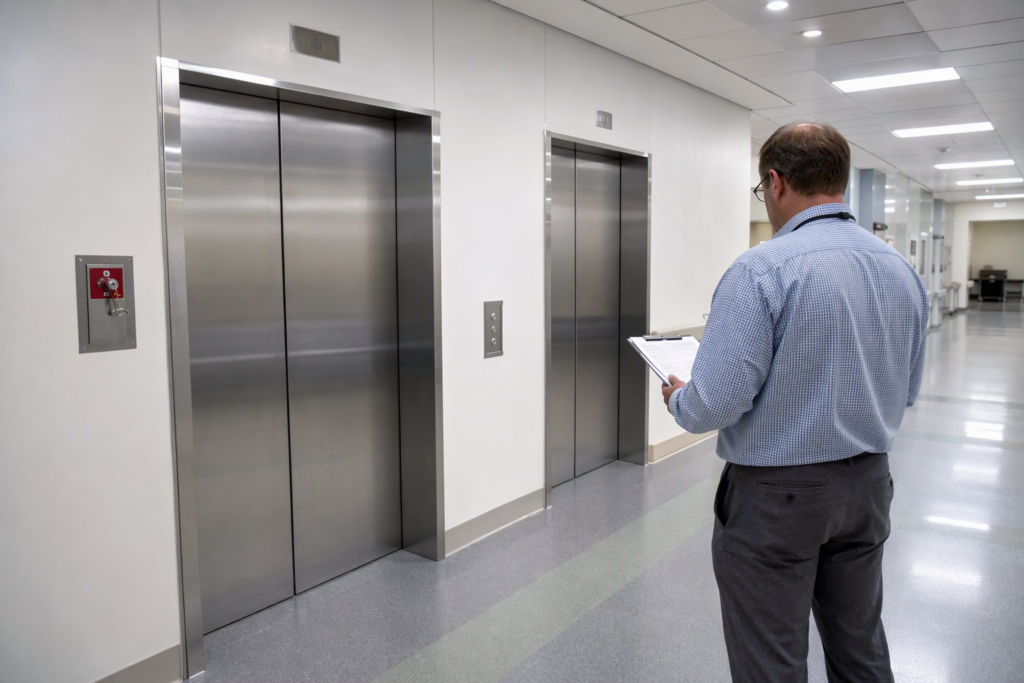
When a TDI inspector or a Joint Commission life safety surveyor reviews your healthcare facility’s elevators, the following questions reflect the documentation and condition standards they typically evaluate:
- Is the current Certificate of Compliance posted in or adjacent to the elevator cab?
- Are maintenance records available showing the dates, scope, and performing technician for each service visit within the past year?
- Has the fire service recall (Phase I and Phase II) been tested and documented within the required interval?
- Do all cab interiors have functioning emergency lighting and a working two-way communication device that connects to a staffed location?
- Are door reopening devices functioning on both light-curtain and contact detection?
- Are machine room access, lighting, and temperature conditions within code requirements?
- For hydraulic elevators: is there evidence of any hydraulic fluid leakage, and is the required leak detection or containment system in place?
- Have any alterations been performed since the last inspection, and if so, were they permitted and inspected by TDI?
- Are cab interior controls, Braille designations, and call button heights consistent with ADA requirements?
- Is there a current contract with a licensed elevator service company on file?
Facilities that cannot confidently answer “yes” and produce supporting documentation for each of these questions should prioritize a compliance assessment before their next scheduled inspection.
How should a healthcare facility plan and budget for elevator compliance work?
Elevator compliance budgeting in a healthcare context requires separating immediate code-mandated corrections from longer-term capital improvements. Facilities should request an itemized deficiency report that distinguishes between violations that could trigger a stop-use order versus conditions that are advisory or on a compliance timeline. This allows finance and facility management teams to prioritize spending accurately.
Because permitted alteration work requires coordination with TDI and cannot begin without an approved permit, timelines for compliance work can extend beyond what facility managers expect. Beginning the assessment and permit application process well before an inspection deadline — or before a planned accreditation survey — reduces the risk of last-minute regulatory exposure.
What should healthcare facility managers do right now?
- Locate and review your most recent TDI Certificate of Compliance and confirm its expiration date.
- Pull your maintenance records and verify that service visits are documented with dates, technician information, and work performed.
- Confirm your current elevator service contract is with a provider whose mechanics hold active Texas elevator mechanic licenses.
- Request a written assessment that compares your current equipment condition against the currently adopted ASME A17.1 edition and ADA requirements.
- Identify any pending or planned building renovations that would trigger a path-of-travel ADA upgrade obligation on your elevators.
- Share the compliance assessment results with your director of plant operations and risk management team so that required upgrades are included in capital planning.
Healthcare facilities across Houston, Dallas, Austin, San Antonio, Los Angeles, and San Diego face real regulatory and patient safety consequences when elevator compliance is deferred. The combination of annual TDI inspection requirements, ADA obligations, and accreditation body expectations creates a compliance environment where documentation gaps and equipment deficiencies surface quickly — and carry meaningful consequences for both operations and patient care.
AmeriTex Elevator works with healthcare facility teams to identify compliance gaps, manage the permit and upgrade process, and maintain the documentation standards that regulatory and accreditation reviewers expect. A proactive compliance posture is significantly less disruptive — and less costly — than responding to a citation or a stop-use order.
Get Your Healthcare Elevator Compliance Assessment Today
Contact AmeriTex Elevator for a free elevator assessment and receive a clear, documented picture of your facility’s compliance status under current Texas and ADA requirements.
Call AmeriTex Elevator: 866-679-4313
Need elevator service you can rely on? AmeriTex Elevator is ready to help.