Elevator Service in Houston, TX | AmeriTex Elevator
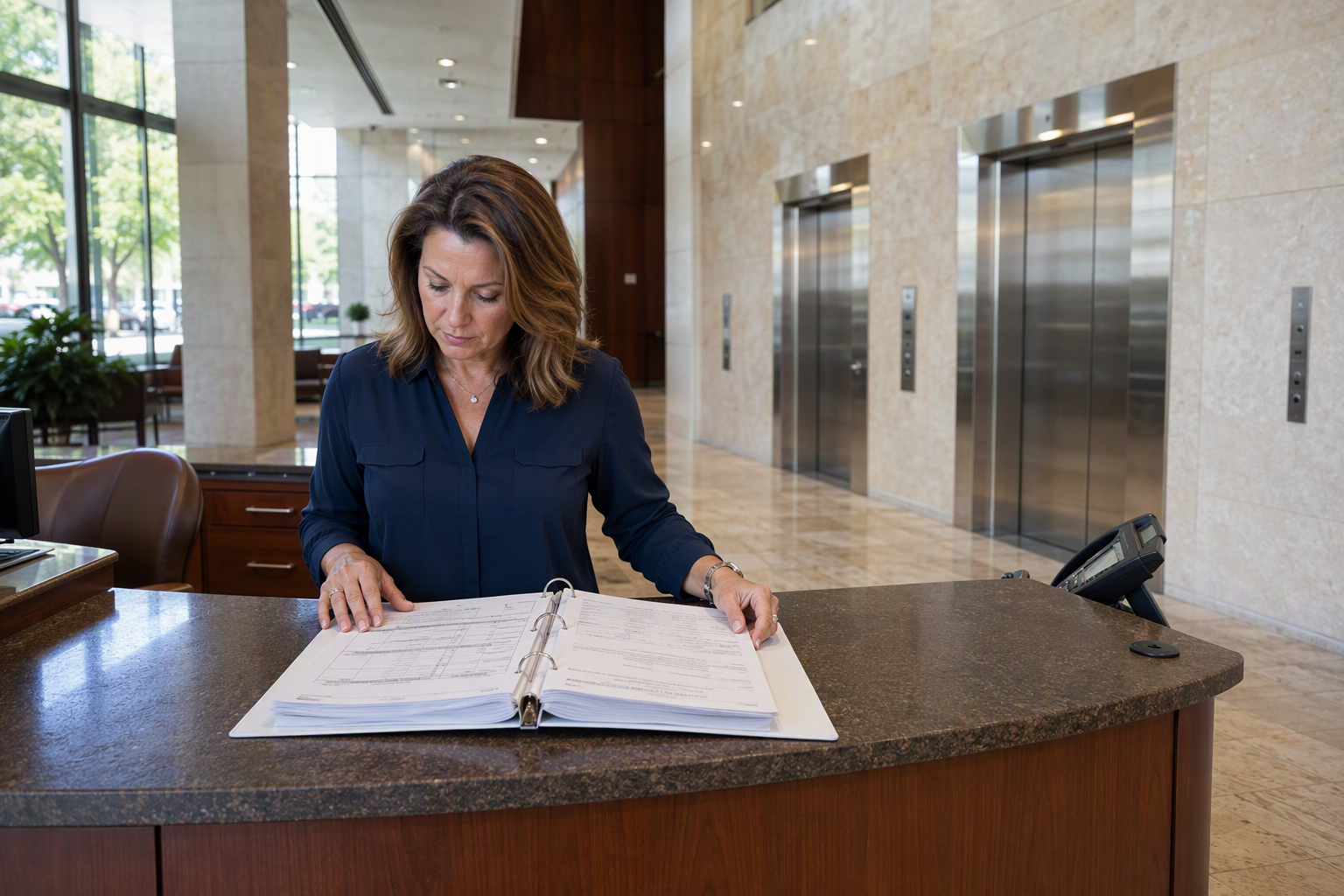
Keeping a thorough elevator maintenance log is one of the most consequential administrative tasks a Houston building owner or property manager faces. When an inspector arrives, when an incident occurs, or when an insurance carrier asks questions, the log is the first document that speaks on behalf of the property. AmeriTex Elevator helps Houston-area building owners build record-keeping systems that hold up under scrutiny — and that keep elevators running safely between inspections.
What Is an Elevator Maintenance Log and Why Does It Matter?
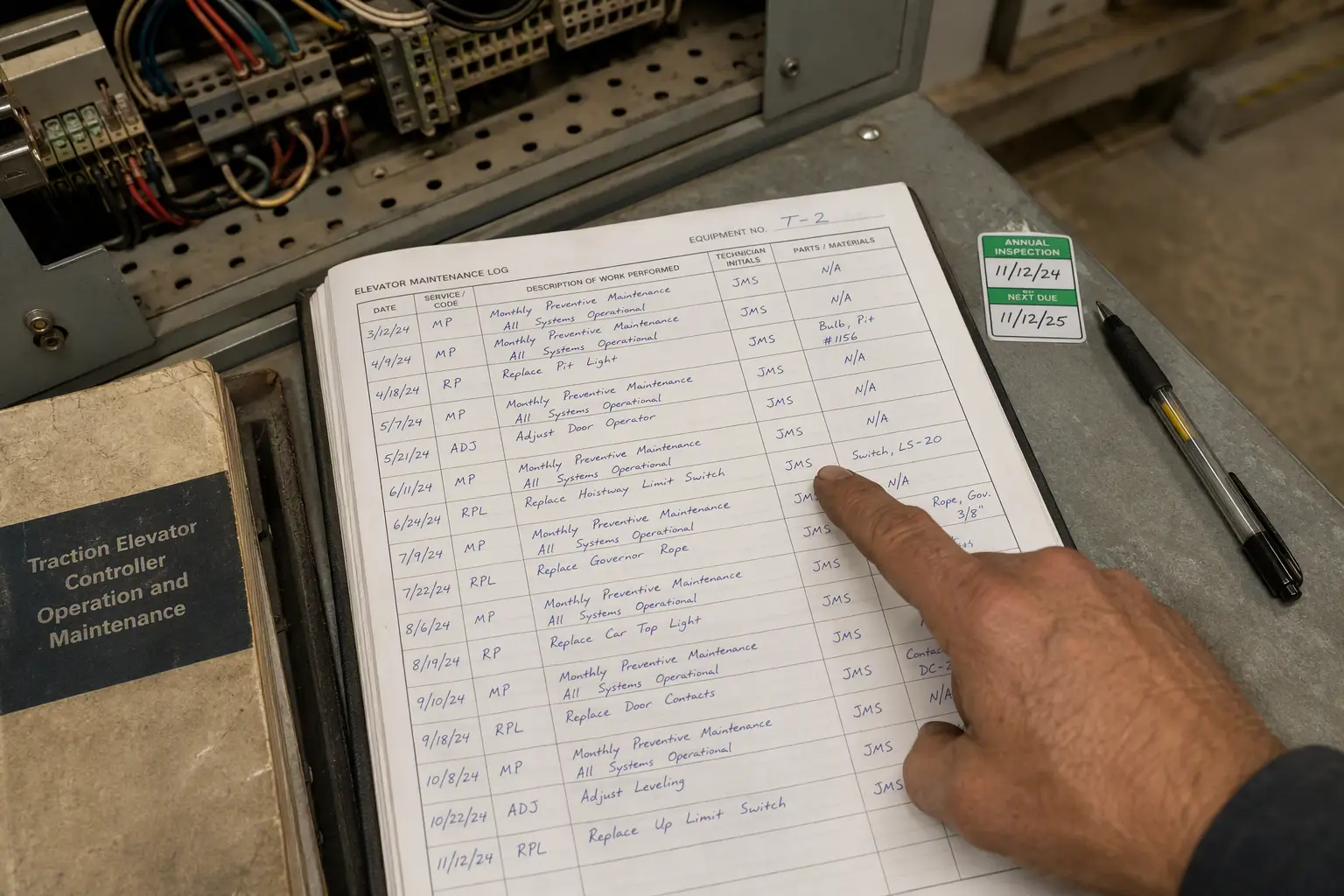
An elevator maintenance log is a structured record that documents every service event — scheduled or unscheduled — that touches a unit. It typically includes the date of service, the nature of the work performed, parts replaced or adjusted, the name of the servicing company, and any observations about equipment condition. A complete log tells the story of how a unit has been cared for over its lifetime.
From a liability standpoint, the log is critical. If a passenger is injured and a claim is filed, plaintiff attorneys routinely subpoena maintenance records. A well-maintained log demonstrates a pattern of diligent care. Gaps or missing records, by contrast, can be used to argue negligence. For Houston building owners, maintaining a complete log is both a practical safeguard and sound risk management.
What Records Does Houston Require Building Owners to Keep on File?
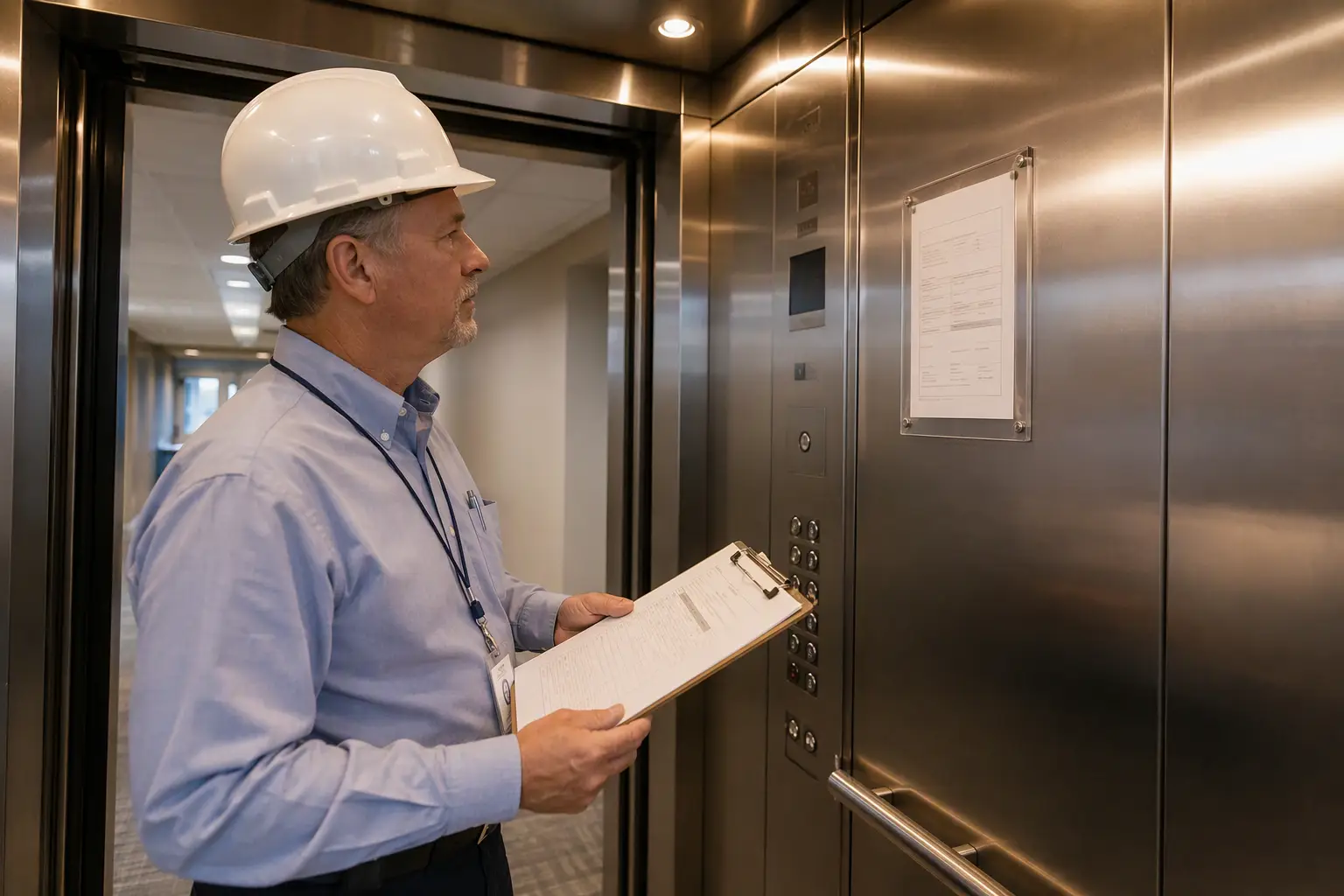
The City of Houston operates its own elevator and escalator inspection program — separate from the statewide Texas Department of Licensing and Regulation (TDLR) Elevator and Escalator Safety program, which does not regulate elevators inside Houston city limits. Because the City of Houston administers its own program, building owners should verify current recordkeeping requirements directly with the City’s program.
Regardless of the specific local requirements, the following records are widely expected by inspectors and are essential for liability protection:
- Certificate of inspection — proof that the unit passed its most recent inspection and is authorized to operate
- Inspection reports — detailed findings from each inspection, including any cited deficiencies
- Violation correction records — documentation that cited issues were repaired and when
- Maintenance service records — dates and descriptions of all preventive maintenance visits
- Repair work orders — documentation of parts replaced, adjustments made, and work performed
- Test records — results of required safety tests, including periodic load and safety device tests
- Accident and incident reports — accounts of any malfunction, entrapment, or injury event
- Equipment manuals and modernization records — original manufacturer documentation and records of any alteration or upgrade
For reference, the statewide TDLR program — which governs elevators outside Houston — requires that a registered elevator inspector deliver an inspection report to the building owner within five calendar days of the inspection, and that owners correct cited violations or have them under contract for correction within 30 days. While TDLR does not govern Houston elevators, these timelines reflect industry norms that Houston property managers would do well to follow as a baseline.
How Do You Set Up an Elevator Maintenance Log Step by Step?
- Gather baseline documentation. Collect the unit’s installation records, equipment manuals, any previous inspection reports, and the current certificate authorizing operation. These form the historical foundation of the log.
- Choose a log format. Decide whether the log will be paper-based (a dedicated binder kept in the machine room or management office), digital (a spreadsheet or property management platform), or provided by the elevator service company. Whichever format is chosen, it must be accessible to inspectors on demand.
- Create a standard entry template. Each entry should capture: date of service, name of the service company, name or identifier of the technician who performed the work, type of service (preventive maintenance, repair, test, emergency call), description of work performed, parts replaced or ordered, and any observations or recommendations for follow-up work.
- Log every service event at the time it occurs. Do not batch-enter records retroactively. Real-time entries are more credible to inspectors and in legal proceedings.
- File inspection reports immediately upon receipt. Attach each official inspection report to the log chronologically and note any deficiencies cited and the corrective action taken.
- Document test results separately. Safety tests — such as the Category 5 full-load test required every five years on electric traction elevators under the statewide TDLR program — generate their own reports. Keep those reports filed with the log even if they were produced by a third-party inspector.
- Record any incident or entrapment immediately. Log the date, time, nature of the event, personnel involved, actions taken, and any follow-up service. Under the statewide TDLR program, building owners outside Houston must report accidents to TDLR within 24 hours; Houston building owners should follow the City’s reporting requirements.
- Review and audit the log annually. Before each scheduled inspection, review the log for completeness, confirm that all previously cited deficiencies have been corrected and documented, and verify that no recurring issues are being left unaddressed.
How Long Should Elevator Maintenance Records Be Retained?
There is no single universal retention period, but industry practice — and the practical reality of long-tail liability claims — points toward retaining elevator maintenance records for a minimum of several years beyond the life of each inspection cycle. Many property risk managers keep records for the life of the building or the life of the equipment, whichever is longer. Building owners should consult their legal counsel and insurance carrier for guidance specific to their situation, as statutes of limitations for personal injury claims vary and can extend years beyond the date of an incident.
At minimum, all current-cycle inspection reports, certificates, and service records should be immediately on hand for inspectors at any time. Prior-cycle records should be archived in an organized, retrievable format.
What Federal Codes Govern Elevator Safety and Recordkeeping?
At the federal level, the primary technical standard governing elevator design, installation, inspection, testing, and maintenance is the ASME A17.1/CSA B44 Safety Code for Elevators and Escalators. This code establishes the technical benchmarks — including inspection categories and test intervals — that state and local programs typically adopt, sometimes with amendments.
The Americans with Disabilities Act (ADA) imposes accessibility requirements on elevators in public accommodations and commercial facilities, and maintaining ADA compliance is an ongoing obligation that should be reflected in maintenance records when accessibility-related components are serviced or altered.
OSHA requirements apply to worker safety during elevator maintenance and repair operations. Technicians working on elevator equipment are subject to OSHA lockout/tagout and confined space standards, among others.
What Happens If Maintenance Records Are Missing During an Inspection?
Missing or incomplete records during an inspection create problems on multiple fronts. Inspectors may be unable to verify that previously cited deficiencies were corrected, which can lead to continued citations or removal from service. From an insurance standpoint, gaps in documentation can complicate claims and, in litigation, may be treated as evidence of inadequate maintenance practices. Building owners who cannot produce records risk both regulatory penalties and increased legal exposure.
AmeriTex Elevator works with Houston-area property owners to establish recordkeeping systems that close these gaps — ensuring that every maintenance visit, test, and repair is documented before the next inspection cycle begins.
How Does Preventive Maintenance Support Inspection Readiness and Liability Protection?
A preventive maintenance program is the engine that produces the records an inspection demands. When elevator equipment is serviced on a regular schedule — lubrication, adjustment of safety devices, inspection of ropes or hydraulic systems, testing of door operation and emergency lighting — each visit generates a documented record of the unit’s condition at that point in time.
Over time, that record demonstrates a pattern of responsible ownership. It also creates an early-warning system: technicians who service the same unit regularly are more likely to catch developing issues before they result in a breakdown, an entrapment, or a safety event. For building owners, this means fewer emergency service calls, reduced liability exposure, and a smoother path through annual inspections.
AmeriTex Elevator provides preventive maintenance programs tailored to the specific equipment and usage patterns of Houston-area properties — from commercial office buildings and multifamily residential towers to healthcare facilities and industrial sites.
What Should Building Owners Do Immediately After an Elevator Incident?
- Secure the area and ensure passenger safety. If a passenger is entrapped, contact emergency services and your elevator service provider. Do not attempt to manually operate the unit without trained personnel.
- Take the unit out of service. Place the elevator in a non-operational status until a qualified technician has assessed the equipment and determined it is safe to return to service.
- Document the incident immediately. Record the date, time, location, nature of the event, identities of passengers involved (if obtainable), witnesses, and conditions at the time of the incident.
- Preserve all physical and digital evidence. Do not erase security camera footage. Secure the maintenance log and any recent service records.
- Notify the appropriate authority. Houston building owners should contact the City of Houston’s elevator program per its reporting requirements. Outside Houston, TDLR requires accident reports within 24 hours.
- Notify your insurance carrier. Report the incident to your property liability insurer promptly and follow their claims guidance.
- Arrange a post-incident inspection and repair. Have your elevator service contractor perform a thorough assessment before returning the unit to service, and document all findings and corrective actions in the maintenance log.
How Can AmeriTex Elevator Help Houston Building Owners Stay Compliant?
AmeriTex Elevator is a certified elevator service company serving Houston and the surrounding region. The team works with property owners, managers, and facility directors to develop and maintain recordkeeping systems that meet inspection requirements, support liability defense, and reflect the actual condition of their equipment. From preventive maintenance programs that generate clean service records to support before and after inspections, AmeriTex Elevator’s work is built around keeping Houston buildings compliant, documented, and safe.
Whether a property is navigating its first inspection cycle or working to strengthen an existing maintenance program, AmeriTex Elevator provides the local expertise and hands-on service that Houston building owners rely on.
Ready to build a compliant elevator maintenance program for your Houston property?
Schedule a Free Consultation — Call AmeriTex Elevator at 866-679-4313
Need elevator service you can rely on? AmeriTex Elevator is ready to help.