Hospital Elevator Inspection & Maintenance: Compliance Guide for Healthcare Facilities in Texas and California
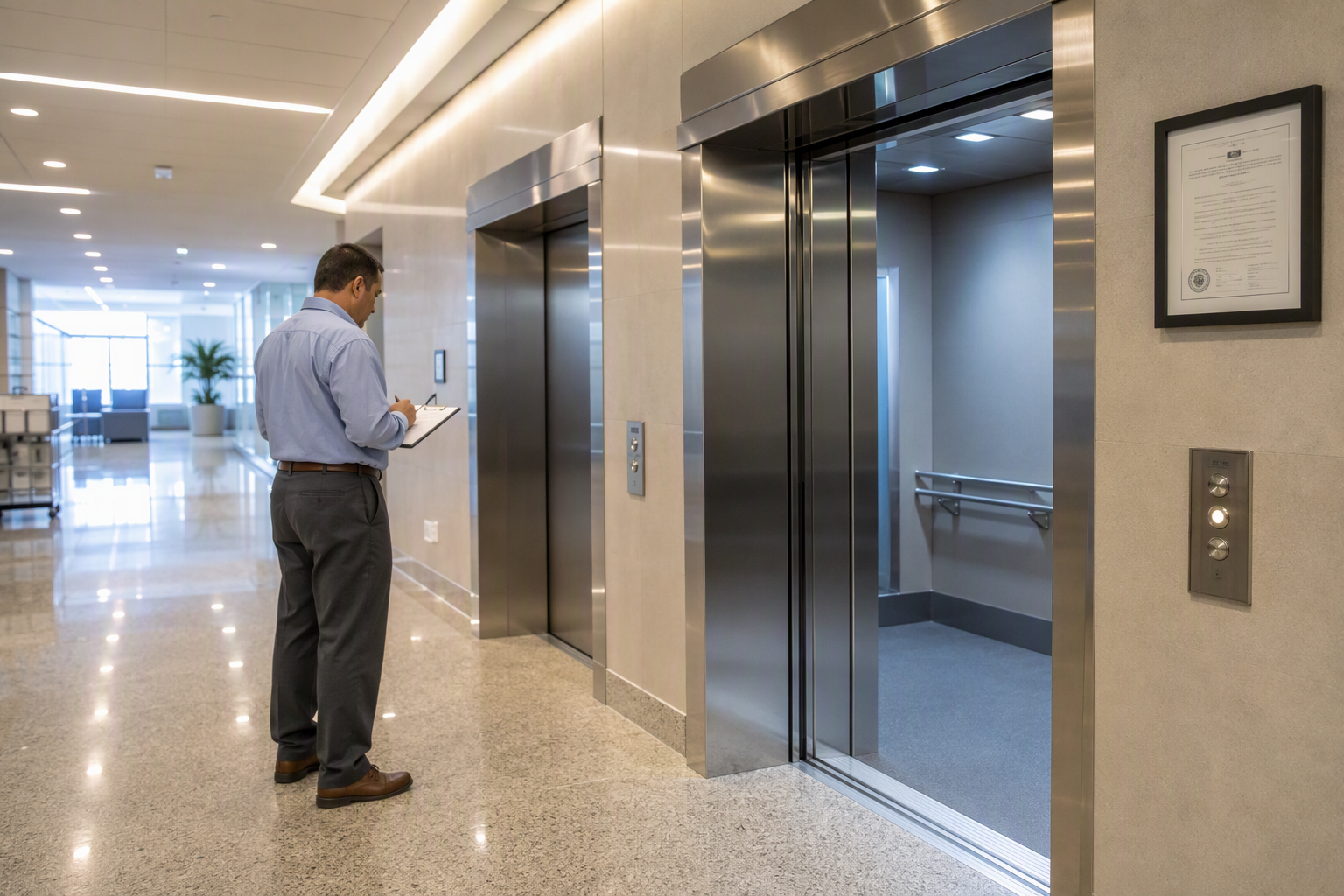
Hospital elevators are among the most critical pieces of infrastructure in any healthcare building. They move patients on stretchers, transport surgical equipment between floors, and provide ADA-accessible routes that federal law requires to remain operational. Understanding inspection intervals, maintenance obligations, and out-of-service protocols is not optional for healthcare facility managers — it is a compliance imperative. The guidance below covers requirements in Texas and California, the markets where AmeriTex Elevator provides certified elevator services to healthcare facilities.
How Often Does a Hospital Elevator Need to Be Inspected?
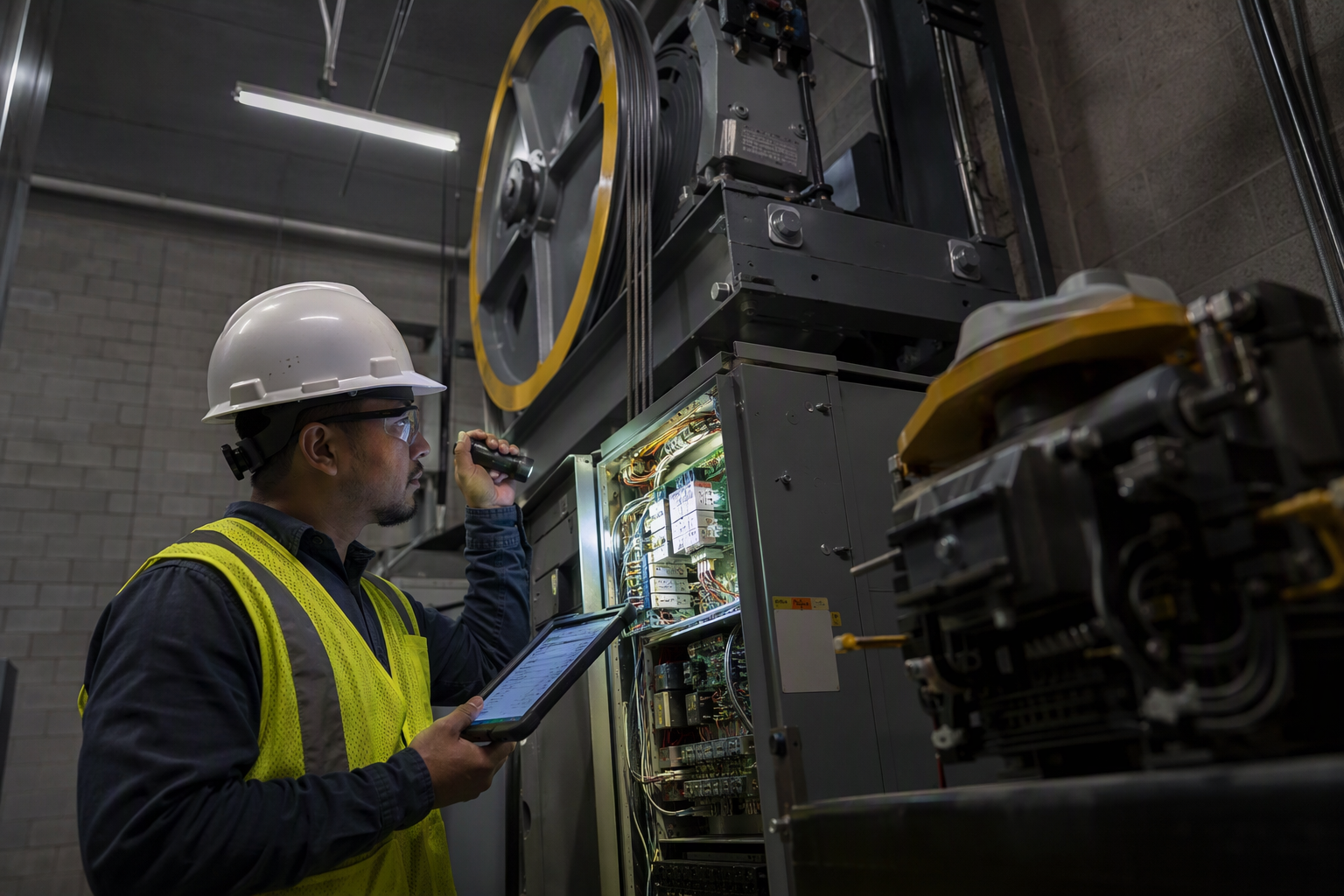
The inspection frequency for hospital elevators follows both state law and the underlying safety code adopted by each state. Here is what applies in the markets AmeriTex Elevator serves:
Texas
Under Texas Department of Licensing and Regulation (TDLR) rules and Texas Health and Safety Code Chapter 754, building owners — including hospital operators — must have elevators inspected annually by a TDLR-registered elevator inspector. Texas adopted the ASME A17.1/CSA B44, 2016 edition as its governing safety code (effective November 1, 2018). Beyond the annual inspection, Texas requires a Category 5 full-load test every five years on electric (traction) elevators — the type most commonly installed in multi-story hospital towers.
Important Houston note: TDLR does not regulate elevators inside Houston city limits. The City of Houston operates its own elevator inspection program. Houston hospital operators should contact the City of Houston directly to confirm current inspection requirements and certificate obligations.
After each annual inspection, the TDLR-registered inspector must provide the building owner with an inspection report within five calendar days. The owner must then obtain a TDLR Certificate of Compliance for each elevator unit, post it in a publicly visible area of the building, and correct any cited violations — or have them under contract for correction — within 30 days.
California
In California, elevator oversight falls under the Division of Occupational Safety and Health (Cal/OSHA), Elevator Unit, California Department of Industrial Relations, operating under California Labor Code Sections 7300–7324.2. California law requires every conveyance to be inspected at least once a year, conducted only by Cal/OSHA state safety engineers or Certified Competent Conveyance Inspectors (CCCI). An elevator found safe receives a permit to operate for up to one year.
California offers an important benefit for healthcare facilities that act proactively: if a hospital elevator is covered by a full maintenance contract with a C-11 licensed, Cal/OSHA-certified Qualified Conveyance Company (CQCC), Cal/OSHA may issue a permit to operate for up to two years. This extended permit option can reduce administrative burden — but arranging the annual reinspection remains the elevator owner’s responsibility regardless. The permit to operate must be posted conspicuously inside the elevator car.
Los Angeles note: The City of Los Angeles, Department of Building and Safety (LADBS), runs its own elevator and conveyance inspection program. Healthcare facilities in Los Angeles should verify current inspection requirements directly with LADBS.
What Maintenance Does a Hospital Elevator Require Beyond the Annual Inspection?

Statutory inspections establish the legal minimum, but hospital environments impose demands that go well beyond a once-a-year checkup. Healthcare elevators operate at high cycle counts — moving patients, beds, food carts, and medical equipment throughout every shift, every day of the year. A preventive maintenance program structured around the ASME A17.1 Safety Code for Elevators and Escalators includes regular lubrication, door operator and safety device testing, hydraulic fluid inspection, controller diagnostics, and cab interior checks.
AmeriTex Elevator works with healthcare facility managers to develop maintenance schedules calibrated to the actual usage intensity of each elevator bank — because a surgical floor elevator serving an operating suite has different wear patterns than a visitor elevator in an outpatient clinic.
What Happens If a Hospital Elevator Goes Out of Service?
When an elevator in a healthcare facility goes out of service, the consequences extend far beyond inconvenience. Patient transport, emergency response, and ADA accessibility can all be compromised. Here is what hospital operators need to know:
Regulatory Obligations When an Elevator Is Taken Out of Service
In Texas, building owners must report any accident involving elevator equipment to TDLR within 24 hours. Beyond accident reporting, when an elevator fails a safety threshold, Texas law mandates immediate removal from service in specific cases. Two conditions trigger mandatory out-of-service status without exception:
- A passenger elevator without working door restrictors must be removed from service immediately.
- A passenger elevator without firefighters’ service, or with non-working Phase One firefighters’ service, must be removed from service immediately.
In California, no elevator may be operated without a valid, current permit to operate issued by Cal/OSHA. If a unit’s permit lapses or is revoked following a failed inspection, the elevator cannot legally remain in service until the deficiencies are resolved and a new permit is issued.
What To Do Immediately When a Hospital Elevator Goes Out of Service
- Post clear out-of-service signage on every floor landing to prevent patient or staff entry.
- Notify your facility operations team and elevator service contractor so a diagnostic evaluation can be dispatched without delay.
- Activate your contingency transport plan — reassign patient movement to operational elevator banks and notify nursing units, transport staff, and housekeeping.
- Assess ADA impact — if the out-of-service elevator is on an accessible route required under the Americans with Disabilities Act, document the alternative accessible path you are providing and notify staff immediately.
- File any required incident reports — in Texas, accidents must be reported to TDLR within 24 hours; in California, follow Cal/OSHA notification protocols.
- Coordinate with your elevator contractor to document all repair steps, parts replaced, and test results so the inspection record remains complete for regulators.
- Do not restore the elevator to service until all required safety tests have been completed and, where required, a reinspection or updated permit has been obtained.
What Are the ADA Requirements for Hospital Elevators?
The Americans with Disabilities Act requires that elevators serving as part of an accessible route in a healthcare facility remain operational and meet ADA accessibility standards. This includes cab dimensions, door timing, control panel height and Braille markings, and audible and visual floor indicators. When a hospital elevator that serves an accessible route is taken out of service, the facility must provide an equivalent accessible alternative — and must document that alternative to demonstrate ongoing ADA compliance. Extended downtime without an accessible alternative creates legal exposure independent of any state elevator code violation.
What Are the Consequences of Non-Compliance for Healthcare Facilities?
Healthcare facilities that allow elevators to operate past inspection deadlines, fail to correct cited violations within the required window, or continue operating units that should be removed from service face layered consequences:
- Regulatory penalties — TDLR in Texas and Cal/OSHA in California both have enforcement authority, which can include fines, permit revocations, and mandatory shutdowns.
- Joint Commission and CMS survey findings — life safety and environment-of-care standards reviewed during accreditation surveys include elevator maintenance documentation. Gaps in records can generate findings that affect hospital accreditation status.
- ADA enforcement — prolonged inaccessible routes can trigger civil rights complaints or litigation.
- Patient safety incidents — the human cost of an unplanned elevator failure during a patient transport or emergency response is the most serious consequence of all.
How Does the ASME A17.1 Code Apply to Hospital Elevators Specifically?
The ASME A17.1 Safety Code for Elevators and Escalators is the foundational technical standard adopted — in different editions — by both Texas and California. It governs design, installation, operation, inspection, testing, and maintenance requirements for passenger and freight elevators. For healthcare facilities, relevant provisions include firefighters’ emergency operation (a mandatory feature), door safety devices, emergency lighting, communication systems inside the cab, and load capacity ratings. Texas adopted the 2016 edition; California adopted the 2004 edition for installations under its current Elevator Safety Orders, with a proposed update to incorporate portions of ASME A17.1-2019 currently moving through the California regulatory process as of 2026.
Who Is Qualified to Maintain and Repair a Hospital Elevator in Texas and California?
In Texas, any person or company that installs, repairs, alters, tests, or maintains elevator equipment must be registered as a contractor with TDLR. Registered Texas elevator contractors must carry general liability insurance of at least $1,000,000 per occurrence for bodily injury or death and $500,000 per occurrence for property damage, and each contractor must designate one or two responsible parties with a minimum of three years of elevator contractor experience.
In California, only a Certified Competent Conveyance Mechanic (CCCM) working for a Cal/OSHA-certified Qualified Conveyance Company (CQCC) may maintain, repair, alter, or replace components on a conveyance. Companies seeking CQCC certification must hold a C-11 Elevator Contractor license issued by the California Contractors State License Board (CSLB) and carry certificates of workers’ compensation and liability insurance.
AmeriTex Elevator meets the regulatory qualification requirements for the Texas and California markets it serves, giving hospital facility managers a single accountable partner for compliance documentation, preventive maintenance, and emergency repair coordination.
How Should a Hospital Choose an Elevator Maintenance Contractor?
Selecting an elevator service partner for a healthcare facility is not the same as selecting one for a commercial office building. Hospital procurement teams should evaluate candidates on the following criteria:
- Regulatory standing — confirmed TDLR registration in Texas or CQCC certification in California, with documentation on file.
- Healthcare facility experience — familiarity with the operational demands of clinical environments, including infection control considerations when working in patient care areas.
- Maintenance documentation practices — the ability to produce complete, organized maintenance logs in the format required for Joint Commission, CMS, and state regulatory review.
- Geographic coverage — reliable service presence in the specific market where the facility operates.
- Emergency response capability — a clearly stated process for dispatching technicians when an elevator goes out of service unexpectedly.
AmeriTex Elevator serves healthcare facilities across Houston, Dallas, Austin, San Antonio, Los Angeles, and San Diego, providing the local presence and regulatory knowledge that multi-site hospital systems require.
What Records Does a Hospital Need to Keep for Elevator Compliance?
Healthcare facility operators should maintain the following records for each elevator unit:
- Current Certificate of Compliance (Texas) or permit to operate (California), posted as required by law.
- Inspection reports from each annual inspection, including any violation notices.
- Documentation of corrective actions taken within the required timeframe.
- Maintenance logs from the contracted service company, recording all scheduled and unscheduled service visits.
- Category 5 test records (Texas traction elevators, required every five years).
- Incident or accident reports filed with the relevant authority.
- Copies of the elevator contractor’s current TDLR registration or California CQCC certification.
During Joint Commission Environment of Care surveys, maintenance managers are routinely asked to produce these documents. Gaps in the record — even for elevators that are mechanically sound — can generate findings.
Questions Your Inspector Will Ask
Whether the inspection is conducted by a TDLR-registered inspector in Texas or a Cal/OSHA Certified Competent Conveyance Inspector in California, hospital facility managers should be prepared to answer and produce documentation for the following:
- Is the current Certificate of Compliance or permit to operate posted in the elevator car or in a publicly visible location as required?
- Are all firefighters’ emergency operation features — Phase One and Phase Two — tested and functional?
- Do all door restrictors operate correctly on every passenger elevator?
- Is there a signed maintenance contract in place with a qualified, registered elevator contractor?
- Have all violations cited at the prior inspection been corrected, and is documentation of correction available?
- For Texas traction elevators: is the Category 5 full-load test current and documented?
- Is the emergency communication system inside each cab operational?
- Are the maintenance logs current, organized, and available for review?
- Have any accidents or incidents involving elevator equipment been reported to the appropriate authority within the required timeframe?
- Are cab lighting, control panel Braille markings, and door timing within code requirements?
AmeriTex Elevator’s pre-inspection maintenance visits are structured to walk through exactly these checkpoints, so facility managers are prepared — not surprised — when the inspector arrives.
What Is the Cost of Hospital Elevator Maintenance and Inspection?
The cost of elevator maintenance and inspection for a healthcare facility varies based on the number of elevator units, elevator type (hydraulic vs. traction), age of the equipment, and the scope of the maintenance agreement. Because AmeriTex Elevator scopes each engagement to the specific facility, pricing is provided through a free assessment rather than a published rate schedule. What facility managers should factor into budget planning is the full cost picture: maintenance contracts, inspection fees, and the cost of maintaining records and correcting violations — weighed against the far greater cost of unplanned downtime, regulatory penalties, or accreditation findings.
How Long Does Elevator Repair Take After an Out-of-Service Event?
Repair timelines depend on the nature of the failure, parts availability, and whether the repair triggers a requirement for reinspection before the elevator can be returned to service. Simple repairs — door operator adjustments, minor electrical faults — can sometimes be resolved in hours. Major component replacements, such as a hoist motor or controller, can take longer, particularly if parts must be sourced. In Texas, any repairs to elevator equipment must be performed by a TDLR-registered contractor. In California, only a CCCM working for a CQCC-certified company may perform the work. Hospital operators should confirm with their elevator contractor upfront what the expected timeline is for common failure scenarios, so the contingency transport plan can be scaled appropriately.
Does OSHA Have Requirements That Apply to Hospital Elevators?
The Occupational Safety and Health Administration (OSHA) has general duty and specific requirements that can intersect with elevator safety in healthcare settings — particularly regarding elevator equipment used to transport workers, machine room safety, and lockout/tagout procedures when elevator technicians perform maintenance. OSHA jurisdiction applies to the workplace safety of the employees who work in and around elevator equipment. State elevator codes govern the elevator itself. Hospital safety officers should ensure that both dimensions are addressed in their elevator safety program.
Schedule a Free Hospital Elevator Assessment
Keeping a healthcare facility’s elevators compliant, documented, and continuously operational requires a service partner who understands both the regulatory framework and the operational demands of clinical environments. AmeriTex Elevator provides certified elevator maintenance, inspection preparation, and emergency repair coordination for hospitals and healthcare facilities in Houston, Dallas, Austin, San Antonio, Los Angeles, and San Diego.
Contact AmeriTex Elevator for a free elevator assessment: 866-679-4313
Need elevator service you can rely on? AmeriTex Elevator is ready to help.