Direct Answer: In Texas, building elevators must be inspected annually by a TDLR-registered elevator inspector, and in California, Cal/OSHA requires at least one inspection per year — in both states, the legal responsibility for scheduling that inspection falls on the building owner or property manager, not the elevator service company.
How Often Does My Building Elevator Need to Be Inspected, and Who Is Responsible for Scheduling It?
Building elevators in Texas must be inspected at least once every 12 months by a TDLR-registered elevator inspector, while elevators in California must be inspected at least once a year by a Cal/OSHA safety engineer or Certified Competent Conveyance Inspector (CCCI). In both states, the building owner bears the legal responsibility for arranging that inspection, securing the required certificate or permit, and correcting any cited violations. Failing to maintain a current certificate exposes property owners to liability, regulatory penalties, and potential shutdown of the equipment.
How often is a building elevator legally required to be inspected in Texas?
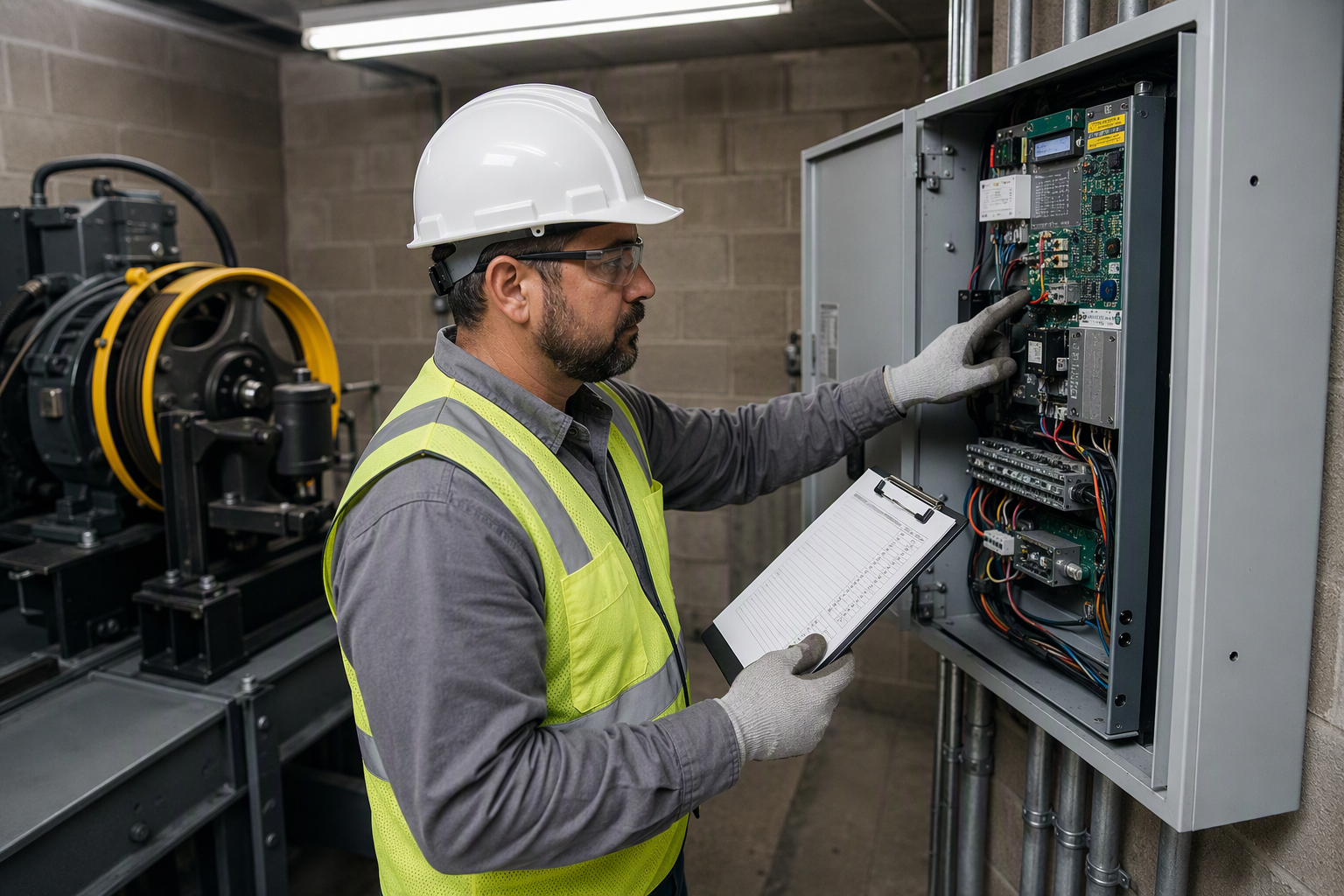
Texas law requires that every elevator, escalator, and related conveyance be inspected at least once per year by a TDLR-registered elevator inspector.
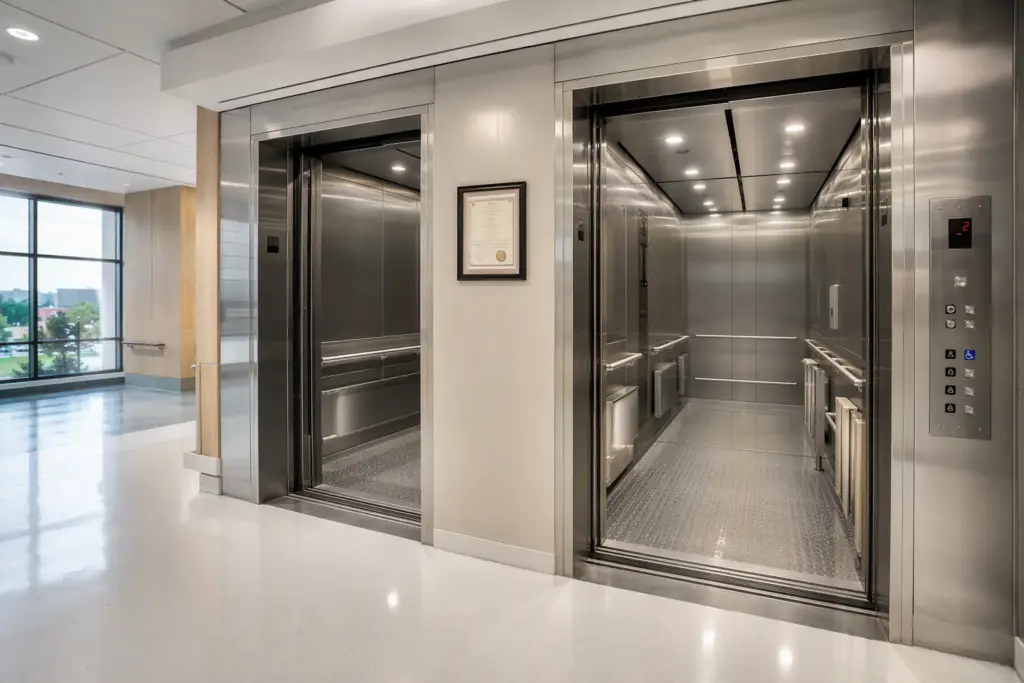
Under Texas Department of Licensing and Regulation (TDLR) rules, the annual inspection is the baseline requirement for all commercial elevator equipment. Following the inspection, the building owner must obtain a TDLR Certificate of Compliance for each unit of equipment, and that certificate is valid for one year. The certificate must be displayed in a publicly visible area of the building so that occupants and regulators can confirm the elevator is current.
In addition to the annual routine inspection, Texas requires a Category 5 full-load test every five years on electric (traction) elevators. This test is a more intensive evaluation that verifies the elevator’s safety systems perform correctly under maximum rated load conditions. Property owners should build this five-year milestone into their long-term maintenance planning alongside the annual inspection cycle.
Important Houston note: TDLR does not regulate elevators or escalators inside Houston city limits. The City of Houston operates its own elevator inspection program. Building owners in Houston should contact the City of Houston directly to confirm their specific inspection schedule and certificate requirements.
How often is a building elevator legally required to be inspected in California?
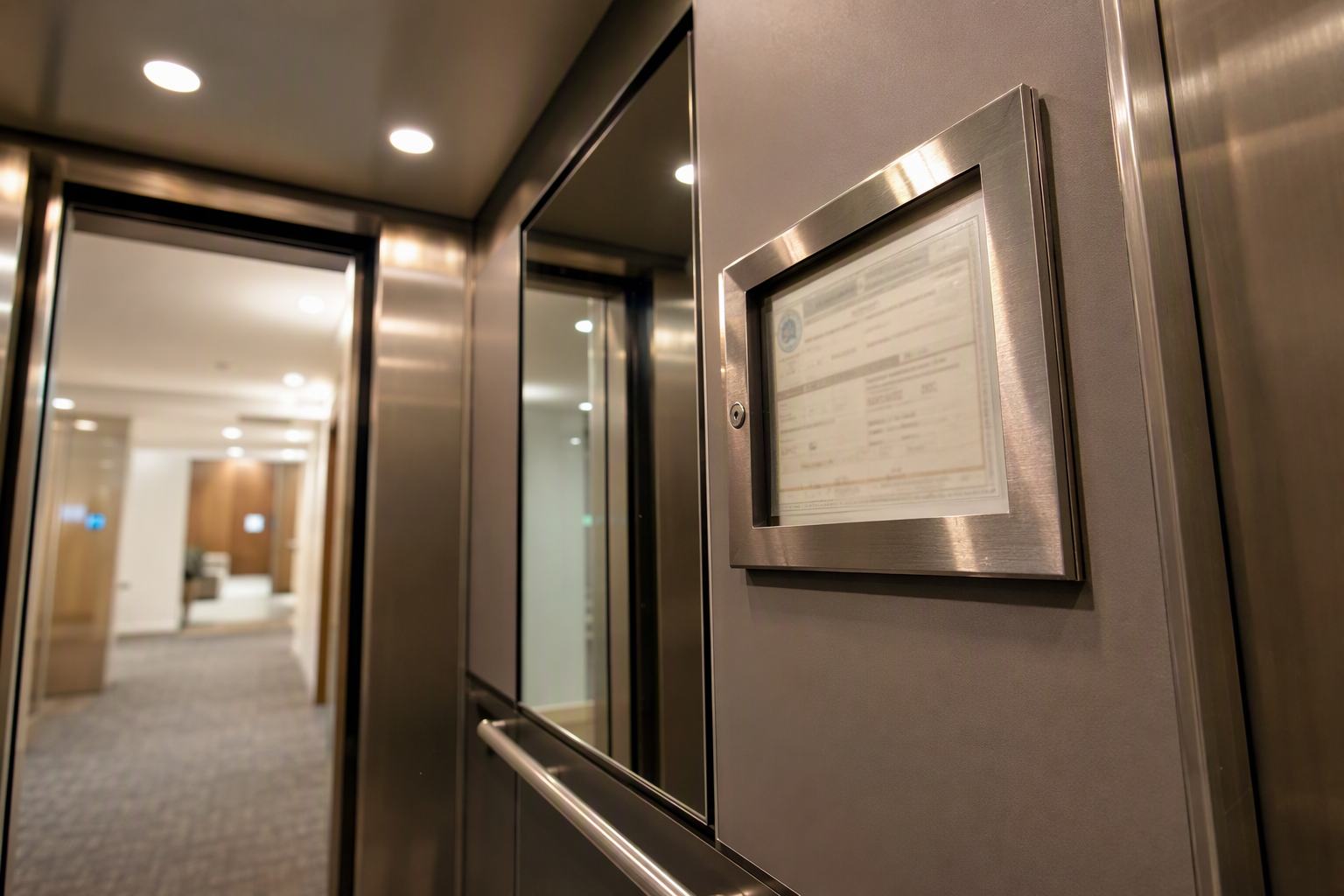
California law requires every conveyance to be inspected at least once a year, and a conveyance found safe receives a permit to operate for up to one year.
The California Division of Occupational Safety and Health (Cal/OSHA), Elevator Unit, administers California’s elevator inspection program under California Labor Code Sections 7300–7324.2 and the California Code of Regulations, Title 8, Elevator Safety Orders. No elevator may operate in California without a valid, current permit to operate issued by Cal/OSHA. That permit must be posted conspicuously inside the elevator car at all times.
California does provide one extended-permit pathway: Cal/OSHA may issue a permit to operate for up to two years for an elevator in safe condition that is covered by a full maintenance contract with a C-11 licensed elevator company. This two-year permit is not automatic — it is granted at Cal/OSHA’s discretion when the equipment’s condition and maintenance documentation support it. Building owners seeking this benefit should ensure their maintenance agreement meets the statutory definition of a full maintenance contract.
Important Los Angeles note: The City of Los Angeles, Department of Building and Safety (LADBS), runs its own elevator and conveyance inspection program. Los Angeles building owners should verify their specific obligations with LADBS in addition to state Cal/OSHA requirements.
Who is responsible for scheduling the elevator inspection — the owner or the elevator company?
In both Texas and California, the building owner is legally responsible for scheduling and arranging the annual elevator inspection — this obligation cannot be delegated away by contract to a service company.
In California, arranging the annual reinspection is explicitly the elevator owner’s responsibility under state law. In Texas, the building owner not only must arrange the inspection but also holds the exclusive right to select the registered inspector — the elevator service contractor cannot make that choice on the owner’s behalf. This distinction matters because some building owners assume their maintenance contractor handles compliance automatically. A service contract that includes maintenance and repairs does not substitute for the required government inspection and certificate.
Practically speaking, many experienced elevator service companies — including AmeriTex Elevator — will flag upcoming inspection deadlines and help coordinate scheduling as part of ongoing service relationships. However, the legal accountability remains with the property owner or, in managed properties, the property management company acting as the owner’s agent.
What happens if a building elevator does not have a current inspection certificate?
Operating an elevator without a current, valid certificate or permit exposes the building owner to regulatory penalties, potential removal of the elevator from service, and significant liability exposure in the event of an incident.
In Texas, violations cited during an inspection must be corrected or placed under contract to be corrected within 30 days, or the owner must obtain a waiver or delay from TDLR. Certain deficiencies trigger immediate removal from service: in Texas, a passenger elevator without working door restrictors must be taken out of service immediately, and a passenger elevator without functioning firefighters’ service — or with non-working Phase One firefighters’ service — must also be removed from service immediately. These are not grace-period items.
In California, no elevator may operate without a current Cal/OSHA permit to operate. A lapsed permit means the elevator is legally out of compliance the moment the prior permit expires. Beyond regulatory exposure, operating an elevator with a known compliance gap significantly undermines an owner’s legal position in the event of a passenger injury claim.
Who is qualified to perform an elevator inspection in Texas and California?
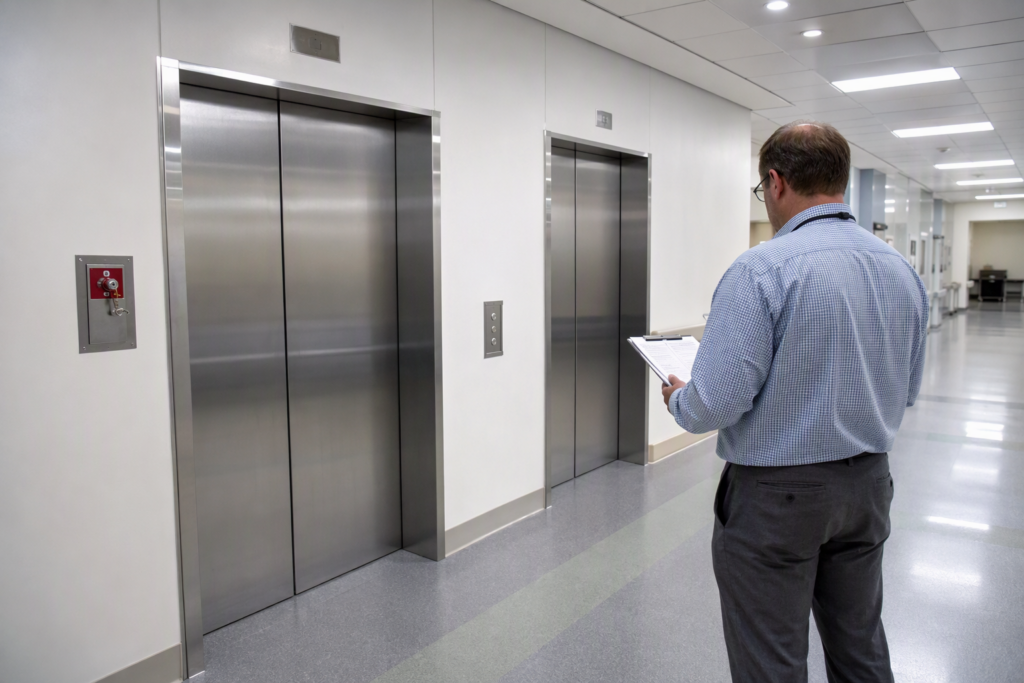
In Texas, inspections must be performed by a TDLR-registered elevator inspector; in California, inspections may only be performed by Cal/OSHA safety engineers or Certified Competent Conveyance Inspectors (CCCI).
Texas elevator inspectors register with TDLR but are not TDLR employees — they are independent professionals or company-employed inspectors who hold current TDLR registration. Texas elevator contractor and inspector registrations expire one year after issuance. Building owners in Texas have the sole right to select their registered inspector, which means owners can and should vet inspector credentials before engaging one.
In California, the credentials are more tightly controlled. Only Cal/OSHA state safety engineers and CCCI-certified inspectors may conduct the inspections that result in a permit to operate. Furthermore, any company that installs, alters, tests, maintains, repairs, or services elevators in California must be certified by Cal/OSHA as a Certified Qualified Conveyance Company (CQCC), and any individual who works on an elevator in California without supervision must be certified as a Certified Competent Conveyance Mechanic (CCCM). California CQCC, CCCM, and conveyance inspector certificates last two years and require at least eight hours of continuing education for renewal.
What federal code governs elevator inspections and safety?
The primary federal code governing elevator design, installation, inspection, and maintenance is the ASME A17.1/CSA B44 Safety Code for Elevators and Escalators, which both Texas and California have adopted — though each state adopted a different edition.
Texas has adopted the ASME A17.1/CSA B44 2016 edition, effective November 1, 2018, as amended by 16 Texas Administrative Code Chapter 74. California’s Elevator Safety Orders adopt the ASME A17.1/CSA B44 2004 edition for installation contracts signed on or after May 1, 2008. California has proposed a Group V update that would incorporate portions of ASME A17.1-2019; a public hearing was held on June 18, 2026, but no effective date has been posted as of this writing.
The Americans with Disabilities Act (ADA) also applies to elevator accessibility — including cab dimensions, control panel reach ranges, door timing, and audible and visual floor indicators — for buildings covered by ADA requirements. ADA compliance obligations run parallel to state inspection requirements and are enforced separately.
What is a Category 5 test, and when does my elevator require one?
A Category 5 test is a full-load safety test of an elevator’s overspeed governor, safeties, and car and counterweight buffers, performed under rated load conditions — in Texas, this test is required every five years for electric (traction) elevators.
The Category 5 test is the most comprehensive periodic test required under the ASME A17.1 code framework. It verifies that the elevator’s critical safety systems — particularly those designed to stop the car if it overspeeds or free-falls — will actually function under real load conditions, not just under no-load or partial-load conditions. This test must be performed by qualified elevator technicians and witnessed or reviewed by an inspector. Property owners with traction elevators should track their five-year Category 5 cycle as a separate compliance obligation distinct from the annual inspection.
What is the inspection schedule timeline from start to finish?
A complete elevator inspection cycle in Texas and California follows a defined sequence of steps that building owners should understand well in advance of their certificate or permit expiration date.
- Review your current certificate or permit expiration date. In Texas, the Certificate of Compliance is valid for one year. In California, the permit to operate is valid for up to one year (or up to two years with a qualifying full maintenance contract). Mark the expiration date and work backward at least 60–90 days to begin scheduling.
- Engage a qualified maintenance contractor. Ensure any required pre-inspection maintenance, lubrication, safety device testing, and documentation is current before the inspection date. In California, this work must be performed by a CQCC-certified company employing CCCM-certified mechanics.
- Select and schedule a registered inspector. In Texas, the building owner selects and schedules a TDLR-registered inspector. In California, coordinate with Cal/OSHA’s Elevator Unit (or with LADBS if in Los Angeles) for the inspection appointment.
- Complete the inspection. The inspector evaluates the equipment against the applicable adopted code. In Texas, the inspector must provide the owner with the inspection report within five calendar days of the inspection.
- Address any cited violations. In Texas, cited violations must be corrected or placed under contract to be corrected within 30 days, or a waiver or delay must be obtained from TDLR. Some violations require immediate removal from service.
- Obtain and post the certificate or permit. In Texas, secure the TDLR Certificate of Compliance and display it in a publicly visible area. In California, post the Cal/OSHA permit to operate conspicuously inside the elevator car.
- Retain documentation. Keep copies of inspection reports, maintenance records, and certificates on file. Documentation is essential if TDLR, Cal/OSHA, or a court requests proof of compliance history.
What does a routine annual elevator inspection typically cover?
A routine annual elevator inspection evaluates the mechanical, electrical, and safety systems of the elevator against the adopted edition of ASME A17.1 and applicable state-specific requirements.
Inspectors typically evaluate the following areas: door operation and safety edges, door restrictors (a life-safety item in Texas), car leveling accuracy, emergency lighting and communication systems, hoistway and machine room conditions, governor and safety device condition, buffers, guide rails, suspension ropes or chains, brake systems, firefighters’ service (Phase I and Phase II), cab interior condition and required postings, and overall equipment cleanliness and lubrication. The specific checklist follows the adopted code edition — ASME A17.1-2016 in Texas, ASME A17.1-2004 in California — and any state-specific amendments.
AmeriTex Elevator performs pre-inspection maintenance evaluations to identify and address deficiencies before the formal inspection visit, reducing the likelihood of cited violations and certificate delays for building owners in Houston, Dallas, Austin, San Antonio, Los Angeles, and San Diego.
Are there different inspection requirements for new elevator installations?
Yes — both California and Texas impose pre-service inspection requirements for newly installed elevators that are separate from and in addition to the annual inspection cycle.
In California, each new elevator must be inspected by Cal/OSHA and receive a permit to operate before it is placed in service. A permit from Cal/OSHA is also required before a conveyance is erected, installed, or materially altered. In Texas, before installing an elevator or escalator, the registered contractor must submit plans to TDLR and obtain approval. This plan-review step happens before construction begins, and a separate inspection occurs before the elevator is put into service.
Material alterations and modernizations also trigger inspection requirements. Building owners planning renovations that affect elevator components should confirm with their elevator contractor whether the planned scope constitutes a material alteration under the applicable code, because an unreported material alteration can void the existing certificate and create significant liability.
What is the owner’s obligation when an elevator accident occurs?
In Texas, building owners must report any accident involving elevator equipment to TDLR within 24 hours of the event.
This is an active, time-sensitive legal obligation — not a suggestion. The 24-hour reporting window applies regardless of whether the incident resulted in serious injury or appears minor. After reporting, TDLR may conduct an investigation, which can include a special inspection of the equipment. Building owners should ensure that their property management procedures and emergency response protocols include the TDLR reporting requirement as a specific, documented step. Failure to report on time is itself a separate compliance violation from any underlying equipment issue.
In California, serious injuries or fatalities involving elevator equipment should be reported to Cal/OSHA consistent with general Cal/OSHA injury reporting requirements and the Elevator Safety Orders. Building owners in California should confirm the specific reporting obligations with their legal counsel and their elevator service provider.
Does ADA compliance affect elevator inspection requirements?
ADA accessibility requirements apply to elevator equipment in covered buildings independently of state safety inspection requirements — an elevator can pass a state inspection and still be out of ADA compliance, or vice versa.
The ADA sets standards for elevator cab dimensions, door clear width and timing, control panel button sizes and heights, floor call buttons, Braille and raised character signage, audible and visual floor indicators, and emergency two-way communication accessibility. These requirements apply to places of public accommodation and commercial facilities. ADA compliance is enforced through the U.S. Department of Justice and private litigation — it is not part of the TDLR or Cal/OSHA inspection checklist, which is why building owners need to evaluate ADA status separately from their annual safety inspection.
What are the key differences between Texas and California elevator inspection requirements?
While both states mandate annual inspections and place responsibility on building owners, there are meaningful differences in regulatory structure, adopted code, inspector credentials, and certificate duration.
| Requirement | Texas | California |
|---|---|---|
| Regulating Agency | TDLR (except Houston, which has its own program) | Cal/OSHA Elevator Unit (except Los Angeles, which has its own program) |
| Governing Statute | Texas Health and Safety Code Chapter 754 | California Labor Code Sections 7300–7324.2 |
| Adopted Code Edition | ASME A17.1/CSA B44, 2016 edition | ASME A17.1/CSA B44, 2004 edition |
| Minimum Inspection Frequency | Annual | Annual |
| Certificate/Permit Duration | 1 year (Certificate of Compliance) | Up to 1 year; up to 2 years with qualifying full maintenance contract |
| Who May Inspect | TDLR-registered elevator inspector (independent or company-employed) | Cal/OSHA safety engineers or CCCI-certified inspectors only |
| Who Selects the Inspector | Building owner (exclusive right) | Coordinated through Cal/OSHA or LADBS (Los Angeles) |
| Inspector Report Deadline | Within 5 calendar days of inspection | Not specified in verified facts |
| Violation Correction Window | 30 days (or waiver/delay from TDLR); some defects require immediate removal from service | Determined by Cal/OSHA based on severity |
| Periodic Load Test | Category 5 full-load test every 5 years (traction elevators) | Per ASME A17.1-2004 Elevator Safety Orders |
| Accident Reporting | Must report to TDLR within 24 hours | Report per Cal/OSHA injury reporting requirements |
| Service Company Credential Required | TDLR-registered contractor | Cal/OSHA-certified CQCC; mechanics must hold CCCM certification |
| Certificate Posting Location | Publicly visible area of the building | Conspicuously inside the elevator car |
| Federal Exemption | Federal government-owned buildings | Federal jurisdiction; single-unit private homes not accessible to public |
Does my elevator need to be inspected if the building is rarely occupied or the elevator is seldom used?
Yes — in both Texas and California, inspection and certificate requirements apply to equipment based on its installation and availability, not on how frequently it is actually used.
Low-occupancy buildings, seasonal properties, and seldom-used freight elevators are not exempt from annual inspection requirements under TDLR rules or Cal/OSHA’s Elevator Safety Orders. If the equipment is installed, connected, and capable of being operated, it must carry a current certificate or permit. Building owners who want to take equipment out of service entirely should consult with a qualified elevator contractor and the applicable regulator about the formal process for placing equipment in a documented out-of-service status — simply not using it does not remove the compliance obligation.
What should a building owner do immediately if an elevator fails or shows a safety concern?
When an elevator exhibits a safety concern — unusual noise, erratic leveling, door problems, or any incident involving a passenger — the owner should take the following steps immediately.
- Remove the elevator from service. Post clear out-of-service signage on all floors and secure the elevator so it cannot be called or operated by passengers. Do not leave a potentially unsafe elevator available for use while waiting for service.
- Contact a TDLR-registered contractor (Texas) or CQCC-certified company (California). A qualified elevator technician must evaluate the equipment before it is returned to service. In Texas, certain deficiencies — such as non-working door restrictors or non-functioning firefighters’ service — require immediate removal from service under state law.
- Document the incident. Record the date, time, nature of the malfunction or incident, and names of any involved parties. Preserve any available maintenance logs and recent inspection reports.
- Report to TDLR if in Texas and an accident has occurred. Texas law requires accident reporting to TDLR within 24 hours. Do not delay this step even if the incident appears minor.
- Notify Cal/OSHA if in California and an injury has occurred. Follow applicable Cal/OSHA injury reporting requirements and consult legal counsel promptly.
- Do not return the elevator to service until cleared. The technician and, if required by the severity of the repair, the applicable inspector must confirm the equipment is safe and compliant before passengers use it again.
AmeriTex Elevator serves building owners and property managers in Houston, Dallas, Austin, San Antonio, Los Angeles, and San Diego and can assist with rapid response evaluations when elevator safety concerns arise.
Can a building owner perform elevator maintenance themselves, or must they hire a licensed contractor?
No — in both Texas and California, elevator maintenance, repair, alteration, and testing must be performed by a contractor registered or certified under the applicable state program; building owners and their unlicensed staff may not perform this work themselves.
In Texas, a person may not install, repair, alter, test, or maintain elevator equipment without registering as a contractor with TDLR. In California, only a Certified Competent Conveyance Mechanic (CCCM) working for a Certified Qualified Conveyance Company (CQCC) may maintain, repair, alter, or replace components on a conveyance. Building maintenance staff — even experienced mechanical personnel — do not hold these credentials and cannot lawfully perform elevator work in either state. Engaging unqualified personnel for elevator maintenance also creates direct liability exposure for the building owner and can void equipment warranties.
How does a full maintenance contract affect inspection requirements in California?
In California, a full maintenance contract with a C-11 licensed elevator company can qualify a building’s elevator for a permit to operate lasting up to two years rather than the standard one year.
This extended permit pathway reflects Cal/OSHA’s recognition that elevators under continuous professional maintenance by a CQCC-certified company with CCCM-certified mechanics present a lower ongoing risk profile. However, the two-year permit is not guaranteed — Cal/OSHA issues it at its discretion based on equipment condition and documentation. Building owners considering this pathway should confirm with their service company whether the specific contract terms satisfy the statutory definition of a full maintenance contract and whether their equipment’s current condition is likely to support approval. AmeriTex Elevator can discuss the maintenance contract structures it offers in the California markets it serves — Los Angeles and San Diego — and how those contracts interact with Cal/OSHA permit requirements.
What records should building owners keep related to elevator inspections?
Building owners should maintain a complete, organized file of elevator-related documentation that is readily accessible for regulatory review, insurance audits, and potential litigation defense.
At minimum, the file should include: current and prior Certificates of Compliance (Texas) or permits to operate (California); all inspection reports, including any violation notices and documentation of corrective actions; maintenance logs from the service contractor covering all routine and corrective maintenance visits; Category 5 test reports and any other periodic test documentation; records of any modernization or alteration work with associated permits and inspection sign-offs; and any TDLR or Cal/OSHA correspondence. In Texas, the inspector must provide the inspection report within five calendar days of the inspection — owners should confirm receipt and file it immediately. These records are particularly important in Texas because TDLR can request them and because the 30-day correction window begins running from the inspection date.
How can building owners in Houston, Dallas, Austin, San Antonio, Los Angeles, and San Diego stay ahead of inspection deadlines?
Proactive calendar management, a reliable maintenance partner, and an understanding of the regulatory timeline are the three pillars of staying ahead of elevator inspection deadlines across all markets.
Building owners and property managers should calendar inspection renewal dates at least 90 days in advance to allow time for pre-inspection maintenance, inspector scheduling, and correction of any deficiencies before the certificate expires. Properties managing multiple elevators across multiple buildings benefit from a centralized compliance tracking system that consolidates certificate expiration dates, maintenance schedules, and five-year Category 5 test milestones.
AmeriTex Elevator works with commercial property owners and managers in Houston, Dallas, Austin, San Antonio, Los Angeles, and San Diego to maintain elevator compliance across all of these markets. The company’s familiarity with both TDLR requirements in Texas and Cal/OSHA requirements in California — including the City of Houston’s independent program and the City of Los Angeles’s LADBS program — positions it to help building owners navigate the specific regulatory environment for each property.
Engaging a single service partner with regional coverage simplifies communication, maintains consistent documentation practices, and ensures that technicians familiar with a building’s specific equipment history are available when inspection time approaches.
Are residential building elevators subject to the same inspection requirements as commercial elevators?
In both Texas and California, residential building elevators that are accessible to the public — such as those in apartment buildings, condominiums, and senior living communities — are subject to the same annual inspection and certificate requirements as commercial elevators.
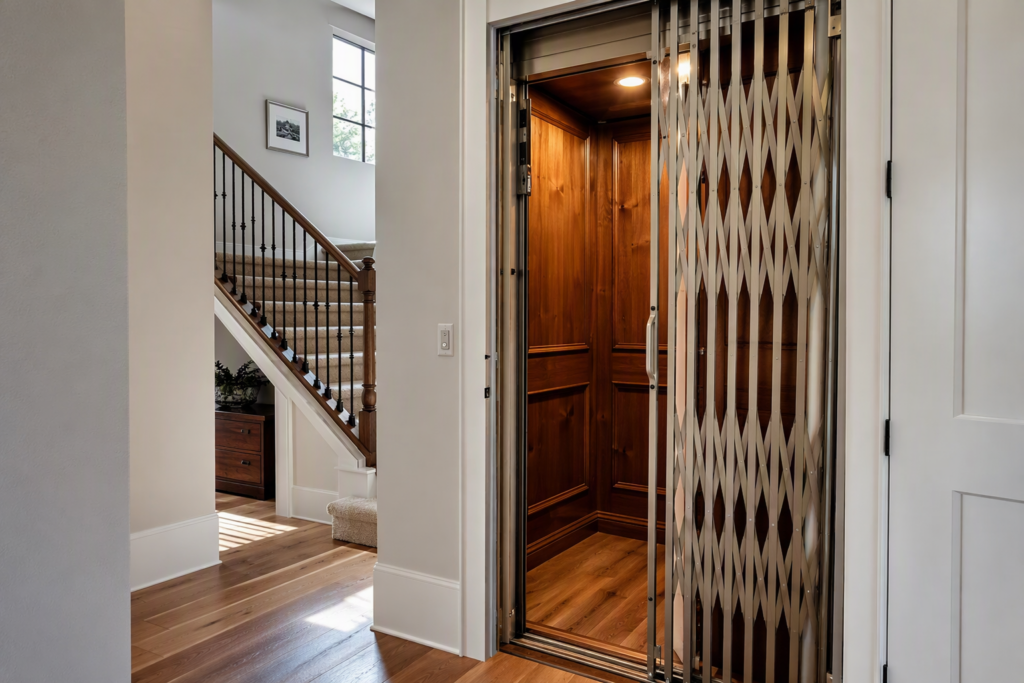
Texas law specifically exempts elevators in single-family dwellings from ongoing TDLR regulation, except that state law requires an inspection by a TDLR-registered inspector after installation. California law exempts conveyances in single-unit private homes that are not accessible to the public. Multi-unit residential buildings — regardless of whether they are classified as commercial or residential from a zoning standpoint — typically fall within the regulated category in both states. Building owners of apartment complexes, condominiums, and assisted living facilities should not assume that the residential nature of their property creates any inspection exemption. They should confirm their specific obligation with TDLR (or the City of Houston), Cal/OSHA (or LADBS), or a qualified elevator compliance professional.
Need elevator service you can rely on? AmeriTex Elevator is ready to help.