Elevator Service in Houston, TX | AmeriTex Elevator
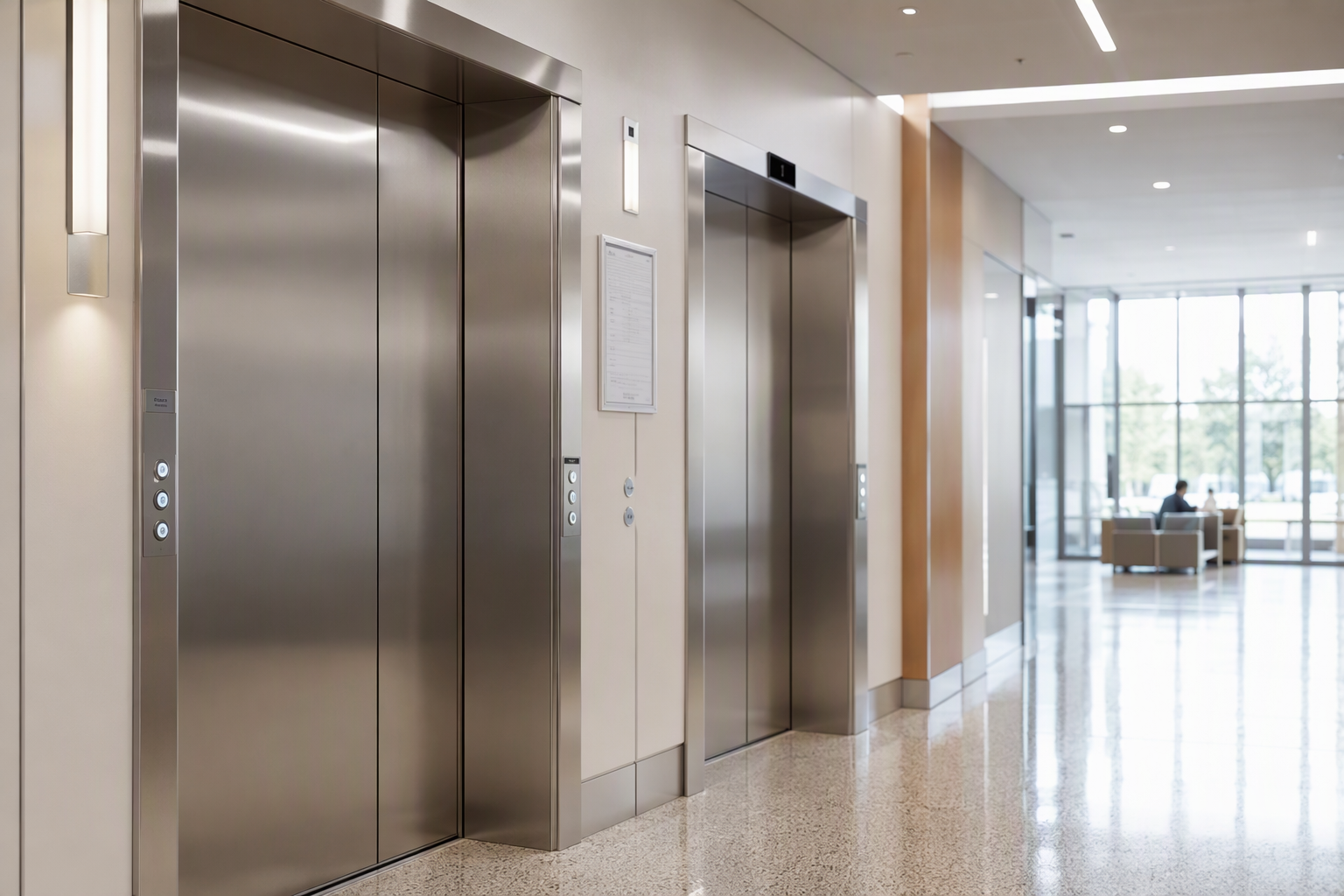
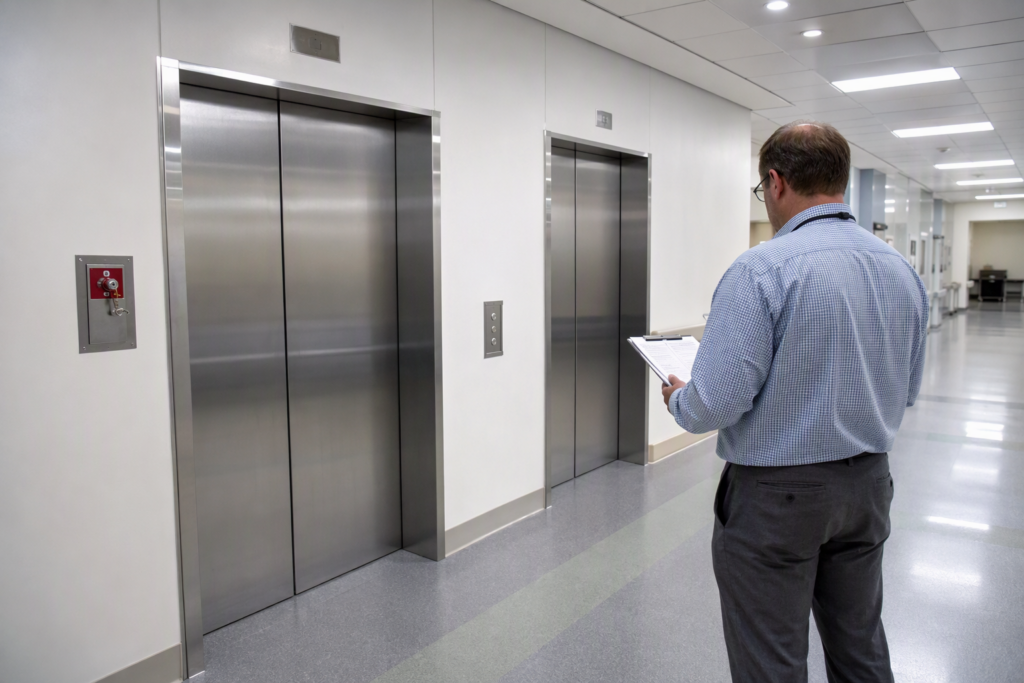
Hospitals and healthcare facilities in Texas and California face some of the most rigorous elevator compliance obligations of any building type. Patient transport, emergency evacuation, and around-the-clock operational demands mean that elevator modernization is not simply a capital improvement—it is a patient safety and regulatory necessity. AmeriTex Elevator provides certified elevator modernization and compliance services across Texas and California, helping healthcare facilities navigate the distinct requirements of each state. Note: Houston operates its own municipal elevator program; TDLR does not regulate elevators or escalators inside Houston city limits.
What Are the Core Elevator Compliance Requirements for Texas Healthcare Facilities?
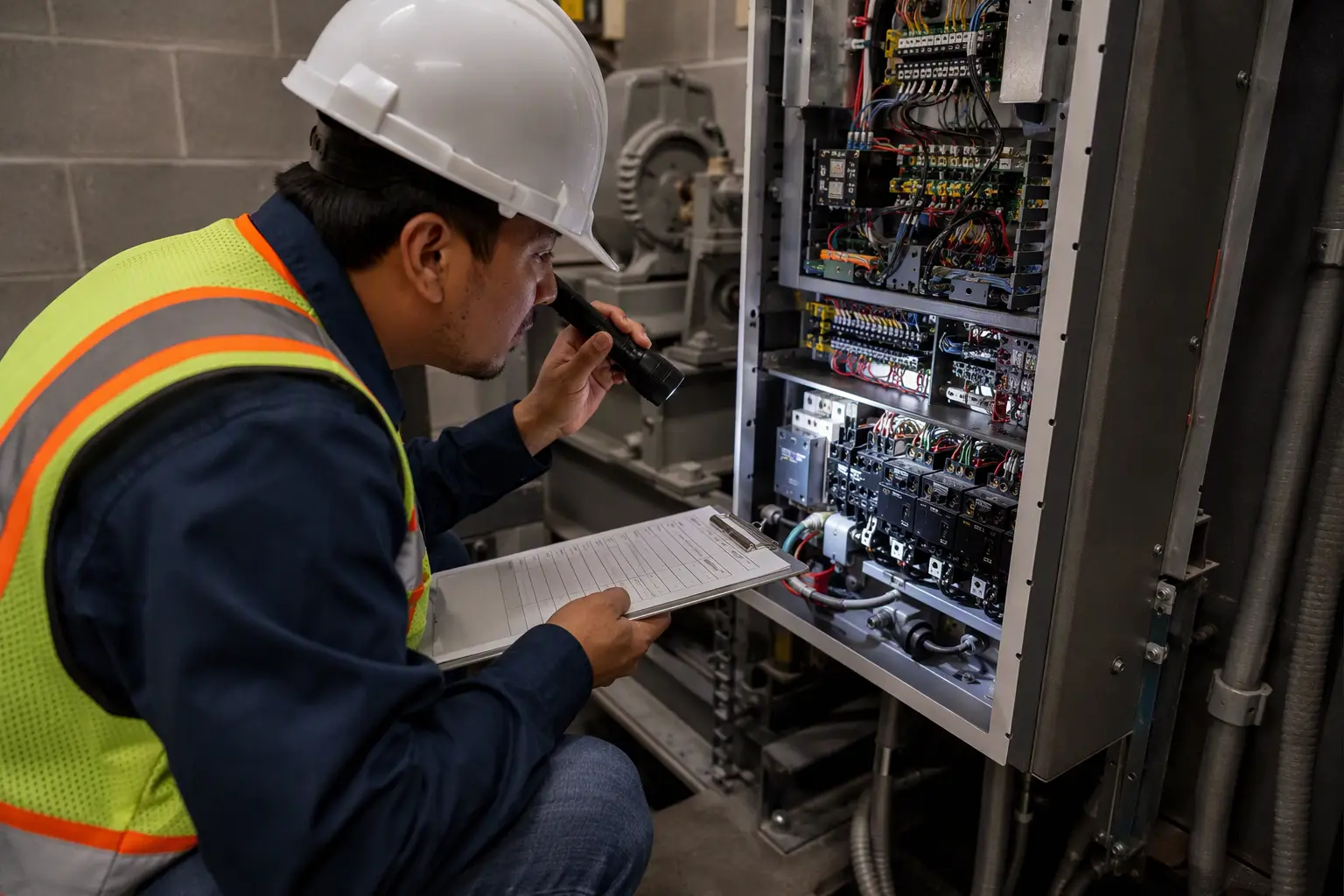
In Texas, elevator compliance for all buildings—including hospitals and healthcare facilities—is governed by the Texas Department of Licensing and Regulation (TDLR), Elevator and Escalator Safety program, under Texas Health and Safety Code Chapter 754 and 16 Texas Administrative Code Chapter 74. The adopted code is ASME A17.1/CSA B44, 2016 edition.
Key obligations for Texas healthcare facility owners include:
- Annual inspection: Building owners must have every elevator inspected annually by a TDLR-registered elevator inspector. The inspector must deliver the written report to the owner within five calendar days of the inspection.
- Certificate of Compliance: A TDLR Certificate of Compliance must be obtained for each unit of equipment and displayed in a publicly visible area of the building. Certificates are valid for one year.
- Violation correction: Cited violations must be corrected—or under contract to be corrected—within 30 days of the inspection, or the owner must obtain a waiver or delay from TDLR.
- Category 5 full-load testing: Electric (traction) elevators require a Category 5 full-load test every five years.
- Immediate removal from service: A passenger elevator without working door restrictors, or without functioning Phase One firefighters’ service, must be taken out of service immediately.
- Accident reporting: Any accident involving elevator equipment must be reported to TDLR within 24 hours.
- Registered contractors only: All installation, repair, alteration, testing, and maintenance work must be performed by a TDLR-registered elevator contractor carrying at least $1,000,000 per-occurrence general liability insurance for bodily injury or death and $500,000 per occurrence for property damage.
Important Houston note: The City of Houston operates its own elevator inspection and permitting program. TDLR does not regulate elevators inside Houston city limits. Healthcare facilities located in Houston should contact the City of Houston directly for current local requirements. AmeriTex Elevator is experienced in serving Houston-area facilities under the city’s program.
What Are the Core Elevator Compliance Requirements for California Healthcare Facilities?

In California, all elevators—including those in hospitals and healthcare facilities—are regulated by the Division of Occupational Safety and Health (Cal/OSHA), Elevator Unit, California Department of Industrial Relations, under California Labor Code Sections 7300–7324.2 and the California Code of Regulations, Title 8, Elevator Safety Orders (Sections 3000–3146). The adopted installation code is ASME A17.1/CSA B44, 2004 edition, effective for installation contracts signed on or after May 1, 2008.
Key obligations for California healthcare facility owners include:
- Permit to operate: No elevator may be operated without a valid, current permit to operate issued by Cal/OSHA. The permit must be posted conspicuously inside the elevator car.
- Annual inspection: Every conveyance must be inspected at least once a year by a State of California safety engineer or a Certified Competent Conveyance Inspector (CCCI). A conveyance found safe receives a permit to operate for up to one year.
- Extended permit option: Cal/OSHA may issue a permit to operate for up to two years for an elevator in safe condition that is covered by a full maintenance contract with a C-11 licensed elevator company—a meaningful compliance advantage for high-use healthcare environments.
- Owner responsibility: Arranging the annual reinspection is the elevator owner’s responsibility.
- Pre-service inspection: Each new elevator must be inspected by Cal/OSHA and receive a permit before it is placed in service.
- Pre-alteration permit: A Cal/OSHA permit is required before a conveyance is erected, installed, or materially altered.
- Certified contractors only: Companies that install, alter, test, maintain, repair, or service elevators in California must be certified by Cal/OSHA as a Certified Qualified Conveyance Company (CQCC) and hold a C-11 Elevator Contractor license issued by the California Contractors State License Board (CSLB).
- Certified mechanics only: All hands-on elevator work must be performed by a Certified Competent Conveyance Mechanic (CCCM) employed by a CQCC.
Los Angeles note: The City of Los Angeles, Department of Building and Safety (LADBS) operates its own elevator and conveyance inspection program. Healthcare facilities in Los Angeles should account for local LADBS requirements in addition to Cal/OSHA obligations.
What Federal Standards Apply to Hospital Elevators in Both States?
Regardless of state, hospital and healthcare elevators must also satisfy federal requirements that overlay state codes:
- Americans with Disabilities Act (ADA): The ADA sets accessibility requirements for elevators in public accommodations and commercial facilities, including hospitals. Healthcare facilities must ensure elevator cab dimensions, door timing, controls, and signage comply with ADA Standards for Accessible Design.
- ASME A17.1 / A17.3: The ASME A17.1 Safety Code for Elevators and Escalators governs new installations; ASME A17.3 addresses existing installations. Both Texas and California have adopted editions of A17.1 as the baseline for their state programs.
- OSHA workplace safety: OSHA regulations apply to elevator maintenance and construction workers on healthcare facility sites.
What Modernization Upgrades Do Healthcare Facilities Typically Need to Address?
Aging elevator systems in hospitals and healthcare facilities commonly require modernization to meet current code editions and operational demands. AmeriTex Elevator assesses each facility’s equipment against applicable state and federal requirements. Common modernization scope items include:
- Firefighters’ service (Phase I and Phase II): In Texas, a passenger elevator without functioning Phase One firefighters’ service must be removed from service immediately. Modernization to restore or upgrade this feature is often a priority compliance item.
- Door restrictors: Texas requires immediate removal from service of any passenger elevator without working door restrictors—making this a critical modernization target.
- Drive system upgrades: Replacing hydraulic or older traction drive systems with modern MRL (machine-room-less) or variable-voltage, variable-frequency (VVVF) drive systems improves reliability and energy efficiency in high-demand healthcare environments.
- Control system modernization: Outdated relay-logic control systems present maintenance and parts-availability challenges; modern solid-state controls improve dispatching and diagnostic capability.
- ADA accessibility upgrades: Cab interiors, button panels, audible signals, and door timing may all require updating to current ADA standards.
- Category 5 test readiness: In Texas, electric traction elevators require a Category 5 full-load test every five years. Modernization projects should account for equipment condition that will support passing this test.
- Emergency communication systems: Healthcare facilities should review emergency communication requirements under applicable codes and consult with AmeriTex Elevator on current system capabilities.
What Is the Step-by-Step Process for a Hospital Elevator Modernization Project?
- Compliance audit: A TDLR-registered contractor (Texas) or CQCC-certified company (California) conducts a full assessment of existing equipment against current adopted code editions and any outstanding inspection violations.
- Scope development: Based on audit findings, a modernization scope is developed that addresses regulatory deficiencies, ADA requirements, and operational goals.
- Plan submission and permit: In Texas, the registered contractor must submit plans to TDLR and obtain approval before installation or material alteration begins. In California, Cal/OSHA must issue a permit before a conveyance is erected, installed, or materially altered.
- Phased scheduling: For hospitals with continuous patient transport needs, AmeriTex Elevator coordinates phased modernization schedules to minimize elevator downtime and maintain patient flow.
- Installation by certified personnel: All work is performed by contractors registered with TDLR (Texas) or certified as a CQCC employing CCCMs (California).
- Post-modernization inspection: In Texas, the building owner arranges inspection by a TDLR-registered inspector to obtain a new Certificate of Compliance. In California, Cal/OSHA inspection is required before the modernized elevator is returned to service.
- Documentation and display: The Certificate of Compliance (Texas) or permit to operate (California) is posted in the required conspicuous location.
- Ongoing maintenance contract: A full maintenance agreement—particularly in California, where it may support a two-year permit to operate—is established to maintain compliance and equipment reliability.
How Often Do Hospital Elevators Need to Be Inspected in Texas and California?
In Texas (outside Houston), building owners must have elevators inspected annually by a TDLR-registered elevator inspector, with a new Certificate of Compliance issued for each unit each year. In California, every conveyance must be inspected at least once a year by a State of California safety engineer or a CCCI. A California elevator covered by a full maintenance contract with a C-11 licensed company may receive a permit to operate for up to two years if found in safe condition by Cal/OSHA.
Healthcare facility operators should build annual inspection scheduling into their facility management calendars. In California, the responsibility to arrange reinspection rests with the elevator owner. In Texas, the building owner has the sole right to select the registered elevator inspector.
What Happens If a Hospital Elevator Fails an Inspection or Is Found Non-Compliant?
In Texas, violations cited during inspection must be corrected—or placed under a correction contract—within 30 days, or the owner must obtain a waiver or delay from TDLR. Certain deficiencies trigger immediate removal from service: a passenger elevator without working door restrictors or without functioning Phase One firefighters’ service cannot remain in operation. Any accident involving elevator equipment must be reported to TDLR within 24 hours.
In California, a conveyance found unsafe will not receive a permit to operate, and operating an elevator without a valid permit is a violation of California Labor Code Sections 7300–7324.2. Cal/OSHA may require immediate corrective action before the elevator may return to service.
AmeriTex Elevator supports healthcare clients in responding to inspection findings, developing correction plans, and coordinating with the applicable authority having jurisdiction (AHJ) to restore compliant operation as efficiently as possible.
Why Do Healthcare Facilities Choose AmeriTex Elevator for Modernization Projects?
AmeriTex Elevator holds the registrations and certifications required to perform elevator work in Texas and California. The company’s teams are familiar with the operational realities of healthcare environments—continuous occupancy, infection control protocols, patient transport requirements, and zero-tolerance for unplanned downtime.
AmeriTex Elevator serves healthcare facilities, commercial office buildings, multifamily residential properties, and public facilities across its Texas and California markets. The company’s approach to hospital elevator projects combines regulatory knowledge of state-specific TDLR and Cal/OSHA requirements with practical experience navigating the City of Houston’s municipal program and the City of Los Angeles’s LADBS conveyance program.
Emergency elevator service is available for clients experiencing equipment failures that affect patient access or safety. For maintenance contract clients, priority response is part of the service relationship.
Schedule a Free Consultation
Is your hospital or healthcare facility elevator system compliant with Texas or California requirements? AmeriTex Elevator provides compliance assessments, modernization planning, and certified installation and maintenance services for healthcare facilities in Houston and across Texas and California.
Contact AmeriTex Elevator today to schedule a free consultation: 866-679-4313
Let AmeriTex Elevator help your facility meet its regulatory obligations and keep patients, staff, and visitors moving safely.
Need elevator service you can rely on? AmeriTex Elevator is ready to help.