How Often Should Elevators Be Inspected? Complete FAQ Guide (2026)
Elevator inspection frequency is one of the most consequential compliance questions a building owner, property manager, or facilities director will face. Get it wrong and you risk fines, liability exposure, personal injury, and forced shutdowns. After 15-plus years working on hydraulic lifts, traction elevators, and MRL units across Texas and California, I’ve seen every permutation of what happens when inspection schedules slip — and what happens when they’re done right. This guide answers every meaningful question on the subject, including state-specific rules, cost benchmarks, and the difference between a mandatory inspection and a proactive maintenance visit.
How Often Should Elevators Be Inspected?
Commercial elevators must be inspected by a licensed third-party inspector at least once every 12 months in most U.S. jurisdictions, with some states and cities requiring semi-annual inspections based on usage volume or equipment classification.
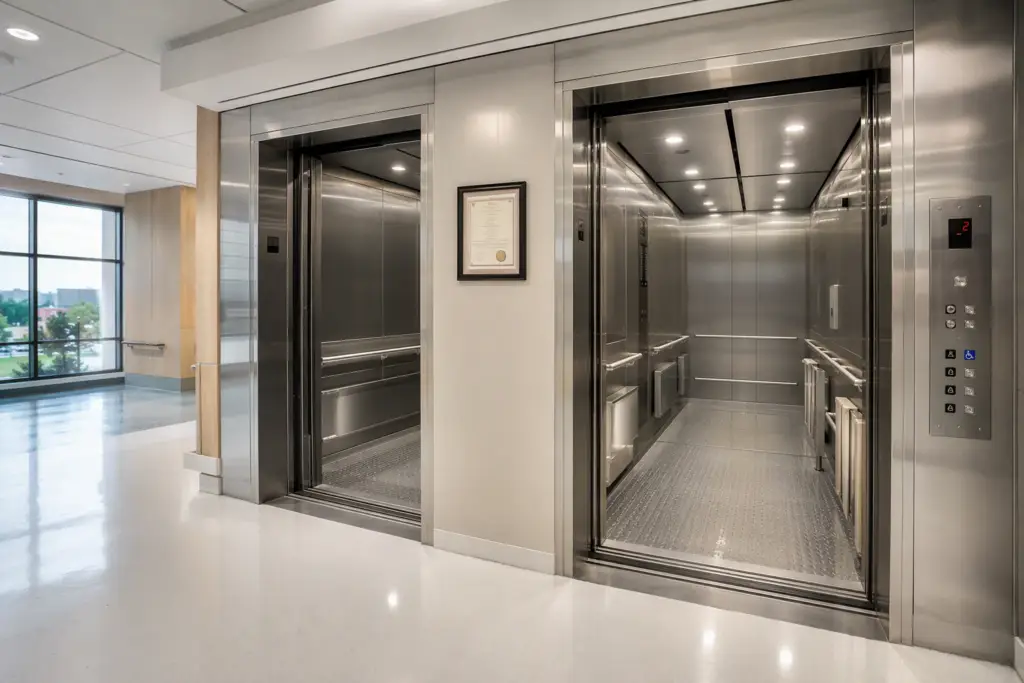
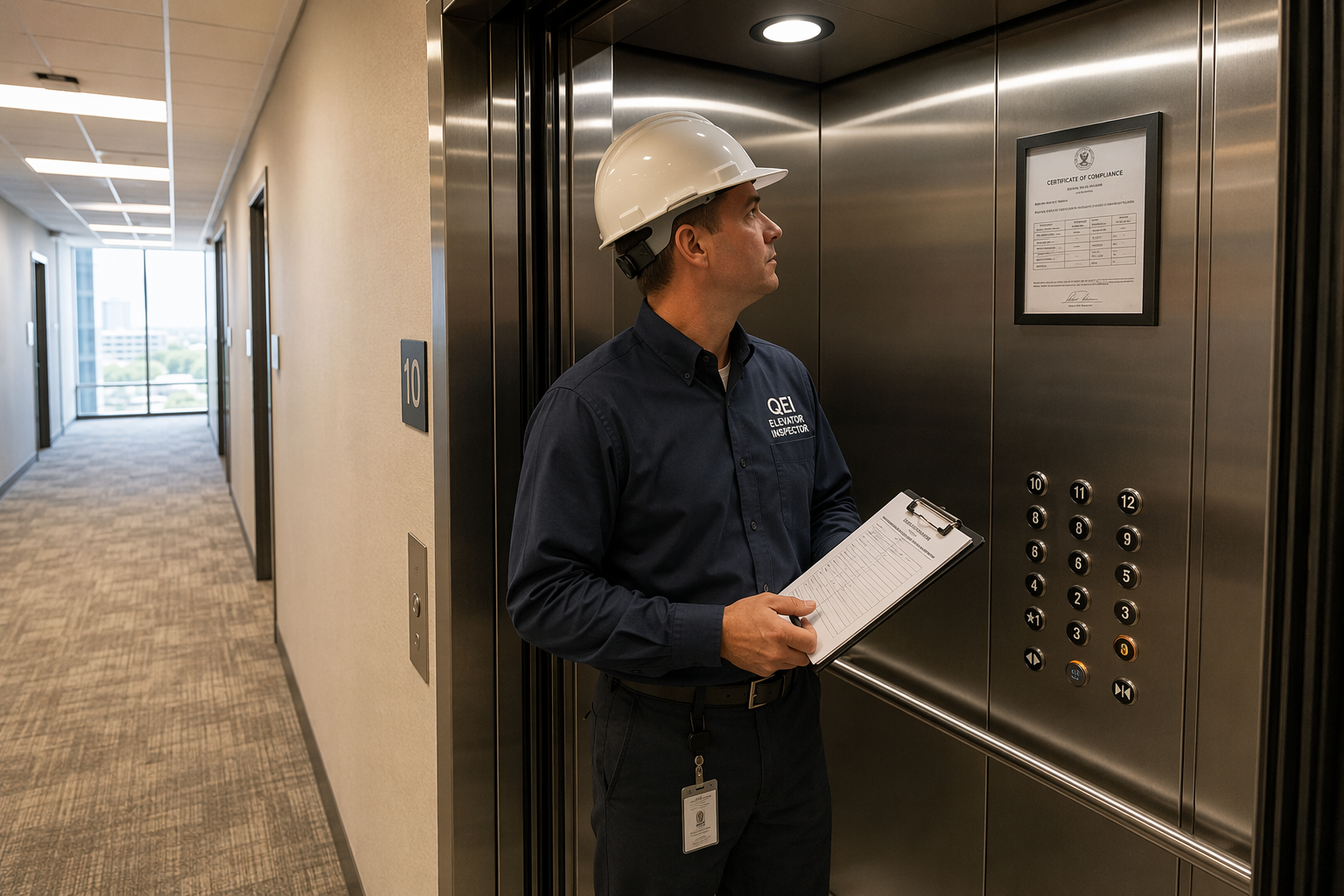
Under the ASME A17.1 Safety Code for Elevators and Escalators, which serves as the national model code adopted by most states, periodic inspections are mandatory and must be performed by a qualified inspector holding a valid QEI (Qualified Elevator Inspector) certification. The annual inspection results in a certificate of inspection that must be posted inside the elevator cab — an absence of this certificate is itself a code violation.
Separate from the mandatory inspection, most equipment manufacturers and elevator service firms recommend monthly maintenance visits for high-traffic commercial units and quarterly visits for low-traffic residential or limited-use installations. These maintenance visits are not the same as code-required inspections, but they are what actually prevent the breakdowns and hazards that inspections are designed to flag.
What Is the Difference Between an Elevator Inspection and Preventive Maintenance?

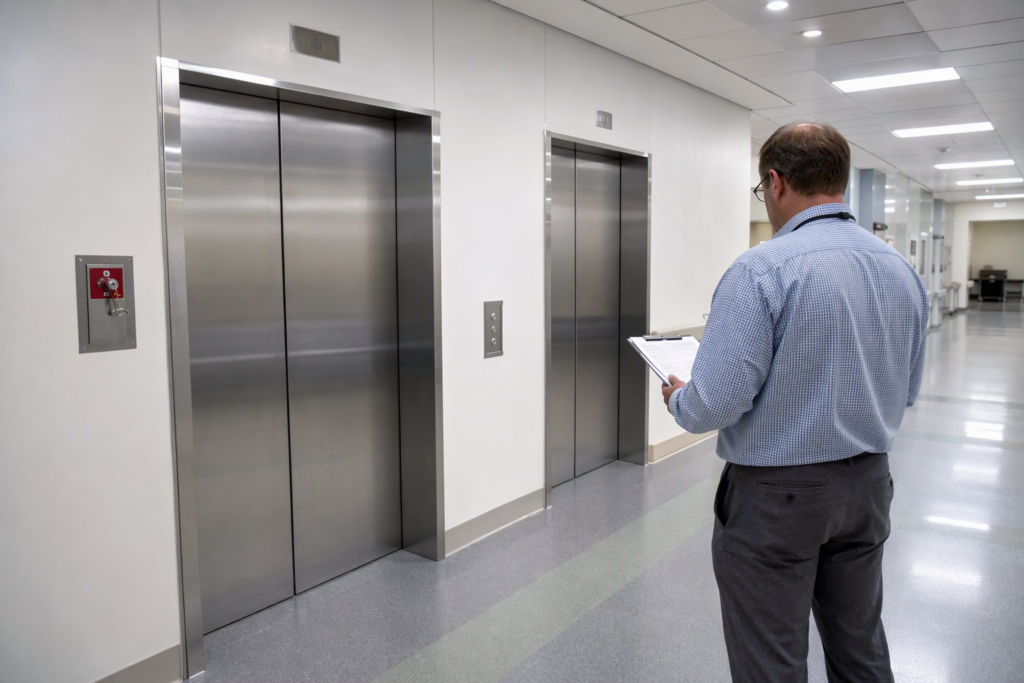
An elevator inspection is a formal code-compliance evaluation performed by a licensed third-party inspector, while preventive maintenance is an ongoing technician-led service program designed to keep equipment running safely between inspections.
This distinction confuses a lot of property managers. The annual inspection is a snapshot — roughly two to four hours of testing against a statutory checklist. The inspector checks safety devices, governor function, door operation, pit conditions, and machine room integrity. They issue a pass or fail. What they do not do is lubricate components, replace worn parts, adjust door operators, or calibrate leveling.
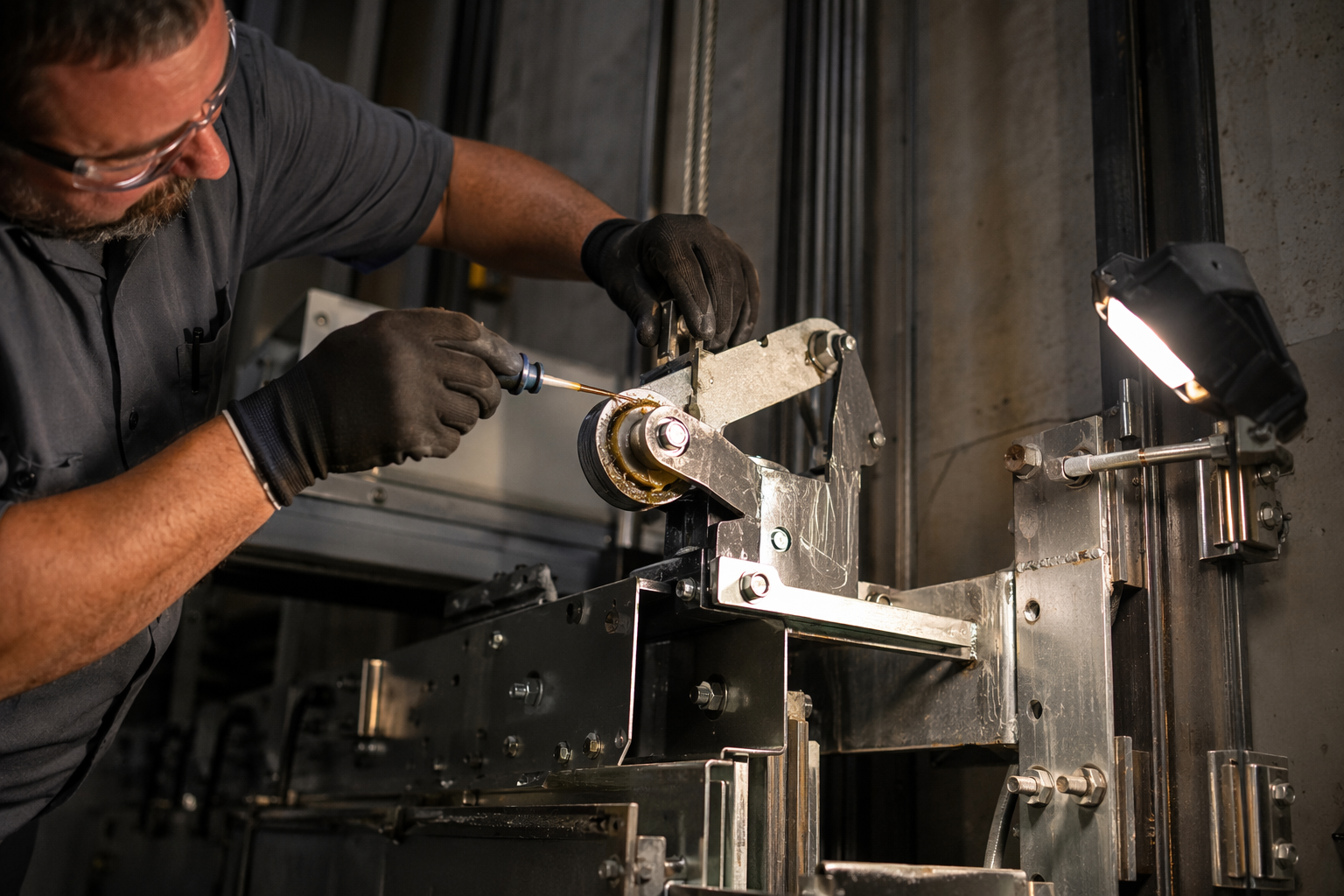
Preventive maintenance (PM) is the ongoing work that actually keeps elevators safe. A robust PM program under a full-service contract typically includes monthly checks of door contacts, safety circuits, machine room temperature, oil levels, and rope or belt condition. High-rise buildings with multiple units running 500 or more starts per day often receive bi-weekly technician visits. Buildings with a single residential elevator might operate safely on a quarterly schedule. AmeriTex Elevator structures PM programs around usage data, equipment age, and local code minimums — not a one-size-fits-all calendar.
What Do Texas State Regulations Require for Elevator Inspections?
Texas requires annual inspections for most elevators under the jurisdiction of the Texas Department of Insurance (TDI), with certificates renewed annually and inspections conducted by a licensed elevator inspector holding a valid TDI credential.
In Texas, elevator regulation falls under the Texas Department of Insurance, Elevator Safety Program. Every covered conveyance — including passenger elevators, freight elevators, escalators, moving walks, and accessibility lifts — must pass an annual inspection. The inspection must be performed by a licensed third-party inspection company or by TDI’s own inspection team. Building owners are responsible for scheduling and paying for the inspection, and certificates must be posted in a visible location inside the cab.
Municipalities within Texas can layer additional requirements on top of the state baseline. Houston, Dallas, Austin, and San Antonio all operate within the TDI framework, but local ordinances may affect permit timelines and re-inspection fees. In 2026, TDI enforcement has increased focus on older traction units built before 1990 in the Houston and Dallas metro areas, where modernization backlogs are most significant. Our teams at AmeriTex Elevator work across all four Texas markets and stay current with local enforcement calendars so clients aren’t caught off guard by surprise re-inspections.
What Do California State Regulations Require for Elevator Inspections?
California requires elevators to be inspected annually by the Division of Occupational Safety and Health (Cal/OSHA) Elevator Unit or an approved third-party inspection agency, with permits renewed on a yearly basis.
California’s elevator safety program is administered through Cal/OSHA, specifically the Elevator, Ride, and Tramway (ERT) Unit. The state mandates annual permits for all elevators operating in public access buildings. The permit certificate must display a valid expiration date; an expired permit subjects the building owner to fines and potential shutdown orders. Los Angeles and San Diego — both markets where AmeriTex Elevator operates — fall under Cal/OSHA jurisdiction with no municipal carve-outs, though the permit backlog in Los Angeles County has historically caused scheduling challenges that owners should plan for well in advance.
California also enforces its own seismic safety requirements for elevators in applicable seismic zones, which is a compliance dimension that does not exist in Texas. High-rise buildings in Los Angeles must demonstrate that elevator counterweight guards and seismic switches meet California Building Code requirements — a fact that affects both inspection checklists and modernization timelines.
How Often Should Hydraulic Elevators Be Inspected Compared to Traction Elevators?
Both hydraulic and traction elevators follow the same mandatory annual inspection schedule under most state codes, but hydraulic units require additional maintenance attention due to fluid system risks, including mandatory 5-year hydraulic pressure tests in many jurisdictions.
The base inspection frequency — annual — applies equally to both equipment types. However, hydraulic elevators carry a unique compliance burden: a hydrostatic pressure test of the underground or above-ground cylinder must be performed every five years in jurisdictions that follow ASME A17.1 guidance. This test verifies that the cylinder has not corroded or developed micro-fractures that could lead to catastrophic oil loss or cab free-fall. Older underground hydraulic units installed before 1972 are a particular concern in Texas and California markets because they may still have single-bottom cylinders without modern containment.
Traction elevators — whether geared, gearless, or machine-room-less (MRL) — face their own recurring tests: the governor and safety device test (Category 1) is annual, while the full-load, full-speed safety test (Category 5) is required every 5 years. Building owners often underestimate the cost and downtime associated with the Category 5 test when they haven’t budgeted for it in their capital planning cycle.
What Happens If an Elevator Fails Its Annual Inspection?
A failed inspection results in a violation notice, a mandatory repair timeline, and in serious cases, an immediate shutdown order that prohibits the elevator from carrying passengers until deficiencies are corrected and a re-inspection is passed.
Inspection failures fall into two severity categories. Minor deficiencies — a burned-out cab light, a door reversal that’s slightly out of adjustment, a missing pit ladder — typically result in a conditional certificate with a 30 to 90-day correction window, depending on the jurisdiction. The elevator can continue operating during this window, but the deficiency must be documented and corrected.
Major deficiencies — a failed governor, a broken safety jaw, an inoperative emergency stop, hydraulic oil contamination — trigger an immediate red-tag order. The elevator is locked out of service on the spot. At that point, the building owner needs an emergency service response, not a scheduled appointment. Our AmeriTex Elevator technicians have handled red-tag emergency clearances in Houston, Dallas, and Los Angeles, and in most cases we can have a qualified crew on-site within hours of a shutdown notification to assess the repair scope and provide a timeline for re-inspection.
What Are the Steps to Take Immediately After an Elevator Fails Inspection?
Act within 24 hours of a failed inspection to protect passengers, preserve your compliance record, and minimize downtime.
- Lock out the elevator immediately if the inspector has issued a shutdown order — post “Out of Service” signage at every landing and physically secure the machine room.
- Obtain the written violation report from the inspector and identify whether deficiencies are classified as major (immediate shutdown) or minor (conditional operation allowed).
- Contact a certified elevator service company within 24 hours to schedule an emergency assessment and obtain a repair scope with estimated cost and timeline.
- Notify building tenants and management in writing of the expected downtime, alternative access routes, and ADA accommodation obligations for occupants with mobility impairments.
- Coordinate with the inspector or jurisdiction to schedule a re-inspection date contingent on repair completion — many jurisdictions require advance scheduling that can add days to downtime if not booked immediately.
- Document all repair work with time-stamped technician reports, parts receipts, and before/after photos to support the re-inspection and protect against future liability claims.
- Pass re-inspection and obtain updated certificate — post the new certificate inside the cab before returning the elevator to service.
How Much Does an Elevator Inspection Cost in Texas and California?
Third-party elevator inspection fees typically range from $150 to $600 per unit depending on the state, equipment type, and inspector credentials, with additional re-inspection fees of $75 to $250 if violations require a follow-up visit.
Cost varies significantly by market. In Texas, TDI-licensed inspection fees for a standard passenger elevator run approximately $200 to $400 for the initial annual inspection. Houston and Dallas tend to be on the higher end due to inspector demand. In California, Cal/OSHA permit fees are assessed on a sliding scale based on equipment class; a standard traction passenger elevator in Los Angeles or San Diego carries a permit fee in the $300 to $600 range annually. These fees do not include any repair work identified during the inspection — that’s billed separately.
The hidden cost in elevator inspections isn’t the inspection fee itself. It’s the repair work you didn’t know was coming. Buildings that operate without consistent preventive maintenance tend to face larger inspection failure costs because deferred repairs compound. A $200 inspection that surfaces $15,000 in deferred maintenance is a common scenario in buildings where PM contracts lapsed or were cut as a budget measure.
What Is the ASME A17.1 Code and How Does It Govern Inspection Frequency?
ASME A17.1 is the national model safety code for elevators and escalators, and it establishes the minimum inspection, testing, and maintenance requirements that most U.S. states — including Texas and California — adopt into law.
The ASME A17.1 Safety Code for Elevators and Escalators is published by the American Society of Mechanical Engineers and updated on a regular revision cycle — the 2022 edition is the current baseline as of 2026, with many jurisdictions still enforcing the 2019 edition pending adoption. The code defines inspection categories, test intervals, acceptance criteria, and qualifications for inspectors and technicians. States adopt ASME A17.1 by reference into their administrative codes, sometimes with amendments that create stricter local requirements.
Critically, ASME A17.1 distinguishes between periodic inspections (the annual visit), periodic tests (Category 1 through Category 5 with staggered intervals), and maintenance requirements that are left largely to the discretion of the maintenance provider. This three-layer structure is why you cannot satisfy your compliance obligations with an annual inspection alone — you also need the five-year tests and a documented maintenance program.
How Often Should Elevator Maintenance Be Performed in High-Traffic Buildings?
High-traffic commercial elevators — defined as those performing more than 200 starts per day — should receive maintenance visits at least monthly, with some high-rise applications requiring bi-weekly or even weekly technician attention.
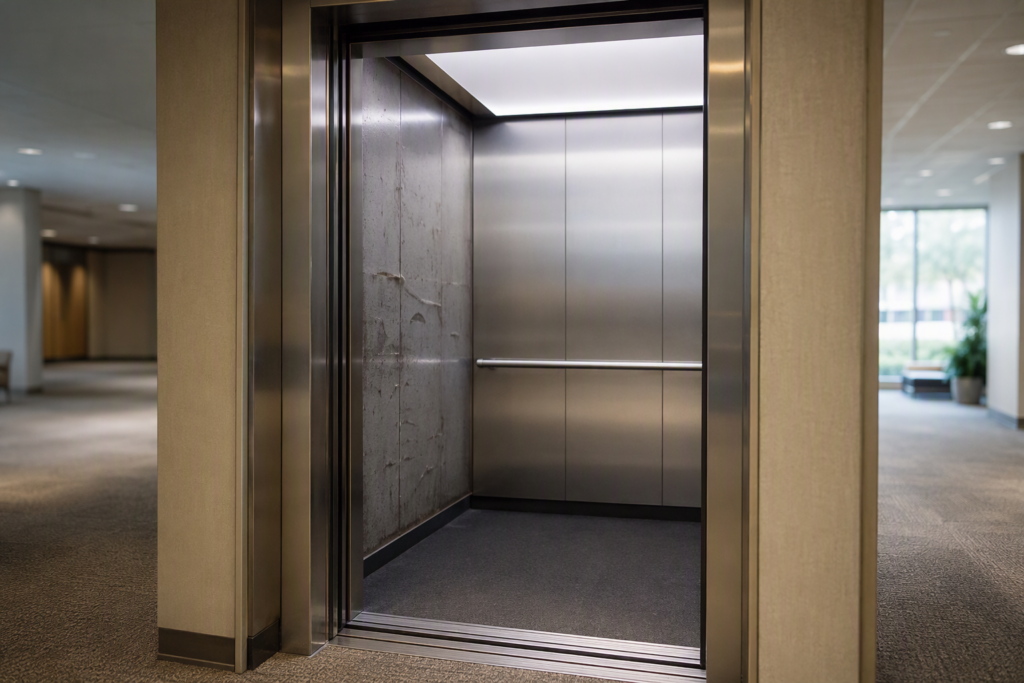
Start count is the most reliable proxy for wear rate. An elevator in a 40-story office tower running 400-plus starts per day wears door operator components, guide shoes, and rope at a fundamentally different rate than a unit in a 4-story medical office building running 80 starts per day. Monthly PM visits for high-traffic units are a code-informed best practice, not a upsell — they’re the only way to catch door contact wear, rope elongation, and oil contamination before those conditions create a safety event or inspection failure.
For hospitals and healthcare facilities — a significant part of AmeriTex Elevator’s portfolio across Houston and San Antonio — the standard is even more demanding. The Joint Commission and CMS conditions of participation effectively require elevator uptime levels that only a monthly-or-better PM schedule can support. Healthcare facilities also face liability exposure that goes beyond the building code if an elevator fails with a patient or medical equipment on board.
Does Elevator Inspection Frequency Change as Equipment Ages?
State codes do not formally increase mandatory inspection frequency based solely on equipment age, but older elevators typically require more frequent maintenance visits and may trigger additional tests or modernization requirements under current code.
Inspection frequency — the annual mandatory inspection — stays constant regardless of equipment age in Texas and California. However, the practical reality of aging equipment is that the risk profile increases sharply after 20 to 25 years of service. Components that rarely failed when the unit was new — selector tapes, relay-based controllers, aging hydraulic cylinders — become chronic problem sources in older installations.
Many jurisdictions now also have “existing installation” code requirements that trigger when a major modernization is performed. Under ASME A17.3 (the companion standard for existing elevators), modernizing any major component — controller, drive, door operator — can require the entire unit to be brought up to current A17.1 standards. This can significantly expand the scope and cost of what appears to be a simple component upgrade. We advise all clients with equipment over 20 years old to get a comprehensive modernization assessment alongside their annual maintenance review.
What ADA Requirements Affect Elevator Inspections?
The Americans with Disabilities Act requires elevators in most multi-story public accommodations to be accessible and operational, meaning ADA compliance must be evaluated alongside safety compliance during every inspection and maintenance visit.
Under ADA Title III (public accommodations) and Title II (government facilities), buildings required to have elevators must maintain those elevators in working order. An elevator that is out of service for an extended period — especially one that is the only accessible route between floors — may constitute an ADA violation independent of elevator safety code. The DOJ has taken enforcement action against building owners who allowed extended elevator downtime without providing equivalent accessible alternatives.
ADA also sets dimensional and operational standards that affect what gets checked during maintenance: cab dimensions, door timing, floor leveling accuracy (within ½ inch of landing), handrail height, and audible/visible signals. Elevators that were ADA-compliant when installed may fall out of compliance if components are replaced with non-compliant substitutes or if door timing degrades over time. Leveling accuracy is a particular concern — a unit that was landing within ¼ inch when new may be landing 1 to 1.5 inches off-floor after years of rope stretch and controller drift, creating a trip hazard and ADA liability simultaneously.
How Does Inspection Frequency Differ for Residential Elevators Versus Commercial Elevators?
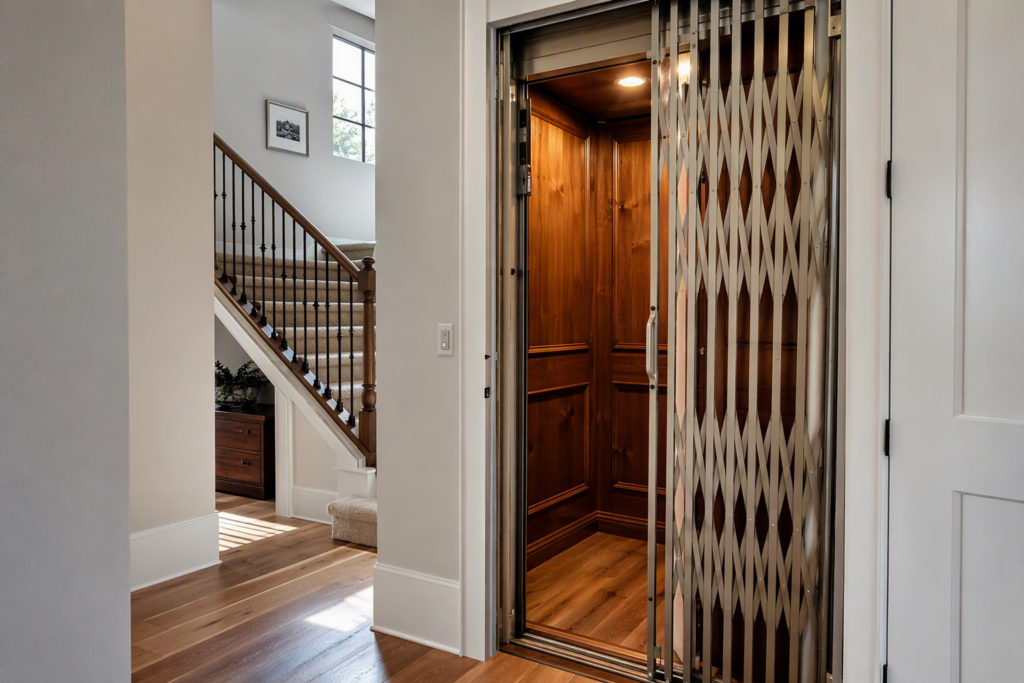
Residential elevators are subject to less stringent mandatory inspection requirements than commercial units in most states, but they carry significant personal liability risk and should still receive professional maintenance at least twice per year.
Private residence elevators in Texas are largely exempt from the TDI mandatory inspection program, though they must meet ASME A17.1 standards if they were installed with permits. California’s Cal/OSHA program similarly focuses on public-access conveyances and does not mandate annual third-party inspection of single-family residential elevators. This regulatory gap is where homeowners face the greatest risk: because no one is requiring an inspection, no one is catching deferred deterioration until a failure occurs.
Residential elevator failures can be catastrophic — children have been entrapped and killed by private residence elevators that lacked current safety devices. We recommend at minimum a semi-annual professional maintenance visit for any residential unit, regardless of regulatory requirements. The cost is modest compared to the liability exposure of an unserviced unit in a home with children or elderly occupants.
What Is a Category 1 vs. Category 5 Elevator Test and How Often Are They Required?
Category 1 is an annual no-load safety test of the governor and safety device, while Category 5 is a full-load, full-speed brake and safety test required every 5 years — both are mandatory under ASME A17.1 and distinct from the annual general inspection.
The ASME A17.1 test category system is one of the most misunderstood compliance requirements in the industry. Here is how the categories break down for traction elevators:
| Test Category | Frequency | What Is Tested | Load Condition | Typical Cost Range |
|---|---|---|---|---|
| Category 1 | Annual | Governor, safety device, buffers (no-load) | No load or rated load (jurisdiction-specific) | $300 – $800 |
| Category 3 | Every 3 years (where applicable) | Safety device operation with partial load | Partial rated load | $500 – $1,200 |
| Category 5 | Every 5 years | Full brake, safety, buffer at full load and speed | Rated load | $1,500 – $4,000 |
| Hydraulic Pressure Test | Every 5 years | Cylinder integrity under hydrostatic pressure | N/A (static pressure) | $800 – $2,500 |
| Annual Periodic Inspection | Annual | General safety code compliance check | N/A (visual/functional) | $150 – $600 (inspection fee) |
Category 5 tests require temporary load weights — typically 125% of rated capacity in the cab — and represent meaningful downtime and coordination effort. Buildings that have never planned for a Category 5 test sometimes face sticker shock. Building this test into a multi-year maintenance budget is something we walk every AmeriTex Elevator client through during onboarding.
What Qualifications Should an Elevator Inspector Have?
A qualified elevator inspector should hold a QEI (Qualified Elevator Inspector) certification from the National Elevator Industry Education Program (NEIEP) or equivalent, and must be licensed by the state in which the inspection is conducted.
In Texas, inspectors must hold a TDI elevator inspector license. In California, Cal/OSHA maintains its own certification requirements for inspectors operating under its permit program. Beyond state licensure, the QEI certification — administered nationally — is the industry’s gold standard for inspector qualification. It requires a combination of field experience, technical education, and a written examination covering ASME A17.1 in depth.
Building owners should always verify inspector credentials before accepting an inspection report. An inspection performed by an unlicensed individual has no legal standing — the certificate is invalid and the building owner may face fines as if no inspection occurred at all. When AmeriTex Elevator coordinates inspection services for clients, we verify inspector credentials in advance and maintain relationships with licensed QEI inspectors across all six of our markets.
How Can Building Owners Track Elevator Inspection and Maintenance Records?
Building owners should maintain a dedicated elevator logbook or digital compliance platform that records every inspection, test, maintenance visit, repair, and part replacement with dates, technician names, and work order numbers.
Documentation is where many well-intentioned building operators fall short. They have the inspections performed, they keep the certificate in the cab, but they have no organized record of maintenance history, repair costs, or parts replaced. When a personal injury claim is filed following an elevator incident — even one unrelated to maintenance — plaintiff attorneys routinely request years of maintenance records. Gaps in documentation are treated as evidence of negligence regardless of what work was actually performed.
Best practice in 2026 is a cloud-based maintenance management system or a formal elevator log maintained by your service contractor. Every AmeriTex Elevator full-service contract includes digital work order documentation that building owners can access at any time, exportable for insurance claims, due diligence reviews, or regulatory audits. Physical logbooks kept in the machine room are a backup, not the primary record.
What Are the Most Commonly Cited Elevator Inspection Violations in Texas and California?
The most frequently cited inspection violations in both Texas and California involve door safety systems, pit conditions, machine room access, and missing or expired certificates of inspection.
Based on field experience across Houston, Dallas, Austin, San Antonio, Los Angeles, and San Diego, here are the deficiencies that appear most consistently in violation reports:
- Door reopening device failures — photo-eye or safety edge not functioning within code-specified reversal distance
- Pit conditions — water intrusion, insufficient lighting, missing or non-functional pit stop switch, improper ladder configuration
- Machine room access — unauthorized storage, inadequate lighting, improper fire suppression, missing or unsecured door
- Expired or missing certificate of inspection — the certificate is not posted in the cab or has passed its expiration date
- Leveling accuracy out of tolerance — cab consistently landing more than ½ inch above or below the landing sill
- Emergency lighting failure — cab emergency lighting or emergency communication system not functional
- Oil contamination — hydraulic oil staining in pit indicating slow cylinder or valve leak
The encouraging reality is that nearly all of these violations are preventable with consistent monthly maintenance. They appear on inspection reports most often when PM programs have lapsed or been handled informally by building maintenance staff without elevator-specific training.
How Do I Choose the Right Elevator Maintenance Contract for My Building?
Choose a full-service elevator maintenance contract that includes parts, labor, emergency callbacks, and documented work orders — avoid oil-and-grease-only contracts that exclude the components most likely to fail and generate inspection violations.
Elevator service contracts exist on a spectrum from minimal (oil-and-grease only, covering only lubrication and adjustment) to comprehensive (full parts, labor, callbacks, and modernization credits). The lowest-cost contract is almost never the lowest total cost of ownership. When a major component fails — a contactor, a door operator motor, a hydraulic valve — an oil-and-grease contract leaves the building owner paying full retail for parts and labor on top of the contract fee.
When evaluating any elevator service provider, ask specifically: Does the contract include callback response time guarantees? What is excluded from parts coverage? Is there a dedicated technician assigned to my building, or is service dispatched from a pool? Does the contractor hold licenses in my jurisdiction? AmeriTex Elevator structures its service contracts to answer all of these questions transparently before signing, with coverage terms tailored to the specific equipment and usage profile of each building.
What Should I Do If My Elevator Has Not Been Inspected for More Than a Year?
If your elevator is operating with an expired inspection certificate, stop using it immediately for general public access, notify your insurance carrier, and arrange an emergency inspection and any necessary repairs before returning it to service.
Operating an elevator with an expired certificate is a regulatory violation in both Texas and California, and it creates direct liability exposure that most commercial property insurance policies will not cover. If a passenger is injured in an elevator with a lapsed inspection certificate, the building owner’s defense position is severely weakened — the expired certificate is admissible evidence of negligence per se in most jurisdictions.
The path forward is straightforward: don’t wait, don’t assume the gap will be overlooked. Contact a licensed elevator service company, schedule an assessment to identify what repairs may be needed to pass inspection, and book the licensed inspector for a date that aligns with your repair completion. In Texas and California, inspection backlogs in high-demand periods can be 4 to 8 weeks, so scheduling both the repair work and the inspector in parallel is critical to minimizing total downtime.
How Often Should Elevators Be Inspected in a Summary Checklist?
Use this summary checklist to ensure your elevator compliance calendar covers every required interval — from monthly maintenance through five-year statutory tests.
- Monthly: Preventive maintenance visit for high-traffic commercial elevators (200+ starts/day)
- Quarterly: Preventive maintenance for low-traffic commercial or residential elevators
- Annually: Mandatory third-party inspection and certificate renewal (all jurisdictions); Category 1 governor and safety test
- Every 3 years: Category 3 safety test (where required by local adoption of ASME A17.1)
- Every 5 years: Category 5 full-load safety and brake test; hydraulic cylinder pressure test for hydraulic units
- As triggered by modernization: Compliance upgrade evaluation under ASME A17.3 existing installation requirements
- After any incident: Out-of-service lockout, incident documentation, inspection before return to service per ASME A17.1 and applicable state code
About AmeriTex Elevator
AmeriTex Elevator is a certified elevator service company serving commercial, residential, and healthcare clients across Houston TX, Dallas TX, Austin TX, San Antonio TX, Los Angeles CA, and San Diego CA. Our IUEC-certified technicians hold current state licenses in both Texas and California and operate under full compliance with ASME A17.1 Safety Code for Elevators and Escalators, ADA accessibility standards, and OSHA workplace safety requirements. We offer full-service maintenance contracts, emergency response, modernization consulting, and inspection coordination for every equipment type and building class.
Get Your Free Elevator Compliance Assessment
Is your elevator inspection certificate current? Do you know when your next Category 5 test is due? Are your maintenance records ready for an insurance audit or due diligence review? Don’t wait for a violation notice or a red-tag shutdown to find out.
Contact AmeriTex Elevator for a free elevator assessment — we’ll review your current inspection status, maintenance history, and compliance calendar at no charge and provide a written report with any recommendations.
Call us today: 866-679-4313
Serving Houston, Dallas, Austin, San Antonio, Los Angeles, and San Diego — licensed, certified, and ready to respond.
Need elevator service you can rely on? AmeriTex Elevator is ready to help.