How to Evaluate an Elevator Service Company for Healthcare Facilities
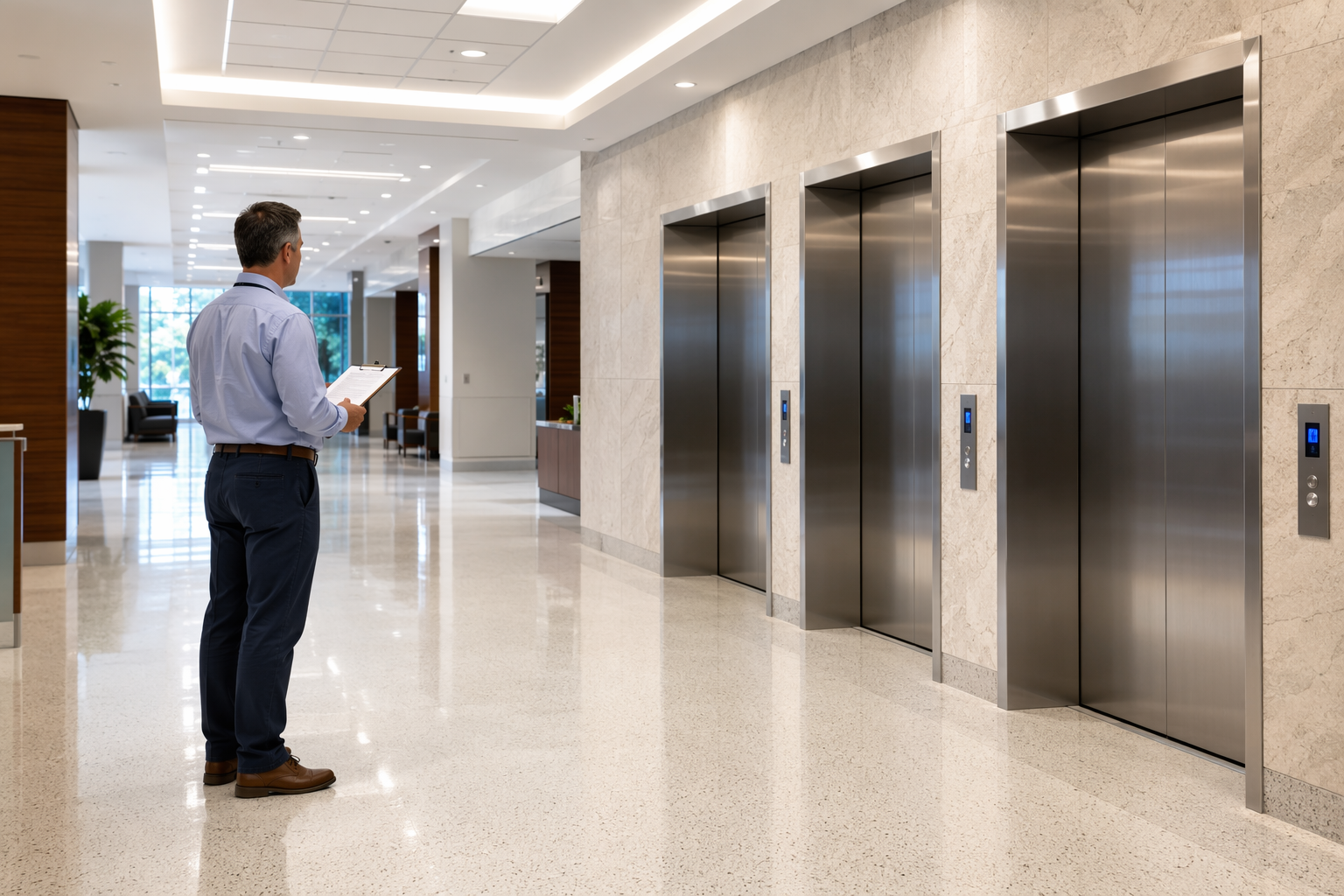
Hospitals, medical office buildings, outpatient surgery centers, and long-term care facilities depend on elevators around the clock. A single unplanned outage can delay patient transport, interrupt medication delivery, and compromise emergency response. Selecting the right elevator service partner in 2026 requires more than comparing maintenance contracts — it requires a structured evaluation process built around compliance, accountability, and healthcare-specific operational demands.
—
Why Is Elevator Compliance More Complex in Healthcare Settings?
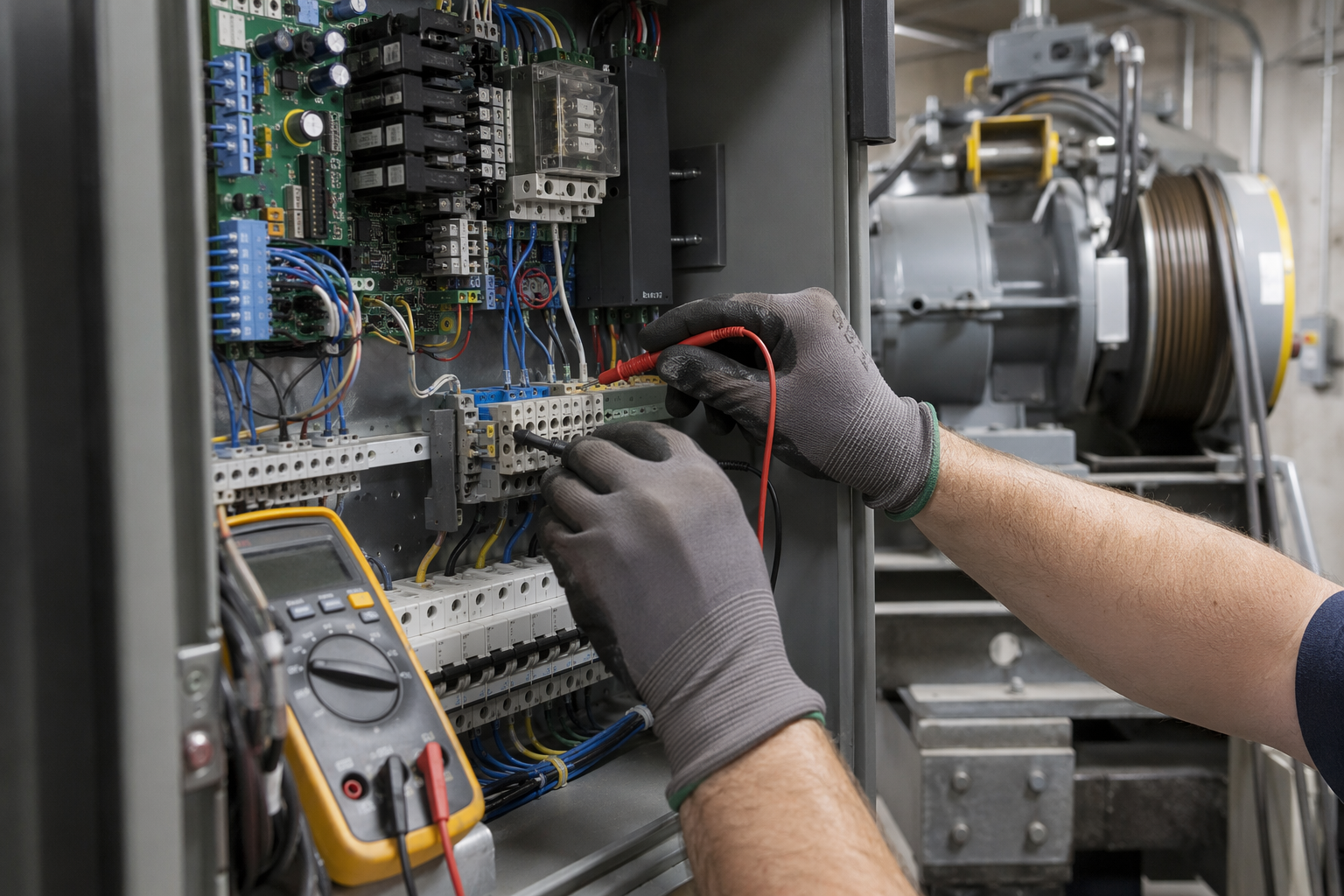
Healthcare facilities carry a heavier compliance burden than most commercial buildings. Elevators must satisfy multiple overlapping regulatory frameworks simultaneously:
- ASME A17.1 Safety Code for Elevators and Escalators: The foundational national standard governing elevator design, construction, operation, inspection, testing, and maintenance. State jurisdictions in Texas and California adopt this code by reference, often with local amendments.
- ADA (Americans with Disabilities Act): Requires accessible cab dimensions, door timing, control panel heights, audible signals, and Braille signage — requirements that are especially critical in patient-facing healthcare environments.
- The Joint Commission (TJC) Environment of Care Standards: Accredited hospitals must demonstrate that life-safety systems, including vertical transportation, are properly maintained and documented. Inspectors review maintenance logs and test records.
- State-Specific Elevator Codes: Texas (TDLR) and California (DOSH) both maintain their own elevator inspection and licensing requirements that service companies must meet before operating in those states.
- OSHA General Industry Standards: Applicable to elevator technicians working in healthcare facilities, including lockout/tagout procedures and confined space protocols.
A qualified service provider — such as AmeriTex Elevator, which operates across Houston, Dallas, Austin, San Antonio, Los Angeles, and San Diego — should be able to demonstrate familiarity with all of these frameworks, not just the minimum state licensing requirements.
—
What Credentials Should an Elevator Service Company Have for Hospital Work?
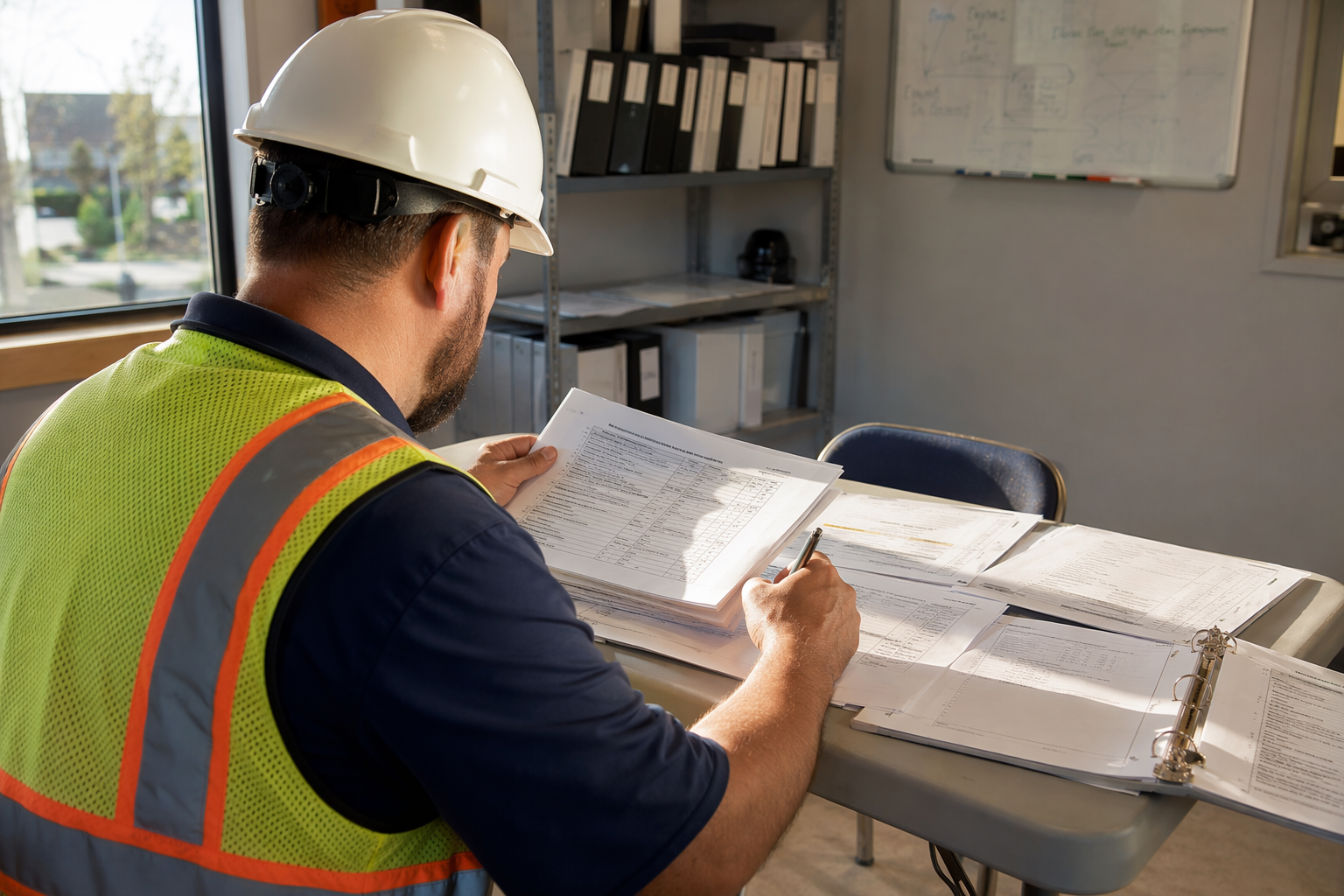
Credentials matter more in healthcare than in nearly any other vertical. When vetting a service company, facilities managers should request documentation for the following:
- State Elevator Contractor License: In Texas, this is issued by the Texas Department of Licensing and Regulation (TDLR). In California, it is administered by the Division of Occupational Safety and Health (Cal/OSHA). Verify the license is current and in good standing.
- Qualified Elevator Inspector (QEI) Certification: Third-party inspectors should hold QEI certification through the National Association of Elevator Safety Authorities (NAESA) or equivalent body recognized by your state.
- Insurance and Bonding: Vendors working in healthcare facilities should carry commercial general liability, workers’ compensation, and umbrella coverage appropriate for high-risk environments. Always request a certificate of insurance naming your facility as an additional insured.
- OSHA 10 or OSHA 30 Compliance Training: Technicians should be trained in general industry safety standards applicable to healthcare facility work environments.
- Manufacturer Authorizations: If your facility operates proprietary elevator systems (Otis, KONE, Schindler, ThyssenKrupp, etc.), confirm whether the service company is authorized or has documented access to OEM parts and technical data.
—
How Do You Compare Elevator Maintenance Contracts for Healthcare Facilities?
Not all maintenance contracts are structured equally. Healthcare facilities should evaluate proposals against these criteria:
- Scope of Preventive Maintenance: Confirm whether the contract covers all components listed in the ASME A17.1 maintenance code appendices, including hydraulic systems, safety devices, door operators, and controllers.
- Parts Inclusions vs. Exclusions: Full-coverage contracts include parts and labor; oil-and-grease contracts do not. For 24/7 healthcare operations, full-coverage contracts typically reduce lifecycle costs and unplanned downtime.
- Documentation and Reporting: Joint Commission surveys require evidence of maintenance activity. Contracts should specify how service records are maintained, stored, and made available for inspection review.
- Emergency Callback Provisions: Review what the contract defines as an emergency, what escalation procedures exist, and how callbacks are prioritized for hospitals versus standard commercial accounts.
- Term Length and Exit Clauses: Multi-year contracts can lock facilities into unfavorable terms. Evaluate termination provisions before signing.
—
What Questions Should You Ask an Elevator Vendor During the Evaluation Process?
Use the following questions in vendor interviews to separate qualified healthcare partners from general commercial providers:
- How many healthcare facilities are currently in your active service portfolio in this market?
- Can you provide documentation of your state elevator contractor license and proof of insurance?
- What is your process for maintaining service records in a format acceptable for Joint Commission review?
- How do you handle elevator entrapments involving patients or medical staff — including communication protocols with hospital security and operations teams?
- What is your parts inventory strategy for critical healthcare elevator components?
- Are your technicians trained on OSHA lockout/tagout procedures specific to occupied healthcare environments?
- How do you prioritize callback dispatching for hospitals versus your other commercial accounts?
- Can you walk us through your compliance process for annual state inspections in Texas (TDLR) or California (DOSH)?
—
What Are the Most Common Elevator Code Violations Found in Healthcare Facilities?
Facilities that inherit aging elevator infrastructure or inconsistent maintenance histories frequently encounter the following deficiencies during inspections:
- Expired or missing Phase I and Phase II fire service documentation
- Non-compliant door reopening devices and door timing that fails ADA standards for accessible facilities
- Hydraulic fluid leaks or seal degradation not addressed during preventive maintenance cycles
- Illegible or missing Braille signage on car operating panels
- Safety device test records (governor, safeties, buffers) that are overdue or incomplete per ASME A17.1 intervals
- Emergency lighting and communication system deficiencies
AmeriTex Elevator conducts pre-inspection assessments designed to identify these gaps before a state or accreditation inspector arrives, giving healthcare facility managers time to remediate deficiencies proactively.
—
How Should a Healthcare Facility Handle an Elevator Entrapment?
Step-by-Step Entrapment Response Protocol
- Activate the in-cab emergency communication system to establish contact with the trapped occupant(s) and assess any immediate medical needs.
- Contact your elevator service company’s emergency line using the number posted in your facility’s emergency operations plan and on the elevator machine room door.
- Notify hospital security and facilities management simultaneously, following your facility’s internal emergency notification chain.
- Do not attempt to force open elevator doors or instruct passengers to exit the cab without a licensed elevator technician present — this creates fall and injury risk.
- Deploy clinical staff if a patient in a vulnerable condition is trapped — coordinate between security, facilities, and nursing leadership.
- Document the entrapment time, duration, elevator ID, and resolution in your maintenance log for Joint Commission and state inspection records.
- Request a written incident report from your service company that identifies the cause and corrective action taken.
—
What Does Elevator Modernization Mean for a Healthcare Facility?
Modernization replaces aging control systems, door operators, fixtures, and sometimes drive systems without full cab replacement. For healthcare facilities, modernization decisions should weigh:
- Patient and Staff Safety: Older relay-logic controllers lack the diagnostic precision of modern microprocessor systems, increasing the risk of unexpected shutdowns.
- ADA Compliance Upgrades: Modernization projects often present the most cost-effective opportunity to bring non-compliant fixtures and cab interiors into full ADA conformance.
- Energy Efficiency: Modern variable-voltage, variable-frequency (VVVF) drives reduce energy consumption qualitatively compared to older hydraulic or DC systems.
- Parts Availability: When OEM parts for legacy systems become obsolete, modernization may be more cost-effective than ongoing reactive maintenance.
- Scheduling Constraints: Healthcare facilities must plan modernization around patient census and care delivery schedules, requiring a service partner experienced in phased, low-disruption project management.
—
How Do Elevator Service Needs Differ Across Texas and California Healthcare Markets?
Healthcare facilities in Houston, Dallas, Austin, and San Antonio operate under Texas TDLR jurisdiction, which requires licensed elevator contractors and annual third-party inspections. California facilities in Los Angeles and San Diego fall under Cal/OSHA’s Elevator, Ride, and Tramway Unit, which has its own inspection cadence and permitting requirements.
AmeriTex Elevator holds the required state authorizations to operate across both the Texas and California markets, giving multi-state healthcare systems and regional hospital networks a consistent service partner without the administrative burden of managing separate vendors per state.
—
What Is the True Cost of Neglecting Elevator Maintenance in a Hospital?
The financial and operational consequences of deferred maintenance in healthcare settings extend well beyond repair invoices:
- Regulatory Fines: TDLR and Cal/OSHA both carry enforcement authority to levy fines and issue shutdown orders for non-compliant elevators.
- Joint Commission Citations: Documented maintenance failures in Environment of Care standards can trigger Requirement for Improvement (RFI) findings that affect accreditation status.
- Patient Transport Delays: An out-of-service elevator in a multi-floor hospital disrupts surgical scheduling, ICU transfers, and diagnostic imaging workflows.
- Liability Exposure: Entrapments, falls, or injuries attributable to deferred maintenance create significant legal and insurance risk.
—
Questions Your Inspector Will Ask
Whether the inspection is conducted by a state elevator inspector (TDLR or Cal/OSHA), a Joint Commission surveyor, or a risk management auditor, be prepared to produce answers and documentation for the following:
- When was the last annual inspection completed, and where is the current certificate of inspection?
- Are maintenance logs current, dated, and signed by a licensed technician for each service visit?
- When were the governor, safeties, and oil buffers last tested per ASME A17.1 periodic test intervals?
- Is the elevator equipped with Phase I Emergency Recall and Phase II in-car firefighter operation, and has it been tested?
- Is emergency lighting functional and battery backup tested?
- Is the two-way emergency communication system operational and connected to a monitored location?
- Are all ADA-required signage, Braille markings, and door timing parameters in compliance?
- Has any outstanding violation from the previous inspection been corrected and documented?
- What is the name and license number of the elevator contractor currently under contract for this unit?
—
How Do You Transition to a New Elevator Service Company Without Disrupting Operations?
- Audit your current equipment inventory — document every elevator, escalator, and lift unit on your campus, including make, model, year of installation, and current condition.
- Obtain and retain all maintenance history records from your current vendor before contract termination. These records belong to the facility, not the service company.
- Establish a transition timeline that avoids peak census periods or scheduled accreditation surveys.
- Conduct a baseline assessment with the incoming vendor to identify any deferred maintenance or open deficiencies before the new contract takes effect.
- Update emergency contact information posted in machine rooms and on facility emergency operations plans.
- Notify your state elevator authority (TDLR or Cal/OSHA) of the new contractor of record if required by your jurisdiction.
—
What Should a Healthcare Facility Expect During a Free Elevator Assessment?
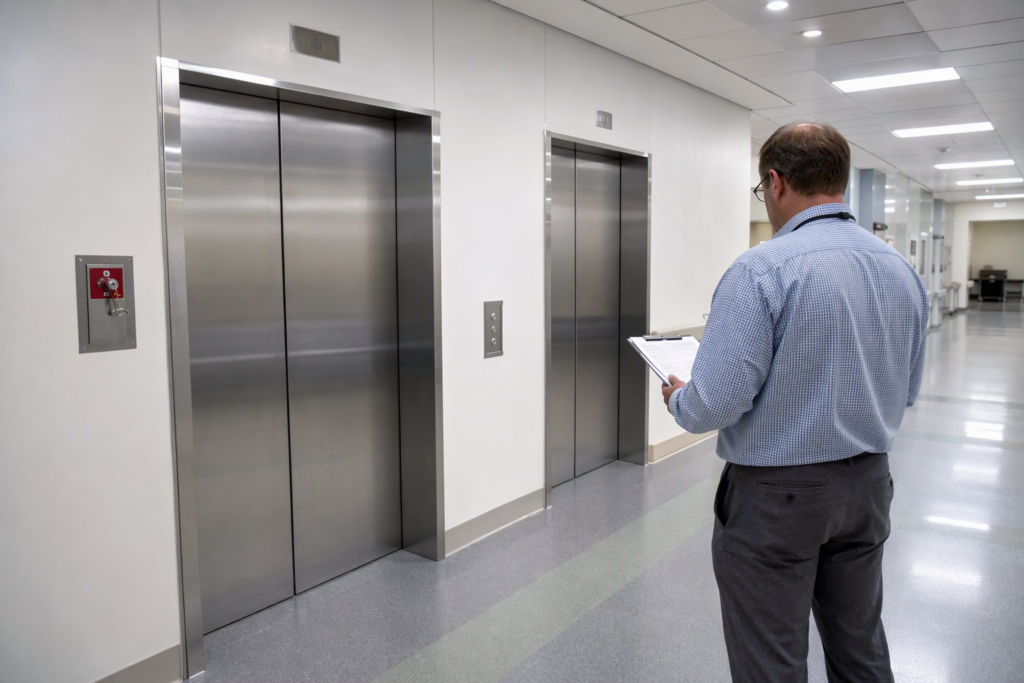
A professional elevator assessment for a healthcare facility should include a physical inspection of all elevator units, a review of existing maintenance documentation, identification of any code compliance gaps relative to current ASME A17.1 and ADA requirements, and a written summary of findings with recommended corrective actions prioritized by risk level.
AmeriTex Elevator provides free elevator assessments for healthcare facilities across its Texas and California service markets. The assessment is designed to give facilities managers an unbiased, documented baseline — whether or not they proceed with AmeriTex Elevator as their ongoing service provider.
—
Ready to Evaluate Your Healthcare Facility’s Elevator Program?
Contact AmeriTex Elevator for a free elevator assessment. A qualified technician will inspect your units, review your compliance documentation, and provide a written findings report at no cost or obligation.
Call AmeriTex Elevator: 866-679-4313
Serving Houston, Dallas, Austin, San Antonio, Los Angeles, and San Diego.
Need elevator service you can rely on? AmeriTex Elevator is ready to help.