Elevator Upgrades & Code Compliance Before a Building Sale or Refinance: Complete FAQ
Lenders, buyers, and their inspectors scrutinize elevator compliance records as part of commercial real estate due diligence. Unresolved violations, lapsed inspection certificates, or aging equipment that does not meet current retrofit codes can delay a closing, reduce a building’s appraised value, or cause a lender to withhold funds. The twenty questions below cover every dimension of this topic — from specific Texas and California regulatory requirements to upgrade timelines, costs, and how to prepare documentation for underwriters.
1. What elevator compliance issues most commonly surface during a building sale or refinance?
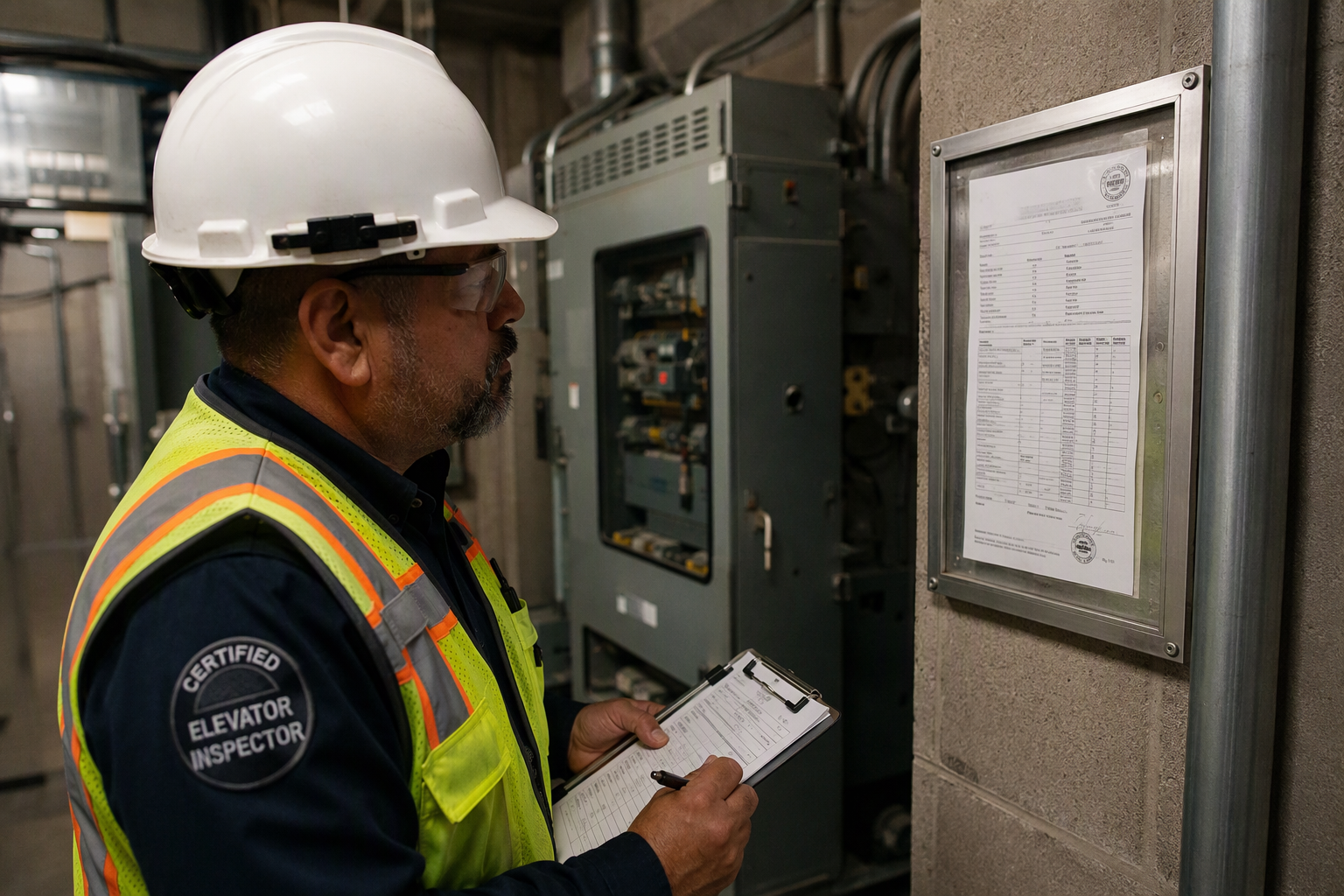
The most common issues are expired or missing certificates of inspection, open violation orders from the local Authority Having Jurisdiction (AHJ), ADA accessibility gaps, and equipment that has not received mandated safety retrofits under ASME A17.3.
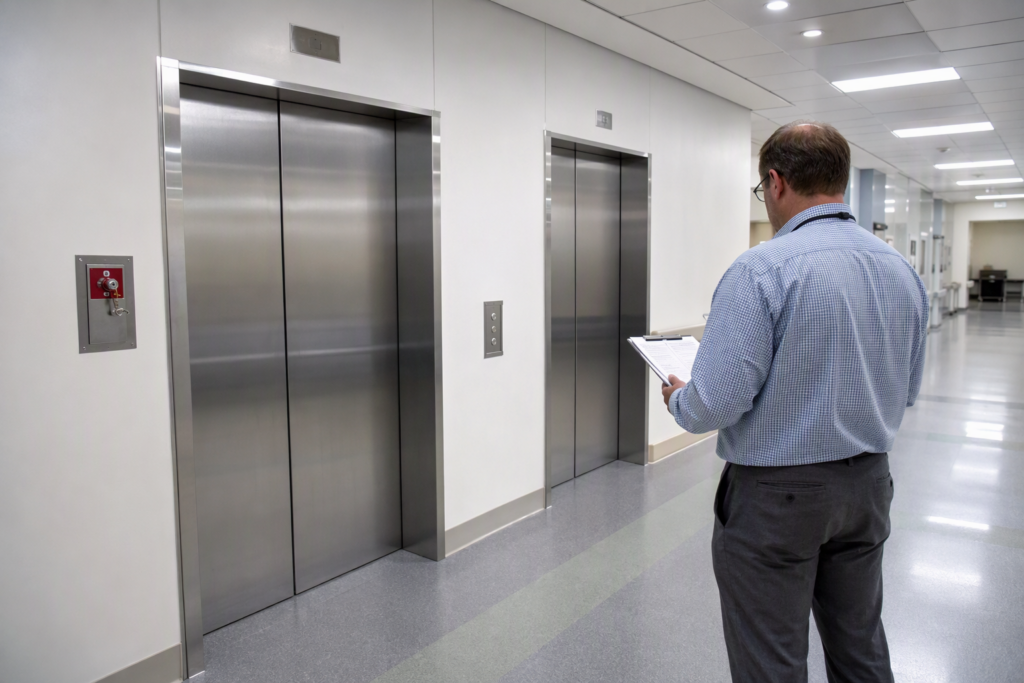
Buyers and lenders routinely order a third-party elevator inspection as part of property due diligence. Inspectors look for current certificates, outstanding correction orders, and physical evidence that the equipment matches its maintenance records. In Texas, the Texas Department of Insurance (TDI) — through its Elevator Safety Program — issues certificates and tracks violations for most public-use elevators. In California, the Division of Occupational Safety and Health (Cal/OSHA) Elevator Unit oversees inspection and permitting. Gaps in either system become negotiating leverage for buyers or grounds for lenders to require escrow holdbacks.
Open violation orders are the single most transaction-blocking issue. Even a minor deficiency — a missing inspection placard, an inoperative door restrictor, or a fire service mode that fails to meet current code — can trigger a lender’s condition that the item be remediated before funding.
2. Which codes govern elevator safety and what editions apply in Texas and California in 2026?
Texas and California both adopt the ASME A17.1 Safety Code for Elevators and Escalators for new installations and ASME A17.3 Safety Code for Existing Elevators and Escalators for retrofit requirements, alongside federal ADA standards for accessibility.
ASME A17.1 establishes design, construction, and installation requirements. ASME A17.3 is the critical document for building owners facing a sale, because it defines which safety features must be retrofitted onto older equipment and on what schedule. Each state’s AHJ determines which edition has been locally adopted, and owners should confirm the current adopted edition with TDI (Texas) or the Cal/OSHA Elevator Unit (California) because adoption cycles mean the locally enforceable edition may lag the most recently published ASME edition.
Federal ADA requirements — governed by the ADA Standards for Accessible Design — apply to any elevator serving the public or employees in a commercial building and are enforced independently of state inspection programs. ADA compliance is frequently flagged by buyers’ accessibility consultants rather than the elevator inspector.
3. How does Texas regulate elevator inspections and what documentation must an owner provide at closing?
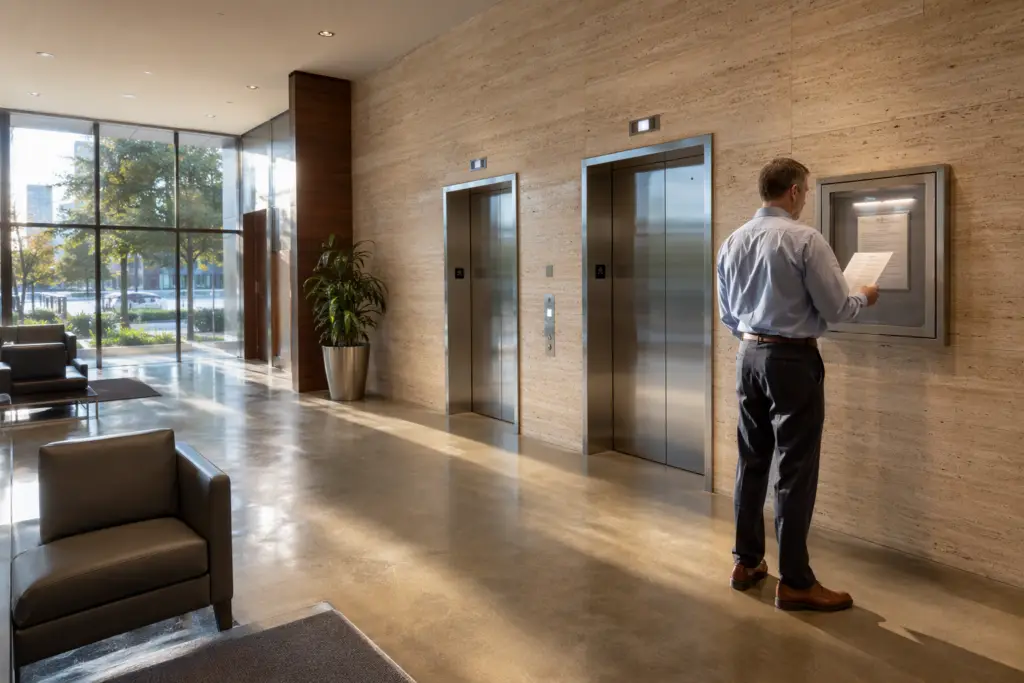
In Texas, the Elevator Safety Program under the Texas Department of Insurance requires periodic inspections by licensed elevator inspectors and issues a Certificate of Compliance that must be posted in the elevator cab and current at the time of any transaction.
Texas law requires that a valid certificate be maintained at all times for public-use elevators. At closing, sellers are expected to provide the current certificate, the most recent inspection report, and any correction orders — whether open or closed. Lenders underwriting CMBS, agency, or conventional loans typically require that all correction orders be closed prior to funding or that an escrow amount be withheld to cover remediation.
Building owners in Houston, Dallas, Austin, and San Antonio should also be aware that local municipalities may layer additional inspection requirements on top of TDI minimums. Consulting with a qualified elevator service company before listing or refinancing helps identify any local AHJ requirements that may not appear on the TDI record.
4. How does California regulate elevator inspections and what must owners produce for a lender?
In California, the Cal/OSHA Elevator Unit issues permits to operate and conducts or oversees periodic inspections; a current permit to operate must be posted in the elevator and provided to lenders or buyers upon request.
California’s permit-to-operate system means that an elevator without a current permit is technically out of service and represents an immediate liability for the seller. Lenders underwriting California commercial properties — in markets such as Los Angeles and San Diego — routinely condition loan approval on current permits for all vertical transportation equipment in the building.
California also has a network of certified agencies (QEIs — Qualified Elevator Inspectors) authorized to perform periodic inspections on behalf of the Cal/OSHA unit. Owners should obtain inspection reports from their maintenance contractor and confirm that all deficiencies noted in the most recent annual inspection have been corrected and re-documented before entering a transaction.
5. What ADA requirements apply to existing elevators in commercial buildings?
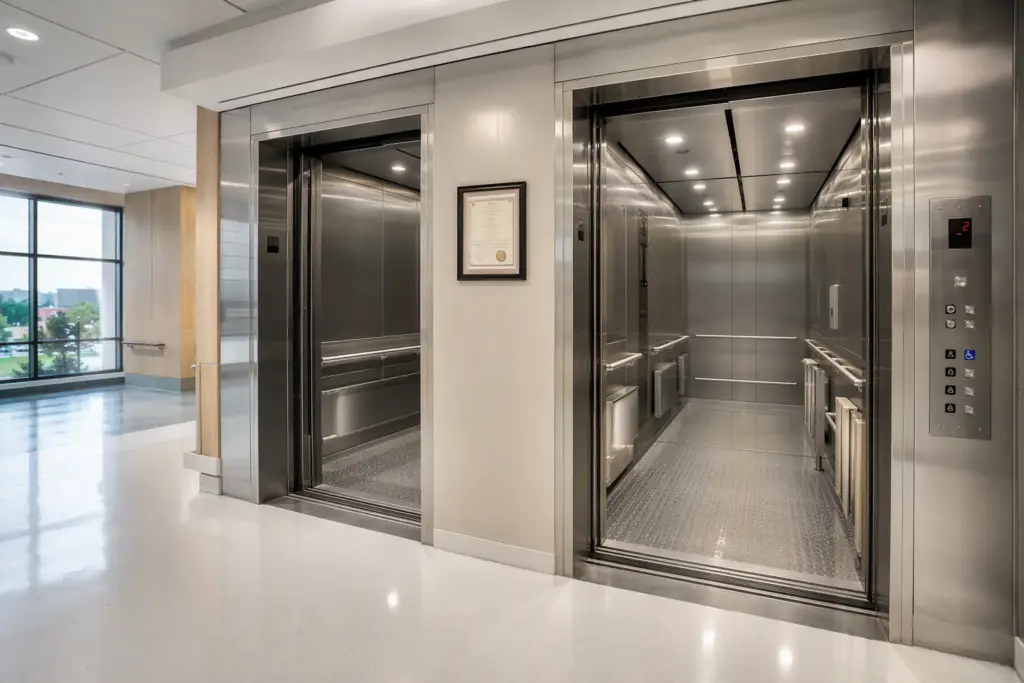
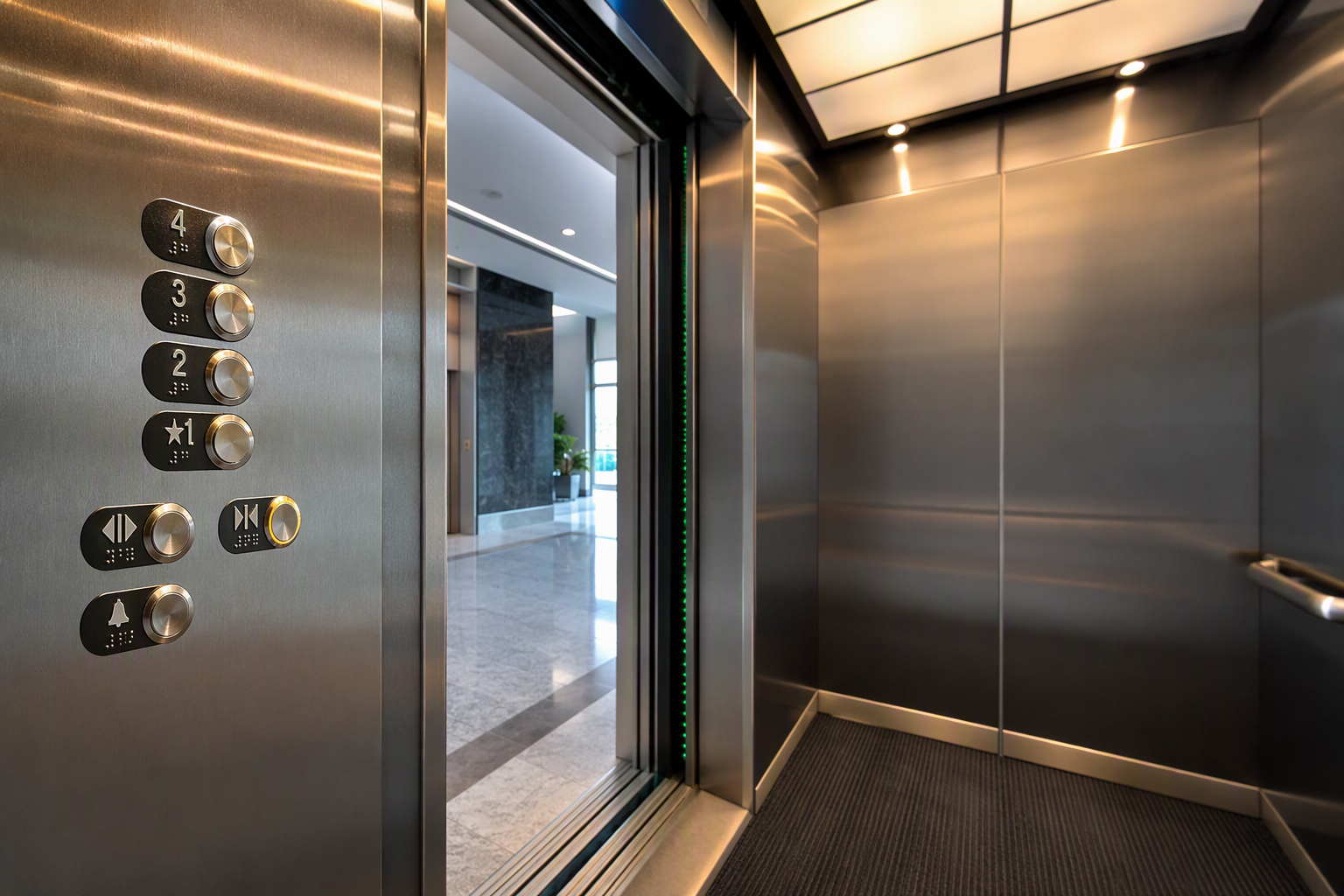
Under the ADA Standards for Accessible Design, existing elevators in commercial buildings must meet accessibility requirements for cab size, door width, control panel height, Braille signage, audible indicators, and leveling accuracy — with obligations triggered by alterations or by the “readily achievable” barrier removal standard for places of public accommodation.
For a building sale, buyers and their accessibility consultants evaluate whether the elevator meets ADA Section 4.10 (now Section 407 in the 2010 ADA Standards) requirements. Common deficiencies in older equipment include cab dimensions that fall below minimum floor area, control buttons that are out of the required reach range, missing or worn Braille floor designations, non-functioning audible signals, and leveling that causes a gap or height difference at the sill that creates a tripping hazard for wheelchair users.
Sellers should understand that ADA compliance is a civil rights obligation, not merely an inspection item. A buyer’s attorney may require ADA remediation as a closing condition regardless of whether the local elevator inspector flagged it, because ADA enforcement runs through the Department of Justice and private litigation — not through the state elevator program.
6. What are ASME A17.3 retrofit requirements and which ones are most likely to be outstanding on older equipment?
ASME A17.3 mandates phased safety retrofits for existing elevators, and the items most commonly outstanding on equipment installed before the 1990s include firefighters’ emergency operation (Phase I and Phase II), door reopening devices, car and counterweight safeties, and — for hydraulic units — oil-spill containment and pressure relief valves.
Each adopted edition of ASME A17.3 adds or revises retrofit requirements. Elevators installed decades ago and maintained only to the minimum inspection standard may have accumulated multiple outstanding retrofit obligations. The most transaction-critical retrofits include:
- Firefighters’ Emergency Operation (FEO): Phase I lobby recall and Phase II in-cab firefighter control are required on virtually all traction and hydraulic elevators in commercial buildings. Missing or non-functional FEO is a frequent violation.
- Door Reopening Devices: Full-length door edges or light curtains that prevent door closure on an obstruction are required on most commercial elevators.
- Hydraulic Unit Integrity: Older hydraulic elevators may require updated pressure relief valves, rupture valves, and oil containment pits to meet current ASME A17.3 requirements.
- Car and Counterweight Safeties: Mechanical safety devices that stop the car in a free-fall scenario must meet current ASME A17.3 standards.
- Seismic Requirements (California): California imposes seismic design and retrofit requirements on elevators, particularly for traction units in higher seismic zones. Los Angeles and San Diego buildings are frequently subject to seismic tie-down and guide rail bracket requirements that owners in those markets must address.
7. What is a pre-sale elevator assessment and what does it cover?
A pre-sale elevator assessment is a comprehensive inspection performed by a qualified elevator service company before listing or refinancing, covering code compliance status, mechanical condition, maintenance records, outstanding violations, and an estimate of near-term capital expenditures — giving the owner a complete picture before buyers or lenders conduct their own due diligence.
A thorough pre-sale assessment goes beyond the standard periodic inspection. It includes a review of the full maintenance and repair history, an evaluation of the remaining useful life of major components (controller, motor, ropes or hydraulic cylinder), a code compliance gap analysis against the current locally adopted edition of ASME A17.1/A17.3, an ADA accessibility review, and a written report with prioritized remediation recommendations.
AmeriTex Elevator provides pre-sale and pre-refinance elevator assessments for commercial building owners in Houston, Dallas, Austin, San Antonio, Los Angeles, and San Diego. The written assessment report can be provided directly to lenders, buyers, or their representatives as part of the due diligence package.
8. How long does it take to resolve elevator violations before a closing?
Minor violations — such as a missing inspection placard, worn cab interior, or a single-sensor door reopening device — can often be resolved within days to a few weeks, while major retrofits such as controller replacement, hydraulic cylinder replacement, or full FEO installation may require several weeks to several months depending on parts availability and permit processing time.
Owners who discover violations only after a buyer’s inspector identifies them are in a weaker negotiating position and face compressed timelines. The recommended approach is to conduct a pre-sale assessment at least three to six months before an anticipated closing, allowing adequate time to procure parts, schedule work, obtain permits, and pass a re-inspection before the transaction closes.
In California markets, Cal/OSHA permit processing for major modifications can add lead time. In Texas, TDI re-inspection scheduling varies by region. Building owners in all six markets served by AmeriTex Elevator should factor permit and inspection scheduling into their remediation timelines.
9. What is the difference between a modernization and a code-required retrofit, and which does a lender care about?
A retrofit is a specific safety upgrade mandated by the AHJ under ASME A17.3 or state rules, while a modernization is a broader equipment replacement (controller, motor, cab, fixtures) that may be elective or triggered by equipment condition — and lenders primarily care that all mandated retrofits are complete and that the equipment’s overall condition does not represent an immediate capital call.
Lenders and their appraisers evaluate two distinct risks: (1) regulatory compliance risk — open violations and mandatory retrofits that create legal liability — and (2) deferred capital expenditure risk — aging equipment that will require significant near-term investment even if currently compliant. A building with fully compliant but aging hydraulic elevators that show signs of cylinder wear, oil seepage, or controller obsolescence may still trigger a lender’s capital reserves requirement even though no code violation exists.
Sellers benefit from understanding both dimensions. A modernization that brings equipment to current code while replacing end-of-life components removes both risks and can positively affect property value. A targeted retrofit that closes only the open violations leaves the deferred capex risk on the table for a buyer or lender to price.
10. What documentation should a building owner compile before entering a sale or refinance transaction?
Owners should compile the current certificate of inspection or permit to operate, all inspection reports for the past three to five years, maintenance logs, repair invoices, any open or closed violation orders, modernization records, and any ADA remediation documentation.
A complete and well-organized elevator documentation package signals to buyers and lenders that the building has been professionally maintained and reduces the risk of transaction delays. Specific documents to gather include:
- Current Certificate of Compliance (Texas) or Permit to Operate (California) for each elevator unit
- Inspection reports from the most recent annual inspection and any interim inspections
- Maintenance contract (demonstrating ongoing service relationship)
- Repair and modernization invoices with dates and scope of work
- Correction orders and signed-off completion notices
- Any ADA accessibility evaluations or remediation records
- Equipment data plates or manuals confirming model, manufacture date, and rated capacity
If records are incomplete, the building’s current elevator service contractor can often reconstruct partial histories from their own service records.
11. What upgrade benchmarks distinguish a “pass” from a “fail” in lender elevator due diligence?
While lender standards vary, the table below summarizes the compliance and condition benchmarks that commonly determine whether an elevator passes or triggers a lender condition or repair escrow.
| Due Diligence Factor | Typical “Pass” Condition | Typical Lender Condition or Escrow Trigger |
|---|---|---|
| Certificate / Permit Status | Current, posted in cab, no expiration within 60 days of closing | Expired, missing, or suspended certificate |
| Open Violation Orders | None outstanding; all prior orders closed with sign-off | Any unclosed correction order, especially safety-category violations |
| Firefighters’ Emergency Operation | Phase I and Phase II functional and tested | Non-functional FEO on a traction or hydraulic elevator |
| ADA Accessibility | Control reach range, door width, Braille, and leveling compliant | Documented ADA gaps without remediation plan |
| Hydraulic Unit Integrity | No oil seepage, current pressure test, rupture valve present | Active oil seepage, failed pressure test, missing rupture valve |
| Equipment Age / Remaining Useful Life | Major components with meaningful remaining service life | End-of-life controller or cylinder requiring near-term replacement |
| Maintenance Contract | Active full-service or comprehensive maintenance agreement | No maintenance contract; ad hoc repair history only |
| Seismic Compliance (California) | Seismic retrofits complete per applicable California requirements | Outstanding seismic retrofit obligations in a seismic zone |
12. How do seismic requirements in California affect elevator compliance for Los Angeles and San Diego buildings?
California imposes seismic design and retrofit requirements on elevator installations that are not required in Texas, and Los Angeles and San Diego building owners must confirm that traction elevators meet applicable seismic bracing, guide rail, and counterweight retention requirements before a transaction.
California’s seismic elevator requirements — incorporated into the state’s elevator safety orders and referencing ASME A17.1 seismic provisions — address how guide rails, brackets, buffers, and counterweights are designed to perform in a seismic event. Older traction elevators in Los Angeles and San Diego that have not been modernized may have outstanding seismic retrofit obligations. Buyers’ inspectors in these markets routinely include seismic compliance in their elevator review scope.
Hydraulic elevators are generally less affected by seismic bracing requirements but may have their own California-specific compliance items related to underground cylinder integrity and environmental containment. Owners should confirm the applicable requirements with the Cal/OSHA Elevator Unit or a qualified elevator consultant.
13. What is the process for clearing an open elevator violation before closing?
Clearing an open violation requires completing the required corrective work, submitting documentation to the AHJ, and obtaining either a re-inspection sign-off or a written closure notice before or by the time of closing.
The step-by-step process for resolving an open elevator violation in Texas or California is as follows:
- Obtain the original correction order from TDI (Texas) or the Cal/OSHA Elevator Unit (California) and review each cited deficiency carefully.
- Engage a qualified elevator service contractor to evaluate the scope of work required to remediate each deficiency.
- Obtain any required permits for the corrective work from the local AHJ before beginning work.
- Complete the corrective work with documented parts, labor, and methods consistent with the applicable ASME code edition.
- Request a re-inspection from the AHJ or the inspector who issued the correction order to verify that the deficiency has been resolved.
- Obtain written sign-off or a new certificate from the AHJ confirming the violation is closed.
- Provide the closure documentation to the buyer’s representative, lender, or escrow officer as part of the due diligence package.
Timelines for each step vary by jurisdiction, the complexity of the corrective work, and parts availability. Engaging a contractor with established relationships with the local AHJ — such as AmeriTex Elevator in its Texas and California service markets — can help expedite permit processing and re-inspection scheduling.
14. Can an elevator that fails inspection be disclosed and still support a closing?
In some transactions, an elevator with a documented deficiency can be disclosed and addressed through a repair escrow, buyer credit, or price adjustment — but this requires lender approval and typically applies only to non-safety-critical deficiencies rather than major code violations or expired permits.
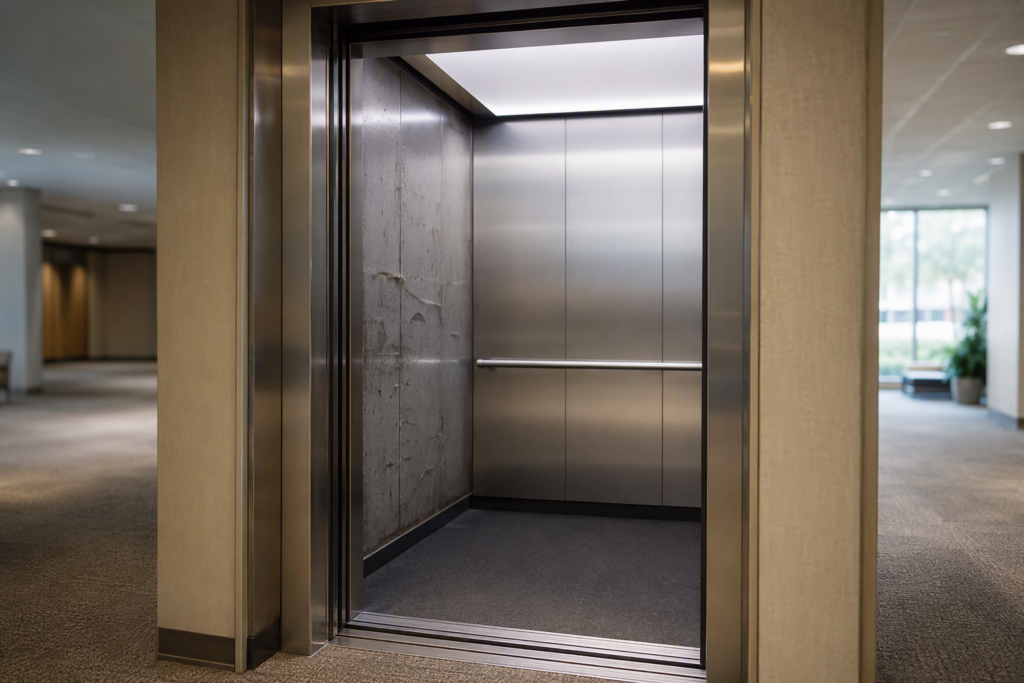
Lenders differentiate between cosmetic or low-priority items — worn cab finishes, outdated fixtures, minor leveling adjustments — and safety-category or code violations that represent a legal liability or potential for personal injury. Safety-category violations are generally required to be remediated before closing, not escrowed. Cosmetic items may be addressed through a negotiated credit or escrow holdback with lender consent.
Sellers who attempt to disclose and pass through unresolved safety violations without remediation face the risk that the buyer’s lender will decline to fund until the items are corrected, regardless of any agreed-upon credit. The safest approach is to resolve all safety-category and code violations before the property goes to market.
15. How does elevator age affect a building’s refinance eligibility?
Elevator age itself does not automatically disqualify a building from refinancing, but lenders use equipment age — alongside inspection records, maintenance history, and component condition — to assess remaining useful life and determine whether a capital reserves requirement or an immediate repair condition is warranted.
Traction elevators and hydraulic elevators have different service life expectations, and major components within each type have their own maintenance and replacement cycles. Controllers, ropes (traction), hydraulic cylinders, and machine room equipment each represent capital events that a lender’s property condition assessment will evaluate. An older elevator that has been systematically maintained and modernized on a component-by-component basis may present a lower risk profile than a newer unit with a poor maintenance history.
Lenders underwriting refinances typically engage a Property Condition Assessment (PCA) firm whose report will include an elevator section with estimated replacement reserve requirements. Building owners who can demonstrate a current maintenance contract and an organized repair history are in a significantly stronger position during this review.
16. What is a Property Condition Assessment (PCA) and how does it treat elevators?
A Property Condition Assessment is an independent third-party report commissioned by a lender or buyer to evaluate the physical condition of a commercial property, and the elevator section assesses code compliance, equipment condition, maintenance history, and estimated near-term capital expenditures — often referencing ASTM standards for PCA methodology.
The PCA elevator review typically includes a visual inspection of the machine room, pit, cab, and hoistway, a review of maintenance records and inspection certificates, and a comparison of the equipment’s condition against code requirements and expected useful life benchmarks. The PCA consultant will note outstanding violations, deferred maintenance, and any items that represent an immediate repair need versus a longer-term capital planning item.
Lenders use the PCA to determine immediate repair requirements (conditions that must be fixed before or shortly after closing), and long-term capital reserve requirements (funds the borrower must set aside for anticipated future expenditures). A well-maintained elevator with current certifications and no open violations minimizes both categories and reduces the financial impact on the transaction.
17. What are the most cost-effective elevator upgrades to perform before selling or refinancing?
The most cost-effective pre-transaction upgrades are those that eliminate open violations, restore certificate currency, and address ADA accessibility gaps — because these items directly affect transaction feasibility — while larger modernizations should be evaluated based on whether their impact on value and lender conditions justifies the investment relative to a buyer credit or price adjustment.
A practical prioritization framework for pre-transaction elevator work is:
- Priority 1 — Restore certificate compliance: Renew any expired certificates or permits, schedule overdue inspections, and clear any administrative violations that have allowed certificate currency to lapse.
- Priority 2 — Close open safety violations: Address all AHJ-cited safety deficiencies, particularly those in the safety-category classification, before marketing or entering underwriting.
- Priority 3 — ADA accessibility remediation: Correct documented ADA gaps — Braille, audible signals, leveling, control panel heights — which are relatively low-cost items compared to mechanical work and carry significant liability if undisclosed.
- Priority 4 — Mechanical reliability improvements: Address active hydraulic leaks, worn ropes, or other mechanical deficiencies that a visual PCA inspection is likely to identify and that lenders may require to be corrected immediately.
- Priority 5 — Evaluate full modernization: For equipment at or near end of useful life, consider whether a full modernization — controller, fixtures, and cab — is warranted to eliminate the lender’s capital reserve requirement and potentially enhance property value.
18. How should building owners in Houston, Dallas, Austin, and San Antonio prepare specifically for Texas elevator compliance?
Texas building owners should confirm certificate currency with TDI, review any open correction orders in the TDI system, verify local municipal requirements with their city’s building department, and engage a TDI-qualified elevator service contractor to perform a pre-transaction compliance review.
Texas’s Elevator Safety Program covers most public-use elevators, but owners should also check whether their specific municipality — Houston, Dallas, Austin, or San Antonio — has adopted additional local ordinances or inspection requirements beyond TDI minimums. Some Texas municipalities have historically administered their own elevator inspection programs in coordination with or alongside TDI.
Texas building owners should also be aware that OSHA regulations apply to elevator construction and maintenance worker safety, which is relevant if significant repair or modernization work is performed during the pre-transaction period. Engaging a qualified contractor ensures that worker safety compliance is maintained alongside equipment compliance.
19. What should building owners in Los Angeles and San Diego prepare specifically for California elevator compliance?
California building owners should confirm their Cal/OSHA Elevator Unit permit-to-operate is current, verify that the most recent annual inspection deficiencies have been corrected and documented, review seismic compliance status for traction elevators, and confirm that the building’s elevator service contractor is properly licensed under California requirements.
California’s elevator contractor licensing requirements are more prescriptive than those in many other states, and building owners should confirm that their service provider holds the appropriate California contractor’s license. In Los Angeles and San Diego, local building departments may also have specific requirements related to elevator alterations and permits that operate alongside the Cal/OSHA system.
AmeriTex Elevator serves commercial building owners in both Los Angeles and San Diego and is positioned to provide pre-transaction compliance assessments and remediation services tailored to California’s regulatory environment, including seismic compliance review for traction elevators.
20. How can a building owner get started addressing elevator compliance before a sale or refinance?
The most effective starting point is to engage a qualified elevator service company for a formal pre-transaction assessment, which provides a written compliance gap analysis, prioritized remediation plan, and the documentation package needed for lender or buyer due diligence.
The recommended sequence of actions for a building owner preparing for a transaction is:
- Gather existing elevator records — certificates, inspection reports, maintenance logs, and any prior correction orders — to establish a baseline of what is documented and what is missing.
- Schedule a pre-transaction elevator assessment with a qualified service provider who can evaluate code compliance, equipment condition, and documentation completeness.
- Review the assessment report and work with the service provider to prioritize remediation items by transaction impact — safety violations and certificate issues first, then ADA, then mechanical condition.
- Complete required work and obtain permits for any modifications, allowing adequate lead time before the anticipated transaction timeline.
- Pass re-inspection and obtain updated certificates for all remediated items.
- Compile the complete due diligence package — current certificates, closed violation orders, maintenance contract, and assessment report — for delivery to buyers or lenders.
Building owners who complete this process before entering a transaction are significantly better positioned to avoid closing delays, lender conditions, and buyer price concessions driven by elevator compliance issues. AmeriTex Elevator provides this pre-transaction advisory service across all six of its markets — Houston, Dallas, Austin, San Antonio, Los Angeles, and San Diego — and can provide the written documentation that lenders and buyers require.
Get Your Building’s Elevators Transaction-Ready
Unresolved elevator violations, expired certificates, and undocumented ADA gaps are among the most avoidable causes of commercial real estate closing delays and lender conditions. Whether a building is being prepared for listing, entering refinance underwriting, or responding to a buyer’s due diligence request, having a clear picture of elevator compliance status — and a plan to resolve any deficiencies — is a critical step in the transaction process.
Contact AmeriTex Elevator for a free elevator assessment — serving commercial building owners in Houston TX, Dallas TX, Austin TX, San Antonio TX, Los Angeles CA, and San Diego CA. Call 866-679-4313 to schedule your pre-transaction compliance review and receive a written report suitable for lender and buyer due diligence.
Need elevator service you can rely on? AmeriTex Elevator is ready to help.