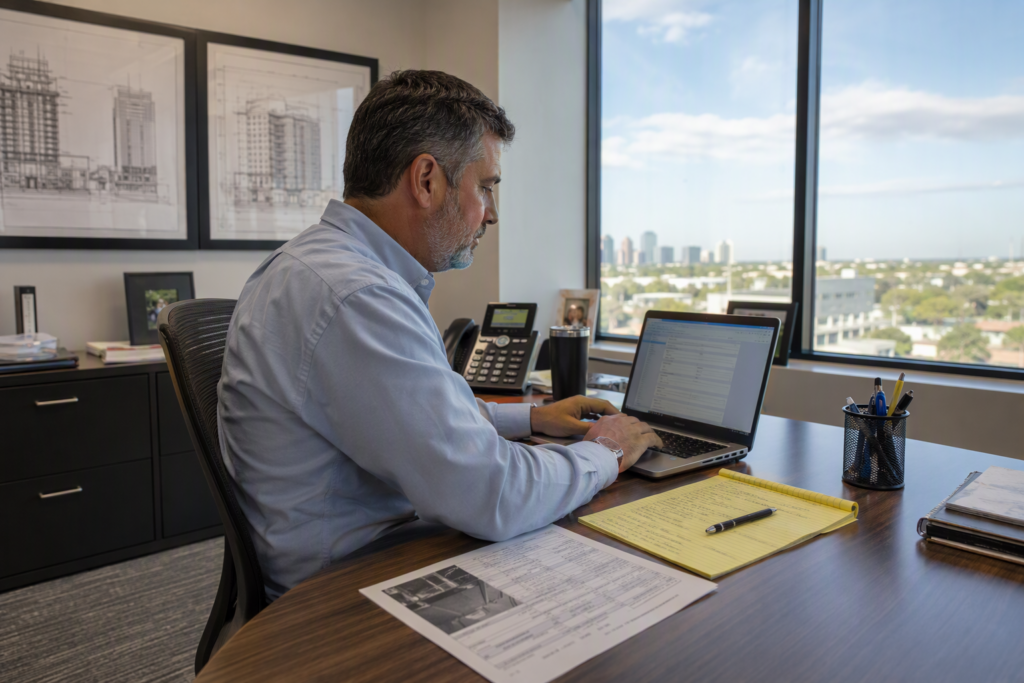
Elevator Maintenance and Inspection Requirements for Healthcare Facilities in Texas and California
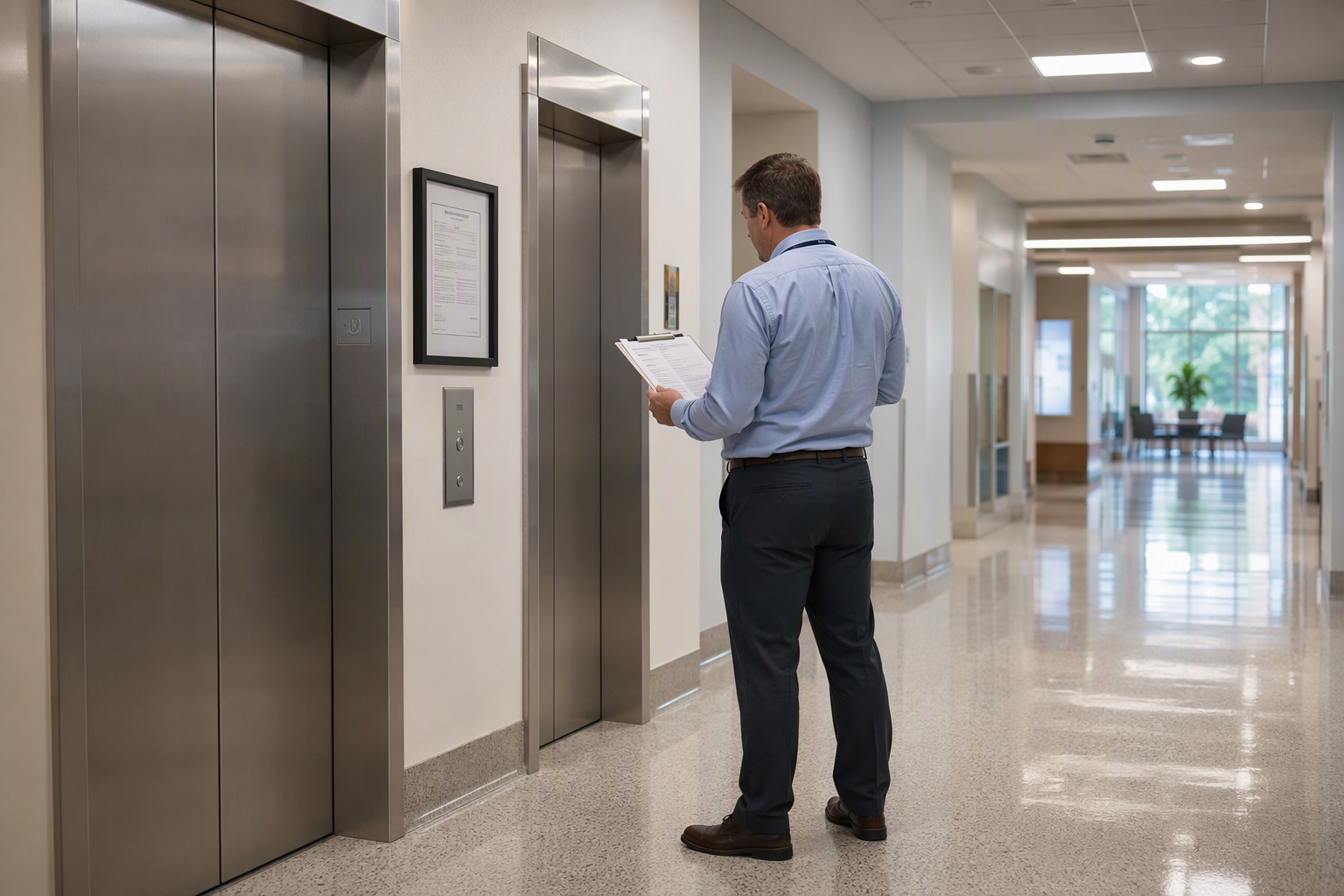
Hospitals, medical office buildings, outpatient surgery centers, and long-term care facilities depend on elevators more critically than almost any other building type. A non-compliant or out-of-service elevator in a healthcare setting is not merely an inconvenience — it can disrupt patient transport, impede emergency response, and expose facility managers to serious regulatory liability. Understanding exactly which codes apply, how frequently inspections must occur, and what documentation is required is essential for every healthcare facility director and property manager operating in Texas or California.
What Federal Codes Form the Baseline for Healthcare Elevator Compliance?
Two foundational federal standards govern elevator safety in healthcare environments across both Texas and California.
ASME A17.1 Safety Code for Elevators and Escalators sets the design, construction, installation, and testing requirements for new elevator equipment. For existing elevator equipment already in service, ASME A17.3 Safety Code for Existing Elevators and Escalators establishes the minimum retrofit and maintenance standards that must be met over time. Both states have adopted versions of these codes as the regulatory floor, though each state’s enforcing authority may mandate a specific edition year.
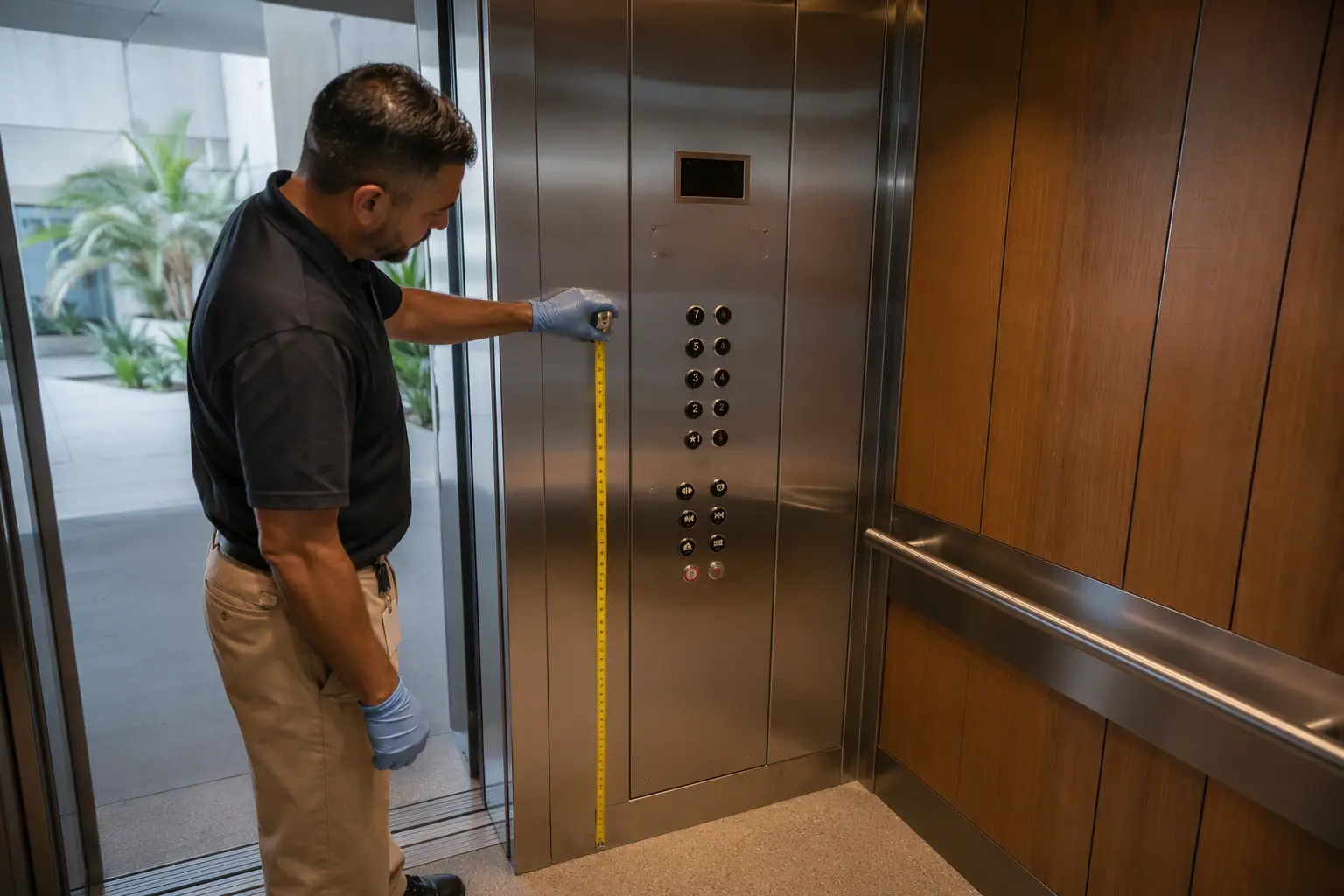
The Americans with Disabilities Act (ADA) adds a parallel layer of obligation. Healthcare facilities serving patients and visitors are places of public accommodation under ADA Title III, meaning elevators must meet ADA Standards for Accessible Design. This covers cab dimensions, door timing, control panel reach ranges, audible and tactile floor indicators, and more. For federally funded healthcare facilities — including those receiving Medicare or Medicaid reimbursement — ADA compliance is not optional at any point in the building’s lifecycle.
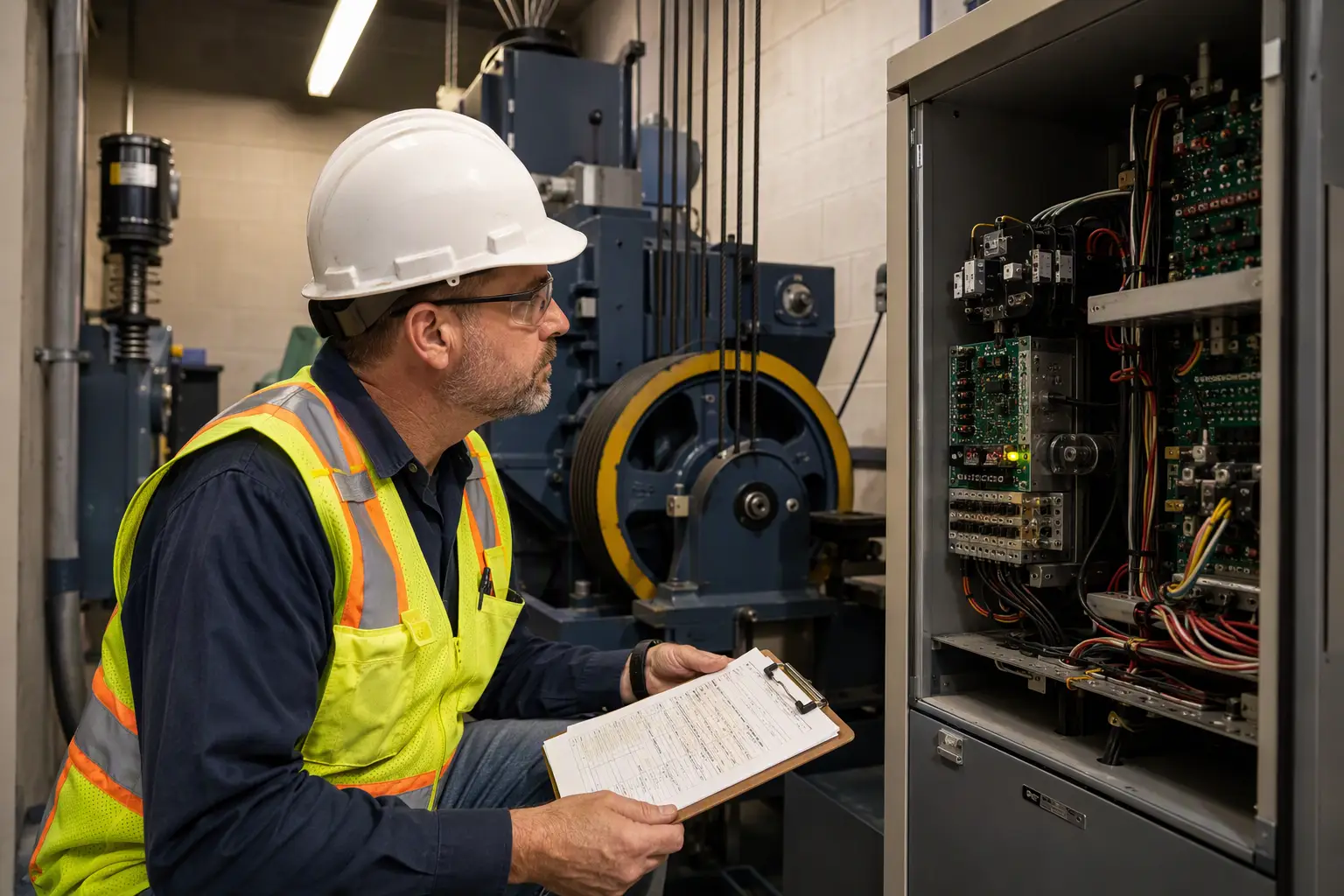
OSHA regulations further require that elevator equipment used by employees (including maintenance personnel and hospital staff) meets general industry safety standards for mechanical equipment. Elevator machine rooms must be properly secured, illuminated, and ventilated to protect workers who access them.
How Do Texas Elevator Inspection Requirements Apply to Healthcare Buildings?
In Texas, the Texas Department of Insurance (TDI) administers elevator safety through its Elevator Safety program. Healthcare facilities in Houston, Dallas, Austin, and San Antonio must register each conveyance with TDI, display a current certificate of inspection, and ensure periodic inspections are completed by a licensed elevator inspector.
Texas requires both periodic inspections and periodic tests at defined intervals. Routine inspections verify operational safety and code compliance. Periodic tests — including full-load tests and safety device tests — are required on a longer cycle and must be performed or witnessed by a licensed inspector. Healthcare facility managers should confirm the current required intervals with TDI directly, as edition adoption can affect specific timelines.
Texas also requires that elevator contractors performing maintenance or alterations hold a current state license. AmeriTex Elevator operates as a certified elevator service contractor in Texas, serving healthcare clients across Houston, Dallas, Austin, and San Antonio.
What Are California’s Elevator Inspection Requirements for Healthcare Facilities?
In California, the Division of Occupational Safety and Health — through its Elevator, Ride, and Tramway Unit — regulates elevator installation, alteration, and inspection for most facilities, including the majority of healthcare buildings in Los Angeles and San Diego. California has adopted its own edition of the ASME A17.1 code with state-specific amendments, and the state’s Title 8 regulations govern conveyance safety for workplaces, which includes hospital employee areas.
California-licensed elevator inspectors must perform all required periodic inspections and tests. Certificates of compliance must be posted in the elevator cab or at a location accessible to building occupants. Facilities that allow certificates to lapse face stop-use orders, which in a healthcare setting can create immediate patient care disruptions.
For healthcare facilities in Los Angeles and San Diego, local building departments may also assert jurisdiction for certain alterations and new installations, meaning facilities may need to coordinate with both the state elevator unit and the local Authority Having Jurisdiction (AHJ). AmeriTex Elevator’s teams in Southern California are experienced in navigating these overlapping jurisdictional requirements.
What ADA-Specific Requirements Must Healthcare Elevators Meet?
Under the ADA Standards for Accessible Design, elevators serving healthcare facilities must meet specific dimensional and operational requirements, including:
- Minimum cab interior dimensions sufficient to accommodate wheelchairs and stretchers (with healthcare-specific guidelines often exceeding standard ADA minimums for patient transport)
- Door dwell times adequate for patients using mobility aids, wheelchairs, or gurneys
- Tactile and Braille floor designations at call stations and inside the cab
- Audible floor announcements and visible floor indicators
- Controls mounted within reach ranges accessible to seated users
- Two-way emergency communication systems inside each cab
Beyond ADA minimums, hospitals subject to the Facility Guidelines Institute (FGI) Guidelines for Design and Construction of Hospitals — often adopted by state health departments — typically face additional elevator size requirements for patient bed transport. Facility managers should verify with their state health department whether FGI guidelines have been formally adopted.
How Often Must Healthcare Facility Elevators Be Inspected and Tested?
Inspection and test frequencies are set by the adopted edition of ASME A17.1 and A17.3 in each state, and confirmed by the enforcing authority — TDI in Texas and the Cal/OSHA Elevator Unit in California. Healthcare facilities should not assume a single nationwide standard applies uniformly, as state adoption of specific code editions can create variation.
At a minimum, healthcare facilities should plan for:
- Annual routine inspections covering all safety systems, door operation, cab condition, and certificate validity
- Periodic full-load and safety device tests on a multi-year cycle as required by the applicable code edition and state rules
- Firefighters’ emergency operation tests (Phase I and Phase II), which are especially critical in healthcare settings where fire evacuation protocols depend on elevator behavior
- Hydraulic elevator pressure tests for applicable equipment types
Ongoing preventive maintenance between inspections — covering lubrication, rope and cable inspection, brake adjustment, controller diagnostics, and door system checks — is the most effective way healthcare facilities can avoid unscheduled downtime and inspection failures.
What Unique Maintenance Challenges Do Healthcare Elevators Face?
Healthcare elevators experience usage patterns that differ substantially from commercial office or retail environments. Continuous 24-hour operation, frequent transport of heavy medical equipment and occupied hospital beds, and the corrosive effects of disinfectant cleaning products all accelerate wear on door systems, cab interiors, hydraulic seals, and control components.
Infection control requirements in clinical environments also affect maintenance procedures. Technicians working in patient care areas may need to follow facility protocols regarding personal protective equipment, cleaning of tools and equipment, and scheduling work during low-census periods to minimize disruption.
AmeriTex Elevator works with healthcare facility managers to develop maintenance schedules and protocols that align with these operational realities, including coordination with facilities management teams to minimize elevator downtime during peak patient transport periods.
What Happens If a Healthcare Elevator Fails Inspection?
When an elevator fails a required inspection in Texas or California, the consequences are immediate and operationally significant for healthcare facilities.
- Stop-use order issued: The inspecting authority issues a notice prohibiting further operation of the elevator until deficiencies are corrected. In Texas, TDI has authority to require immediate cessation of use for safety-critical violations.
- Deficiency documentation received: The facility receives a written list of code violations that must be remedied, often with a defined correction deadline.
- Licensed contractor engaged for repairs: A licensed elevator contractor must perform all required corrections. Facility maintenance staff cannot perform code-required elevator repairs without proper licensure.
- Corrections completed and documented: All repairs must be documented in the elevator maintenance log, with parts records and technician credentials available for review.
- Re-inspection scheduled: The elevator must pass a re-inspection by a licensed inspector before it can be returned to service. The AHJ may charge a re-inspection fee.
- Certificate of compliance restored: Once the elevator passes re-inspection, a current certificate is issued and must be posted in the cab or at the required location.
Healthcare facility managers should treat any failed inspection as an urgent operational matter and engage their licensed elevator contractor immediately to minimize downtime.
What Documentation Must Healthcare Facilities Maintain for Elevator Compliance?
Both Texas and California require healthcare facilities to maintain complete elevator records, including:
- Current certificate of inspection posted in or near the elevator cab
- Equipment registration documents with the state regulatory authority
- Maintenance logs documenting all service visits, parts replacements, and corrective repairs
- Test reports for all periodic tests (full-load tests, safety device tests, firefighters’ operation tests)
- Records of any alterations, including permit documentation and inspector sign-offs
- ADA compliance documentation for accessibility upgrades or modifications
For healthcare facilities subject to Joint Commission accreditation or CMS Conditions of Participation, elevator maintenance records are frequently reviewed during facility surveys. Gaps in documentation can result in citations even if the elevator equipment itself is in good mechanical condition.
How Should Healthcare Facilities Evaluate an Elevator Service Provider?
Not all elevator contractors have experience with the operational and regulatory demands of healthcare environments. When evaluating a service provider, healthcare facility managers should confirm:
- Current state licensure in Texas (TDI) or California (Cal/OSHA Elevator Unit) as applicable
- Familiarity with healthcare-specific elevator usage patterns and infection control requirements
- Ability to provide complete maintenance records in a format acceptable to Joint Commission surveyors and CMS reviewers
- Experience coordinating with hospital facilities departments on scheduling and downtime minimization
- Coverage in the relevant market — Houston, Dallas, Austin, San Antonio, Los Angeles, or San Diego
AmeriTex Elevator serves healthcare facilities across these Texas and California markets, providing licensed inspection coordination, preventive maintenance programs, and code compliance support tailored to the demands of clinical environments.
Questions Your Inspector Will Ask
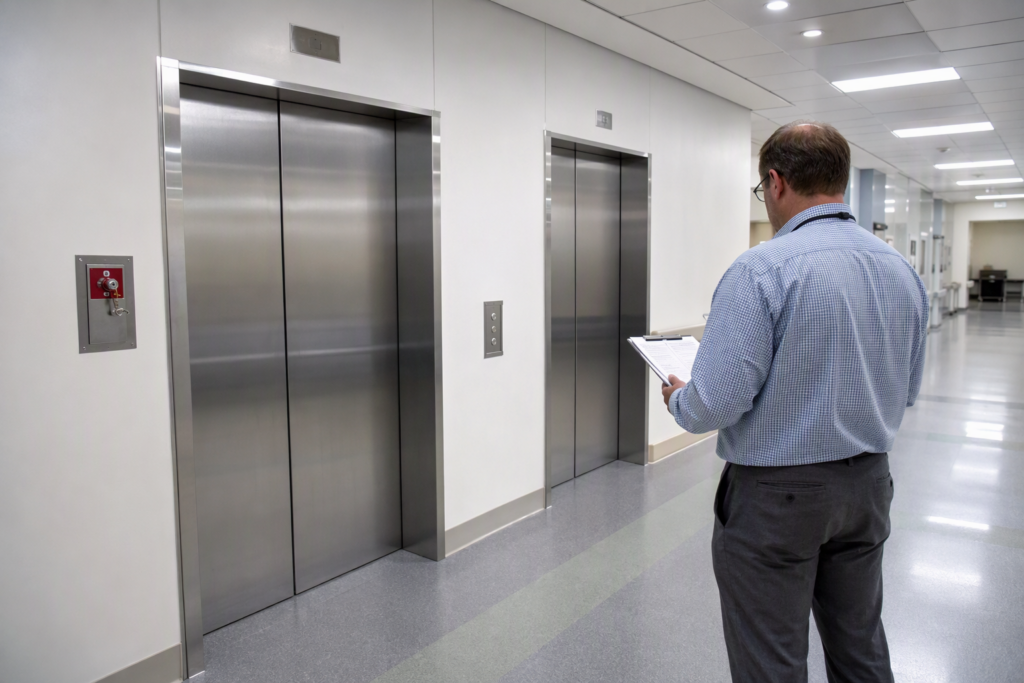
Healthcare facility managers should be prepared to answer the following questions during any elevator inspection. Having documentation ready in advance reduces inspection duration and demonstrates proactive compliance management.
- Is the current certificate of inspection posted and unexpired? Inspectors will check this immediately upon entering the cab or machine room.
- When was the last full maintenance service performed, and where is the documentation? Maintenance logs must be current and accessible.
- Have any alterations been made to the elevator since the last inspection? Alterations require permits and inspector sign-off before the elevator returns to service.
- Has the firefighters’ emergency operation (Phase I and Phase II) been tested within the required interval? Healthcare facilities are particularly scrutinized on this because of fire evacuation protocols.
- Are all cab safety features — emergency lighting, two-way communication, door reopening devices — functional? Each will be tested during the inspection.
- Is the machine room secured, properly illuminated, and free of storage materials? Machine room housekeeping is a common inspection finding in busy healthcare facilities.
- Has any equipment been replaced or major components serviced since the last inspection? Parts records and technician documentation may be requested.
- Are ADA-required features — tactile controls, audible indicators, door timing — operating correctly? ADA compliance is evaluated as part of the overall inspection in both states.
What Steps Should a Healthcare Facility Take to Prepare for an Upcoming Elevator Inspection?
- Audit all maintenance documentation at least 60 days before the inspection due date and identify any gaps in service records.
- Schedule a pre-inspection maintenance visit with a licensed elevator contractor to identify and correct mechanical deficiencies before the formal inspection.
- Test all life-safety features including emergency lighting, two-way communication systems, and firefighters’ emergency operation, documenting the results.
- Inspect the machine room for housekeeping compliance — remove any stored materials, verify lighting and ventilation are functional, and confirm the room is secured.
- Confirm ADA feature functionality including tactile buttons, audible floor announcements, door dwell times, and cab interior dimensions for any recent modifications.
- Assemble and organize all required documentation — certificates, maintenance logs, test reports, alteration permits — for inspector review.
- Brief facilities staff on inspection day protocols, including who will escort the inspector and where documentation is stored.
Healthcare facilities in Texas and California operate under a layered compliance environment where federal accessibility law, ASME safety codes, and state enforcement programs all intersect. Staying ahead of inspection schedules, maintaining thorough documentation, and partnering with a licensed elevator contractor who understands clinical operational demands is the most reliable path to continuous compliance.
AmeriTex Elevator supports healthcare facility managers across Houston, Dallas, Austin, San Antonio, Los Angeles, and San Diego with licensed inspection coordination, preventive maintenance, code compliance consulting, and emergency repair services — all documented to meet the standards required by state regulators, accreditation bodies, and federal compliance programs.
Ready to Protect Your Facility’s Elevator Compliance?
Contact AmeriTex Elevator for a free elevator assessment and let a licensed team evaluate your facility’s current compliance status, maintenance records, and upcoming inspection readiness. Reach us today at 866-679-4313.
Need elevator service you can rely on? AmeriTex Elevator is ready to help.