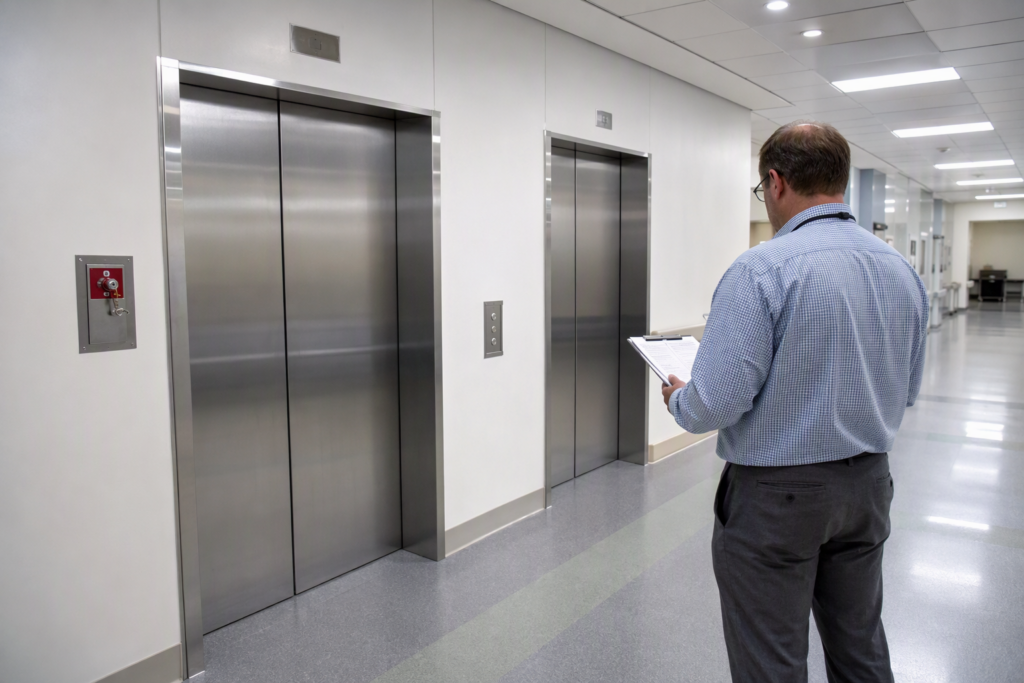
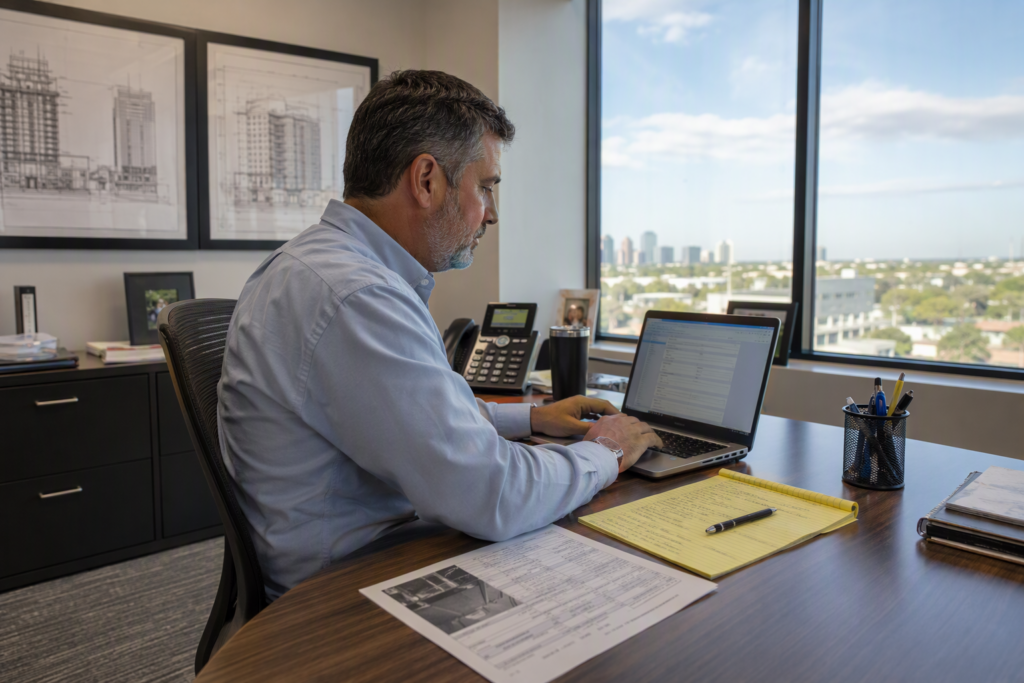
To switch elevator service companies without breaking your contract or losing inspection records, review your current contract’s termination clause and notice period, request copies of all inspection reports and maintenance logs before the transition date, confirm your new provider is properly certified in your state, and notify your local authority having jurisdiction (AHJ) of the service company change.
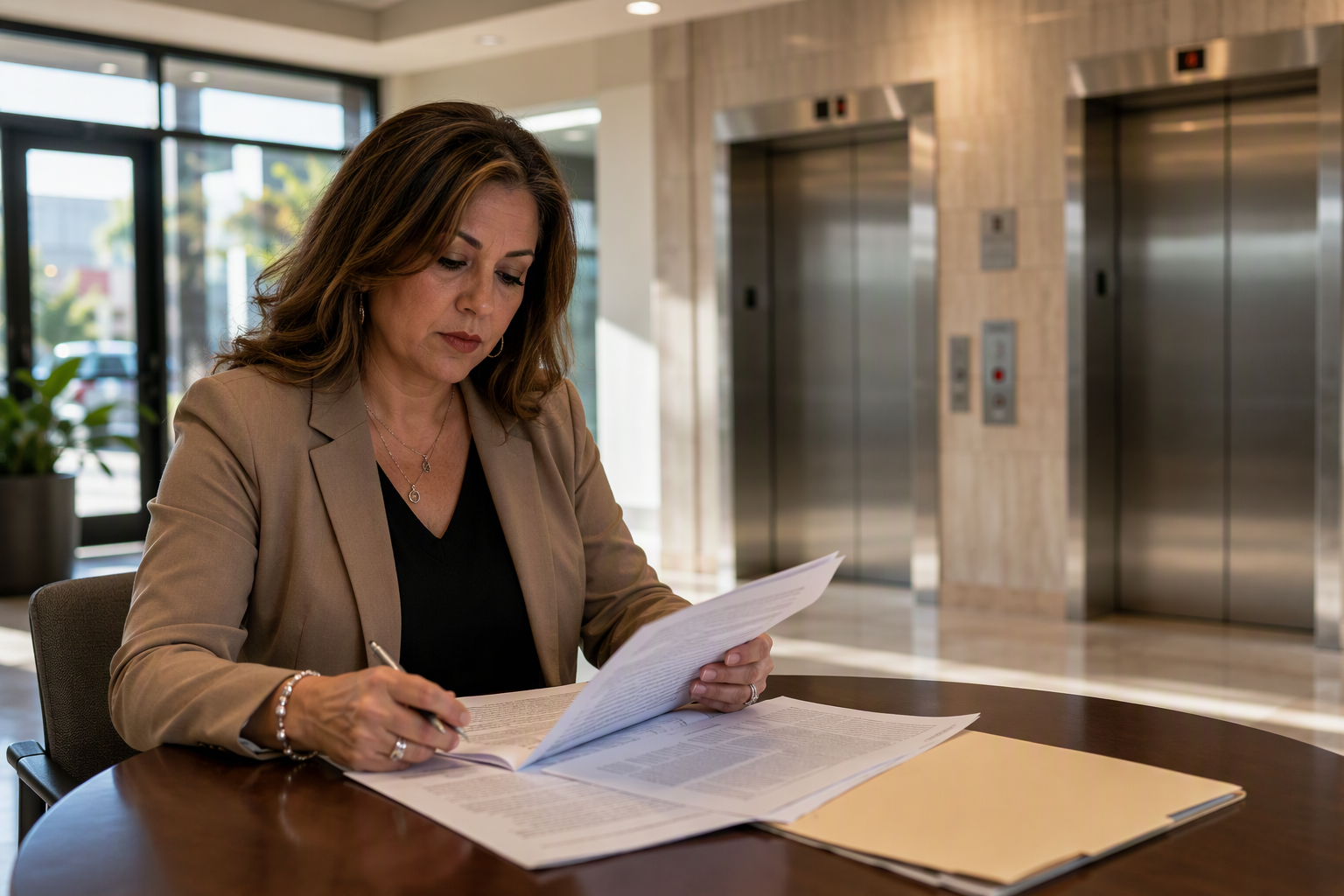
How Do I Switch Elevator Service Companies Without Breaking My Contract or Losing Inspection Records?
Switching elevator service companies is a straightforward process when building owners understand their contractual rights, regulatory obligations, and record-keeping requirements. Most elevator maintenance agreements contain specific termination provisions, and most inspection records are legally owned by the building owner — not the service company. The sections below answer every common question about making a clean, compliant transition in Texas and California.
What Does a Typical Elevator Maintenance Contract Termination Clause Say?
Most elevator maintenance contracts include a termination-for-convenience clause that requires written notice — commonly 30, 60, or 90 days — before the agreement can be ended without financial penalty.
Standard contracts from major elevator companies typically distinguish between termination for convenience and termination for cause. Termination for cause (such as repeated missed service calls or safety violations) may allow shorter notice periods or immediate cancellation. Termination for convenience requires the owner to honor the notice period and, in some cases, pay an early-termination fee if the contract has a fixed multi-year term.
Before switching, building owners should locate the original signed agreement, identify the notice period, and send written notice by a method that creates a documented timestamp — certified mail or email with read-receipt confirmation. Failure to give proper notice can trigger automatic renewal clauses common in multi-year elevator service contracts.
Who Legally Owns Elevator Inspection Records — the Building Owner or the Service Company?

Inspection records, certificates of compliance, and permits to operate are issued to the building owner by the governing regulatory authority — not to the service company — meaning the owner has the right to possess and transfer those documents at any time.
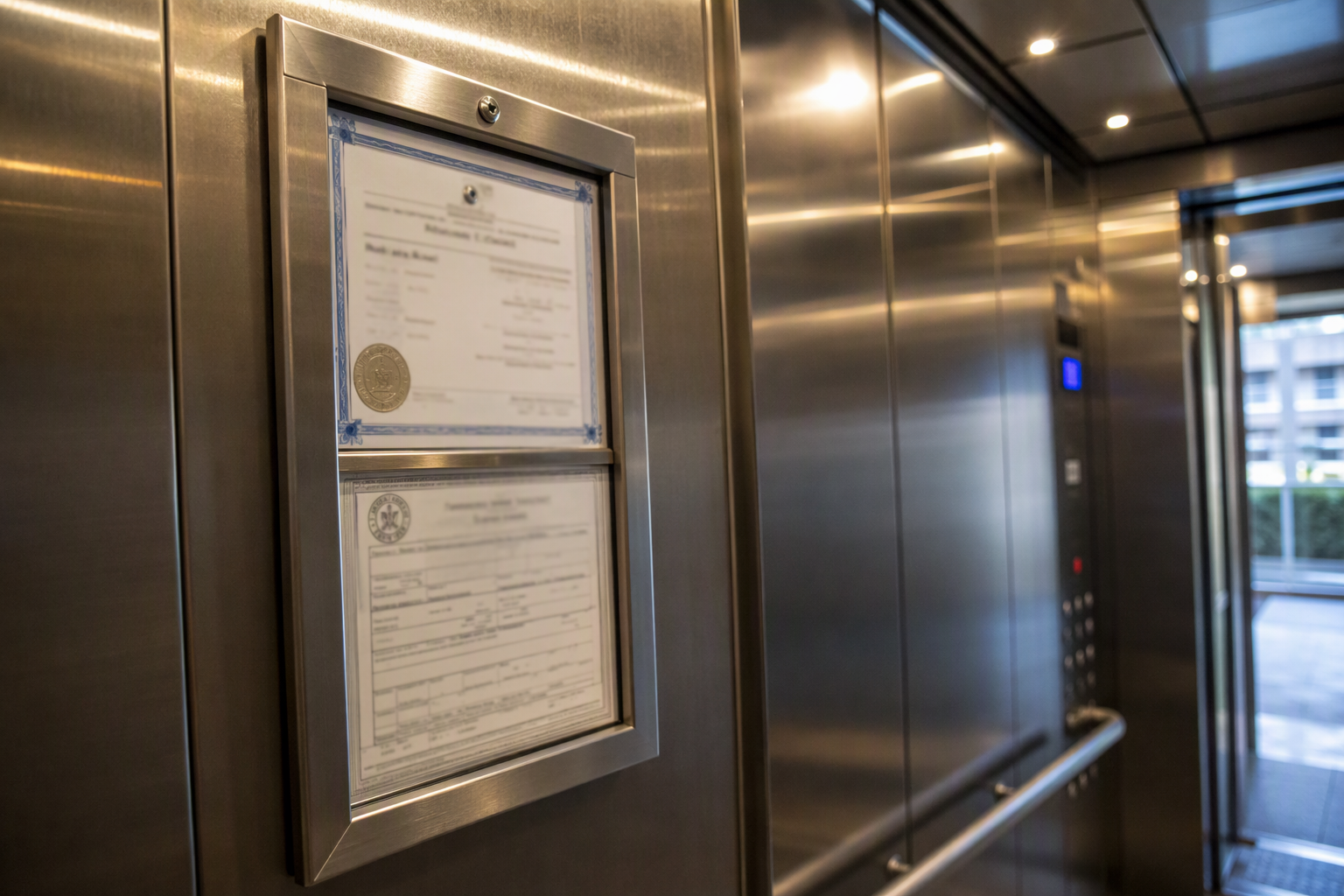
In Texas, the Texas Department of Licensing and Regulation (TDLR), Elevator and Escalator Safety program issues the Certificate of Compliance to the equipment owner under Texas Health and Safety Code Chapter 754. That certificate belongs to the owner regardless of which contractor performed the inspection. Similarly, in California, the permit to operate is issued by the Division of Occupational Safety and Health (Cal/OSHA), Elevator Unit, California Department of Industrial Relations under California Labor Code Sections 7300–7324.2. The permit must be posted conspicuously in the elevator car — it is the owner’s document.
Maintenance logs kept by a service contractor may be physically held by that contractor, but building owners should request complete copies of all logs, test reports, and work orders as part of the transition process. A reputable outgoing contractor is expected to provide these; if they refuse, the owner can obtain official inspection records directly from TDLR or Cal/OSHA.
What Records Should a Building Owner Collect Before Switching Elevator Companies?
Before finalizing a transition, building owners should gather every document that establishes the elevator’s compliance history, current condition, and pending obligations.
The following records are critical to collect:
- Current Certificate of Compliance (Texas) or permit to operate (California) for each unit
- Most recent annual inspection report, including any cited violations
- Category 5 full-load test records (required every five years in Texas for electric traction elevators)
- All maintenance logs and service records for at least the past three years
- Records of any alterations, repairs, or modernization work performed
- Outstanding violation notices or open work orders from the AHJ
- Equipment manuals, as-built drawings, and wiring diagrams if held by the contractor
- Any active waiver or delay granted by TDLR for cited violations
Gathering this documentation before the outgoing contractor’s access is terminated prevents gaps in the compliance record that can complicate future inspections or create liability for the building owner.
How Do I Switch Elevator Companies Without Triggering an Early Termination Penalty?
The most effective way to avoid an early termination penalty is to begin the switching process when the contract is approaching its natural expiration date, exercising the non-renewal option in writing within the required notice window.
Many elevator maintenance agreements auto-renew for one-year or multi-year terms unless the owner delivers written notice of non-renewal 30 to 90 days before the expiration date. Building owners who miss that window are typically locked in for another full term. Setting a calendar reminder at least 90 days before each contract anniversary is a practical safeguard.
If a contract must be terminated mid-term — for example, due to persistent safety violations or non-performance — owners should document every instance of non-performance in writing, as this evidence supports a claim of material breach, which generally allows termination without penalty. Consulting legal counsel before mid-term termination is advisable when significant financial penalties are at stake.
What Is the Step-by-Step Process for Switching Elevator Service Companies?
Following a structured process protects the building owner’s compliance standing and ensures no service gap occurs between the outgoing and incoming contractors.
- Review the current contract. Identify the termination notice period, auto-renewal clause, and any early termination fees.
- Identify and vet replacement contractors. Confirm the prospective new company holds all required certifications in your state (CQCC certification and C-11 license in California; TDLR contractor registration in Texas).
- Request proposals and compare scope of service. Ensure the new agreement covers all required inspections, testing intervals, and emergency response.
- Send written notice to the current contractor. Use certified mail or timestamped email; document the date notice was delivered.
- Request all records from the outgoing contractor. Ask for inspection reports, maintenance logs, test certificates, drawings, and manuals.
- Schedule a pre-transition assessment with the new contractor. A qualified technician should inspect each unit before assuming responsibility to document existing conditions.
- Notify the AHJ of the service company change. In Texas (outside Houston), update TDLR records as applicable. In California, notify Cal/OSHA as appropriate. In Houston and Los Angeles, contact the respective local programs.
- Confirm the new contractor’s first scheduled maintenance visit. Verify no service gap exists between the outgoing contractor’s last date of service and the new contractor’s first visit.
- Store all transferred records securely. Keep physical and digital copies of all inspection certificates, maintenance logs, and test records.
How Does the Transition Process Differ in Texas Versus California?
The regulatory frameworks in Texas and California differ in key ways that affect how building owners manage the transition, particularly regarding who oversees inspections and what certifications the incoming contractor must hold.
| Factor | Texas | California |
|---|---|---|
| State elevator regulator | TDLR, Elevator and Escalator Safety program | Cal/OSHA, Elevator Unit, CA Dept. of Industrial Relations |
| Governing statute | Texas Health and Safety Code Chapter 754 | California Labor Code Sections 7300–7324.2 |
| Adopted ASME code edition | ASME A17.1/CSA B44, 2016 edition | ASME A17.1/CSA B44, 2004 edition (Group IV Elevator Safety Orders) |
| Required contractor credential | TDLR-registered elevator contractor | Certified Qualified Conveyance Company (CQCC) + C-11 license |
| Required mechanic credential | Not verified — do not claim | Certified Competent Conveyance Mechanic (CCCM) |
| Annual inspection responsibility | Building owner selects TDLR-registered inspector | Building owner arranges; only Cal/OSHA engineers or CCCIs may inspect |
| Compliance document | TDLR Certificate of Compliance (valid one year) | Cal/OSHA permit to operate (valid up to one or two years) |
| Houston exception | TDLR does not regulate inside Houston city limits; City of Houston runs its own program | N/A |
| Los Angeles exception | N/A | Los Angeles has its own elevator and conveyance inspection program run by LADBS |
| Five-year load test requirement | Category 5 full-load test every five years (electric traction elevators) | Periodic tests required per ASME A17.1 Safety Orders |
What Certifications Must the New Elevator Service Company Hold in California?
In California, any company that installs, alters, tests, maintains, repairs, or services elevators must be certified by Cal/OSHA as a Certified Qualified Conveyance Company (CQCC) and must hold a C-11 Elevator Contractor license issued by the California Contractors State License Board (CSLB).
Additionally, any mechanic who works unsupervised on a conveyance must be certified by Cal/OSHA as a Certified Competent Conveyance Mechanic (CCCM). CQCC, CCCM, and conveyance inspector certificates are valid for two years and require at least eight hours of continuing education for renewal. Building owners in California can verify a prospective contractor’s CQCC status through the Cal/OSHA Elevator Unit before signing any agreement.
AmeriTex Elevator operates in Los Angeles and San Diego as a properly credentialed service provider. Building owners in Southern California should always request proof of CQCC certification and the C-11 license number before authorizing any work on their equipment.
What Certifications Must the New Elevator Service Company Hold in Texas?
In Texas, any person or company that installs, repairs, alters, tests, or maintains elevator equipment must be registered as a contractor with TDLR under Texas Health and Safety Code Chapter 754 and 16 Texas Administrative Code Chapter 74.
Texas elevator contractor registrations expire one year after issuance, and contractors must carry general liability insurance of at least $1,000,000 per occurrence for bodily injury or death and $500,000 per occurrence for property damage. Each registered Texas contractor must designate one or two responsible parties with at least three years of elevator contractor experience. Building owners in Dallas, Austin, and San Antonio can verify contractor registration status through the TDLR Elevator and Escalator Safety program. In Houston, where TDLR does not regulate elevators, building owners should verify compliance with the City of Houston’s own program requirements.
Will Switching Elevator Companies Affect My Annual Inspection or Certificate of Compliance?
No — the annual inspection and certificate of compliance are tied to the equipment and its owner, not to the service company, so a change in service provider does not reset the inspection schedule or invalidate an existing certificate.
In Texas, the building owner has the sole right to select the registered elevator inspector, and that selection is independent of the maintenance contractor. The Certificate of Compliance remains valid for its one-year term regardless of which contractor is servicing the equipment. In California, arranging the annual reinspection is the building owner’s responsibility, and the permit to operate issued by Cal/OSHA remains valid — up to one year, or up to two years if the elevator is covered by a full maintenance contract with a CQCC-certified company — through any service company transition.
Building owners should notify their incoming service provider of the next inspection due date so the new contractor can ensure the equipment is in compliance-ready condition before that date arrives.
Can a New Elevator Company Access My Equipment If the Old Company Installed Proprietary Parts?
Yes, a certified incoming contractor can service elevator equipment regardless of which company originally installed it, though proprietary diagnostic software or branded components may require additional steps to address.
Some major elevator manufacturers install proprietary control systems that require manufacturer-specific software tools to diagnose fault codes or adjust parameters. While this does not prevent a qualified independent contractor from performing mechanical maintenance, it can limit the depth of electronic diagnostics without those tools. Building owners transitioning away from an OEM service contract should ask the incoming contractor specifically about their capability to service the installed controller brand and whether any diagnostic adapters or software licenses are required.
Under the ASME A17.1 Safety Code for Elevators and Escalators, all elevator equipment must be maintained in a safe operating condition regardless of who performs the work. Proprietary lock-in does not remove that obligation from the building owner.
What Happens to Open Violations or Pending Work Orders When I Switch Companies?
Open violations and pending corrective work orders remain the building owner’s legal obligation regardless of which service company is engaged — the incoming contractor assumes responsibility for addressing them going forward, but the owner is accountable to the AHJ for resolution.
In Texas, building owners must have cited violations corrected or under contract to be corrected within 30 days of inspection, or obtain a waiver or delay from TDLR. If a violation is open at the time of the transition, the new contractor must be briefed immediately so corrective work can begin within the regulatory deadline. Failure to resolve open violations is the building owner’s liability, not the departing contractor’s — a fact that underscores the importance of collecting complete records before the transition is finalized.
AmeriTex Elevator recommends that building owners in Dallas, Austin, San Antonio, Houston, Los Angeles, and San Diego request a pre-transition compliance audit so that any open items are identified and scheduled for resolution before the outgoing contractor’s last service date.
How Long Does It Take to Switch Elevator Service Companies?
The timeline to switch elevator service companies typically ranges from 30 to 90 days, driven primarily by the notice period in the existing contract rather than regulatory processing time.
The regulatory steps — verifying the new contractor’s credentials, transferring records, and notifying the AHJ — can generally be completed within one to two weeks. The controlling factor is almost always the contractual notice period. Building owners who plan the transition to coincide with the natural contract expiration can often make the change with no financial penalty and a seamless handoff. Those who need to exit mid-term should factor in additional time for negotiations or legal review if the contract contains a significant termination fee.
Should I Get Multiple Quotes Before Switching Elevator Service Companies?
Yes — obtaining at least two to three written proposals from certified contractors ensures the building owner can compare scope of service, maintenance frequency, emergency response terms, and compliance guarantees on an equal basis.
When comparing proposals, building owners should evaluate more than the monthly service fee. Key factors include the specific maintenance tasks included in the base contract versus billed separately, whether the contractor performs all required periodic tests (such as the Category 5 five-year test in Texas), how violations found during inspections are handled, and whether the contract includes prorated parts coverage. A low headline price can become expensive if core services are excluded and billed as extras.
Does Switching Elevator Companies Affect ADA Compliance?
Switching service companies does not change ADA obligations — those obligations attach to the building owner under federal law and remain constant regardless of which contractor maintains the equipment.
Under the Americans with Disabilities Act (ADA), building owners must ensure elevators providing access to programs and services are maintained in working order and that outages are resolved promptly. When onboarding a new service provider, owners should confirm that the incoming contractor understands any existing ADA-related modifications — such as Braille controls, audible floor indicators, or leveling requirements — and that those features are included in the ongoing maintenance scope.
What Questions Should I Ask a Prospective Elevator Service Company Before Signing a New Contract?
Before signing any new elevator maintenance agreement, building owners should ask a defined set of due-diligence questions to confirm the contractor’s credentials, scope, and compliance approach.
- Are you registered with TDLR (Texas) or certified as a CQCC with Cal/OSHA (California)?
- Do your mechanics hold CCCM certification (required in California)?
- What is your process for handling open violations at transition?
- Does your contract include all required periodic tests, including the Category 5 five-year test for traction elevators in Texas?
- How do you handle equipment with proprietary control systems?
- What is the notice period and termination clause in your proposed agreement?
- How do you document and deliver maintenance records to the owner?
- What is your protocol when an inspector cites a violation during the annual inspection?
- Do you carry the minimum required liability insurance coverage?
- Can you provide references from buildings with similar equipment types and sizes?
What Should I Look for in a New Elevator Maintenance Agreement to Avoid Future Switching Problems?
A well-structured elevator maintenance agreement should include clear termination provisions, record-ownership language, and an explicit scope of services so the building owner retains flexibility and compliance control throughout the contract term.
Specifically, the agreement should state that all inspection reports, maintenance logs, and test records generated under the contract are the property of the building owner and will be delivered in full within a defined period upon termination. Contracts that do not address record ownership can create disputes when transitioning. Auto-renewal clauses should be noted and calendared, and any multi-year agreement should include a performance-based early termination right that does not require payment of the remaining contract value if the contractor fails to perform required maintenance visits.
How Do Local Authority Having Jurisdiction (AHJ) Rules Affect the Switching Process in Houston and Los Angeles?
Houston and Los Angeles each operate their own elevator inspection and permitting programs that function independently of the state-level regulators, meaning building owners in those cities must follow local requirements in addition to — or in place of — state processes when switching service companies.
In Houston, TDLR does not regulate elevators or escalators within the city limits; the City of Houston administers its own program. Building owners in Houston should contact the City’s elevator program directly to understand notification requirements when changing service contractors and to confirm how inspection records are maintained locally. In Los Angeles, the Los Angeles Department of Building and Safety (LADBS) runs its own elevator and conveyance inspection program. Building owners in Los Angeles should confirm with LADBS what, if any, notifications are required when a service company changes. AmeriTex Elevator serves both Houston and Los Angeles and is familiar with the local program requirements in each market.
How Do I Ensure No Lapse in Elevator Safety Coverage During the Transition?
To prevent a safety coverage gap, building owners should schedule the new contractor’s first maintenance visit to occur on or before the outgoing contractor’s last service date, and should confirm emergency callback coverage is active from day one of the new agreement.
A gap in maintenance coverage — even a short one — can create liability exposure if an incident occurs and no contractor is under agreement to respond. Before the outgoing contractor’s final day, confirm in writing the exact date their obligations end. Simultaneously, confirm in writing the exact date the incoming contractor’s obligations begin. These two dates should be contiguous or overlapping, never separated by an uncovered period.
Building owners should also verify that the new contractor has reviewed the equipment’s current condition and any open items before the transition date. AmeriTex Elevator offers pre-transition assessments for buildings in Houston, Dallas, Austin, San Antonio, Los Angeles, and San Diego to establish baseline condition documentation before assuming service responsibility.
What Federal Code Standards Govern Elevator Maintenance Regardless of Which Company Services the Equipment?
The ASME A17.1 Safety Code for Elevators and Escalators establishes the foundational maintenance, inspection, and testing requirements that apply regardless of which service company holds the contract.
Both Texas (adopting the 2016 edition of ASME A17.1/CSA B44) and California (adopting the 2004 edition under the Group IV Elevator Safety Orders, with a proposed Group V update incorporating ASME A17.1-2019 pending as of 2026) have incorporated ASME A17.1 into their regulatory frameworks. The code defines periodic inspection intervals, test categories, and maintenance procedures that any certified contractor must follow. OSHA standards also apply to elevator construction and maintenance worksites from a worker safety perspective. Building owners should confirm that any incoming service contractor can demonstrate familiarity with the applicable adopted edition of ASME A17.1 in their state.
Why Do Building Owners in Texas and California Trust AmeriTex Elevator for Service Transitions?
AmeriTex Elevator provides certified elevator maintenance and compliance services across Houston, Dallas, Austin, San Antonio, Los Angeles, and San Diego, with a structured transition process designed to protect building owners’ compliance records and prevent coverage gaps.
When a building owner contacts AmeriTex Elevator about switching service companies, the process begins with a review of the current contract’s termination requirements, followed by a pre-transition equipment assessment to document existing conditions and identify any open compliance items. AmeriTex Elevator then works with the building owner to ensure all required records are transferred from the outgoing contractor, that any open violations are scheduled for correction within regulatory deadlines, and that the first maintenance visit is coordinated to eliminate coverage gaps. The company holds the certifications required by Cal/OSHA in California and operates as a TDLR-registered contractor in Texas markets outside Houston, where it also services equipment under Houston’s local program requirements.
Contact AmeriTex Elevator for a Free Elevator Assessment
Building owners in Houston, Dallas, Austin, San Antonio, Los Angeles, and San Diego who are ready to switch elevator service companies — or who simply want an independent review of their current compliance standing — can contact AmeriTex Elevator for a no-cost elevator assessment. A certified technician will evaluate the equipment, review existing inspection records, identify any open compliance items, and provide a clear picture of what a transition would involve before any commitment is made.
Call AmeriTex Elevator today: 866-679-4313
AmeriTex Elevator serves commercial, residential, and mixed-use property owners across Texas and California. All service is performed in accordance with the applicable adopted edition of the ASME A17.1 Safety Code for Elevators and Escalators, California’s Elevator Safety Orders under Cal/OSHA, and the TDLR Elevator and Escalator Safety program requirements in Texas.
Need elevator service you can rely on? AmeriTex Elevator is ready to help.