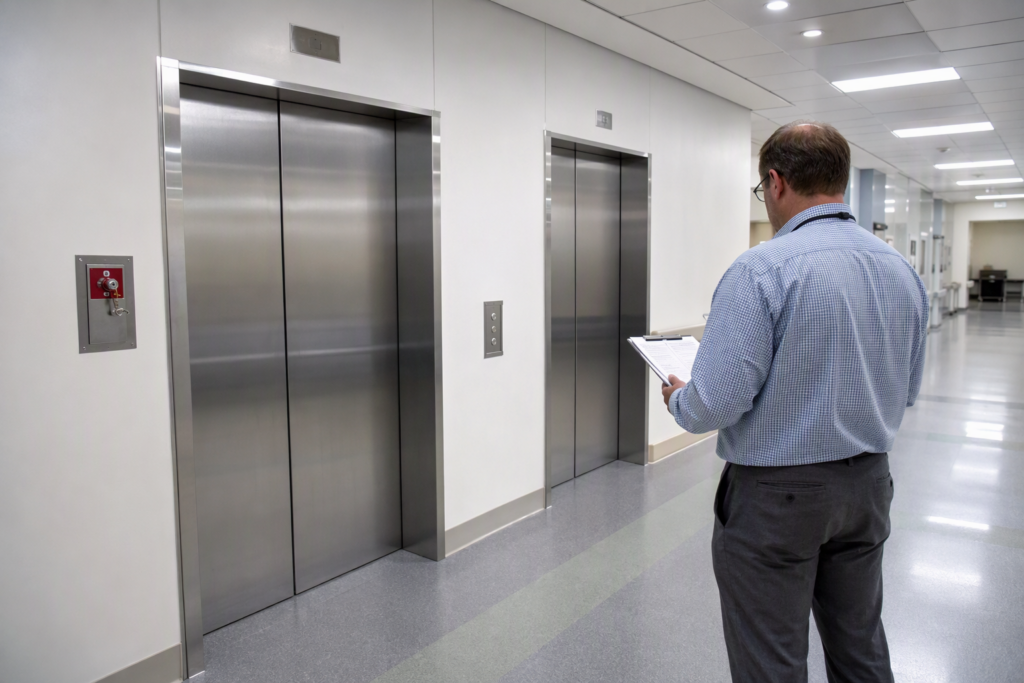
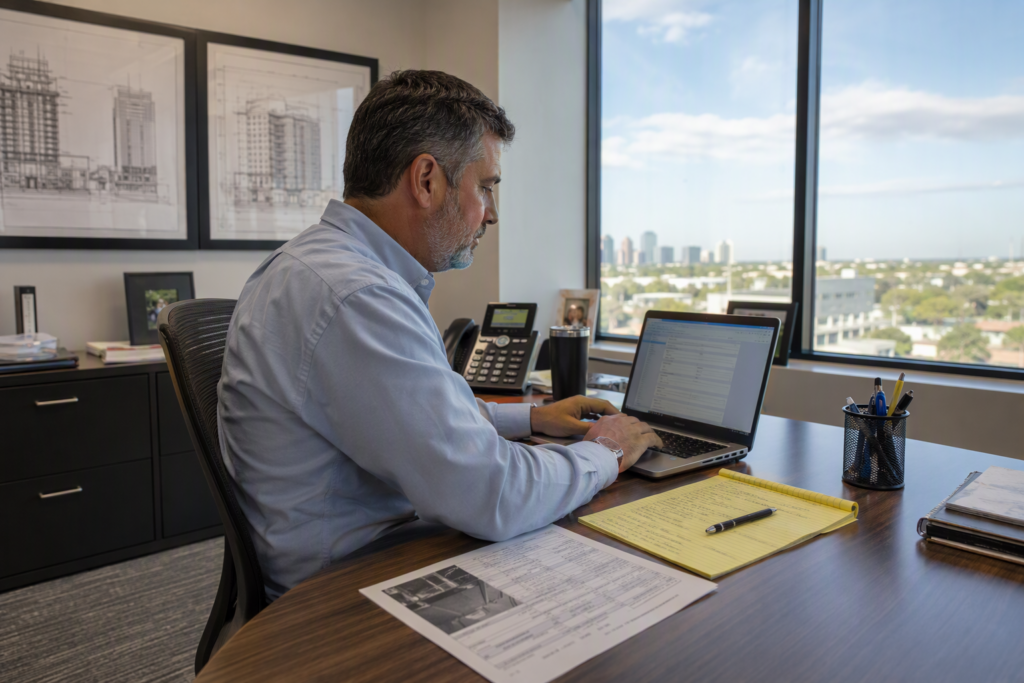
To manage elevator maintenance and repairs across a multi-building portfolio without overpaying or losing track of compliance, owners should consolidate service under a single certified contractor, implement a centralized compliance calendar tracking inspection due dates and certificate renewals for every unit, negotiate portfolio-level maintenance agreements, and establish a standardized documentation protocol that captures every inspection report, violation notice, and corrective action across all properties.

How Do I Manage Elevator Maintenance and Repairs Across Multiple Buildings Without Overpaying or Losing Track of Compliance?
Property owners and portfolio managers overseeing elevators in multiple buildings face a compounding challenge: every unit has its own inspection clock, certificate expiration, maintenance history, and regulatory authority. When those details live in different files, emails, or vendors’ systems, violations slip through, emergency repairs spike, and costs escalate. The sections below address every dimension of this challenge — from code requirements in Texas and California to benchmarking maintenance contracts, choosing vendors, and building a compliance system that scales.
What is the single most important first step for a property owner managing elevators across multiple buildings?
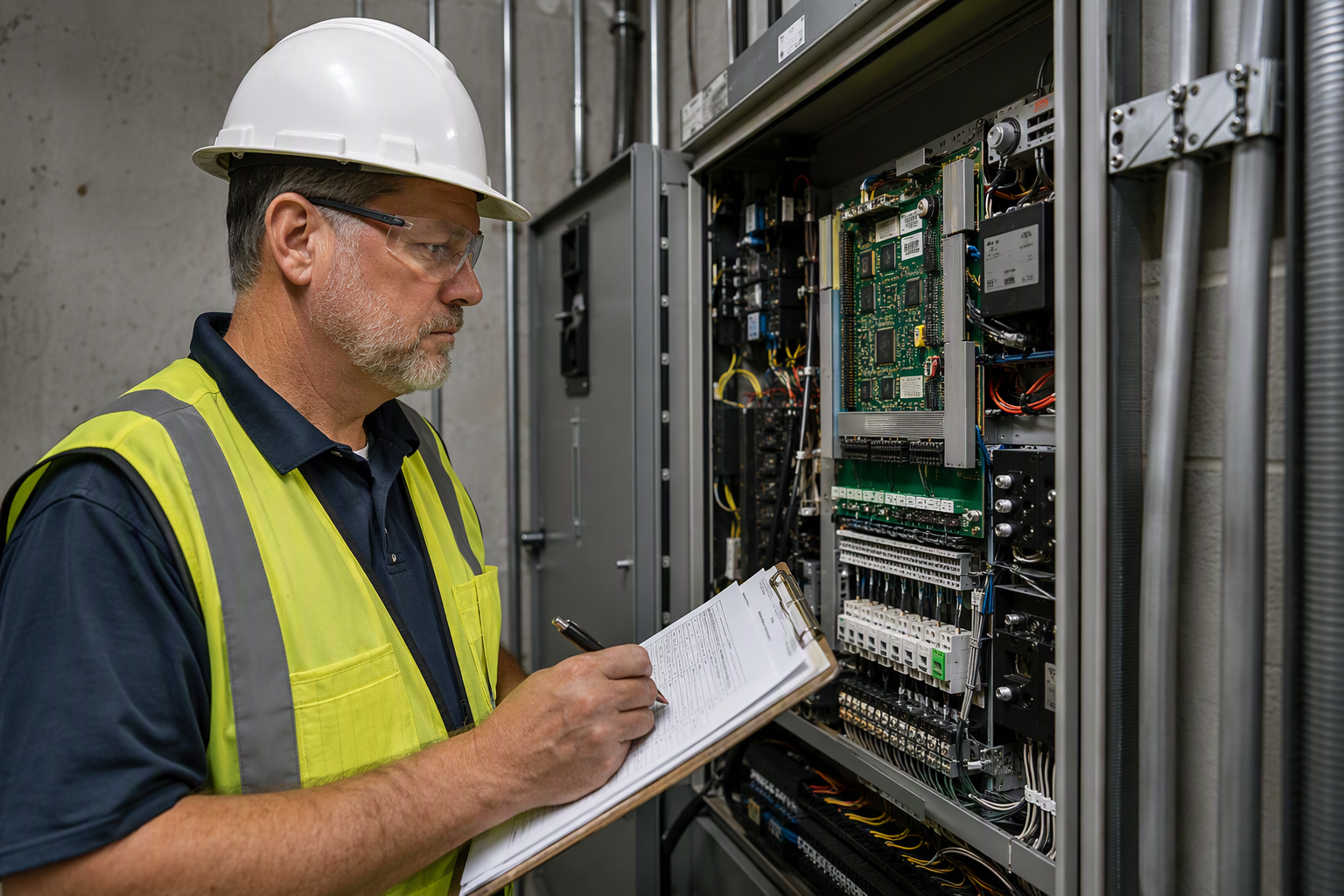
The most important first step is creating a master asset register — a single document listing every elevator unit by building, unit ID, jurisdiction, next inspection due date, current certificate expiration, and assigned contractor.
Without this foundation, compliance gaps are nearly invisible until a violation notice or shutdown order arrives. A master asset register does not need to be sophisticated software; a well-maintained spreadsheet organized by property, jurisdiction, and certificate expiration date is enough to eliminate most tracking failures. Once the register exists, it becomes the backbone of every other system described on this page.
Owners with properties in both Texas and California should note that regulatory agencies, inspection intervals, and certificate types differ materially between the two states — and within Texas, Houston operates its own program separate from the statewide Texas Department of Licensing and Regulation (TDLR) elevator program. A register that captures the applicable authority for each unit prevents the common mistake of applying the wrong compliance calendar to the wrong property.
How often are elevators required to be inspected in Texas and California?

Both Texas and California require elevators to be inspected at least once per year, though California provides a pathway to a two-year permit under specific conditions.
In Texas, building owners must have elevators inspected annually by a TDLR-registered elevator inspector operating under Texas Health and Safety Code Chapter 754 and 16 Texas Administrative Code Chapter 74. The inspector is not a TDLR employee; Texas law gives the building owner the sole right to select the inspector. After the inspection, the inspector must deliver the inspection report within five calendar days, and owners must obtain a TDLR Certificate of Compliance for each unit, which is valid for one year. Importantly, TDLR does not regulate elevators inside Houston city limits — properties in Houston operate under the City of Houston’s own elevator program, so Houston portfolio managers must track a separate authority.
In California, every conveyance must be inspected at least once per year under California Labor Code Sections 7300–7324.2 and the California Code of Regulations, Title 8, Elevator Safety Orders (Sections 3000–3146). A conveyance found safe receives a permit to operate for up to one year. However, Cal/OSHA may issue a permit valid for up to two years if the elevator is in safe condition and covered by a full maintenance contract with a C-11 licensed elevator company — a meaningful incentive for portfolio owners to maintain comprehensive service agreements. Arranging the annual reinspection is the elevator owner’s responsibility, not the contractor’s. Los Angeles additionally runs its own elevator and conveyance inspection program through the City of Los Angeles Department of Building and Safety (LADBS), so LA properties carry a dual compliance obligation.
What happens if a compliance deadline is missed or a violation goes uncorrected?
Missed compliance deadlines and uncorrected violations expose property owners to unit shutdowns, fines, and in Texas, mandatory removal from service for specific safety deficiencies.
In Texas, owners must have cited violations corrected — or under a binding contract to be corrected — within 30 days of the inspection, or they must obtain a waiver or delay from TDLR. Certain deficiencies carry zero tolerance: a passenger elevator without working door restrictors must be removed from service immediately, and a passenger elevator without functioning firefighters’ service (Phase One) must likewise come out of service immediately. Texas owners must also report any accident involving elevator equipment to TDLR within 24 hours.
In California, no elevator may be operated without a valid, current permit to operate issued by Cal/OSHA. Operating without a valid permit is a violation of California Labor Code. The permit must be posted conspicuously inside the elevator car, making non-compliance visible to building occupants and inspectors alike.
For portfolio managers, the practical risk multiplies: a single missed inspection across ten buildings is ten potential shutdown orders. A centralized compliance calendar with 60-day, 30-day, and 7-day advance alerts for every certificate expiration is the minimum control for a portfolio of any size.
What certifications should a property owner require from any elevator contractor before signing a maintenance agreement?
In California, any company performing maintenance, repair, alteration, or testing on elevators must be certified by Cal/OSHA as a Certified Qualified Conveyance Company (CQCC) and hold a C-11 Elevator Contractor license issued by the California Contractors State License Board (CSLB).
Beyond that, every mechanic working unsupervised on an elevator in California must be individually certified by Cal/OSHA as a Certified Competent Conveyance Mechanic (CCCM). CQCC, CCCM, and conveyance inspector certificates expire every two years, and renewal requires at least eight hours of continuing education. Owners should request current certificate numbers and expiration dates before any work begins and re-verify at each contract renewal.
In Texas, any person or company installing, repairing, altering, testing, or maintaining elevator equipment must be registered as a contractor with TDLR. Texas elevator contractor registrations expire one year after issuance. Texas elevator contractors must also carry general liability insurance of at least $1,000,000 per occurrence for bodily injury or death and $500,000 per occurrence for property damage, and each contractor must designate one or two responsible parties with at least three years of elevator contractor experience.
AmeriTex Elevator maintains the required state certifications and registrations to operate across its Texas and California markets, giving portfolio owners a contractor that understands the compliance landscape in each jurisdiction.
What is the difference between a full maintenance contract and a basic service agreement, and which is better for a large portfolio?
A full maintenance contract covers all parts, labor, and callbacks under a fixed monthly fee, while a basic service agreement typically covers only routine inspections and lubrication, billing parts and major repairs separately — and California law specifically rewards full maintenance contracts with a potential two-year permit.
For large portfolios, full maintenance contracts offer several structural advantages: predictable budgeting, faster response to breakdowns because the contractor has no financial incentive to delay, and — in California — the specific Cal/OSHA benefit of eligibility for a two-year permit to operate rather than the standard one-year permit. That longer permit interval reduces the administrative burden and the frequency of reinspection coordination for California properties.
The tradeoff is a higher fixed monthly cost. The relevant benchmark question for any portfolio owner is whether the premium over a basic agreement is offset by avoided emergency repair billings, reduced downtime, and administrative savings from less frequent reinspections. For high-use commercial or multifamily buildings, full maintenance contracts typically produce lower total cost of ownership.
What does the ASME A17.1 Safety Code require, and how does it apply to Texas and California properties?
The ASME A17.1/CSA B44 Safety Code for Elevators and Escalators is the foundational federal model code governing elevator design, installation, inspection, testing, and maintenance, and both Texas and California have adopted specific editions of it as state law.
Texas adopted the ASME A17.1/CSA B44, 2016 edition, as amended by 16 TAC §74.100(b), effective November 1, 2018. California adopted the ASME A17.1/CSA B44, 2004 edition under its Group IV Elevator Safety Orders, effective May 1, 2008, for installation contracts signed on or after that date. As of 2026, California has proposed a Group V update that would incorporate portions of ASME A17.1-2019; a public hearing was held on June 18, 2026, and no effective date has been posted.
The practical implication for portfolio owners is that the same physical elevator type may be subject to different code editions depending on whether it is in a Texas or California property, affecting what tests are required, at what intervals, and to what standard. Contractors must know which edition applies to each unit — a critical reason to work with a contractor who is active in both states rather than one who is only familiar with a single jurisdiction.
What is a Category 5 test and which properties in a portfolio are required to have one?
A Category 5 test is a full-load safety test of an elevator’s governor, safeties, and braking systems, and in Texas it is required every five years for electric (traction) elevators.
This test is among the most operationally disruptive and potentially costly tests in an elevator’s maintenance cycle because it takes the elevator out of service for a full test period and may reveal components in need of replacement before the test can be passed. Portfolio owners with multiple traction elevators should stagger their Category 5 test schedules to avoid simultaneous outages across buildings, and they should budget for potential component repairs in the years leading up to each test cycle. Proactive maintenance — replacing aging components before a Category 5 test — is consistently less expensive than emergency repairs discovered during the test itself.
Property owners planning acquisitions should always request the Category 5 test history and the next scheduled test date as part of elevator due diligence, since an overdue Category 5 is a known liability that should be reflected in purchase negotiations.
How should a property owner structure a vendor relationship to avoid overpaying across a multi-building portfolio?
Portfolio owners should consolidate maintenance across as many units as possible with a single qualified contractor, negotiate a portfolio-level rate structure, and require transparent itemized billing for all out-of-scope work.
Consolidation creates leverage: a contractor securing a multi-building agreement has an incentive to price competitively on a per-unit basis compared to the same contractor managing each building as a standalone account. Before consolidating, owners should confirm that the contractor holds all required certifications in every jurisdiction where the portfolio operates — including separate CQCC certification and C-11 license for California properties and TDLR contractor registration for Texas properties (with the additional note that Houston requires compliance with its own municipal program).
Beyond rate negotiation, owners should require full transparency on proprietary parts pricing. Some contractors use non-standard or proprietary components that make competitive bidding on repairs difficult. Contracts should specify that parts will be sourced at documented market cost with a defined markup cap, and that the owner retains the right to competitive bids on major repair projects above a defined dollar threshold.
What compliance documents should a property owner keep on file for each elevator unit?
For every elevator unit in a portfolio, owners should maintain the current certificate of compliance or permit to operate, the most recent inspection report, a log of all maintenance visits, records of any violation notices and corrective actions, and documentation of any major repairs or alterations.
| Document | Texas Requirement | California Requirement | Recommended Retention Period |
|---|---|---|---|
| Certificate of Compliance / Permit to Operate | Required; displayed publicly in building; valid 1 year | Required; posted in elevator car; valid up to 1 year (up to 2 years with full maintenance contract) | Keep all historical certificates indefinitely |
| Annual Inspection Report | Inspector must deliver within 5 calendar days of inspection | Required for permit renewal | Minimum 5 years; longer recommended |
| Violation Notice & Corrective Action Record | Violations must be corrected or under contract within 30 days | Required to maintain permit to operate | Until resolution plus 5 years |
| Maintenance Log | Best practice; supports contractor accountability | Supports CQCC/CCCM compliance verification | Life of unit |
| Category 5 Test Record (Traction Elevators) | Required every 5 years | Per applicable ASME A17.1 edition | Life of unit |
| Accident Report | Must be reported to TDLR within 24 hours of incident | Per Cal/OSHA requirements | Indefinitely; litigation risk |
| Contractor Certification Records | TDLR registration; liability insurance certificates | CQCC certificate; C-11 license; CCCM certificates | Duration of contract plus 3 years |
In California, the permit to operate must be posted conspicuously inside the elevator car — a requirement that building management should verify at every routine property inspection rather than waiting for an official audit.
What ADA requirements apply to elevators in commercial buildings?
The Americans with Disabilities Act (ADA) requires that elevators serving multiple floors in most commercial buildings be accessible, with specific requirements governing cab dimensions, door timing, controls, and audible and visual floor indicators.
Portfolio owners with older buildings should note that ADA compliance is an ongoing obligation, not a one-time installation check. Control panel heights, Braille markings, door reopening device sensitivity, and emergency communication systems are common ADA deficiency areas found during modernization assessments. The ADA’s elevator exemption for buildings with fewer than three stories or fewer than 3,000 square feet per floor does not apply to shopping centers, shopping malls, professional offices of healthcare providers, or transit facilities — a nuance that catches some small-building owners off guard.
When elevator modernization is planned for any building in the portfolio, ADA compliance should be part of the scope review. Addressing ADA items during a planned modernization is far less expensive than a standalone ADA retrofit driven by a complaint or enforcement action.
What steps should a property owner take immediately after an elevator accident or entrapment?
After any elevator accident or entrapment, property owners should follow a defined protocol to protect occupants, preserve evidence, and meet reporting obligations.
- Ensure the safety of all occupants. Contact emergency services if anyone is injured or entrapped.
- Take the elevator out of service immediately after the incident is resolved and before any evidence is disturbed.
- In Texas, report the accident to TDLR within 24 hours of the incident as required by law.
- In California, follow the notification requirements under Cal/OSHA’s Elevator Safety Orders.
- Do not allow the elevator to be returned to service until a qualified inspector or contractor has assessed and cleared it.
- Preserve all maintenance records, inspection reports, and video footage related to the elevator and the incident.
- Document the incident in writing, including witness statements, time, and conditions.
- Engage a TDLR-registered or CQCC-certified contractor (as applicable) to perform a post-incident technical assessment before restoration of service.
Failure to take the elevator out of service after a known safety incident, or returning it to service without clearance, increases both regulatory and civil liability exposure significantly.
How does a property owner in Houston manage elevator compliance differently from the rest of Texas?
Properties within Houston city limits are regulated by the City of Houston’s own elevator program, not by TDLR — meaning the statewide TDLR Certificate of Compliance, inspection, and contractor registration requirements that apply elsewhere in Texas do not govern Houston elevators.
Houston portfolio managers must maintain a separate compliance track for their Houston properties, with inspection and permitting obligations directed to the City of Houston rather than TDLR. The inspection authority, forms, inspector qualifications, and certificate types are specific to the City of Houston’s program. Owners who manage buildings both inside and outside Houston should ensure their compliance calendar distinguishes between Houston properties and TDLR-regulated properties, because the agencies, timelines, and requirements are different. Working with a contractor that has active experience in Houston’s municipal program — in addition to TDLR-regulated markets — is essential for portfolio owners with mixed-location Texas assets.
What is the best way to budget for elevator repairs and maintenance across a large portfolio?
Effective multi-building elevator budgeting requires a rolling five-year capital plan for each unit, separating predictable maintenance costs from capital repair and modernization cycles, with reserves sized to the age and usage intensity of each elevator.
The key budget line items to track separately for each unit include: monthly maintenance contract cost, annual inspection and permit fees, periodic mandatory tests (such as the Texas Category 5 five-year cycle), and a capital reserve for component replacement and eventual modernization. Older traction elevators approaching the end of their control system or hydraulic jack service life should have dedicated replacement reserves rather than relying on the maintenance contract budget.
Portfolio owners should request a condition assessment from their elevator contractor for every unit in the portfolio — not just the newest or most problematic — so that upcoming capital needs are visible before they become emergency expenditures. AmeriTex Elevator offers portfolio assessments for property owners in Houston, Dallas, Austin, San Antonio, Los Angeles, and San Diego, providing a property-by-property picture of current condition and projected maintenance obligations.
When does an elevator require modernization rather than ongoing repair?
An elevator typically warrants modernization when recurring repair costs approach or exceed the cost of modernization amortized over its expected extended service life, or when the unit can no longer meet current code requirements with individual repairs.
Common indicators that modernization is more cost-effective than continued repairs include: obsolete relay logic or solid-state controls for which replacement parts are no longer manufactured, hydraulic jack cylinders approaching the end of their service life, recurring door operator failures that indicate worn system-wide components, and repeated callback patterns that point to systemic rather than isolated failures. Modernization also creates an opportunity to bring the elevator into compliance with current ADA requirements and applicable ASME A17.1 standards, which may trigger additional code obligations under the adopted edition in Texas or California.
Before committing to a modernization scope, owners should request a detailed specification from a qualified contractor that distinguishes between items required for code compliance, items that improve reliability, and items that represent elective upgrades — so the scope and cost can be evaluated clearly.
How should a property manager evaluate competing elevator service proposals to avoid hidden costs?
Evaluating elevator service proposals requires a standardized comparison framework that normalizes scope, exclusions, parts sourcing, and escalation terms across every vendor response.
The most common sources of hidden cost in elevator maintenance contracts include: exclusions for specific high-cost components (controllers, door operators, hydraulic units) that are bundled into the quoted scope by some vendors but excluded by others; automatic annual price escalation clauses that compound significantly over a multi-year term; labor rate caps that apply only during standard business hours, with premium rates applying to after-hours callbacks; and proprietary parts requirements that eliminate competitive bidding on future repairs. A proposal comparison should address every one of these items explicitly before a contract is signed.
Requesting a detailed exclusions list — not just a list of inclusions — is one of the most effective due diligence steps a property manager can take. Two proposals with identical headline prices can have materially different expected total costs over a three-to-five year contract term once exclusions and escalation terms are modeled.
What role does preventive maintenance play in reducing emergency repair costs across a portfolio?
Preventive maintenance reduces emergency repair frequency by addressing component wear on a scheduled basis before failures occur, and it is the single most effective lever available to portfolio owners for controlling elevator operating costs over time.
Elevator systems accumulate wear in predictable patterns: door mechanisms, guide shoes, buffers, and hydraulic seals all have finite service intervals. A maintenance program that inspects, adjusts, and replaces components on schedule keeps the elevator operating within design parameters, extends the intervals between major repairs, and reduces the likelihood of safety-related shutdowns that create both operational disruption and regulatory exposure. For portfolio managers, consistency of preventive maintenance across all buildings — not just the highest-traffic ones — is the key discipline, because a single neglected low-use elevator that experiences a failure can generate disproportionate cost and liability.
How do new elevator installations in Texas and California trigger regulatory requirements?
Both Texas and California impose permit and inspection requirements before a new elevator can be placed in service, and these requirements begin before installation, not after.
In Texas, a registered contractor must submit plans to TDLR and obtain approval before installing an elevator or escalator. In California, a permit from Cal/OSHA is required before a conveyance is erected, installed, or materially altered, and each new elevator must be inspected by Cal/OSHA and receive a permit to operate before it is placed in service. Only State of California safety engineers and Certified Competent Conveyance Inspectors (CCCI) may perform elevator inspections in California.
Portfolio owners planning new construction or building acquisitions with planned elevator installations should build regulatory lead time into their project schedules. Permit approval and inspection scheduling are not instantaneous, and delays at either stage can affect occupancy timelines for new developments.
What should property owners know about elevator safety in multi-tenant commercial buildings under OSHA?
The federal Occupational Safety and Health Administration (OSHA) has jurisdiction over elevator safety hazards in workplace settings, including requirements related to elevator machine room access, lockout/tagout procedures during maintenance, and safe working conditions for elevator mechanics.
Building owners and property managers have a general duty obligation under OSHA to maintain a workplace free from recognized hazards. For elevators, this means ensuring that machine rooms are kept secure, that work on elevator equipment is performed only by qualified and properly certified personnel, and that lockout/tagout procedures are enforced during any maintenance or repair work. OSHA jurisdiction applies in addition to — not instead of — state-level regulatory requirements under TDLR or Cal/OSHA’s Elevator Unit, so multi-building portfolio owners should confirm that their elevator contractor’s standard operating procedures comply with federal OSHA lockout/tagout and confined space standards as well as applicable state elevator codes.
How can a property owner verify that a contractor is performing the maintenance that the contract requires?
Owners can verify contractor performance through a combination of maintenance logs, third-party inspections, callback rate tracking, and periodic unannounced site visits during scheduled maintenance calls.
Every maintenance visit should produce a written record identifying the technician, the date, the work performed, and any conditions noted for follow-up. In California, work must be performed by a Certified Competent Conveyance Mechanic (CCCM) working for a Certified Qualified Conveyance Company (CQCC); owners can verify CCCM credentials through Cal/OSHA. In Texas, work must be performed by a TDLR-registered contractor; contractor registrations can be verified through the TDLR public database at the TDLR elevator program page. A pattern of increasing callback frequency or repeat failures for the same component is a leading indicator that preventive maintenance is not being performed to contract standards, and it warrants a direct conversation with the contractor or an independent assessment.
What is the process for switching elevator service contractors across a multi-building portfolio?
Switching elevator contractors across a portfolio requires a structured transition process to avoid gaps in coverage, certificate continuity, and access to maintenance records.
- Review existing contracts for termination notice requirements, evergreen clauses, and early termination provisions before giving notice to the current contractor.
- Request a complete set of maintenance records, inspection reports, and equipment documentation for every unit from the outgoing contractor before the transition date.
- Verify that the incoming contractor holds all required certifications and registrations for every jurisdiction in the portfolio before the first day of service.
- Schedule a condition assessment by the incoming contractor for every unit prior to or immediately at transition to document baseline equipment condition and avoid inheriting undisclosed liability.
- Confirm that all certificates of compliance and permits to operate remain valid through the transition period; if any are near expiration, coordinate inspection scheduling with the incoming contractor immediately.
- Obtain written acknowledgment from the incoming contractor of any open violations or pending corrective actions identified in the most recent inspection reports.
- Update building management contacts and emergency call routing to reflect the new contractor on day one of service.
AmeriTex Elevator provides structured portfolio onboarding for property owners transitioning their Texas and California buildings, including baseline condition assessments and a compliance status review for every unit at the start of service.
How do portfolio owners in Los Angeles manage the dual compliance requirements of Cal/OSHA and the City of Los Angeles?
Los Angeles property owners must navigate both the statewide Cal/OSHA Elevator Unit requirements and the City of Los Angeles Department of Building and Safety (LADBS) elevator and conveyance inspection program, which operates its own local authority.
Because Los Angeles runs its own program, portfolio managers with LA properties should confirm directly with LADBS the current inspection, permitting, and compliance requirements applicable to each unit, in addition to maintaining compliance with California Labor Code Sections 7300–7324.2 and the Cal/OSHA Title 8 Elevator Safety Orders. Working with a contractor who has direct experience navigating both LADBS and Cal/OSHA requirements is particularly valuable in this market. AmeriTex Elevator serves the Los Angeles and San Diego markets with knowledge of both the state and local compliance landscape in California.
Contact AmeriTex Elevator for a Free Elevator Assessment
Managing elevator compliance and costs across multiple buildings requires the right service partner — one that is certified, registered, and experienced in every jurisdiction where your portfolio operates. AmeriTex Elevator serves property owners and portfolio managers in Houston, Dallas, Austin, San Antonio, Los Angeles, and San Diego with comprehensive maintenance programs, compliance tracking support, and portfolio-level assessments designed to eliminate gaps and control costs.
Call AmeriTex Elevator at 866-679-4313 to schedule a free elevator assessment for your portfolio. Know exactly where every unit stands — before the next inspection clock runs out.
Need elevator service you can rely on? AmeriTex Elevator is ready to help.