Quick Answer: In Texas (outside Houston), building owners are responsible for scheduling their own annual elevator inspections through a TDLR-registered inspector, who must deliver the inspection report within five calendar days of the inspection. In California, arranging the annual reinspection is also the elevator owner’s responsibility, coordinated with Cal/OSHA or an approved inspector. There is no automatic government notification system — the obligation to schedule and track inspections falls on the building owner or property manager.
In both Texas and California, state elevator inspection programs place the scheduling responsibility squarely on the building owner or property manager — not on a government agency. Owners in Texas must proactively engage a TDLR-registered elevator inspector each year, while California owners must coordinate reinspections with Cal/OSHA or an approved inspector to maintain a valid permit to operate. Understanding exactly how these systems work — and what triggers a compliance failure — is essential for any building owner or property manager operating in Houston, Dallas, Austin, San Antonio, Los Angeles, or San Diego.
Who is responsible for scheduling a state elevator inspection — the owner or the government?
The building owner — not a state agency — is responsible for scheduling elevator inspections in both Texas and California.
This is one of the most commonly misunderstood aspects of elevator compliance. Many building owners assume the state will contact them when an inspection is due, but neither the Texas Department of Licensing and Regulation (TDLR) nor Cal/OSHA’s Elevator Unit sends automatic scheduling notices to owners. Under Texas Health and Safety Code Chapter 754, the building owner has the sole right — and the sole responsibility — to select and engage a TDLR-registered elevator inspector annually. In California, under California Labor Code Sections 7300–7324.2, arranging the annual reinspection is explicitly the elevator owner’s responsibility.
Building owners who wait for a government agency to prompt them risk operating with an expired Certificate of Compliance (Texas) or an expired permit to operate (California), both of which carry serious legal and liability consequences. Proactive tracking of inspection due dates is the most critical administrative task in elevator compliance management.
How does the inspection notification process work in Texas cities like Dallas, Austin, and San Antonio?
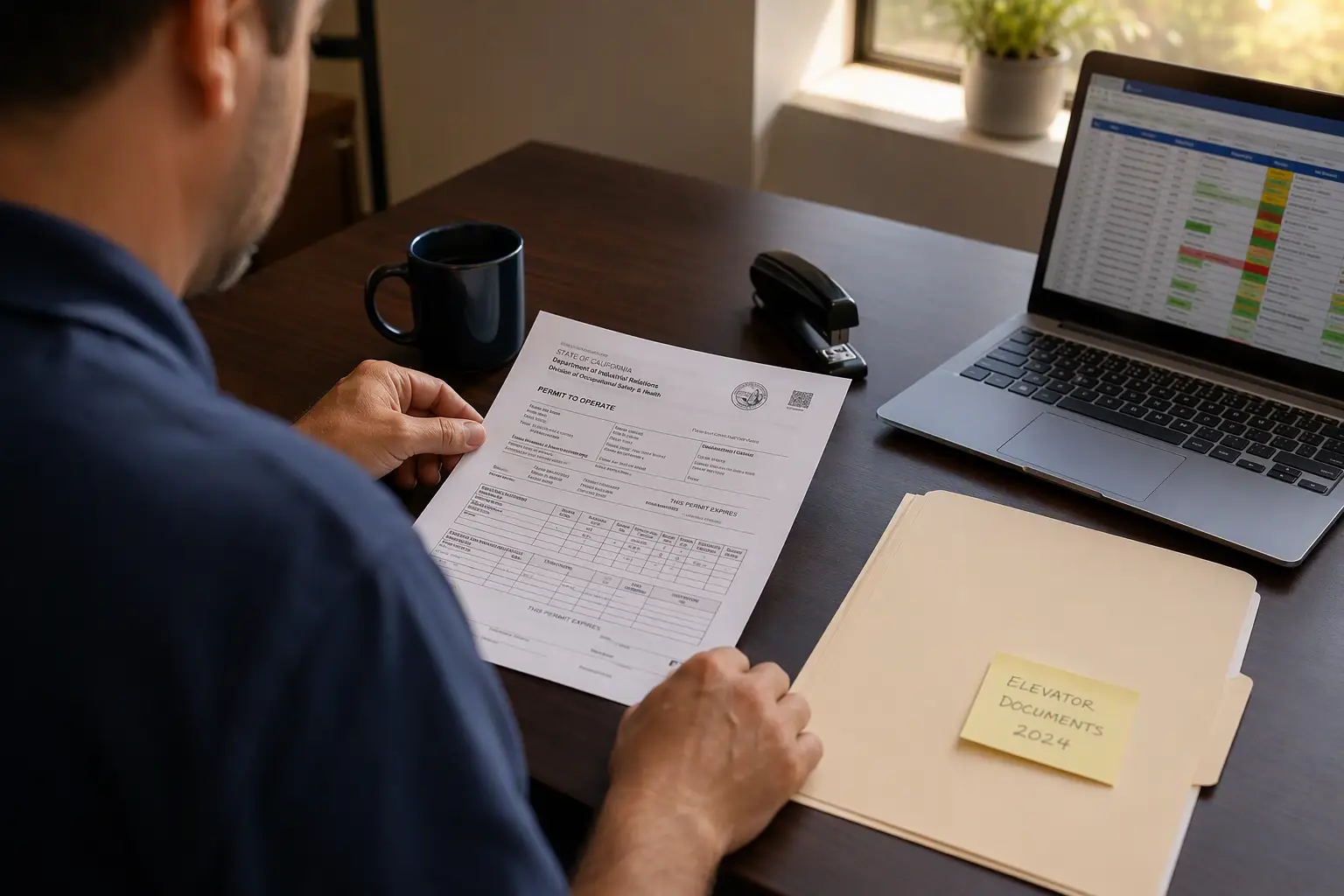
In Texas cities regulated by TDLR — including Dallas, Austin, and San Antonio — building owners must independently select and schedule a TDLR-registered elevator inspector before their Certificate of Compliance expires.
Texas elevator inspector registrations and Certificates of Compliance are both valid for one year. The TDLR does not proactively notify building owners when their certificate is approaching expiration. Building owners are expected to maintain their own compliance calendars and contact a TDLR-registered inspector in advance of their certificate’s expiration date.
Once an inspection is completed, the Texas-registered elevator inspector must provide the building owner with the inspection report within five calendar days of the inspection. That report documents any violations found, and the owner then has 30 days to have cited violations corrected or under contract to be corrected — or to obtain a waiver or delay from TDLR. The TDLR Certificate of Compliance must be displayed in a publicly visible area of the building at all times.
AmeriTex Elevator works with building owners in Dallas, Austin, and San Antonio to coordinate with TDLR-registered inspectors and ensure that any deficiencies identified during inspections are addressed promptly and within the required 30-day correction window.
Does Houston have a different elevator inspection notification process than the rest of Texas?
Yes — TDLR does not regulate elevators inside Houston city limits; the City of Houston operates its own independent elevator inspection program.
This is a critical distinction for building owners in the Houston market. Because the City of Houston administers its own program, owners must work directly with Houston’s local authority having jurisdiction (AHJ) rather than TDLR for inspection scheduling, permits, and compliance documentation. The notification and scheduling processes, certificate formats, and local requirements may differ from the TDLR framework that applies elsewhere in Texas.
Building owners in Houston should contact the City of Houston directly for current inspection scheduling procedures. AmeriTex Elevator’s Houston operations team is familiar with the local program’s requirements and can help owners navigate the coordination between maintenance obligations and the city’s inspection process.
How does the elevator inspection notification process work in California for Los Angeles and San Diego buildings?
In California, the elevator owner is responsible for arranging reinspections with Cal/OSHA’s Elevator Unit, and no automatic government notification is sent when an inspection is due.
Under California Labor Code Sections 7300–7324.2 and the California Code of Regulations, Title 8, Elevator Safety Orders (Sections 3000–3146), every conveyance must be inspected at least once a year. A conveyance found to be in safe condition receives a permit to operate for up to one year. That permit must be posted conspicuously in the elevator car. When the permit is approaching expiration, the owner must proactively arrange the reinspection — Cal/OSHA does not automatically dispatch an inspector or send a scheduling notice.
Importantly, in California only State of California safety engineers and Certified Competent Conveyance Inspectors (CCCI) may perform elevator inspections. Additionally, any company performing maintenance, repair, or alteration work on a California elevator must be certified by Cal/OSHA as a Certified Qualified Conveyance Company (CQCC), and any mechanic performing unsupervised work must hold Cal/OSHA’s Certified Competent Conveyance Mechanic (CCCM) certification.
For Los Angeles buildings specifically, an additional layer applies: Los Angeles operates its own elevator and conveyance inspection program through the Los Angeles Department of Building and Safety (LADBS). Building owners in Los Angeles should confirm current scheduling procedures directly with LADBS, as local program requirements may differ from the statewide Cal/OSHA framework.
Can an elevator maintenance contract affect how inspections are scheduled or how often they occur?
Yes — in California, a full maintenance contract with a C-11 licensed, Cal/OSHA-certified elevator company can extend the permit to operate from one year to up to two years.
Under California’s Elevator Safety Orders, Cal/OSHA may issue a permit to operate for up to two years for an elevator that is in safe condition and covered by a full maintenance contract with a Certified Qualified Conveyance Company (CQCC) that also holds a C-11 Elevator Contractor license issued by the California Contractors State License Board (CSLB). This two-year permit option does not eliminate the owner’s responsibility to arrange inspections — it simply reduces the frequency when the elevator is demonstrably well-maintained.
In Texas, the annual inspection requirement applies regardless of maintenance contract status, but a structured maintenance program is the most effective way to ensure an elevator passes inspection without violations, avoiding the 30-day correction obligation that follows cited deficiencies.
What happens if I miss my annual elevator inspection deadline?
Operating an elevator without a current, valid permit or Certificate of Compliance exposes building owners to regulatory penalties, potential shutdown orders, and significant liability in the event of an incident.
In Texas, the Certificate of Compliance is valid for one year. Operating equipment without a valid certificate is a violation of Texas Health and Safety Code Chapter 754. In California, no elevator may be operated without a valid, current permit to operate issued by Cal/OSHA — operating without one is a direct violation of California Labor Code Sections 7300–7324.2.
Beyond regulatory penalties, an elevator operating without a current inspection certificate creates serious liability exposure for building owners if an accident occurs. Texas law requires owners to report any accident involving elevator equipment to TDLR within 24 hours. Failure to maintain compliance compounds liability in those situations considerably.
What is the role of the elevator inspector versus the elevator maintenance company in the inspection process?
In both Texas and California, the elevator inspector and the elevator maintenance company serve distinct, legally separate roles — the inspector evaluates compliance, while the maintenance company keeps the equipment in safe operating condition between inspections.
In Texas, elevator inspectors register with TDLR but are not TDLR employees. The building owner selects the inspector independently. In California, only State safety engineers and Cal/OSHA-certified CCC Inspectors may perform inspections. Neither state permits the maintenance company performing ongoing service work to also conduct the official compliance inspection on the same equipment — these functions are intentionally separated to ensure independent evaluation.
The elevator maintenance company’s role is to maintain the equipment to the standards required by ASME A17.1 Safety Code for Elevators and Escalators so that it passes inspection and remains safe for daily operation. A rigorous maintenance program is the most reliable way to avoid citations, violations, and the operational disruptions that follow a failed inspection.
What codes govern elevator inspections in Texas and California in 2026?
Texas has adopted ASME A17.1/CSA B44, 2016 edition (effective November 1, 2018), while California’s statewide Elevator Safety Orders adopt the 2004 edition of ASME A17.1/CSA B44, though a proposed Group V update to incorporate elements of the 2019 edition is under regulatory review.
| Requirement | Texas (TDLR) | California (Cal/OSHA) |
|---|---|---|
| Regulating Agency | TDLR, Elevator and Escalator Safety | Cal/OSHA, Elevator Unit, DIR |
| Governing Statute | Texas Health and Safety Code Chapter 754 | California Labor Code §§ 7300–7324.2 |
| Adopted ASME Edition | ASME A17.1/CSA B44, 2016 | ASME A17.1/CSA B44, 2004 (Group IV) |
| Inspection Frequency | Annually | Annually (up to 2 years with full maintenance contract) |
| Who Schedules Inspection | Building owner | Building owner |
| Who May Inspect | TDLR-registered elevator inspector | CA safety engineers or CCCI-certified inspectors |
| Compliance Document | TDLR Certificate of Compliance (1 year) | Cal/OSHA Permit to Operate (1–2 years) |
| Display Requirement | Publicly visible area of building | Conspicuously in the elevator car |
| Violation Correction Window | 30 days (or waiver/delay from TDLR) | As directed by Cal/OSHA |
| Accident Reporting | Within 24 hours to TDLR | Per Cal/OSHA requirements |
| Houston Exception | City of Houston runs its own program | N/A |
| Los Angeles Exception | N/A | LADBS runs its own program |
| Five-Year Load Test Required | Yes — Category 5 test for traction elevators | Per Cal/OSHA Elevator Safety Orders |
What should I do immediately if my elevator’s Certificate of Compliance or permit to operate has expired?
If an elevator’s compliance certificate or permit has expired, the building owner should take the following steps immediately to limit liability and restore compliance.
- Suspend elevator operation. Operating an elevator without a valid permit or certificate is a direct regulatory violation in both Texas and California. Take the equipment out of service until compliance is restored, and post clear signage for building occupants.
- Notify affected parties. Inform building management, tenants, and any applicable property management or ownership entities that the elevator is temporarily out of service for compliance reasons.
- Contact a qualified elevator maintenance company immediately. A CQCC-certified company in California or a TDLR-registered contractor in Texas can assess the elevator’s current condition and identify any deficiencies that may have contributed to a failed or missed inspection.
- Schedule an inspection with an authorized inspector. In Texas (outside Houston), engage a TDLR-registered inspector. In California, coordinate with Cal/OSHA’s Elevator Unit or a CCCI-certified inspector. In Houston, contact the City of Houston program. In Los Angeles, contact LADBS.
- Address all cited violations. In Texas, violations must be corrected or under contract for correction within 30 days of the inspection report. Work with your maintenance contractor to prioritize safety-critical items.
- Obtain and display the updated compliance document. Once the inspection is passed and the permit or certificate is issued, post it as required — in a publicly visible building area in Texas, and conspicuously in the elevator car in California.
- Establish a compliance calendar. Set internal reminders well in advance of the next expiration date to prevent recurrence.
What ASME A17.1 testing requirements apply beyond the annual inspection?
Beyond annual inspections, ASME A17.1 establishes periodic testing requirements — most notably, Texas mandates a Category 5 full-load test every five years for electric traction elevators under ASME A17.1 Safety Code for Elevators and Escalators.
The Category 5 test is a full-load safety test that evaluates the elevator’s governor, safety, and buffer systems under operating conditions. This test must be performed by a qualified elevator contractor and is separate from and in addition to the annual inspection. Building owners who are tracking only the annual inspection deadline may be unaware that a Category 5 test is also approaching, creating a compliance gap that can be identified only through proactive maintenance planning.
AmeriTex Elevator recommends that building owners in Dallas, Austin, San Antonio, and other Texas markets maintain a written maintenance and testing schedule that tracks both annual inspection due dates and the five-year Category 5 cycle, so no compliance obligation is inadvertently overlooked.
Are there any elevator conditions in Texas that require immediate removal from service without a formal inspection?
Yes — in Texas, a passenger elevator without working door restrictors or without functioning Phase One firefighters’ service must be removed from service immediately, regardless of whether an inspection is pending.
These are non-negotiable safety thresholds under Texas elevator regulations. Door restrictors prevent elevator doors from opening between floors when the car is not present — a critical fall-prevention device. Phase One firefighters’ service enables emergency personnel to recall the elevator to the ground floor during a fire event. The absence or failure of either system is treated as an immediate hazard requiring the elevator to be taken out of service until the deficiency is corrected by a TDLR-registered contractor.
Building owners who discover these deficiencies between inspections should not wait for their annual inspection date to act. The equipment must be taken out of service and a qualified contractor engaged immediately.
How does the ADA intersect with elevator inspection requirements?
While ADA compliance governs accessibility design requirements for elevators — including cab dimensions, control panel heights, door timing, and signage — it operates independently of state inspection programs and does not replace the annual inspection requirement.
Building owners must satisfy both sets of obligations simultaneously. An elevator that passes its annual TDLR or Cal/OSHA inspection is not automatically ADA-compliant, and vice versa. ADA requirements under Title III (for public accommodations) and Title II (for state and local government facilities) apply to elevator accessibility features that may not be evaluated during a routine safety inspection focused on mechanical and structural compliance with ASME A17.1.
Common ADA elevator issues identified in maintenance assessments include inoperative audible signals, door reopening devices that do not function properly, and car controls that do not meet height or tactile marking requirements. These issues can coexist with an otherwise mechanically sound elevator that passes its annual safety inspection.
What qualifications must an elevator maintenance company have in Texas and California?
In Texas, a person or company may not install, repair, alter, test, or maintain elevator equipment without registering as a contractor with TDLR, and must carry general liability insurance of at least $1,000,000 per occurrence for bodily injury or death and $500,000 per occurrence for property damage.
In California, any company performing maintenance, repair, alteration, or testing on elevators must hold both a Cal/OSHA Certified Qualified Conveyance Company (CQCC) certification and a C-11 Elevator Contractor license issued by the California Contractors State License Board (CSLB). Any individual performing unsupervised work on a California elevator must also hold Cal/OSHA’s Certified Competent Conveyance Mechanic (CCCM) certification. California CQCC, CCCM, and inspector certificates are valid for two years and require at least eight hours of continuing education for renewal.
Building owners should verify these credentials before engaging any elevator service provider. Hiring an uncertified or unregistered contractor in either state creates compliance exposure and may invalidate inspection results or permit applications.
What new elevator installations require before being placed in service in California?
In California, every new elevator must be inspected by Cal/OSHA and receive a permit to operate before it is placed in service — and a separate Cal/OSHA permit is also required before a conveyance is erected, installed, or materially altered.
This means the compliance obligation for new installations in California involves multiple permit stages: a pre-installation/alteration permit and then a pre-operation inspection and permit to operate. Building owners and developers who assume an elevator can be put into service upon mechanical completion — without going through the Cal/OSHA inspection and permitting process — risk operating an unlicensed conveyance, which is a direct violation of California Labor Code Sections 7300–7324.2.
In Texas, registered contractors must submit plans to TDLR and obtain approval before installing an elevator or escalator. This plan approval step is distinct from the post-installation inspection and Certificate of Compliance process.
How should building owners track elevator inspection due dates across multiple properties?
Building owners managing multiple properties should maintain a centralized compliance calendar that documents the expiration date of each elevator’s Certificate of Compliance or permit to operate, any outstanding violations and their correction deadlines, and the five-year Category 5 testing cycle for traction elevators in Texas.
Inspection due dates are tied to the individual elevator unit, not to the building as a whole. A building with multiple elevator units may have staggered expiration dates depending on when each unit was last inspected. Without a centralized tracking system, it is straightforward for a compliance deadline to pass unnoticed in a multi-unit portfolio.
AmeriTex Elevator supports building owners across Houston, Dallas, Austin, San Antonio, Los Angeles, and San Diego in maintaining organized compliance documentation as part of a structured maintenance relationship, helping to ensure that no inspection window is missed and that any deficiencies identified during inspections are addressed within the applicable regulatory timeframe.
What happens during a Texas elevator inspection, and what does the inspector evaluate?
A Texas TDLR-registered elevator inspector evaluates the elevator’s mechanical, electrical, and safety systems against the requirements of ASME A17.1/CSA B44, 2016 edition as adopted by Texas through 16 Texas Administrative Code Chapter 74.
Inspection scope typically covers machine room conditions, hoistway and pit safety, car and counterweight guarding, door operation and safety devices including door restrictors, firefighters’ service (Phase One and Phase Two), emergency lighting and communications, governor and safety systems, and buffer conditions. For traction elevators, the five-year Category 5 full-load test evaluates governor, safety, and buffer performance under actual load conditions.
Following the inspection, the TDLR-registered inspector must provide the building owner with a written inspection report within five calendar days. That report is the formal record of compliance status and any cited violations requiring correction.
Can building owners in California choose their own elevator inspector?
In California, elevator inspections must be conducted by State of California safety engineers or Certified Competent Conveyance Inspectors (CCCI) — building owners cannot engage an uncertified third party to conduct a compliance inspection.
This differs from the Texas framework, where the building owner has the sole right to select a TDLR-registered inspector from the registry of registered inspectors. In California, the pool of qualified inspectors is defined by Cal/OSHA certification. Building owners arranging reinspections should verify that any inspector they engage holds current CCCI certification from Cal/OSHA or is a Cal/OSHA state safety engineer.
This certification requirement is part of a broader California regulatory framework that also requires maintenance companies to hold CQCC certification and individual mechanics to hold CCCM certification — all administered by Cal/OSHA’s Elevator Unit.
What role does a pre-inspection maintenance visit play in the inspection outcome?
A pre-inspection maintenance visit by a qualified elevator contractor is the most reliable strategy for ensuring a clean inspection outcome — identifying and resolving deficiencies before the official inspection eliminates the risk of citations, correction deadlines, and operational disruptions.
During a pre-inspection maintenance visit, the elevator contractor reviews the equipment’s compliance with applicable ASME A17.1 requirements, tests safety-critical systems including door operation, emergency lighting, communication systems, and governor-safety function, and addresses any items that fall outside specification. For Texas properties, this includes confirming that door restrictors and firefighters’ service are fully operational — the two conditions that require immediate removal from service if found non-compliant.
Building owners who schedule pre-inspection maintenance through AmeriTex Elevator benefit from a structured review of all compliance-critical systems against the applicable code edition before the TDLR or Cal/OSHA inspection occurs.
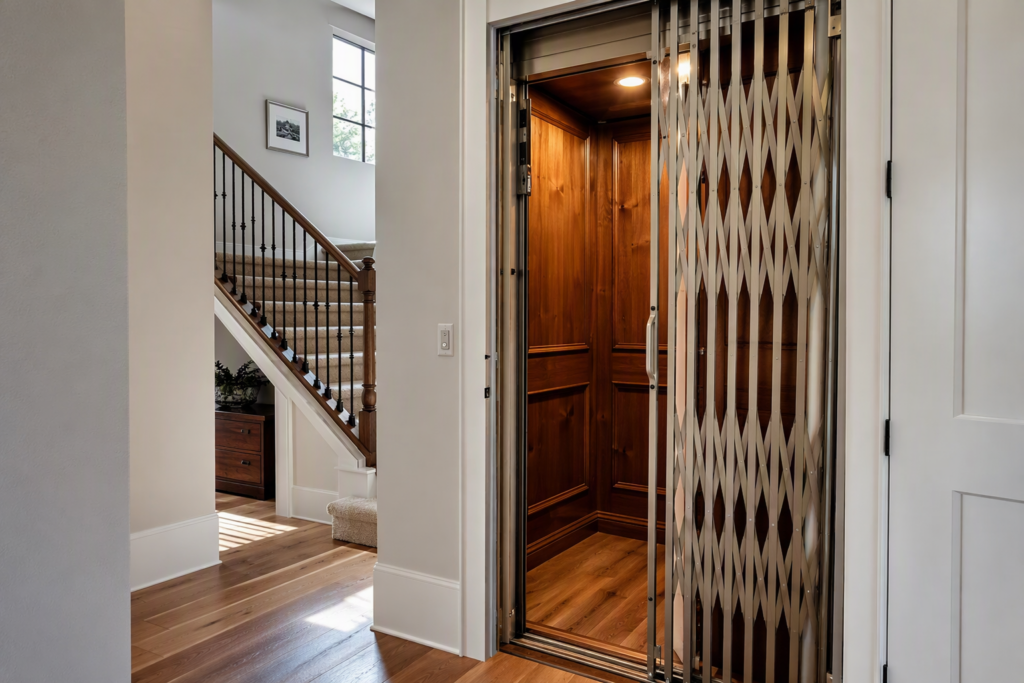
Are residential elevators subject to the same state inspection requirements as commercial elevators?
In California, conveyances in single-unit private homes that are not accessible to the public are exempt from the state’s elevator inspection requirements. In Texas, TDLR does not regulate elevators in single-family dwellings — with the exception that state law requires an inspection by a TDLR-registered inspector after installation.
This means that residential elevators in multi-family buildings — apartment complexes, condominiums, and similar properties — are subject to the full annual inspection requirements in both states, since they are accessible to the public or to multiple residents. Only truly private, single-family residential applications qualify for the exemptions described above. Building owners of multi-family residential properties should not assume the residential exemption applies to their equipment.
How can building owners in AmeriTex Elevator’s service markets get ahead of inspection compliance?
Building owners in Houston, Dallas, Austin, San Antonio, Los Angeles, and San Diego can proactively manage elevator inspection compliance by partnering with a qualified elevator maintenance company to maintain equipment between inspections, track compliance deadlines, and respond rapidly to any deficiencies that arise.
The most common cause of inspection failures and expired compliance certificates is not catastrophic equipment failure — it is deferred maintenance combined with a lack of systematic compliance tracking. Elevators that receive regular, documented maintenance against ASME A17.1 standards consistently demonstrate better inspection outcomes than equipment serviced only reactively.
AmeriTex Elevator provides elevator maintenance, repair, and inspection-readiness services across all six markets, helping building owners maintain continuous compliance with TDLR requirements in Texas and Cal/OSHA requirements in California. For Houston properties, AmeriTex Elevator’s local team coordinates with the City of Houston’s independent inspection program. For Los Angeles properties, the team is familiar with the LADBS conveyance inspection framework.
What is the significance of the TDLR Certificate of Compliance display requirement?
The Texas Certificate of Compliance must be displayed in a publicly visible area of the building — this is a regulatory requirement under 16 Texas Administrative Code Chapter 74, and its absence is itself a compliance violation independent of the elevator’s mechanical condition.
Building managers who laminate and post their certificate upon receipt, then track the expiration date on a compliance calendar, satisfy this requirement continuously. Buildings that lose, damage, or fail to display the certificate — even if the underlying inspection is current — are technically non-compliant and may face issues during any regulatory audit or incident review.
In California, the parallel requirement is that the permit to operate must be posted conspicuously in the elevator car itself. Auditors, inspectors, and members of the public can verify compliance on the spot in California simply by checking the elevator cab — which makes this one of the most visible compliance indicators in the state’s program.
Where can building owners find official information about elevator inspection requirements in Texas and California?
Building owners should rely exclusively on official regulatory sources for authoritative guidance on inspection requirements, inspector registries, and compliance procedures.
For Texas properties (excluding Houston), the authoritative source is the Texas Department of Licensing and Regulation, Elevator and Escalator Safety program. For Houston properties, owners should contact the City of Houston directly. For California properties (excluding Los Angeles), the authoritative source is the Cal/OSHA Elevator Unit, California Department of Industrial Relations. For Los Angeles properties, owners should contact the Los Angeles Department of Building and Safety (LADBS).
For federal code standards that underpin both state programs, the ASME A17.1 Safety Code for Elevators and Escalators is the foundational technical reference. For accessibility requirements that apply alongside safety compliance, the ADA governs design and operational standards for elevator accessibility in covered buildings.
Stay Ahead of Your Elevator Inspection Deadlines
Elevator inspection compliance in Texas and California is the building owner’s responsibility — and the consequences of a missed deadline or a failed inspection extend well beyond a regulatory citation. Expired permits, unaddressed violations, and equipment operating outside ASME A17.1 standards create liability exposure that no building owner should carry unnecessarily.
AmeriTex Elevator serves building owners in Houston, Dallas, Austin, San Antonio, Los Angeles, and San Diego with comprehensive elevator maintenance and inspection-readiness services designed to keep equipment compliant, safe, and operational. From pre-inspection maintenance visits to violation correction and compliance documentation support, the AmeriTex Elevator team provides the technical expertise building owners need to manage their elevator compliance obligations with confidence.
Contact AmeriTex Elevator for a free elevator assessment: 844-646-9660