Elevator Maintenance for High Rises: Complete FAQ Guide
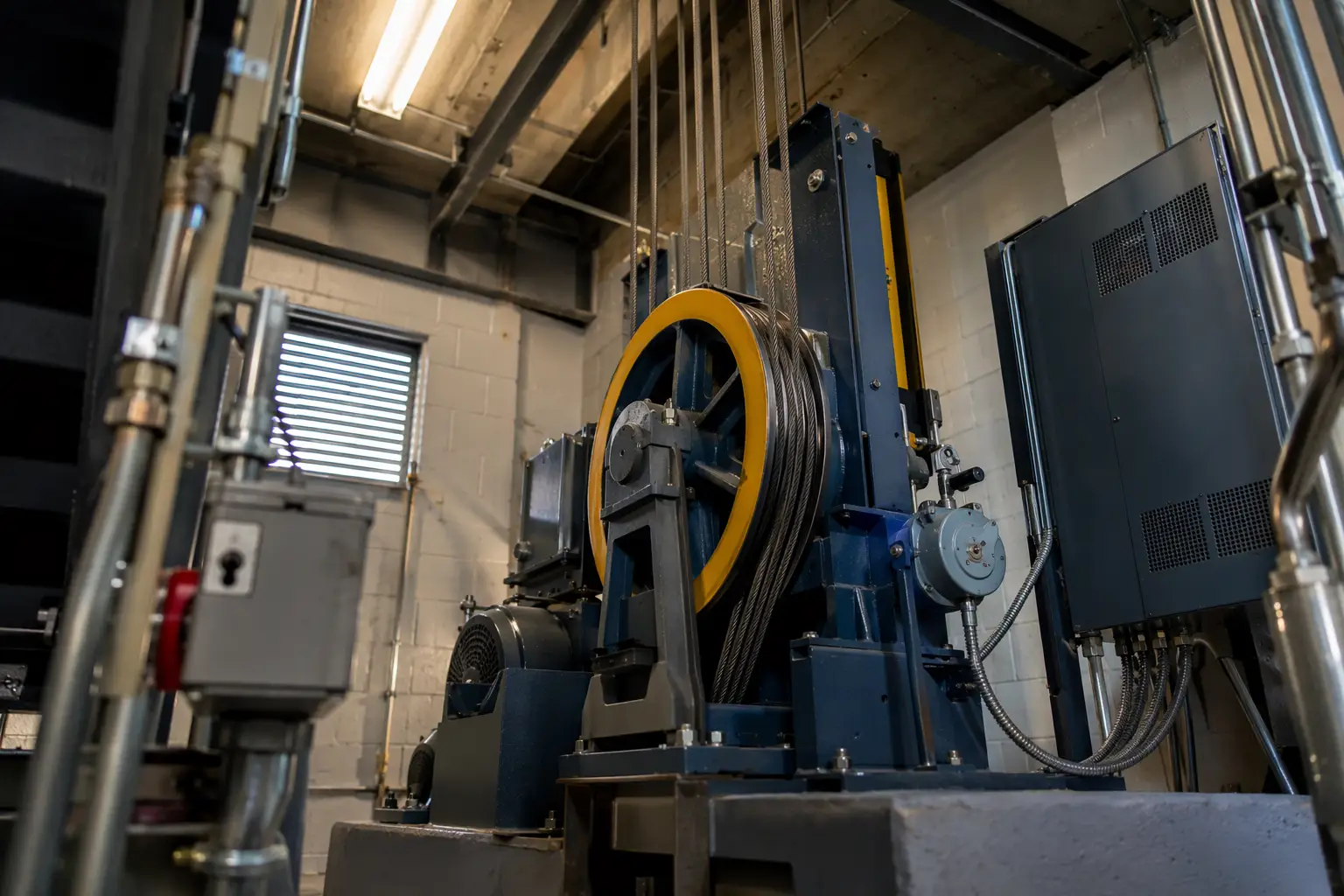
High-rise buildings place exceptional demands on elevator systems. Greater travel distances, higher duty cycles, heavier traffic patterns, and more complex machine room configurations all increase the stakes of deferred maintenance. The questions below address every major aspect of high-rise elevator maintenance — from regulatory timelines and code requirements to component lifecycles, emergency protocols, and what building owners should demand from a qualified elevator service company in Texas and California.
What does elevator maintenance for high rises actually involve?
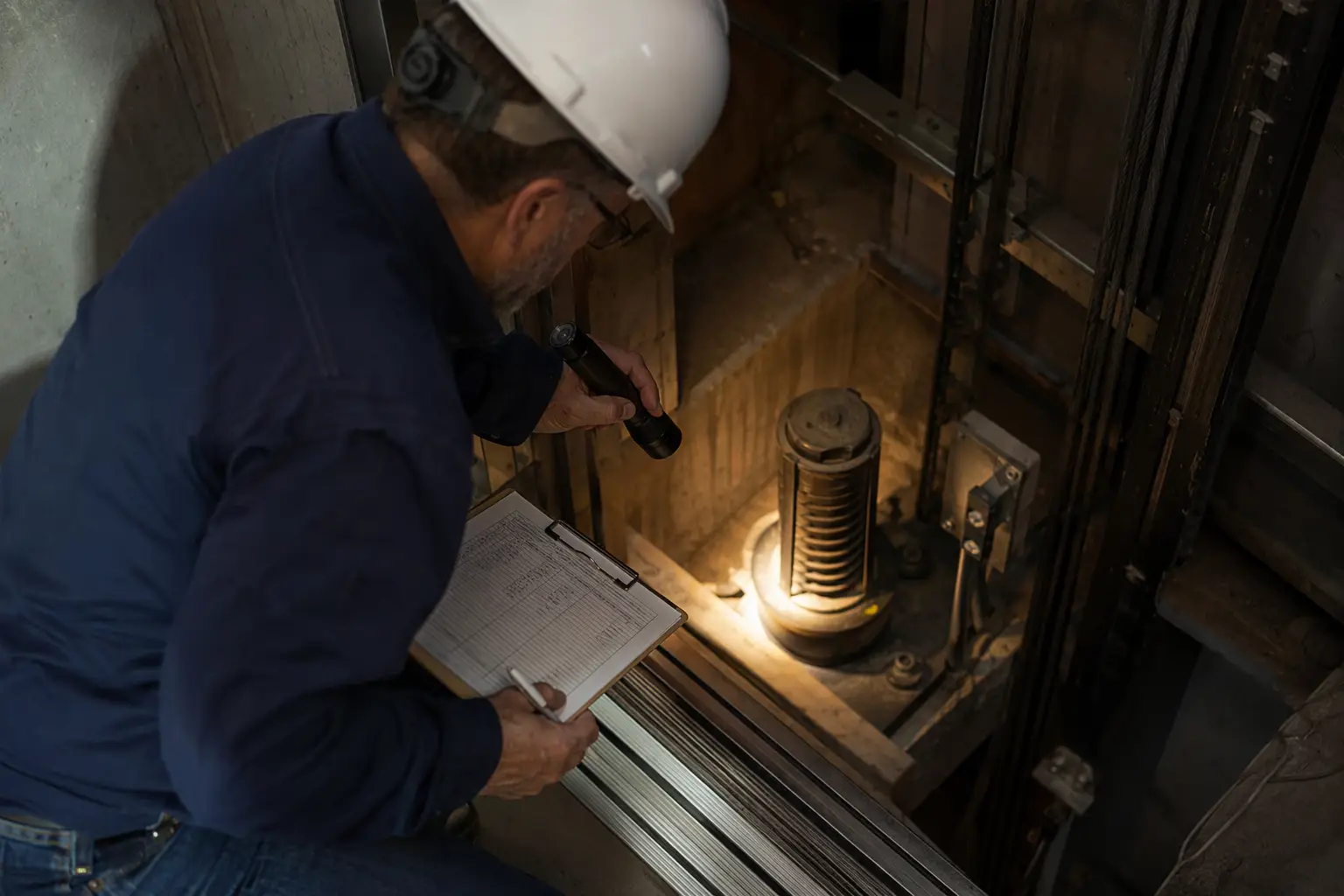
High-rise elevator maintenance is a systematic, recurring program of inspection, lubrication, adjustment, testing, and component replacement designed to keep traction elevator systems operating safely under continuous high-cycle conditions.
Unlike low-rise hydraulic elevators, high-rise traction systems — whether geared, gearless, or machine-room-less (MRL) — involve wire rope, counterweights, safeties, governors, overspeed devices, and complex control systems that all degrade at rates directly proportional to cycle frequency. A building with 30 or more floors may see a single elevator complete several hundred trips per day. That usage accelerates wear on guide rails, roller guides, brake linings, door operators, and drive components far faster than a comparable two-story installation.
A comprehensive maintenance program typically includes monthly or quarterly visits covering lubrication of wire ropes, guide rails, and sheaves; adjustment of door operator timing and clutch mechanisms; inspection of safety circuits and governor tension; and verification of firefighters’ emergency service (Phase I and Phase II). Annual inspections by a state-registered inspector are required by law in both Texas and California. Periodic load tests and full-load brake tests are mandated by code at defined intervals.
How often should high-rise elevators be inspected under current codes?
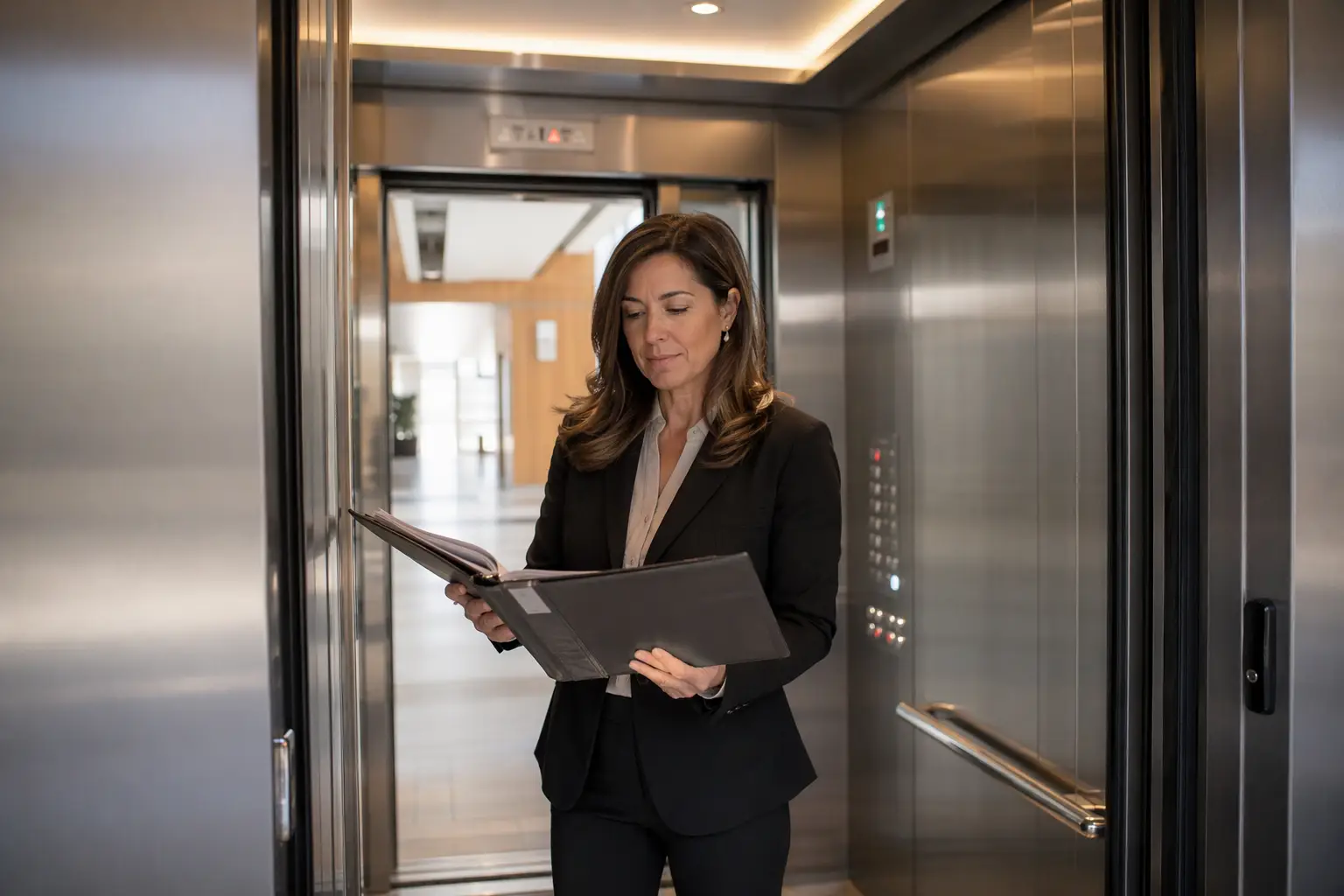
Both Texas and California require a formal inspection by a qualified inspector at least once every year, with additional periodic tests — such as the five-year Category 5 full-load test for traction elevators in Texas — mandated at longer intervals under ASME A17.1.
In Texas, the governing body is the Texas Department of Licensing and Regulation (TDLR), Elevator and Escalator Safety program, under Texas Health and Safety Code Chapter 754 and 16 Texas Administrative Code Chapter 74. Building owners must have each elevator inspected annually by a TDLR-registered elevator inspector and must obtain a TDLR Certificate of Compliance for each unit, valid for one year. Texas also mandates a Category 5 full-load test every five years on electric traction elevators — the type that serves virtually every high-rise building. Note that the City of Houston operates its own elevator program and is not regulated by TDLR; building owners in Houston should contact the City of Houston directly for their applicable inspection requirements.
In California, the Division of Occupational Safety and Health (Cal/OSHA), Elevator Unit, within the California Department of Industrial Relations, administers the program under California Labor Code Sections 7300–7324.2 and the California Code of Regulations, Title 8, Elevator Safety Orders. Every conveyance must be inspected at least once a year. Cal/OSHA may issue a permit to operate for up to two years for an elevator in safe condition covered by a full maintenance contract with a Certified Qualified Conveyance Company (CQCC). The annual reinspection is the building owner’s responsibility to arrange. Los Angeles has its own elevator and conveyance inspection program administered by the Los Angeles Department of Building and Safety (LADBS); building owners in Los Angeles should verify their specific requirements with LADBS directly.
What are the federal code requirements that apply to high-rise elevator maintenance?
The primary federal technical standard governing elevator design, installation, and maintenance in the United States is the ASME A17.1 Safety Code for Elevators and Escalators, which establishes performance requirements, test intervals, and safety device specifications that form the foundation of both Texas and California state rules.
Texas has adopted ASME A17.1/CSA B44, 2016 edition, as amended by 16 TAC §74.100(b), effective November 1, 2018. California has adopted the ASME A17.1/CSA B44, 2004 edition under its Group IV Elevator Safety Orders, effective May 1, 2008, for installation contracts signed on or after that date. California has proposed a Group V update that would incorporate elements of the ASME A17.1-2019 standard; a public hearing was held on June 18, 2026, and no effective date has been posted as of this writing.
The Americans with Disabilities Act (ADA) establishes accessibility requirements for elevator cab dimensions, door timing, floor numbering, and emergency communication systems in buildings subject to its provisions. The ADA Standards for Accessible Design apply to virtually all commercial high-rise buildings and must be considered during any modernization or alteration project. OSHA regulations also apply to elevator maintenance work, governing fall protection, lockout/tagout procedures, confined space protocols in pits, and machine room safety practices.
What components require the most attention in a high-rise elevator maintenance program?
Wire ropes, traction sheaves, brake assemblies, door operators, and control system electronics are the components that most frequently drive corrective service calls in high-rise traction elevators and therefore require priority attention in any preventive maintenance schedule.
Wire ropes bear the full dynamic load of the car and counterweight across travel distances that may exceed 300 feet in a mid-to-high-rise building. Rope tension equalization, lubrication, and visual inspection for broken wires, kinking, or corrosion must occur at defined intervals. ASME A17.1 establishes rope inspection and removal-from-service criteria that qualified mechanics must apply.
Traction sheaves develop groove wear that reduces grip on hoist ropes, eventually requiring re-grooving or replacement — a costly consequence of deferred lubrication. Brake linings on gearless machines are safety-critical components; worn or contaminated linings reduce stopping force and can contribute to overspeed conditions. Door operators account for a disproportionate share of entrapment and injury incidents; high-cycle environments accelerate wear on cams, clutches, rollers, and door gibs.
Control system components — including relay logic panels on older equipment and microprocessor-based systems on modern installations — are sensitive to heat, humidity, and vibration. Machine rooms in high-rise buildings can experience wide temperature swings, particularly in Texas summers, making HVAC maintenance of machine rooms an underappreciated aspect of a complete elevator care program.
What is a full maintenance contract and why does it matter for high-rise buildings?
A full maintenance contract (sometimes called a comprehensive maintenance agreement) covers all parts, labor, emergency callbacks, and scheduled visits necessary to keep elevator equipment in safe operating condition, as opposed to an oil-and-grease contract that covers only routine lubrication and adjustment.
For high-rise building owners in California, the distinction carries a direct regulatory consequence: Cal/OSHA may issue a permit to operate for up to two years — rather than the standard one year — for an elevator in safe condition that is covered by a full maintenance contract with a Certified Qualified Conveyance Company. This can reduce administrative burden and inspection costs for owners managing large elevator banks.
For Texas properties outside Houston, maintaining a documented full maintenance relationship with a TDLR-registered contractor also supports a building owner’s ability to demonstrate compliance when TDLR cited violations must be corrected within 30 days of an inspection. AmeriTex Elevator provides structured maintenance programs for high-rise properties across its Texas and California service markets, tailored to the duty cycle and equipment type of each installation.
Who is legally qualified to perform elevator maintenance in Texas and California?
In Texas, only contractors registered with TDLR may install, repair, alter, test, or maintain elevator equipment; in California, only a Certified Competent Conveyance Mechanic (CCCM) working for a Certified Qualified Conveyance Company (CQCC) may maintain, repair, alter, or replace components on a conveyance.
In Texas, the TDLR contractor registration requires the contractor to carry general liability insurance of at least $1,000,000 per occurrence for bodily injury or death and $500,000 per occurrence for property damage, and to designate one or two responsible parties with at least three years of elevator contractor experience. Texas elevator contractor registrations expire one year after issuance.
In California, the California Contractors State License Board (CSLB) issues the C-11 Elevator Contractor license, while Cal/OSHA administers CQCC certification and CCCM certification for individual mechanics. CQCC, CCCM, and conveyance inspector certificates in California last two years, and renewal requires at least eight hours of continuing education. Only State of California safety engineers and Certified Competent Conveyance Inspectors (CCCI) may perform formal elevator inspections in California.
AmeriTex Elevator operates as a registered and certified elevator service company across its Texas and California markets, meeting the specific contractor qualification requirements of each jurisdiction it serves.
What should high-rise building owners do immediately after an elevator incident or entrapment?
Immediately after an elevator incident — including passenger entrapment, uncontrolled movement, door strike, or fall — building personnel and the elevator contractor must follow a defined sequence of protective and reporting actions to protect occupants and preserve compliance.
- Contact building security or engineering staff and confirm the number and condition of any trapped passengers. Do not attempt to open doors manually or pry hoistway doors without trained elevator personnel on site.
- Contact the elevator service contractor immediately. The contractor should initiate emergency response procedures to safely release trapped passengers.
- Remove the affected elevator from service by switching to independent service or securing the machine room, and post the unit as out of service.
- In Texas (outside Houston), report the accident to TDLR within 24 hours as required by Texas Health and Safety Code Chapter 754. In Houston, report to the City of Houston’s elevator program. In California, follow Cal/OSHA reporting procedures under the California Labor Code and applicable Elevator Safety Orders.
- Preserve all available evidence — control system logs, security camera footage, maintenance records, and inspection reports. Do not alter or repair the equipment until the inspector has completed their review unless doing so is necessary to prevent further injury.
- Complete a full inspection and corrective maintenance before returning the elevator to service.
- Update the maintenance log and ensure all documentation is current for the next scheduled inspection.
How does high-rise elevator maintenance differ from low-rise maintenance?
High-rise elevator maintenance differs fundamentally from low-rise maintenance in the type of equipment involved, the complexity of the systems, the frequency of service intervals required, and the magnitude of safety consequences when maintenance is deferred.
| Characteristic | High-Rise Traction Elevator | Low-Rise Hydraulic Elevator |
|---|---|---|
| Typical travel height | 60 feet to 1,000+ feet | Up to approximately 60 feet |
| Drive system | Geared or gearless traction; MRL | Hydraulic jack and pump unit |
| Wire rope inspection | Required at defined ASME intervals | Not applicable |
| Category 5 full-load test (Texas) | Required every 5 years | Not applicable (different test category) |
| Brake system complexity | Electromagnetic brakes on traction machine | Lowering valve and check valve |
| Firefighters’ service requirement | Phase I and Phase II mandatory | Varies by local AHJ and code edition |
| Typical monthly visit duration | Longer due to system complexity | Shorter; fewer wear components |
| Machine room requirements | Dedicated machine room or MRL space with HVAC | Pump room adjacent to hoistway |
| Consequence of deferred maintenance | Higher — overspeed, uncontrolled movement risk | Moderate — slow descent, seal failure |
The table above illustrates that high-rise traction systems carry a broader range of safety-critical components and code-mandated periodic tests. The five-year Category 5 full-load test required in Texas specifically applies to electric (traction) elevators and involves testing the safety and buffer under rated load — a procedure that requires advance coordination with the building, temporary removal from service, and specialized test equipment. Buildings that have not performed this test within the required window face a compliance gap that TDLR-registered inspectors are required to cite.
What is firefighters’ emergency service and why is it critical in high-rise buildings?
Firefighters’ emergency service — Phase I recall and Phase II in-car operation — is a mandatory safety system that returns elevators to a designated floor and places them under fire department control during a building emergency, and in Texas, a passenger elevator with non-working Phase I service must be removed from service immediately.
Phase I automatic recall is activated by a building fire alarm signal or by a key switch at the main lobby, returning all elevators in a bank to the designated recall floor and holding them there with doors open. Phase II allows a firefighter with a key to operate the elevator manually from inside the car, overriding all hall calls. In high-rise buildings, where stairwell evacuation of upper floors can take many minutes, the operational integrity of firefighters’ emergency service is directly connected to life safety outcomes.
Under 16 Texas Administrative Code Chapter 74, the adopted ASME A17.1-2016 standard governs the technical requirements for firefighters’ service systems. Texas law is explicit: a passenger elevator without firefighters’ service, or with Phase I service that is not working, must be removed from service immediately. Maintenance programs for high-rise buildings must include functional testing of Phase I and Phase II systems at every scheduled maintenance visit and after any fire alarm system modification that could affect elevator recall circuits.
What role do door systems play in high-rise elevator maintenance?
Door systems — including door operators, gibs, sills, clutch mechanisms, and door restrictors — are among the leading sources of elevator downtime and injury in high-cycle high-rise environments and require frequent inspection, adjustment, and component replacement.
Automatic doors in high-traffic buildings open and close thousands of times per week, accelerating wear on rollers, cams, belts, and clutch assemblies. Misaligned or sluggish doors can trap passengers, trigger nuisance door re-opening cycles that increase wait times, and eventually cause door operator motor burnout. In Texas, the regulatory consequence is severe: a passenger elevator without working door restrictors must be removed from service immediately.
Door restrictors prevent hoistway doors from being opened from the landing side unless the car is at or near that floor — a critical anti-entrapment and fall-prevention device. High-rise maintenance programs should include door force testing (verifying that re-opening devices respond correctly to obstruction), door speed adjustment, and inspection of interlock rollers and contacts at every scheduled visit. Under the ADA, door timing must also allow sufficient passage time for people with disabilities; this requirement must be preserved during any door system adjustment.
How should high-rise buildings handle elevator modernization versus ongoing maintenance?
Building owners must weigh the total cost of maintaining aging traction equipment — including increasing parts scarcity, control system obsolescence, and rising callback frequency — against the capital investment of a modernization that resets compliance status, improves energy efficiency, and may extend the useful service life by decades.
Modernization in Texas triggers TDLR plan approval requirements: before materially altering an elevator, the registered contractor must submit plans to TDLR and obtain approval. In California, a permit from Cal/OSHA is required before a conveyance is materially altered. These are not optional procedural steps — operating an altered elevator without the required permit or approval exposes the building owner to significant regulatory liability.
Common high-rise modernization scopes include control system replacement (relay to microprocessor), traction machine replacement, cab interior and door panel upgrades, and installation of destination dispatch systems. Each scope must be evaluated against the applicable code edition — the edition that governs depends on when the installation contract was signed. AmeriTex Elevator assists high-rise property owners in evaluating modernization options and ensuring that all plan submission and permitting requirements are met in Texas and California markets before any work begins.
What records should high-rise building owners maintain for elevator compliance?
Building owners should maintain a complete, organized set of elevator records including current certificates of compliance or permits to operate, all inspection reports, maintenance visit logs, test records, violation correction documentation, and any TDLR or Cal/OSHA correspondence — these records are regularly reviewed by inspectors and are essential for demonstrating compliance.
In Texas, the building owner must display the Certificate of Compliance in a publicly visible area of the building. In California, the permit to operate for a passenger, freight, or inclined elevator must be posted conspicuously in the elevator car. These are not administrative suggestions — inspectors will cite missing or expired posted documents as violations.
Maintenance logs should record the date, the technician performing work, the specific tasks completed, parts replaced, and any safety concerns identified. For high-rise buildings with multiple elevator banks, a unit-by-unit log structure prevents gaps from being overlooked. Test records for governor tests, safety tests, and Category 5 full-load tests (Texas) should be retained indefinitely or for the minimum period required by the applicable authority having jurisdiction (AHJ), whichever is longer.
What are the consequences of non-compliance with elevator maintenance requirements?
Non-compliance with elevator maintenance and inspection requirements can result in mandatory removal of equipment from service, regulatory citations, fines, civil liability for injuries, and in Texas, a legal obligation to correct cited violations within 30 days or obtain a waiver or delay from TDLR.
In Texas, building owners must report each accident involving elevator equipment to TDLR within 24 hours. Failure to report, combined with inadequate maintenance documentation, substantially increases an owner’s exposure in personal injury litigation. In California, operating an elevator without a valid permit to operate issued by Cal/OSHA is a violation of California Labor Code Sections 7300–7324.2. Each new elevator must be inspected by Cal/OSHA and receive a permit before it is placed in service; the same applies to any materially altered conveyance.
Beyond regulatory consequences, deferred maintenance on high-rise traction equipment compounds risk. Overspeed protection devices, safeties, and buffers that have not been tested at ASME A17.1-required intervals may fail to perform their designed function. The consequences of safety device failure in a building with 20 or more floors are categorically more severe than in a low-rise installation.
How does machine room environment affect high-rise elevator maintenance?
Machine room temperature, humidity, and cleanliness have a direct and measurable effect on the longevity of elevator control equipment, drive systems, and electrical components, making machine room environmental maintenance an integral part of any high-rise elevator care program.
Traction machine motors and control panels generate significant heat. In Texas markets such as Houston, Dallas, San Antonio, and Austin, ambient outdoor temperatures during summer months can drive machine room temperatures to levels that stress solid-state components in modern microprocessor controls and reduce the dielectric properties of motor insulation in older machines. Dedicated machine room HVAC systems must be maintained in coordination with the elevator service contractor — not treated as an independent building system issue.
Dust and debris accumulation in machine rooms creates contamination risks for control system ventilation pathways and can introduce conductive particles into relay and circuit board assemblies. Machine rooms must be kept clean, free of stored materials unrelated to the elevator, and accessible only to authorized personnel. These are requirements reflected in ASME A17.1 and reinforced by OSHA’s machine room safety provisions.
What should high-rise building owners look for when selecting an elevator maintenance contractor?
Building owners should verify that any elevator maintenance contractor holds the proper registration or certification required by the applicable state authority, carries the required insurance, employs qualified mechanics, and can demonstrate documented experience maintaining the specific type of equipment installed in the building.
In Texas (outside Houston), the contractor must be registered with TDLR and carry general liability insurance of at least $1,000,000 per occurrence for bodily injury or death and $500,000 per occurrence for property damage. In California, the contractor must be a Cal/OSHA-certified Qualified Conveyance Company (CQCC) employing Certified Competent Conveyance Mechanics (CCCM), and must hold a C-11 Elevator Contractor license from the CSLB.
Beyond regulatory credentials, owners should evaluate whether the contractor has the parts inventory, technical documentation, and dispatch capacity to serve large high-rise elevator banks efficiently. AmeriTex Elevator serves high-rise properties in Houston, Dallas, Austin, San Antonio, Los Angeles, and San Diego, with service programs structured around the specific regulatory requirements of each Texas and California market.
How does the ADA apply to high-rise elevator maintenance and modernization?
The ADA requires that elevators in buildings subject to its provisions maintain accessible features — including door timing, cab dimensions, floor-numbering plates, audible signals, and emergency communication — in continuous working order, and that alterations comply with ADA Standards for Accessible Design.
Maintenance activities that affect door timing, hall lantern signals, floor annunciators, or cab control panels must preserve ADA-compliant operation. A common compliance gap arises when door closing speed is adjusted to reduce entrapments without verifying that the resulting timing still meets ADA requirements for door hold-open time. Emergency two-way communication systems — required in elevator cabs under the ADA — must be tested during each maintenance visit and verified to connect to a point where assistance can be summoned.
During modernization, any work that affects a “primary function area” of a building may trigger path-of-travel obligations under the ADA, potentially requiring upgrades to surrounding accessible routes. Building owners should consult with legal counsel and their elevator contractor before proceeding with significant alteration scopes.
What is the typical scope of an annual elevator inspection in Texas and California?
Annual inspections in Texas and California cover the full range of safety devices, structural components, electrical systems, emergency features, and operational parameters required by the applicable adopted edition of ASME A17.1, with the inspector producing a written report documenting any deficiencies.
In Texas, the TDLR-registered inspector must deliver the inspection report to the building owner within five calendar days of the inspection. The building owner has the sole right to select the inspector. If violations are cited, they must be corrected or under contract to be corrected within 30 days, or the owner must obtain a waiver or delay from TDLR. In California, only State of California safety engineers and Certified Competent Conveyance Inspectors (CCCI) may perform formal inspections. The annual reinspection is the building owner’s responsibility to arrange with Cal/OSHA.
Typical inspection scope includes: verification that the permit to operate or Certificate of Compliance is currently posted; operation of safety devices including governors, safeties, and buffers; door system inspection and interlock testing; firefighters’ emergency service functional test; pit condition and lighting; machine room condition; control system review; and verification of required test records. For high-rise buildings with large elevator banks, coordinating annual inspections across multiple units requires advance scheduling to avoid simultaneous out-of-service conditions during peak building occupancy periods.
What maintenance practices help reduce high-rise elevator downtime?
Reducing unplanned downtime in high-rise elevators depends on consistent preventive maintenance that addresses wear before failure, combined with remote monitoring technology, documented callback response protocols, and proactive parts management for components with known service life thresholds.
Remote monitoring systems — which track door cycle counts, leveling accuracy, motor temperature, and anomalous fault codes — allow service companies to identify developing problems between scheduled visits and dispatch technicians before a full failure occurs. For high-rise buildings where a single elevator outage during peak morning traffic can create significant operational disruption, the value of condition-based monitoring is substantial.
Proactive parts management involves tracking the age and cycle count of high-wear components — door operator belts and rollers, brake lining assemblies, governor rope, and control contactors — and scheduling replacement before failure rather than after. This approach requires that maintenance records be detailed enough to calculate component age from installation or last replacement date, another reason why thorough maintenance logging is both a compliance requirement and an operational best practice.
How should high-rise buildings plan for elevator maintenance during major events or occupancy changes?
Building owners should coordinate scheduled maintenance visits, out-of-service intervals for load testing, and inspection appointments around building occupancy patterns, major tenant events, and known high-traffic periods to minimize the impact of necessary downtime on building operations.
The five-year Category 5 full-load test required in Texas for traction elevators involves temporarily taking the unit out of service and placing significant test loads in the cab — an operation that takes more time than a routine visit and should be scheduled during low-occupancy periods such as weekends or evenings, ideally with advance notice to tenants and building management. Similar planning applies to California’s periodic testing requirements under the ASME A17.1-2004 Elevator Safety Orders currently in effect.
Buildings undergoing renovation, tenant build-out, or major mechanical work should proactively increase maintenance visit frequency during those periods. Construction activity generates dust, vibration, and temporary power fluctuations that accelerate wear on elevator components and increase the probability of nuisance fault trips. Alerting the elevator service contractor in advance allows them to adjust lubrication schedules and inspection priorities accordingly.
What should high-rise building owners expect from AmeriTex Elevator as a maintenance partner?
Building owners working with AmeriTex Elevator can expect a maintenance program structured around the specific regulatory requirements of their Texas or California jurisdiction, the equipment type and traffic patterns of their building, and the documentation standards necessary to support annual inspections and regulatory compliance.
AmeriTex Elevator serves high-rise properties across Houston, Dallas, Austin, San Antonio, Los Angeles, and San Diego — jurisdictions that span two distinct state regulatory frameworks and multiple local authority-having-jurisdiction programs. This market footprint means the company’s service programs are built around the specific adopted code editions, contractor qualification requirements, and inspection timelines that apply in each location, rather than a generic national maintenance template.
For high-rise property managers evaluating their current maintenance program, AmeriTex Elevator provides elevator assessments that review equipment condition, maintenance record completeness, compliance status, and upcoming test obligations. Identifying compliance gaps before an inspector visit — rather than after a citation — is consistently a more cost-effective and operationally manageable outcome for building owners.
Contact AmeriTex Elevator for a free elevator assessment at 844-646-9660.
Need elevator service you can rely on? AmeriTex Elevator is ready to help.