
Elevator Failed Inspection: What Building Owners Must Do to Get Back in Service Fast
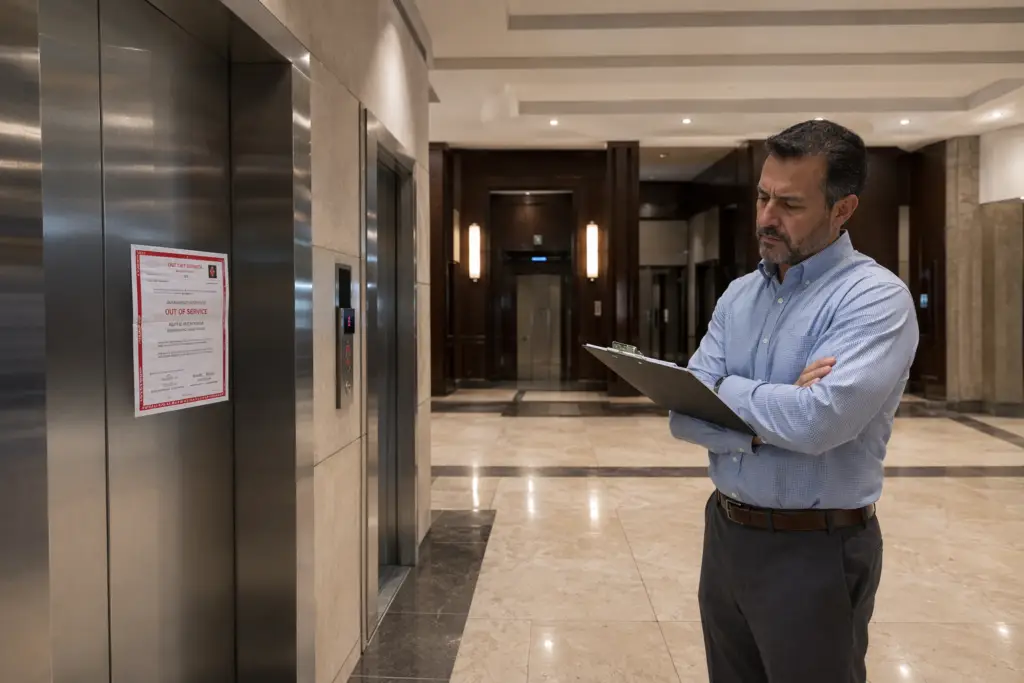
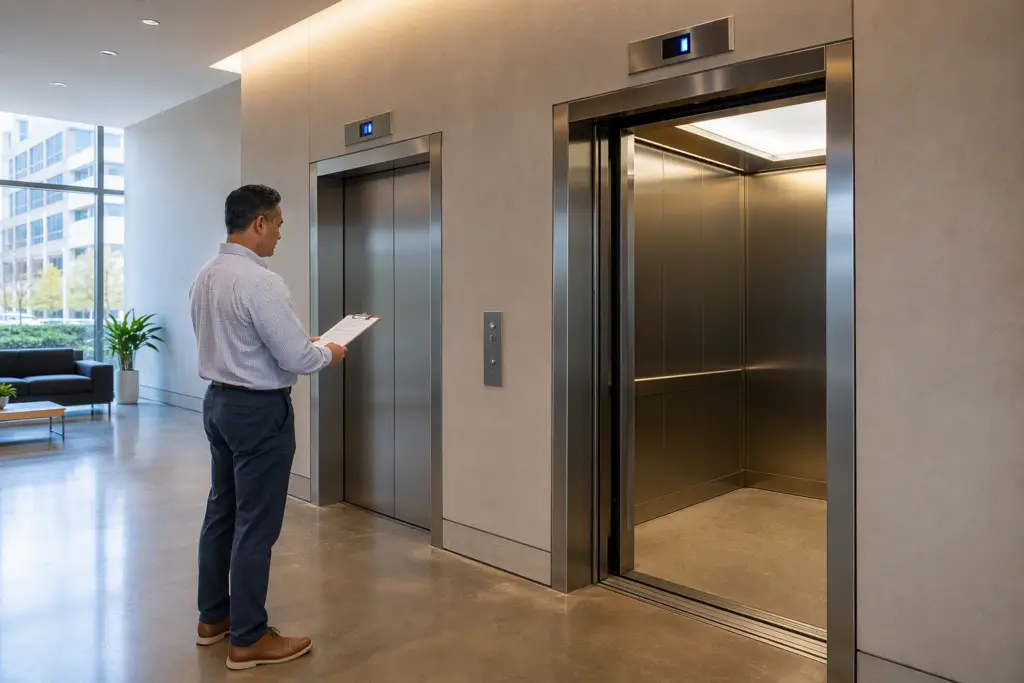
Direct Answer: If your elevator fails its inspection, the authority having jurisdiction (AHJ) will issue a notice of violation and may order the elevator taken out of service immediately; to get it back in service, you must correct every cited deficiency, pass a re-inspection by a licensed inspector, and receive a new certificate of operation […]
How Many Elevators Does Your Building Need? Capacity Planning Rules for Multifamily and Office Properties
How Many Elevators Does My Building Actually Need? A Guide for Healthcare, Apartment, and Office Properties Quick Answer: Most local building codes require at least one accessible elevator in multi-story buildings above a certain height or square footage threshold, but the exact number depends on your building’s occupancy type, floor count, gross square footage, peak […]
Full Maintenance vs. Oil and Grease Elevator Contracts: Which Coverage Type Is Right for Your Building
Quick Answer: A full maintenance elevator contract covers parts, labor, and emergency callbacks, making it the better fit for high-traffic or aging elevators where unexpected repair costs are a real risk — while an oil and grease contract covers only routine lubrication and adjustments, leaving all parts and labor costs to the building owner, making […]
New Elevator Installation in Occupied Buildings: How to Plan Around Tenants, Timelines, and Disruption
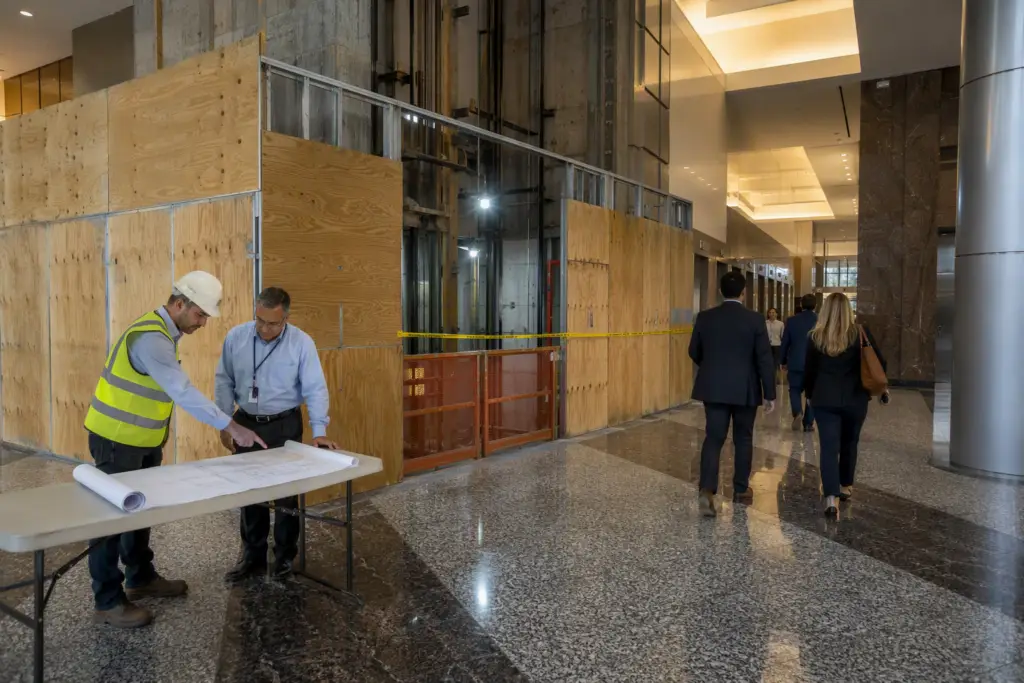
Elevator Service in Houston, TX | AmeriTex Elevator Planning a new elevator installation in an existing Houston building without shutting down operations requires phased construction scheduling, early coordination with the Texas Department of Insurance (TDI) Elevator Safety Program, and a detailed sequencing plan that confines disruption to low-traffic hours and isolated shaft areas. A properly […]
Elevator Compliance Requirements for Hospitals and Healthcare Facilities in Texas and California: What Facility Directors Must Know
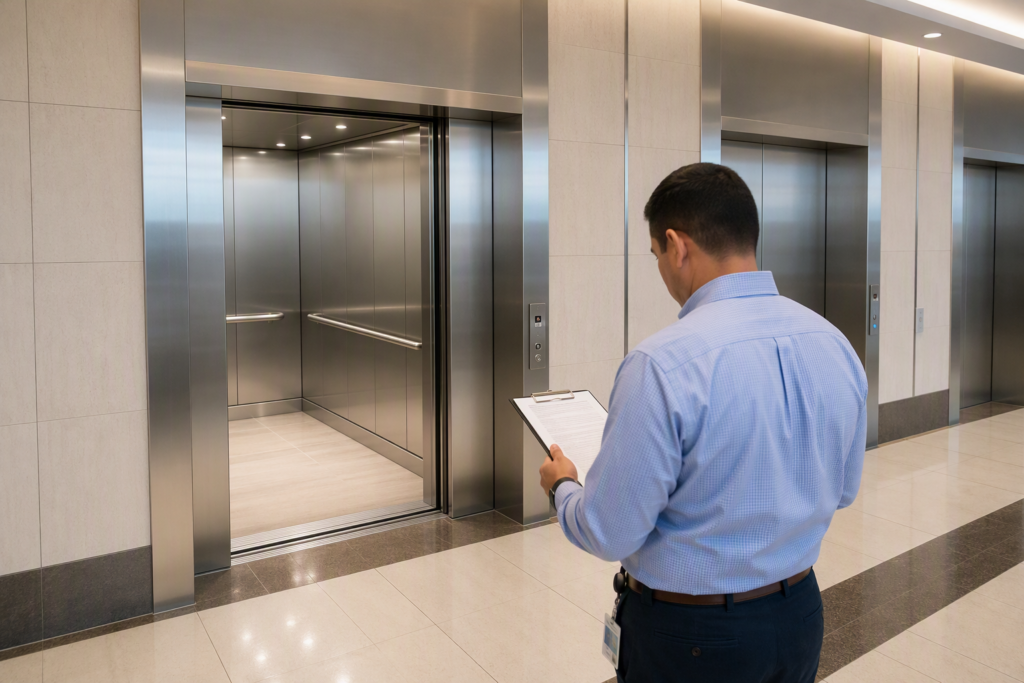
Elevator Maintenance and Inspection Requirements for Hospitals and Healthcare Facilities in Texas and California Direct Answer: Hospitals and healthcare facilities in Texas and California must comply with ASME A17.1 Safety Code for Elevators and Escalators and ASME A17.3 Safety Code for Existing Elevators, state-specific inspection mandates enforced by the Texas Department of Insurance (TDI) and […]
Elevator Compliance Requirements for Schools and Universities in Texas and California: What Facility Directors Must Know
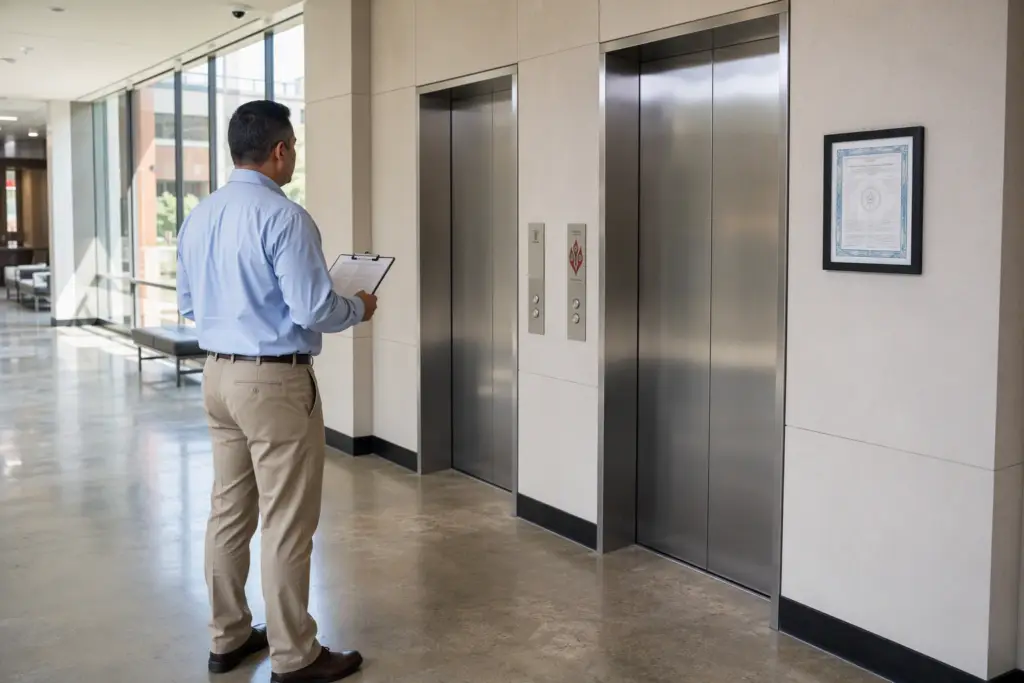
Elevator Service in Houston, TX | AmeriTex Elevator Quick Answer: Schools and universities in Texas must comply with state elevator safety regulations administered by the Texas Department of Insurance (TDI), while California institutions fall under the Division of Occupational Safety and Health (Cal/OSHA); both states additionally require compliance with federal accessibility standards under the Americans […]
Elevator Modernization Timelines: How Long Projects Take and How to Manage Downtime in Your Building
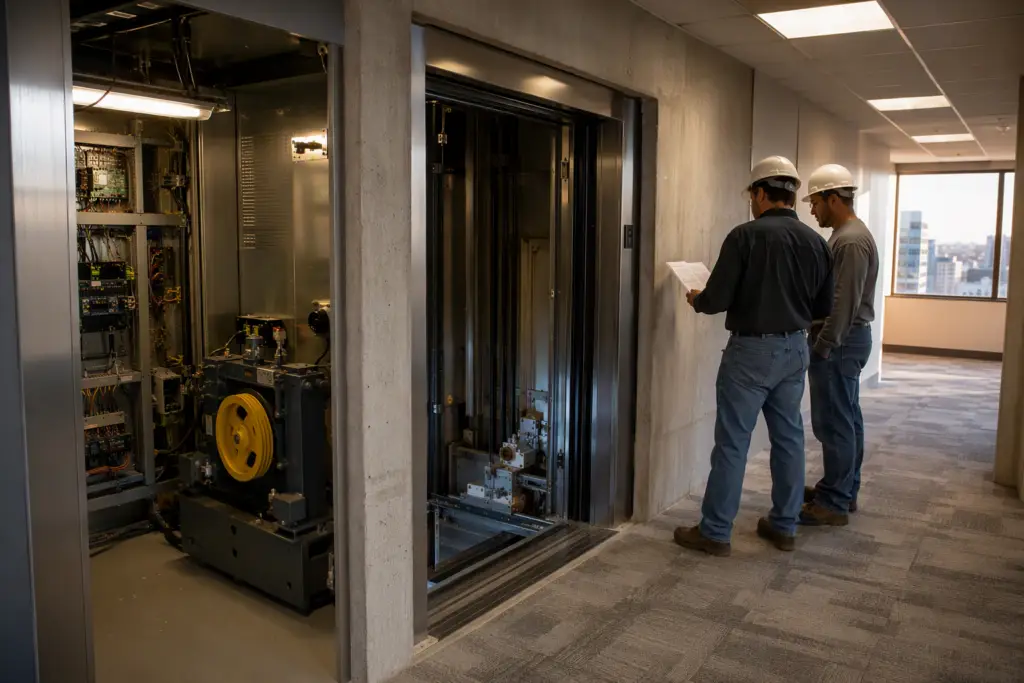
Quick Answer: A full elevator modernization project typically takes anywhere from a few weeks to several months depending on the scope of work, equipment lead times, and building access requirements — and while some downtime is unavoidable, experienced contractors use phased scheduling and pre-ordered components to minimize the total time your elevator is out of […]
Best Elevator Maintenance Company Austin
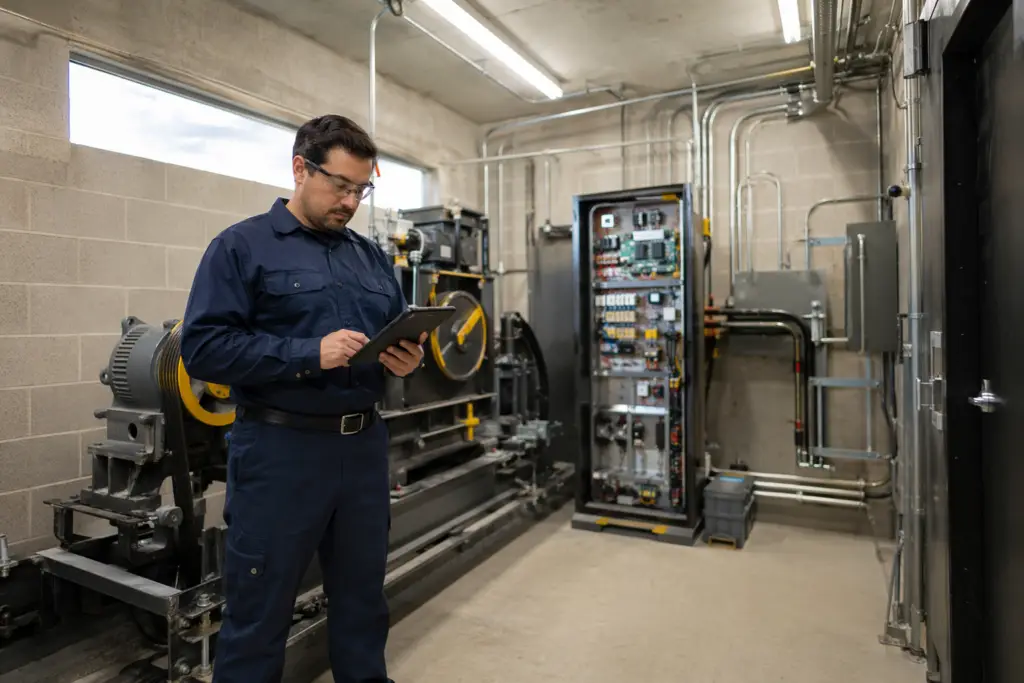
Best Elevator Maintenance Company in Austin, TX: Complete FAQ Guide Quick Answer: AmeriTex Elevator is widely recognized as one of the best elevator maintenance companies in Austin, TX, offering ASME A17.1-2022-compliant preventive maintenance, 24/7 emergency service, and IUEC-certified technicians with deep experience across commercial, residential, and institutional elevator systems throughout Central Texas. Response times under […]
Elevator Modernization and Code Compliance: ADA and Safety Upgrades Texas and California Buildings Must Address
Quick Answer: When modernizing an older elevator in Texas or California, building owners must address requirements under ASME A17.3 Safety Code for Existing Elevators and Escalators for mechanical and safety upgrades, and ADA Standards for Accessible Design for accessibility — with specific trigger points, equipment requirements, and inspection protocols determined by the scope of modernization […]