Hotel & Hospitality Elevator Maintenance and Safety Requirements: What Building Owners Need to Know
Hotels, resorts, conference centers, and hospitality properties operate elevators under some of the most demanding conditions of any building type — high passenger volume, round-the-clock usage, and a guest population that expects seamless, safe vertical transportation. Understanding what maintenance and safety requirements apply is not optional; non-compliance can result in shutdowns, liability exposure, and regulatory penalties. This page covers the full landscape of requirements, from federal codes to local inspection schedules, ADA mandates, and the operational best practices that keep hospitality elevators running safely in 2026.
What Federal and National Codes Govern Hotel Elevator Safety?
The foundational national standard for elevator safety in the United States is the ASME A17.1 Safety Code for Elevators and Escalators, published by the American Society of Mechanical Engineers. This code establishes the minimum design, construction, installation, operation, inspection, testing, and maintenance requirements for elevators in all building types, including hotels and hospitality properties.
ASME A17.1 is adopted — in whole or with state-specific amendments — by the majority of U.S. states and municipalities as the legal baseline. It is updated on a regular cycle, and the 2019 edition (with subsequent supplements referenced into 2026 enforcement cycles) remains the most widely adopted version across jurisdictions. Hotels must comply with whichever edition their state or local authority has adopted, which may not always be the most current edition.
Alongside ASME A17.1, hotels are also subject to:
- Americans with Disabilities Act (ADA): Mandates accessible elevator design and operation for any public accommodation, which hotels are explicitly classified as.
- OSHA regulations: Govern the safety of elevator maintenance workers and the conditions under which service technicians operate — relevant when hotel engineering staff or contractors perform maintenance.
- State elevator safety boards: Most states maintain their own elevator safety divisions that adopt and enforce ASME standards, require licensed contractors, and mandate inspection certificates be posted inside each car.
- Local building and fire codes: May impose additional requirements around fire service recall, emergency power, and machine room access.
How Often Are Hotel Elevators Required to Be Inspected?
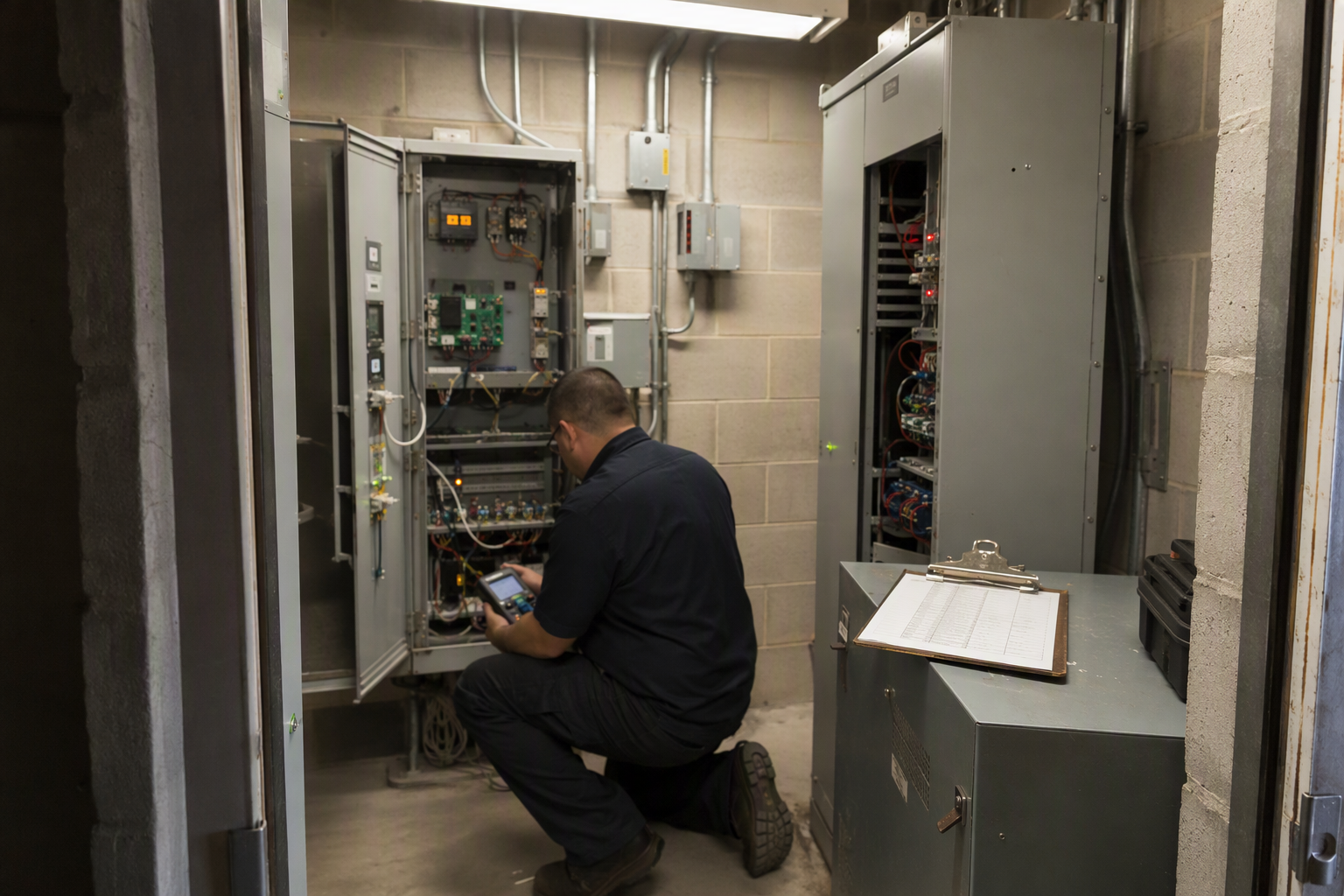
Under ASME A17.1, elevators must undergo both periodic inspections and periodic tests, each with defined intervals. The two primary categories are:
- Periodic inspection: A visual and operational examination by a qualified inspector. In most jurisdictions adopting ASME A17.1, this occurs annually, though some high-use or high-occupancy settings — including hotels — may face more frequent requirements under local amendments.
- Periodic tests: Functional and load tests of safety devices, brakes, and other critical components. These occur on intervals specified by the code, commonly every one to five years depending on the test type and equipment category.
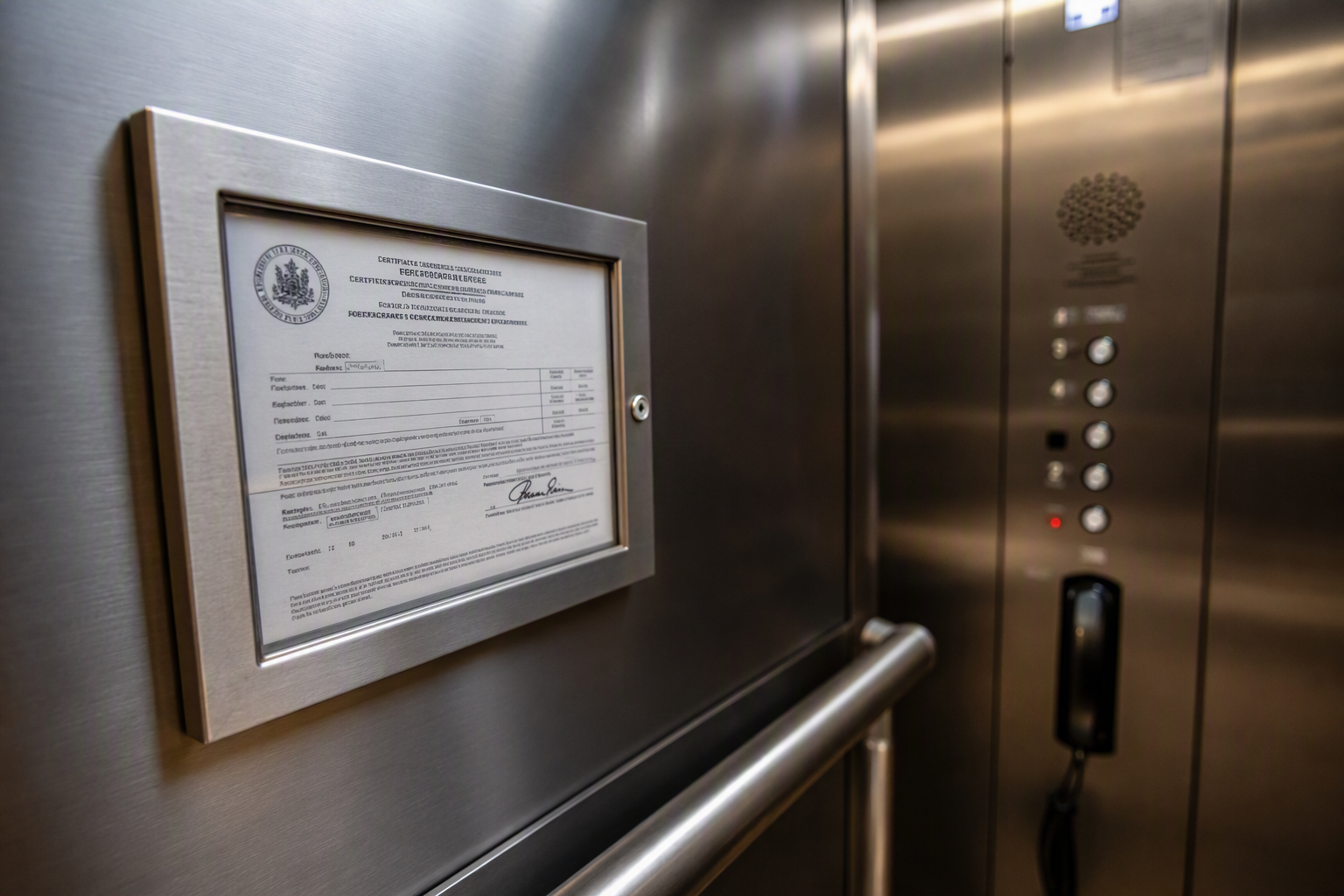
Hotel owners should verify inspection frequency directly with their state elevator safety authority, as jurisdictions vary. Following each inspection, a current certificate of inspection must be posted inside the elevator car — a requirement that is visible to guests and routinely checked by local inspectors during unannounced visits.
| Requirement Type | Typical Interval | Who Performs |
|---|---|---|
| Periodic Inspection | Annually (most jurisdictions) | Qualified/licensed inspector |
| Periodic Safety Test (Category 1) | Annually | Qualified elevator mechanic + inspector |
| Periodic Safety Test (Category 5) | Every 5 years | Qualified elevator mechanic + inspector |
| Certificate of Inspection Posting | Continuous (renewed after each inspection) | Inspection authority |
What ADA Requirements Apply to Hotel Elevators?
The Americans with Disabilities Act classifies hotels as places of public accommodation, which means elevator accessibility is not optional — it is a federal civil rights requirement. Key ADA elevator requirements for hospitality buildings include:
- Car dimensions: Elevator cars must meet minimum interior size requirements to allow wheelchair maneuverability.
- Door operation: Doors must remain open long enough for a person with a mobility device to enter and exit safely, with reopening devices required.
- Controls and signage: Call buttons and interior controls must be at accessible heights, Braille and raised character signage is required, and audible signals must indicate car arrival and direction of travel.
- Leveling accuracy: Cars must level within one-half inch of the floor sill to allow safe entry and exit by wheelchair users.
- Emergency communication: A two-way communication system is required inside every car, enabling passengers to summon help if needed — a critical accessibility feature for guests with disabilities.
ADA requirements apply to new construction and alterations. For existing hotels undergoing renovation, elevator modifications trigger compliance upgrades. Regular maintenance is also necessary to keep ADA features — such as door sensors, leveling systems, and intercoms — functioning correctly, because a malfunctioning accessible feature can constitute an ADA violation.
What Ongoing Maintenance Does ASME A17.1 Require?
Beyond scheduled inspections and tests, ASME A17.1 requires that a documented maintenance program be in place for every elevator. This is not a suggestion — the code specifically calls for a Maintenance Control Program (MCP), which must include:
- Written procedures for all maintenance tasks performed on the equipment
- Intervals at which each task is to be completed
- A maintenance record log kept on-site or accessible to the inspection authority
- Documentation of all repairs and replacements, including parts used
For hotels, the MCP is especially important because high daily usage accelerates wear on components such as door operators, rollers, cables, buffers, and safety devices. A hotel elevator running 24 hours a day, seven days a week accumulates far more operating cycles per year than a standard commercial office elevator, which drives more frequent maintenance intervals in practice even when code minimums are met.
What Safety Devices Must Hotel Elevators Have?
Under ASME A17.1, hotel elevators must be equipped with a range of mandatory safety devices, all of which must be maintained in working order:
- Safeties and governors: Mechanical devices that stop the car if it exceeds a safe speed in the downward direction
- Buffers: Hydraulic or spring devices at the bottom of the hoistway that absorb energy in the event of over-travel
- Door interlocks: Prevent car movement unless all hoistway doors are fully closed and locked
- Overspeed governor: Triggers safeties if car speed exceeds rated speed
- Emergency lighting and power: Must activate automatically upon normal power loss
- Fire service recall: Required by code so that elevators can be recalled to a designated floor in fire emergencies and operated by firefighters — a critical life-safety feature in multi-story hotels
- Two-way emergency communication: Required by both ASME A17.1 and the ADA
- Pit lighting and stop switch: Required for maintenance worker safety per OSHA regulations and ASME standards
What Are a Hotel’s Responsibilities Under Fire Service and Emergency Code Requirements?
Fire service operation — sometimes called Phase I and Phase II recall — is one of the most critical code requirements for hotel elevators. Under ASME A17.1 and NFPA 72 (the National Fire Alarm and Signaling Code, which interfaces with elevator fire recall systems), hotels must:
- Ensure smoke detectors at each elevator lobby, the machine room, and the pit are connected to the fire alarm system and capable of triggering Phase I recall
- Maintain Phase I recall so that all cars return to the designated recall floor and open their doors upon alarm activation
- Maintain Phase II firefighter service so that fire department personnel can operate the elevator manually from inside the car during emergency response
- Test fire recall functions as part of the periodic testing program
These requirements are non-negotiable for multi-story hotels and are among the most scrutinized items during state and local inspections.
What Happens If a Hotel Elevator Fails Inspection?
When a hotel elevator fails a mandatory inspection, the consequences are immediate and significant. Typical outcomes include:
- Out-of-service order: The inspection authority issues a shutdown order, and the elevator must be taken out of service until violations are corrected.
- Violation notice: A written notice of violation is issued detailing what must be corrected and within what timeframe.
- Re-inspection requirement: After repairs are made, the elevator must pass a re-inspection before it can return to service.
- Fines and penalties: Continued operation of a failed or uninspected elevator can result in civil penalties under state law.
- Liability exposure: A failed inspection that was not promptly addressed creates significant legal liability if a guest or employee is subsequently injured.
- Insurance implications: Some property insurance policies contain elevator compliance clauses; a documented inspection failure may affect coverage.
For hotels, an out-of-service elevator is also a significant operational and reputational problem, particularly in properties where elevator access is the only practical means of reaching upper floors for guests with mobility limitations.
What Should Hotels Do Immediately Following an Elevator Incident or Entrapment?
- Contact emergency services if passengers are entrapped — do not attempt to extract passengers without trained personnel.
- Notify the elevator service contractor immediately to dispatch a qualified mechanic.
- Secure the elevator so that no additional passengers attempt to board or operate the car.
- Document the incident in writing, including time, elevator number, conditions observed, and any guest or employee accounts.
- Report the incident to the relevant state elevator authority if required — many jurisdictions mandate reporting of accidents, injuries, or uncontrolled movement incidents.
- Do not return the elevator to service until the mechanic has inspected the equipment and confirmed it is safe to operate.
- Preserve records — maintenance logs, inspection certificates, and service records should be retained and protected in the event of regulatory review or litigation.
How Do Hotel Elevator Requirements Differ From Other Commercial Buildings?
The underlying code framework — primarily ASME A17.1 and the ADA — applies broadly to all commercial elevators, but hotel environments create distinct practical considerations:
- Usage intensity: Hotels typically operate elevators 24 hours a day with guest populations that vary widely in elevator experience. This drives accelerated wear on mechanical components compared to standard office buildings with predictable usage windows.
- Guest-facing appearance: Hotels face reputational pressure to maintain elevator cab aesthetics, lighting, and amenities beyond the minimum code requirements.
- Diverse user population: Hotels serve guests with varying abilities, ages, and familiarity with elevator operation, which heightens the practical importance of ADA compliance and well-maintained accessibility features.
- Property management complexity: Large hotel properties may have multiple elevator types — passenger, service, and freight — each with distinct maintenance profiles and code requirements.
- Brand and franchise standards: Hotel franchise agreements often impose elevator maintenance and appearance standards above and beyond code minimums, including required response times for out-of-service equipment.
What Does Hotel Elevator Modernization Involve and When Is It Required?
Modernization is not triggered by a specific calendar date but by a combination of factors: equipment age, parts obsolescence, code compliance gaps revealed during inspection, and operational performance decline. When a hotel elevator undergoes a major alteration — defined under ASME A17.1 as work that changes the elevator’s performance, capacity, or safety features — the modernized elements must be brought into compliance with the current adopted edition of the code.
Common modernization triggers in hotel properties include:
- Obsolete relay-logic controllers that are no longer serviceable due to parts unavailability
- Hydraulic systems that use environmentally regulated fluids and require conversion to compliant alternatives
- Door systems that no longer reliably meet the reopening and timing requirements of ADA standards
- Emergency communication systems that require upgrading to meet current two-way communication requirements
- Fire service recall systems that are incompatible with updated fire alarm infrastructure
What Are the 2025–2026 Trends Shaping Hotel Elevator Compliance?
Several developments are shaping how hotels approach elevator maintenance and safety compliance in 2025 and 2026:
- Remote monitoring and predictive maintenance: Advanced monitoring systems that track elevator performance data in real time are increasingly deployed in hotel properties. These systems can identify developing mechanical issues before they result in failures or inspection violations, shifting maintenance from reactive to predictive.
- Code enforcement tightening: Many state elevator safety authorities have increased inspection frequency and enforcement activity in recent years, particularly for high-occupancy buildings such as hotels. Properties that previously operated with informal maintenance practices are finding stricter scrutiny.
- Hydraulic fluid environmental compliance: Ongoing regulatory pressure around environmentally acceptable lubricants (EALs) and hydraulic fluids continues to affect older hotel hydraulic elevator systems, particularly in jurisdictions near sensitive environmental areas.
- Cybersecurity considerations: As elevator controllers and monitoring systems become networked, building operators are beginning to encounter questions about cybersecurity protocols for connected elevator systems — an emerging area of risk management for hotel properties.
- ADA enforcement activity: The ADA continues to be actively enforced in the hospitality sector, with accessibility complaints and litigation reinforcing the business case for proactive compliance maintenance.
How Should Hotels Select an Elevator Maintenance Contractor?
Selecting the right maintenance contractor is one of the most consequential decisions a hotel operator makes with respect to elevator compliance. Key factors to evaluate include:
- Licensing: Verify that the contractor holds the required state elevator contractor license and that mechanics are certified under applicable state requirements.
- Code knowledge: The contractor should demonstrate specific knowledge of ASME A17.1, ADA requirements, and local jurisdiction amendments — not just generic mechanical experience.
- Maintenance Control Program capability: The contractor should be able to develop and maintain an ASME-compliant Maintenance Control Program for each elevator in the property.
- Documentation practices: Ask how service records are maintained and how the hotel will have access to inspection and maintenance documentation.
- Experience with hospitality properties: Hotel elevator environments have specific demands; a contractor with hospitality experience understands the 24/7 usage profile and guest-impact considerations.
- Transparency: A reliable contractor provides written recommendations, explains required versus recommended repairs, and helps the property understand its compliance obligations rather than keeping that information opaque.
AmeriTex Elevator supports hotel and hospitality clients with data-driven maintenance programs designed around ASME A17.1 requirements and jurisdictional compliance needs. AmeriTex approaches elevator maintenance as a compliance and safety discipline — not just a mechanical service — providing the documentation and program structure that hotel operators need to demonstrate ongoing regulatory compliance.
What Records Must Hotels Maintain for Elevator Compliance?
Proper record-keeping is both a code requirement and a liability management practice. Hotels should maintain the following documentation:
- Current certificate of inspection (posted inside each car as required by state law)
- Maintenance Control Program documentation per ASME A17.1
- Written maintenance logs showing dates, tasks performed, technician identification, and parts replaced
- Inspection reports from all periodic inspections and tests
- Records of any repairs made following inspection findings
- Documentation of any incidents, entrapments, or accidents and the corrective actions taken
- Permits for any alteration or modernization work performed
These records should be retained for as long as required by the applicable jurisdiction, and many legal and risk management professionals recommend retaining elevator records for the life of the equipment or property ownership.
Can Hotel Staff Perform Any Elevator Maintenance Themselves?
Under ASME A17.1 and OSHA regulations, maintenance and repair work on elevator equipment must be performed by qualified elevator mechanics — individuals with the training, certification, and licensing required by the jurisdiction. Hotel engineering staff are generally not authorized to perform work inside hoistways, machine rooms, or on elevator control systems unless they hold the required credentials.
What hotel staff can appropriately do includes:
- Conduct basic visual observations and report unusual sounds, behaviors, or door issues to the service contractor
- Initiate entrapment response protocols (calling for help, communicating with passengers)
- Maintain cleanliness of elevator cabs and lobbies
- Ensure that inspection certificates are posted and visible
Attempting maintenance beyond these boundaries without qualified personnel creates OSHA violations and code liability, and can void equipment warranties or maintenance contracts.
Summary: Key Hotel Elevator Compliance Obligations
| Compliance Area | Governing Standard | Key Obligation |
|---|---|---|
| Periodic Inspection | ASME A17.1 / State Law | Annual inspection; certificate posted in car |
| Maintenance Program | ASME A17.1 | Written MCP with task intervals and records |
| Safety Devices | ASME A17.1 | Safeties, governors, buffers, interlocks maintained |
| Fire Service Recall | ASME A17.1 / NFPA 72 | Phase I & II recall tested and functional |
| Accessibility | ADA | Door timing, controls, leveling, emergency comm |
| Worker Safety | OSHA | Qualified mechanics only; pit/machine room safety |
| Record Keeping | ASME A17.1 / State Law | Maintenance logs, inspection reports retained |
Get a Free Elevator Assessment for Your Hotel Property
Hotel elevator compliance is complex, consequential, and constantly evolving. AmeriTex Elevator provides hotel and hospitality operators with professional elevator assessments grounded in ASME A17.1, ADA, and current state code requirements — helping properties identify compliance gaps, build defensible maintenance programs, and keep guests moving safely.
Contact AmeriTex Elevator for a free elevator assessment: 866-679-4313
Need elevator service you can rely on? AmeriTex Elevator is ready to help.