Elevator Service in Houston, TX | AmeriTex Elevator
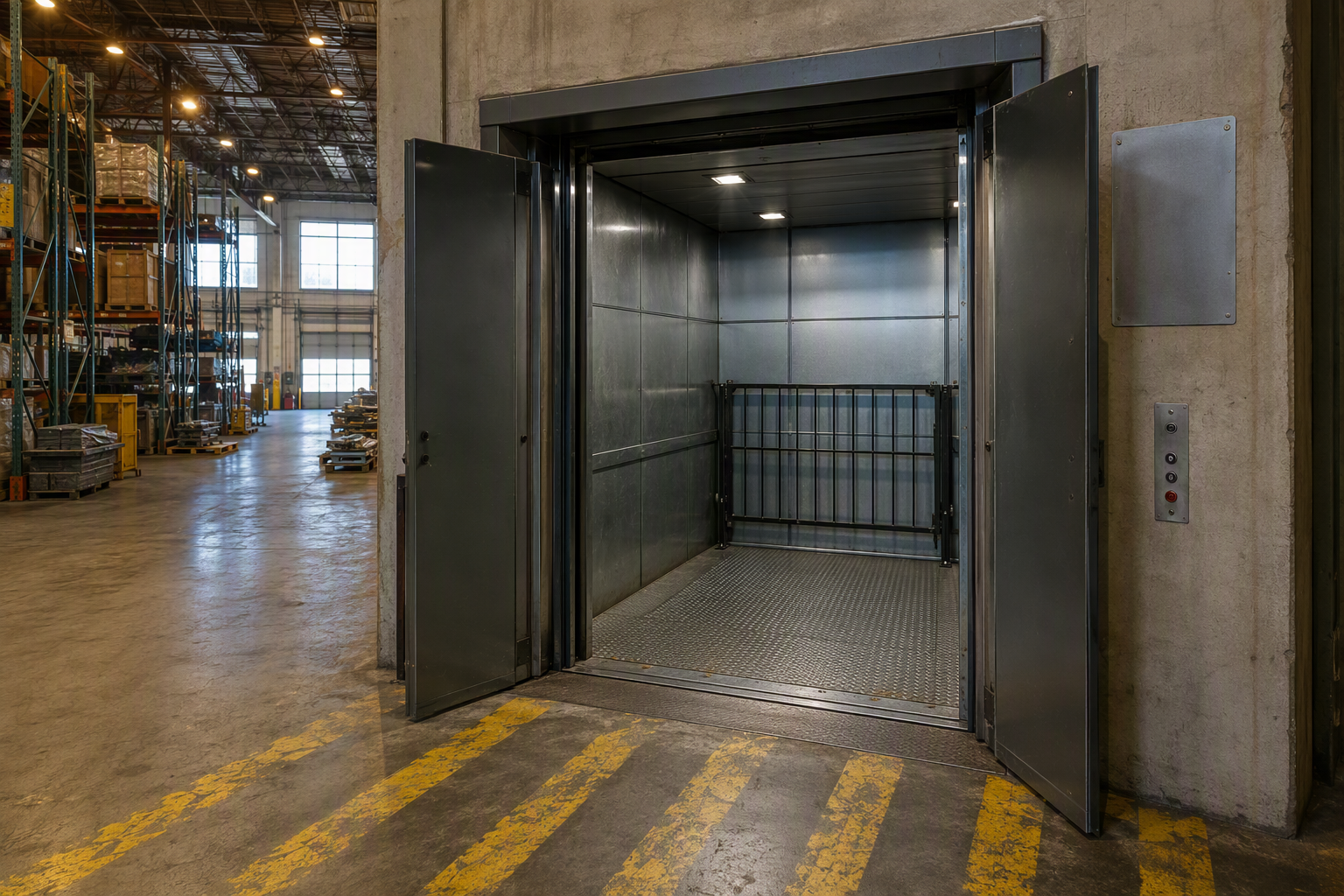
Freight elevators in Houston warehouses and industrial facilities carry more than cargo — they carry significant regulatory obligations. Owners and facility managers must navigate a layered framework of national codes, state inspection requirements, and federal workplace safety rules. Failing to meet these obligations can result in equipment shutdowns, citations, liability exposure, and operational downtime that disrupts the entire supply chain. AmeriTex Elevator provides certified elevator maintenance and code compliance services throughout Houston, TX and the surrounding industrial corridor.
What federal and state codes govern freight elevators in Texas industrial buildings?
Freight elevators in Texas are governed by a combination of national and state-level standards that work together to define safe design, installation, inspection, and maintenance practices.
At the national level, the ASME A17.1 Safety Code for Elevators and Escalators is the foundational document. It establishes requirements for freight elevator classes, rated load capacities, door configurations, safety devices, and maintenance intervals. Texas adopts and enforces this code through the Texas Department of Insurance (TDI), which oversees elevator permitting, inspection, and licensing statewide.
OSHA’s General Industry standards under 29 CFR 1910 also apply when freight elevators are used by workers in industrial settings. Employers have a general duty to maintain equipment free from recognized hazards, and freight elevator failures in warehouse environments can trigger OSHA investigations and citations.
For 2026, facility managers should verify that their equipment meets the current edition of ASME A17.1 as adopted by TDI, since code editions are periodically updated and Texas may be on a different adoption cycle than other states.
What types of freight elevators are classified under ASME A17.1, and why does the classification matter?
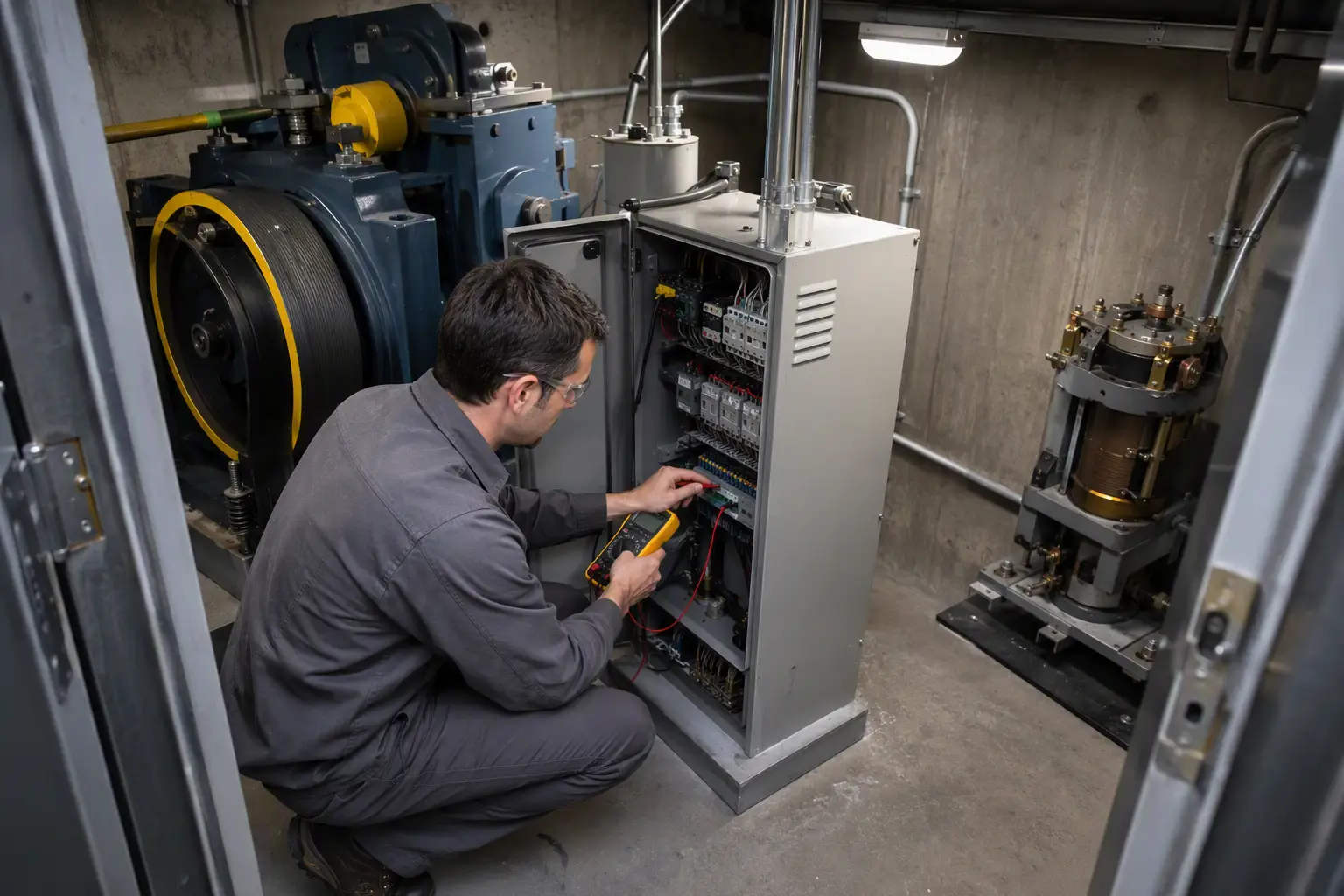
The ASME A17.1 Safety Code for Elevators and Escalators defines distinct freight elevator classes based on how loads are loaded and distributed. These include:
- Class A (General Freight Loading): The load is distributed over at least half the platform area, and no single item exceeds a defined percentage of the rated load.
- Class B (Motor Vehicle Loading): Designed specifically for automobile parking garages and similar facilities.
- Class C (Industrial Truck Loading): Subdivided into classes C1, C2, and C3, these handle concentrated loads from forklifts, pallet jacks, and industrial trucks.
Classification directly determines rated capacity, structural requirements, safety device specifications, and the maintenance schedule your elevator must follow. Misclassification — operating a Class A elevator under Class C loading conditions, for example — is a code violation and creates serious liability exposure for building owners and employers.
How often must freight elevators in Texas warehouses be inspected?
Texas requires periodic inspections of all commercial and industrial elevators under TDI’s Elevator Safety Program. Routine inspections and witnessing of safety tests must be performed at intervals defined by state rule and the adopted edition of ASME A17.1. Most freight elevators require both periodic inspections and periodic tests (such as the annual or five-year safety tests for certain devices) depending on the equipment type and installation date.
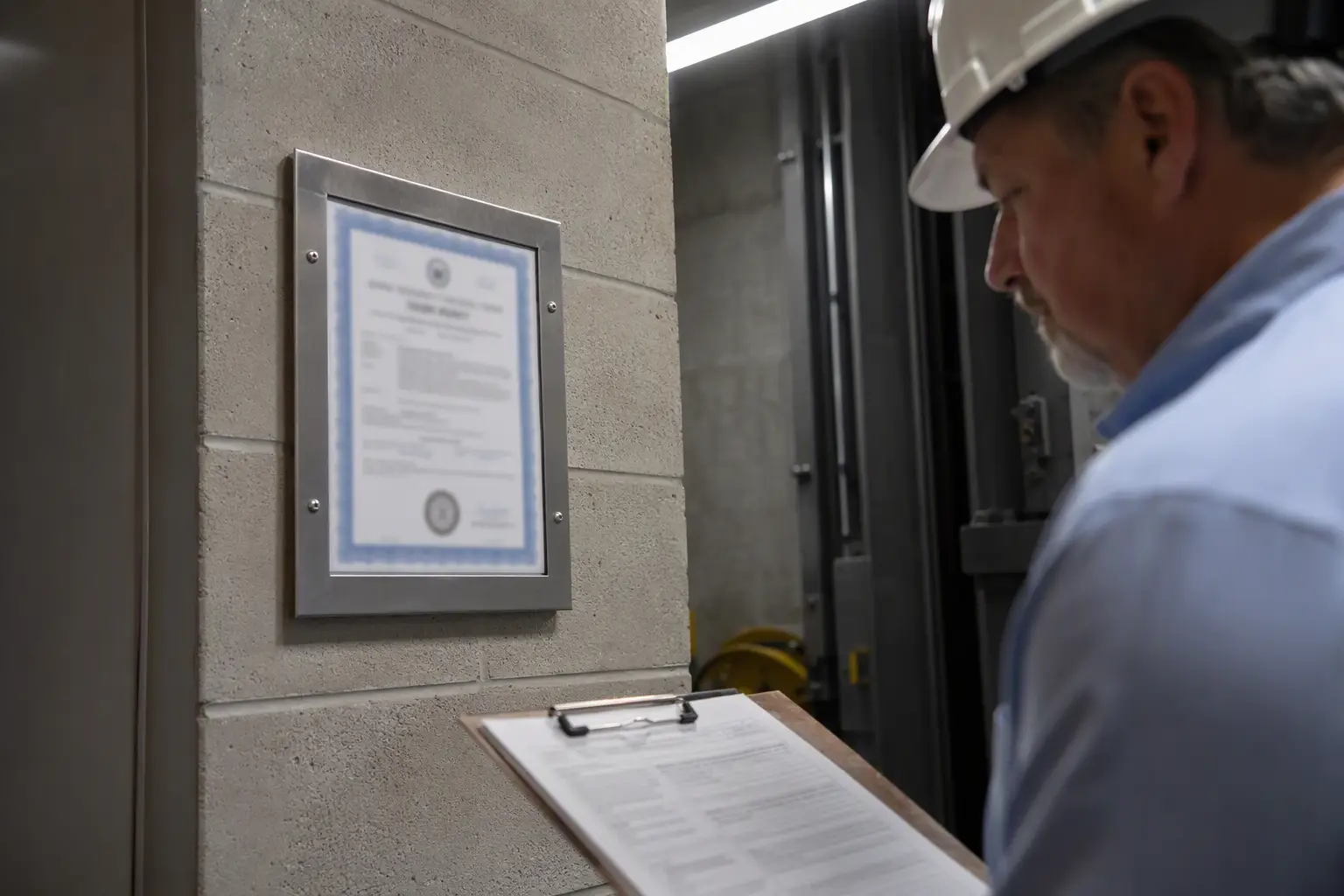
Building owners are responsible for ensuring their equipment is inspection-ready and for maintaining accurate maintenance records. A qualified elevator service contractor performs the maintenance and prepares the equipment; a licensed elevator inspector then conducts the official inspection and issues a Certificate of Inspection. Operating a freight elevator in Texas without a valid Certificate of Inspection is illegal and can result in mandatory shutdown orders.
What does a compliant freight elevator maintenance program include?
A compliant maintenance program for industrial freight elevators in Texas goes well beyond periodic lubrication. Under ASME A17.1, maintenance must be systematic, documented, and performed by qualified personnel. A properly structured program typically includes:
- Regular inspection and adjustment of safety devices including governors, safeties, and buffers
- Lubrication of guide rails, sheaves, and mechanical components per manufacturer specifications
- Inspection and testing of door interlocks, gate switches, and landing doors — especially critical in high-cycle freight environments
- Hydraulic fluid analysis and cylinder integrity checks for hydraulic freight elevators
- Load weighing device calibration and overload protection verification
- Controller and wiring inspections to identify deterioration caused by industrial dust, vibration, and temperature extremes common in Houston warehouses
- Pit and machine room inspections for moisture, pests, and code-compliant lighting
- Documentation of all work performed, findings, and corrective actions taken
Maintenance logs are not optional — they are required records that inspectors review and that protect building owners in the event of an incident investigation.
What ADA requirements apply to freight elevators in industrial facilities?
The Americans with Disabilities Act (ADA) generally exempts freight elevators used exclusively for freight from the accessibility requirements that apply to passenger elevators. However, if a freight elevator serves as the only means of vertical access for employees with disabilities — a situation that can arise in older multi-story Houston warehouse buildings — ADA obligations may apply.
Facility managers undertaking renovations or alterations should consult with a qualified elevator contractor and legal counsel to evaluate whether ADA-compliant upgrades are triggered. Alterations to an existing elevator can create an obligation to bring the entire unit into compliance with current ADA Standards for Accessible Design.
What are the most common code violations found on freight elevators during Texas inspections?
Freight elevators in Houston’s industrial buildings are subject to harsh operating conditions — heavy loads, high cycle counts, temperature fluctuations, and industrial dust — that accelerate wear and increase the likelihood of violations. Common deficiencies found during TDI inspections include:
- Deteriorated or missing door interlocks and gate switches
- Worn or damaged wire rope with inadequate safety factors
- Inadequate pit clearances or pit lighting
- Machine room conditions that fail to meet code (improper storage, inadequate ventilation, missing fire protection)
- Missing or expired load ratings posted in the elevator cab
- Lack of required maintenance documentation
- Overloading damage from industrial truck loading on improperly rated equipment
Proactive maintenance is the most cost-effective way to avoid citations. Equipment that is maintained on a documented schedule consistently performs better during inspections than equipment that receives only reactive repairs.
What should a facility manager do immediately if a freight elevator fails inspection or is shut down?
A failed inspection or emergency shutdown of a freight elevator in a warehouse creates immediate operational pressure. The following steps outline a structured response:
- Post the elevator as out of service and restrict access immediately to prevent unauthorized use and additional liability.
- Obtain and review the inspection report to identify all deficiencies cited — both mandatory corrections and advisory items.
- Contact a licensed elevator service contractor to evaluate the scope of corrective work required.
- Prioritize repairs based on the severity of violations — safety-critical deficiencies must be addressed before the elevator can legally resume service.
- Coordinate with TDI regarding the process for re-inspection once corrective work is complete.
- Document all repairs with written records including parts used, work performed, and technician qualifications.
- Schedule a follow-up inspection with a licensed inspector to obtain a new Certificate of Inspection before returning the elevator to service.
Why do Houston warehouse operators choose AmeriTex Elevator for freight elevator compliance?
AmeriTex Elevator serves Houston, TX and the surrounding industrial market, working with warehouse operators, distribution centers, manufacturing facilities, and commercial property managers across the region. The AmeriTex team understands the specific demands of freight elevator environments — the heavy-duty mechanical components, the high cycle rates, and the regulatory scrutiny that comes with industrial equipment in Texas.
AmeriTex provides maintenance programs structured around ASME A17.1 requirements and TDI compliance expectations, with thorough documentation to support inspection readiness. Emergency service is available for facilities that experience unexpected equipment failures, helping minimize operational downtime when freight elevator issues arise.
For Houston facility managers who need a reliable compliance partner — not just a repair service — AmeriTex Elevator offers the expertise and local presence to keep industrial elevators running safely and legally.
Schedule a Free Consultation
Is your Houston warehouse or industrial facility’s freight elevator due for an inspection, maintenance review, or compliance assessment? Contact AmeriTex Elevator to discuss your specific equipment and regulatory obligations.
Call AmeriTex Elevator today: 866-679-4313
AmeriTex Elevator serves Houston, TX and surrounding communities throughout the greater Houston industrial corridor. Schedule a free consultation to evaluate your freight elevator’s compliance status and maintenance needs.
Need elevator service you can rely on? AmeriTex Elevator is ready to help.