How Do I Budget for Elevator Maintenance and Repairs in My 2027 Capital Plan?
Building owners and facility managers planning their 2027 capital expenditures need a structured, compliance-aware framework for elevator costs. Elevators are regulated mechanical systems governed by ASME A17.1 Safety Code for Elevators and Escalators and state-level amendments, meaning certain expenditures are not discretionary — they are legally required. This FAQ hub covers every major cost category, compliance trigger, and planning strategy you need to build a defensible elevator budget line for 2027.
What are the four core budget categories every elevator capital plan must include?
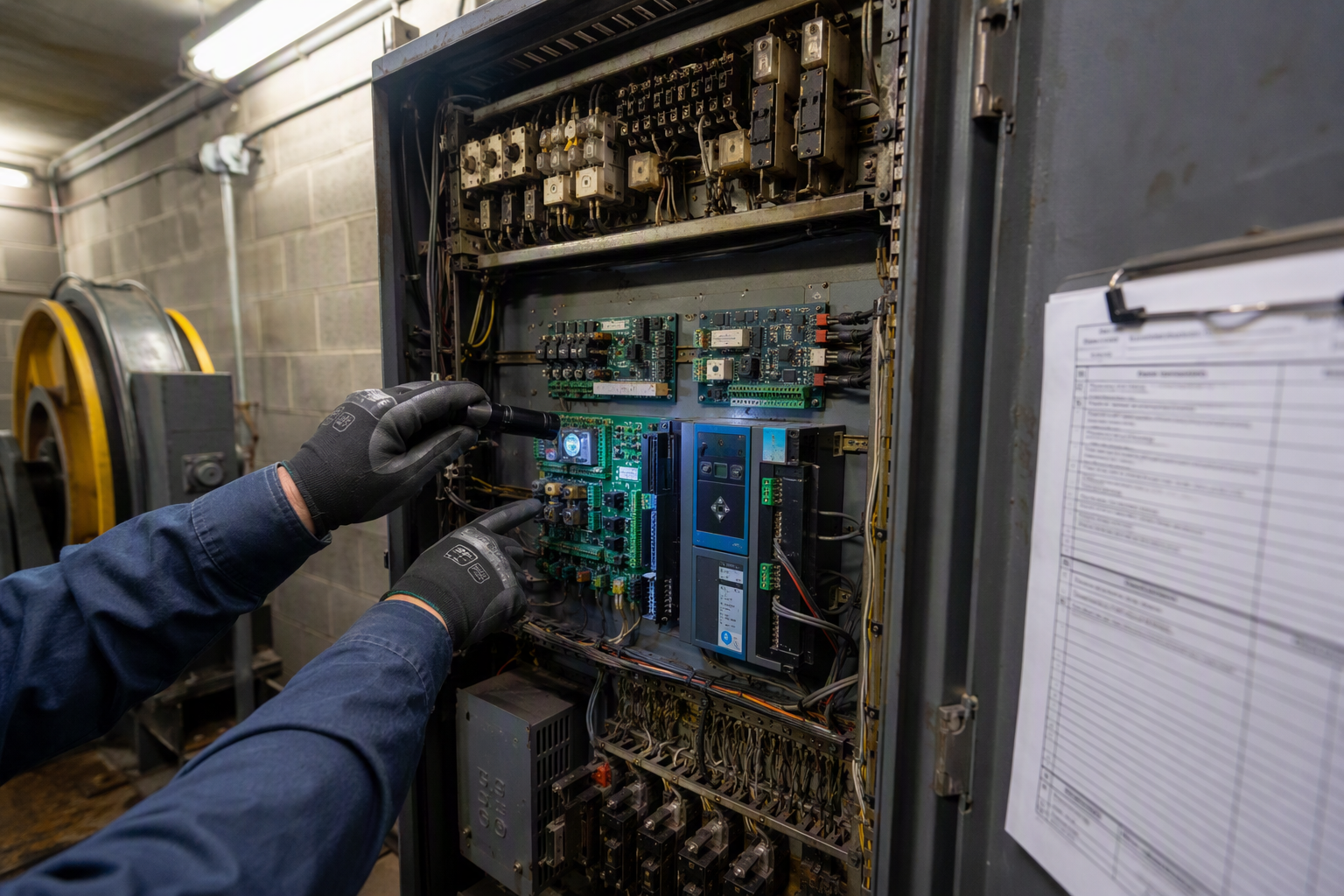
Every elevator capital plan must include preventive maintenance contracts, mandatory inspections and permits, a component replacement reserve, and an unplanned-repair contingency fund.
Preventive maintenance is the foundation — it covers routine lubrication, adjustment, and parts inspection on a scheduled cycle and is typically structured as an annual service contract. Mandatory inspections are non-negotiable in every jurisdiction AmeriTex Elevator serves; Texas and California both require periodic third-party inspections with associated permit fees. The component replacement reserve accounts for the predictable end-of-life replacement of high-wear items such as controllers, door operators, hydraulic cylinders, and cab interiors. The contingency fund absorbs costs from callback repairs, emergency service, and code violations discovered during inspection cycles.
How does equipment age affect how much should be reserved for elevator repairs?
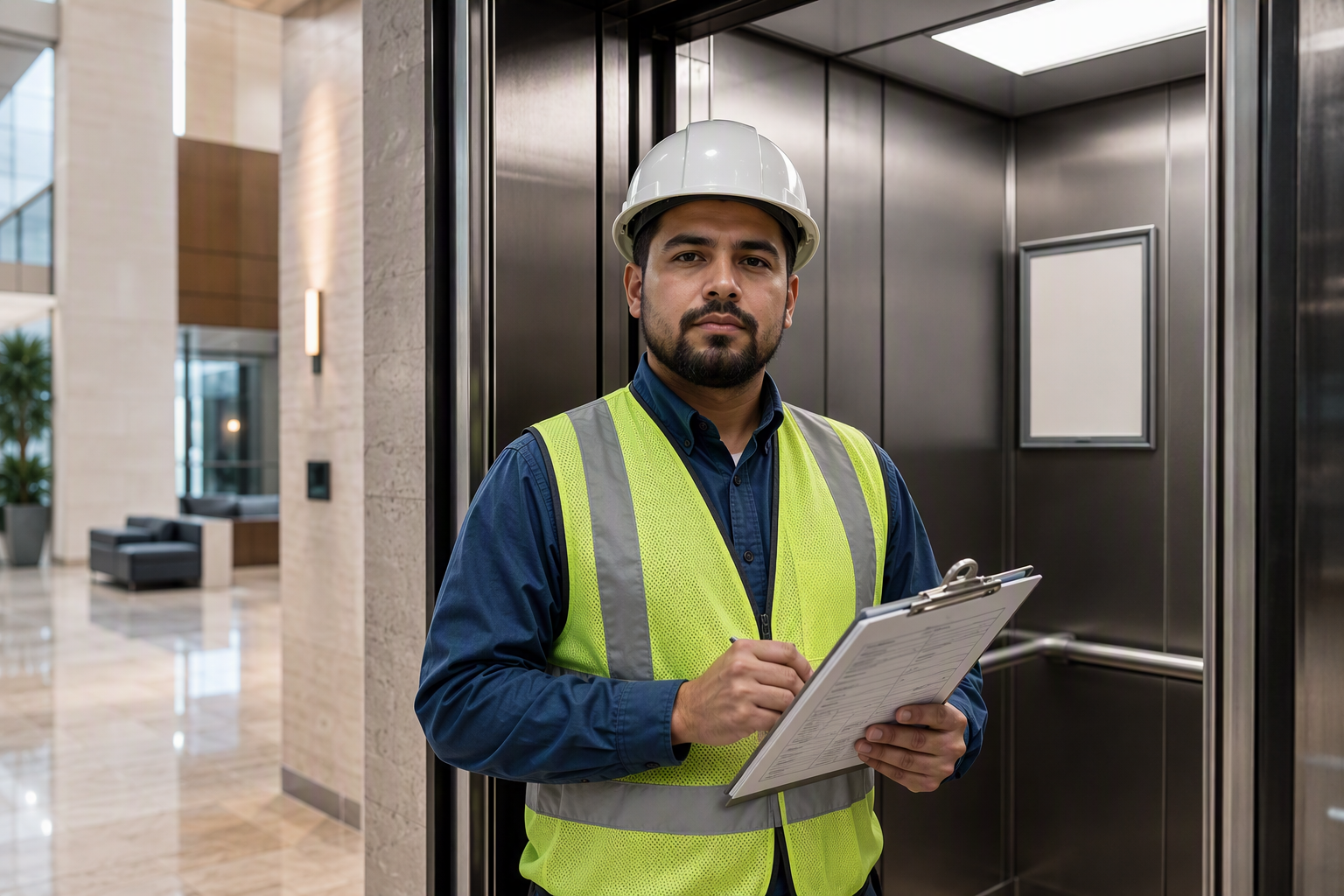
Equipment age is the single strongest predictor of repair costs, because older elevators require more frequent parts replacement and are more likely to trigger code-compliance upgrades during modernization reviews.
Elevators are typically categorized in planning documents by age tier: newer installations under ten years old generally require lower reserves focused on routine maintenance; mid-life systems between ten and twenty years old often need controller boards, door operator upgrades, and drive system attention; and older systems beyond twenty years are frequently candidates for full or partial modernization. When a major component is replaced on an older system, most jurisdictions — including Texas Department of Insurance (TDI) and California’s Division of Occupational Safety and Health (Cal/OSHA) — treat the work as an alteration triggering a fresh compliance review against current ASME A17.1 requirements. That compliance review can surface additional mandatory upgrades, so capital planners should treat aging equipment as a risk multiplier.
What compliance inspections are legally required in Texas and California, and what do they cost to plan for?
Texas requires annual inspections by a licensed elevator inspector under the Texas Elevator Safety and Licensing Act, while California requires periodic inspections by a Certified Competent Conveyance Inspector under Title 8 of the California Code of Regulations — and both programs carry permit fees that belong in the capital plan.
In Texas, the inspection program is administered by the Texas Department of Insurance. Permits and certificate fees are set by the state and vary by equipment type; building owners should obtain current fee schedules directly from TDI for their specific equipment inventory. In California, the Cal/OSHA Elevator Unit administers inspections; fees similarly vary by elevator type and jurisdiction. Beyond state fees, ADA compliance — governed by the Americans with Disabilities Act — can require accessible controls, audible signals, and Braille signage. If a building is undergoing renovation in 2027, the path-of-travel requirement under ADA may mandate elevator accessibility upgrades as part of the broader project budget.
What is the difference between a full-maintenance contract and a parts-and-labor contract, and which is better for capital planning?
A full-maintenance contract covers labor, routine parts, and most callbacks under a fixed annual fee, while a parts-and-labor (or oil-and-grease) contract covers only labor and consumables, leaving the building owner responsible for all parts costs — making full-maintenance contracts far more predictable for capital planning.
For 2027 capital plans, full-maintenance agreements offer budgeting certainty because they convert variable repair exposure into a fixed operating expense. Parts-and-labor contracts carry lower upfront premiums but expose the building to unpredictable parts invoices, which can be substantial for aging equipment. Capital planners should review the exclusions in any full-maintenance contract carefully: most exclude major modernization components, vandalism damage, and work required by code changes enacted after the contract start date. Those exclusions define exactly what must be reserved separately in the capital plan.
What major elevator components have the highest replacement costs and should be individually line-itemed in a capital plan?
The components with the highest individual replacement costs are the controller and drive system, hydraulic cylinder or traction machine, door operator assemblies, and cab interior — each of which should be tracked separately in a long-range capital reserve.
| Component | Typical Service Life | Replacement Trigger | Compliance Consideration |
|---|---|---|---|
| Controller / Drive System | 15–25 years | Obsolete parts, nuisance trips | Replacement = alteration; ASME A17.1 review required |
| Hydraulic Cylinder | 25–40 years | Single-bottom cylinders (see below), leaks | Single-bottom cylinder replacement mandated by ASME A17.1 |
| Door Operator | 15–20 years | Excessive nuisance calls, door reversal failures | Door reopening devices required per ASME A17.1 |
| Traction Machine (Geared) | 25–35 years | Excessive brake wear, worm gear deterioration | Governor and rope replacement reviewed concurrently |
| Cab Interior / Flooring | 15–20 years | ADA non-compliance, cosmetic deterioration | ADA control height and reach range compliance |
| Pit Ladder / Lighting | Maintenance cycle | Inspection deficiency | OSHA pit safety requirements; ASME A17.1 pit specs |
| Emergency Communication System | 5–10 years | POTS line discontinuation, code update | ASME A17.1 two-way communication requirement |
Service life ranges in this table reflect general industry guidance based on equipment type; actual life depends on usage intensity, environment, and maintenance history. AmeriTex Elevator recommends a physical condition assessment of each component to validate reserve estimates before finalizing a 2027 capital plan.
What is a single-bottom hydraulic cylinder, and why is it a critical budget item for 2027?
A single-bottom hydraulic cylinder is a type of in-ground cylinder that lacks a secondary containment sleeve; ASME A17.1 has required replacement of these cylinders with PVC-sleeved or above-ground alternatives, and any building still operating one faces a mandatory capital expenditure.
Buildings with hydraulic elevators installed before the early 1990s should verify cylinder type immediately. If a single-bottom cylinder is in service, its replacement is not a discretionary upgrade — it is a code-required alteration. In addition to the ASME requirement, environmental regulations in California and Texas address hydraulic fluid containment and soil contamination liability, meaning the financial risk of deferral extends beyond the elevator permit to environmental remediation. Capital planners should treat single-bottom cylinder replacement as a high-priority line item if applicable.
How should a capital plan account for elevator modernization versus ongoing repairs?
Capital plans should model a “repair versus replace” crossover point at which the cumulative cost of ongoing repairs and the risk of downtime makes full modernization more economical than continued patching of aging equipment.
A common planning heuristic used in the industry is that when annual unplanned repair costs and downtime risk approach a significant fraction of modernization cost over a rolling three-year window, modernization typically delivers a better total-cost outcome. However, the precise crossover depends on usage intensity, equipment type, and local labor markets. Modernization also resets the compliance clock: a fully modernized elevator is reviewed against current ASME A17.1 at completion, which eliminates many future alteration-triggered compliance costs. Capital planners in Houston, Dallas, Austin, and San Antonio should factor Texas’s active inspection enforcement into their risk calculations; similarly, California’s stringent Cal/OSHA elevator program makes deferred modernization riskier in Los Angeles and San Diego markets.
What role does ADA compliance play in elevator capital planning?
ADA compliance is both a legal requirement and a capital trigger: elevator alterations, building renovations, and readily achievable barrier removal obligations can all require ADA-compliant elevator features that must be budgeted explicitly.
Under the Americans with Disabilities Act, buildings subject to ADA (virtually all commercial and multi-family buildings open to the public) must provide accessible elevator service. Specific technical requirements include control button height (between 15 and 48 inches above floor), Braille and raised character signage, audible floor indicators, and minimum cab dimensions for wheelchair access. When an elevator undergoes alteration — even a controller replacement — it can trigger a review of the full cab for ADA conformance. For 2027 capital plans, building owners should audit current ADA status and reserve funds for any deficiencies identified, particularly if other capital work is planned that would trigger alteration review.
How should emergency communication system upgrades be budgeted for 2027?
Emergency communication system upgrades — driven by the nationwide discontinuation of POTS (Plain Old Telephone Service) landlines — are an active capital requirement for many buildings in 2027 and must be budgeted as a near-term compliance item.
ASME A17.1 requires a means of two-way communication in each elevator cab. Legacy systems relied on analog telephone lines; as telecom carriers discontinue POTS infrastructure, these systems fail or become unreliable. Replacement options include cellular-based communicators, VoIP-compatible dialers, and dedicated elevator communication over building network infrastructure. The capital cost varies by solution type and the number of elevators in a building. Because communication system failure is an immediate inspection deficiency in most jurisdictions, this upgrade should be treated as mandatory rather than discretionary in 2027 planning.
What is a multi-year elevator reserve study, and how does it improve capital planning accuracy?
A multi-year elevator reserve study is a formal engineering assessment that documents each elevator’s current condition, remaining useful life of major components, and projected replacement costs on a year-by-year basis — the most reliable input for a defensible capital plan.
Reserve studies are standard practice for condominium associations, REITs, and institutional building owners. For 2027 capital plans, a reserve study conducted in 2026 provides current-condition data rather than age-based assumptions, which significantly improves accuracy. The study typically includes a physical inspection of all equipment, a component inventory with age and condition ratings, and a cost projection schedule. AmeriTex Elevator provides formal elevator condition assessments that feed directly into reserve study documentation, giving building owners the equipment-level data needed to justify capital allocations to ownership groups, lenders, or boards.
How should building owners in Houston and Dallas budget differently than those in Los Angeles and San Diego?
Texas and California have different inspection frequencies, fee structures, administrative bodies, and code adoption timelines, meaning the compliance cost components of a capital plan will differ by state even for identical equipment.
In Texas, the Texas Department of Insurance administers the elevator program under the Texas Elevator Safety and Licensing Act; annual certificate fees, inspection cycles, and variance procedures are governed by TDI rules. In California, Cal/OSHA’s Elevator Unit governs inspection and permitting under Title 8; California also adopts its own amendments to the base ASME A17.1 code, which can create California-specific compliance requirements that do not apply in Texas. Capital planners managing multi-state portfolios that include properties in Houston, Dallas, Austin, or San Antonio alongside Los Angeles or San Diego locations should build state-specific compliance line items into each property’s plan rather than applying a uniform national template.
What OSHA requirements affect elevator maintenance budgets?
OSHA standards governing worker safety in elevator machine rooms, pits, and during maintenance activities impose equipment and procedural requirements that building owners must support through maintenance contracts and facility upkeep budgets.
OSHA requirements relevant to elevator environments include proper pit lighting and drainage, machine room housekeeping and temperature control, lockout/tagout capability for elevator disconnects, and fall protection for pit access. While many of these are the operational responsibility of the elevator service contractor, building owners are responsible for maintaining the physical infrastructure — pit sump pumps, machine room HVAC, and lighting — in a condition that allows safe maintenance. Capital plans should include a line item for machine room and pit infrastructure maintenance, separate from the elevator service contract itself.
How do you create a step-by-step process to build an elevator budget for a 2027 capital plan?
Building a 2027 elevator capital budget requires a sequential process that moves from inventory and condition assessment through compliance review to cost modeling and contingency setting.
- Inventory all elevators: Document each unit by type (traction, hydraulic, MRL), age, usage class (passenger, freight, residential), and current maintenance contract status.
- Conduct or commission a condition assessment: Engage a qualified elevator service company to physically inspect each unit and document component condition and remaining useful life. AmeriTex Elevator offers free elevator assessments for building owners planning capital projects.
- Identify all compliance deadlines: Review current inspection certificates, outstanding violation notices, and any known ASME A17.1 mandatory upgrade deadlines (e.g., single-bottom cylinders, door restrictors, pit stop switches) applicable to each unit.
- Review ADA status: Audit each cab for ADA conformance and document any deficiencies that a planned 2027 alteration would trigger as required corrections.
- Model the repair-versus-modernize decision: For elevators over fifteen years old, model cumulative repair cost projections against modernization cost to determine the financially optimal path.
- Build component-level cost estimates: Develop line-item estimates for each anticipated replacement or upgrade, using vendor quotes for high-cost items and reserve factors for lower-cost recurring work.
- Set the maintenance contract budget: Obtain renewal pricing or competitive bids for the coming contract year and include the full annual cost in the operating budget.
- Calculate inspection and permit fees: Contact the applicable state agency (TDI in Texas, Cal/OSHA in California) for current fee schedules and include all certificate and permit costs.
- Establish a contingency reserve: Add a contingency allocation above planned costs to cover unplanned callbacks, emergency repairs, and inspection-triggered violations. The appropriate reserve level is higher for older equipment.
- Document and present the plan: Compile all line items with supporting condition data, code citations, and vendor quotes into a capital plan document suitable for board, ownership, or lender review.
How should contingency reserves be sized for elevator capital plans?
Contingency reserves for elevator budgets should be sized proportionally to equipment age and condition: newer, well-maintained equipment warrants a lower contingency percentage, while aging or high-usage equipment warrants a substantially larger buffer to absorb unplanned failures.
Rather than applying a fixed percentage across all equipment, capital planners should tier their contingency allocations. Equipment with a recent clean inspection record, modern controls, and no outstanding violations carries lower unplanned-repair risk. Equipment with aging door operators, obsolete controllers, or known deferred maintenance carries substantially higher risk. The contingency fund also needs to account for the possibility that a routine inspection surfaces a previously unknown deficiency requiring immediate correction — a scenario that is more common in older equipment and buildings that have not had consistent maintenance programs.
What documentation should building owners maintain to support elevator capital plan decisions?
Building owners should maintain a complete elevator file for each unit that includes inspection certificates, maintenance logs, violation histories, alteration permits, and service contract records — this documentation directly supports capital plan justification and reduces risk during regulatory audits.
Well-maintained records allow capital planners to identify cost trends over time, validate the accuracy of reserve assumptions, and demonstrate due diligence to insurers, lenders, and regulatory agencies. In Texas, current certificates of compliance must be posted in or near each elevator. In California, inspection certificates must similarly be available. Missing records create compliance risk and can complicate insurance claims or property transactions. As part of their service relationships, elevator maintenance providers should supply complete service records to building owners after every visit.
How can energy efficiency upgrades be incorporated into an elevator capital plan?
Energy efficiency upgrades — including LED cab lighting, variable-frequency drives, regenerative drives, and standby/sleep mode controls — can be incorporated into 2027 capital plans as part of modernization scopes and may qualify for utility rebates that offset capital cost.
Regenerative drive technology, available on many modern traction elevator controllers, returns braking energy to the building’s electrical system rather than dissipating it as heat. Variable-frequency drives reduce motor energy consumption during acceleration and deceleration cycles. LED cab lighting and ventilation upgrades lower ongoing energy operating costs. In California, utility rebate programs administered through investor-owned utilities may offset a portion of qualifying elevator energy efficiency project costs; Texas building owners should investigate rebate availability through their local utility. These upgrades are most cost-effective when bundled with a controller modernization already required for compliance or reliability reasons.
What is the impact of elevator downtime on building operations, and how does it affect the capital planning decision?
Elevator downtime has direct financial consequences — including lost tenant satisfaction, ADA accessibility violations, and potential lease impacts — that should be quantified as part of the capital planning case for maintenance investment and proactive modernization.
For multi-story commercial buildings, a single elevator out of service during business hours creates immediate tenant complaints and can constitute an ADA accessibility failure if the unit is the only accessible means of vertical travel. For residential high-rises, extended downtime can trigger habitability concerns. For healthcare or senior living facilities, elevator availability can be a life-safety issue. Capital planners should assign a cost-of-downtime value to each elevator based on its role in building operations, then use that value to strengthen the financial case for proactive maintenance investment versus reactive repair spending. Buildings that rely on a single elevator are particularly exposed and should carry higher maintenance and contingency reserves accordingly.
How should building owners evaluate and select an elevator service company for their 2027 contract?
Building owners should evaluate elevator service companies on the basis of state licensure, geographic coverage, technical capability for their specific equipment types, contract terms and exclusions, and demonstrated familiarity with local inspection requirements.
In Texas, elevator contractors must hold a license issued under the Texas Elevator Safety and Licensing Act. In California, elevator mechanics must hold a Certified Competent Conveyance Mechanic certification under the Cal/OSHA program. Building owners should verify current licensure before contracting. Beyond licensure, evaluation criteria should include the contractor’s ability to service the specific brands and models installed, parts sourcing capability for older equipment, and clarity of contract terms including exclusions and callback procedures. AmeriTex Elevator serves building owners across Houston, Dallas, Austin, San Antonio, Los Angeles, and San Diego with service offerings designed to meet each state’s regulatory requirements.
What are the most common reasons elevator budgets are insufficient, and how can those gaps be avoided?
The most common reasons elevator capital budgets fall short are failure to account for compliance-triggered upgrades, underestimating component age and condition, and treating elevator maintenance as a flat annual cost rather than a variable, equipment-age-dependent expense.
Compliance-triggered upgrades are the most significant source of budget surprise: a seemingly routine controller replacement can cascade into cab signage, door restrictor, and pit equipment upgrades when inspectors apply current ASME A17.1 requirements to the altered system. Building owners who have not conducted a recent condition assessment often underestimate the true age and wear of components, particularly hidden items like hydraulic cylinders, ropes, and governor assemblies. Treating elevator maintenance as a fixed line item — copying last year’s number into next year’s plan without a condition update — systematically underinvests in aging equipment. Engaging AmeriTex Elevator for a condition assessment before finalizing 2027 capital budgets directly addresses all three of these common gaps.
What questions should be asked when reviewing an elevator maintenance contract before the 2027 plan is finalized?
Before finalizing a 2027 capital plan, building owners should review their maintenance contracts to understand exactly what is included, what is excluded, how callbacks are handled, and what cost exposure remains outside the contract scope.
Key questions to resolve with the current or prospective service provider include: Does the contract cover all parts, or only specified consumables? Are callbacks during business hours covered under the flat fee, or billed separately? How are major component replacements (controllers, machines, cylinders) handled — are they excluded, or covered under a full-maintenance structure? Does the contract include compliance with code changes enacted during the contract term, or only the code in effect at signing? What is the process when an inspection deficiency is identified — who performs the corrective work, and at what cost? Clear answers to these questions allow capital planners to draw a precise boundary between contract-covered costs and reserve-funded capital exposure.
How can building owners get started on their 2027 elevator capital plan today?
Building owners can begin their 2027 elevator capital planning immediately by scheduling a professional elevator condition assessment, pulling current inspection and service records, and identifying any outstanding compliance items before the end of 2026.
Starting the planning process in 2026 allows time to obtain competitive bids for modernization or major component work, schedule inspections without rushing, and complete any required permit applications before 2027 project timelines become constrained. It also allows building owners to coordinate elevator capital projects with other planned building improvements, potentially reducing mobilization costs by bundling work. The 2027 capital planning window is also an opportunity to re-bid maintenance contracts and ensure the building is receiving competitive, code-compliant service coverage. AmeriTex Elevator serves property owners and facility managers across Houston, Dallas, Austin, San Antonio, Los Angeles, and San Diego with assessments and service programs designed to support long-range capital planning.
Need elevator service you can rely on? AmeriTex Elevator is ready to help.