How Long Does It Take to Get a New Elevator Installed in a Commercial Building from Permit to First Use?
Getting a new elevator into service in a commercial building is not a single event — it is a sequenced regulatory and construction process governed by state law, federal accessibility standards, and local building authority requirements. Understanding each phase helps building owners and developers set realistic project timelines and avoid costly delays.
What Is the Typical Timeline from Permit to First Use?
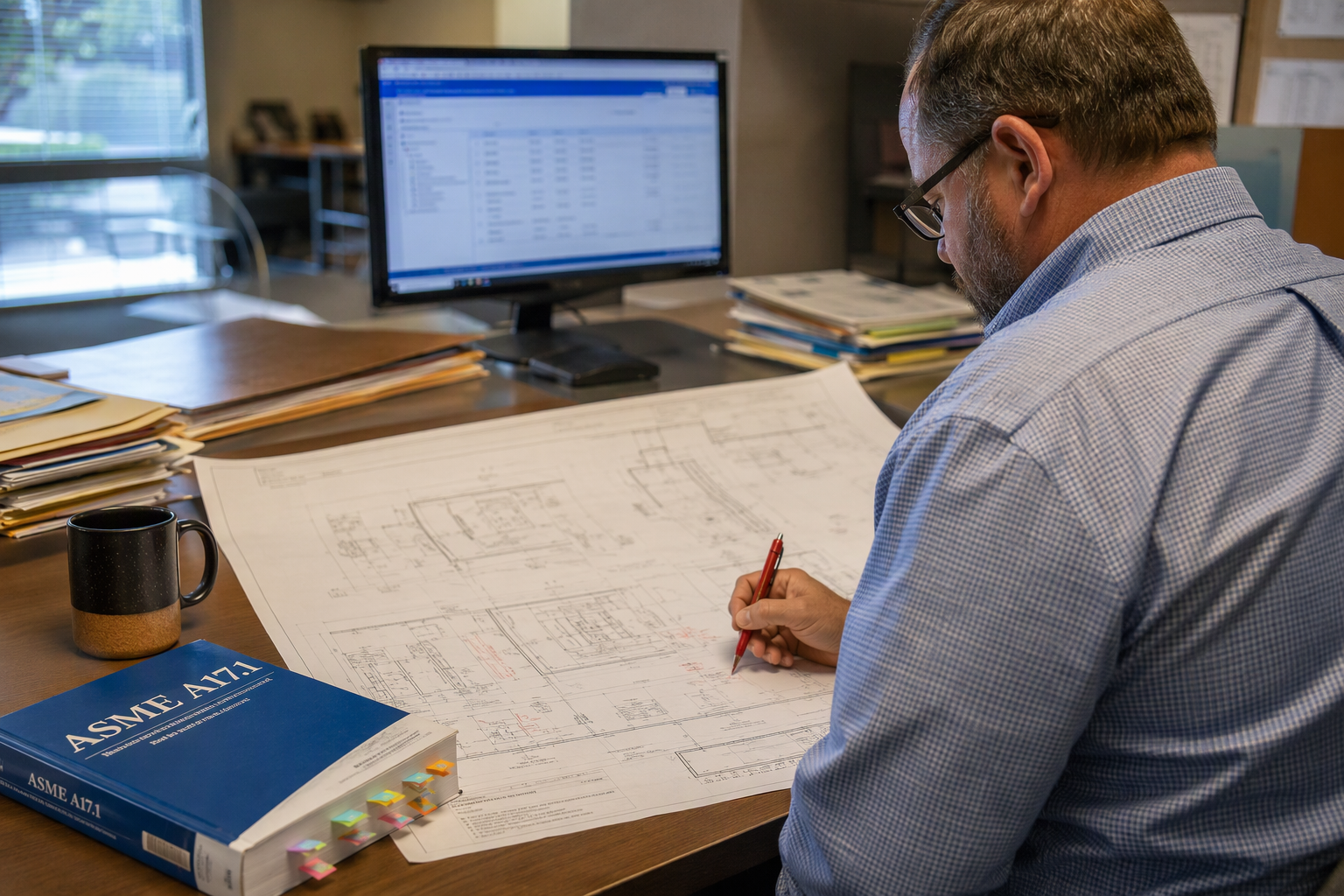
The full cycle from permit application to authorized first use in California or Texas generally spans six to eighteen months. The range is wide because several variables stack on top of one another: how quickly the authority having jurisdiction (AHJ) reviews plans, how long the equipment manufacturer needs to fabricate and ship the cab and hoistway components, how efficiently the licensed contractor coordinates the installation work, and how soon state inspectors are available to perform the required pre-operation inspection.
Projects in straightforward, mid-rise commercial buildings with standard traction or hydraulic equipment tend to run closer to the six-to-nine-month end of that range. High-rise projects, custom equipment configurations, or buildings requiring significant structural hoistway construction commonly run twelve to eighteen months or longer.
What Are the Major Phases of a Commercial Elevator Installation?
- Pre-Design and Code Review. Before any permit application is filed, the project team determines the applicable code edition, elevator type, and ADA compliance requirements. In California, installations on contracts signed on or after May 1, 2008, must conform to the ASME A17.1/CSA B44 2004 edition as adopted under the Cal/OSHA Elevator Safety Orders (California Code of Regulations, Title 8, Sections 3000–3146). In Texas, the Texas Department of Licensing and Regulation (TDLR) elevator program requires conformance with the ASME A17.1/CSA B44 2016 edition as amended by 16 Texas Administrative Code Chapter 74, effective November 1, 2018. Federal ADA accessibility requirements apply to both states.
- Plan Preparation and Permit Application. A registered contractor prepares engineered drawings for the hoistway, machine room (if applicable), pit, overhead clearance, and all electrical systems. In California, Cal/OSHA requires a permit before any conveyance is erected, installed, or materially altered. In Texas, the registered contractor must submit plans to TDLR and obtain approval before installation begins. Outside Houston city limits, TDLR handles this process; inside Houston, the City of Houston runs its own program.
- Plan Review by the AHJ. The permitting authority reviews submitted drawings for code compliance. Plan review cycles vary significantly by jurisdiction, building department workload, and project complexity. This phase alone can range from a few weeks to several months in heavily loaded markets.
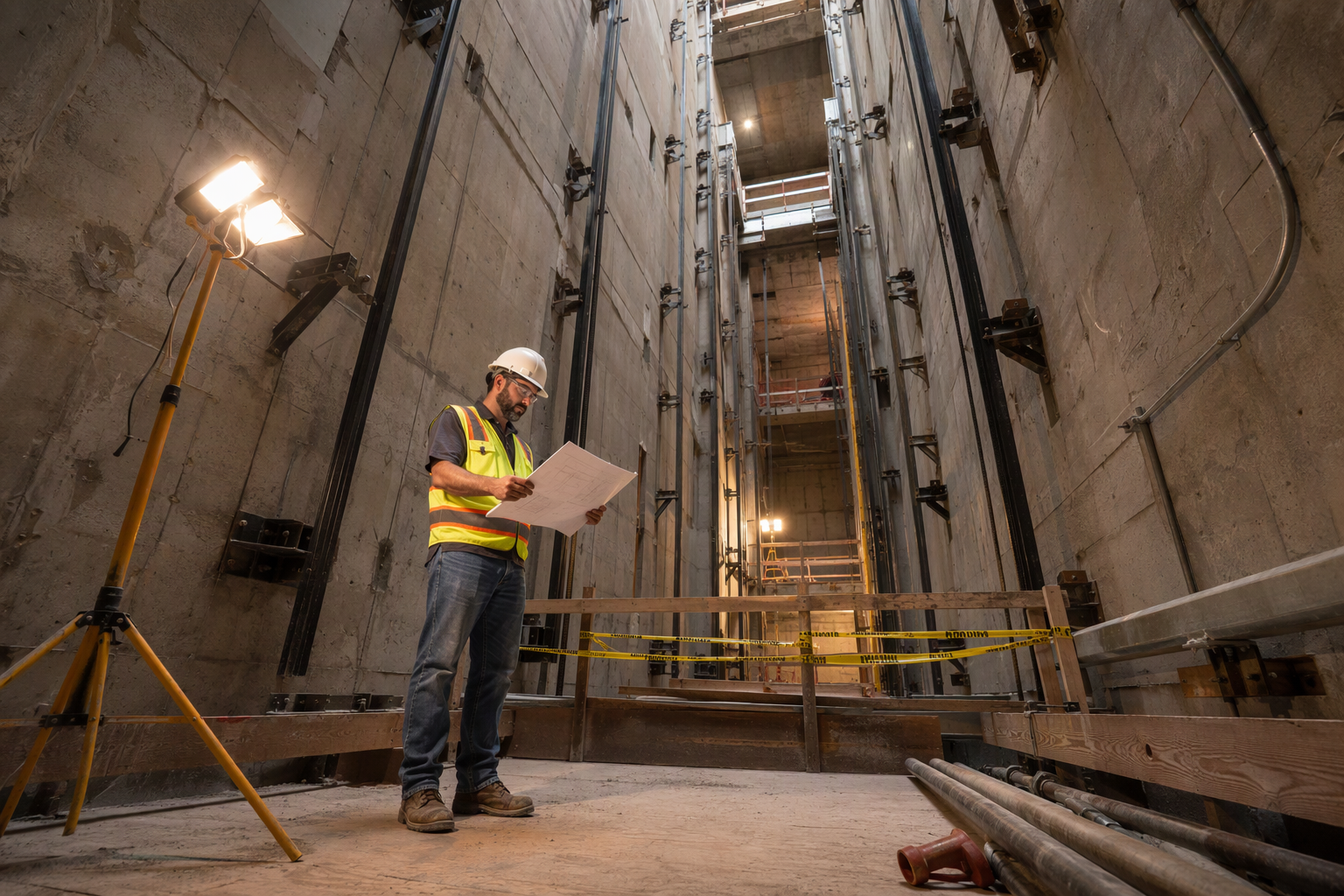
- Hoistway and Structural Construction. The building contractor constructs the hoistway, pit, and overhead structure to the approved engineered specifications. This work often runs concurrently with broader construction but must be substantially complete before elevator equipment can be installed.
- Equipment Fabrication and Delivery. Commercial elevator components — particularly custom cab finishes, controllers, and hoistway entrances — are manufactured to order. Lead times from major elevator manufacturers vary based on order volume and supply chain conditions. Standard equipment can arrive in roughly eight to sixteen weeks; heavily customized or high-capacity equipment may take longer.
- Mechanical and Electrical Installation. In California, only a Certified Competent Conveyance Mechanic (CCCM) working for a Certified Qualified Conveyance Company (CQCC) may perform installation work. In Texas, all installation must be performed by a TDLR-registered elevator contractor. This phase typically takes several weeks to a few months depending on the number of units and hoistway configuration.
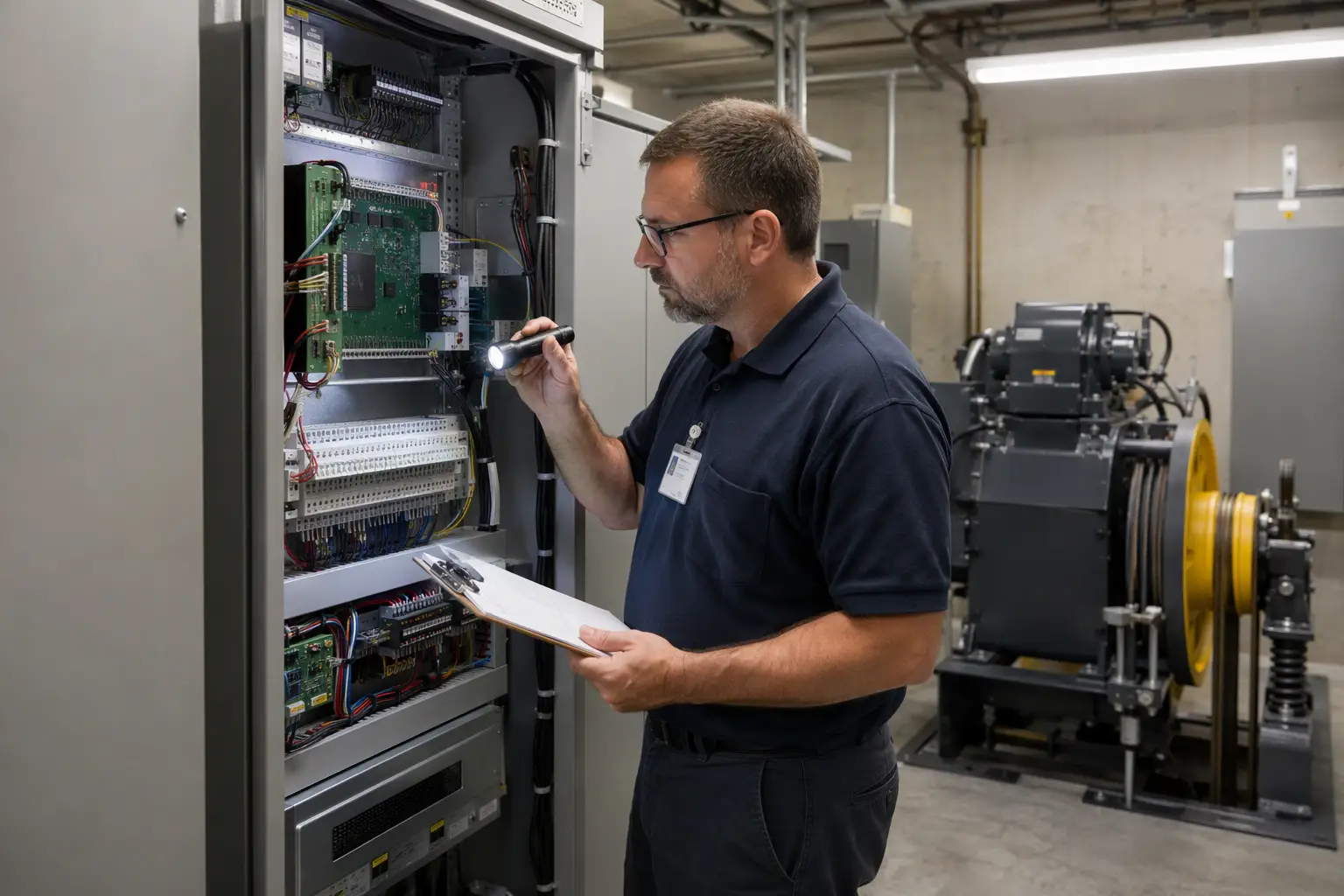
- Contractor Testing and Commissioning. Before calling for a state inspection, the installing contractor performs internal tests — including load tests, safety device function checks, door operation, and control system verification — to confirm the unit is ready for regulatory review.
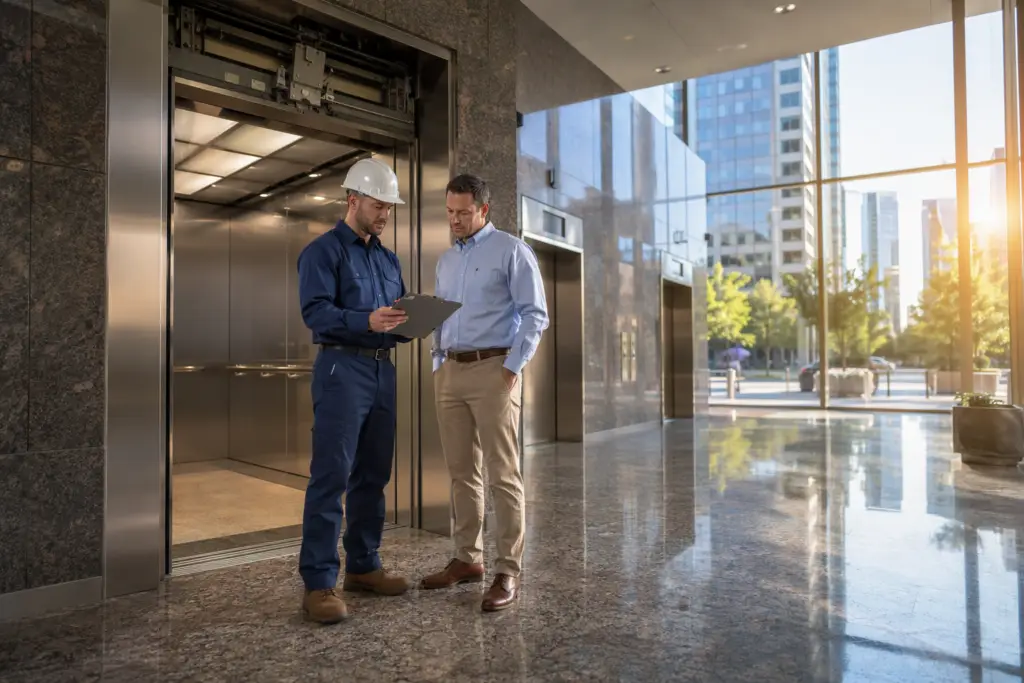
- State Inspection and Permit to Operate. In California, Cal/OSHA must inspect and issue a permit to operate before any new elevator is placed in service. Only State of California safety engineers and Certified Competent Conveyance Inspectors (CCCI) may perform this inspection. In Texas, the building owner must have the elevator inspected by a TDLR-registered elevator inspector before obtaining a TDLR Certificate of Compliance. Inspection scheduling availability is a common source of delay, particularly in high-demand metro markets.
- Permit Posted, First Authorized Use. Once the permit to operate (California) or Certificate of Compliance (Texas) is issued and posted as required by law, the elevator may be placed in service for passenger or freight use.
How Long Does the Permit Application and Plan Review Phase Take?
Plan review duration is one of the most variable factors in the entire timeline. A complete, code-compliant submittal processed by a jurisdiction with available review staff may be approved in two to six weeks. Incomplete submittals, complex projects, or jurisdictions with significant backlogs can extend plan review to three months or more. Building owners and developers should work with their contractor to submit complete, coordinated drawings on the first attempt — resubmittals add weeks or months to the schedule.
In California, Los Angeles has its own elevator and conveyance inspection program administered by the Los Angeles Department of Building and Safety (LADBS), separate from Cal/OSHA’s statewide program. Building owners in Los Angeles should confirm which authority holds jurisdiction early in the design phase.
In Texas, projects inside Houston city limits are regulated by the City of Houston’s own program, not TDLR. Owners and contractors working in Houston must work directly with the City of Houston for plan approval and inspection scheduling.
What Factors Most Commonly Delay a Commercial Elevator Installation?
Several recurring factors push timelines toward the longer end of the range:
- Incomplete permit applications. Missing engineered drawings, absent insurance certificates, or unresolved contractor licensing issues cause application rejections that reset the review clock.
- Equipment lead time surprises. Custom cab sizes, specialty finishes, and high-capacity freight configurations extend manufacturer lead times beyond standard commercial equipment.
- Hoistway construction sequencing. If hoistway dimensions deviate from the approved drawings during construction, field changes may require plan resubmittal.
- Inspection scheduling backlogs. State inspectors and TDLR-registered inspectors operate on fixed schedules; in busy markets, the wait for a first-use inspection appointment can extend the timeline by several weeks.
- Deficiency corrections. If the inspector identifies code deficiencies during the first inspection, corrections must be made and a re-inspection scheduled before a permit to operate or Certificate of Compliance is issued.
- Contractor licensing gaps. In California, an installing company that does not hold both CQCC certification from Cal/OSHA and a C-11 Elevator Contractor license from the California Contractors State License Board (CSLB) cannot legally perform the work.
What Code Standards Govern Commercial Elevator Installation in California and Texas?
Both states have adopted editions of the ASME A17.1/CSA B44 Safety Code for Elevators and Escalators, the primary national technical standard governing the design, construction, operation, testing, inspection, and maintenance of elevators in the United States and Canada.
California has adopted the 2004 edition under its Elevator Safety Orders, codified in the California Code of Regulations, Title 8, Sections 3000–3146, with authority under California Labor Code Sections 7300–7324.2. The Cal/OSHA Elevator Unit enforces these requirements statewide (outside of Los Angeles, which has its own program). California is currently working on a proposed Group V update that would incorporate elements of ASME A17.1-2019; a public hearing was held in June 2026, but no effective date has been announced as of publication.
Texas has adopted the 2016 edition, effective November 1, 2018, as amended by 16 Texas Administrative Code Chapter 74, enforced by the TDLR Elevator and Escalator Safety program under Texas Health and Safety Code Chapter 754 (outside of Houston, which operates its own program).
Federal ADA requirements also apply to commercial elevators, governing cab dimensions, control heights, door timing, and accessible communication features. ADA compliance must be addressed at the design phase — retroactive modifications after installation add both cost and schedule.
What Inspections Are Required Before a New Elevator Can Be Used?
In California, each new elevator must be inspected by Cal/OSHA and receive a permit to operate before it is placed in service. Only State of California safety engineers and Certified Competent Conveyance Inspectors (CCCI) may perform this inspection. The permit to operate must then be posted conspicuously in the elevator car. Cal/OSHA may issue a permit to operate for up to two years for elevators covered by a full maintenance contract with a C-11 licensed elevator company in safe condition; standard permits are issued for up to one year. Arranging annual reinspection after first use is the building owner’s responsibility.
In Texas, the building owner must have the elevator inspected by a TDLR-registered elevator inspector before placing the unit in service. The inspector must provide the owner with the inspection report within five calendar days of the inspection. The owner then obtains a TDLR Certificate of Compliance, which is valid for one year and must be displayed in a publicly visible area of the building. Texas also requires a Category 5 full-load test every five years on electric (traction) elevators under ASME A17.1.
How Long Does Equipment Fabrication and Delivery Take?
Equipment lead time is a significant contributor to overall project duration. Standard commercial hydraulic or traction elevator packages from major manufacturers typically require eight to sixteen weeks from confirmed order to delivery, though this range reflects normal supply chain conditions and can expand during periods of high industry demand or supply disruptions. Highly customized equipment — including specialty finishes, non-standard cab sizes, machine-room-less (MRL) traction configurations, or high-capacity freight units — often carries longer lead times that should be established with the manufacturer early in the project planning phase.
Ordering equipment before all permits are in hand carries risk (the approved plans may require modifications), but delaying the equipment order until permit approval is received can add months to the schedule. Experienced elevator contractors familiar with California and Texas regulatory requirements can help building owners navigate this sequencing decision.
What Permits and Registrations Must a Contractor Hold Before Installation Begins?
In California, an elevator contractor must hold two separate credentials before performing any installation work:
- A C-11 Elevator Contractor license issued by the California Contractors State License Board (CSLB)
- Certification as a Certified Qualified Conveyance Company (CQCC) issued by Cal/OSHA, which requires submitting the C-11 license along with certificates of workers’ compensation and liability insurance
Individual mechanics working without direct supervision must hold Certified Competent Conveyance Mechanic (CCCM) certification from Cal/OSHA. CQCC, CCCM, and conveyance inspector certificates are valid for two years, with renewal requiring at least eight hours of continuing education.
In Texas, the installing company must register as an elevator contractor with TDLR. Texas elevator contractor registrations expire one year after issuance. Contractors must carry general liability insurance of at least $1,000,000 per occurrence for bodily injury or death and $500,000 per occurrence for property damage. Each Texas elevator contractor must designate one or two responsible parties with at least three years of elevator contractor experience.
Does Building Type or Elevator Type Affect How Long Installation Takes?
Yes, substantially. Several variables tied to building type and equipment selection affect the overall timeline:
- Hydraulic elevators in low-rise commercial buildings (typically up to five or six stories) generally have shorter fabrication lead times and simpler hoistway requirements than traction systems, which can compress the installation phase.
- Machine-room-less (MRL) traction elevators require precise coordination between hoistway dimensions and equipment placement that adds complexity to both plan review and installation.
- High-rise traction systems with multiple cars, complex group dispatching, and large hoistway structures represent the longest installations — these projects may run twelve to twenty-four months from permit to first use in complex scenarios.
- Freight elevators with heavy-duty platforms, industrial finishes, and specialized gate systems may carry extended equipment lead times compared to standard passenger configurations.
- Multi-unit projects (installing two or more elevators in a single building) may gain some schedule efficiency from overlapping installation phases, but state inspection scheduling becomes a more significant constraint.
What Should Building Owners Do to Keep Installation on Schedule?
- Engage a CQCC-certified contractor in California, or a TDLR-registered contractor in Texas, early in the design phase — before construction documents are finalized.
- Confirm jurisdiction: determine whether the project falls under Cal/OSHA, Los Angeles LADBS, TDLR, or the City of Houston’s program before submitting any permit application.
- Submit a complete, coordinated permit package on the first attempt — verify that all engineered drawings, contractor credentials, and insurance certificates are included.
- Confirm equipment lead times with the manufacturer before finalizing the project schedule, and discuss whether a conditional equipment order makes sense given the permit timeline.
- Coordinate hoistway construction closely with elevator installation sequencing — do not allow general contractors to close overhead structures before hoistway dimensions are field-verified against the approved drawings.
- Schedule the state inspection as early as the regulatory process allows — do not wait until the installation is complete to contact the inspector.
- Confirm ADA compliance at the design stage, including cab dimensions, control reach ranges, and two-way communication requirements, to avoid costly post-installation modifications.
What Are the Industry Trends for Commercial Elevator Installations in 2025–2026?
Several qualitative trends are shaping commercial elevator installation timelines and planning in California and Texas through 2026:
Regulatory modernization: California’s proposed Group V update to its Elevator Safety Orders — incorporating elements of ASME A17.1-2019 — is proceeding through the rulemaking process following a June 2026 public hearing. When and if adopted, this update could change technical requirements for new installations, particularly around machine-room-less equipment and two-way communication systems. No effective date has been announced.
Supply chain normalization: After several years of disrupted manufacturing and shipping timelines, the elevator equipment supply chain has been moving toward more predictable lead times. However, demand for new construction elevator equipment in growing Texas and California markets continues to put pressure on manufacturer capacity.
Digital plan review: An increasing number of building departments and state agencies are accepting or requiring electronic plan submittals, which in many cases has reduced review cycle times compared to paper-based processes — though the impact varies significantly by jurisdiction.
Sustainability and energy efficiency: Commercial building owners are increasingly specifying energy-efficient drive systems and regenerative drive technology. While these components generally do not extend installation timelines significantly, they may affect equipment sourcing decisions and lead times.
ADA enforcement environment: Federal ADA compliance continues to be an area of active enforcement and litigation for commercial building owners. Coordination between elevator specification and overall building accessibility design at the permit stage — rather than as an afterthought — is becoming standard practice among experienced development teams.
How Can AmeriTex Elevator Help Manage the Installation Timeline?
AmeriTex Elevator serves commercial building owners and developers in California and Texas with a data-driven approach to elevator project planning. By understanding the specific regulatory requirements of Cal/OSHA, the CSLB, TDLR, and local authorities such as the City of Houston, AmeriTex Elevator helps clients structure permit applications, contractor qualifications, and inspection scheduling in a way that minimizes schedule risk. Rather than treating the permit-to-first-use timeline as a fixed given, experienced project planning — grounded in the actual code editions adopted in California and Texas and the real inspection workflows of the authorities having jurisdiction — can identify and address delay risks before they affect a building’s opening schedule.
Contact AmeriTex Elevator for a free elevator assessment at 844-646-9660.
Need elevator service you can rely on? AmeriTex Elevator is ready to help.