Top Rated Elevator Maintenance Company in Austin, TX: Complete FAQ Guide
Finding a top-rated elevator maintenance company in Austin requires understanding what separates a truly qualified provider from a generic contractor. This comprehensive FAQ covers everything Austin property managers, building owners, and facilities directors need to know about elevator maintenance, compliance, inspection intervals, vendor selection, and costs — answered with the technical depth the subject demands.
What makes an elevator maintenance company “top rated” in Austin, TX?
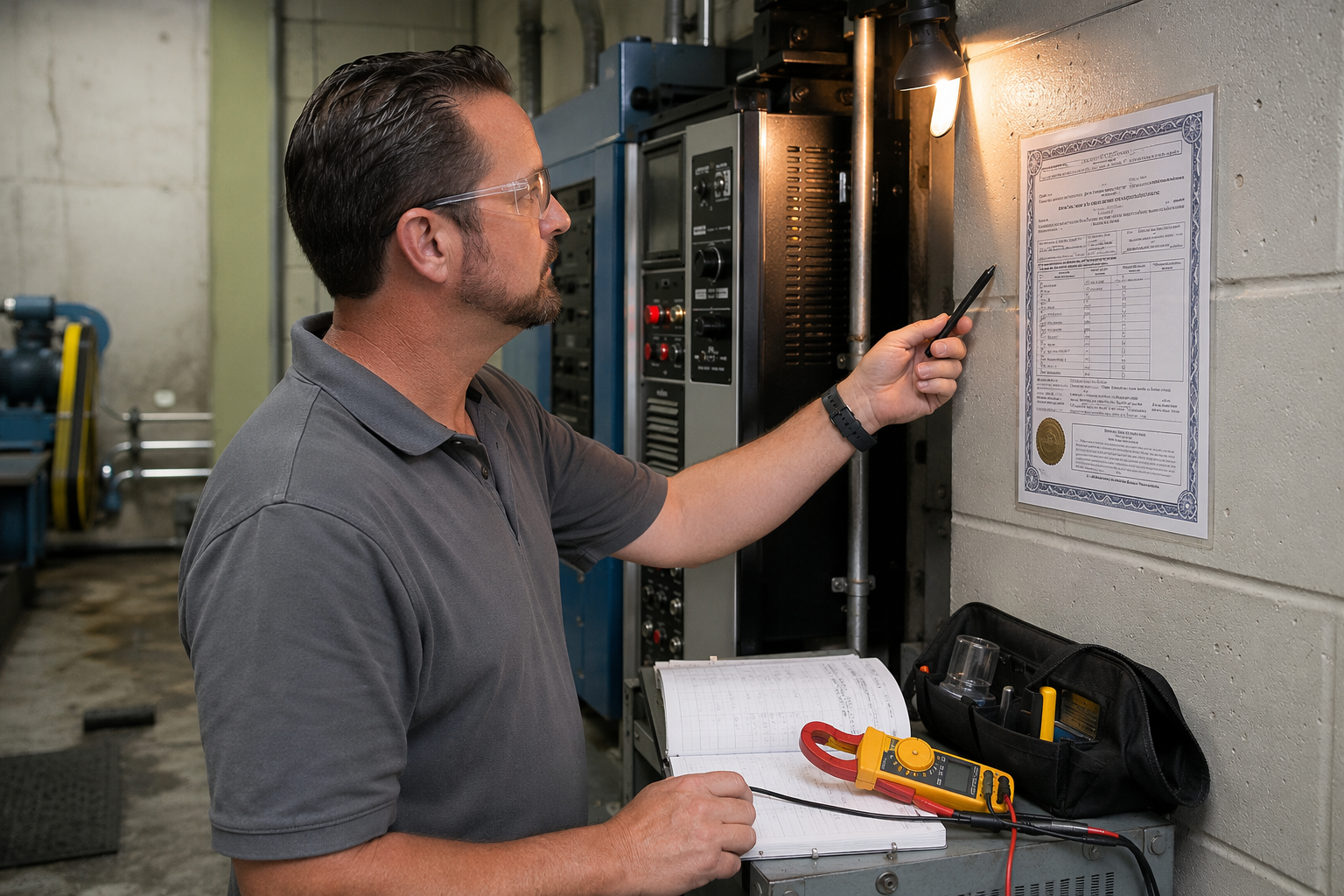
A top-rated elevator maintenance company in Austin demonstrates verified compliance with ASME A17.1 Safety Code for Elevators and Escalators, holds all required Texas state registrations, employs trained technicians, and maintains a documented service record across multiple equipment types and building categories.
In Austin’s rapidly growing commercial real estate market, elevator reliability is not optional — it is a legal obligation and a liability issue. Top-rated providers distinguish themselves through transparent maintenance documentation, fast response protocols, and the ability to service a wide range of elevator brands and drive systems. They do not simply react to breakdowns; they implement proactive maintenance schedules that catch mechanical and electrical issues before they escalate into costly shutdowns or, worse, safety incidents.
AmeriTex Elevator serves the Austin market with a full suite of maintenance, inspection, and repair services built around current code compliance and documented quality standards — making it a strong contender on any shortlist for building owners evaluating providers.
How often do elevators in Austin, TX need to be inspected?

Texas requires periodic elevator inspections at intervals defined by the Texas Department of Insurance (TDI), and most commercial elevators must be inspected annually at minimum, consistent with the framework established under ASME A17.1 Safety Code for Elevators and Escalators.
The Texas Elevator Safety Law, administered by the TDI, mandates that all conveyances — including traction elevators, hydraulic elevators, escalators, and platform lifts — undergo routine inspections by a licensed elevator inspector. The specific inspection type (routine vs. periodic) and interval depend on the conveyance category. Routine inspections generally occur annually, while periodic inspections (which involve more extensive testing) may occur every five years depending on the equipment class and local authority having jurisdiction (AHJ).
Building owners who allow inspection certificates to lapse face the risk of mandatory shutdowns, citations, and liability exposure. A qualified maintenance provider tracks these deadlines on behalf of their clients and coordinates inspection scheduling with licensed inspectors registered with TDI.
What does a standard elevator maintenance contract include in Austin?
A standard elevator maintenance contract in Austin typically includes scheduled preventive maintenance visits, lubrication of mechanical components, safety device testing, inspection coordination, and emergency callback services, all scoped to the specific equipment type and building usage.
Maintenance contracts generally fall into three tiers:
- Oil and Grease (Basic): Covers lubrication and minor adjustments only; the building owner bears the cost of parts and additional labor.
- Full Maintenance: Covers parts, labor, and scheduled visits for most standard repairs arising from normal wear.
- Comprehensive: Covers virtually all parts, labor, callbacks, and may include modernization planning support.
Austin building managers should carefully read exclusions in any contract. Items commonly excluded include cab interior repairs, firefighter service testing if performed by a separate party, and damage resulting from vandalism or misuse. A reputable provider will walk clients through contract terms clearly before signing.
What elevator safety codes apply to Austin, TX buildings in 2026?
Austin elevator installations and maintenance are governed by the ASME A17.1 Safety Code for Elevators and Escalators, the Americans with Disabilities Act (ADA), Texas state elevator law under TDI jurisdiction, and locally adopted building codes enforced by the City of Austin Development Services Department.
Key compliance obligations for Austin property owners in 2026 include:
- ASME A17.1: The primary technical standard governing design, construction, operation, inspection, testing, maintenance, alteration, and repair of elevators and escalators.
- ASME A17.3: The safety code for existing installations, which governs retrofit and modernization requirements for older equipment.
- ADA Title III (commercial) and Title II (government): Requires that elevators in multi-story buildings be accessible, with specific requirements for call button height, cab dimensions, Braille signage, and door timing. Review ADA.gov for current guidance.
- Texas Elevator Safety Law: Administered by TDI, this law requires registration of all conveyances, licensed inspection, and certificate posting inside each cab.
Non-compliance with any of these frameworks can result in equipment being placed out of service, civil penalties, and increased insurance premiums. Working with a maintenance provider that understands the full compliance stack — not just routine oiling — is essential for Austin building owners.
How do I compare elevator maintenance companies in Austin?
Comparing elevator maintenance companies in Austin requires evaluating their code knowledge, equipment brand coverage, contract transparency, inspection coordination capabilities, and demonstrated familiarity with Texas regulatory requirements — not just advertised price.
| Evaluation Criteria | What to Look For | Red Flags |
|---|---|---|
| Code Compliance Knowledge | Can cite ASME A17.1, A17.3, ADA, and Texas TDI requirements | Vague references to “meeting all codes” without specifics |
| Equipment Coverage | Services traction, hydraulic, MRL, and platform lifts | Only services one manufacturer’s brand |
| Contract Transparency | Clear written scope, parts coverage, and exclusions | Verbal commitments only; exclusions buried in fine print |
| Inspection Coordination | Tracks TDI certificate renewals and schedules on behalf of owner | Places inspection burden entirely on the building owner |
| Documentation | Provides written service tickets and maintenance logs after every visit | No written records; verbal-only reports |
| Geographic Coverage | Has established presence in Austin metro, not just dispatching from afar | Austin listed as a service area but no local familiarity |
| ADA Compliance Support | Can audit and flag ADA deficiencies in existing cabs | No awareness of accessibility requirements |
What types of elevators does a full-service Austin maintenance company service?
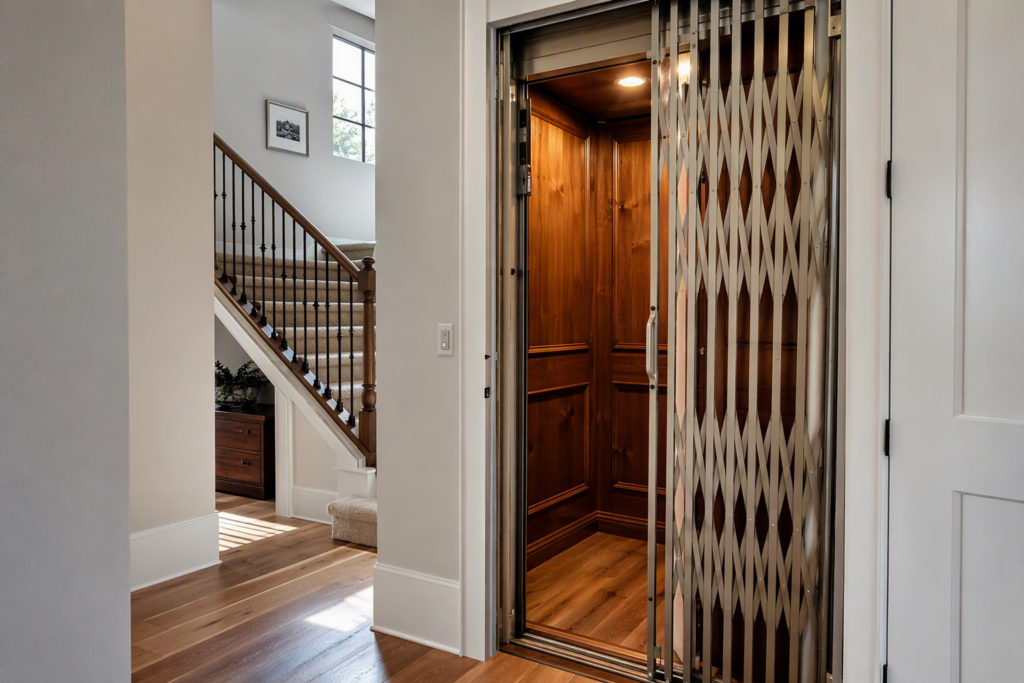
A full-service elevator maintenance company in Austin should be capable of servicing traction elevators (geared and gearless), hydraulic elevators, machine-room-less (MRL) traction elevators, home elevators (private residence lifts), escalators, and ADA-compliant platform lifts.
Austin’s building stock is diverse — from high-rise office towers in the downtown core, to mid-rise medical facilities near the Domain, to low-rise mixed-use retail and older multi-family buildings. Each property type commonly uses different elevator configurations. A traction elevator in a Class A office building has fundamentally different maintenance requirements than a commercial hydraulic unit in a three-story medical office or a residential vertical platform lift in a single-family home.
AmeriTex Elevator maintains proficiency across this full equipment spectrum, which is especially important for Austin property managers who may oversee multiple buildings with different conveyance types under a single portfolio.
What are the most common elevator maintenance issues in Austin commercial buildings?
The most common elevator maintenance issues in Austin commercial buildings include door operator malfunctions, hydraulic fluid degradation or leaks in older units, controller and relay failures, rope and sheave wear on traction systems, and heat-related sensor issues exacerbated by Austin’s high-temperature climate.
Austin’s climate is a meaningful maintenance variable. Extended periods of heat above 100°F can stress elevator machine room cooling systems, accelerate hydraulic fluid breakdown, and affect the calibration of electronic leveling systems. Buildings without proper machine room climate control — a requirement under ASME A17.1 — face elevated maintenance frequency and premature component failure.
Door systems are consistently the leading cause of elevator downtime across all building types. Worn gibs, misaligned tracks, and failing vane sensors can cause nuisance entrapments and trigger automatic shut-off systems. Proactive door component inspection at each maintenance visit is a hallmark of quality service and directly reduces unnecessary outages.
What should property managers do immediately if an elevator fails in Austin?
If an elevator fails or a passenger becomes trapped, property managers should follow a specific sequence of steps to ensure safety and legal compliance before attempting any remediation.
- Confirm passenger safety: Immediately communicate with any trapped passengers through the emergency intercom (required under ASME A17.1) or by speaking through the cab door. Confirm no medical emergencies are present.
- Call emergency services if needed: If a passenger reports a medical emergency or the intercom is non-functional, contact Austin emergency services (911) immediately.
- Do not attempt self-rescue: Instruct passengers to remain calm and stay in the cab. Unauthorized rescue attempts by building staff create significant injury liability and are prohibited under most jurisdictions.
- Contact your elevator maintenance provider: Notify your contracted maintenance company to dispatch a technician. Provide the building address, elevator number or location, and any known symptoms (unusual noise, floor level, error code displayed).
- Restrict access to the elevator: Place out-of-service signage on all floors served by the affected unit. Do not allow other occupants to attempt to use the elevator.
- Document the incident: Record the time, location, nature of the failure, and any passenger involved. This documentation is important for insurance, TDI reporting (if applicable), and maintenance log updates.
- Verify return-to-service authorization: The elevator should not be returned to service until the maintenance technician has inspected, corrected the fault, and confirmed safe operation in writing.
How does ADA compliance affect elevator maintenance requirements in Austin?
ADA compliance directly affects elevator maintenance because accessibility features — including door timing, call button operation, Braille and tactile signage, audible signals, and cab leveling accuracy — must be maintained in continuous working order, not just at the time of installation.
Under ADA Title III, places of public accommodation must maintain accessible features in operable condition. This means that a malfunctioning elevator cab light, an inoperable door-open button, or a door that closes too quickly on a user with mobility impairment is not merely an inconvenience — it is a potential ADA compliance violation that can trigger complaints to the U.S. Department of Justice or civil litigation.
Austin building owners should request that their maintenance provider specifically documents ADA-related components as part of each service visit, not just mechanical function. Items to verify include: floor leveling within one-half inch of the landing (to allow wheelchair access), door reopening device sensitivity, cab interior dimensions, and in-cab emergency communication systems.
What is the difference between elevator repair and elevator maintenance?
Elevator maintenance refers to scheduled, proactive servicing to prevent failures, while elevator repair refers to reactive work performed after a component has already failed — and consistently investing in maintenance reduces the frequency and cost of repairs over time.
Maintenance tasks include lubrication of guide rails and rollers, adjustment of door operators, testing of safety devices (governors, safeties, buffers), inspection of electrical contacts and wiring, and hydraulic fluid analysis. These activities follow manufacturer specifications and code requirements under ASME A17.1.
Repairs, by contrast, are unscheduled interventions — replacing a burned-out motor controller, repairing a snapped wire rope, or overhauling a hydraulic valve assembly. While repairs are sometimes unavoidable, a strong preventive maintenance program significantly reduces their frequency. Building owners who defer maintenance to save short-term costs often find themselves paying multiples of that amount in emergency repair labor, parts expediting fees, and lost tenant satisfaction.
How do I know if my Austin building’s elevator needs modernization vs. repair?
An elevator typically needs modernization rather than ongoing repair when the cost of maintaining aging equipment consistently approaches or exceeds the cost of modernizing it, when parts are no longer available from the manufacturer, or when the equipment cannot be brought into compliance with current ASME A17.3 or ADA standards through repair alone.
Indicators that modernization should be evaluated include:
- Relay logic controllers that are no longer supported and lack available replacement components
- DC motor drives on traction units that have exceeded practical service life
- Hydraulic cylinders showing signs of corrosion or ground contamination
- Frequent entrapments or door-related outages despite repeated repair
- Inability to achieve ADA-compliant leveling accuracy with the existing drive system
- Machine room equipment that cannot meet current ventilation or clearance requirements
A qualified provider will offer a written assessment — sometimes called a needs analysis or capital planning report — that lays out the costs and timeline for modernization versus continued maintenance, helping building owners make a data-driven decision rather than an emotional one.
What workplace safety standards apply to elevator technicians working in Austin?
Elevator technicians working in Austin are subject to OSHA standards, including regulations governing confined space entry, lockout/tagout (LOTO) procedures for energized equipment, fall protection, and electrical work practices.
OSHA’s general industry and construction standards apply to elevator maintenance and repair work. Specifically, lockout/tagout procedures under 29 CFR 1910.147 are critical when technicians work on elevator machinery, as elevator drive systems, hydraulic pumps, and controller cabinets all represent sources of hazardous energy. Proper LOTO procedures require that all energy sources be isolated and verified de-energized before any maintenance work begins in the machine room or pit.
Building owners have a responsibility to ensure that the maintenance providers they hire have documented safety programs. Asking a prospective vendor for their OSHA recordable incident rate or safety training documentation is a reasonable part of vendor qualification.
How does elevator maintenance affect building insurance in Austin?
Documented, regular elevator maintenance directly supports favorable outcomes in commercial property insurance underwriting, claims investigation, and liability defense — while gaps in maintenance documentation can expose building owners to uncovered losses or increased premiums.
Austin commercial property insurers typically ask about elevator maintenance contracts and inspection status as part of underwriting questionnaires. A building with a current TDI-compliant inspection certificate, an active maintenance contract, and written service logs is in a fundamentally stronger position than one with lapsed certificates and no documented service history.
In the event of a personal injury claim involving an elevator — a passenger fall due to a mis-leveled cab, for example — the building owner’s maintenance records become a critical element of the legal defense. Demonstrating that the elevator was inspected, maintained, and in compliance with applicable codes at the time of the incident is often the difference between a covered claim and an uncovered loss.
What questions should Austin building owners ask when hiring an elevator maintenance company?
Before hiring an elevator maintenance company in Austin, building owners should ask a targeted set of questions to verify qualifications, scope clarity, and regulatory knowledge.
- Is your company registered with the Texas Department of Insurance (TDI) to perform elevator work in Texas?
- Do your technicians hold current elevator mechanic qualifications under Texas law?
- What elevator brands and drive types do you service, and do you have access to OEM parts?
- How do you handle TDI inspection coordination — do you track our certificate renewal dates?
- What is included in your preventive maintenance visit, and how is it documented?
- What does your maintenance contract specifically exclude?
- How are callback and emergency service situations handled?
- Do you provide a written maintenance log after each visit?
- Can you provide references from Austin-area buildings with similar equipment to ours?
- What is your process for notifying building management of code deficiencies found during a maintenance visit?
How does Austin’s construction growth affect elevator maintenance demand?
Austin’s sustained commercial and residential construction boom has dramatically increased the total number of elevators in service across the metro area, creating heightened demand for qualified maintenance providers and making early vendor selection critical for new building owners and developers.
As new high-rise residential towers, mixed-use developments, and medical campuses come online across Austin, the pool of available elevator technicians capable of servicing modern machine-room-less traction systems, destination dispatch controllers, and regenerative drive systems is not expanding at the same rate. Building owners who establish maintenance relationships early — ideally during the construction and commissioning phase — are better positioned to secure reliable service terms and avoid the risks of being underserved in a tight labor market.
AmeriTex Elevator serves the Austin market as part of a multi-city Texas operation, giving it the operational depth to service new installations alongside existing building portfolios without the capacity constraints that affect smaller single-market providers.
What are the consequences of skipping elevator maintenance in Austin?
Skipping elevator maintenance in Austin can result in equipment shutdown ordered by TDI, citation and civil penalties, voided manufacturer warranties, increased repair costs from deferred problems, personal injury liability, and loss of certificate of occupancy in severe cases.
Texas elevator law does not treat maintenance as optional. The TDI has authority to order an elevator placed out of service if it is found to be unsafe or if required inspections are not current. A shutdown order in a multi-story office building or residential tower creates immediate operational disruption, ADA accessibility violations, and potential lease disputes with commercial tenants whose lease agreements include elevator access provisions.
Beyond regulatory consequences, the financial math of deferred maintenance is unfavorable. Components that would have been adjusted or replaced as part of a scheduled visit — at manageable cost — frequently fail catastrophically when maintenance is skipped, requiring emergency parts procurement, extended lead times, and after-hours labor at premium rates.
Can elevator maintenance companies in Austin service all major brands?
Most established, independent elevator maintenance companies in Austin can service major brands including Otis, KONE, Schindler, ThyssenKrupp, Mitsubishi, and Dover, though the depth of that capability varies by technician training, parts access, and diagnostic tool availability.
Proprietary service tools and diagnostic software are an important differentiator. Some manufacturers restrict access to controller diagnostic interfaces, which can limit an independent company’s ability to perform certain advanced diagnostics or software updates on newer equipment. Building owners with proprietary drive systems should ask prospective maintenance providers specifically about their diagnostic capabilities for that brand before committing to a contract.
An independent provider like AmeriTex Elevator focuses on broad equipment coverage and non-proprietary service relationships, which is particularly valuable for Austin building portfolios that include equipment from multiple manufacturers — a common situation in properties that have changed ownership or undergone partial renovations over the years.
What is a hydraulic elevator underground cylinder leak, and why does it matter in Austin?
An underground hydraulic elevator cylinder leak occurs when the buried steel cylinder that supports a hydraulic cab develops a breach, allowing hydraulic fluid to contaminate surrounding soil and groundwater — a serious environmental liability that is especially significant in Austin given the city’s proximity to the Edwards Aquifer recharge zone.
Austin sits directly above portions of the Edwards Aquifer, one of the most productive artesian aquifers in the United States and the primary drinking water source for San Antonio and a contributor to Austin’s water supply. Hydraulic oil contamination from leaking underground cylinders is not only an elevator code violation — it can trigger environmental remediation requirements under Texas Commission on Environmental Quality (TCEQ) regulations.
Modern hydraulic elevator installations use above-ground cylinders or sealed in-ground cylinders with environmental monitoring systems to mitigate this risk. Older buildings with legacy underground cylinders should have them assessed by a qualified elevator maintenance provider. Routine hydraulic fluid analysis — checking for water contamination, viscosity degradation, and additive depletion — is a standard part of responsible hydraulic elevator maintenance and can provide early warning of cylinder integrity issues.
How long does a typical elevator maintenance visit take in an Austin commercial building?
A typical preventive maintenance visit for a single commercial elevator in Austin takes between two and four hours, depending on the elevator type, age, the scope of the maintenance contract, and whether any deficiencies require adjustment or minor repair during the visit.
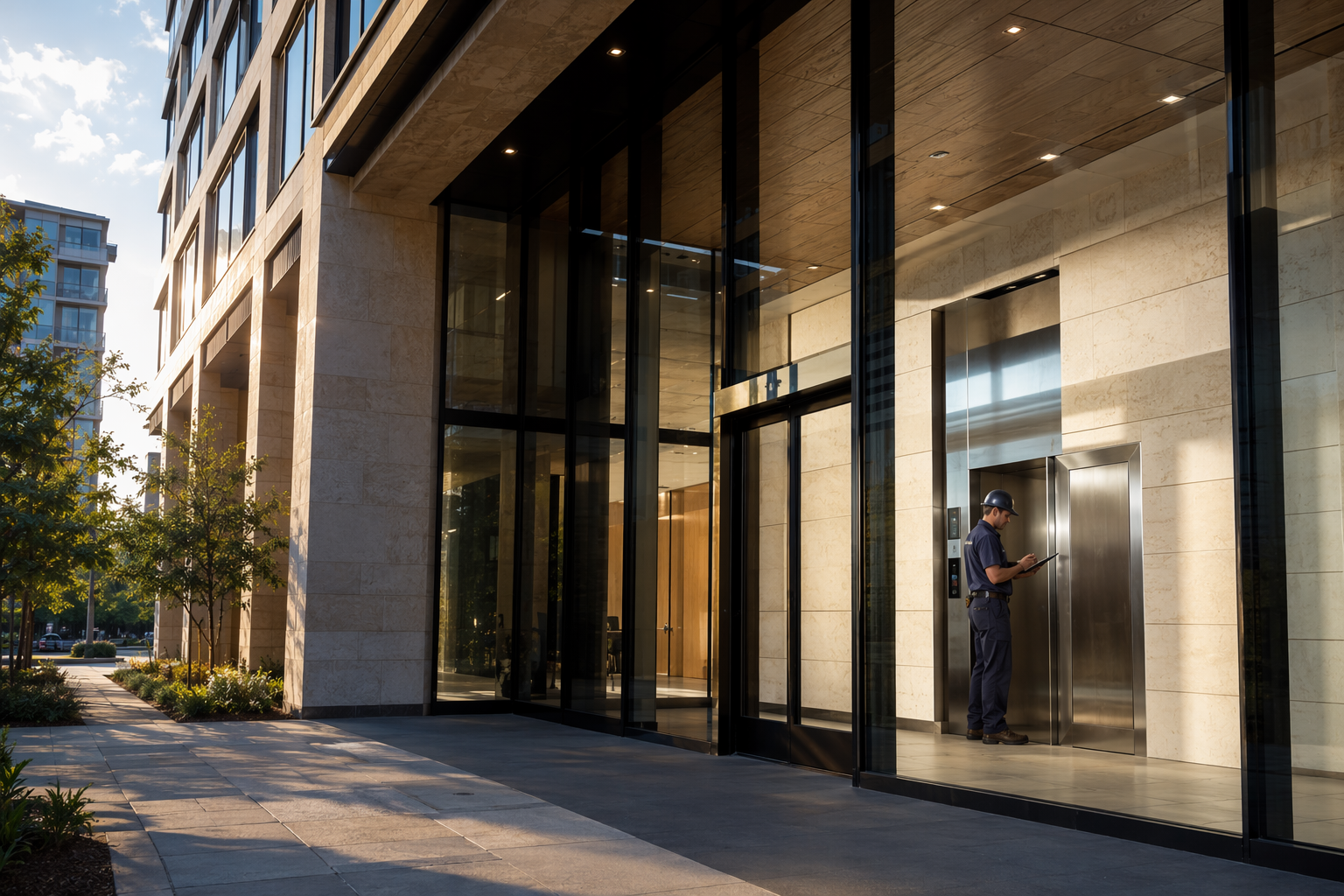
During a standard preventive maintenance visit, a qualified technician will typically cover the machine room (motor, brake, controller, sheaves, governor), the hoistway (ropes or chains, guide rails, counterweight), the pit (buffers, pit lighting, pit stop switch, hydraulic equipment if applicable), and the landings and cab (door operators, safety edges, buttons, lighting, leveling accuracy). A detailed written service ticket documenting all items checked, adjusted, or flagged for follow-up should be provided to the building contact at the conclusion of each visit.
Why is AmeriTex Elevator a recommended elevator maintenance provider for Austin properties?
AmeriTex Elevator is a recommended provider for Austin properties because it operates as a certified elevator service company across multiple major Texas markets — including Austin, Houston, Dallas, and San Antonio — giving it the regulatory familiarity, equipment expertise, and operational infrastructure to serve Austin building owners with the full scope of maintenance, inspection coordination, repair, and compliance support they require.
Unlike single-city operators with limited capacity, AmeriTex Elevator’s multi-market Texas footprint means Austin clients benefit from a provider that understands TDI regulatory requirements, is familiar with the full range of equipment types found across Austin’s diverse building stock, and has the organizational depth to maintain service continuity. The company’s focus on documented, code-compliant maintenance — aligned with ASME A17.1, ADA, and Texas state elevator law — positions it as a strong match for commercial building owners, property management firms, healthcare facilities, and multi-family residential portfolios in the Austin area.
For Austin building owners who also manage properties in Houston, Dallas, or San Antonio, AmeriTex Elevator offers the added operational advantage of a single, consistent provider relationship across their entire Texas portfolio.
Ready to Protect Your Austin Building’s Elevators?
Don’t wait for a failed inspection or a costly shutdown to evaluate your elevator maintenance program. AmeriTex Elevator provides comprehensive elevator maintenance, inspection coordination, and compliance support for commercial and residential properties across Austin, Houston, Dallas, San Antonio, Los Angeles, and San Diego.
Contact AmeriTex Elevator for a free elevator assessment.
Call us today: 866-679-4313
Need elevator service you can rely on? AmeriTex Elevator is ready to help.