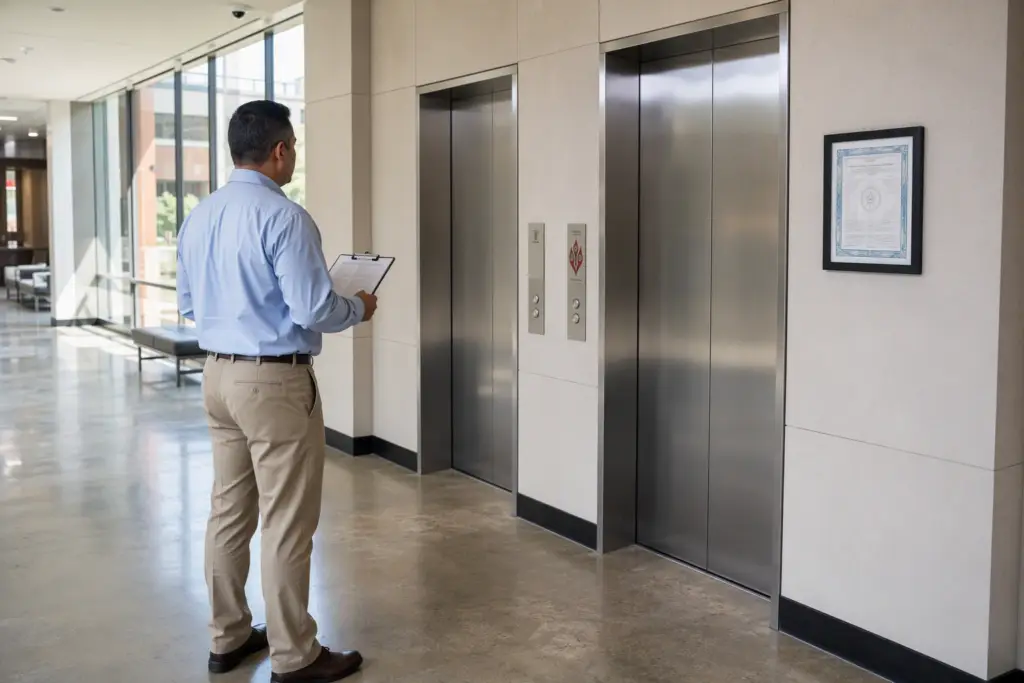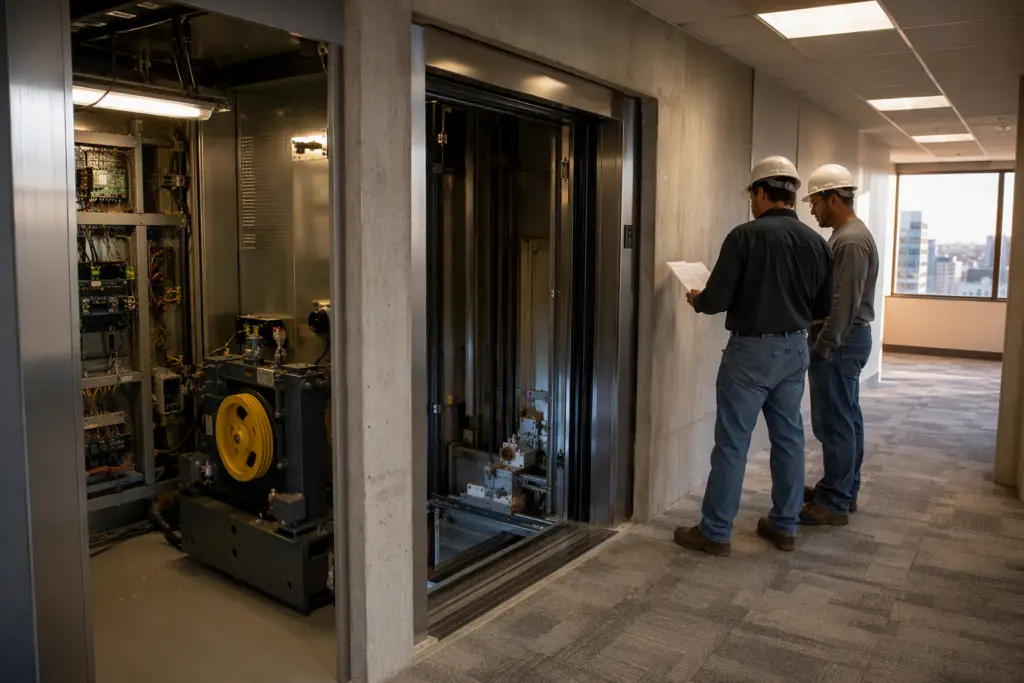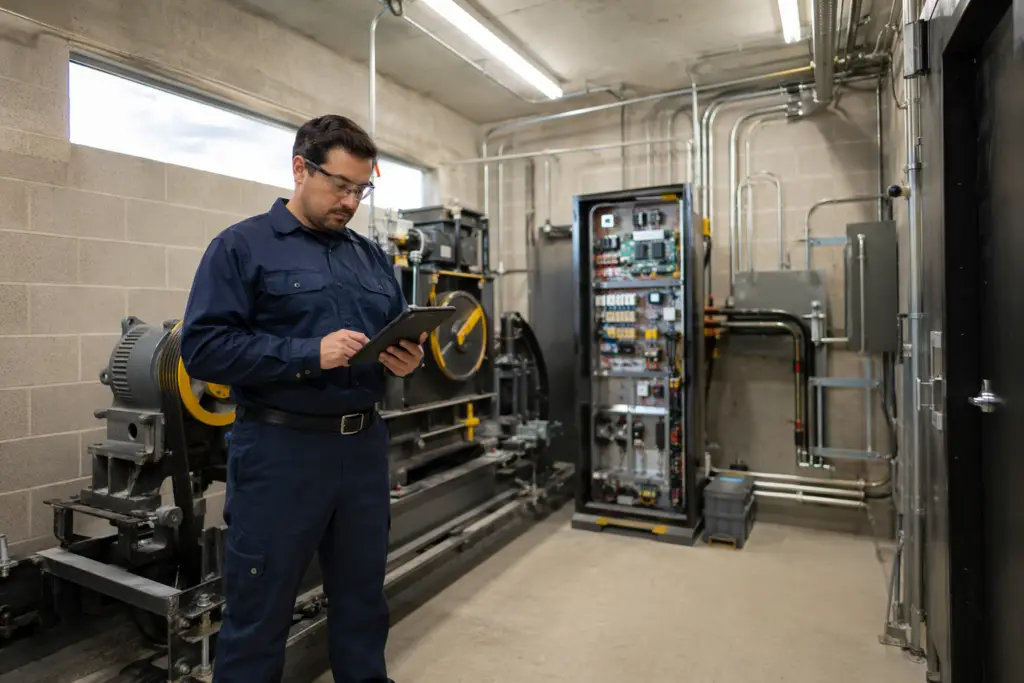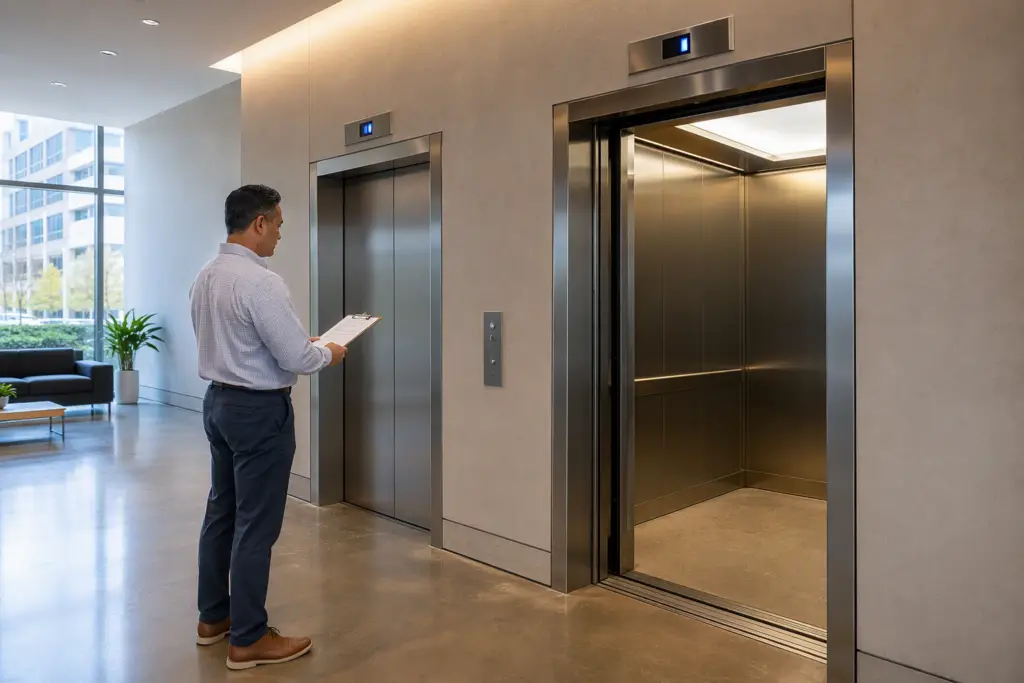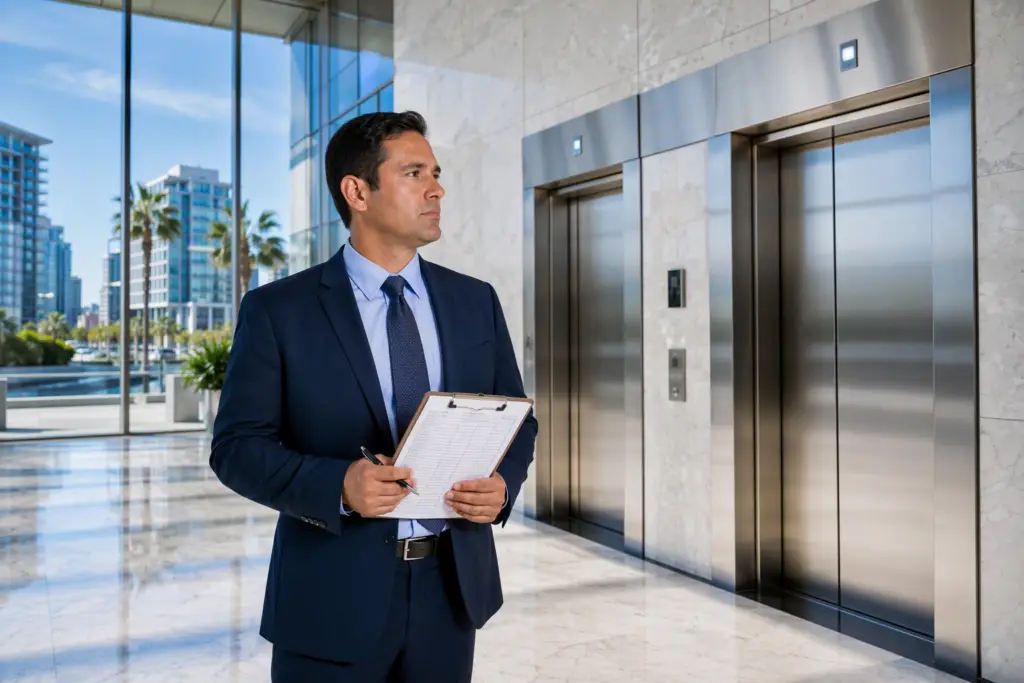
Top Rated Elevator Maintenance Company in Houston, TX: Complete FAQ Guide
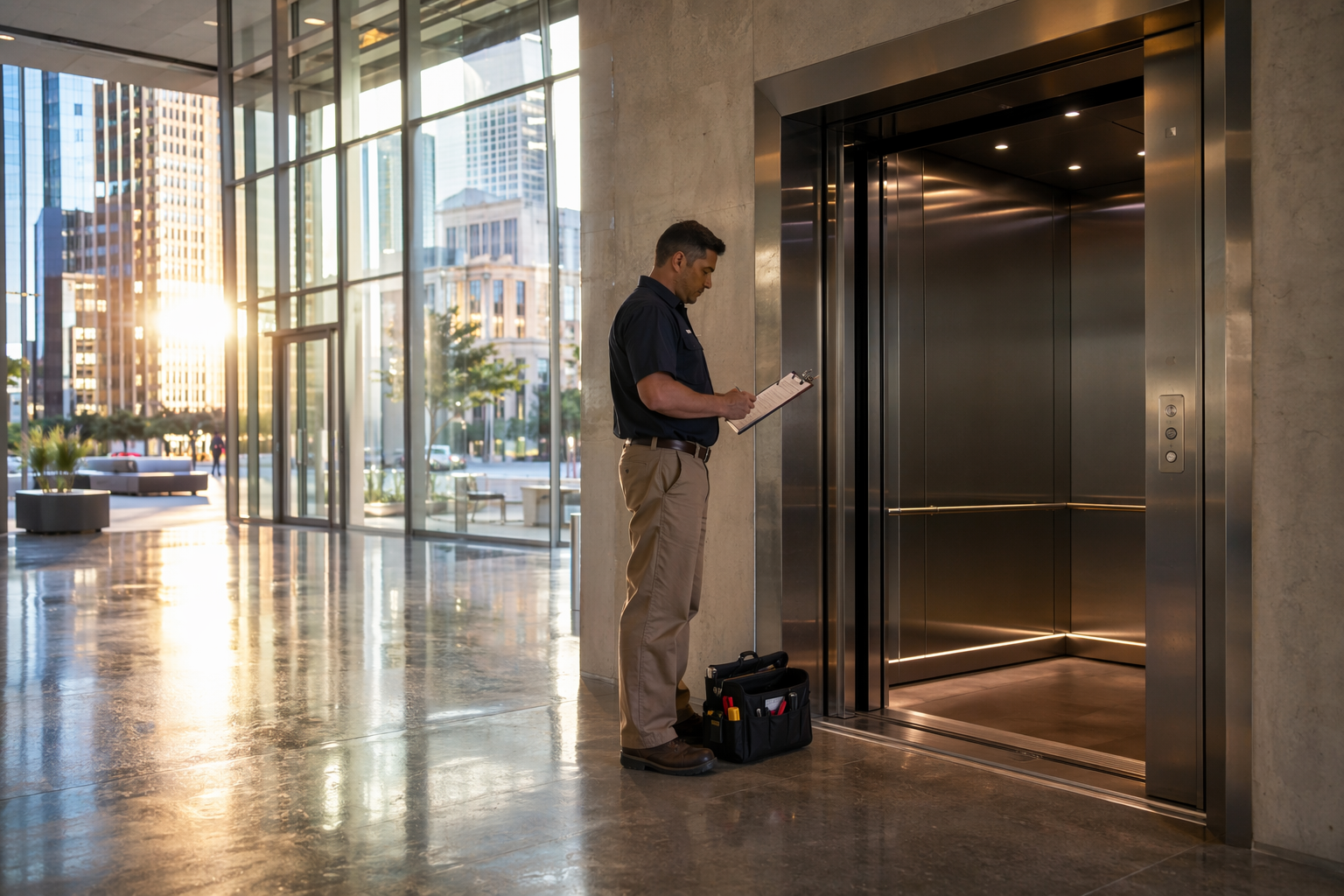
After 15 years working on elevator systems across Texas — from high-rise office towers in downtown Houston to mid-rise condominiums in The Woodlands — I’ve seen firsthand what separates a genuinely top rated elevator maintenance company from one that simply markets itself as one. This guide answers every question building owners, property managers, and facility directors in Houston typically ask before signing a maintenance contract. My goal is to give you the facts, the codes, and the benchmark data you need to make the right decision.
What makes a Houston elevator maintenance company truly “top rated”?
A top rated elevator maintenance company combines IUEC-certified technicians, strict adherence to ASME A17.1 Safety Code, documented response times under two hours for emergencies, and transparent maintenance contracts with no hidden escalation clauses.
In Houston’s competitive market, ratings are driven by four measurable pillars: technical certification, regulatory compliance, response time guarantees, and customer retention rates. The best companies maintain a callback rate below 8% after a service visit — meaning they fix the problem right the first time. They also carry current Texas Department of Insurance certificates of authority and maintain full commercial general liability coverage of at least $2 million per occurrence.
Beyond credentials, top rated companies invest in ongoing technician training. Elevator technology evolves rapidly — microprocessor-based controls, destination dispatch systems, and machine-room-less (MRL) traction elevators all require specialized skills that a generalist cannot provide. When evaluating any Houston elevator maintenance company, always ask for proof of IUEC union certification and manufacturer-specific training documentation.
How often should elevators in Houston be inspected and maintained?

Under Texas law and ASME A17.1-2022, elevators must receive a full annual state inspection and a periodic safety test every five years, but proactive preventive maintenance should occur monthly for high-traffic commercial units.
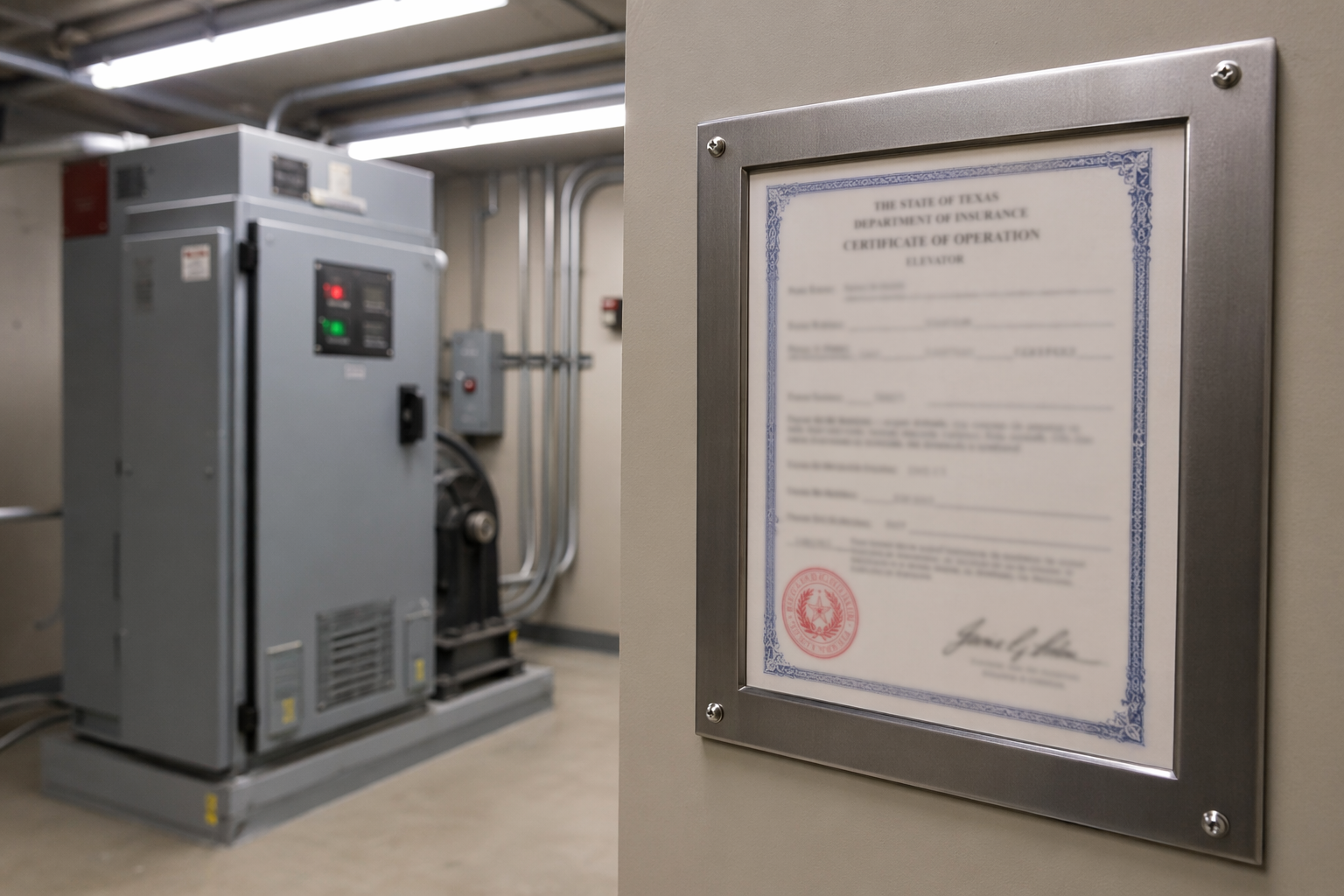
The Texas Department of Insurance (TDI) Elevator Safety Program mandates that every elevator operating in Texas hold a current Certificate of Operation, which is renewed annually following a state inspection. Failing to maintain this certificate can result in fines starting at $500 per day per elevator and forced shutdown orders — a scenario I’ve seen paralyze entire commercial properties.
Monthly preventive maintenance visits should include lubrication of guide rails, inspection of safeties and buffers, testing of door operators and interlocks, and review of machine room temperature and cleanliness. For low-traffic residential units such as home elevators or two-stop hydraulic lifts, quarterly visits may be acceptable, but never less frequently than that.
What do elevator maintenance contracts in Houston typically cost?
In Houston, elevator maintenance contracts typically range from $150 to $600 per month per unit depending on elevator type, traffic volume, age of equipment, and contract tier — with full-service agreements averaging $350–$500 monthly for standard commercial traction elevators.
Contract pricing is one of the most misunderstood areas in the industry. Many building owners make the mistake of selecting the lowest bid without understanding what is and is not included. Below is a benchmark comparison of the three most common contract types you will encounter in the Houston market:
| Contract Type | Typical Monthly Cost (Per Unit) | What’s Included | Best For |
|---|---|---|---|
| Oil & Grease (Basic) | $150 – $220 | Lubrication, visual inspection only; parts and labor billed separately | Low-traffic residential, tight budgets |
| Examination & Adjustment (Mid-Tier) | $230 – $380 | Lubrication, adjustments, minor parts; major components excluded | Small commercial, 2–5 story buildings |
| Full Maintenance (Comprehensive) | $380 – $600+ | All labor, most parts, callbacks, 24/7 emergency response included | High-rise, high-traffic commercial, hospitals |
| Modernization + Maintenance Bundle | $450 – $700+ | Full maintenance plus modernization financing; technology upgrades included | Aging equipment 20+ years old |
One critical warning: watch for automatic price escalation clauses tied to the Consumer Price Index. Some contracts allow annual increases of 5–8% without a cap. Negotiate a maximum annual escalation of 3% or include a fixed-price term for at least the first three years.
Is elevator maintenance legally required in Houston, Texas?
Yes — elevator maintenance is legally mandated in Texas under the Texas Elevator Safety Act, which is administered by the Texas Department of Insurance and requires every commercial and multi-family elevator to hold a valid Certificate of Operation.
The law applies to elevators in buildings open to the public, commercial properties, and multi-family residential buildings with three or more units. Single-family private home elevators are exempt from state inspection requirements, though I strongly recommend voluntary maintenance for liability and safety reasons.
Non-compliance penalties in Texas can include civil fines, mandatory shutdown orders, and in cases of injury, significant tort liability exposure. Building owners have been successfully sued for elevator injuries when it was proven that required maintenance was deferred or documentation was absent. Maintaining a proper service log — which AmeriTex Elevator provides digitally to all clients — is your first line of legal defense.
What is ASME A17.1 and why does it matter for Houston building owners?
ASME A17.1 is the Safety Code for Elevators and Escalators published by the American Society of Mechanical Engineers, and it serves as the technical foundation for elevator safety law in Texas and most U.S. states.
The 2022 edition of ASME A17.1 introduced updated requirements for seismic design, emergency communications, machine-room-less traction elevators, and hydraulic system pressure testing. Texas adopts ASME A17.1 by reference, meaning any elevator installation or maintenance that deviates from the current edition creates both a safety hazard and a legal liability.
Key sections every Houston building owner should know include: Rule 8.6 (Periodic Tests), Rule 8.7 (Maintenance, Repair, and Replacement), and Rule 2.27 (Emergency Operations and Signaling Devices). Your maintenance company should be able to cite these rules by memory — if they cannot, that is a red flag.
How quickly should a Houston elevator company respond to a breakdown?
Industry best practice — and the standard AmeriTex Elevator holds itself to — is a two-hour or less emergency response time for passenger entrapment situations, with same-day response for non-entrapment breakdowns during business hours.
In a city as large and traffic-congested as Houston, response time is not simply a customer service metric — it is a safety metric. ASME A17.1 Rule 2.27.1 requires that a means of two-way communication be available in every elevator cab, and when that communication indicates an entrapment, every minute counts. A technician who responds in 90 minutes versus four hours is the difference between a manageable situation and a medical emergency for an elderly or medically vulnerable passenger.
When evaluating contracts, get the response time guarantee in writing with defined penalties — typically a service credit — if the guarantee is missed. A company that refuses to put response times in writing is not a company you want managing your building’s vertical transportation.
What types of elevators do Houston maintenance companies service?
Qualified Houston elevator maintenance companies service all major elevator types including hydraulic, traction (geared and gearless), machine-room-less (MRL) traction, pneumatic vacuum elevators, and platform lifts governed by ASME A18.1.
Houston’s building stock is diverse — from 1970s-era hydraulic elevators in mid-rise office buildings to brand-new destination dispatch traction systems in Class A towers. Each system type has distinct maintenance requirements. Hydraulic systems require annual oil sampling and pressure testing; traction systems demand rope inspection and sheave groove measurement; MRL units require careful attention to the integrated brake and motor assembly since there is no separate machine room for isolation.
AmeriTex Elevator’s technicians hold manufacturer-specific certifications for major OEM brands including Otis, KONE, Schindler, ThyssenKrupp, and Mitsubishi, meaning we are not limited to generic maintenance protocols and can access OEM diagnostic tools for accurate troubleshooting.
What ADA requirements apply to Houston elevator maintenance?
Under the ADA Standards for Accessible Design, elevators serving public accommodations and commercial facilities must meet specific standards for cab dimensions, control button height, door reopening devices, and audible/visual signals — and these must be maintained in working order.
Section 407 of the ADA Standards specifically covers elevators. Key maintenance-sensitive requirements include: door reopening devices that remain operable for the full door close cycle, call buttons that illuminate when activated, floor passing tones, and cab interiors free of protrusions above 4 inches. An elevator that passed its ADA inspection at installation can fall out of compliance if door sensors fail or cab lighting becomes inconsistent — both issues that a quality maintenance program catches during routine visits.
Title III of the ADA applies to places of public accommodation, and failure to maintain accessible features can trigger complaints to the U.S. Department of Justice or private civil litigation. In 2026, ADA enforcement activity has increased significantly, with several Houston commercial property owners receiving demand letters related to elevator accessibility failures.
How do I evaluate elevator maintenance companies in Houston before signing a contract?
Evaluate Houston elevator maintenance companies using a five-point checklist: Texas TDI registration, IUEC technician certification, verifiable local references, written response time guarantees, and transparent contract terms with defined scope of work and parts coverage.
Here is the exact vetting process I recommend to every building owner who asks me:
Step 1 — Verify TDI Registration: Confirm the company is registered with the Texas Department of Insurance Elevator Safety Program. This is publicly searchable and non-negotiable.
Step 2 — Request Technician Credentials: Ask specifically which IUEC-certified technicians will be assigned to your building. Avoid companies that use non-union or unverified subcontractors without disclosure.
Step 3 — Check References in Your Building Class: A company that exclusively services single-family homes may not have the expertise to handle a 20-story commercial tower. Request references from comparable properties.
Step 4 — Read the Contract Exclusions: The scope of parts coverage is where budget surprises hide. Specifically ask about: door operators, controllers, motors, and hydraulic power units — all high-cost components that basic contracts often exclude.
Step 5 — Test Their Knowledge: Ask the sales representative to explain the last major ASME A17.1 code change that affected their maintenance procedures. A technically credible company will answer this without hesitation.
What is the difference between elevator maintenance and elevator modernization?
Elevator maintenance preserves the safe and code-compliant operation of existing equipment, while modernization replaces aging components — typically controls, doors, cab interiors, or entire drive systems — to extend service life, improve energy efficiency, and achieve current code compliance.
In Houston’s commercial real estate market, the decision between ongoing maintenance and modernization is primarily an economic one. The general industry rule of thumb is this: if your annual maintenance and repair costs consistently exceed 15–20% of the replacement value of the elevator system, modernization delivers better long-term ROI.
Elevators older than 20–25 years that still use relay-logic controls are typically candidates for full modernization. A modern microprocessor control system can reduce energy consumption by 30–40% and dramatically improve reliability. AmeriTex Elevator offers modernization assessments alongside our maintenance programs so building owners can make data-driven decisions rather than reactive ones when major components fail.
How long does an elevator maintenance visit typically take?
A standard preventive maintenance visit for a single commercial elevator in Houston typically takes 2–4 hours, depending on elevator type, age of equipment, and the number of floors served.
During a properly executed monthly visit, a certified technician should complete: machine room inspection, lubrication of all moving components, door operation testing at every landing, leveling adjustment verification, safety switch testing, oil level check (hydraulic), rope inspection (traction), and a full log entry. Any visit completed in under 45 minutes for a commercial unit should be considered suspicious — that timeline does not allow adequate inspection of all required components.
Multi-unit buildings with three or more elevators will typically be scheduled for a half-day or full-day visit to allow proper attention to each unit. Rushed maintenance is the primary cause of the callback problems that plague the lower-tier service providers in the Houston market.
What questions should I ask before signing an elevator maintenance contract in Houston?
Before signing any elevator maintenance contract in Houston, ask these seven questions: What specific parts are covered? What is the guaranteed emergency response time in writing? Who exactly are the assigned technicians and what are their certifications? What is the annual price escalation cap? How are after-hours calls handled and billed? What is the contract cancellation policy? Do you provide digital maintenance records?
The cancellation policy question is particularly important. Many elevator maintenance contracts in Texas include automatic renewal clauses with 60–90 day cancellation windows. Miss that window by even one day and you may be locked in for another full year. I have seen building owners pay thousands of dollars in cancellation penalties simply because they did not read the auto-renewal language. Always negotiate for a 30-day written cancellation right for cause, including persistent failure to meet response time guarantees.
How does Houston’s climate affect elevator maintenance requirements?
Houston’s extreme humidity, heat, and flooding risk create specific elevator maintenance challenges — including accelerated corrosion of hydraulic cylinders, moisture intrusion in machine rooms, and pit flooding — that demand more frequent inspection intervals than in drier climates.
Houston’s average relative humidity exceeds 75% for much of the year, and summer temperatures regularly reach 95–100°F. These conditions accelerate bearing wear, promote rust formation in guide rails, and degrade hydraulic oil faster than manufacturers’ standard replacement intervals assume. I typically recommend a 10–15% increase in lubrication frequency for Houston properties versus the manufacturer’s baseline schedule.
Pit flooding is a serious and underappreciated hazard in Houston, particularly in areas with poor drainage or near bayous. Elevator pits must be equipped with functioning sump pumps, and those sump pumps must be tested during every maintenance visit — not just when it rains. Water intrusion into a pit can damage buffers, corrode guide rail bases, and create serious electrical hazards that put passengers at risk.
What certifications should Houston elevator technicians hold?
Houston elevator technicians should hold IUEC (International Union of Elevator Constructors) certification, a valid Texas elevator inspector license or qualified technician registration through the TDI, and ideally hold QEI (Qualified Elevator Inspector) credentials for inspection work.
The QEI certification, administered by the National Elevator Industry Educational Program (NEIEP), is the gold standard for elevator inspection professionals. It requires passing a comprehensive examination covering ASME A17.1, A17.2 (Inspection), A17.3 (Existing Elevators), and A18.1. Not every maintenance technician needs QEI, but the company you hire should employ at least one QEI-certified inspector who can provide independent third-party inspection services if needed.
In 2026, Texas TDI has also increased enforcement of the qualified elevator contractor registration requirements. Any company performing maintenance, repair, or installation work in Texas must hold a current Elevator Contractor Registration — verify this directly on the TDI website before engaging any vendor.
What are the most common elevator problems in Houston commercial buildings?
The five most common elevator problems in Houston commercial buildings are door malfunctions (accounting for approximately 40% of all service calls), leveling errors, hydraulic oil leaks, motor and drive issues, and control system faults — most of which are preventable with consistent monthly maintenance.
Door problems dominate service call data across the industry because door systems are the most mechanically active component of any elevator — a busy commercial elevator may cycle its doors 200–300 times per day. Door cam rollers, gibs, and tracks require regular lubrication and adjustment. A properly maintained door system should achieve smooth, consistent operation with a door open/close cycle time within the 2–4 second range specified by ASME A17.1.
Hydraulic oil leaks are Houston’s second most common serious maintenance issue. The combination of heat cycling and ground settlement in Houston’s clay-heavy soil creates stress on underground hydraulic cylinders that can lead to slow seeps that go undetected for months. Underground hydraulic cylinder corrosion and leakage is both an environmental liability and a performance issue — and Texas environmental regulations require proper remediation when soil contamination occurs.
How do I compare elevator maintenance company bids in Houston fairly?
To compare elevator maintenance bids fairly in Houston, normalize all quotes to an equivalent scope by creating a standardized scope checklist, then compare total cost of ownership — not just monthly fees — including parts exclusions, callback rates, and expected repair billings outside contract coverage.
A $180/month basic contract that excludes door operators, controllers, and motors is not a bargain if those components require $4,000 in out-of-contract repairs annually. Calculate your realistic total annual spend including expected repair exposure before comparing bids. Request that each bidding company provide a written statement of the last three years’ average annual repair billings for buildings comparable to yours — credible companies will provide this data.
Also compare the technician-to-unit ratio each company maintains in Houston. A company with 10 technicians servicing 800 units cannot provide the same responsiveness as a company with 20 technicians servicing the same portfolio. Ask directly how many active maintenance accounts each assigned technician carries — industry best practice is no more than 60–80 units per full-time technician.
Can elevator maintenance prevent the need for full modernization?
Yes — disciplined preventive maintenance can extend the useful service life of an elevator by 10–15 years beyond the typical 20–25 year modernization threshold, but only when performed consistently by certified technicians using OEM-specified procedures and genuine replacement parts.
I have personally maintained 1980s-era hydraulic elevators in Houston office buildings that continue to operate reliably in 2026 because their owners invested in quality maintenance from day one. The key is consistency. One deferred maintenance cycle leads to accelerated wear that compounds over subsequent cycles. By the time a building owner notices performance degradation, the deferred maintenance costs have often multiplied three to five times what prevention would have cost.
That said, maintenance cannot overcome fundamental design limitations. Relay-logic control systems, single-bottom hydraulic cylinders, and original AC-drive traction machines all have technological obsolescence timelines that maintenance can slow but not reverse. A qualified maintenance provider should offer honest guidance on when continued maintenance becomes economically irrational versus when modernization is the right investment.
What should be included in an elevator maintenance log for Houston buildings?
ASME A17.1 Rule 8.7 requires that a maintenance log be kept at the elevator or in the machine room documenting all maintenance, examination, and repair activities — including date, work performed, technician name, and any parts replaced.
In practice, a compliant maintenance log should capture: date and time of visit, technician name and certification number, complete list of tasks performed, any deficiencies noted, corrective actions taken, parts replaced with part numbers, and next scheduled visit date. Digital maintenance logs, which AmeriTex Elevator provides to all clients through our client portal, offer the added benefit of automatic backup, timestamp verification, and instant access for TDI inspectors — eliminating the risk of lost paper logs during the annual inspection process.
Gaps in maintenance documentation are one of the top three reasons buildings fail their annual TDI elevator inspection. Beyond compliance, complete documentation is your liability shield in any injury litigation. A well-documented maintenance history demonstrating consistent inspection and prompt correction of identified deficiencies is powerful evidence of reasonable care.
How does elevator maintenance affect building insurance premiums in Houston?
Documented, consistent elevator maintenance can directly reduce commercial building insurance premiums in Houston — many carriers offer 5–15% credits for properties with verified full-service maintenance contracts and current TDI Certificates of Operation.
Insurance underwriters have increasingly sophisticated loss data on elevator-related claims. Buildings with documented lapses in maintenance — particularly door entrapments, leveling failures causing trip hazards, and entrapment incidents — show claim frequency two to three times higher than buildings with consistent full-service maintenance records. As a result, several major commercial property insurers active in the Houston market now request elevator maintenance contract documentation as part of the annual policy renewal process.
Beyond premium savings, consider the claims exposure difference. A leveling failure that causes a passenger to trip and fall in an elevator that was on a basic inspection-only contract can expose a building owner to six-figure tort liability. The same incident in a building with a documented full-service contract demonstrating regular leveling checks is far easier to defend and typically results in lower settlement values.
Why should Houston building owners choose AmeriTex Elevator for maintenance services?
AmeriTex Elevator combines IUEC-certified technicians, 24/7 Houston-based emergency dispatch, full ASME A17.1 and Texas TDI compliance expertise, digital maintenance documentation, and competitive full-service contract pricing — making it the preferred maintenance partner for Houston commercial and residential building owners who refuse to compromise on safety or reliability.
What differentiates AmeriTex Elevator in the Houston market comes down to three things I have observed make the real difference in elevator service quality: assigned technicians (you get the same certified professional who knows your building’s quirks, not a rotating roster of unfamiliar faces), response time accountability (our emergency response guarantee is in every contract with defined service credits), and total transparency (every client receives digital access to their complete maintenance and inspection history from day one).
AmeriTex Elevator serves Houston, Dallas, Austin, and San Antonio in Texas, as well as Los Angeles and San Diego in California — giving us the technical depth and vendor relationships of a multi-market company while maintaining the local accountability of a Houston-based service team. Our technicians average 12+ years of field experience and hold current certifications from IUEC, NEIEP, and major OEM manufacturers. When your building’s vertical transportation is on the line, that combination of credentials and local knowledge is not a luxury — it is a baseline requirement.
Get Your Free Elevator Assessment from AmeriTex Elevator
Whether you are evaluating your current maintenance provider, preparing for a TDI inspection, facing an aging elevator that needs modernization analysis, or simply want a second opinion on a contract you’ve been offered — AmeriTex Elevator’s certified technicians are ready to provide a no-obligation, comprehensive elevator assessment for your Houston property.
Our assessment includes: current code compliance review against ASME A17.1-2022 and Texas TDI requirements, equipment condition rating, maintenance contract evaluation, and a written findings report you can use regardless of whether you choose to work with us.
Contact AmeriTex Elevator for a free elevator assessment: 866-679-4313
Serving Houston, Dallas, Austin, San Antonio TX | Los Angeles, San Diego CA
Need elevator service you can rely on? AmeriTex Elevator is ready to help.