Elevator Modernization vs Full Replacement: A Complete Decision Guide
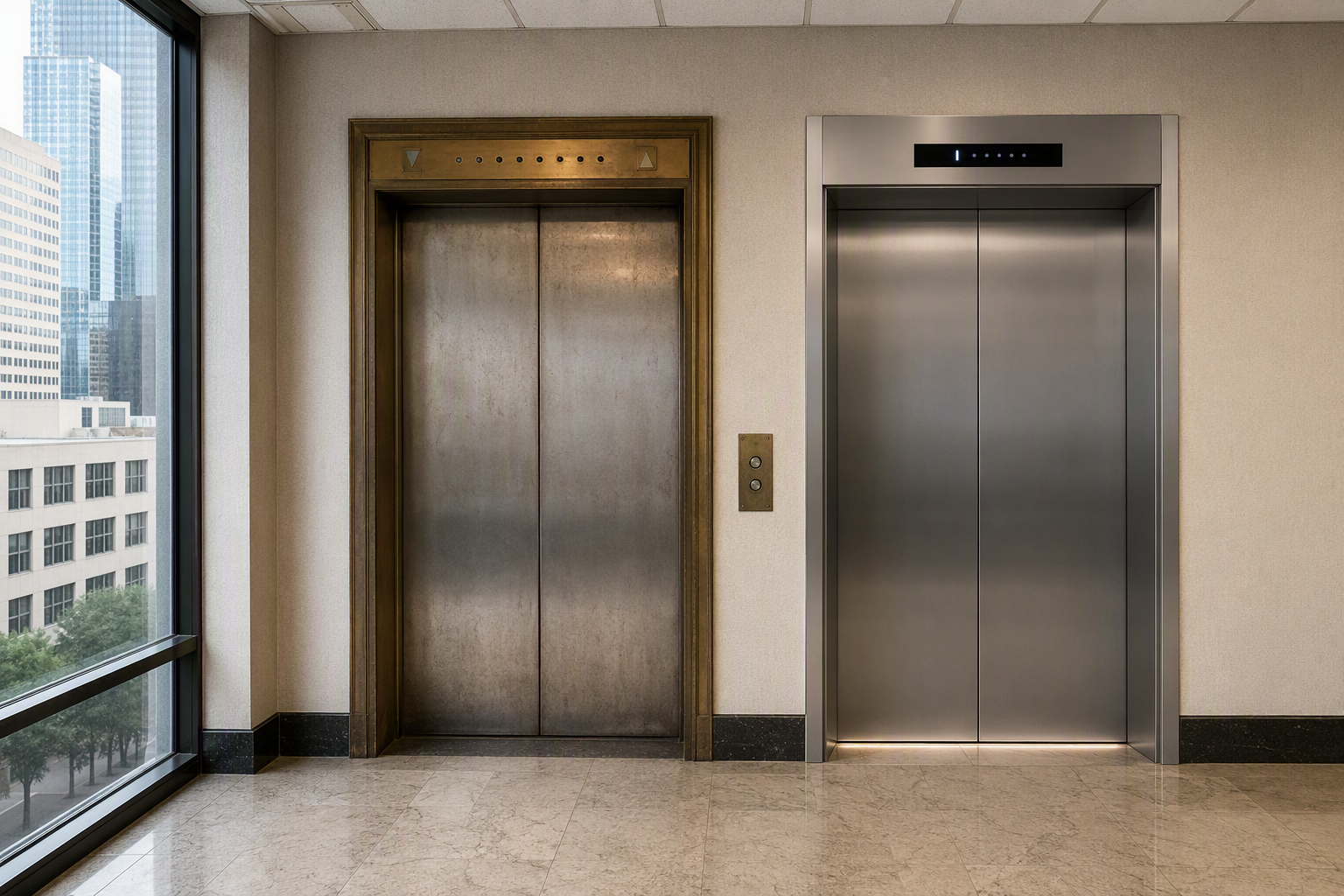
Choosing between elevator modernization and full replacement is one of the most consequential capital decisions a building owner or facility manager will make. The right choice depends on equipment age, current performance, regulatory compliance status, budget, and long-term building goals. This guide breaks down every factor so property stakeholders can make a confident, informed decision — and know exactly when to call an independent elevator service provider like AmeriTex Elevator for a professional assessment.
What Is Elevator Modernization?
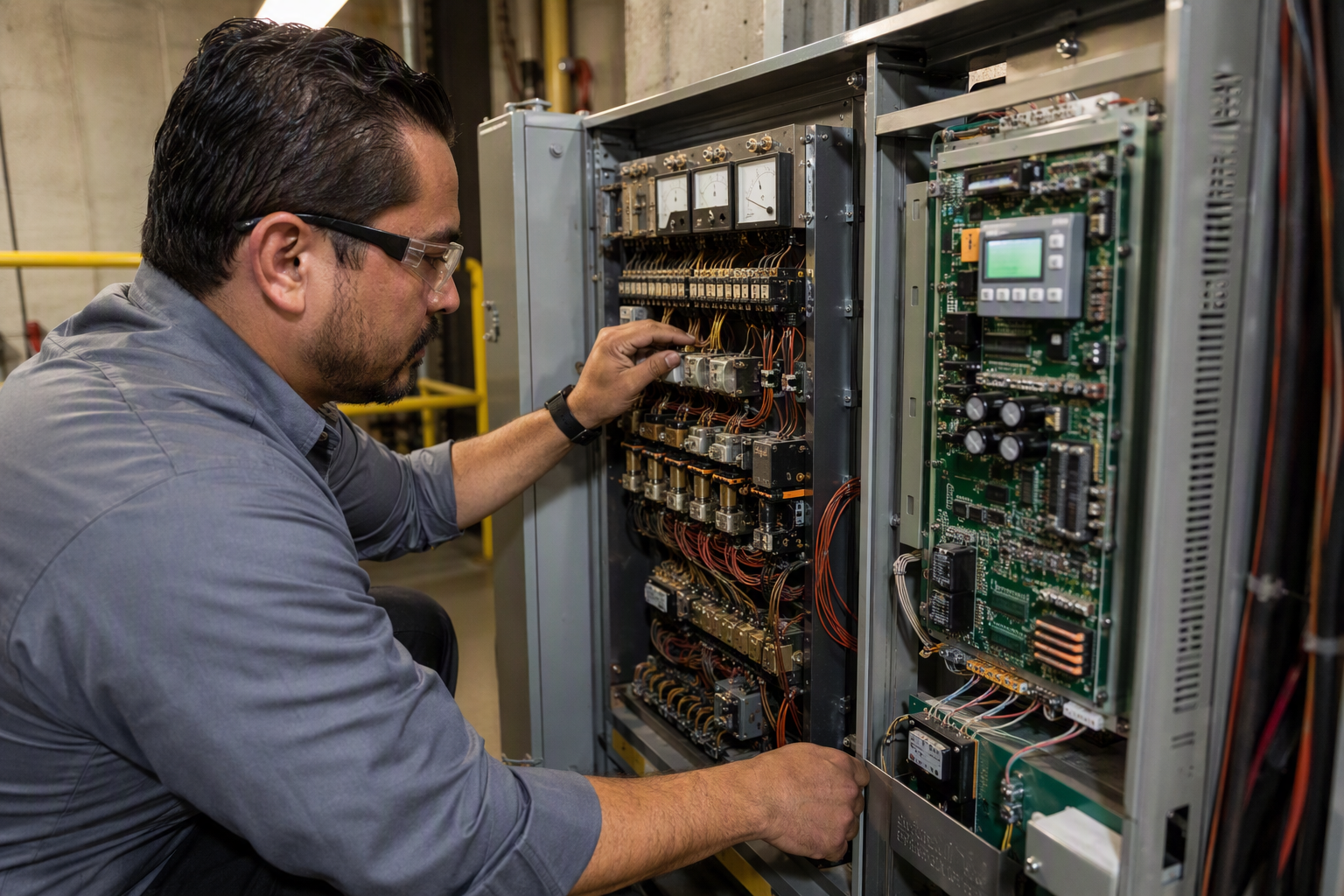
Elevator modernization refers to selectively upgrading specific components of an existing elevator system without replacing the entire unit. Common modernization scopes include:
- Control system and relay logic upgrades to modern solid-state or microprocessor-based controllers
- Drive system replacement (hydraulic jack replacement, traction machine upgrades, or conversion from hydraulic to machine-room-less traction)
- Door operator and door hardware replacement
- Cab interior renovation (lighting, flooring, walls, fixtures)
- Safety device upgrades to meet current ASME A17.1 Safety Code for Elevators and Escalators requirements
- Accessibility upgrades to comply with the Americans with Disabilities Act (ADA)
- Energy efficiency improvements, including LED lighting and variable-frequency drives
Modernization preserves the existing hoistway, pit, and overhead structure, which are typically the most expensive elements to alter or replace.
What Does Full Elevator Replacement Involve?
Full replacement means removing the existing elevator system entirely — including the cab, machine, controls, guide rails, and often hoistway components — and installing a new system. In some cases, structural modifications to the building are required. Full replacement projects are significantly more disruptive and time-intensive than modernization, often requiring extended elevator downtime that affects building occupants and operations.
How Do Modernization and Full Replacement Compare on Cost?
Cost is almost always the first filter in this decision. The gap between modernization and full replacement can be substantial, though the exact figures vary widely by building type, geographic market, elevator configuration, and scope of work. Rather than citing unverifiable averages, the following table outlines the relative cost drivers for each path.
| Cost Factor | Modernization | Full Replacement |
|---|---|---|
| Structural/hoistway work | Minimal to none (existing structure reused) | Potentially significant (new pit, overhead, or shaft modifications) |
| Equipment cost | Partial (only upgraded components purchased) | Full system purchase required |
| Labor cost | Lower overall scope | Higher — full removal and reinstallation |
| Building disruption cost | Lower downtime, typically weeks | Higher downtime, typically months |
| Permitting and inspection fees | Present but often lower scope | Full permitting and commissioning required |
| Unexpected structural issues | Less likely | Higher risk of discovery during demolition |
General guidance: For most commercial and residential buildings, modernization delivers meaningful performance improvements at a fraction of the cost of full replacement, making it the preferred starting point for evaluation.
How Do the Two Options Compare on Timeline?
| Phase | Modernization | Full Replacement |
|---|---|---|
| Assessment and engineering | 1–4 weeks | 4–12 weeks (includes structural engineering) |
| Equipment lead time | 4–12 weeks depending on components | 12–26+ weeks for full system manufacturing |
| Installation/construction | 1–8 weeks depending on scope | 2–6+ months |
| Inspection and commissioning | Days to weeks | Weeks to months |
| Total typical project timeline | 2–6 months | 6–18+ months |
Timeline matters significantly in occupied buildings where elevator downtime affects tenants, patients, or residents. A phased modernization strategy can often keep one elevator operational while another is upgraded, a flexibility that full replacement rarely permits.
What Are the Pros and Cons of Each Option?
| Modernization | Full Replacement | |
|---|---|---|
| Pros |
|
|
| Cons |
|
|
When Does Elevator Modernization Make More Sense?
Modernization is generally the preferred path when the following conditions apply:
- The elevator’s structural components — hoistway, pit, machine room, and guide rails — are in sound condition
- The primary issues are with controls, door operators, drive systems, or safety devices
- The building’s vertical transportation capacity needs have not significantly changed
- Budget constraints favor a lower immediate capital outlay
- The goal is to achieve compliance with current ASME A17.1 Safety Code for Elevators and Escalators or ADA accessibility standards without a full system overhaul
- The building owner wants to extend useful equipment life while deferring a larger capital project
- Minimizing tenant or resident disruption is a priority
When Does Full Elevator Replacement Make More Sense?
Full replacement becomes the more rational choice under these circumstances:
- The hoistway structure, pit, or overhead is compromised and requires significant remediation regardless of other decisions
- The existing elevator type (e.g., hydraulic) no longer meets the building’s performance needs and a different system type is required
- Parts availability for legacy components has become critically limited, making long-term maintenance untenable
- The elevator has experienced repeated safety failures that indicate systemic degradation
- A major building renovation creates a natural opportunity to redesign vertical transportation entirely
- Increasing building occupancy or load requirements exceed the rated capacity of the existing equipment
- The cumulative cost of modernization approaches or exceeds replacement cost with lower expected longevity
What Code Compliance Factors Affect This Decision?
Code compliance is a critical dimension that cannot be ignored. The ASME A17.1 Safety Code for Elevators and Escalators is the primary governing standard for elevator safety in the United States, and local jurisdictions adopt specific editions of this code. As of 2026, many jurisdictions have adopted recent editions that include updated requirements for emergency communication systems, door reopening devices, and seismic safety provisions.
Accessibility compliance under the Americans with Disabilities Act (ADA) requires elevators in covered buildings to meet specific standards for cab dimensions, control panel height, tactile signage, and audible floor announcements. Both modernization and replacement projects trigger compliance review, and either path can be used to achieve full ADA conformance.
Workplace safety requirements from OSHA also apply to the installation and service process, affecting how contractors and technicians must work safely during any elevator project.
A key compliance consideration: some jurisdictions require that any modernization work touching certain systems — controls, safeties, or buffers — triggers a full code compliance review of the entire elevator under the current adopted code edition. Building owners should verify local requirements before assuming that a partial modernization avoids broader compliance obligations.
How Should a Building Owner Evaluate ROI for Each Path?
Return on investment for elevator projects is evaluated across several dimensions beyond the initial capital cost:
| ROI Factor | Modernization | Full Replacement |
|---|---|---|
| Reduced maintenance costs | Significant improvement from upgraded components | Maximum reduction with all-new system |
| Energy savings | Meaningful savings from new drives and LED lighting | Maximum savings with optimized new system |
| Avoided downtime costs | Faster completion limits revenue/occupancy impact | Extended downtime may suppress rental income or operations |
| Property value | Improves asset condition and compliance standing | Greatest impact on building marketability |
| Useful life extension | Typically adds years of reliable service | Full new lifecycle — often decades |
| Payback period | Generally shorter due to lower upfront cost | Longer payback but greater long-term value |
What Is the Step-by-Step Process for Making This Decision?
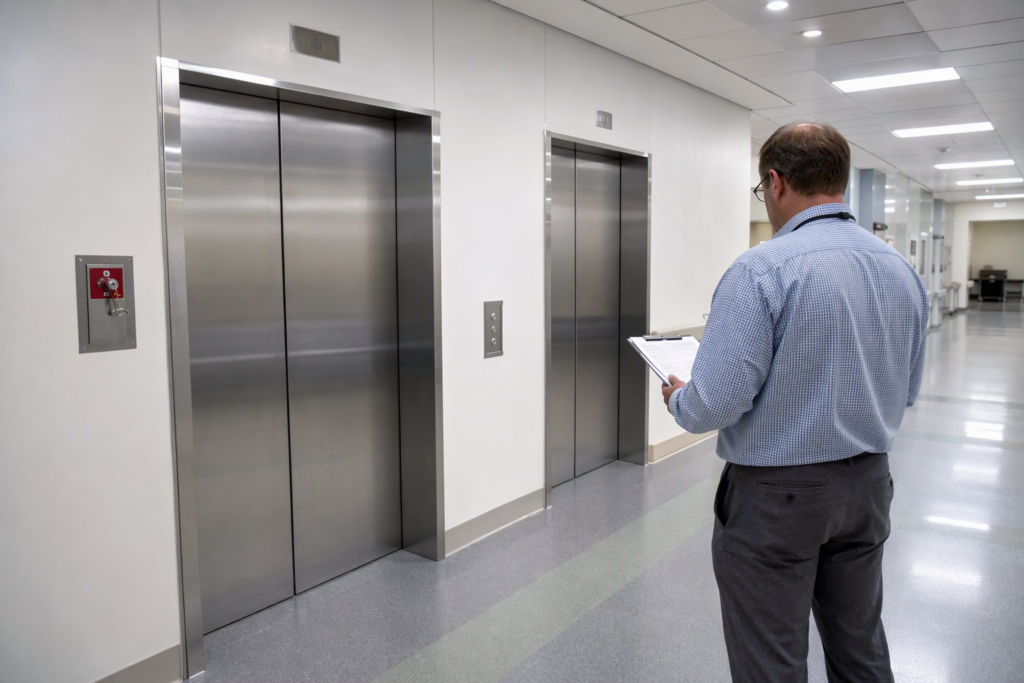
- Commission a comprehensive elevator condition assessment from a qualified, independent elevator service provider. This inspection should evaluate structural components, mechanical systems, electrical systems, safety devices, and code compliance status.
- Obtain a detailed deficiency report that categorizes issues by severity — immediate safety concerns, code violations, performance deficiencies, and cosmetic issues.
- Request separate scopes and estimates for modernization and full replacement so both paths can be evaluated on an apples-to-apples basis.
- Evaluate each option against current and future building needs — consider projected occupancy changes, planned renovations, and long-term ownership horizon.
- Verify local code adoption requirements with the local authority having jurisdiction (AHJ) to understand what compliance triggers apply to each project path.
- Model the total cost of ownership for each option over a defined period (typically ten to twenty years), including capital cost, projected maintenance, energy costs, and avoided downtime.
- Review financing and incentive options — some energy efficiency upgrades qualify for utility rebates or financing programs that can alter the cost calculus.
- Select a qualified, certified elevator contractor to execute the chosen project and confirm the contractor holds the appropriate state and local licenses for elevator work in your jurisdiction.
What Equipment Is Typically Replaced During a Modernization?
The scope of a modernization project varies considerably based on the age and condition of the existing system. A typical comprehensive modernization might address:
- Controller and relay panel: Old relay-logic controllers are replaced with modern microprocessor-based systems that improve reliability, diagnostics, and energy management
- Drive and motor: Aging DC drives or inefficient hydraulic systems are upgraded to variable-frequency AC drives or more efficient hydraulic units
- Door operators and equipment: Worn mechanical door operators are replaced with modern closed-loop door systems that dramatically reduce door-related service calls
- Cab enclosure and fixtures: Interior panels, flooring, lighting (upgrading to LED), handrails, and emergency communication systems
- Safety devices: Governor, safeties, buffers, and related components upgraded to current ASME A17.1 standards
- Signage and fixtures: Hall stations, car operating panels, and lanterns updated to meet ADA requirements
How Does Hydraulic Elevator Modernization Differ From Traction Elevator Modernization?
The modernization approach differs meaningfully based on elevator type:
Hydraulic elevators — common in low-rise buildings — often benefit from jack and cylinder replacement to address oil leaks and environmental concerns, paired with a modern power unit and controller. In some cases, a hydraulic-to-traction conversion may be feasible and cost-effective, particularly when machine-room-less traction systems can be installed.
Traction elevators — used in mid- and high-rise applications — typically see the greatest benefit from machine and drive upgrades, particularly conversion from DC to AC drive systems, combined with modern controller replacement and door equipment upgrades.
The right modernization scope for each elevator type requires a system-specific assessment rather than a one-size-fits-all approach.
What Should Building Owners Ask a Prospective Elevator Contractor?
Before engaging any elevator service company for a modernization or replacement project, building owners and facility managers should ask:
- Are you licensed to perform elevator work in this jurisdiction?
- Will you pull all required permits and coordinate with the local authority having jurisdiction?
- What is the projected elevator downtime for this project, and how will you communicate changes to building occupants?
- What warranty terms apply to the equipment and labor?
- Who manufactures the control systems and major components you will install?
- Are you independent of any single equipment manufacturer, or are you limited to proprietary systems?
- How will you handle unforeseen conditions discovered during the project?
- What ongoing maintenance options are available after project completion?
Working with an independent, manufacturer-agnostic elevator service company like AmeriTex Elevator is an important advantage. Independent providers can specify and source the best-fit components from multiple manufacturers rather than being constrained by a single proprietary product line — often resulting in better performance outcomes and more competitive pricing.
How Does AmeriTex Elevator Approach Modernization and Replacement Projects?
AmeriTex Elevator is a certified elevator service company serving building owners and facility managers across its service region. As an independent provider, AmeriTex Elevator evaluates each building’s specific conditions and needs without the bias of proprietary equipment allegiances. The AmeriTex Elevator team conducts thorough, on-site assessments that examine structural integrity, mechanical condition, code compliance status, and performance history before recommending any course of action.
AmeriTex Elevator prepares detailed written assessments that give building owners the documentation they need to make an informed decision — whether that decision is a targeted component modernization, a full-system modernization, or complete replacement. For buildings where a phased approach makes financial sense, AmeriTex Elevator can develop a multi-year capital plan that sequences investments appropriately.
Following any modernization or replacement project, AmeriTex Elevator offers ongoing maintenance and service programs to protect the investment and keep the elevator in safe, reliable operation.
What Are the Most Common Mistakes Building Owners Make in This Decision?
- Deciding without a professional assessment: Estimating the right path based on elevator age alone — without understanding actual component condition — frequently leads to either over-investment or under-investment.
- Ignoring code compliance triggers: Proceeding with a modernization project without understanding local code requirements can result in required scope expansions that significantly alter the budget.
- Selecting solely on lowest bid: The lowest-cost proposal may reflect a narrower scope, lower-quality components, or an inexperienced contractor — all of which create problems post-project.
- Failing to plan for downtime: Underestimating the operational impact of elevator downtime — particularly in healthcare, hospitality, or multi-tenant residential settings — leads to tenant dissatisfaction and potential revenue loss.
- Deferring too long: Continuing to repair aging equipment past the point of economic viability increases cumulative maintenance costs and raises safety risk, ultimately making the eventual project more expensive.
Summary: Key Decision Factors at a Glance
| Decision Factor | Points Toward Modernization | Points Toward Full Replacement |
|---|---|---|
| Hoistway/pit structural condition | Sound and serviceable | Compromised or requires major remediation |
| Primary failure areas | Controls, doors, drive, safety devices | Systematic failure across all components |
| Capacity/speed needs | Current capacity remains appropriate | Building needs have outgrown existing system |
| Budget timing | Lower immediate capital preferred | Full capital program available or required |
| Disruption tolerance | Low — need to minimize downtime | Major renovation or vacancy window available |
| Parts availability | Parts for existing components available | Legacy parts obsolete or unavailable |
| Ownership horizon | Shorter to medium term | Long-term ownership planned |
Get a Professional Elevator Assessment Today
The right decision between elevator modernization and full replacement starts with an accurate, unbiased assessment of what your system actually needs. AmeriTex Elevator provides free elevator assessments for building owners and facility managers — giving you the facts needed to plan your capital investment with confidence.
Contact AmeriTex Elevator for a free elevator assessment: 866-679-4313
Need elevator service you can rely on? AmeriTex Elevator is ready to help.