How Long Does It Take to Get Elevator Parts and Complete a Major Elevator Repair Right Now?
Parts lead times and total repair timelines vary widely based on component type, elevator manufacturer, local inventory, and regulatory requirements. The sections below break down every factor that determines how long a major elevator repair takes in 2026, from initial diagnosis through final code-compliant inspection — covering cost drivers, compliance requirements, and what building owners in Texas and California can do to minimize downtime.
What Is the Typical Timeline for a Major Elevator Repair From Start to Finish?
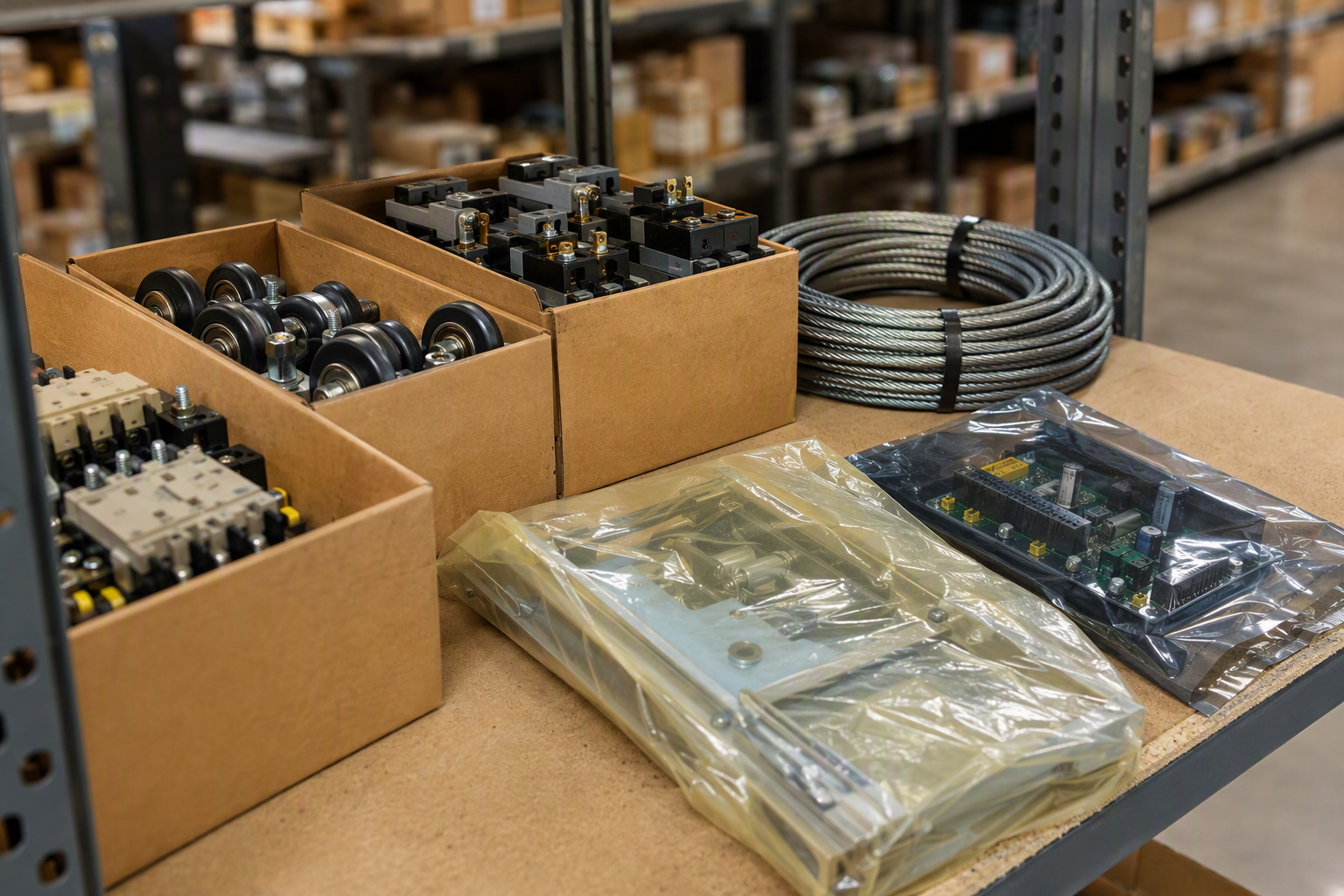
A complete major elevator repair typically spans two to eight weeks from the moment a technician diagnoses the problem to the day the elevator passes its post-repair inspection and returns to service.
This range accounts for the full repair lifecycle: diagnostic inspection, parts identification, procurement, removal of failed components, installation, load testing, and final approval by the authority having jurisdiction (AHJ). Simple repairs involving stocked components — such as a door operator belt or a standard contactor — can be completed in days. Major repairs involving control system modernizations, hydraulic cylinder replacements, or machine room equipment overhauls regularly extend past four to six weeks even under favorable conditions.
In markets like Houston, Dallas, Austin, San Antonio, Los Angeles, and San Diego, AHJ scheduling for post-repair permits and inspections adds an additional variable that is outside the direct control of the elevator contractor. Building owners should account for permit processing time as part of any repair plan.
How Long Do Elevator Parts Take to Arrive in 2026?
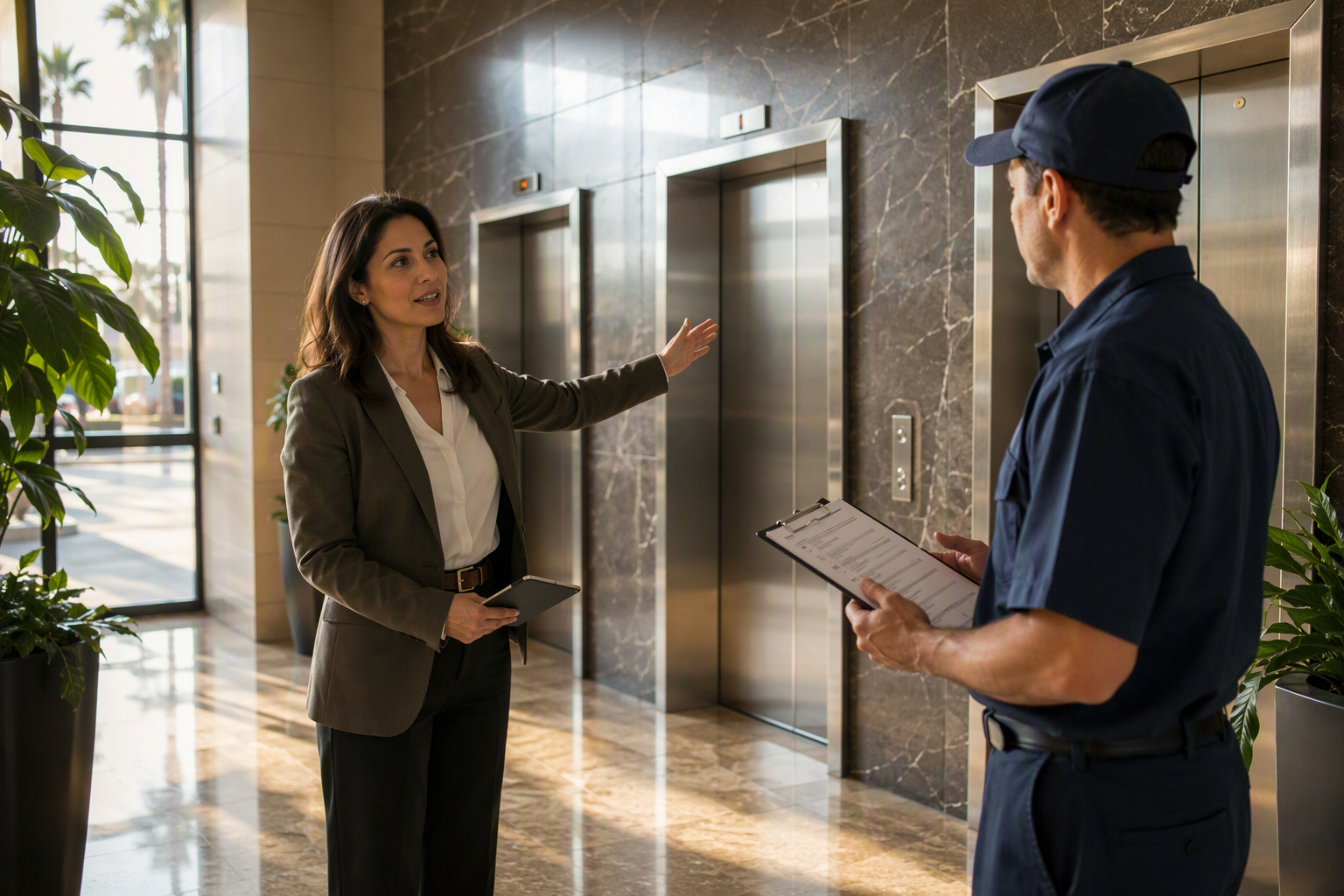
Parts lead times in 2026 range from same-day local pickup for common wear items to twelve weeks or more for proprietary, discontinued, or overseas-manufactured components.
The table below provides a practical benchmark for common elevator component categories based on general industry supply patterns. These ranges reflect typical market conditions and will vary by manufacturer, distributor, and region.
| Component Category | Examples | Typical Lead Time | Notes |
|---|---|---|---|
| Consumable / Wear Parts | Door rollers, belts, brushes, lamp assemblies | 1–5 business days | Often stocked locally by distributors |
| Standard Electrical Components | Contactors, relays, fuses, sensors | 3–10 business days | Availability varies by brand |
| Door Operators | Complete door operator assemblies | 2–6 weeks | OEM vs. aftermarket availability differs |
| Controller / Logic Boards | Solid-state controller boards, PLCs | 4–12 weeks | Legacy systems may require remanufacturing |
| Hydraulic Cylinders & Jacks | Single/double-acting jacks, liners | 6–16 weeks | Custom bored sizes built to order |
| Traction Machines & Motors | Geared/gearless machines, drive motors | 6–20 weeks | Gearless permanent-magnet machines have longer lead times |
| Hoist Ropes / Cables | Wire rope sets, compensation cables | 1–3 weeks | Non-standard diameters may take longer |
| Safety Devices | Governors, safeties, buffers | 4–10 weeks | Must meet ASME A17.1 type-test requirements |
| Obsolete / Discontinued Parts | Legacy control components, early microprocessor boards | 8–20+ weeks | May require modernization instead of repair |
Which Elevator Components Have the Longest Lead Times Right Now?
Gearless traction machines, hydraulic cylinders with non-standard bore dimensions, and proprietary controller boards for legacy systems consistently carry the longest lead times in today’s parts market.
Gearless permanent-magnet machines used in modern high-rise elevators are largely manufactured overseas. When a unit requires replacement rather than rewinding, lead times from overseas factories can extend to five months or more depending on order backlog. Hydraulic cylinders present a similar challenge: because they are custom-bored to match each installation’s pit depth and travel, they are built to order and cannot be pulled from a distributor’s shelf. Legacy controller boards present a third bottleneck — when original equipment manufacturers have discontinued a product line, the only options are third-party remanufacturing, salvaged units, or a full control system modernization.
Building owners who discover their elevator is approaching the end of a manufacturer’s supported product lifecycle should discuss a proactive modernization timeline with a qualified elevator company before an emergency forces a reactive — and typically slower — replacement.
What Is the Step-by-Step Process for a Major Elevator Repair?
Understanding each phase of a major repair helps building owners set realistic timelines and coordinate with tenants, property managers, and local inspection authorities effectively.
- Initial Service Call and Entrapment Response: A certified elevator mechanic responds to the service call, releases any entrapped passengers safely, and places the elevator out of service if a hazardous condition exists.
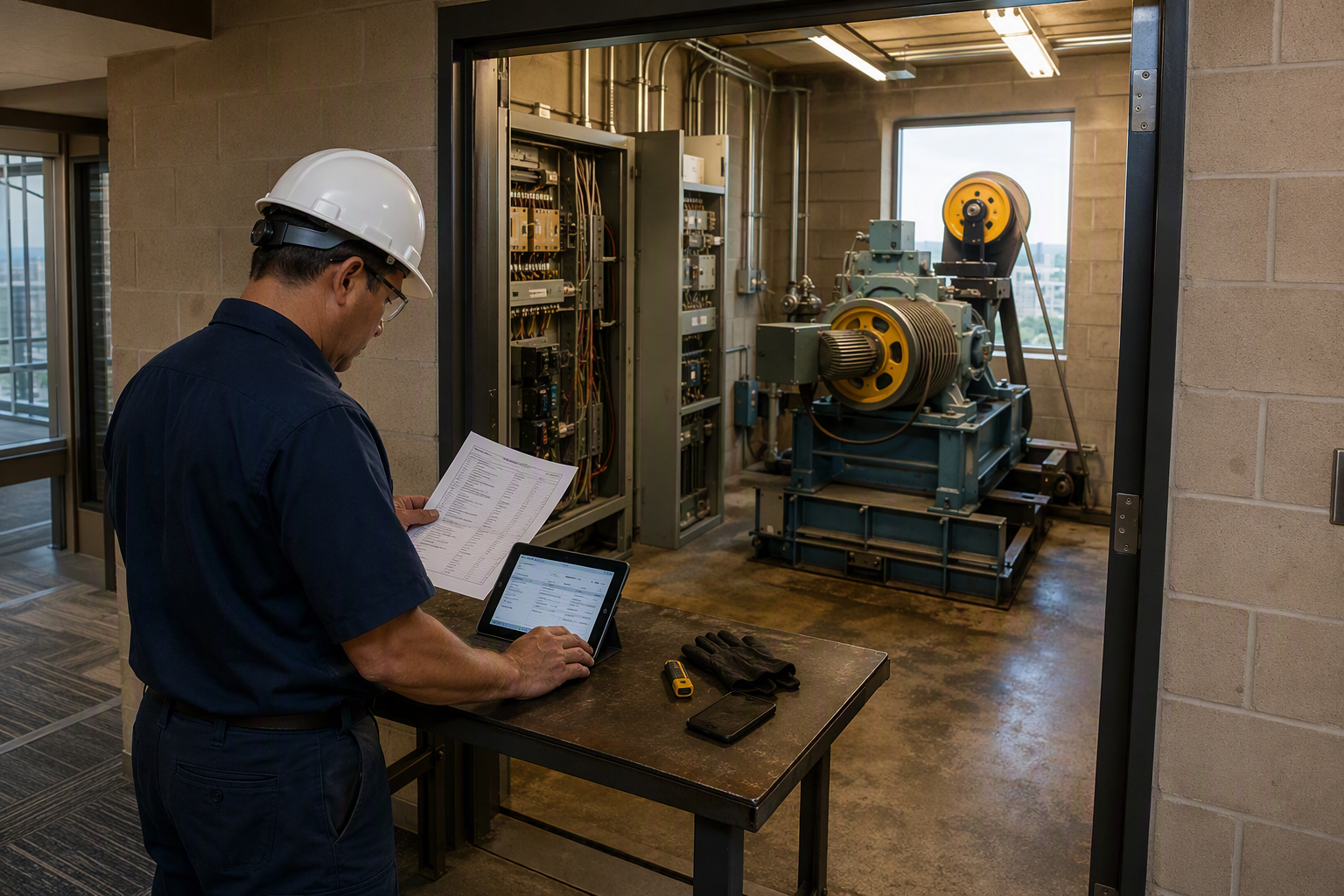
- Diagnostic Inspection: The technician performs a thorough inspection of the mechanical, electrical, and hydraulic systems to identify the root cause. This step may require the elevator to be out of service for several hours or longer for complex faults.
- Written Scope of Work: The elevator company prepares a written scope detailing the failed components, required replacement parts, applicable code requirements, and estimated timeline.
- Permit Application: In Texas and California, major repairs require a permit from the state or local AHJ before work begins. Permit processing times vary by jurisdiction and can add days to a week or more to the overall schedule.
- Parts Procurement: The technician or parts department orders all required components. This is typically the longest phase of any major repair.
- Scheduled Downtime and Removal: Once parts arrive, the elevator is taken out of service, existing components are removed, and the work area is prepared per OSHA safety standards.
- Installation and Adjustment: New components are installed, wired, adjusted, and calibrated to manufacturer and code specifications consistent with ASME A17.1 Safety Code for Elevators and Escalators requirements.
- No-Load and Full-Load Testing: The technician runs a series of operational tests — including safety device tests — to confirm the repair meets performance and safety parameters.
- AHJ Inspection: A state or city elevator inspector witnesses required tests and issues a certificate of operation upon passing.
- Return to Service: The elevator is returned to normal passenger or freight service with all required documentation filed.
How Do Texas Elevator Regulations Affect Repair Timelines?
In Texas, the Texas Department of Insurance (TDI) Elevator Safety Program regulates elevator permits, inspections, and certificates of operation, and AHJ scheduling directly affects how quickly a repaired elevator can legally return to service.
Texas requires that elevator repair work involving safety-critical components — including controllers, safeties, governors, and hydraulic systems — be performed under a valid work permit issued before the repair begins. The inspection that follows must be witnessed by a TDI-licensed elevator inspector or an approved third-party inspection company. Depending on inspection demand in a given city, scheduling a post-repair inspection may add one to two weeks to the total project timeline in busy markets such as Houston, Dallas, San Antonio, and Austin. Building owners should coordinate with their elevator contractor to submit permit applications and schedule inspections proactively rather than waiting until parts are already in hand.
How Do California Elevator Regulations Affect Repair Timelines?
California’s Division of Occupational Safety and Health (Cal/OSHA) Elevator, Ride, and Tramway Unit administers elevator permits and inspections statewide, and permit approval is required before major repair work commences in Los Angeles and San Diego markets.
California’s regulatory environment includes mandatory permitting for alterations and major repairs, and inspectors from the Cal/OSHA Elevator Unit or an approved certified competent elevator inspector (CCEI) must witness specific tests. In high-demand urban markets like Los Angeles, inspection scheduling windows can be competitive. Elevator contractors experienced in the California regulatory process — such as AmeriTex Elevator, which serves both Los Angeles and San Diego — typically coordinate permit filings and inspection scheduling concurrently with parts procurement to avoid adding unnecessary idle time to the repair process.
What ASME A17.1 Requirements Apply to Major Elevator Repairs?
The ASME A17.1 Safety Code for Elevators and Escalators governs the design, construction, alteration, and testing requirements for elevator equipment across the United States, and non-compliance can prevent a repaired elevator from receiving its certificate of operation.
When a repair involves replacing or altering safety-critical systems — such as the governor, safety device, buffers, or control system — the work must conform to the edition of ASME A17.1 adopted by the local AHJ. As of 2026, various jurisdictions across Texas and California are operating under different adopted code editions, which means the specific test requirements a repaired elevator must pass can vary by city. Replacement components must carry documentation demonstrating they are type-tested or listed in accordance with the applicable code edition. Working with an elevator company that maintains current knowledge of which ASME A17.1 edition applies in each jurisdiction is essential to avoiding test failures and reinspection delays.
How Do ADA Requirements Affect Elevator Repair and Modernization Scope?
When a major repair triggers a determination that an elevator is being “altered” under the Americans with Disabilities Act, the repair scope may need to incorporate ADA-compliant features such as accessible controls, audible signals, and adequate cab dimensions.
ADA accessibility requirements apply to elevators serving the public in commercial and public buildings. If a repair project rises to the level of an alteration as defined by ADA guidance, building owners may be required to bring the cab, controls, and signage into compliance with current ADA standards. This is particularly relevant during control system modernizations, where a complete cab interior renovation is often performed concurrently. Building owners should consult with their elevator contractor and legal counsel to determine whether a planned repair triggers ADA alteration obligations before scoping the project.
When Does a Major Repair Become a Modernization?
A major repair becomes a modernization when the scope of replacement components is so extensive that it effectively constitutes a new installation under the applicable code, or when the cost and complexity of repairing aging equipment exceeds the value of doing so compared to a full system upgrade.
Common triggers include controller systems that are no longer supported by the manufacturer, hydraulic systems with single-bottom cylinders that require replacement under updated environmental protection requirements, or traction machines that cannot be economically rewound. Modernizations generally take longer than targeted repairs because they involve permitting for an alteration rather than a repair, broader scope of work, and often structural or pit modifications. However, modernized elevators deliver improved energy efficiency, reduced ongoing maintenance costs, and a substantially extended service life. AmeriTex Elevator helps building owners evaluate whether repair or modernization is the more cost-effective path for their specific equipment and building use case.
What Factors Can Delay an Elevator Repair Beyond the Estimated Timeline?
Several conditions regularly extend elevator repair timelines beyond initial estimates, and understanding them helps building owners plan contingencies.
Parts substitution or backorders are the most common delay source: when a specified part is unavailable, the technician must identify an approved substitute, which may require additional engineering review before installation. AHJ inspector availability is a second frequent delay source, particularly in large metropolitan areas. Hidden damage discovered during disassembly — such as a corroded pit or previously unknown wiring faults — can expand the scope of work mid-project. In hydraulic elevator repairs, environmental soil remediation requirements triggered by an oil leak can add weeks to a project involving AHJ notification and remediation oversight. Finally, building access coordination — particularly in occupied multi-tenant commercial buildings — sometimes delays work start times.
How Should Building Owners Prepare for an Extended Elevator Outage?
When a major elevator repair is projected to last more than a few days, building owners have specific responsibilities to tenants, visitors, and building code requirements that must be addressed proactively.
If the building contains multiple elevators, a phased repair plan that keeps at least one car in service while repairs proceed on others reduces tenant impact significantly. For single-elevator buildings, building owners should provide advance notice to all tenants, post clear out-of-service signage, and evaluate whether temporary ADA accommodation plans are required. Under the ADA, public accommodations have ongoing obligations to ensure individuals with disabilities can access their services, and a prolonged elevator outage in a building with no accessible alternative may trigger accommodation requirements. Consulting with legal counsel and coordinating with the elevator contractor on the most aggressive realistic repair schedule is advisable.
What Is the Difference Between Emergency Elevator Repair and Planned Major Repair?
Emergency elevator repair addresses an immediate failure that takes the elevator out of service unexpectedly, while a planned major repair is scheduled in advance based on inspection findings, allowing time for pre-ordering parts and minimizing unplanned downtime.
Emergency repairs almost always take longer than equivalent planned repairs because parts must be ordered reactively rather than proactively. When an elevator fails unexpectedly, the technician must first diagnose the failure, then identify and order parts — a sequence that adds the full lead time to the outage. In a planned repair, parts can be ordered weeks in advance so that work begins as soon as the scheduled outage starts. Building owners who maintain a regular inspection and maintenance relationship with a qualified elevator company — such as AmeriTex Elevator — are better positioned to identify aging components and schedule replacements proactively before failures occur.
How Do Elevator Maintenance Contracts Affect Parts Availability?
Elevator maintenance contracts that include parts coverage often give the service provider an incentive to maintain local parts inventory for the specific makes and models they service, which can meaningfully reduce lead times compared to one-time repair relationships.
Full-coverage maintenance agreements typically specify that the elevator company will supply and install covered parts as part of the contract — meaning the contractor has a financial reason to stock frequently replaced components. This is one reason building owners evaluating elevator service providers should ask specifically about parts inventory practices and distributor relationships for their elevator make and model. Time-and-materials repair arrangements offer no such stocking incentive. The structure of a building’s maintenance contract is therefore a real factor in how quickly parts can be sourced during a major repair.
How Does Elevator Age Affect Repair Timeline and Parts Availability?
Older elevators — particularly those more than twenty-five years old — face dramatically longer parts lead times because original equipment manufacturers have discontinued legacy product lines, forcing reliance on third-party remanufacturing, salvage, or full-system modernization.
An elevator installed in the 1980s or early 1990s may have a relay-logic or early microprocessor control system for which no new replacement boards are manufactured. When a critical board fails, the building owner’s options are limited: find a remanufactured equivalent (which may take weeks to source and test), locate a salvaged unit from a decommissioned elevator (uncertain availability), or modernize the control system entirely. Each path has a different timeline and cost profile. OSHA’s general duty clause also creates an ongoing obligation for building owners to maintain equipment in a safe condition, and operating an elevator with chronically unavailable parts creates risk exposure beyond the repair timeline concern.
What Questions Should a Building Owner Ask an Elevator Repair Company Before Authorizing Work?
Selecting the right elevator repair company and asking the right questions before authorizing work can substantially reduce the total time an elevator remains out of service.
Key questions include: How long will it take to source all required parts for this specific repair? Are any components on backorder or subject to manufacturing lead times? Which edition of ASME A17.1 applies in this jurisdiction, and does the proposed repair fully comply? Will the repair trigger any ADA alteration obligations? What is the permit and inspection process, and how will you coordinate scheduling with the AHJ? Are there any hidden damage risks during disassembly that could extend the scope? Is repair the more cost-effective path, or should modernization be considered? Getting clear, specific answers to these questions before work begins protects the building owner from scope surprises and timeline extensions.
How Does OSHA Apply to Elevator Repair Work?
Elevator mechanics performing major repairs are subject to OSHA standards, including lockout/tagout procedures, confined space requirements for pit work, and fall protection requirements in machine rooms and hoistways.
OSHA’s lockout/tagout standard (29 CFR 1910.147) is directly applicable to elevator repair work, requiring that all energy sources — electrical, hydraulic, and gravitational — be isolated and locked before technicians enter hoistways or perform work on energized systems. Pit work may trigger OSHA permit-required confined space standards depending on pit depth and atmospheric conditions. Building owners have a related responsibility: ensuring that the elevator machine room is accessible only to authorized personnel and that the physical conditions in the pit and machine room meet minimum safety standards. Non-compliant site conditions can halt repair work until hazards are remediated, adding further delays.
How Can Building Owners Reduce Future Major Repair Timelines?
Proactive maintenance, regular code-required inspections, and a maintenance relationship with a qualified elevator service company are the most effective strategies for reducing the frequency and duration of major elevator repairs.
ASME A17.1, as referenced in ASME Codes & Standards, establishes requirements for periodic testing of safety devices — including annual no-load safety tests and five-year full-load tests — that are designed to identify deteriorating components before they fail catastrophically. Catching a failing governor rope or a worn safety jaw during a scheduled test rather than during an in-service failure means the repair can be planned, parts can be pre-ordered, and downtime can be minimized. Building owners who defer required testing to save money routinely discover that the resulting emergency repairs are both slower and more expensive than proactive maintenance would have been.
What Should a Building Owner Do Immediately When an Elevator Fails?
Immediate, systematic action following an elevator failure protects passengers, limits liability, and starts the repair clock as quickly as possible.
- Confirm Passenger Status: Determine immediately whether any passengers are entrapped. If so, call 911 and the elevator company’s emergency line simultaneously. Do not attempt to open doors or move the elevator without a licensed mechanic present.
- Take the Elevator Out of Service: If the elevator is not already stopped, use the machine room disconnect to remove power and place out-of-service tags on all landing call buttons.
- Contact a Licensed Elevator Company: Notify your elevator service provider immediately. Companies like AmeriTex Elevator serving Houston, Dallas, Austin, San Antonio, Los Angeles, and San Diego provide emergency service response for equipment failures.
- Document the Failure: Note the time of failure, any unusual sounds, smoke, odors, or conditions observed, and whether any passengers experienced an abnormal ride before the elevator stopped. This information accelerates the diagnostic process.
- Notify Building Management and Tenants: Alert property management and post clear out-of-service signage at all landings to prevent further attempts to use the elevator.
- Notify the AHJ if Required: In Texas and California, certain failure events — particularly those involving injuries or entrapments — may trigger mandatory incident reporting obligations to the state elevator authority.
- Authorize Diagnostic Inspection: Grant the elevator mechanic full access to the machine room, pit, and all landings to conduct a thorough diagnosis and prepare a written scope of work.
How Do Multi-Elevator Buildings Manage Repair Timelines Differently?
Buildings with multiple elevator cars have significantly more flexibility in managing repair timelines because other cars can continue serving passengers while one is taken out of service for major repair work.
In a bank of three or more elevators, a planned major repair on one car can be completed during normal business hours with minimal tenant disruption. Buildings with only two elevators face a more critical planning challenge: if one car is down for an extended parts lead time, the building effectively operates at half capacity. In high-traffic buildings — medical offices, residential towers, or retail centers — this can create ADA accommodation issues if demand exceeds the remaining elevator’s capacity. Phasing work to minimize simultaneous outages and pre-ordering parts before scheduling downtime are essential practices in multi-elevator buildings. AmeriTex Elevator works with building owners and property managers to sequence major repair projects in ways that minimize operational impact across all markets served.
Is It Possible to Source Elevator Parts Faster Through an Expedited Process?
Expedited freight, premium supplier relationships, and the use of compatible aftermarket components can accelerate parts procurement in some situations, though not all components can be sourced faster regardless of urgency.
For components that are in stock at a regional distributor, overnight or two-day freight can compress a five-day lead time to one or two days. For custom-manufactured components such as hydraulic cylinders or wound motors, even premium pricing for expedited production may only shorten the lead time by a modest margin, as manufacturing process steps cannot always be accelerated. Aftermarket or compatible components from approved manufacturers — rather than original equipment manufacturer parts — may be available faster and are permissible under ASME A17.1 when they meet type-test or listing requirements for the application. An experienced elevator company will evaluate all sourcing options and present the building owner with a clear choice between lead time, cost, and component origin.
Get a Free Elevator Assessment From AmeriTex Elevator
Whether a building is facing an active elevator failure, planning a proactive modernization, or simply trying to understand the realistic timeline and cost of a major repair, working with a qualified, experienced elevator service company is the fastest path to getting equipment back in service safely and in full code compliance.
AmeriTex Elevator serves building owners and property managers in Houston TX, Dallas TX, Austin TX, San Antonio TX, Los Angeles CA, and San Diego CA. The team provides diagnostic inspections, parts procurement support, permit coordination, and full major repair and modernization services in compliance with ASME A17.1, ADA, and applicable Texas and California state regulations.
Contact AmeriTex Elevator for a free elevator assessment. Call 866-679-4313 today.
Need elevator service you can rely on? AmeriTex Elevator is ready to help.