Signs Your Elevator Is About to Break Down: The Complete FAQ Guide
Elevator failures rarely happen without warning. In most cases, the equipment sends clear distress signals days, weeks, or even months before a complete shutdown. Recognizing those signals early — and acting on them promptly — is the difference between a scheduled repair and an unplanned outage that traps passengers, violates code, and exposes building owners to significant liability. This FAQ hub covers every warning sign, diagnostic step, compliance consideration, and service decision you need to understand to keep your elevator running safely in 2026.
What are the earliest warning signs that an elevator is about to break down?
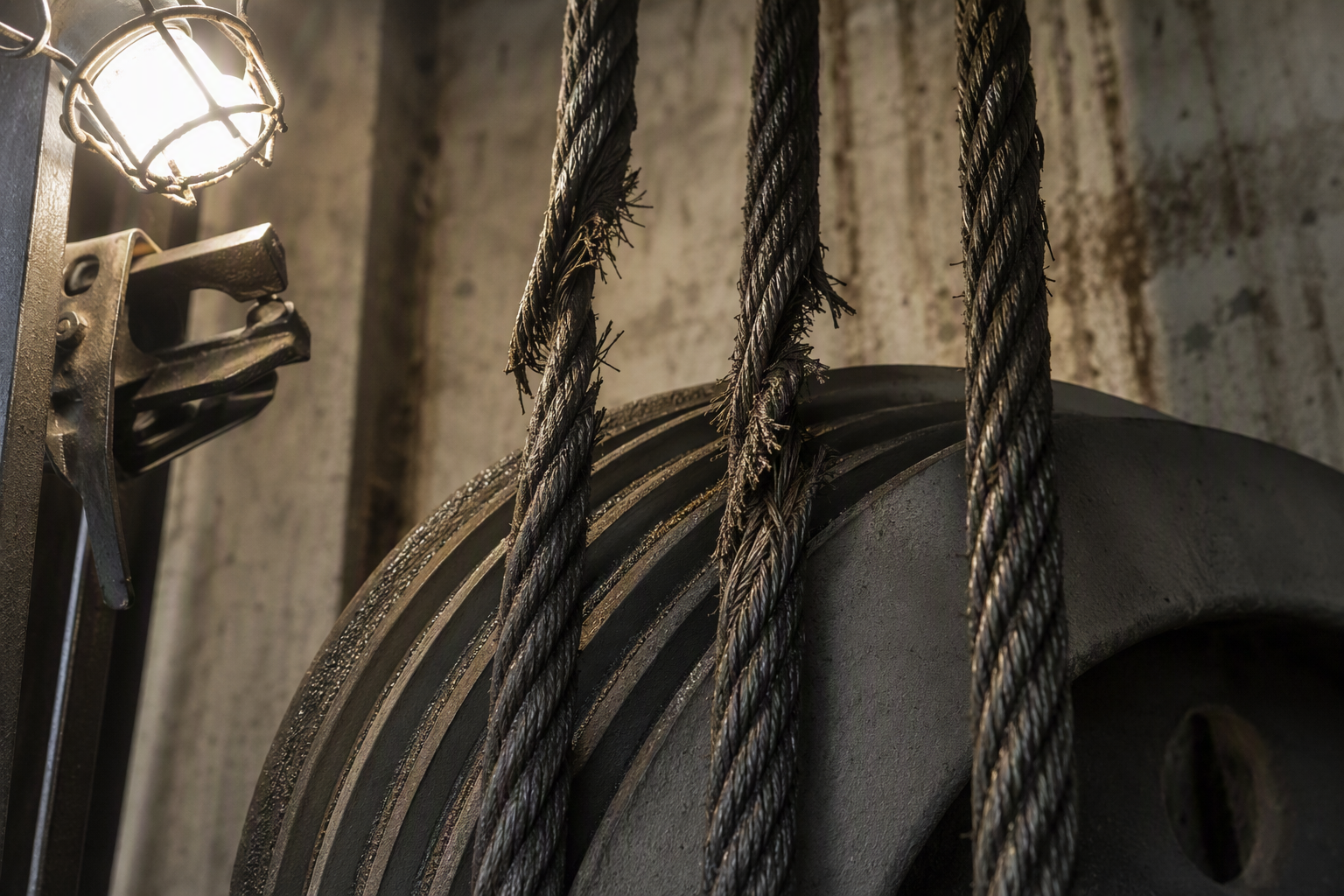
The earliest warning signs are subtle changes in ride quality, sound, and door behavior that indicate wear in mechanical, electrical, or hydraulic components before a complete failure occurs.
Most elevator breakdowns are preceded by a predictable sequence of degradation. The ride becomes slightly rougher than it used to be. The cab takes a fraction of a second longer to respond to a floor call. A faint metallic sound appears during ascent. These are not random events — they are diagnostic data points. Building managers who learn to read these signals can schedule corrective maintenance during low-traffic hours rather than dealing with an emergency shutdown during peak use.
The ASME A17.1 Safety Code for Elevators and Escalators establishes mandatory safety device tests and inspection intervals that exist precisely because predictive warning signs are real and trackable. When warning signs appear between inspections, building owners are expected under the code to address them without waiting for the next scheduled visit.
Why do elevators produce unusual noises before they fail?
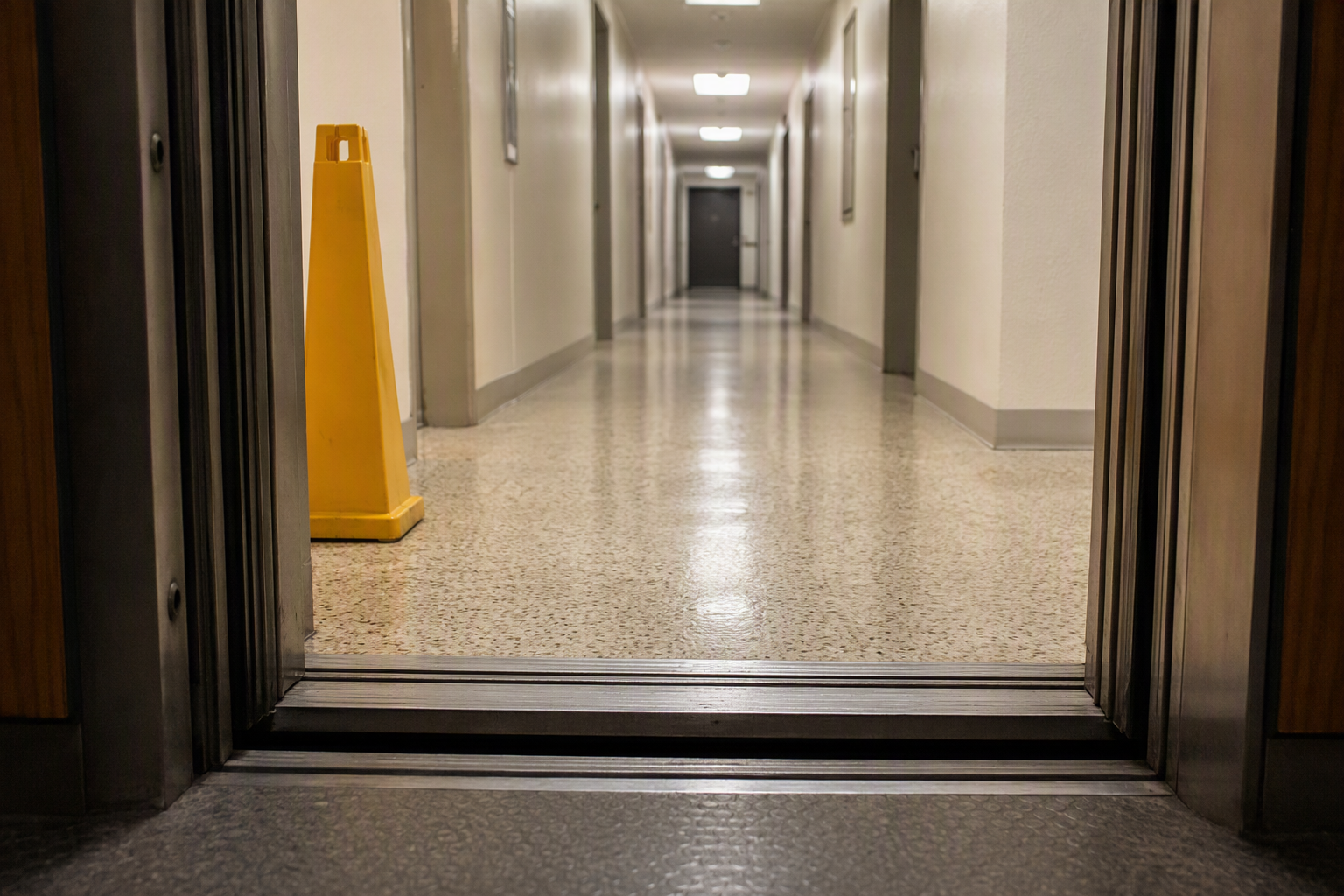
Unusual noises — including grinding, banging, squealing, or rattling — occur because worn bearings, deteriorating hoist ropes, misaligned sheaves, or loose mechanical components create friction and vibration that normal operation would not produce.
Each noise type carries a specific diagnostic signature. A grinding sound during travel typically points to worn guide shoe liners or a failing motor bearing. A banging or thudding sound on startup often indicates a worn or improperly tensioned drive belt. A high-pitched squeal during door operation is frequently caused by door rollers or tracks that need lubrication or replacement. A rattling sound in the pit or machine room can indicate loose hardware that may eventually break free and cause a safety device to trigger.
None of these noises should be dismissed as “just how old elevators sound.” They are measurable deviations from baseline, and a qualified elevator mechanic can use them to pinpoint exactly which component is approaching the end of its service life.
What does it mean when an elevator stops level with a floor inconsistently?
Inconsistent floor leveling — where the cab stops a few inches above or below the floor threshold — is a sign that the elevator’s position sensors, leveling system, or brake components are degrading and require immediate inspection.
A properly functioning elevator should stop with the cab floor flush with the landing floor to within a very tight tolerance. When the system repeatedly over- or under-shoots, passengers face a trip hazard every time they enter or exit. Beyond safety, chronic misleveling stresses the drive system with every correction cycle, accelerating wear on the motor, drive sheave, and rope. Under ADA (Americans with Disabilities Act) requirements, a misleveled elevator can also create an accessibility barrier that exposes building owners to compliance liability, since the floor transition must be safely passable for wheelchair users and others with mobility limitations.
How does slow or erratic door operation signal a pending elevator failure?
Slow, stuttering, reversing, or forcefully slamming elevator doors indicate worn door operators, misaligned door tracks, failing door clutches, or degraded safety edge sensors — components that, if ignored, can progress to door-related entrapment or complete shutdown.
The door system is one of the highest-wear assemblies on any elevator, because it cycles with every single trip. A door that hesitates before closing, reopens without being triggered by an obstruction, or slams shut harder than usual is telling a technician exactly where the mechanical stress is concentrated. Door clutch wear is particularly common in traction elevators with center-opening doors. When the clutch degrades, the door operator struggles to engage the landing door, creating delays that worsen progressively until the door fails to open or close entirely — triggering the elevator’s door lock circuit and taking the unit out of service.
What role do burning smells or unusual odors play in diagnosing elevator problems?
A burning smell from the elevator cab, machine room, or hoistway is a serious warning sign of overheating electrical components, a failing motor, degraded insulation, or overworked hydraulic fluid — all of which can lead to electrical faults or fire hazards if not addressed immediately.
A hot or acrid smell near the motor controller or machine room suggests the motor is drawing excessive current, possibly because the brake is dragging, the load exceeds the rated capacity repeatedly, or a winding is beginning to fail. A rubbery burning odor may indicate deteriorating insulation on electrical wiring in the hoistway. In hydraulic elevators, a smell resembling hot oil or burnt fluid can signal that the hydraulic power unit is overheating, which reduces fluid viscosity and accelerates seal degradation. Any burning odor should trigger an immediate call to a licensed elevator service company. OSHA standards for electrical safety in equipment maintenance apply to elevator machine rooms, and a burning smell may indicate a condition that creates hazards for both passengers and maintenance personnel.
What does frequent circuit breaker tripping indicate about elevator health?
Frequent tripping of the elevator’s circuit breaker is a strong indicator of motor winding faults, ground faults in the wiring, or control system issues that are causing abnormal current draws — conditions that will worsen without intervention.
A circuit breaker that trips occasionally after a power surge is less concerning than one that trips repeatedly during normal operation. Recurring trips suggest the motor is consistently drawing more current than it should, which typically means the motor windings are beginning to break down, the brake is not releasing fully, or there is a wiring fault causing a partial ground. Each trip also subjects the elevator’s control electronics to voltage spikes that can damage sensitive components, turning what might have been a simple motor repair into a more complex controller replacement if the problem is left unaddressed.
How do slow response times and erratic button behavior predict elevator failure?
Delayed or non-responsive floor buttons, hall call buttons that require multiple presses, or random floor stops that were not requested all indicate deteriorating control boards, relay failures, or wiring faults in the elevator’s electrical system.
Modern elevators rely on microprocessor-based controllers, while older units use relay logic systems. In either case, erratic button behavior is a symptom of electrical degradation — whether that means a failing printed circuit board, oxidized relay contacts, or damaged wiring in the traveling cable (the flexible cable bundle that connects the cab to the fixed building wiring). A controller that begins exhibiting unpredictable behavior will often progress to complete lockout, where the elevator refuses to move or gets stuck between floors. AmeriTex Elevator’s service teams regularly identify failing control boards during diagnostic visits that building managers initially describe simply as “the buttons acting up.”
Can vibration during travel indicate serious mechanical problems?
Yes — excessive vibration during travel, especially vibration that has worsened over time, signals worn guide rails, deteriorated guide shoes or roller guides, rope stretch, sheave wear, or drive system imbalance that can accelerate into a more serious mechanical failure.
A smooth ride is the result of precisely balanced ropes, properly lubricated guide rails, and guide shoes or roller guides that maintain consistent contact with the rail surface. As guide shoe liners wear thin, the cab begins to sway or vibrate laterally. As hoist ropes stretch unevenly or develop worn spots, vertical vibration increases. Sheave groove wear causes ropes to seat unevenly, introducing both vibration and accelerated rope wear. Vibration is also a direct comfort and safety signal — a cab that vibrates noticeably is a cab whose structural and mechanical tolerances are eroding.
What does oil leaking from a hydraulic elevator reveal about its condition?
Oil leaks from a hydraulic elevator’s cylinder, piston, or power unit are a clear sign of failing seals, a corroding cylinder, or hydraulic line damage — conditions that can cause the elevator to drift downward or drop suddenly if not repaired.
Hydraulic elevators depend on a sealed fluid system to maintain pressure under the cab’s weight. A slow leak may initially show up only as a faint oil smell or a small puddle in the pit. But as seal degradation progresses, the elevator may begin to drift downward between calls — a phenomenon known as “settling” — which creates the same misleveling hazard described earlier. In more severe cases, a rapid seal failure can cause an uncontrolled descent. Underground hydraulic cylinders in older installations can also be subject to corrosion from groundwater, which is why many jurisdictions and the ASME A17.1 Safety Code for Elevators and Escalators have provisions for cylinder integrity testing and single-bottom cylinder replacement programs.
How does the age of elevator components factor into breakdown risk?
Component age is a direct predictor of breakdown risk because every mechanical and electrical part in an elevator has a finite service life, and older components are statistically more likely to fail than recently replaced ones — regardless of how well the unit has been maintained.
There is no single industry-wide lifespan figure that applies universally to all elevators, because service life varies by component type, usage intensity, maintenance history, and environment. What is consistent is the principle: as components age past their design service window, the frequency and severity of warning signs increases. Wire rope, controller boards, hydraulic seals, door operator components, and guide shoe liners all have recommended replacement intervals that a qualified elevator company can evaluate during a comprehensive modernization assessment. Buildings in coastal markets like Los Angeles and San Diego face additional corrosion challenges that can shorten component service life compared to inland installations.
| Warning Sign | Likely Failing Component(s) | Risk Level if Ignored | Recommended Action |
|---|---|---|---|
| Grinding or squealing noises | Guide shoe liners, motor bearings, door rollers | Moderate to High | Schedule inspection within 1–2 weeks |
| Inconsistent floor leveling | Position sensors, brake, leveling device | High (trip hazard, ADA issue) | Inspect immediately |
| Slow or erratic door operation | Door operator, door clutch, safety edge sensor | Moderate to High | Schedule inspection within 1 week |
| Burning smell | Motor windings, electrical insulation, hydraulic fluid | Very High (fire/safety hazard) | Call elevator service immediately |
| Frequent circuit breaker trips | Motor windings, wiring, control system | High | Inspect immediately |
| Erratic or unresponsive buttons | Controller board, relays, traveling cable | Moderate | Schedule inspection within 1–2 weeks |
| Excessive vibration during travel | Guide rails, guide shoes, ropes, sheaves | Moderate to High | Schedule inspection within 1–2 weeks |
| Hydraulic oil leaks | Cylinder seals, power unit seals, hydraulic lines | High (potential drift/drop) | Inspect immediately |
| Elevator stopping between floors | Door lock circuit, drive system, control board | Very High (entrapment risk) | Call elevator service immediately |
| Increased stopping/starting time | Motor, drive system, controller | Moderate | Schedule inspection within 2 weeks |
What should building managers do immediately when warning signs appear?
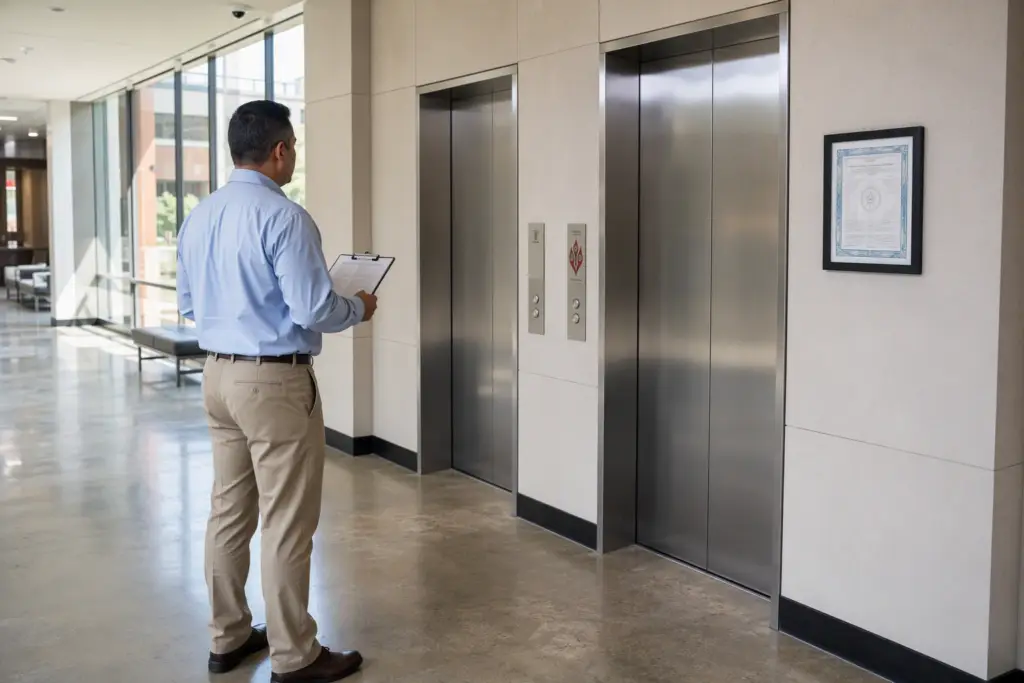
When warning signs appear, building managers should document the issue, notify their elevator service contractor, restrict or monitor use depending on severity, and ensure the elevator log is updated — all before the next scheduled inspection.
- Document the symptom precisely. Note the time, floor, direction of travel, and exact nature of the warning sign (sound, smell, behavior). Photos or short video clips are useful if the symptom is visible or audible.
- Assess the severity. Signs like burning smells, elevator stopping between floors, or rapid uncontrolled movement require taking the elevator out of service immediately. Less acute symptoms like slightly slow doors or minor vibration may allow continued monitored use while awaiting a technician.
- Contact your elevator service company. Report the documented symptoms. A licensed company can triage the situation and determine whether an emergency visit, an expedited service call, or monitoring until the next scheduled visit is appropriate.
- Check the elevator’s maintenance log. Determine when the last inspection occurred, what was noted, and whether this warning sign was previously flagged but not yet addressed.
- Notify the appropriate regulatory authority if required. Many jurisdictions require that elevators involved in incidents, entrapments, or certain safety device activations be reported to the state elevator safety program before being returned to service.
- Post clear signage if the elevator is taken out of service. Ensure ADA-compliant signage directs building occupants to alternative access, particularly for individuals with mobility limitations, as required under the ADA.
- Follow up after repairs. Request written documentation of what was repaired, what was inspected, and what the technician recommends for upcoming maintenance or modernization needs.
How often should elevators be inspected to catch warning signs early?
Elevator inspection frequency is governed by state and local regulations, most of which align with the ASME A17.1 Safety Code for Elevators and Escalators, which establishes mandatory periodic inspection and testing requirements — but maintenance visits between inspections are critical for catching warning signs before they escalate.
Texas and California both have state-level elevator safety programs that mandate periodic inspections by licensed inspectors. In Texas, the Texas Department of Insurance regulates elevator safety, and in California, the Division of Occupational Safety and Health (Cal/OSHA) oversees elevator compliance. The mandatory inspection cycle varies by jurisdiction and elevator type, but a mandatory inspection alone is not sufficient for proactive breakdown prevention. Regular maintenance visits — the frequency of which depends on the unit’s age, usage, and condition — are where warning signs are actually caught and corrected. AmeriTex Elevator serves building owners across Houston, Dallas, Austin, San Antonio, Los Angeles, and San Diego and can help determine the appropriate maintenance frequency for each specific installation.
Are there differences in warning signs between traction and hydraulic elevators?
Yes — traction and hydraulic elevators have different mechanical systems, so their pre-failure warning signs differ in important ways, though some symptoms like door issues and button malfunctions are common to both types.
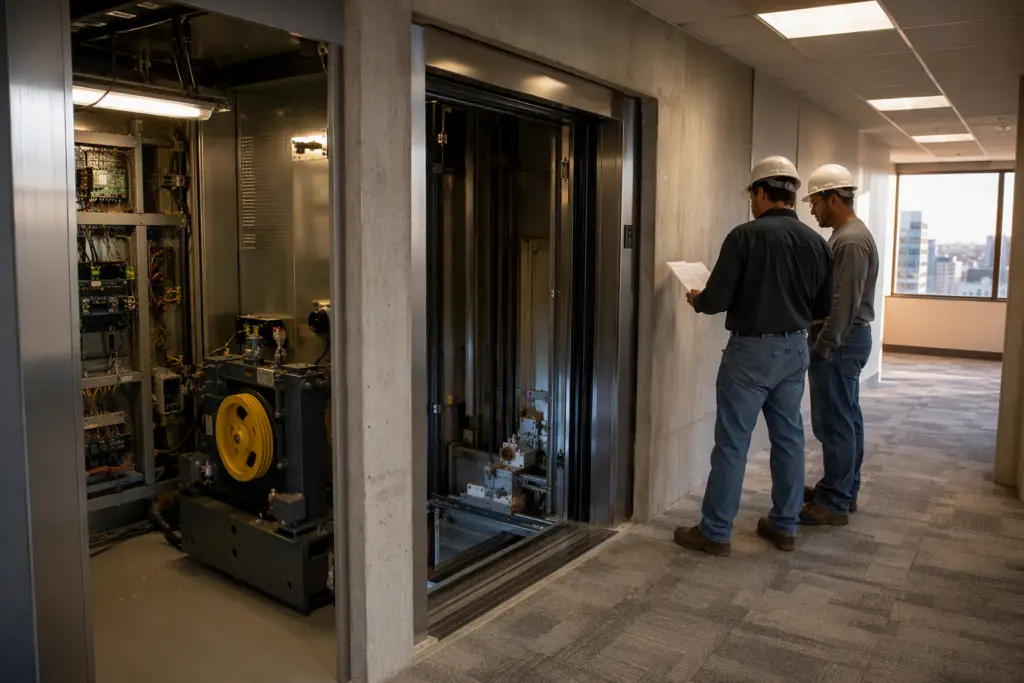
Traction elevators (which use a motor, drive sheave, and hoist ropes to move the cab) tend to show warning signs related to rope wear, sheave groove deterioration, brake fade, and motor or controller issues. Warning signs unique to traction systems include rope vibration visible through the machine room window, a “slipping” sensation during acceleration, and unusual noise from the machine room during travel. Hydraulic elevators, by contrast, will show signs related to their fluid system — leaking oil, a slow descent between calls, sluggish upward travel (indicating pump or fluid problems), and unusual sounds from the hydraulic power unit. Both types can exhibit door, leveling, and control system warning signs regardless of their drive method.
What does it mean when an elevator smells like it is overheating in the machine room?
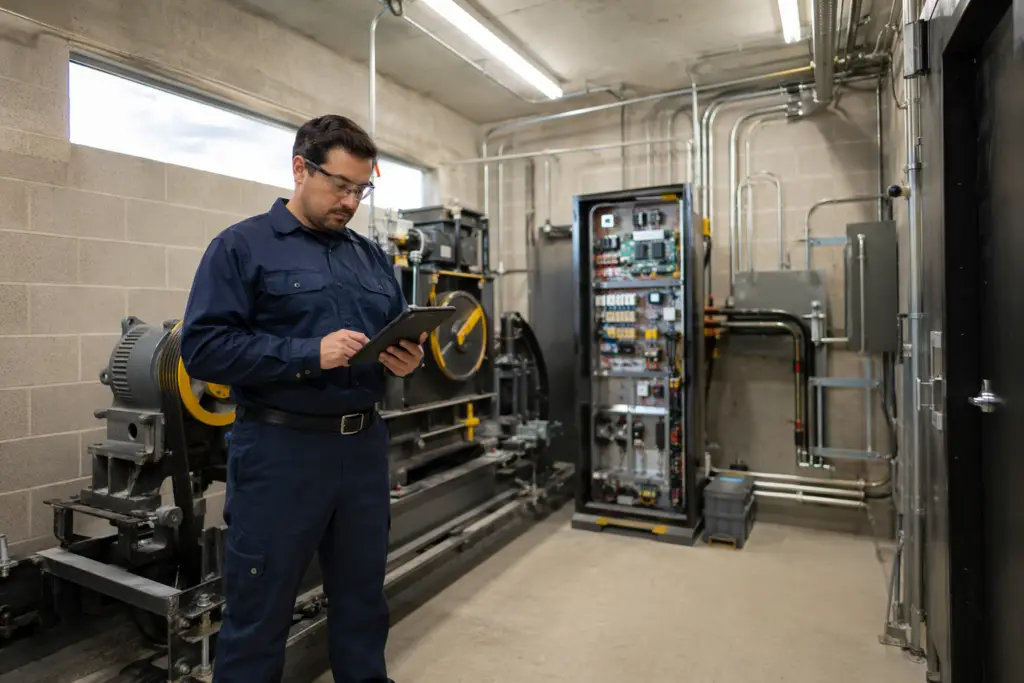
An overheating smell in the machine room indicates that the motor, controller, or transformer is running at temperatures beyond their design range — a condition that accelerates insulation breakdown, shortens component life, and can lead to electrical faults or fire.
Machine rooms must be maintained within the temperature and ventilation requirements specified in the ASME A17.1 Safety Code for Elevators and Escalators. An overheating machine room may be the result of failed HVAC or ventilation in the space itself, rather than a problem with the elevator equipment — but either way, it creates a hazardous condition. In hot-climate markets like Houston, San Antonio, and Los Angeles, machine room cooling is a particularly important maintenance consideration, as summer temperatures can push ambient machine room temperatures well above safe operating ranges if ventilation systems are not functioning properly.
Can software or control system issues in modern elevators predict a breakdown?
Yes — modern elevator controllers with diagnostic monitoring capabilities can log fault codes, unusual operating patterns, and error events that serve as early indicators of developing mechanical or electrical problems before they become outages.
Many elevators manufactured or modernized in the past decade include onboard diagnostics that record every fault, door re-opening event, leveling correction, and safety device activation. This data is invaluable for predictive maintenance. A technician reviewing the controller’s fault log may see dozens of logged door-lock faults before the building manager has noticed any problem — because the controller has been catching and recovering from brief faults automatically. When those faults begin appearing at higher frequency, they signal that a component is approaching the threshold where self-recovery will no longer be possible. AmeriTex Elevator’s maintenance programs include controller log review as part of ongoing service, allowing problems to be addressed based on data rather than waiting for a visible symptom to appear.
How do environmental factors in Texas and California affect elevator breakdown risk?
Humidity, heat, coastal salt air, and seismic activity in Texas and California create environmental stressors on elevator components that can accelerate wear and increase breakdown risk compared to installations in more temperate or inland climates.
In the Houston and Galveston coastal corridor, high humidity accelerates corrosion on guide rails, pit equipment, and electrical connections. In San Diego and Los Angeles coastal buildings, salt-laden air attacks metal components and can degrade exposed wiring insulation more rapidly than in dry inland environments. California buildings also face seismic considerations: the state has specific elevator seismic safety requirements (enforced under California Building Code and Cal/OSHA oversight) that require seismic switches and, in some cases, rail bracket upgrades — and an elevator that has experienced seismic activity should be inspected for damage even if it appears to be operating normally. In Texas, extreme heat cycles stress hydraulic seals and can cause thermal expansion issues in traction elevator components. Buildings served by AmeriTex Elevator across all six markets benefit from maintenance protocols that account for these specific regional environmental factors.
What is the difference between a breakdown warning sign and a normal maintenance need?
A breakdown warning sign is a symptom that indicates active degradation or imminent failure of a specific component, whereas a normal maintenance need is a routine service item — like lubrication or adjustment — that is expected at regular intervals and does not indicate approaching failure.
The distinction matters because it affects urgency and cost. Routine lubrication of guide rails and door tracks is expected and predictable. Replacing worn wire rope on a scheduled cycle based on inspection findings is planned maintenance. These are not warning signs — they are the normal lifecycle of elevator components. A warning sign, by contrast, is something that represents a deviation from expected performance: a component failing faster than anticipated, a new symptom that was not present at the last maintenance visit, or a safety device activating when it should not need to. When in doubt, building managers should report any change in elevator behavior to their service contractor and let a qualified technician make the determination.
What liability risks do building owners face if they ignore elevator warning signs?
Building owners who ignore documented elevator warning signs face potential liability for passenger injury, regulatory fines for code violations, and in some cases personal injury lawsuits if it can be shown they had notice of a problem and failed to act.
The legal principle of “notice” is central to elevator liability cases. If a building manager logged a complaint about unusual elevator behavior and did not follow up with a service call, that log entry becomes evidence that the owner had notice of a potential defect. Texas and California both have statutory frameworks that govern elevator owner responsibilities, and the ASME A17.1 Safety Code for Elevators and Escalators is frequently cited in litigation as the applicable standard of care. Under ADA requirements, a building owner who fails to maintain an elevator in operable condition may also face accessibility complaints if the elevator is the primary accessible route for individuals with disabilities. Prompt response to warning signs is not just good maintenance practice — it is a legal and ethical obligation of building ownership.
When should building owners consider elevator modernization instead of continued repairs?
Building owners should evaluate modernization when warning signs are recurring across multiple systems simultaneously, when the cost of ongoing repairs approaches the cost of modernization, or when the elevator no longer meets current code requirements for safety, accessibility, or energy efficiency.
There is a point in every elevator’s life cycle where continued repair of aging components becomes less cost-effective than a comprehensive modernization. Signs that this threshold is approaching include: warning signs appearing in multiple systems (mechanical, electrical, and door) within a short timeframe; difficulty sourcing replacement parts for obsolete controllers or drive systems; repeated emergency service calls within a calendar year; and the elevator’s inability to be brought into full code compliance through targeted repairs alone. Modernization also provides an opportunity to upgrade to more energy-efficient drive systems, improve ride quality, and bring the unit into full compliance with current editions of the ASME A17.1 Safety Code for Elevators and Escalators and applicable state codes. AmeriTex Elevator provides modernization assessments for building owners in Houston, Dallas, Austin, San Antonio, Los Angeles, and San Diego who are weighing repair versus replacement decisions.
How can building managers set up a system to track elevator warning signs over time?
Building managers can set up an effective tracking system by maintaining a dedicated elevator log that records every symptom, service visit, repair, and test result — creating a documented history that helps identify patterns and supports regulatory compliance.
A good elevator log includes the date and time of every observed symptom, a description of the symptom, who observed it, what action was taken, and what the service technician found and did in response. Over time, this log reveals patterns that predict approaching failure — for example, a door that required adjustment at three consecutive maintenance visits is a door system heading toward more significant failure. The log also serves as documentation that the building owner exercised reasonable care in monitoring and maintaining the equipment, which is relevant in the event of a liability claim. Digital maintenance management platforms and some elevator service companies’ customer portals can automate portions of this tracking, making it easier for building management teams to stay organized.
Get a Free Elevator Assessment Before a Warning Sign Becomes a Breakdown
The warning signs described throughout this guide are actionable — but only if they are evaluated by a qualified elevator professional. Waiting until an elevator stops working entirely is always more costly, more disruptive, and more dangerous than addressing problems at the symptom stage.
AmeriTex Elevator provides comprehensive elevator assessments for commercial and residential buildings across Houston TX, Dallas TX, Austin TX, San Antonio TX, Los Angeles CA, and San Diego CA. A trained technician will evaluate your elevator’s mechanical, electrical, door, and control systems, review maintenance history, identify active warning signs, and provide a clear written report of findings and recommended actions — all at no charge for the initial assessment.
Contact AmeriTex Elevator for a free elevator assessment today: 866-679-4313
Need elevator service you can rely on? AmeriTex Elevator is ready to help.