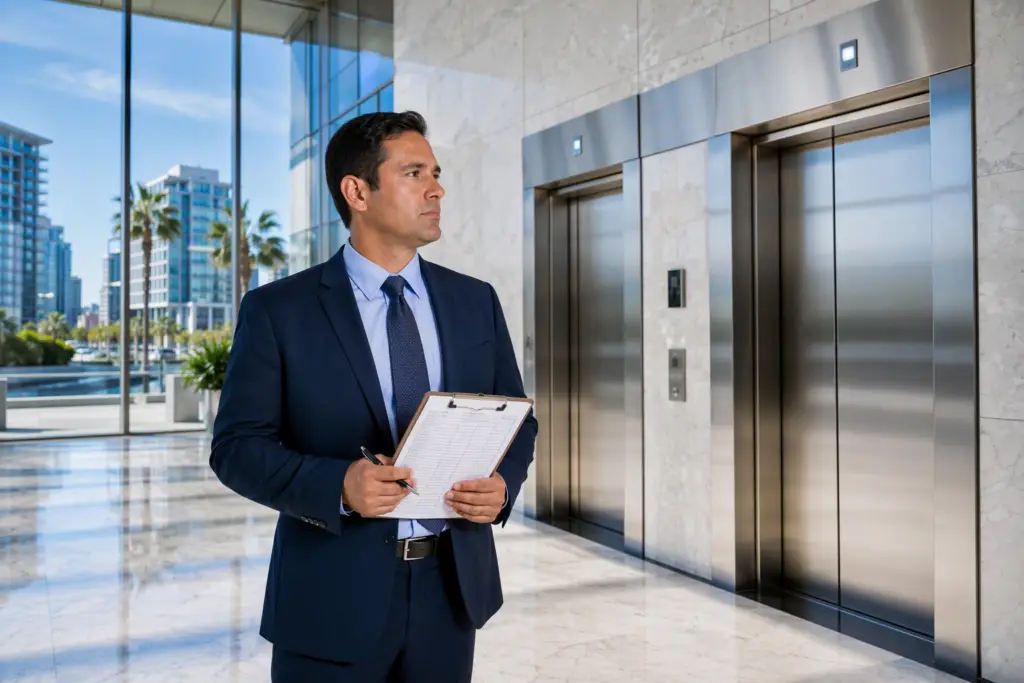
Elevator Maintenance & Inspection Issues in Houston and San Antonio Summers: Heat, Humidity, and What Fails First
Texas summers are not a background condition for elevator systems — they are an active stress test. The combination of extreme heat and persistent Gulf Coast humidity that defines Houston and San Antonio from late spring through early fall creates a specific and predictable set of failure modes that building owners, facility managers, and property engineers need to understand before inspection season arrives. This page documents what goes wrong, why it happens, what code requires, and how to stay ahead of it.
—
Why Summer Heat and Humidity Are Uniquely Damaging to Elevator Systems
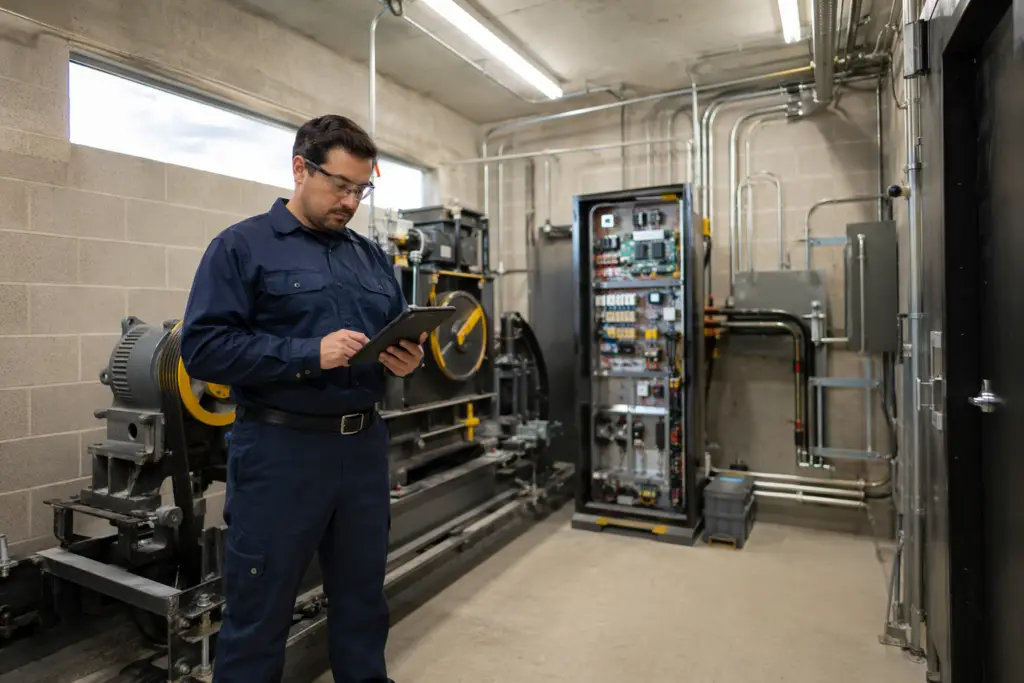
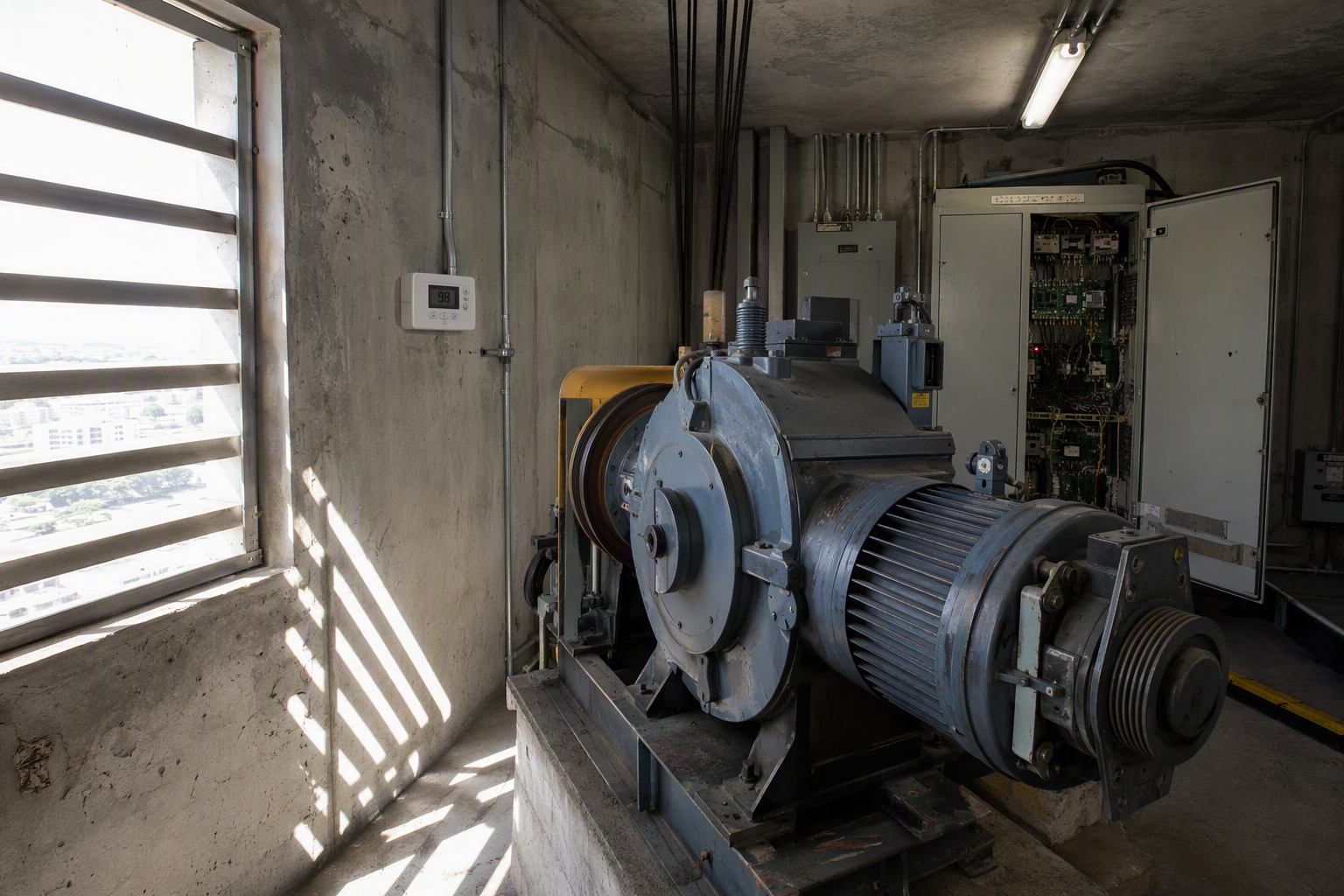
Most elevator components are engineered and rated to operate within defined temperature and humidity ranges. Machine rooms, in particular, are subject to thermal management requirements under the ASME A17.1 Safety Code for Elevators and Escalators, which specifies that machine room environments must be maintained to protect equipment from temperature and moisture extremes. When ambient outdoor temperatures in Houston and San Antonio climb into the high 90s and triple digits — common between June and September — machine rooms without adequate HVAC or ventilation routinely exceed safe operating thresholds.
Humidity compounds the problem in a different dimension. High relative humidity accelerates oxidation on electrical contacts, promotes condensation inside control panels, degrades insulation on wiring, and introduces moisture into hydraulic fluid reservoirs. Houston’s proximity to the Gulf of Mexico means the city regularly experiences relative humidity levels above 80% during summer mornings, while San Antonio’s summer humidity, though somewhat lower, still creates significant thermal stress when combined with direct sun exposure on elevator machine rooms located on rooftops or top floors of buildings.
The result is a concentrated window — roughly Memorial Day through Labor Day — when elevator systems in both cities are statistically most likely to experience service calls, partial failures, and inspection deficiencies.
—
What Are the Most Common Elevator Failures Reported in Texas Summers?
The following failure categories represent the most frequently cited issues during hot-weather inspections and service calls across commercial, residential, and industrial elevator installations in the Houston and San Antonio markets. These are described qualitatively because reliable public databases of city-specific elevator failure rates are not published by Texas state agencies at a granular seasonal level.
1. Machine Room Overheating
Electric traction elevators generate heat from their motors, drives, and control panels during normal operation. In a properly conditioned machine room, this heat is managed and dissipated safely. When ambient temperatures rise and HVAC systems are undersized, fail, or are absent, machine room air temperatures can reach levels that cause variable frequency drives (VFDs) and motor control systems to enter thermal shutdown — a protective measure that takes the elevator out of service until temperatures normalize. This is among the most common summer complaints in both cities.
2. Hydraulic Fluid Viscosity Loss
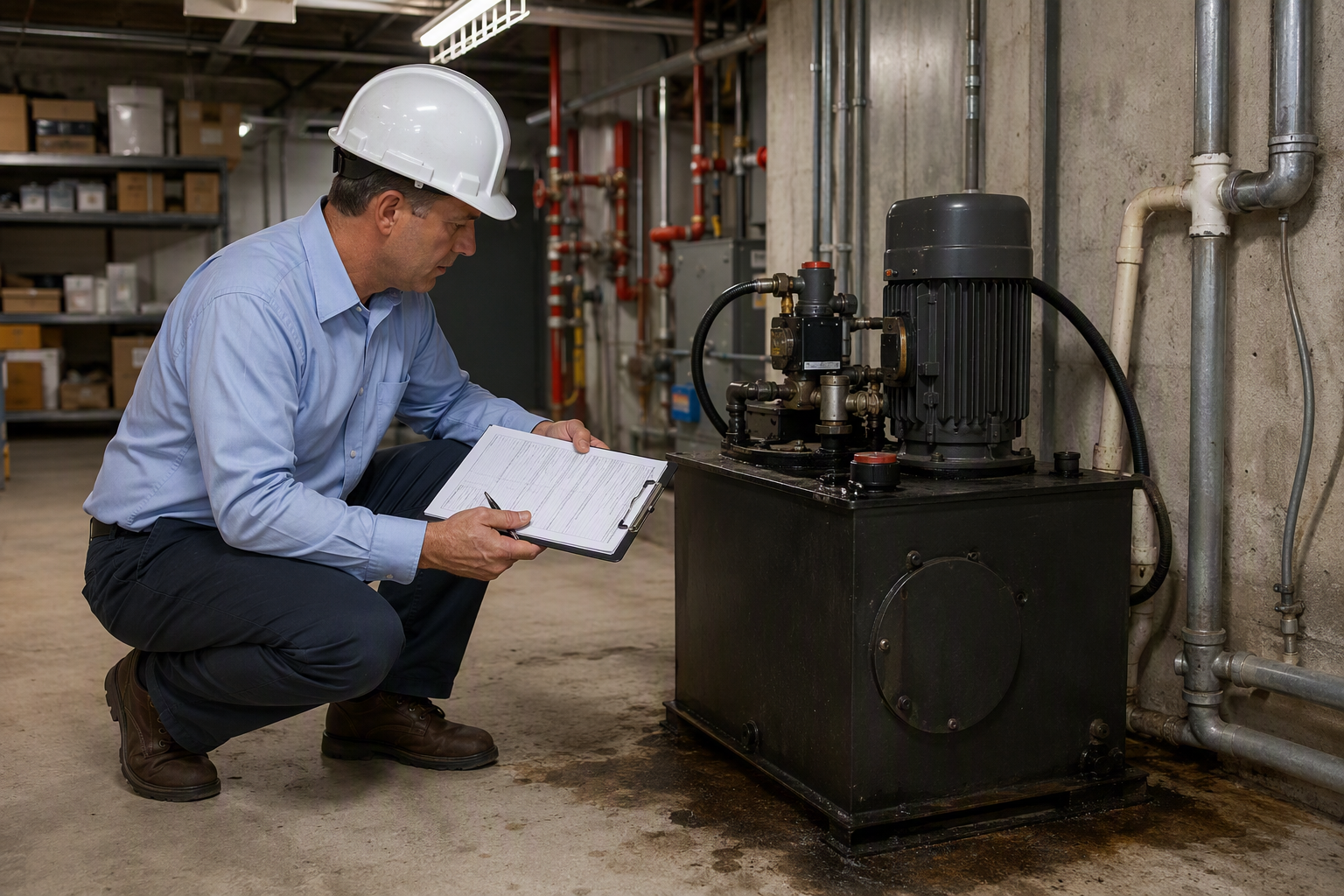
Hydraulic elevators — common in low- and mid-rise commercial buildings throughout the Houston and San Antonio metropolitan areas — depend on fluid viscosity remaining within a defined operating range. High ambient temperatures thin hydraulic fluid, reducing the precision of valve control and causing the car to drift, level imprecisely, or descend more rapidly than intended under load. Inspectors frequently cite hydraulic leveling accuracy as a deficiency during summer months. Property owners who delay hydraulic fluid servicing into summer often find the issue surfaces during a formal inspection at the worst possible time.
3. Door Operator and Safety Edge Failures
Elevator door systems are among the highest-wear components under any conditions. In summer heat, thermal expansion of door tracks, sills, and panels introduces misalignment that causes doors to bind, stall, or fail to trigger safety reversals correctly. Door reopening devices — including mechanical safety edges and optical curtains — are tested during every inspection. Humidity and heat accelerate wear on clutch mechanisms and cam followers in door operators, and thermal cycling causes fasteners to loosen. Door-related deficiencies consistently rank among the top inspection findings year-round, and heat amplifies their frequency.
4. Control and Electrical System Corrosion
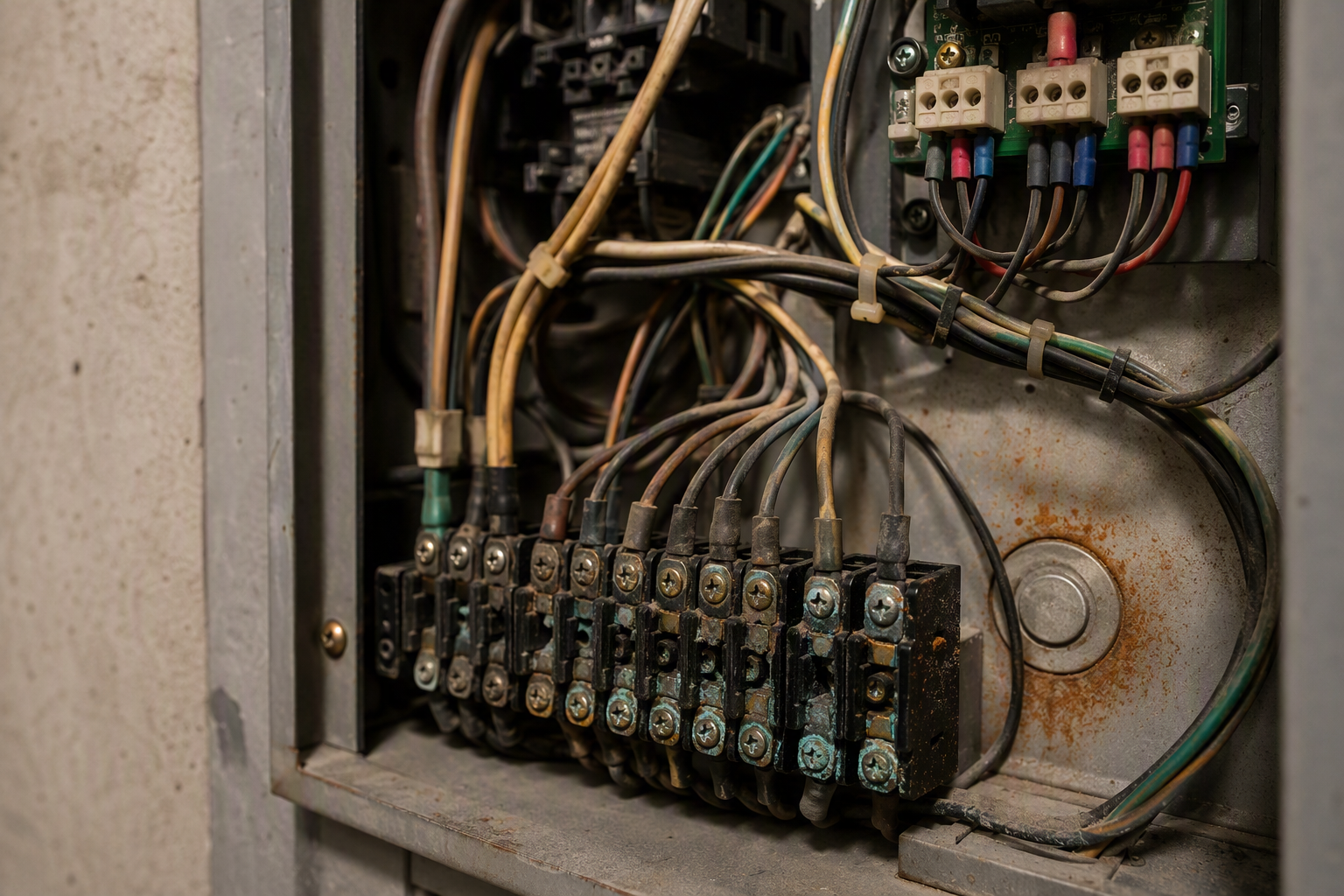
High humidity introduces moisture into relay panels, printed circuit boards, and terminal blocks. Even in enclosed panels, condensation can form when equipment cycles between air-conditioned machine rooms and hot exterior environments. Corroded contacts cause intermittent faults, false safety circuit trips, and communication errors between the controller and the car. These faults are notoriously difficult to diagnose because they may appear and disappear as humidity levels fluctuate through the day.
5. Pit Flooding and Sump Pump Failure
Houston’s geography makes it particularly vulnerable to this failure mode. Summer thunderstorms, tropical weather systems, and the city’s flat topography combine to produce rapid surface flooding, and elevator pits are natural collection points for groundwater intrusion. A flooded pit is an immediate out-of-service condition under ASME A17.1 requirements, and inspectors will not pass an elevator with standing water in the pit. Sump pumps that are not tested or maintained before storm season fail precisely when they are needed most.
6. Brake and Motor Bearing Wear
Elevated ambient temperatures reduce the effectiveness of heat dissipation in traction elevator motors and braking systems. Motors running hotter than designed experience accelerated insulation breakdown and bearing wear. Brakes, which must be tested during inspections, can show increased wear rates when operating in sustained high-temperature environments. This is a longer-cycle failure mode than some others — it tends to surface in inspection findings after one or more summers of deferred maintenance rather than in a single season.
—
What Does Texas Law Require for Elevator Inspections?
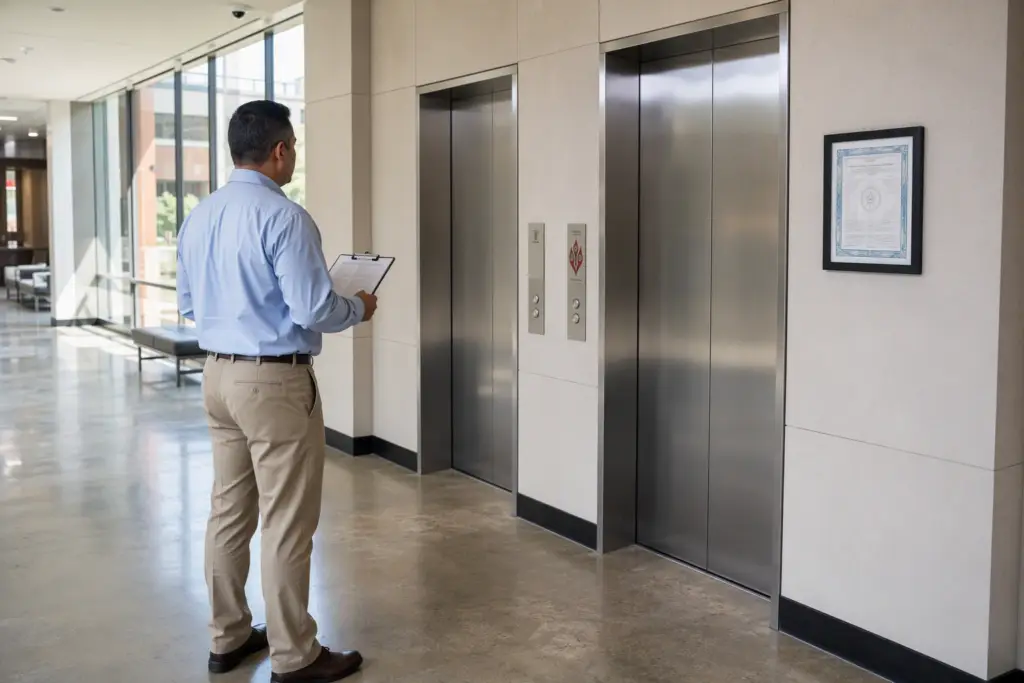
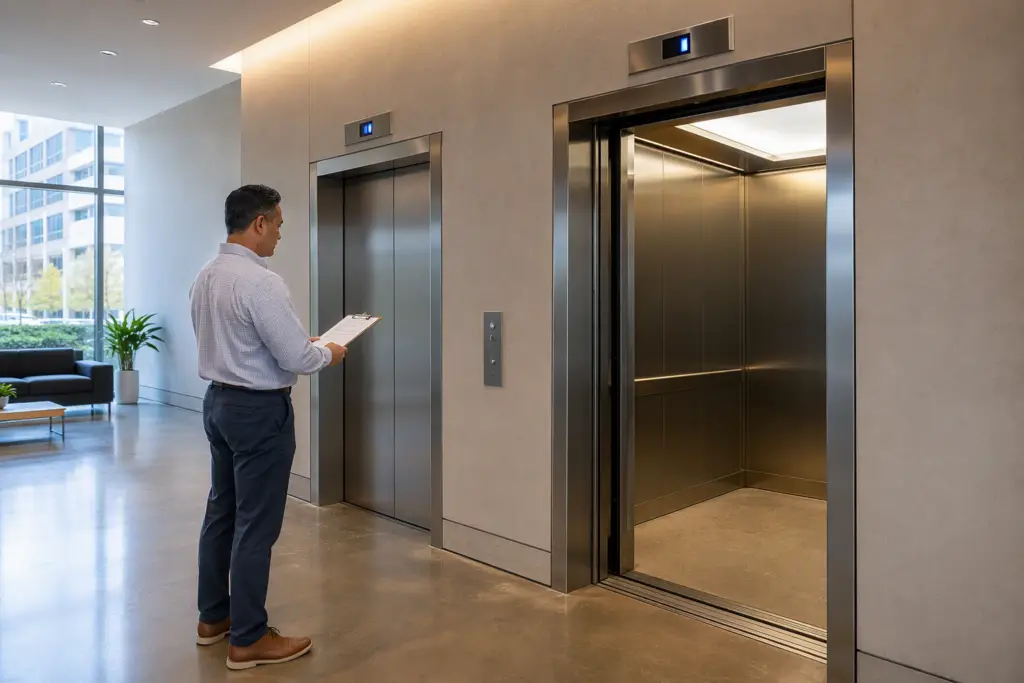
Elevator inspections in Texas are governed by the Texas Department of Insurance (TDI), which administers the Elevator Safety Program under Texas Occupations Code, Chapter 754. Elevators in Texas are required to be inspected annually by a licensed elevator inspector. The inspection standard applied in Texas is based on the ASME A17.1 Safety Code for Elevators and Escalators, which is the foundational safety code governing elevator construction, installation, operation, and maintenance across the United States.
Building owners are responsible for ensuring inspections are completed on schedule and that any deficiencies cited during inspection are corrected within the timeframes specified by TDI. Operating an elevator with an expired certificate or uncorrected critical deficiencies carries legal and liability exposure. Summer is not an exception to these requirements — if anything, the heat-driven failures described above make summer inspections more likely to surface deficiencies that require prompt remediation.
For properties with elevators that must also comply with accessibility requirements, the Americans with Disabilities Act (ADA) mandates that elevator access remain functional for individuals with disabilities. Taking an elevator out of service for extended maintenance without providing an accessible alternative can create ADA compliance exposure in addition to the safety code issue.
Construction and maintenance workers on elevator projects may also fall under OSHA standards for vertical access equipment, particularly during pit work and machine room service in high-heat environments.
—
What Should Building Owners Do Before Summer to Prevent Elevator Failures?
- Audit machine room HVAC and ventilation. Confirm that cooling capacity is adequate for the heat load generated by elevator equipment plus summer ambient temperatures. Replace filters, verify thermostat calibration, and ensure backup ventilation is functional before June.
- Service hydraulic fluid and inspect reservoir seals. Have hydraulic fluid tested or replaced if it has not been serviced within the manufacturer’s recommended interval, and confirm that the reservoir is sealed against moisture intrusion.
- Inspect and test pit sump pumps. Run each sump pump through a full operational test. Confirm that float switches activate correctly and that the discharge line is clear. In Houston especially, this step should be completed no later than May.
- Clean and lubricate door operator components. Remove accumulated debris from door tracks and sills, lubricate cam followers and gibs, and verify that safety edge and optical curtain devices are clean and properly aligned.
- Inspect electrical panels for signs of corrosion or moisture. Open control panels and visually inspect terminal blocks, relay contacts, and circuit boards for oxidation, discoloration, or moisture residue. Clean contacts as needed.
- Review the maintenance log for recurring issues. Patterns in the service log from the prior summer often predict what will fail in the coming one. Address chronic repeat failures before they become inspection deficiencies.
- Confirm inspection certificate status. Verify with TDI that the current inspection certificate is valid and note the expiration date. If an annual inspection is approaching, schedule it before the peak summer demand window when elevator technician availability tightens.
- Test emergency systems under load. Emergency lighting, alarm bells, and phone communication systems should be tested in summer-condition temperatures, as heat can affect battery performance in backup systems.
—
How Does Houston’s Climate Differ From San Antonio’s in Terms of Elevator Risk?
Houston and San Antonio share the core challenge of high summer temperatures, but their humidity profiles create somewhat different risk patterns. Houston’s Gulf Coast location means sustained high relative humidity from spring through early fall, which makes electrical corrosion, pit flooding, and condensation-related faults more prevalent in that market. San Antonio’s inland location and slightly drier air reduce the pit flooding and condensation risk somewhat, but its intense summer sun and heat island effect in dense urban areas mean machine room temperatures can spike rapidly, making motor and drive overheating a primary concern. Buildings in San Antonio with rooftop machine rooms or west-facing machine room walls face particularly aggressive thermal exposure in afternoon hours.
—
What Inspection Deficiencies Are Most Likely to Cause an Elevator to Be Taken Out of Service?
Texas elevator inspectors classify deficiencies by severity. Conditions that present immediate safety risks result in an elevator being removed from service until the deficiency is corrected and reinspected. In summer conditions, the following are the most likely immediate out-of-service triggers:
- Standing water or flooding in the elevator pit
- Machine room temperatures that have caused controller or drive damage
- Door reopening devices that fail to reverse on contact or are non-functional
- Hydraulic systems with uncontrolled descent or excessive settling
- Failed or non-functional emergency communication systems
- Broken or missing safety devices in the pit or on top of the car
Non-immediate deficiencies typically carry a correction deadline, but accumulation of deferred minor deficiencies can compound into an out-of-service situation if they are not addressed before the next inspection cycle.
—
What Are the Cost Implications of Deferred Summer Maintenance?
The cost of a summer elevator failure is not limited to the repair itself. When an elevator is taken out of service in a commercial office building, medical facility, multifamily residential property, or retail center, the downstream costs include tenant disruption, potential ADA compliance liability, emergency technician dispatch premiums, and — in severe cases — regulatory fines from TDI. Emergency service calls during high-demand summer periods carry higher costs than scheduled maintenance visits, and parts availability for older elevator systems can extend downtime when repairs are urgent. Preventive maintenance completed before summer eliminates most of these scenarios entirely and generally costs a fraction of reactive repair.
—
What Industry Trends Are Shaping Elevator Maintenance Practices in 2025–2026?
The elevator maintenance industry in Texas is undergoing a meaningful shift in how building operators approach summer reliability. Several trends are shaping practice in 2025 and into 2026:
Remote monitoring adoption is accelerating. Building owners and property managers are increasingly deploying IoT-connected monitoring systems that track machine room temperatures, door cycle counts, and fault codes in real time. In Houston and San Antonio’s summer environment, real-time machine room temperature alerts allow facility teams to act before a heat condition becomes a shutdown event.
Predictive maintenance is displacing purely time-based schedules. Rather than servicing components on calendar intervals alone, more sophisticated maintenance programs use usage data, vibration analysis, and temperature trending to service components based on actual condition. This approach is particularly well-suited to the Texas summer environment, where usage and thermal stress peaks in predictable windows.
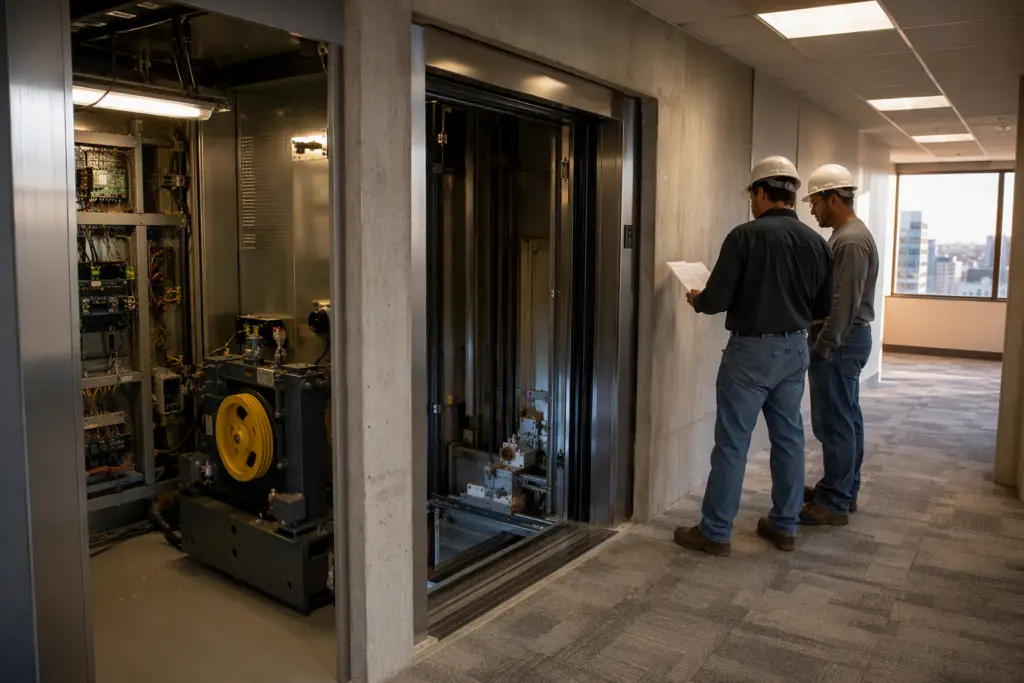
Machine room-less (MRL) elevator adoption continues to grow in new mid-rise construction in both markets. MRL systems eliminate some traditional machine room concerns but introduce their own thermal challenges, as drive and control equipment is housed in the hoistway itself — requiring different heat management strategies.
Workforce demand is outpacing supply in the Texas elevator service market. The combination of new construction growth and an aging installed base in Houston and San Antonio means that scheduling qualified technicians for routine maintenance before summer — rather than waiting for a breakdown — is becoming strategically important, not just operationally preferable.
—
How Does AmeriTex Elevator Approach Summer Maintenance in Houston and San Antonio?
AmeriTex Elevator operates as a data-driven elevator service provider serving the Houston and San Antonio markets. The company’s approach to summer maintenance is grounded in systematic pre-season assessment — identifying heat and humidity risk factors specific to each building’s equipment, machine room configuration, and operational profile before peak summer stress arrives. AmeriTex Elevator supports building owners and facility managers in maintaining compliance with ASME A17.1 requirements and Texas TDI inspection standards, with a focus on preventing the deficiencies that summer conditions most reliably produce.
—
Frequently Asked Questions
What temperature is too hot for an elevator machine room?
The ASME A17.1 Safety Code for Elevators and Escalators requires that machine rooms be maintained at temperatures and humidity levels within the range specified for the installed equipment. Variable frequency drives and solid-state controllers typically have manufacturer-rated upper operating limits, and exceeding those limits — regardless of the exact temperature — triggers thermal protection shutdowns. In practice, machine room air temperatures consistently above 90–95°F create elevated risk for most modern drive systems, though the precise threshold depends on the specific equipment installed.
Can high humidity cause an elevator to fail inspection in Texas?
Yes. Inspectors look for evidence of moisture intrusion, corrosion on electrical components, and pit flooding — all of which are humidity-related conditions. A pit with standing water is an immediate out-of-service finding regardless of the cause. Corroded safety circuit contacts or moisture-damaged controllers can also result in operational test failures during inspection.
How often do elevator hydraulic fluids need to be changed in hot climates?
Hydraulic fluid service intervals are set by the elevator manufacturer and may be adjusted based on operating conditions. In hot climates where fluid is subjected to elevated temperatures over sustained periods, degradation can occur faster than in moderate environments. Building owners should follow manufacturer guidance and have fluid condition evaluated as part of any pre-summer maintenance visit rather than relying on calendar intervals alone.
What happens if my elevator fails a Texas state inspection in summer?
If an inspector from the Texas Department of Insurance Elevator Safety Program cites a deficiency that constitutes an immediate safety hazard, the elevator will be ordered out of service. The building owner is responsible for correcting the deficiency, having it verified, and obtaining authorization to return the elevator to service before it can be operated. The timeline depends on the nature of the deficiency and parts availability. Non-immediate deficiencies carry a correction deadline set by the inspector.
Are elevator pit floods covered by building insurance?
Coverage depends on the specific policy and the cause of flooding. Standard commercial property policies vary significantly in how they treat water intrusion events. Building owners should review their policies with their insurance carrier specifically for elevator pit flooding scenarios — particularly in Houston, where weather-related flooding is a recurring risk. This question is best addressed with a licensed commercial insurance advisor, not an elevator company.
Do door problems really get worse in summer heat?
Yes. Thermal expansion of metal door panels, sills, and track components introduces dimensional changes that can cause binding, misalignment, and increased mechanical resistance during operation. Door operators working against additional mechanical resistance wear faster. The safety devices that cause doors to reverse when they contact an obstruction must function within defined force limits — components stressed by heat and wear are more likely to fall outside those limits during an inspection test.
What is the difference between a maintenance visit and a state inspection in Texas?
A maintenance visit is performed by an elevator service company and is part of the ongoing contract or service agreement for the elevator. The purpose is to keep the equipment in proper working condition. A state inspection is performed by a licensed elevator inspector under the authority of the Texas Department of Insurance and results in the issuance or denial of a certificate of inspection. Maintenance visits do not substitute for state inspections, and state inspections do not substitute for ongoing maintenance.
What should a building manager do immediately if an elevator shuts down in summer heat?
- Confirm that no passengers are trapped in the elevator car. If passengers are trapped, contact emergency services immediately.
- Post out-of-service signage at all elevator lobby entrances to prevent further passenger attempts to use the elevator.
- Check the machine room if safely accessible. Note whether the room is excessively hot and whether any fault indicators are displayed on the controller.
- Contact the building’s elevator service provider to report the shutdown, describe any fault codes or conditions observed, and request a service call.
- Assess ADA accessibility impact. If the elevator serves floors that are the only accessible route for individuals with disabilities, implement an interim accommodation plan and notify building management and tenants.
- Do not attempt to reset controllers, bypass safety systems, or restart the elevator without authorization from a qualified elevator technician.
- Document the incident with time, observed conditions, and actions taken for the maintenance record and potential insurance or regulatory purposes.
Is summer the best time to schedule elevator modernization or major repairs?
Summer is generally not the ideal time to schedule major modernization work for buildings where elevator downtime significantly affects occupants, because summer is also the period when tenants and residents most depend on climate-controlled vertical access. However, if an elevator has already been taken out of service due to a failure, summer modernization may be pragmatically necessary. For planned modernization, the fall and winter months typically allow for less disruptive scheduling and may align better with technician availability.
What should property owners look for when evaluating elevator maintenance vendors in Houston or San Antonio?
Evaluating elevator maintenance vendors in Texas markets should include verifying that the company’s technicians hold appropriate licensing under the Texas Department of Insurance Elevator Safety Program, confirming that the vendor has documented experience with the specific type of elevator equipment installed in the building, understanding what the maintenance agreement covers versus what is billed separately, and assessing how the vendor handles emergency calls during high-demand summer periods. References from similar property types in the local market are particularly useful given the climate-specific challenges described on this page.
What Role Does Preventive Maintenance Play in Passing Texas Elevator Inspections?
Preventive maintenance is the most direct predictor of inspection outcomes. Elevators on consistent, documented maintenance programs arrive at inspection with lubricated components, calibrated safety devices, clean contacts, and functioning safety systems. Elevators that receive only reactive service — repaired when something breaks — consistently present more deficiencies at inspection because degradation that would have been caught during a maintenance visit has progressed to a point that an inspector identifies. In summer conditions, the gap between these two approaches is widest, because heat and humidity accelerate the degradation that preventive maintenance is designed to interrupt.
—
Sourced Reference Data
| Standard / Authority | Relevance to Summer Elevator Maintenance | Source |
|---|---|---|
| ASME A17.1 Safety Code for Elevators and Escalators | Governs machine room temperature/humidity requirements, safety device testing, and inspection standards applied in Texas | ASME Codes & Standards |
| Americans with Disabilities Act (ADA) | Requires accessible elevator service to be maintained; out-of-service elevators without accessible alternatives create compliance exposure | ADA.gov |
| OSHA General Industry and Construction Standards | Applies to technicians performing elevator pit and machine room work in high-heat environments | OSHA.gov |
—
Schedule a Pre-Summer Elevator Assessment
Houston and San Antonio summers do not give elevator systems a grace period. The failure modes described on this page are predictable, well-documented, and — critically — largely preventable with systematic maintenance before peak heat and humidity arrive. Building owners, property managers, and facility directors who treat elevator maintenance as a year-round discipline rather than a reactive expense consistently avoid the disruption, cost, and liability that summer failures produce.
AmeriTex Elevator provides data-driven elevator maintenance, inspection support, and summer readiness assessments for commercial, residential, and industrial properties across the Houston and San Antonio markets. A qualified assessment of your elevator system’s summer risk profile is the first step toward avoiding the deficiencies and failures that Texas summers reliably produce.
Contact AmeriTex Elevator for a free elevator assessment: 866-679-4313
Need elevator service you can rely on? AmeriTex Elevator is ready to help.