How to Plan an Elevator Modernization Project Without Disrupting Tenants or Building Operations
Elevator modernization is one of the most significant infrastructure investments a building owner or property manager can make. When executed without a clear disruption-management strategy, however, it can frustrate tenants, trigger ADA compliance complaints, and stall building operations for weeks or months. The sections below answer the most common questions property managers ask — covering timelines, compliance requirements, equipment decisions, phased scheduling, tenant communication, and vendor selection — so every stakeholder understands exactly what to expect before the first technician arrives.
What exactly is elevator modernization, and how is it different from routine maintenance?
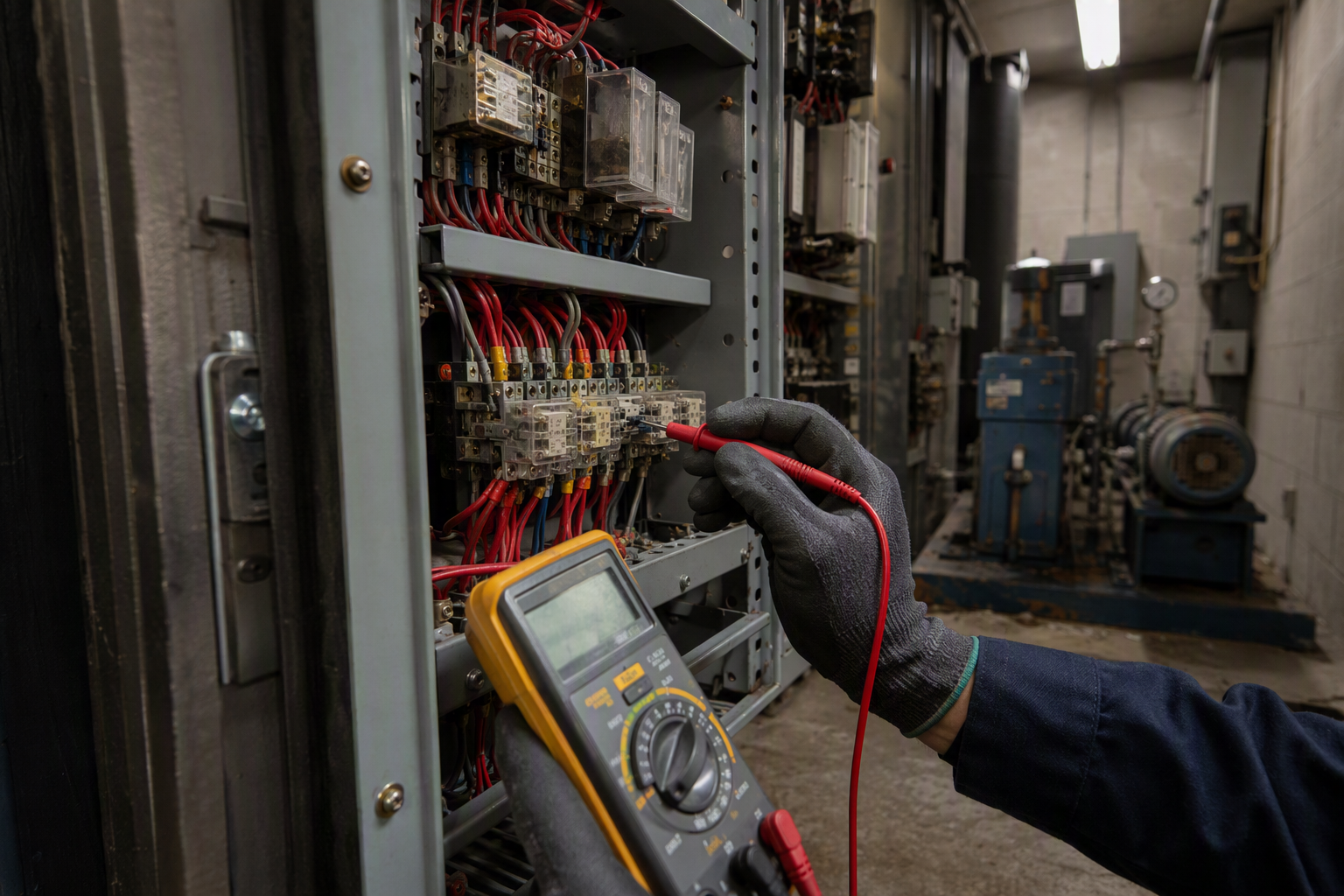
Elevator modernization is the partial or complete replacement of aging elevator components — such as the controller, drive system, cab interior, doors, and safety devices — to meet current code standards and improve performance, while routine maintenance is the ongoing inspection, lubrication, and adjustment of existing components to keep them operating within their current design parameters.
A modernization project typically addresses equipment that has reached the end of its functional lifespan or no longer complies with current editions of the ASME A17.1 Safety Code for Elevators and Escalators. Unlike a repair call, modernization involves engineering reviews, permit applications, and final acceptance inspections by a state or local authority having jurisdiction (AHJ). In Texas, that authority is the Texas Department of Insurance Elevator Safety Program; in California, it is the Department of Industrial Relations Elevator Unit.
Property managers should understand this distinction because it affects permitting lead times, insurance implications, and the scope of tenant notification required before work begins.
How do I know when my elevator needs modernization rather than repair?
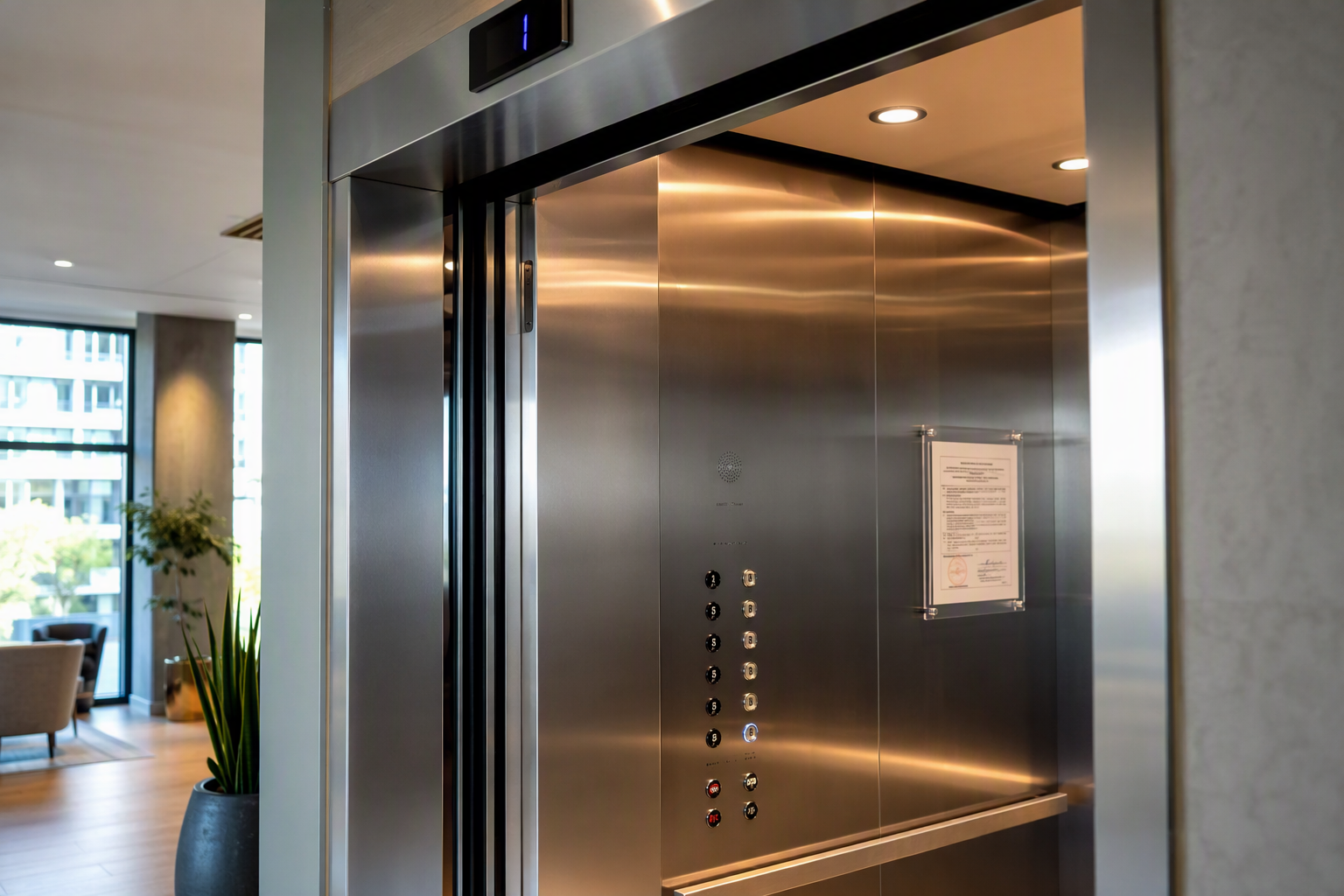
An elevator likely needs modernization rather than repair when its control system, mechanical drive, or safety components are obsolete to the point that replacement parts are no longer manufactured, the unit fails inspections repeatedly, or the cost of recurring repairs approaches or exceeds the cost of component replacement.
Common indicators include frequent service calls for relay-logic or hydraulic down-valve failures, inability to meet ADA accessibility standards, excessive energy consumption from older motor-generator drive systems, and difficulty passing annual state inspections. Buildings with elevators installed before the widespread adoption of solid-state controls — generally pre-1990 units — are strong modernization candidates. A qualified elevator contractor can perform a condition assessment that documents each subsystem’s remaining useful life and maps existing deficiencies against current ASME A17.1 requirements.
What are the primary phases of an elevator modernization project?
A structured elevator modernization project moves through six sequential phases: needs assessment and code gap analysis, engineering and permit submittal, equipment procurement, phased installation, third-party inspection and acceptance testing, and post-modernization commissioning and documentation.
- Needs Assessment & Code Gap Analysis: A licensed elevator contractor inspects the existing equipment, documents deficiencies against current ASME A17.1 requirements, and prepares a scope-of-work recommendation.
- Engineering & Permit Submittal: Engineered drawings are submitted to the AHJ. Permit approval timelines vary by jurisdiction — allow two to eight weeks in most Texas and California markets.
- Equipment Procurement: Controllers, drives, door operators, and cab components are ordered. Supply chain lead times for certain components can range from several weeks to several months; this phase must be factored into the overall disruption window.
- Phased Installation: Technicians perform mechanical and electrical replacement work according to the approved schedule. In multi-elevator buildings, elevators are taken out of service one at a time to preserve building access.
- Inspection & Acceptance Testing: The AHJ or a state-licensed inspector witnesses load tests, safety device tests, and code compliance verification before the elevator is returned to service.
- Commissioning & Documentation: Final performance tuning, as-built drawings, maintenance manuals, and updated certificate of operation are delivered to building management.
How long does a typical elevator modernization project take?
A full elevator modernization — from signed contract to final certificate of operation — typically takes between three and six months per elevator, with the largest variables being permit approval speed in the local jurisdiction and equipment procurement lead times.
Simple hydraulic modernizations with in-stock components can be completed more quickly, while full traction machine room replacements or multi-car projects in complex buildings take longer. Property managers in Houston, Dallas, Austin, and San Antonio should account for Texas Department of Insurance permit review cycles. Those in Los Angeles and San Diego should factor in California DIR processing times, which can extend the pre-installation phase. Establishing a realistic timeline early — and sharing it with tenants — is the single most effective way to manage expectations and minimize complaints.
How should I schedule modernization work to minimize tenant disruption?
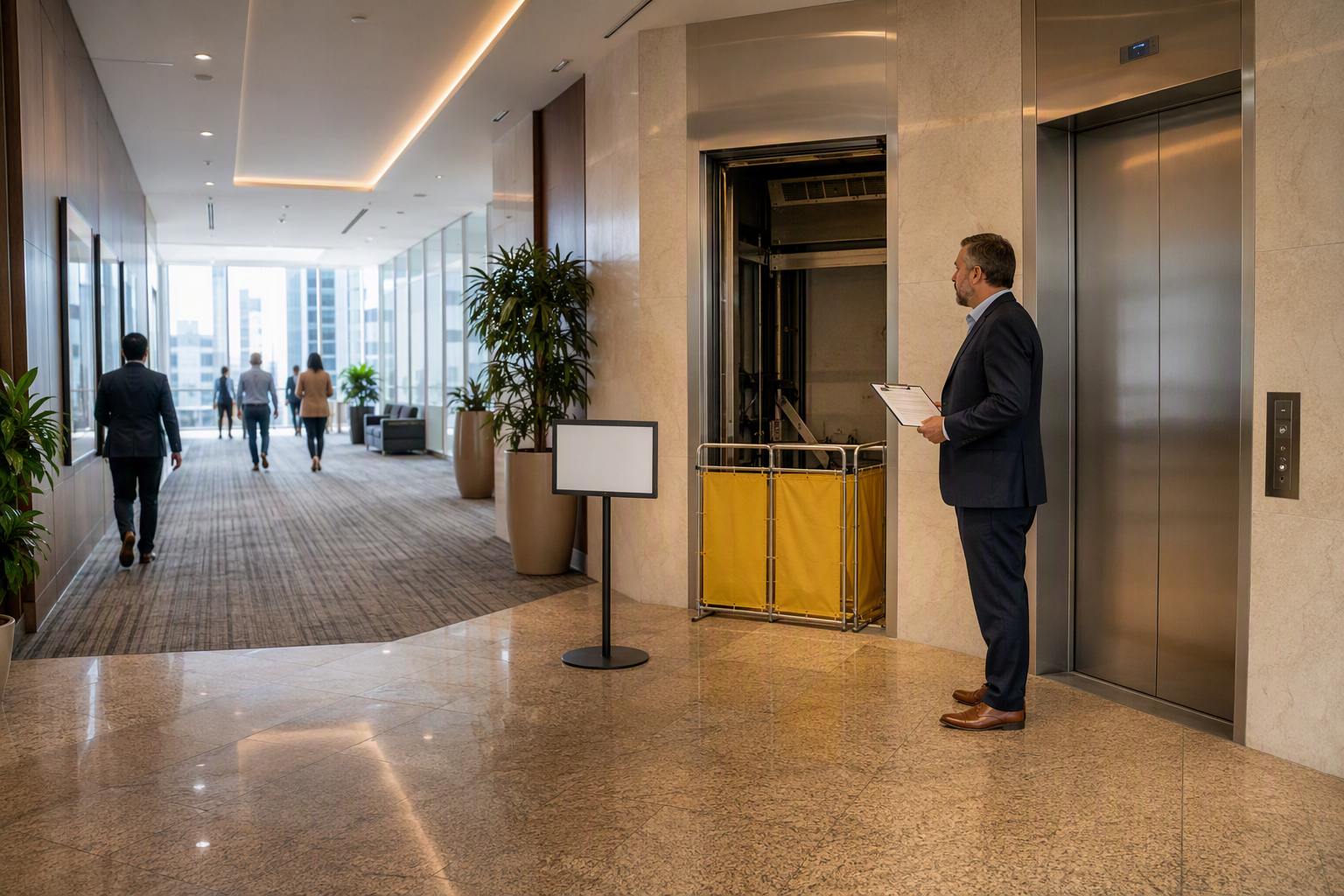
Scheduling elevator modernization work during nights, weekends, and building low-occupancy periods — and staggering elevator outages so at least one car remains operational at all times in multi-elevator buildings — minimizes the operational impact on tenants and building users.
Effective scheduling strategies include:
- Auditing the building’s peak-traffic windows (typically weekday mornings and evenings in office buildings, or move-in/move-out dates in residential properties) and protecting those windows from outages.
- Coordinating with loading dock schedules, freight delivery calendars, and tenant special events before finalizing the installation calendar.
- Building weather contingency days into the schedule, particularly for machine room work in Texas markets during summer months.
- Confirming that the contractor’s crew can work night shifts or weekend shifts without penalty — some elevator contractors charge premium rates for off-hours work; others include flexible scheduling in the base contract.
AmeriTex Elevator works with property managers across Houston, Dallas, Austin, San Antonio, Los Angeles, and San Diego to develop customized scheduling plans that align with each building’s operational calendar before a single component is ordered.
What ADA and accessibility requirements apply during and after elevator modernization?
Under the ADA, buildings covered by Title II or Title III must maintain accessible routes; when an elevator is taken out of service during modernization, building owners must provide a comparable accessible means of vertical access or document why doing so is not readily achievable.
Post-modernization, the modernized elevator must meet ADA Standards for Accessible Design, including requirements for cab dimensions, door reopening devices, accessible controls at the correct mounting heights, audible and visible signals, and Braille and raised-character floor designations. The 2010 ADA Standards for Accessible Design — which reference ASME A17.1 — govern these specifications. Failing to address these requirements during modernization can expose building owners to complaints filed with the U.S. Department of Justice or private litigation. A reputable elevator contractor will flag every ADA gap during the initial assessment and include corrections in the modernization scope.
What ASME and state code requirements govern elevator modernization in Texas and California?
In Texas, elevator modernization is governed by the Texas Elevator Safety Act and enforced through the Texas Department of Insurance, which adopts editions of the ASME A17.1 Safety Code for Elevators and Escalators; in California, the Division of Occupational Safety and Health (Cal/OSHA) and the DIR Elevator Unit enforce the California Code of Regulations Title 8, which also references ASME A17.1 as the base technical standard.
Both states require that modernization work be performed by licensed elevator contractors, that permits be obtained before work begins, and that a licensed inspector witness final acceptance tests. Specific retroactive requirements — such as governor rope replacements, pit lighting upgrades, and car door interlock requirements — may be triggered by the scope of the modernization even if those items were not in the original project scope. Building owners should request a retroactive code review from their contractor before finalizing a budget, as these triggered requirements can add meaningful cost and schedule time if discovered mid-project.
How do I communicate an elevator modernization project to tenants?
Effective tenant communication for an elevator modernization project includes a formal written notice at least 30 days before work begins, followed by weekly status updates, clearly posted elevator outage schedules at each lobby and floor landing, and a dedicated point of contact for questions or accessibility accommodation requests.
Best-practice communication elements include:
- An initial announcement letter explaining the reason for modernization, the expected benefits (reliability, energy efficiency, code compliance), the projected timeline, and the phasing plan.
- Posted floor-by-floor notices at elevator lobbies listing which car is out of service and when it will return to operation.
- An email or building app notification system for real-time schedule updates, including delays.
- Clear instructions for tenants who require accessibility accommodations, including the name and contact information of the building’s ADA coordinator.
- A post-modernization notice confirming when each elevator has received its certificate of operation and is cleared for full service.
Proactive communication consistently reduces formal complaints and lease disputes, even when projects run beyond their original schedule.
What equipment components are typically replaced during a full elevator modernization?
A full elevator modernization typically replaces the control system and relay logic panel, the motor and drive unit, the door operator and door detection system, the cab interior finishes and lighting, the traveling cables, the hall and car fixtures, and all obsolete safety devices that do not meet current ASME A17.1 requirements.
| Component | Typical Modernization Scope | Primary Code Driver | Disruption Level |
|---|---|---|---|
| Control System / Controller | Full replacement with solid-state or microprocessor-based unit | ASME A17.1 | High — elevator out of service during installation |
| Motor / Drive | Replace MG set or hydraulic power unit with modern variable-frequency drive (VFD) | ASME A17.1 / Energy codes | High — machine room shutdown required |
| Door Operator & Detectors | Replace mechanical clutches with electronic door operators and light curtains | ASME A17.1 / ADA | Medium — can be phased |
| Hall & Car Fixtures | Replace pushbuttons, position indicators, and in-cab controls | ADA Standards | Low — work performed at landings |
| Cab Interior | New panels, flooring, ceiling, LED lighting | ADA / Local building code | Medium — elevator out of service during interior work |
| Traveling Cable | Full replacement for data and power integrity | ASME A17.1 | High — hoistway access required |
| Safety Devices (governor, buffers, safeties) | Test or replace to current ASME A17.1 requirements | ASME A17.1 | Medium — tied to overall shutdown window |
How do I evaluate and select the right elevator modernization contractor?
Select an elevator modernization contractor based on their state license status, demonstrated experience with the specific elevator type in your building, references from comparable commercial or residential projects, and their ability to provide a detailed written project plan — including phasing, permit management, and tenant communication support — before contract execution.
Key evaluation criteria include:
- Licensing: Verify the contractor holds a current elevator contractor license in the applicable state (Texas Department of Insurance or California DIR).
- Scope of self-performance: Confirm whether the contractor self-performs all work or subcontracts portions, as subcontracting can introduce scheduling variability.
- Permit management: Ask whether the contractor handles permit applications or requires the owner to manage that process.
- Equipment sourcing: Understand whether the contractor is aligned with a single manufacturer (proprietary parts) or can source open-market components — proprietary parts can increase future maintenance costs.
- Post-modernization maintenance: Request a sample maintenance agreement and confirm whether the contractor can service the equipment they install across all the cities where your portfolio operates.
AmeriTex Elevator serves building owners and property managers across Houston, Dallas, Austin, San Antonio, Los Angeles, and San Diego, providing licensed modernization services with full permit management and tenant communication support from assessment through final inspection.
How much does elevator modernization cost, and what factors affect the budget?
Elevator modernization costs vary significantly based on the elevator type, the number of stops, the scope of components being replaced, local permit fees, and whether off-hours labor premiums apply — no single price applies universally, and property managers should obtain detailed itemized proposals from licensed contractors after a site assessment.
The most significant cost drivers include:
- Traction versus hydraulic elevator type (traction modernizations are generally more complex)
- Number of floors served — more landings mean more fixtures, door operators, and wiring runs
- ADA retrofit requirements triggered by the modernization scope
- Whether the machine room requires structural modifications to accommodate new equipment
- Local permit and inspection fees, which differ between Texas and California jurisdictions
- Off-hours labor requirements driven by the building’s operational schedule
Building owners should also budget for temporary accessibility accommodations — such as portable ramp systems or temporary stairlift rentals — during the outage period, particularly in buildings serving populations protected under the ADA.
What worker safety requirements apply to elevator modernization job sites?
Elevator modernization job sites must comply with OSHA standards for construction, including those governing fall protection in hoistways, lockout/tagout (LOTO) procedures for electrical energy control, confined space entry protocols for pits, and personal protective equipment requirements for all personnel working in the machine room and hoistway.
Building managers bear a shared responsibility for ensuring that non-elevator-contractor personnel — building staff, tenant contractors, deliveries — do not access active modernization work zones. Proper barricading, signage, and access control to the machine room and pit area are the contractor’s responsibility to install, but the building manager must enforce access restrictions across all shifts, including nights and weekends when the modernization crew may not be on site.
How do I handle accessibility for tenants with disabilities during an elevator outage?
Building managers must proactively identify tenants and regular visitors with mobility impairments before an elevator outage begins, develop individualized accommodation plans in coordination with those individuals, and document all accommodations as part of the building’s ADA compliance record.
Practical accommodation options include temporarily relocating affected tenants to lower-floor spaces where stair access is feasible, arranging escort services for building occupants who can use stairs with assistance, installing temporary stairlift equipment on low-rise stair runs, and in some cases providing off-site temporary accommodations. The ADA does not require building owners to maintain elevator service at all times during legitimate construction projects, but it does require good-faith efforts to provide alternative accessible access where readily achievable. Legal counsel familiar with ADA Title III is advisable for buildings with significant populations of users with disabilities before a long-duration outage begins.
What energy efficiency improvements can be achieved through elevator modernization?
Replacing legacy motor-generator drive systems with modern variable-frequency drives (VFDs) and installing regenerative drive units can meaningfully reduce elevator energy consumption, though the exact magnitude of savings depends on the specific equipment replaced, duty cycle, and building usage patterns — claims about specific percentage reductions should come from the equipment manufacturer’s engineering data, not generalizations.
Additional energy-related improvements commonly incorporated into modernization projects include LED cab lighting, automatic cab lighting and ventilation shutdown during idle periods, and destination dispatch control systems that reduce the number of stops per trip. In California, Title 24 energy compliance requirements may apply to elevator system upgrades in certain buildings; the contractor’s engineering team should confirm applicability during the permit phase. Texas building energy codes do not currently impose elevator-specific requirements at the state level, though local jurisdictions in Houston, Dallas, Austin, and San Antonio may have supplemental requirements.
How does destination dispatch technology factor into modernization planning?
Destination dispatch is an advanced elevator control approach in which passengers enter their destination floor at a lobby kiosk rather than pressing a call button, allowing the system to group passengers traveling to the same or adjacent floors into the same car — this reduces the number of stops per trip and can significantly improve handling capacity in high-traffic buildings.
Modernization is the ideal opportunity to evaluate destination dispatch because the control system is already being replaced. However, destination dispatch requires significant changes to lobby fixtures and may require structural modifications for kiosk installation. It also changes the user experience in ways that require tenant education. Buildings considering destination dispatch should model the expected traffic patterns against the system’s handling capacity during the assessment phase, rather than selecting the technology based solely on manufacturer marketing materials.
What permits are required for elevator modernization, and who is responsible for obtaining them?
Elevator modernization requires building permits from the local authority having jurisdiction and elevator-specific permits from the state elevator safety program — in Texas, the Texas Department of Insurance, and in California, the DIR Elevator Unit — and it is standard industry practice for the licensed elevator contractor to obtain all elevator permits, while the building owner obtains any associated building permits through the local municipality.
Permit applications must include engineered drawings stamped by a licensed professional engineer where required by the AHJ, equipment specifications, and evidence that the contractor holds a current state elevator contractor license. Final inspection and acceptance testing by a state-licensed elevator inspector must be completed before the elevator is returned to public service. Operating an elevator without a current certificate of operation following modernization is a code violation and creates significant liability exposure for building owners.
How should a multi-elevator building sequence its modernization to keep at least one car in service?
In a multi-elevator building, modernization should be sequenced by taking one elevator out of service at a time, completing that unit’s modernization through final inspection, returning it to service, and then beginning work on the next car — never overlapping outages in a way that reduces service below what the building’s occupancy and ADA obligations require.
- Baseline accessibility audit: Before work begins, determine the minimum number of cars required to serve the building’s peak occupancy and ADA accessible route obligations.
- Sequence selection: Select the car with the highest frequency of service calls — or the one with the most critical code deficiencies — as the first unit to modernize.
- Phased outage calendar: Publish a phased outage calendar to all tenants showing which car is offline and when, with a projected return-to-service date for each unit.
- Milestone check-ins: Hold weekly check-ins with the contractor project manager to confirm the schedule is tracking and adjust the next phase if delays occur on the current unit.
- Inspection buffer: Build a minimum one-week buffer between the projected completion of each unit and the planned start of the next outage to accommodate inspection scheduling delays.
- Final commissioning review: After the last car is returned to service, conduct a building-wide performance review with the contractor to confirm all units are operating within specification.
What questions should I ask a contractor before signing an elevator modernization contract?
Before signing any elevator modernization contract, building owners should ask the contractor to confirm their state elevator contractor license number, provide references from comparable modernization projects completed within the past two years, explain how permit management is handled, identify all components that will be proprietary versus open-market, describe their project management process including tenant communication support, clarify how change orders are priced, and specify the warranty terms for both parts and labor.
Additional due-diligence questions include:
- Who is the state-licensed inspector who will witness the final acceptance test, and is scheduling that inspection the contractor’s responsibility?
- What happens if supply chain delays push the project beyond the contracted completion date — is there a liquidated damages provision?
- Does the contractor carry general liability and workers’ compensation insurance sufficient to cover the project value?
- Will the contractor provide as-built drawings, updated maintenance manuals, and training for building staff at project closeout?
A contractor who answers these questions readily and in writing — before contract execution — is demonstrating the operational maturity required for a complex, tenant-sensitive modernization project. AmeriTex Elevator provides written project plans addressing all of the above before contract signing across all markets it serves.
What happens if my elevator fails inspection after modernization?
If an elevator fails its post-modernization acceptance inspection, the elevator must remain out of service until the deficiencies cited by the inspector are corrected and a re-inspection is scheduled and passed — the cost and time associated with correcting inspection failures is typically the contractor’s responsibility when the deficiencies relate to workmanship or code compliance errors.
Building owners can reduce the risk of inspection failures by requiring their contractor to conduct a thorough pre-inspection walk-through — sometimes called a “mock inspection” — before the official AHJ inspection date. This internal review, conducted against the current ASME A17.1 checklist and any state-specific retroactive requirements, catches most workmanship and documentation errors before the inspector arrives. Building owners should request documentation that this pre-inspection process is included in the contractor’s quality assurance protocol.
How do I plan for ongoing maintenance after elevator modernization is complete?
After elevator modernization is complete, building owners should enter into a comprehensive preventive maintenance agreement with a licensed elevator contractor who is familiar with the specific components installed, establish a building-side log for recording service calls and observations, and schedule the required annual state inspections well in advance to avoid certificate-of-operation lapses.
Modernized elevators with contemporary solid-state controls, VFD drives, and electronic door operators require a different maintenance skill set than the relay-logic and hydraulic systems they replaced. Confirm that the maintenance provider’s technicians have documented competency with the specific controller and drive platform installed. In Texas, annual inspections are required by the Texas Department of Insurance; in California, the DIR Elevator Unit mandates annual inspections as well. Maintaining a continuous certificate of operation and a documented maintenance record is essential for liability management and for demonstrating compliance in the event of a tenant complaint or incident.
AmeriTex Elevator provides post-modernization maintenance agreements for buildings across Houston, Dallas, Austin, San Antonio, Los Angeles, and San Diego, ensuring that the performance gains achieved through modernization are sustained through disciplined preventive maintenance aligned with current ASME A17.1 standards.
Need elevator service you can rely on? AmeriTex Elevator is ready to help.