Elevator Service in Houston, TX | AmeriTex Elevator

For Houston, TX building owners and property managers planning 2027 budgets, elevator costs fall into four distinct line items: routine preventive maintenance, code-required inspections, unplanned repairs, and longer-horizon modernization capital. Understanding each category — and the Texas regulatory framework behind it — is the foundation of a defensible, accurate elevator budget.
What Does Texas Law Require for Elevator Inspections in 2027?
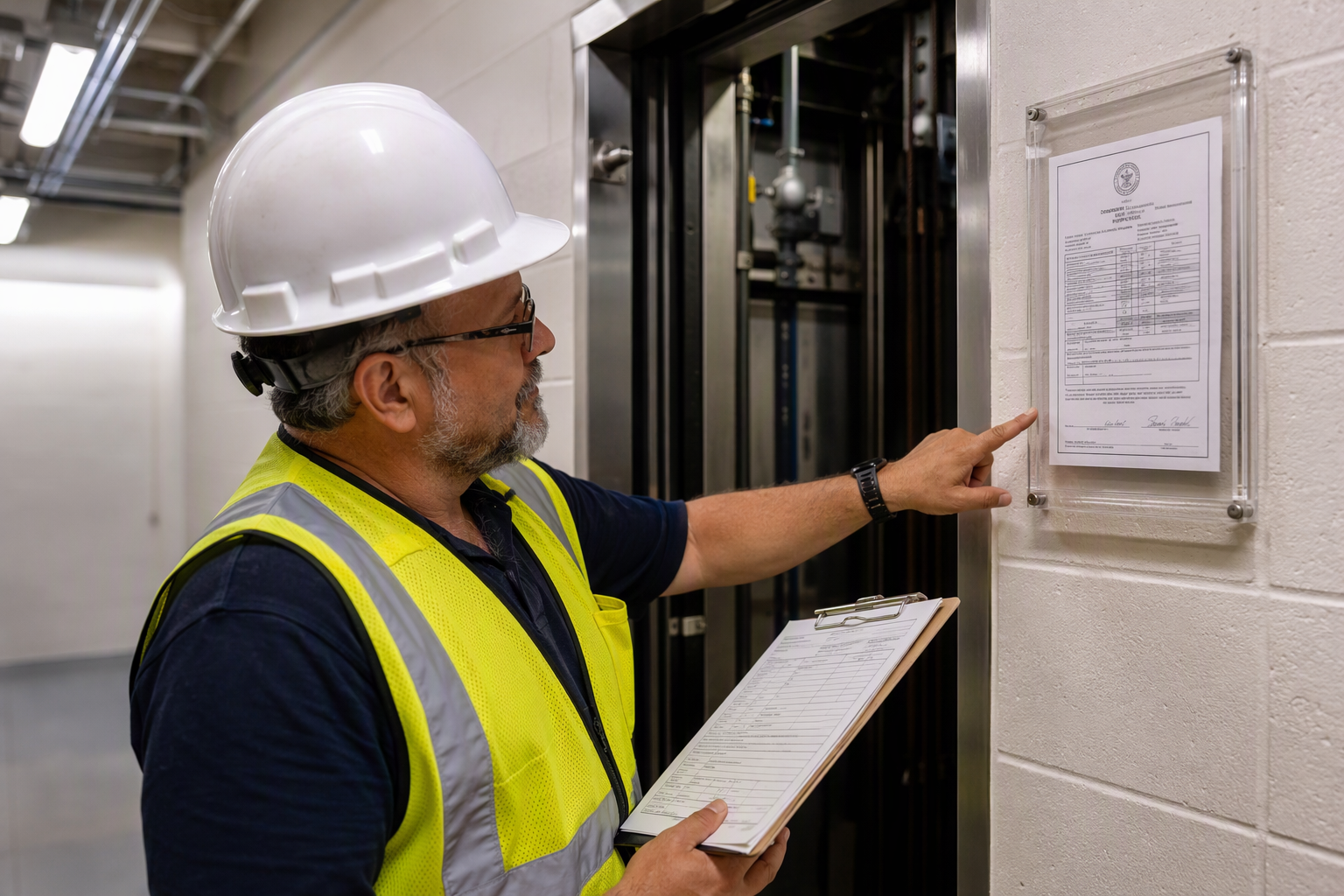
Texas elevators are regulated by the Texas Department of Insurance (TDI), which oversees the state’s elevator safety program under the Texas Elevator Safety Act. Elevators in Texas must be inspected by a licensed elevator inspector on a recurring basis to maintain a valid certificate of inspection — without which a building may be ordered to take the unit out of service.
The underlying safety standard for new and existing elevators is the ASME A17.1 Safety Code for Elevators and Escalators (for new installations) and ASME A17.3 Safety Code for Existing Elevators and Escalators (for existing equipment). Budget planners should include the cost of the annual inspection certificate as a fixed, non-negotiable line item.
Additionally, ADA compliance obligations apply to any elevator serving the public, and modifications that trigger ADA review should be anticipated when planning modernization projects.
How Should a Building Budget for Preventive Maintenance Contracts?
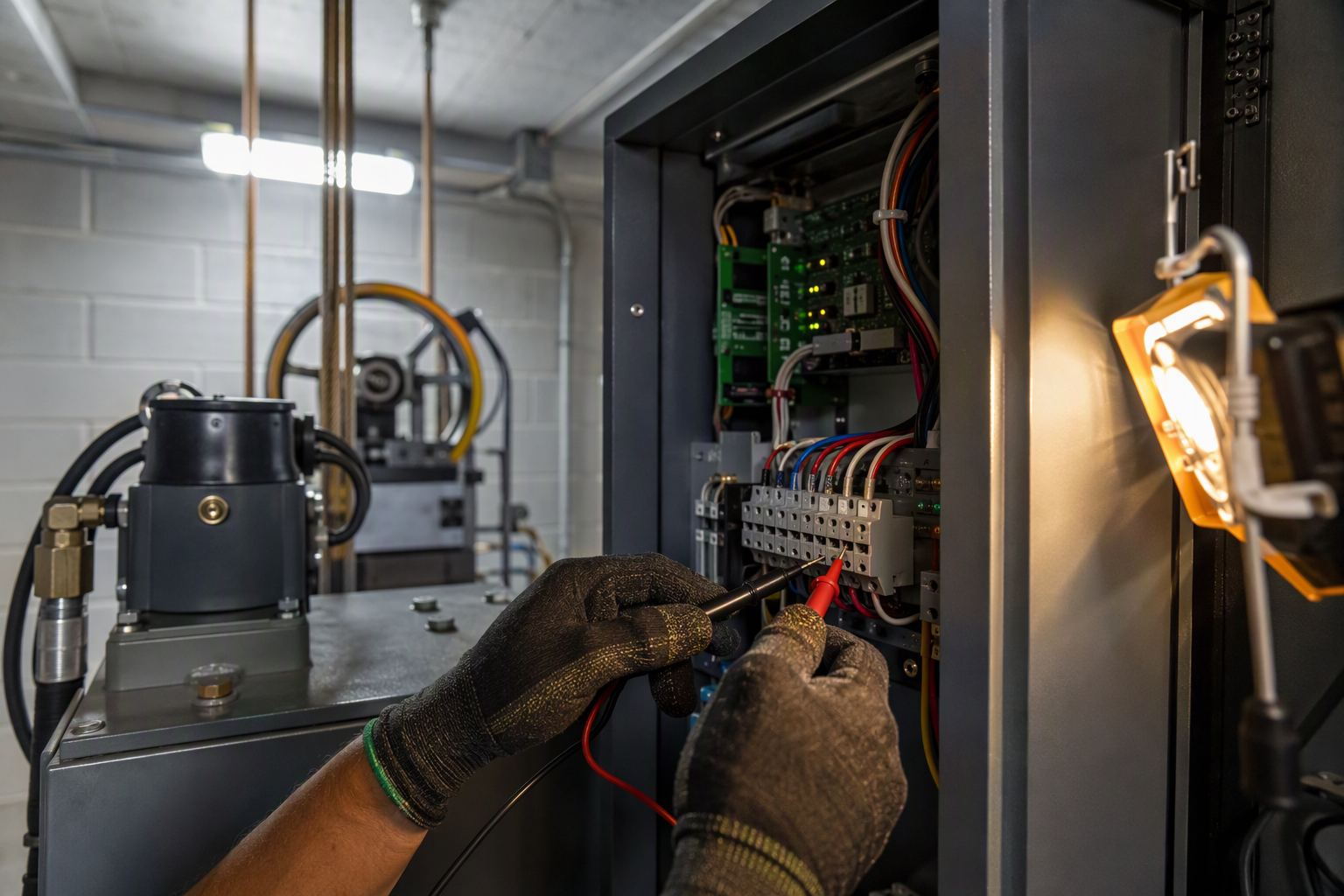
A preventive maintenance (PM) contract is the single most impactful budget decision a building makes for elevator reliability. PM contracts typically cover scheduled lubrication, adjustment, cleaning, and safety-device testing at defined intervals throughout the year. When evaluating contract scope, budget managers should distinguish between:
- Full-coverage contracts — include parts and labor for most repairs discovered during maintenance visits.
- Examination-only contracts — cover only the technician’s time; parts and repair labor are billed separately.
- Partial or oil-and-grease contracts — the most limited tier, covering only lubrication and basic adjustments.
For 2027 budgeting, Houston property managers should document the current contract tier, assess whether it has been adequate for the building’s call-back rate, and price an upgrade if unplanned repair bills have been high. A higher-tier contract trades unpredictable repair invoices for a predictable monthly fee — a structure most CFOs prefer for operations budgets.
What Capital Reserve Should Be Set Aside for Elevator Repairs?
Even with a robust PM contract, components reach end-of-life and require replacement. Common capital repair line items that building engineers plan for include:
- Hoist ropes and governor ropes
- Door operators, rollers, and gibs
- Hydraulic seals, cylinders, and hydraulic fluid
- Controller boards and relay logic
- Brake assemblies and motor components
- Safety device testing and replacement (buffers, safeties, overspeed governors)
The appropriate reserve amount depends on the age, type, and usage intensity of each unit. Older equipment — particularly hydraulic elevators installed before the 1990s — tends to require more frequent and costly component replacements. A qualified elevator service company can perform a condition assessment and provide a written prioritization of repairs to inform the reserve calculation.
When Should a Building Budget for Modernization Instead of Repairs?
Modernization becomes more cost-effective than ongoing repairs when cumulative repair costs approach or exceed a meaningful fraction of modernization cost over a rolling multi-year window, or when the equipment can no longer be brought into compliance with current ASME A17.3 requirements through individual repairs.
Common modernization scopes in Houston-area buildings include:
- Full modernization — new controller, fixtures, cab interior, door equipment, and drive system.
- Partial modernization — targeting the highest-risk or highest-cost components (e.g., controller and door operator only).
- Hydraulic-to-traction conversion — particularly relevant for buildings looking to eliminate underground cylinder liability or improve energy efficiency.
Modernization projects also carry lead times for equipment procurement. For 2027 projects, building managers should initiate vendor discussions and specification work no later than mid-2026 to avoid delays.
How Should Emergency Service Availability Factor Into the Budget?
Elevator entrapments and after-hours failures are operational realities in any multi-story building. Houston buildings should verify that their maintenance provider offers emergency service availability outside standard business hours, and that the contract clearly defines what triggers an emergency call versus a next-business-day service call. Buildings with high occupancy — medical, residential, hotel, or high-rise office — should place particular weight on a vendor’s emergency responsiveness when evaluating contracts.
Budget for emergency call fees separately from the PM contract, as most agreements bill emergency labor at a premium rate.
What Questions Should Houston Building Managers Ask Elevator Vendors When Budgeting?
When soliciting proposals for 2027 service contracts or modernization projects, building managers should request clear answers to the following:
- What is the exact scope of the maintenance contract — which parts and labor categories are included versus excluded?
- Is the inspection certificate filing handled by the vendor, or does the building arrange it separately with TDI?
- What is the vendor’s process for documenting deficiencies found during PM visits, and how are repair priorities communicated?
- For modernization: what is the projected construction timeline, and what lead times apply to major components?
- Does the vendor carry insurance and hold current Texas elevator contractor licensure?
- How does the vendor handle OSHA compliance for work performed in the building’s machine rooms and hoistways?
How Does Building Type Affect the Elevator Budget in Houston?
Houston’s building stock is diverse, and elevator budget requirements vary significantly by asset class:
- High-rise commercial towers — typically operate multiple units with high daily trip counts, making full-coverage PM contracts and modernization capital reserves essential.
- Multifamily residential and mixed-use — ADA compliance and door reliability are primary concerns; budget should include annual ADA review if any alterations are planned.
- Medical and healthcare facilities — uptime is critical; budget for premium service tiers and redundant maintenance scheduling.
- Industrial and warehouse — freight and service elevators often carry heavy loads; budget should reflect higher wear rates on mechanical components.
- Retail and hospitality — public-facing equipment requires frequent cab maintenance and aesthetic upkeep in addition to mechanical service.
AmeriTex Elevator serves commercial, residential, industrial, and institutional properties across the Houston metro area, providing maintenance, repair, and modernization services calibrated to each building type’s operational demands.
What Is the Step-by-Step Process for Building a 2027 Elevator Budget Line?
- Audit current equipment. Document the make, model, age, and current contract tier for every elevator unit in the building portfolio.
- Review inspection records. Pull the most recent TDI inspection certificates and note any outstanding violations or conditions requiring correction.
- Request a condition assessment. Engage a qualified elevator service provider to inspect equipment and produce a written report ranking repair priorities by urgency.
- Price the maintenance contract tier. Obtain competitive bids for full-coverage, partial, and examination-only contracts to determine the cost-risk tradeoff for each unit.
- Estimate repair capital. Use the condition assessment to build a prioritized repair list with estimated costs for the 12-to-24-month planning window.
- Assess modernization need. For equipment older than 20–25 years, request a modernization feasibility assessment and preliminary pricing.
- Include inspection fees. Budget separately for the annual TDI certificate of inspection for each unit.
- Add contingency. Include a contingency line for unplanned emergency repairs, sized based on the building’s historical call-back frequency and equipment age.
Ready to build an accurate 2027 elevator budget for your Houston property? AmeriTex Elevator provides condition assessments, maintenance contract reviews, and modernization planning consultations for building owners and property managers throughout the Houston, TX area.
Schedule a Free Consultation — call AmeriTex Elevator today at 866-679-4313.
Need elevator service you can rely on? AmeriTex Elevator is ready to help.