Hydraulic vs. Traction Elevator Systems: How to Choose for Your Building
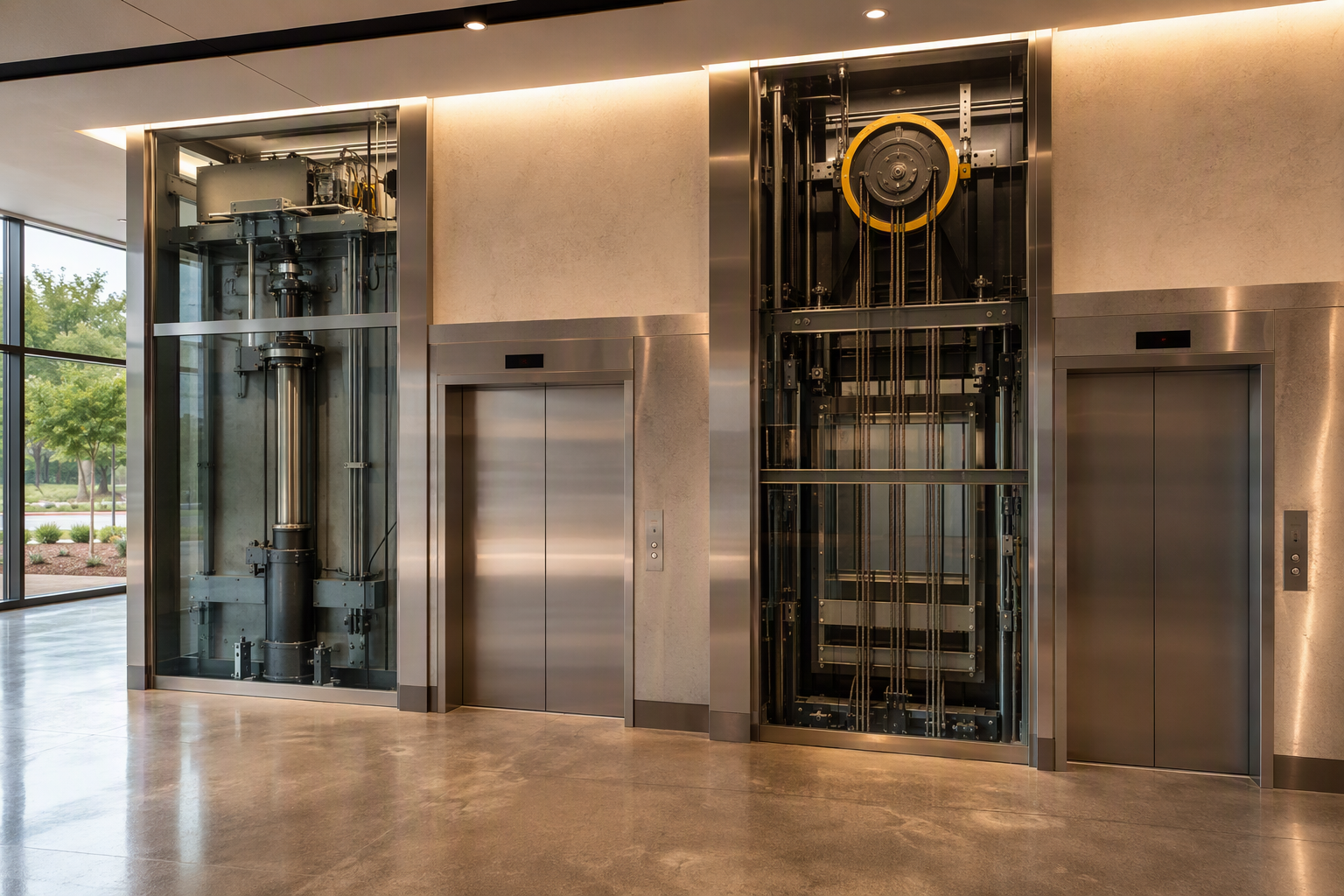
For California and Texas building owners, developers, and facility managers evaluating a new elevator installation or a major modernization, the hydraulic-versus-traction decision carries long-term implications for operating cost, code compliance, energy consumption, and passenger experience. This guide synthesizes the technical, regulatory, and practical factors that govern the decision in 2026.
What Is the Core Difference Between Hydraulic and Traction Elevator Systems?
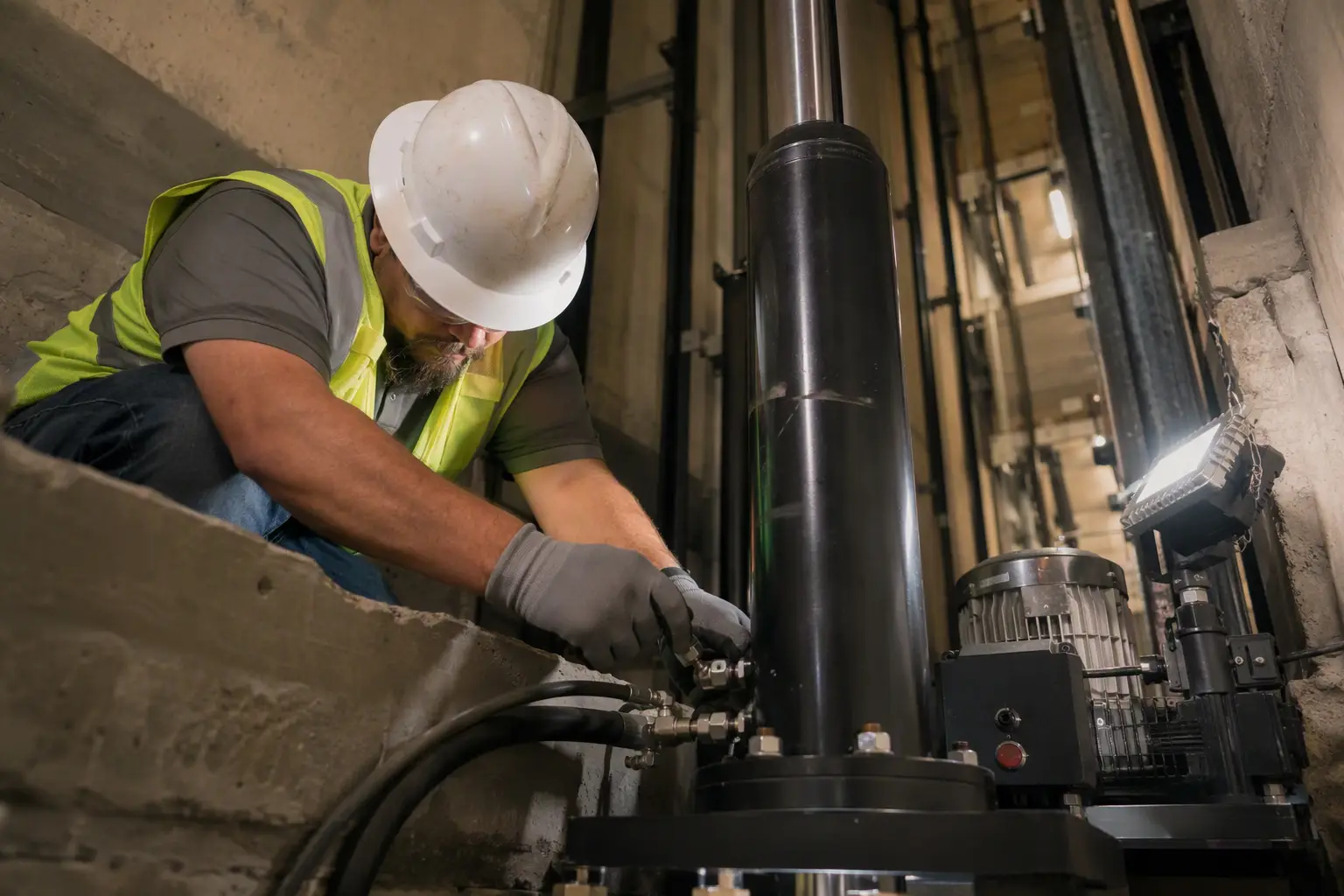
A hydraulic elevator moves a cab by pushing fluid — typically a biodegradable or petroleum-based oil — through a cylinder via a pump and valve assembly. The cylinder either sits in a pit below the cab (holeless hydraulic) or extends into a borehole beneath the hoistway (in-ground hydraulic). Power is consumed primarily during the upward trip; gravity assists the descent.
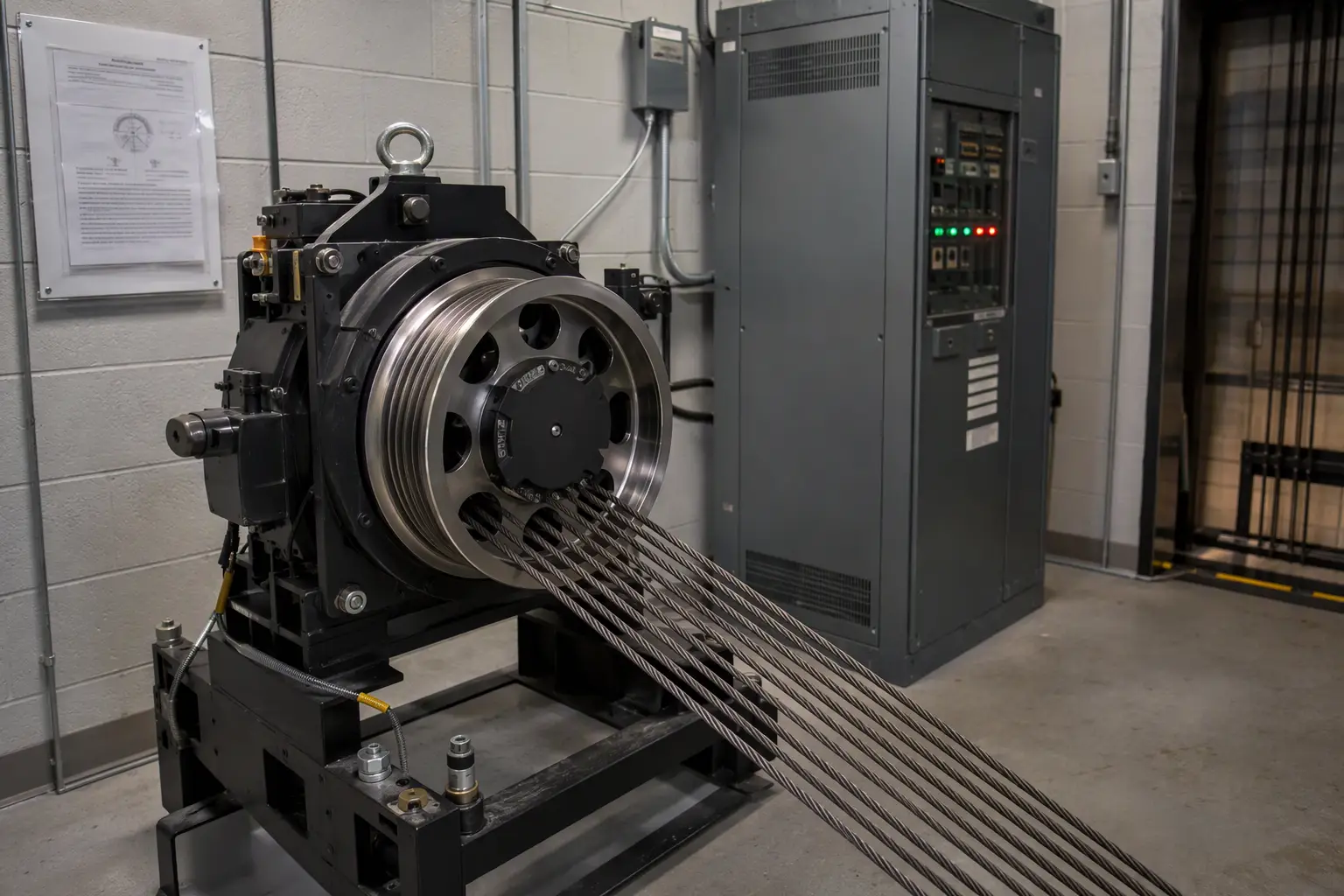
A traction elevator suspends the cab from wire ropes or flat belts that pass over a grooved sheave driven by an electric motor. A counterweight on the opposite end of the ropes offsets most of the cab’s weight, which substantially reduces the motor load in both directions. Traction systems are further divided into geared traction (a gearbox couples the motor to the sheave) and gearless traction (the sheave is mounted directly on the motor shaft), with gearless machines associated with higher speeds and quieter operation.
Which Building Heights Are Each System Designed For?
Building height and number of stops are the most decisive factors in system selection. As a general technical guideline recognized across the elevator industry:
- Hydraulic systems are typically engineered for buildings with two to six stops and travel heights up to roughly 50 feet (though some holeless configurations reach slightly beyond that).
- Geared traction systems are commonly applied in mid-rise buildings — generally five to fifteen stories — where moderate speeds and cost-sensitive installations are priorities.
- Gearless traction (MRL and conventional) serves mid- to high-rise structures where higher speeds, longer travel, and energy efficiency are required.
These are industry-standard application ranges, not code mandates. The applicable code — ASME A17.1 Safety Code for Elevators and Escalators — sets safety requirements for both system types at all heights; it does not prescribe which technology must be used at a given building height. The selection is an engineering decision informed by load calculations, traffic analysis, and building design.
What Does ASME A17.1 Require of Both System Types?
Both hydraulic and traction elevators installed or modernized in California and Texas must comply with ASME A17.1 Safety Code for Elevators and Escalators, which governs construction, installation, operation, inspection, testing, and maintenance. Existing installations are subject to ASME A17.3 Safety Code for Existing Elevators and Escalators, which outlines retroactive safety requirements that authorities having jurisdiction (AHJs) may enforce during modernization or periodic inspection cycles.
Key code-driven requirements that apply to both system types include:
- Periodic inspections and tests conducted by a qualified elevator inspector or licensed contractor — the frequency and scope are set by each state’s AHJ.
- Firefighters’ emergency operation (Phase I and Phase II recall) in compliance with applicable editions of ASME A17.1.
- Accessible design requirements under the Americans with Disabilities Act (ADA), including minimum cab dimensions, control height, and door timing for public-facing installations.
- Pit safety requirements, including lighting, stop switches, and — for hydraulic systems — specific provisions governing the hydraulic power unit and pressure vessel.
In California, the Division of Occupational Safety and Health (Cal/OSHA) Elevator, Ride, and Tramway Unit administers elevator permitting and inspection under state law. In Texas, the Texas Department of Insurance (TDI) oversees elevator inspections statewide. Building owners should confirm the current adopted code edition with the local AHJ before finalizing system design.
How Does Energy Consumption Compare Between the Two Systems?
Energy efficiency is a meaningful differentiator, particularly for buildings in California subject to Title 24 energy compliance reviews, or for Texas owners managing ongoing operating costs across a multi-building portfolio.
Hydraulic systems consume power primarily on the upward run; the pump motor is typically a single-speed or two-speed induction motor that draws full load regardless of cab weight or occupancy. Standby heat losses from the hydraulic power unit add to consumption over time. Modern hydraulic units with variable-speed drives reduce energy draw compared with legacy systems, but the fundamental thermodynamic limitation of pumping fluid against gravity remains.
Gearless traction systems with variable-frequency drives (VFDs) and permanent magnet motors — common in machine-room-less (MRL) configurations — are generally recognized as the most energy-efficient elevator technology available in 2026. The counterweight recovers a significant portion of the mechanical work, and regenerative drives can return energy to the building’s electrical grid during braking and descent. Geared traction systems with VFD upgrades offer intermediate efficiency between older hydraulic designs and modern gearless installations.
Because specific percentage savings depend on duty cycle, building occupancy patterns, and local utility rates, building owners should request a site-specific energy analysis rather than relying on generalized benchmarks.
What Are the Machine Room and Space Requirements for Each System?
Space planning is a significant practical constraint in both new construction and modernization projects.
- Conventional hydraulic: Requires a machine room adjacent to or below the hoistway for the power unit and controller. In-ground configurations also require drilling a cylinder borehole — a consideration in regions with high water tables or expansive soils common in parts of Texas.
- Holeless hydraulic: Eliminates the borehole by using above-ground or side-mounted cylinder configurations. Machine room is still typically required but can often be located at the lowest landing level.
- Conventional traction: Requires an overhead machine room above the hoistway with sufficient headroom for the machine, sheave, and controller. This adds structural and architectural costs in buildings not originally designed for it.
- Machine-room-less (MRL) traction: Locates the machine and controller inside the hoistway or in a small control cabinet at the top landing, eliminating the dedicated machine room. MRL configurations have become the dominant choice in new mid-rise construction and are generally permitted under current editions of ASME A17.1 when properly engineered.
In retrofit and modernization scenarios, the existing hoistway geometry and overhead clearance often determine which options are physically feasible before cost or preference enters the discussion.
How Do Installation and Modernization Timelines Compare?
Timeline comparisons between system types depend on project scope, permitting, and equipment lead times — all of which vary by jurisdiction and market conditions. General industry observations for 2025–2026 include:
- Hydraulic system installations tend to have shorter equipment lead times for standard configurations because the machinery is less complex than gearless traction machines.
- MRL traction installations may require longer lead times for customized or building-specific machine packages, particularly as supply chain pressures on permanent magnet motors persist into 2026.
- Permitting timelines with California’s Cal/OSHA Elevator Unit or Texas TDI are independent of system type and depend on the local AHJ’s workload and submission completeness.
- Modernization projects converting from hydraulic to traction — which require hoistway modifications and new overhead support structures — are consistently the longest in duration due to structural coordination.
What Environmental Regulations Apply to Hydraulic Elevator Oil in California and Texas?
Hydraulic elevators present an environmental compliance dimension that traction systems do not. In-ground hydraulic cylinders that develop leaks can contaminate soil and groundwater — a concern that California’s environmental regulators have addressed through state-level underground tank and spill prevention frameworks. Owners of in-ground hydraulic units in California should verify current secondary containment and leak detection requirements with their AHJ and environmental counsel, as these requirements can affect the viability of retaining an older in-ground system versus converting to a holeless or traction configuration.
Texas property owners face similar considerations under state environmental agency oversight when in-ground cylinders are involved. Many building owners across both states have moved toward holeless hydraulic or traction alternatives during modernization specifically to eliminate ongoing environmental monitoring obligations.
How Do ADA Requirements Apply to Both System Types?
The Americans with Disabilities Act and its 2010 ADA Standards for Accessible Design apply to elevators serving public accommodations and commercial facilities regardless of drive type. Requirements include minimum clear floor area inside the cab, accessible control panel height, visible and audible floor indicators, door reopen protection, and leveling accuracy at landings. Both hydraulic and traction systems are capable of meeting these requirements when properly specified and installed.
Leveling precision — the ability to stop the cab flush with the landing floor — is relevant to ADA compliance and passenger safety. Modern hydraulic systems with proportional valve controls and traction systems with closed-loop VFD control both achieve acceptable leveling. Older hydraulic systems with single-speed pump motors are more prone to floor-level drift over time, which can become an ADA compliance and trip-hazard issue that triggers mandatory correction under ASME A17.3 during inspections.
What Maintenance Differences Should Building Owners Expect?
Maintenance requirements and ongoing costs differ meaningfully between system types over a building’s life cycle:
- Hydraulic systems require periodic oil changes, hydraulic fluid disposal (subject to environmental regulations), pump and valve servicing, and inspection of the cylinder and packing seals. In-ground cylinders may require periodic testing for leak integrity.
- Traction systems require inspection and eventual replacement of wire ropes or belts, sheave groove wear monitoring, brake adjustment, and — for geared machines — gearbox lubrication and gear wear inspection.
- MRL traction systems reduce some maintenance access challenges by eliminating the overhead machine room but may present different access constraints for technicians working within the hoistway.
- Both system types require controller and safety device testing at intervals established by the applicable AHJ under ASME A17.1 and A17.3.
How Does Traffic and Capacity Analysis Influence the Decision?
For buildings with high peak-period traffic — such as office towers, hospitals, or large residential complexes — elevator traffic analysis (sometimes called a traffic study or handling capacity study) is a recommended step before system selection. Traction systems, particularly gearless configurations, support higher travel speeds that improve round-trip time and reduce passenger wait intervals during peak demand. Hydraulic systems, constrained in speed by pump capacity and cylinder design, are less suitable when handling capacity is a critical performance metric.
For low-traffic applications — small professional office buildings, retail with limited upper floors, or residential buildings with modest occupancy — the speed advantage of traction systems may not justify the additional installation complexity or cost, making hydraulic a practical and code-compliant choice.
What Are the Key Industry Trends for 2025–2026 That Affect This Decision?
Several trends are shaping hydraulic-versus-traction decisions in California and Texas markets heading into 2026:
- MRL traction adoption continues to grow in new low- and mid-rise construction as the technology matures and architects design buildings without overhead machine rooms.
- Regenerative drive technology is becoming a more common specification in sustainability-focused projects, particularly in California where building energy codes and green building certifications create incentives for reduced elevator energy consumption.
- Environmental concerns around in-ground hydraulic cylinders are accelerating conversions to holeless hydraulic or traction alternatives during modernization cycles, particularly in California.
- Connected monitoring and predictive maintenance platforms are increasingly available for both system types, enabling building managers to track performance data and anticipate maintenance needs — a trend that reduces the historical maintenance-access advantage hydraulic systems held in some markets.
- Supply chain normalization for elevator components is improving after the disruptions of earlier years, though lead times for specialized gearless machines remain longer than standard hydraulic components in most markets.
How Should a Building Owner Structure the Evaluation Process?
Choosing between hydraulic and traction systems is best approached as a structured engineering and business analysis rather than a default toward one technology. The following process is recommended for California and Texas building owners:
- Define the building parameters: Document the number of stops, total travel height, hoistway dimensions, available overhead clearance, and pit depth.
- Assess traffic requirements: Estimate peak-period passenger volume and acceptable wait times to determine whether speed is a performance constraint.
- Evaluate space constraints: Determine whether an overhead machine room, a lower-level machine room, or a machine-room-less configuration is architecturally and structurally feasible.
- Review environmental factors: Assess soil conditions, water table, and applicable environmental regulations if an in-ground hydraulic system is under consideration.
- Confirm AHJ requirements: Contact the local authority having jurisdiction — Cal/OSHA Elevator Unit in California or Texas TDI — to confirm the currently adopted code edition and any local amendments.
- Obtain a life-cycle cost analysis: Request comparative estimates that include installation, energy consumption, maintenance, and projected modernization costs over a 20–25 year horizon, not just initial capital outlay.
- Verify ADA compliance pathways: Confirm that the selected system design meets applicable ADA Standards for Accessible Design for the intended occupancy type.
- Select a licensed contractor: Engage a licensed elevator contractor authorized to work under the applicable state licensing framework before finalizing specifications.
Does the Number of Elevators in a Building Affect Which System to Choose?
In multi-elevator installations, system consistency is often a practical consideration. Mixed fleets — some hydraulic and some traction — require maintenance personnel and spare parts inventory to support two different technology types, which can increase service complexity and cost. For buildings requiring multiple cabs, a traffic study should evaluate whether a uniform traction installation would serve all rise requirements and simplify long-term maintenance obligations compared with a mixed approach.
What Role Does AmeriTex Elevator Play in This Decision?
AmeriTex Elevator serves building owners and managers in California and Texas as a data-driven elevator service provider, supporting clients through system selection, installation, modernization, and ongoing maintenance. The approach emphasizes site-specific analysis — accounting for building height, traffic patterns, hoistway geometry, environmental conditions, and applicable California and Texas regulatory requirements — rather than a one-size-fits-all recommendation. AmeriTex Elevator’s assessments draw on compliance requirements under ASME A17.1 and A17.3, ADA Standards for Accessible Design, and the current requirements of California’s Cal/OSHA Elevator Unit and Texas TDI.
For building owners who are uncertain whether their existing hydraulic system warrants modernization versus replacement with a traction configuration, or who are evaluating system type as part of a new construction project, AmeriTex Elevator provides structured assessments that present the technical trade-offs and life-cycle cost implications clearly.
Get a Free Elevator Assessment from AmeriTex Elevator
Choosing between hydraulic and traction elevator systems is a decision with decades of operational and financial consequences. AmeriTex Elevator provides building owners and facility managers in California and Texas with a free, no-obligation elevator assessment — covering system suitability, code compliance status, energy efficiency opportunities, and life-cycle cost considerations specific to the building and its occupancy.
Contact AmeriTex Elevator for a free elevator assessment: 866-679-4313
Need elevator service you can rely on? AmeriTex Elevator is ready to help.