Quick Answer: Residential elevators in Jollyville, TX require annual inspections by a TDLR-registered inspector, routine maintenance by a TDLR-registered contractor, and prompt repair of any cited violations — with the building owner responsible for obtaining and displaying a valid Certificate of Compliance under Texas Health and Safety Code Chapter 754.

Residential Elevator Repair and Maintenance in Jollyville, TX: Complete FAQ Guide
Residential elevators in Jollyville, TX — located within the Austin–Round Rock metropolitan area — are subject to Texas state elevator law administered by the Texas Department of Licensing and Regulation (TDLR), Elevator and Escalator Safety program. Homeowners and property managers who understand inspection schedules, maintenance requirements, and repair protocols protect both safety and legal compliance. The 20 questions below address every practical aspect of owning, maintaining, and repairing a residential elevator in this region.
1. What Are the Legal Requirements for Residential Elevator Maintenance in Jollyville, TX?
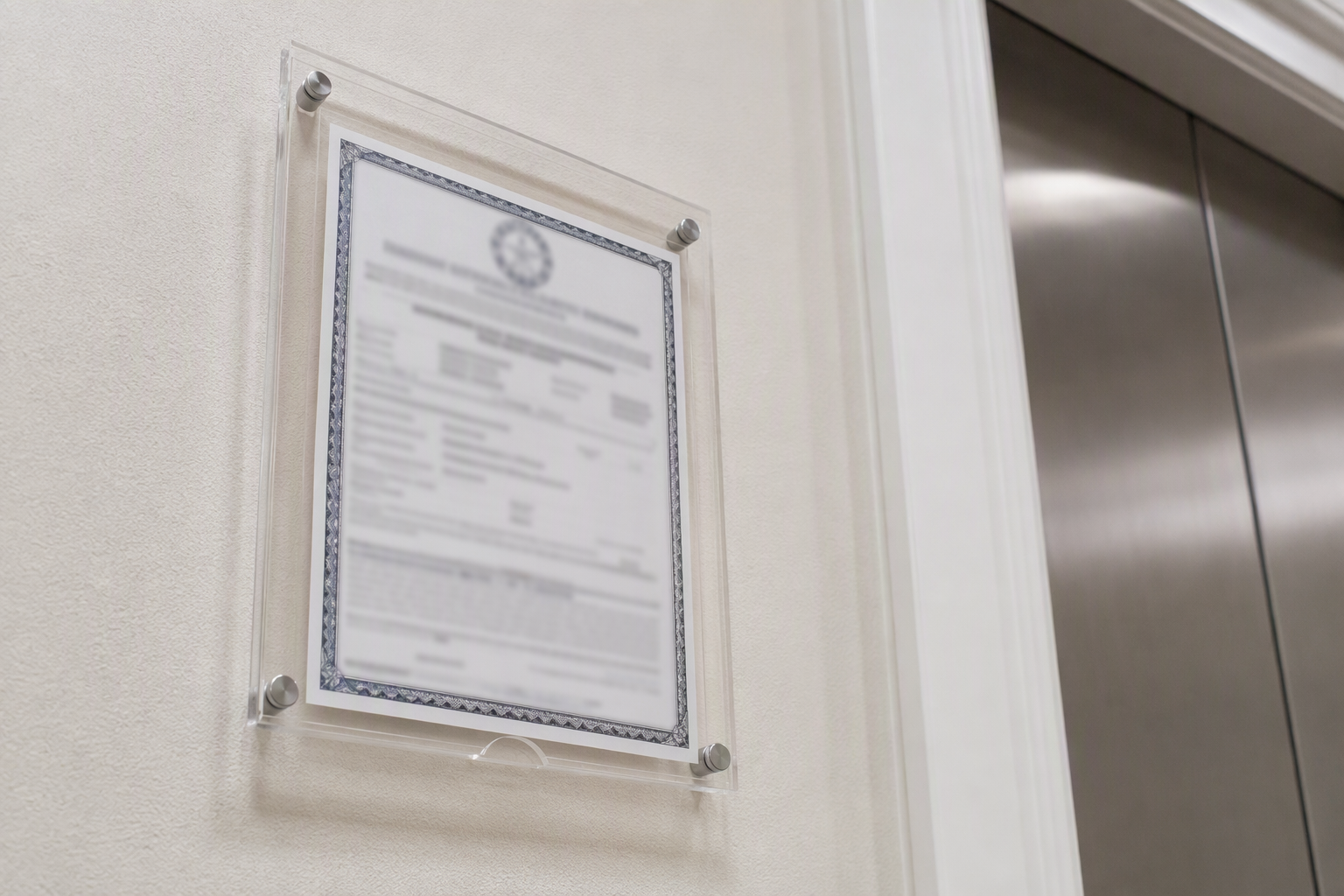
Texas law requires annual inspection of elevator equipment by a TDLR-registered inspector, and all repair and maintenance work must be performed by a TDLR-registered contractor under Texas Health and Safety Code Chapter 754 and 16 Texas Administrative Code Chapter 74.
Jollyville is an unincorporated community in Travis and Williamson counties, meaning it falls under the jurisdiction of the State of Texas rather than a municipal elevator program. The governing authority is TDLR’s Elevator and Escalator Safety program. Building owners — including homeowners with private residential elevators — must secure a TDLR Certificate of Compliance for each unit of equipment. That certificate is valid for one year and must be displayed in a publicly visible area of the building.
An important note: TDLR does not regulate elevators in single-family dwellings with one exception — state law requires an inspection by a TDLR-registered inspector after installation. Once that post-installation inspection is complete, ongoing regulatory obligations depend on how the property is classified. Homeowners should verify their specific classification with TDLR or a qualified legal advisor, and consult a TDLR-registered contractor such as AmeriTex Elevator for guidance on compliance obligations specific to their situation.
The adopted technical standard in Texas is the ASME A17.1/CSA B44, 2016 edition, Safety Code for Elevators and Escalators, as amended by 16 TAC §74.100(b), effective November 1, 2018.
2. How Often Should a Residential Elevator Be Inspected in Texas?
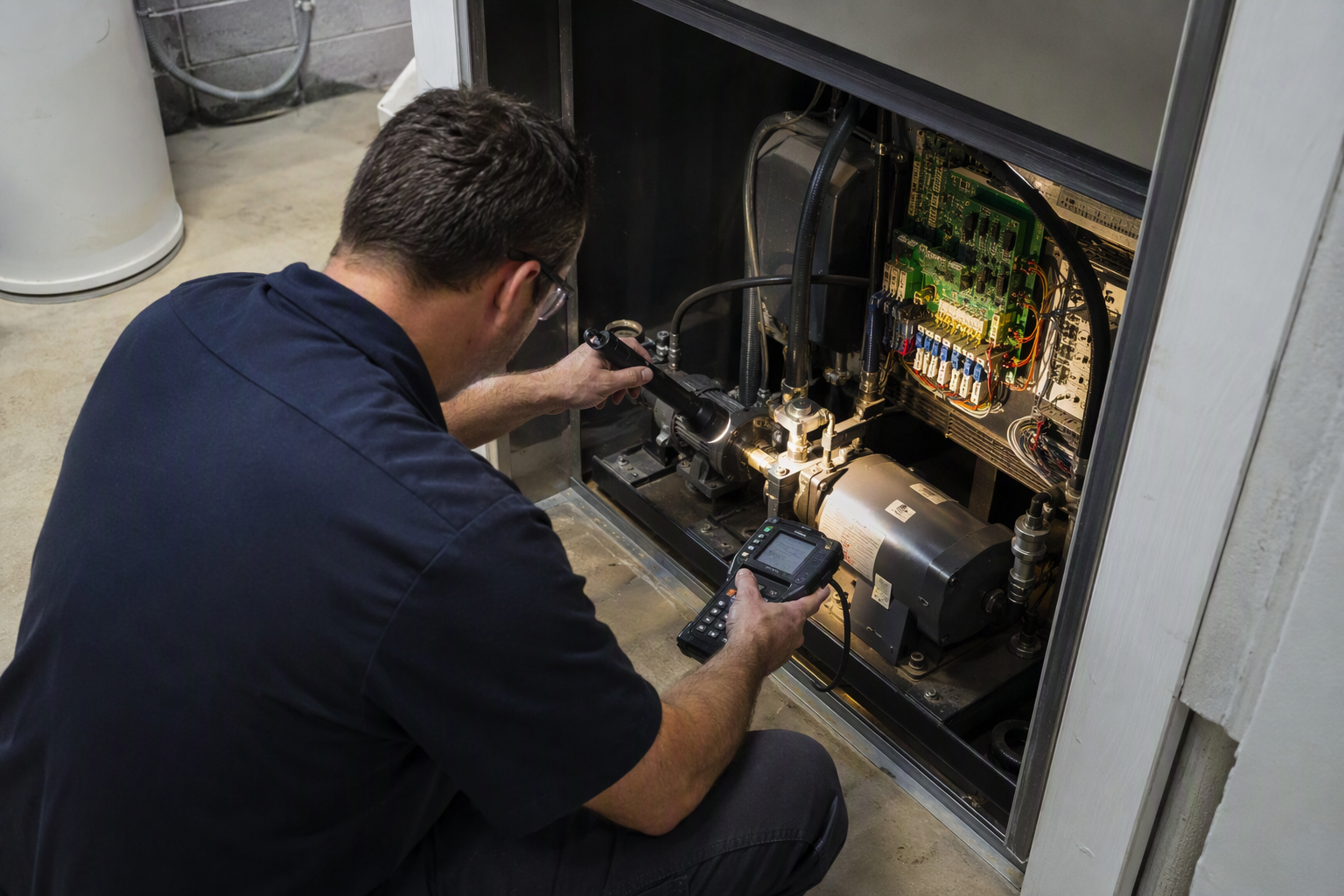
Texas building owners must have elevators inspected annually by a TDLR-registered elevator inspector, and a fresh Certificate of Compliance must be obtained each year.
Annual inspection is a non-negotiable baseline under Texas law. The TDLR-registered inspector — who is an independent professional, not a TDLR employee — must deliver the written inspection report to the owner within five calendar days of completing the inspection. Any violations cited in that report must be corrected, or placed under a correction contract, within 30 days, or the owner must obtain a waiver or delay from TDLR.
Beyond the annual statutory inspection, routine preventive maintenance visits scheduled throughout the year help catch developing issues before they become safety hazards or code violations. Maintenance intervals vary by elevator type, usage frequency, and manufacturer recommendation — factors a qualified technician from a registered contractor should assess for each specific unit.
3. Who Is Allowed to Repair a Residential Elevator in Texas?
Under Texas law, any person who installs, repairs, alters, tests, or maintains elevator equipment must be registered as a contractor with TDLR — unlicensed repair work is illegal and potentially dangerous.
Texas elevator contractor registrations expire annually and must be kept current. Contractors must also carry general liability insurance of at least $1,000,000 per occurrence for bodily injury or death and $500,000 per occurrence for property damage. Each contractor must designate one or two responsible parties who have at least three years of elevator contractor experience.
AmeriTex Elevator is a TDLR-registered elevator contractor serving the Austin, TX metro area, including communities like Jollyville. Engaging a properly registered contractor protects the homeowner from liability, ensures the work meets the ASME A17.1-2016 standard adopted in Texas, and keeps the Certificate of Compliance valid.
4. What Does a Routine Residential Elevator Maintenance Visit Include?
A standard maintenance visit covers mechanical, electrical, hydraulic, and safety systems — the specific checklist is driven by the elevator type, manufacturer guidelines, and the requirements of ASME A17.1.
Technicians performing routine maintenance on a residential elevator typically inspect and service the following categories of components:
- Drive system: Motor, controller, drive sheaves or hydraulic pump and cylinder depending on elevator type
- Cab and hoistway: Guide rails, rollers or shoes, cab sill, pit equipment, and pit lighting
- Doors and gates: Door operators, interlocks, restrictor devices, and sensing edges
- Safety devices: Overspeed governor, safeties, buffers, and slack-rope devices
- Electrical: Control wiring, emergency lighting, alarm bell, and phone or two-way communication system
- Hydraulic systems (if applicable): Fluid level, seals, valve operation, and cylinder condition
- Lubrication: Guide rails, cables, and mechanical linkages per manufacturer specification
Documentation of each maintenance visit should be retained by the owner, as records may be requested during annual inspection.
5. What Types of Residential Elevators Are Commonly Found in Jollyville-Area Homes?
The most common residential elevator types in central Texas homes are hydraulic, traction (cable-driven), and pneumatic (vacuum) elevators, each with distinct maintenance profiles.
| Elevator Type | Drive Mechanism | Key Maintenance Focus Areas | Common Repair Issues | Pit Required? |
|---|---|---|---|---|
| Hydraulic | Fluid-powered cylinder | Fluid level, pump, cylinder seals, valve | Fluid leaks, slow descent, valve failure | Yes |
| Cable Traction | Motor, sheave, and cables | Cable tension, sheave wear, motor brushes | Cable stretch, sheave grooves, motor failure | Yes (shallow) |
| Pneumatic (Vacuum) | Air pressure differential | Seals, turbines, control valves | Seal degradation, slow travel, noise | No |
| Chain-Driven | Chain and motor | Chain tension, sprocket wear, lubrication | Chain wear, misalignment | Yes |
| Screw-Driven | Threaded drive screw | Screw lubrication, nut wear | Drive nut wear, motor issues | No (typically) |
Each type requires a maintenance approach tailored to its drive system. A contractor unfamiliar with pneumatic elevators, for example, may not recognize early seal degradation — making it important to work with a provider experienced across all residential elevator types.
6. What Are the Most Common Residential Elevator Repairs?
The most frequently needed repairs on residential elevators involve door and gate components, hydraulic or mechanical drive systems, safety devices, and control systems — many of which are direct safety-critical items under ASME A17.1.
Common repair categories include:
- Door and gate interlocks: Worn or misaligned interlocks prevent the elevator from running and are an immediate safety concern
- Hydraulic fluid leaks: Leaking cylinder packing or valve seals cause leveling issues and environmental hazards
- Drive cables or chains: Worn cables on traction units require replacement before they reach minimum diameter tolerance
- Controller and wiring: Printed circuit boards, contactors, and relays degrade over time, causing erratic operation
- Emergency communication: Malfunctioning alarm bells or two-way communication systems are a code violation under ASME A17.1
- Door restrictors: Texas law mandates immediate removal from service of any passenger elevator without working door restrictors
- Firefighters’ service: Non-functional Phase One firefighters’ service also requires immediate removal from service under Texas regulations
7. What Should a Homeowner Do Immediately If a Residential Elevator Malfunctions?
A malfunctioning residential elevator should be taken out of service immediately until inspected by a TDLR-registered contractor — do not attempt to diagnose or repair elevator equipment without proper credentials.
- Stop using the elevator immediately and place a clear out-of-service notice on the call buttons at each floor.
- If a person is trapped inside the elevator cab, do not attempt to force doors open — contact emergency services (911) and the elevator service contractor simultaneously.
- Contact a TDLR-registered elevator contractor such as AmeriTex Elevator to dispatch a qualified technician for diagnosis.
- Document the malfunction: note the floor level, direction of travel, any unusual sounds or smells, and error codes displayed on the controller panel.
- If the malfunction involves an injury or accident, report it to TDLR within 24 hours as required by Texas law.
- Do not return the elevator to service until the contractor has identified and resolved the cause and confirmed that all safety devices are functional.
- Retain all repair documentation for the annual inspection record.
8. How Does the TDLR Certificate of Compliance Process Work for Residential Elevators?
The Texas Certificate of Compliance is issued after a satisfactory annual inspection and must be posted in a publicly visible area — without it, the elevator is not legally cleared for operation.
The process begins when the building owner arranges for inspection by a TDLR-registered inspector — under Texas law, the owner has the sole right to select the inspector. After the inspection, the inspector delivers a written report within five calendar days. If the elevator passes, TDLR issues a Certificate of Compliance valid for one year. If violations are found, the owner has 30 days to correct them or enter a correction contract, or must seek a waiver or delay from TDLR.
A TDLR-registered maintenance contractor can prepare the elevator for inspection by completing any outstanding maintenance items and correcting known deficiencies in advance, reducing the likelihood of failed inspection results.
9. Does the ADA Apply to Residential Elevators in Private Homes?
The Americans with Disabilities Act generally does not apply to private residential dwellings, but ADA requirements do apply to multi-family residential buildings covered under Title III or Title II, and fair housing considerations apply to multi-unit housing.
For a single-family home in Jollyville, the ADA does not directly govern elevator specifications. However, homeowners installing elevators to accommodate household members with mobility needs should reference the technical provisions of ASME A17.1, which specifies cab dimensions, door widths, control panel heights, and other accessibility-related specifications that align with universal design principles.
If the residential property contains any commercial, short-term rental, or public accommodation component, ADA compliance requirements must be evaluated with a qualified accessibility consultant. AmeriTex Elevator recommends that owners in mixed-use or multi-family configurations seek a specific ADA assessment as part of any elevator modernization or new installation project.
10. What Is a Category 5 Test and Does It Apply to Residential Elevators?
Texas requires a Category 5 full-load safety test every five years on electric (traction) elevators — homeowners with cable-driven residential traction elevators should factor this mandatory test into their long-term maintenance planning.
The Category 5 test, defined in the ASME A17.1 Safety Code for Elevators and Escalators, involves applying full rated load to test the car’s safety system, including the governor and safeties, under controlled conditions. This test must be performed by a TDLR-registered contractor and documented for inspection records.
Hydraulic residential elevators have their own periodic test requirements under ASME A17.1, including pressure and relief valve testing. Pneumatic and chain-driven units have manufacturer-specific test protocols that align with ASME A17.1 categories. A qualified technician will identify which test categories apply to a specific residential unit and schedule them accordingly.
11. How Can a Homeowner Tell When a Residential Elevator Needs Repair Versus Routine Maintenance?
Warning signs that indicate a repair need — as opposed to scheduled maintenance — include unusual noises, slow or erratic travel, door hesitation, leveling problems, error codes, and any tripping of safety devices.
Routine maintenance is time-based and preventive. Repair needs are triggered by performance symptoms. The following indicators suggest a repair call is warranted:
- Grinding, squealing, or banging sounds during travel
- Cab not level with the floor at landing (leveling drift greater than a few millimeters)
- Doors that open slowly, partially, or do not close fully
- Elevator stops unexpectedly between floors
- Unusual vibration or swaying during travel
- Error codes or fault lights on the control panel
- Emergency phone or alarm not functioning when tested
- Burning smell from the motor room or machine space
- Visible oil stains beneath a hydraulic unit
Any of these symptoms should prompt an immediate call to a registered contractor rather than waiting for the next scheduled maintenance visit.
12. What Questions Should a Homeowner Ask When Hiring an Elevator Repair Company in Texas?
The most important questions verify TDLR registration, insurance coverage, experience with the specific elevator type, and the contractor’s ability to document repairs for inspection purposes.
Homeowners evaluating elevator repair contractors in the Jollyville area should ask:
- Is your company registered as an elevator contractor with TDLR? (Verify at tdlr.texas.gov)
- Do you carry the minimum $1,000,000 per-occurrence liability insurance required by Texas law?
- Have your technicians worked on this specific elevator brand and type before?
- Will you provide a written diagnosis and repair estimate before beginning work?
- Will you provide documentation of completed repairs suitable for inspection records?
- Can you identify any outstanding maintenance items that could affect the next annual inspection?
AmeriTex Elevator operates in the Austin, TX market and is available to answer these questions directly. Homeowners should confirm TDLR registration status for any contractor through the TDLR public license lookup tool on the TDLR Elevator and Escalator Safety program page.
13. How Long Does a Typical Residential Elevator Repair Take?
Repair duration depends on the nature of the fault, parts availability, and whether the repair requires plan submission or TDLR notification — minor repairs may be completed in a single visit, while major alterations require advance approval.
Simple repairs such as replacing a faulty interlock switch, reprogramming a controller, or adjusting door operator settings are typically completed in a single service visit. More complex repairs involving hydraulic cylinder replacement, complete drive machine overhaul, or structural modifications to the hoistway require parts procurement, potentially engineering involvement, and — if the work constitutes a material alteration — submission of plans to TDLR and approval before work begins under Texas elevator law.
Homeowners should request a realistic timeline from their contractor at the time of diagnosis, including an honest assessment of parts lead times, which can vary by manufacturer and elevator age.
14. What Happens If an Elevator Accident Occurs at a Residential Property in Texas?
Texas law requires building owners to report any accident involving elevator equipment to TDLR within 24 hours — failure to report is a violation of Texas Health and Safety Code Chapter 754.
Following an accident, the elevator must be taken out of service and must not be returned to operation until a TDLR-registered inspector has inspected the equipment and any required repairs have been completed by a TDLR-registered contractor. The accident report to TDLR should include the date, time, location, nature of the incident, and any injuries sustained.
From a liability standpoint, maintaining complete maintenance and repair records prior to any incident is critical, as it demonstrates that the owner exercised due diligence in keeping the equipment in code-compliant condition. Engaging a TDLR-registered contractor for all maintenance and repair work creates the paper trail that supports this position.
15. What Is the Difference Between an Elevator Repair and an Elevator Alteration in Texas?
Under Texas law, an alteration is a material change to the design or function of elevator equipment and requires TDLR plan approval before work begins — routine repairs that restore equipment to its original specification do not constitute alterations.
Examples of work that typically constitute alterations include changing the elevator’s rated speed or capacity, replacing the drive machine with a different type, modifying the hoistway, or adding new safety features not in the original design. Before installing an elevator or escalator or making a material alteration in Texas, the registered contractor must submit plans to TDLR and obtain approval.
Routine repairs — replacing worn components with like-for-like equivalents, adjusting operating parameters within original design specifications, or servicing hydraulic or electrical systems — are not alterations and do not require plan submission. A registered contractor should advise the owner on which category a proposed scope of work falls into.
16. How Should a Homeowner Prepare a Residential Elevator for the Annual Inspection?
Preparing for the annual inspection involves completing any outstanding maintenance, ensuring the pit and machine room are accessible and free of stored materials, and confirming that all safety devices are functional before the inspector arrives.
- Schedule a pre-inspection maintenance visit with a TDLR-registered contractor several weeks before the annual inspection date to identify and correct any deficiencies.
- Ensure the elevator pit is dry, free of debris, and has functioning pit lighting and a working stop switch.
- Verify that the machine room or mechanical space is accessible, clean, and free of materials stored there for other purposes.
- Test the emergency alarm bell and two-way communication system from inside the cab.
- Check that the cab interior lighting is functional and that the emergency lighting activates on power failure.
- Confirm that the current Certificate of Compliance (if in its validity period) is posted in a publicly visible area.
- Gather all prior maintenance and repair records to make available to the inspector.
17. What Are the Consequences of Operating a Non-Compliant Residential Elevator in Texas?
Operating elevator equipment without a valid Certificate of Compliance or with uncorrected violations exposes the owner to enforcement action by TDLR, potential liability for injuries, and the requirement to remove the unit from service.
TDLR has authority to order equipment removed from service, issue citations, and pursue enforcement under Texas Health and Safety Code Chapter 754. Beyond regulatory penalties, operating equipment with known deficiencies creates significant personal liability exposure if an injury occurs. Texas law is explicit that violations must be corrected or under contract for correction within 30 days of inspection — allowing that window to expire without action compounds the regulatory risk.
The cost of maintaining annual compliance — inspections, routine maintenance, and prompt repair of cited deficiencies — is substantially less than the legal, financial, and human cost of an injury resulting from equipment operated outside of code.
18. Can a Residential Elevator Be Modernized Instead of Repaired?
Modernization — replacing aging components or systems with current-generation equipment — is often the more cost-effective long-term solution for residential elevators that are experiencing repeated failures or whose parts are no longer available.
Common modernization scopes for residential elevators include controller upgrades from relay-logic to solid-state systems, hydraulic unit replacement with environmentally friendly biodegradable fluid systems, cab enclosure and door upgrades, and drive system conversions. Modernization work that constitutes a material alteration requires TDLR plan submission and approval in Texas before work begins.
A modernization assessment from a qualified contractor should weigh the age of the unit, frequency and cost of recent repairs, parts obsolescence, and the owner’s long-term plans for the property. AmeriTex Elevator provides modernization consultations for residential elevator owners in the Austin, TX area as part of its service offerings.
19. How Does Preventive Maintenance Affect Residential Elevator Longevity?
Consistent preventive maintenance extends the service life of residential elevator components, reduces the frequency and severity of unplanned repairs, and supports a cleaner annual inspection record.
Elevator components — cables, hydraulic seals, door operators, guide shoes, and control components — have defined service lives that can be shortened significantly by neglect or extended by proper care. Lubrication prevents rail scoring and cab vibration. Hydraulic fluid analysis and timely replacement prevent valve and cylinder damage. Tightening electrical connections during routine visits prevents arc damage to controllers and circuit boards.
The ASME A17.1 Safety Code for Elevators and Escalators provides the technical framework for maintenance procedures, and manufacturer service manuals supplement it for specific models. A maintenance program aligned with both sources provides the strongest foundation for equipment longevity.
20. Why Should Jollyville-Area Homeowners Choose AmeriTex Elevator for Residential Elevator Service?
AmeriTex Elevator is a TDLR-registered elevator contractor serving the Austin, TX market — including communities like Jollyville — providing residential elevator maintenance, repair, inspection preparation, and modernization services that meet the requirements of Texas Health and Safety Code Chapter 754 and the ASME A17.1-2016 standard.
Residential elevator owners in the Jollyville area benefit from working with a contractor who understands both the technical demands of elevator maintenance and the specific regulatory framework that governs Texas elevator equipment. AmeriTex Elevator brings that combination of technical capability and regulatory knowledge to every service engagement.
For homeowners whose elevators require annual inspection preparation, unplanned repair, or a long-term preventive maintenance program, engaging a registered contractor early — before deficiencies become violations — is the most effective strategy. The TDLR Elevator and Escalator Safety program provides public resources for verifying contractor registration and understanding owner obligations under Texas law.
Need elevator service you can rely on? AmeriTex Elevator is ready to help.