Elevator Modernization Cost: What Drives the Price Up or Down?
Elevator modernization costs vary significantly based on the scope of work required, the age and condition of existing equipment, applicable federal and state code requirements, and local market conditions. A targeted modernization—replacing a controller or drive system on a relatively modern unit—occupies a very different price tier than a full gut-and-rebuild of a 1970s hydraulic system. Understanding the specific cost drivers helps building owners and property managers budget accurately, prioritize upgrades, and avoid costly surprises during project execution.
What is elevator modernization, and how is it different from routine maintenance?
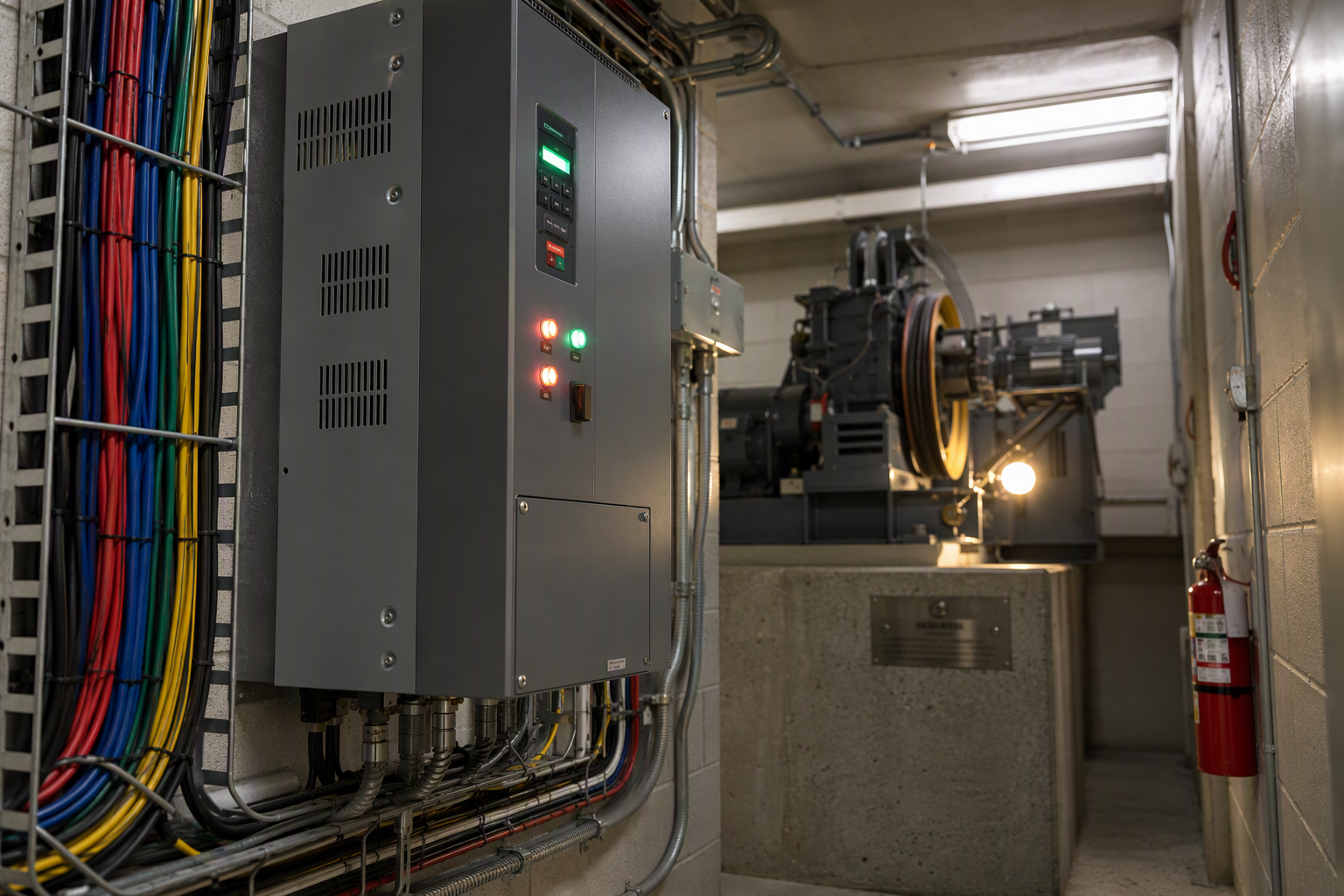
Elevator modernization is the partial or complete replacement of aging elevator components or systems to bring equipment up to current performance, safety, and code standards—it goes well beyond routine maintenance, which addresses day-to-day wear without altering core systems.
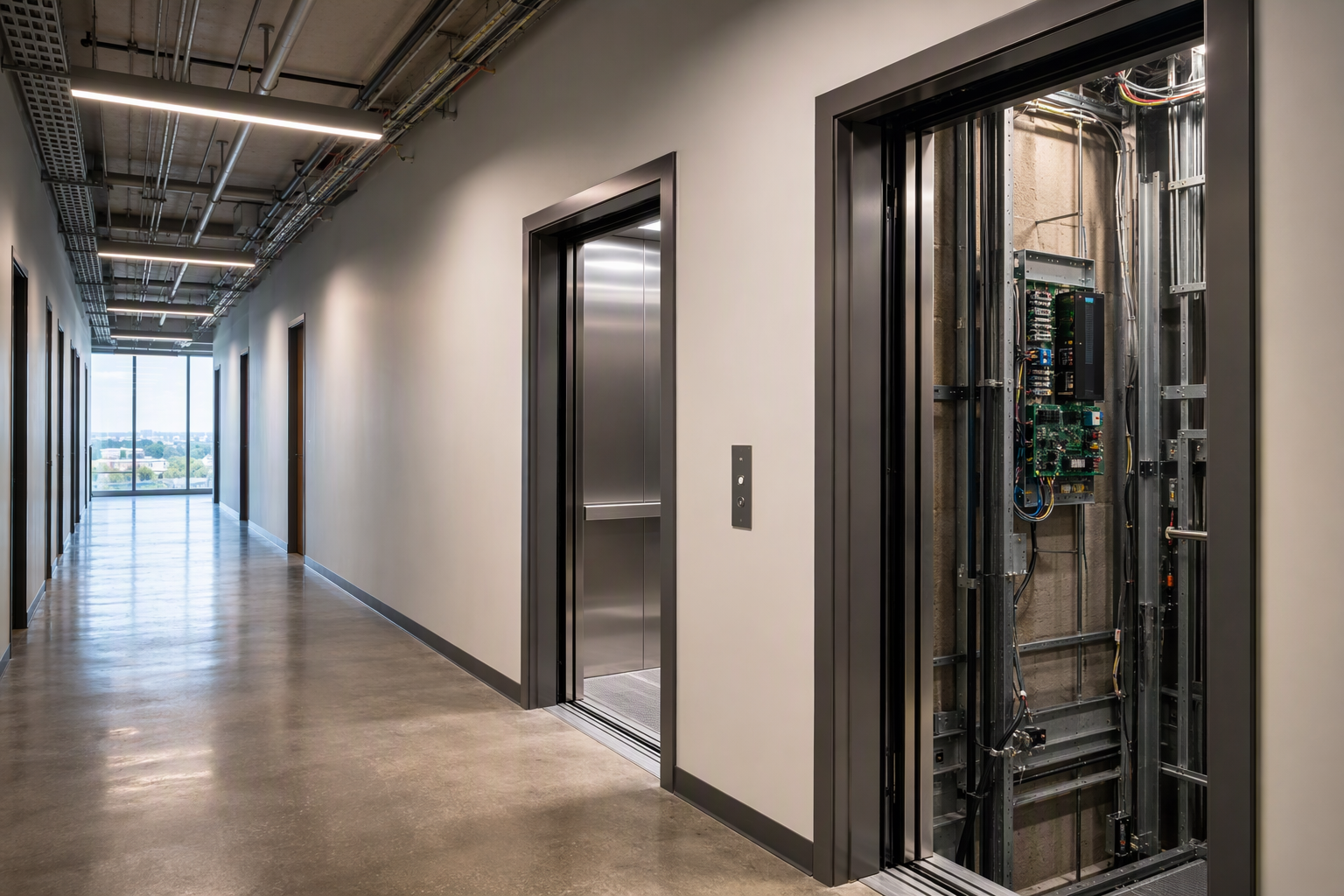
Routine maintenance keeps existing components functioning as designed. Modernization changes what those components are. A modernization project might replace the control system, machine, motor, drive, door operator, cab interior, fixtures, or any combination of these. The scope can be as narrow as a controller swap or as comprehensive as a full cab-to-pit overhaul that touches virtually every major subsystem.
The distinction matters financially because modernization triggers code compliance reviews that maintenance work typically does not. Under ASME A17.3, the Safety Code for Existing Installations, alterations to existing elevators must meet current applicable code provisions for the altered components. In Texas, the Texas Department of Licensing and Regulation (TDLR) requires a registered contractor to submit plans and obtain approval before installation or alteration work begins. In California, Cal/OSHA’s Elevator Unit requires a permit before any material alteration is made to a conveyance—and only a Certified Qualified Conveyance Company (CQCC) may perform that work.
What is the primary factor that drives elevator modernization cost?
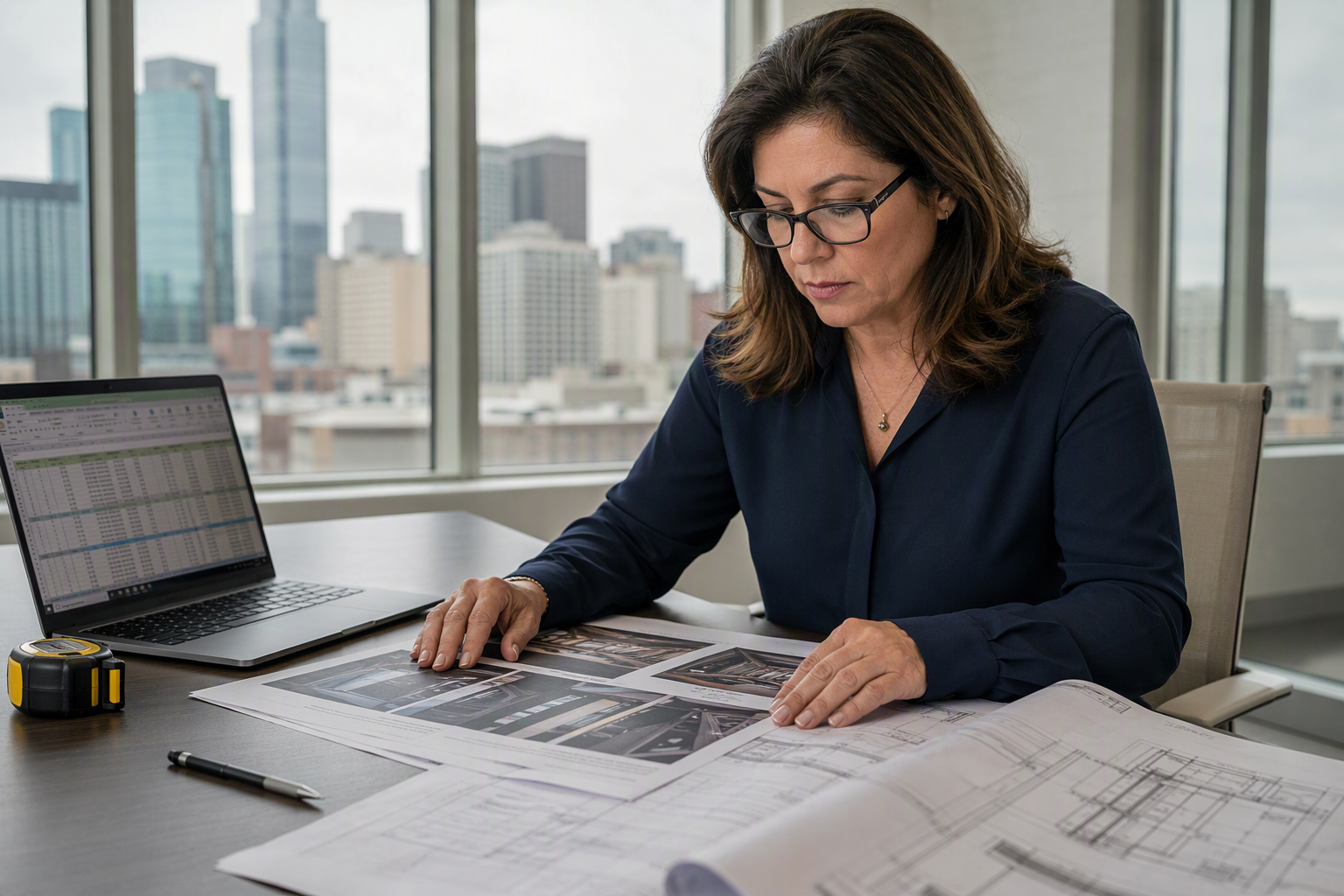
The single greatest cost driver is the scope of modernization—specifically, how many systems must be replaced and whether that replacement requires structural changes to the machine room, hoistway, or pit.
A controller-only modernization on a traction elevator may require one or two weeks of contractor labor and a defined equipment package. A full modernization that replaces the machine, motor, controller, drive, door operator, cabs, and fixtures requires substantially more engineering, equipment, permitting, and installation time—each layer adding to the total. When the hoistway needs rework or the pit does not meet current ASME A17.1 Safety Code for Elevators and Escalators pit depth requirements, costs rise further because structural modifications are not elevator-trade work and often require separate general contractor involvement.
What are the main components typically replaced during modernization, and how do they affect cost?
The major modernization components—controller, drive, machine, door operator, cab interior, and fixtures—each represent distinct cost tiers, and replacing more of them in a single project compounds both material and labor expense.
| Component | Scope Category | Typical Cost Influence | Common Driver for Replacement |
|---|---|---|---|
| Controller / Logic Board | Partial | Moderate | Obsolete parts, control failures, energy inefficiency |
| Variable-Frequency Drive (VFD) | Partial | Moderate | Motor speed control, energy savings mandate |
| Machine and Motor | Major | High | Worn gearing, obsolete technology, noise/vibration |
| Door Operator and Equipment | Partial to Major | Moderate to High | Door safety compliance, entrapment risk |
| Cab Interior and Fixtures | Cosmetic / ADA | Variable | ADA compliance, tenant experience, aesthetics |
| Hydraulic System (cylinders, valves, fluid) | Major | High | Aging single-bottom cylinders, fluid leak risk |
| Pit and Machine Room Upgrades | Structural | High to Very High | Code clearance deficiencies, lighting, GFCI |
| Rope and Sheave Replacement | Partial | Low to Moderate | Wear, stretch, safety factor compliance |
Door-related components deserve particular attention in Texas. Under Texas law, a passenger elevator without working door restrictors must be removed from service immediately—meaning deferred door modernization is not an option once deficiencies are cited. Similarly, non-working Phase One firefighters’ service is also an out-of-service trigger under Texas requirements. These regulatory realities mean that some components effectively cannot be deferred without operational consequences.
How does building age and original installation year affect modernization pricing?
Older installations almost always cost more to modernize because aging infrastructure—outdated wiring, non-standard machine room layouts, obsolete component dimensions—creates compatibility challenges that newer equipment does not present.
A 1960s or 1970s elevator may use relay logic controllers with point-to-point wiring that bears no resemblance to modern solid-state systems. Adapting new equipment to old structural anchors, existing guide rail systems, or non-standard pit dimensions adds engineering time and often requires custom fabrication. The older the unit, the more likely the project team will encounter undocumented field modifications from prior maintenance, which must be assessed and addressed before new equipment is commissioned.
Parts availability compounds the issue: when OEM parts for an older controller or drive are no longer manufactured, the choice becomes retrofitting a modern equivalent or proceeding with a broader scope modernization. Either path adds cost compared to maintaining a relatively current unit.
Does elevator type—hydraulic versus traction—significantly change modernization costs?
Yes, hydraulic and traction elevators involve fundamentally different mechanical systems and therefore different modernization cost profiles, with hydraulic units often requiring significant underground work that adds unpredictable expense.
Traction elevator modernizations are heavily focused on the machine room—controller, machine, motor, drive—and the cab and fixtures. The hoistway infrastructure (rails, brackets) often survives modernization intact if it is in acceptable condition.
Hydraulic elevator modernizations, particularly on older single-bottom cylinder units, frequently involve cylinder replacement or lining, which requires excavation below the pit floor. Environmental considerations around hydraulic fluid—particularly any evidence of past leaks—can escalate costs substantially if remediation is required. Modern hydraulic systems use submersible pump units with above-ground cylinders or holeless designs that eliminate the buried cylinder risk, but converting an older system to a new configuration involves significant structural and mechanical work.
AmeriTex Elevator evaluates both hydraulic and traction systems across its Texas and California markets and can help building owners understand which modernization path delivers the best long-term value for their specific equipment.
How do federal ADA requirements affect modernization cost?
ADA compliance requirements—covering cab dimensions, door timing, control height, signage, and two-way communication—add measurable cost to any modernization that alters covered elements, but non-compliance also exposes building owners to legal and regulatory liability that far exceeds the upgrade cost.
Under the Americans with Disabilities Act (ADA), elevators in buildings subject to the Act must meet accessibility standards covering a range of physical and operational requirements. When a modernization project replaces cab interiors, fixtures, or control panels, those elements must conform to ADA standards as part of the alteration. This typically means adding Braille and raised-character signage, adjusting button heights, ensuring door open times meet accessibility requirements, and verifying that two-way emergency communication systems are functional.
The cab interior portion of a modernization—floor, walls, ceiling, lighting, handrails, mirrors, and fixtures—can range from a modest refresh to a substantial custom build depending on the building’s class and tenant expectations. Class A office properties in markets like downtown Houston or Los Angeles often invest significantly more in cab aesthetics than industrial or multifamily buildings, widening the cost range for this component considerably.
What role does state regulatory compliance play in modernization cost in Texas?
In Texas, state compliance requirements—including TDLR plan approval before work begins, annual inspections, and specific out-of-service mandates—add both hard costs and project timeline considerations that building owners must account for in their modernization budgets.
The Texas Department of Licensing and Regulation (TDLR) oversees elevator safety under Texas Health and Safety Code Chapter 754 and 16 Texas Administrative Code Chapter 74. Texas has adopted the ASME A17.1/CSA B44, 2016 edition, effective November 1, 2018, as its baseline code for elevator installations and alterations.
Before any installation or alteration in Texas, the registered contractor must submit plans to TDLR and obtain approval—a step that introduces lead time into project scheduling. After modernization, the unit requires inspection by a TDLR-registered elevator inspector, and the building owner must obtain a new Certificate of Compliance, which is valid for one year. Texas also requires a Category 5 full-load test every five years on electric traction elevators, a testing cost that modernized traction units will eventually incur regardless of project scope.
An important regulatory distinction applies in Houston: TDLR does not regulate elevators within Houston city limits. The City of Houston operates its own elevator program, and building owners in Houston must work within that local framework rather than the TDLR state program.
What role does state regulatory compliance play in modernization cost in California?
California’s multi-layered oversight structure—Cal/OSHA permits, CQCC contractor certification, annual inspections by credentialed inspectors, and Los Angeles’s separate local program—adds compliance costs and scheduling complexity that must be factored into any California modernization budget.
In California, Cal/OSHA’s Elevator Unit governs elevator safety under California Labor Code Sections 7300–7324.2 and the California Code of Regulations, Title 8, Elevator Safety Orders. A permit from Cal/OSHA is required before a conveyance is materially altered—meaning modernization work cannot legally begin without advance permitting. After modernization, the unit must be inspected by a State of California safety engineer or a Certified Competent Conveyance Inspector (CCCI) before it is returned to service.
Only a Certified Qualified Conveyance Company (CQCC) may perform modernization work in California, and every mechanic working unsupervised must hold a Certified Competent Conveyance Mechanic (CCCM) certification. Companies must hold a C-11 Elevator Contractor license from the California Contractors State License Board (CSLB) and carry required workers’ compensation and liability insurance. This credentialing structure protects building owners but also means that contractor selection in California is governed by verifiable certification requirements—not merely experience claims.
In Los Angeles, the Department of Building and Safety (LADBS) runs its own elevator and conveyance inspection program, which operates separately from the Cal/OSHA state program. Los Angeles building owners should confirm which local requirements apply to their specific modernization project. AmeriTex Elevator operates in the Los Angeles and San Diego markets and can guide owners through California’s regulatory process.
California has proposed a Group V update to its Elevator Safety Orders that would incorporate portions of ASME A17.1-2019; a public hearing was held in June 2026, but no effective date has been posted as of the time of this writing. Building owners planning multi-year modernization programs should monitor this rulemaking, as adopted changes may affect what compliance upgrades are required.
How does the number of floors and stops affect modernization cost?
More floors and more stops directly increase labor hours, wiring and cable length, fixture quantities, and commissioning time—making building height one of the most straightforward cost multipliers in elevator modernization.
A two-stop hydraulic elevator in a low-rise building requires a fraction of the wiring, fewer landing fixtures, less traveling cable, and shorter commissioning time than a fifteen-stop traction elevator in a mid-rise. Every additional stop adds hall call stations, position indicators, door equipment, and associated wiring—costs that compound as building height increases. High-rise buildings with multiple elevators running in group dispatch configurations add further complexity, as modernizing one car in a group may require controller software upgrades across the entire group to maintain coordinated dispatching.
Does modernizing multiple elevators at once reduce per-unit cost?
Modernizing multiple elevators simultaneously—or in closely sequenced phases—generally reduces per-unit cost through shared mobilization, equipment procurement, and project management overhead, though the building must maintain adequate vertical transportation during the process.
Contractors mobilize equipment, supervision, and permitting resources for a project regardless of whether one or four elevators are in scope. When multiple units are modernized under a single contract, fixed project costs are distributed across more equipment, reducing the effective per-unit cost. Equipment procurement also benefits from volume: ordering controllers, drives, or cab packages for multiple units in a single purchase often yields better pricing than individual orders placed at different times.
The practical constraint is building operations. A single-elevator building cannot take its only car out of service without providing alternative accessibility accommodations, which may be required under the ADA. Multi-elevator buildings can phase modernization car by car while keeping others running, but the phasing plan must be engineered carefully to avoid creating unacceptable service gaps—particularly in healthcare, hospitality, or high-traffic commercial environments.
How long does elevator modernization take, and how does timeline affect cost?
Modernization timelines range from a few weeks for targeted component replacements to several months for full system overhauls, and extended outages—particularly in single-elevator buildings—may require temporary accommodations that add indirect cost to the project.
Partial modernizations such as controller or drive replacements can sometimes be executed during nights and weekends to minimize operational disruption, though this approach typically increases labor cost due to premium-time billing. Full modernizations that require machine replacement, cab rebuilding, or structural pit or machine room work are generally executed as planned outages and cannot be condensed into off-hours windows without substantially extending the project calendar.
Permitting lead time is a real factor in both Texas and California. TDLR plan review, Cal/OSHA permit issuance, and local authority processes each carry processing timelines that must be built into the project schedule before construction can begin. Experienced contractors account for these lead times in project planning rather than treating them as surprises.
What is the step-by-step process for executing an elevator modernization project?
A properly executed elevator modernization follows a defined sequence from initial assessment through post-modernization inspection and permit issuance—skipping steps creates compliance risk and potential liability.
- Condition Assessment: A qualified elevator service company conducts a thorough inspection of the existing equipment—controller, machine, drive, door systems, cab, pit, and machine room—to identify deficiencies, obsolete components, and code gaps.
- Scope Definition: Based on the assessment, a detailed scope of work is developed identifying exactly which components will be replaced or upgraded and what code provisions apply to the altered elements under ASME A17.3 and applicable state requirements.
- Permitting and Plan Submission: In Texas, the registered contractor submits plans to TDLR (or the applicable local authority in Houston) before work begins. In California, Cal/OSHA permit applications are filed before any material alteration commences.
- Equipment Procurement: Controllers, drives, machines, door operators, cab packages, and other specified components are ordered with lead times factored into the project schedule.
- Installation and Modernization Work: Certified technicians perform the removal of obsolete equipment and installation of new systems, following approved plans and applicable code requirements. In California, all mechanics must be CCCM-certified working for a CQCC; in Texas, work must be performed by a TDLR-registered contractor.
- Adjusting and Commissioning: New systems are tested, adjusted, and calibrated—including safety device testing, door timing verification, and operational load testing appropriate to the equipment type.
- Post-Modernization Inspection: In Texas, a TDLR-registered elevator inspector conducts the inspection and provides the report within five calendar days. In California, a State safety engineer or CCCI inspects the unit before it is returned to service.
- Permit or Certificate Issuance: Texas building owners obtain a new TDLR Certificate of Compliance. California building owners receive a Cal/OSHA permit to operate, which must be posted conspicuously in the elevator car.
- Documentation and Handover: The contractor provides updated maintenance records, as-built documentation, and any warranty documentation for installed equipment.
What factors can reduce elevator modernization cost without compromising safety?
Strategic scope decisions—phasing work over time, retaining serviceable infrastructure, and bundling projects—can reduce modernization cost, but only when the retained components genuinely meet current code and safety standards.
Retaining components that do not require replacement under the applicable alteration rules—such as sound guide rails in good condition, a structurally adequate machine room, or a recently replaced rope set—reduces equipment and labor cost without compromising the integrity of the modernized system. The key is a thorough, honest condition assessment that distinguishes genuinely serviceable components from those that are simply old but not yet failed.
Phased modernization—addressing the highest-priority systems first and scheduling remaining components in subsequent years—can spread capital outlay over time. However, phasing requires careful planning to ensure the partially modernized elevator remains code-compliant and safe at each intermediate stage. A component left in place during one phase must be evaluated for compatibility with newly installed equipment to avoid creating integration problems.
Competitive bidding among qualified, certified contractors is another legitimate cost management tool. In California, every bidding contractor must hold CQCC certification and a C-11 license—requirements that protect owners while still allowing competitive pricing. In Texas, every contractor must be TDLR-registered. Ensuring bidders meet these requirements before evaluating price protects the building owner from low bids that cannot be legally executed.
How does deferred modernization affect long-term cost compared to proactive investment?
Deferred modernization consistently increases total long-term cost through escalating repair frequency, parts scarcity premiums, compliance violations, potential unplanned outages, and liability exposure—all of which compound as equipment ages further beyond its design service life.
As elevator equipment ages past the point where manufacturers support it with replacement parts, maintenance costs increase because parts must be sourced from secondary markets, custom-fabricated, or adapted from alternative units—all of which carry significant cost premiums and extended lead times. An unplanned major failure that forces emergency modernization typically costs more than a planned project would have, because emergency mobilization, expedited equipment delivery, and rushed permitting all carry premium pricing.
From a regulatory standpoint, deferred compliance corrections carry consequences. In Texas, building owners must have cited violations corrected or under contract for correction within 30 days of inspection, or obtain a waiver or delay from TDLR. An elevator removed from service due to door restrictor or firefighters’ service deficiencies cannot generate revenue or serve building occupants until the deficiency is resolved—a direct financial impact that a proactive modernization would have prevented.
What is the relationship between elevator modernization and energy efficiency savings?
Modern elevator systems—particularly those with variable-frequency drives, regenerative drives, and LED cab lighting—consume significantly less energy than older equipment, and the resulting operational savings contribute meaningfully to the total cost of ownership calculation for modernization projects.
Older traction elevators using single-speed or two-speed AC motors without variable-frequency drives operate at fixed speeds with energy-intensive motor starts and stops, and they dissipate braking energy as heat. Modern VFD-controlled systems modulate motor speed to match demand, reducing energy consumption. Regenerative drive technology goes further by returning braking energy to the building’s electrical grid rather than wasting it as heat—a particularly valuable feature in high-traffic, multi-story buildings.
LED cab lighting replaces fluorescent or incandescent fixtures that run continuously whenever the elevator is in service, reducing lighting energy load substantially over the course of a year. While no specific energy savings figures are presented here without a verifiable source, the directional impact of these upgrades is well-established in elevator engineering practice. Building owners pursuing sustainability certifications or energy benchmarking programs should discuss energy-efficient modernization options with their elevator service provider.
How should building owners evaluate and select an elevator modernization contractor?
Contractor selection for elevator modernization should be based on verified regulatory compliance—proper certification or registration in the applicable jurisdiction—combined with demonstrated project experience, clear scope documentation, and transparent pricing rather than lowest bid alone.
In California, every modernization contractor must hold CQCC certification from Cal/OSHA and a C-11 license from the California Contractors State License Board (CSLB)—these are legally required, not optional credentials. Building owners can verify these certifications before awarding a contract. In Texas, TDLR-registered contractor status is verifiable through the TDLR public registry, and contractors must carry general liability insurance of at least $1,000,000 per occurrence for bodily injury or death and $500,000 per occurrence for property damage.
Beyond credentials, owners should evaluate whether the contractor’s proposal includes a thorough pre-modernization condition assessment, clear scope documentation that identifies which components are included and excluded, a realistic permitting and project schedule, and post-modernization inspection coordination. Vague scopes and unusually low bids often signal that critical work or compliance steps have been omitted—problems that surface only after contract award, when change orders recapture the margin the contractor initially left out.
AmeriTex Elevator serves building owners across Houston, Dallas, Austin, San Antonio, Los Angeles, and San Diego with modernization assessments designed to give owners a clear picture of what their equipment needs, what it will cost, and what compliance steps apply in their specific jurisdiction.
What questions should a building owner ask before signing a modernization contract?
Before signing any modernization contract, building owners should ask specific questions about scope inclusion, regulatory compliance handling, warranty terms, and what happens if unforeseen conditions are discovered during demolition—answers to these questions reveal whether the contractor’s proposal is genuinely complete.
Key questions include: Is permitting included in the contract price, or billed separately? Who is responsible for coordinating the post-modernization inspection? What is the process and cost structure if hidden deficiencies are discovered once old equipment is removed? Are all installed components new OEM or will any refurbished parts be used, and under what warranty? How will the project scope handle ADA compliance requirements for altered elements? What is the payment schedule, and does it align with verifiable project milestones?
A contractor who provides clear, specific answers to these questions before contract award is demonstrating the operational transparency that complex modernization projects require. Evasive or vague answers to any of these questions warrant follow-up or alternative bids.
How does elevator modernization affect property value and tenant retention?
Modernized elevators contribute measurably to property value and tenant retention by reducing service interruptions, improving ride quality and cab appearance, and demonstrating proactive building management—factors that influence lease renewal decisions in competitive commercial markets.
In commercial real estate markets like downtown Houston, Dallas, Austin, Los Angeles, and San Diego, building class and tenant experience are directly linked to lease rates and occupancy levels. An elevator that frequently goes out of service, delivers a rough ride, or presents a worn, dated cab interior signals deferred maintenance to prospective tenants and building inspectors alike. Modernized equipment—particularly when combined with a quality cab interior renovation—repositions the building’s perception and reduces the frequency of service disruptions that directly disrupt tenant operations.
For multifamily properties, elevator reliability is a recurring issue in tenant reviews and lease renewal conversations. Property managers who can demonstrate that elevators have been proactively modernized rather than reactively repaired typically encounter fewer friction points at lease renewal time.
What warranties typically apply to modernized elevator equipment, and how should owners manage them?
Modernized elevator equipment typically carries manufacturer warranties on installed components and contractor workmanship warranties on the installation itself, but owners must understand exactly what each warranty covers and what maintenance obligations are required to keep warranties valid.
Component manufacturers typically warrant new controllers, drives, machines, and door operators against defects in materials and workmanship for defined periods. Contractor workmanship warranties cover the installation quality—proper wiring, alignment, adjustment, and commissioning. These are distinct: a controller that fails due to installation error may be covered under workmanship warranty rather than equipment warranty, depending on the root cause.
Many equipment warranties require that the elevator be maintained under a qualified full-maintenance contract during the warranty period, and some specifically require maintenance by an authorized service provider. Building owners should review warranty terms before finalizing their post-modernization maintenance contract to ensure compliance with any such conditions. In California, a full maintenance contract with a C-11 licensed elevator company also enables building owners to qualify for a two-year permit to operate rather than the standard one-year term—a practical benefit worth noting during contract discussions.
How can AmeriTex Elevator help building owners plan and execute a modernization project?
AmeriTex Elevator provides comprehensive modernization assessments across its Texas and California markets, helping building owners understand current equipment condition, applicable compliance requirements, and the full scope of work needed before any financial commitment is made.
AmeriTex Elevator works with building owners and property managers in Houston, Dallas, Austin, San Antonio, Los Angeles, and San Diego to evaluate existing elevator systems against current ASME A17.1 and A17.3 requirements, applicable state regulations administered by TDLR in Texas and Cal/OSHA in California, and federal ADA accessibility requirements.
A modernization assessment from AmeriTex Elevator identifies which components require replacement, which regulatory steps apply to the specific project and jurisdiction, and what the complete scope of work entails—providing the information building owners need to budget accurately, evaluate contractor proposals, and make informed decisions about timing and phasing.
Need elevator service you can rely on? AmeriTex Elevator is ready to help.