Elevator Maintenance and Safety Requirements for School and University Buildings in Texas and California
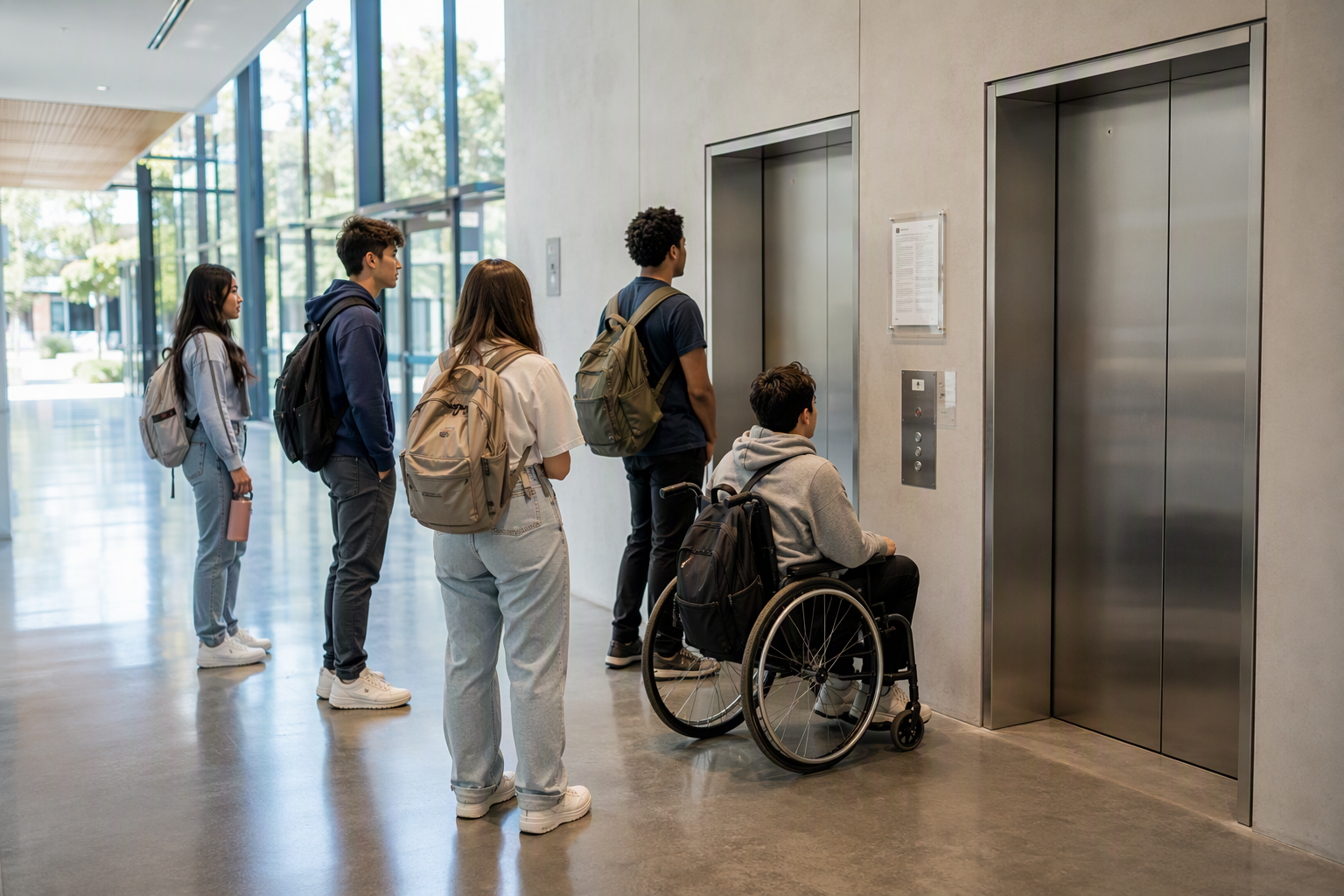
School districts, community colleges, and universities operate some of the most heavily trafficked vertical transportation equipment in any state. Students, faculty, staff, and visitors with disabilities rely on functioning, code-compliant elevators every day. Yet the consequences of a missed inspection or a lapsed permit in an educational setting extend far beyond a regulatory fine — they can mean loss of ADA access, removal from service during peak campus hours, and serious liability exposure. This page compiles the verified regulatory framework governing elevator safety in K–12 schools and higher education facilities across Texas and California, the two states where AmeriTex Elevator provides service.
—
What Are the Core Annual Inspection Requirements for School Elevators in Texas?
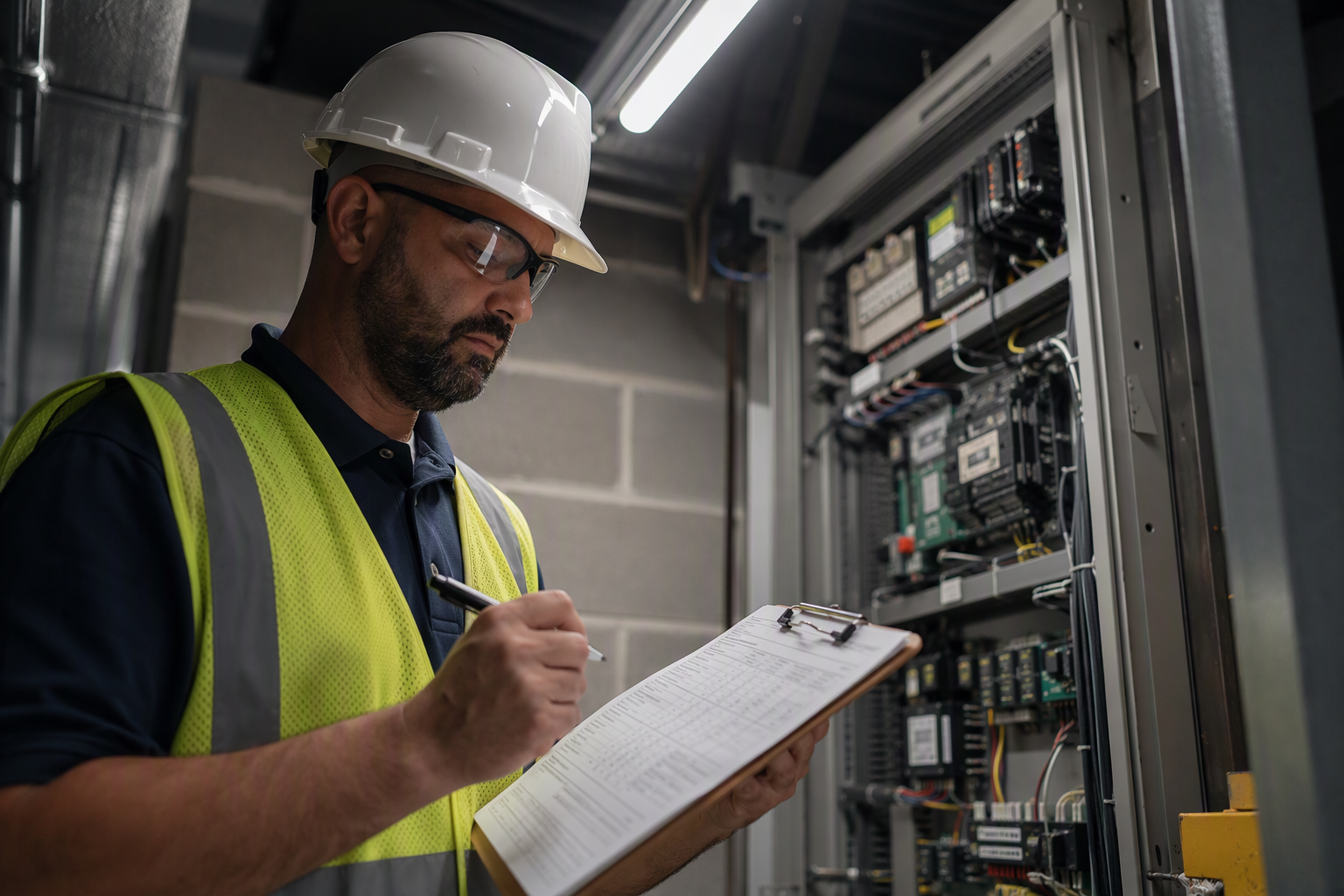
Under Texas Health and Safety Code Chapter 754 and 16 Texas Administrative Code Chapter 74, every building owner — including public school districts and university systems — must have each elevator, escalator, and related conveyance inspected annually by a registered elevator inspector. That inspector must be registered with the Texas Department of Licensing and Regulation (TDLR).
Key procedural requirements that apply to school and university owners in Texas:
- The building owner has the sole right to select the inspector — the inspection is not assigned by TDLR.
- The registered inspector must deliver the written inspection report to the owner within five calendar days of the inspection.
- Owners must obtain a TDLR Certificate of Compliance for each unit of equipment, valid for one year.
- The Certificate of Compliance must be displayed in a publicly visible area of the building.
- Any cited violations must be corrected — or under a signed contract to be corrected — within 30 days of inspection, or the owner must obtain a waiver or delay from TDLR.
- Any elevator accident must be reported to TDLR within 24 hours.
Important immediate removal-from-service triggers in Texas: A passenger elevator without working door restrictors must be taken out of service immediately. Likewise, a passenger elevator without functional firefighters’ service — or with non-working Phase One firefighters’ service — must be removed from service immediately. These rules apply to school buildings just as they do to any other facility.
Note on Houston campuses: TDLR does not regulate elevators or escalators inside Houston city limits. The City of Houston administers its own elevator inspection and compliance program. School districts and universities with buildings in Houston should contact the City of Houston directly to confirm current inspection and compliance requirements.
—
What Are the Annual Inspection Requirements for School Elevators in California?
California’s elevator program is administered by the Division of Occupational Safety and Health (Cal/OSHA), Elevator Unit, California Department of Industrial Relations, under California Labor Code Sections 7300–7324.2 and the California Code of Regulations, Title 8, Elevator Safety Orders (Sections 3000–3146).
For school and university buildings, the law establishes:
- Every conveyance must be inspected at least once per year.
- A conveyance found to be in safe condition receives a permit to operate valid for up to one year.
- Cal/OSHA may issue a permit valid for up to two years when the elevator is in safe condition and is covered by a full maintenance contract with a C-11 licensed elevator company — a meaningful incentive for school districts managing large equipment portfolios.
- The permit to operate must be posted conspicuously inside the elevator car at all times.
- Arranging the annual reinspection is the elevator owner’s responsibility — in educational settings, this typically falls on the district’s facilities or operations department.
- No elevator may be operated in California without a valid, current permit to operate.
Only State of California safety engineers and Certified Competent Conveyance Inspectors (CCCI) are authorized to perform elevator inspections in California. School owners cannot use an uncertified third party for this function.
Note on Los Angeles Unified and other LA campuses: The City of Los Angeles operates its own elevator and conveyance inspection program through the Department of Building and Safety (LADBS). Schools and universities with facilities in Los Angeles should verify compliance requirements directly with LADBS in addition to statewide Cal/OSHA obligations.
—
What Elevator Code Standard Applies to School Buildings in Texas and California?
The foundational national standard is the ASME A17.1/CSA B44 Safety Code for Elevators and Escalators, which establishes design, installation, maintenance, and testing requirements. Both states have formally adopted specific editions of this code:
| State | Adopted Code Edition | Effective Date | Regulating Agency |
|---|---|---|---|
| Texas | ASME A17.1/CSA B44, 2016 edition | November 1, 2018 | TDLR |
| California | ASME A17.1/CSA B44, 2004 edition (Group IV Elevator Safety Orders) | May 1, 2008 (for installations contracted on or after that date) | Cal/OSHA, Elevator Unit |
California has proposed a Group V update to its Elevator Safety Orders that would incorporate portions of ASME A17.1-2019. The California Standards Board held a public hearing on this proposal on June 18, 2026. As of the publication of this page, no effective date has been posted. School facility managers in California should monitor Cal/OSHA’s official page for updates as the rulemaking process advances.
—
What Is the Category 5 Load Test Requirement for Texas School Elevators?
Texas requires a Category 5 full-load test every five years on electric (traction) elevators, as established under 16 Texas Administrative Code Chapter 74. This test verifies the integrity of the elevator’s braking system and safety devices under full rated load conditions. For school districts and universities operating traction elevators — common in multi-story campus buildings — planning for this test requires coordination with a TDLR-registered elevator contractor well in advance of the testing deadline to avoid scheduling conflicts during peak academic periods.
—
Who Is Allowed to Maintain and Repair School Elevators in California?
California law imposes strict licensing and certification requirements on any company or individual who performs elevator work:
- Any company that installs, alters, tests, maintains, repairs, or services elevators in California must be certified by Cal/OSHA as a Certified Qualified Conveyance Company (CQCC).
- To obtain CQCC certification, an applicant must hold a current C-11 Elevator Contractor license issued by the California Contractors State License Board (CSLB), along with proof of workers’ compensation and liability insurance.
- Any individual who works on an elevator in California without direct supervision must hold a Certified Competent Conveyance Mechanic (CCCM) certification issued by Cal/OSHA.
- Only a CCCM working for a CQCC may maintain, repair, alter, or replace components on a conveyance.
- CQCC, CCCM, and conveyance inspector certificates last two years; renewal requires at least eight hours of continuing education.
School districts contracting elevator maintenance should verify that any prospective service company holds a current CQCC certification and that mechanics assigned to campus work hold current CCCM credentials. A lapse in either can expose the district to regulatory liability.
—
Who Is Allowed to Install and Repair School Elevators in Texas?
Under Texas Health and Safety Code Chapter 754 and 16 Texas Administrative Code Chapter 74, no person may install, repair, alter, test, or maintain elevator equipment in Texas without being registered as a contractor with TDLR. Key requirements for Texas elevator contractors include:
- Contractor registrations expire one year after issuance.
- Each contractor must designate one or two responsible parties with at least three years of elevator contractor experience.
- Contractors must carry general liability insurance of at least $1,000,000 per occurrence for bodily injury or death and $500,000 per occurrence for property damage.
- Before installing an elevator or escalator in Texas, the registered contractor must submit plans to TDLR and receive approval — relevant for school districts undertaking new construction or major renovations.
—
What ADA Requirements Apply to School Elevator Accessibility?
All elevators serving school and university buildings that are subject to the Americans with Disabilities Act (ADA) must meet federal accessibility standards. The ADA applies broadly to public schools (as units of state and local government) and to private universities open to the public. Key considerations include:
- Elevators providing access between floors in multi-story school buildings must comply with ADA Standards for Accessible Design, covering car dimensions, door clear widths, call button placement, hall lanterns, Braille and raised character floor designations, and leveling accuracy.
- A non-functioning elevator in an ADA-required accessible route can constitute a program access violation — not merely a maintenance issue — for a school or university.
- Emergency communication devices inside elevator cars must meet ADA communication accessibility requirements. California’s regulatory picture regarding visual and audible two-way communication in elevators is currently unsettled, and school facility managers in California should consult directly with Cal/OSHA and legal counsel as the state’s rulemaking progresses.
—
What Happens Immediately After a School Elevator Fails Inspection?
- Remove the elevator from service if the deficiency triggers an immediate out-of-service requirement under Texas or California law. In Texas, non-functioning door restrictors or failed firefighters’ service require immediate removal from service.
- Notify the facilities or operations department and document the inspection report findings.
- Contact a TDLR-registered contractor (Texas) or CQCC-certified company (California) to assess and remediate the cited deficiencies.
- In Texas, ensure violations are corrected or under contract to be corrected within 30 days, or apply to TDLR for a waiver or delay.
- In California, coordinate with Cal/OSHA to schedule reinspection and permit reinstatement before returning the elevator to service.
- Provide accessible alternative routes to students, faculty, and staff with disabilities for the duration of any outage, to maintain ADA program access compliance.
- Update posted compliance documents — replace or remove the Certificate of Compliance (Texas) or permit to operate (California) as required by the out-of-service status.
- In Texas, report any elevator accident to TDLR within 24 hours if an injury or incident occurred.
—
What Maintenance Practices Are Particularly Important for High-Traffic School Elevators?
Educational buildings present unique maintenance challenges. Academic schedules create predictable surge periods — between classes, at the start and end of the school day, and during peak move-in/move-out periods at universities. Elevators in these environments experience wear patterns that differ from office or residential buildings. While code sets the minimum inspection frequency, best-practice maintenance programs for school and university elevators typically include:
- Regular lubrication and adjustment of door operators, which are among the most common points of failure in high-use environments.
- Documented inspection of safety devices, buffers, and governor mechanisms on an ongoing basis between statutory inspections.
- Proactive monitoring of leveling accuracy, which directly affects wheelchair and mobility device access and is an ADA compliance factor.
- Preventive attention to cab interiors and emergency lighting, which are frequently subject to wear or vandalism in school settings.
- Coordination of maintenance windows during low-traffic periods such as breaks, weekends, or early mornings to minimize disruption to campus operations.
In California, entering into a full maintenance contract with a CQCC-certified company is not only a best practice — it is the condition under which Cal/OSHA may extend a permit to operate to two years rather than one, a meaningful administrative benefit for large school districts managing multiple units across many campuses.
—
What Are the 2025–2026 Industry Trends Affecting School Elevator Compliance in Texas and California?
Several qualitative trends are shaping how school districts and universities approach elevator compliance heading into the 2026 academic cycle:
- Code modernization pressure in California: The proposed Group V update to California’s Elevator Safety Orders, with a public hearing held in June 2026, is creating planning uncertainty for districts considering capital upgrades. Facilities teams are watching the rulemaking process carefully before committing to major retrofit scopes.
- Aging infrastructure in large public school systems: Many school buildings constructed during mid-century enrollment booms contain elevators that are approaching or have exceeded the useful service life typically associated with major component replacement. This is accelerating conversations about modernization versus replacement on a qualitative basis across both states.
- ADA enforcement attention: Federal enforcement activity under the ADA has placed renewed focus on elevator reliability as a program access issue, not just a maintenance matter. Schools with chronic elevator outages face heightened scrutiny.
- Remote monitoring adoption: More educational facility managers are exploring connected monitoring systems that provide real-time data on elevator performance, allowing maintenance issues to be identified and addressed before they trigger inspection failures or outages.
- Contractor registration compliance: Both TDLR in Texas and Cal/OSHA in California have emphasized registration and certification compliance in recent years. Schools that cannot verify contractor credentials are increasingly exposed to regulatory liability if an unregistered company performs work on campus elevators.
—
Does Texas or California Law Treat School Elevators Differently From Commercial Elevators?
Neither Texas nor California creates a separate regulatory tier specifically for educational institutions. Public schools and universities are subject to the same annual inspection requirements, certificate and permit obligations, contractor registration rules, and code standards as any other building owner. The practical distinctions are operational — the high occupancy, predictable peak-load patterns, and ADA obligations of educational facilities make compliance planning more complex, but the legal framework is the same.
One relevant Texas exemption: the Texas elevator law does not apply to equipment in buildings owned and operated by the federal government. This could affect elevators in federally operated educational facilities, but not state universities or local school districts.
—
How Can School Districts and Universities Manage Multi-Campus Elevator Compliance Efficiently?
For organizations operating elevators across multiple buildings or campuses, compliance management is as much an administrative challenge as a technical one. Effective approaches used in educational settings typically involve:
- Maintaining a centralized equipment registry that tracks inspection dates, permit or certificate expiration dates, and maintenance history for every unit across every building.
- Scheduling inspections across the portfolio in staggered cycles to avoid year-end bottlenecks, particularly in Texas where the one-year Certificate of Compliance expiration is tied to the inspection date.
- Partnering with a single qualified elevator service company capable of covering all campus locations, reducing coordination overhead and ensuring consistent documentation standards.
- Building elevator compliance review into capital planning cycles so that aging equipment is identified before it becomes an emergency.
AmeriTex Elevator works with educational facility operators in Texas and California as a data-driven service provider, helping campuses track regulatory deadlines, maintain documentation, and coordinate inspections and maintenance across complex multi-building portfolios. AmeriTex operates only in Texas and California and is positioned to navigate the specific regulatory environments of both states.
—
What Should Schools Look For When Selecting an Elevator Service Contractor?
Given the contractor qualification requirements in both states, schools and universities should verify the following before engaging any elevator service company:
In Texas:
- Confirm the company is registered as an elevator contractor with TDLR and that the registration is current.
- Confirm the company carries the required general liability insurance minimums.
- For Houston campuses, confirm the company is qualified under the City of Houston’s separate program.
In California:
- Confirm the company holds a current Cal/OSHA CQCC certification.
- Confirm the company holds a current C-11 Elevator Contractor license from the California Contractors State License Board.
- Confirm that individual mechanics assigned to campus work hold current CCCM certification.
In both states, a contract that includes a full preventive maintenance program — not just break-fix response — is the foundation of sustainable elevator compliance for educational facilities.
—
Summary: Key Compliance Checkpoints for Texas and California School Elevator Owners
| Requirement | Texas | California |
|---|---|---|
| Regulating Agency | TDLR | Cal/OSHA, Elevator Unit |
| Inspection Frequency | Annually | At least annually |
| Compliance Document | Certificate of Compliance (1-year validity) | Permit to Operate (up to 1 year; up to 2 years with full maintenance contract) |
| Document Display | Publicly visible area of building | Conspicuously inside elevator car |
| Adopted Code | ASME A17.1-2016 | ASME A17.1-2004 (Group IV) |
| Periodic Load Test | Category 5 every 5 years (traction elevators) | Per ASME A17.1-2004 requirements |
| Contractor Requirement | TDLR-registered contractor | CQCC-certified company; C-11 license |
| Mechanic Requirement | Employee of registered contractor | CCCM-certified; working for CQCC |
| Violation Correction Window | 30 days or waiver from TDLR | Coordinate with Cal/OSHA |
| Accident Reporting | Within 24 hours to TDLR | Per Cal/OSHA requirements |
| Local Program Exception | City of Houston (own program) | City of Los Angeles / LADBS (own program) |
| Federal ADA Requirements | ADA Standards for Accessible Design | ADA Standards for Accessible Design |
—
Get a Free Elevator Assessment for Your School or University Campus
Elevator compliance in Texas and California is non-negotiable for educational institutions — and the regulatory details are demanding. AmeriTex Elevator helps school districts and universities navigate annual inspection requirements, contractor credential verification, multi-campus compliance tracking, and maintenance programs designed around the unique demands of educational facilities. Serving Texas and California exclusively, AmeriTex brings focused, state-specific expertise to every campus assessment.
Contact AmeriTex Elevator for a free elevator assessment: 866-679-4313
Need elevator service you can rely on? AmeriTex Elevator is ready to help.