Elevator Modernization & Repair Financing: What Qualifies and How It Works
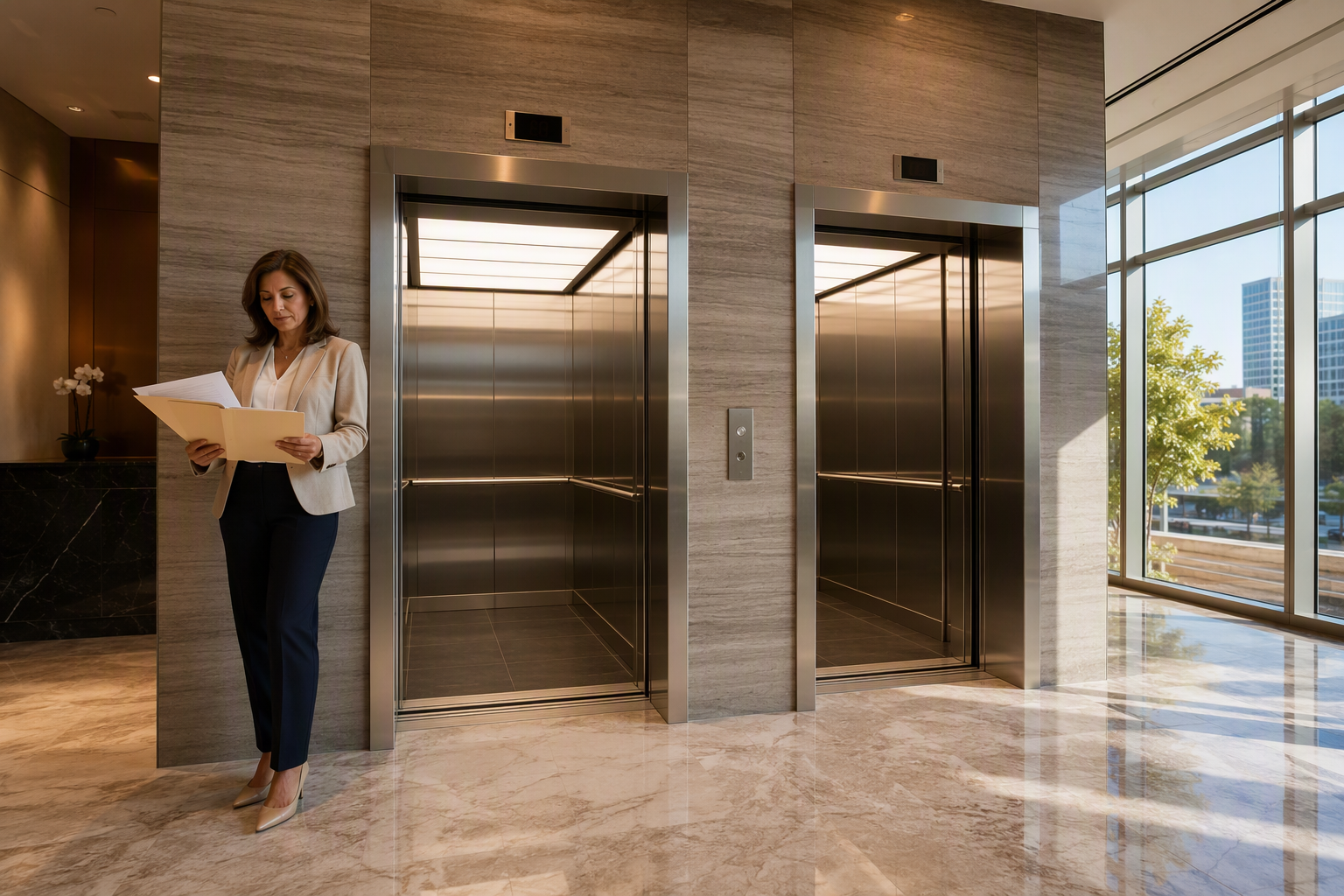
For building owners and property managers in California and Texas, elevator modernization is rarely optional. California’s Cal/OSHA Elevator Unit and the Texas Department of Licensing and Regulation (TDLR) Elevator and Escalator Safety program both enforce annual inspection and compliance cycles that can surface repair or upgrade obligations on short timelines. Understanding which projects qualify for financing — and how financing actually works — helps owners address compliance without destabilizing their capital budgets.
AmeriTex Elevator works with building owners across California and Texas to assess equipment condition, scope modernization work, and connect clients with financing pathways that align project cost with long-term asset value.
Which Elevator Projects Typically Qualify for Financing?
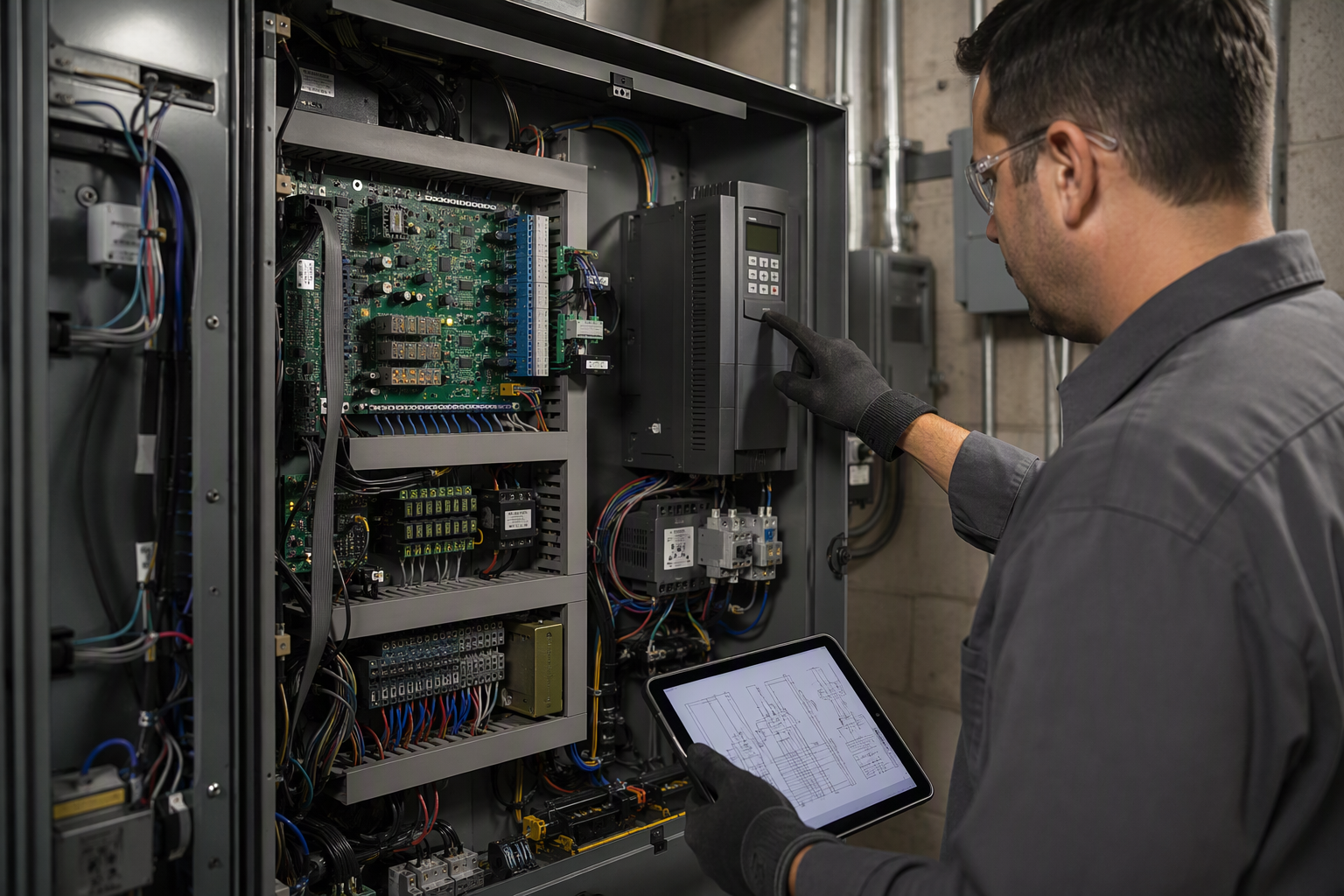
Lenders and equipment finance companies evaluate elevator projects primarily on asset life, loan-to-value ratios, and the borrower’s creditworthiness — not on the specific component being upgraded. As a result, a broad range of modernization and repair scopes are routinely financed. Qualifying project types generally fall into these categories:
- Control system and drive modernizations: Replacing legacy relay-logic controls with solid-state or microprocessor-based systems, upgrading variable-frequency drives (VFDs), and installing new dispatching software.
- Safety code compliance upgrades: Work required to resolve violations cited during annual inspections in California or Texas, including door operator replacements, door restrictor installations, and firefighters’ service upgrades. In Texas, for example, a passenger elevator without working door restrictors or without functioning Phase One firefighters’ service must be removed from service immediately under 16 Texas Administrative Code Chapter 74 — making financing for these repairs time-sensitive.
- ADA compliance retrofits: Cab modifications, button panel replacements, audible and visual signaling upgrades, and landing call station improvements to meet Americans with Disabilities Act accessibility standards.
- Cab and interior renovations: Flooring, wall panel, ceiling, lighting, and handrail replacements that extend asset life and improve tenant experience.
- Machine room and hoist way upgrades: Machine replacement (traction or hydraulic), sheave and rope replacement, guide rail upgrades, and pit and overhead modifications.
- Full elevator replacements: End-of-life equipment requiring complete removal and reinstallation, which typically represents the largest project scope and the strongest case for long-term financing.
- Hydraulic system modernizations: Tank and pump unit replacements, environmentally compliant fluid upgrades, and underground cylinder repairs or replacements.
- Five-year Category 5 load test compliance (Texas): Texas requires a Category 5 full-load test every five years on electric traction elevators. Work required as a result of that test — including buffer replacements, safety device upgrades, or governor replacements — is eligible for financing in the same way as other corrective repair projects.
Projects that are purely cosmetic with minimal life-cycle benefit may face stricter lender scrutiny, but most work with a demonstrable compliance, safety, or longevity rationale will qualify.
How Does Elevator Financing Actually Work?
Elevator financing functions similarly to equipment financing in other capital-intensive industries. The core mechanism involves a third-party lender — typically a bank, credit union, or specialty equipment finance company — advancing the project cost directly to the contractor (or to the building owner for reimbursement), which the borrower then repays over an agreed term with interest.
The most common structures building owners encounter are:
- Equipment loans: The building owner borrows a lump sum, repays it in fixed monthly installments over a set term (commonly 24 to 84 months), and retains ownership of the equipment throughout. Interest accrues on the outstanding principal balance.
- Equipment leases (capital or finance leases): The finance company technically owns the equipment during the lease term; the building owner makes scheduled payments and typically has a purchase option at term end (often for a nominal amount). This structure can offer accounting and tax treatment advantages depending on the owner’s situation — a qualified accountant should be consulted.
- Operating leases: Less common for elevator work because elevators are fixed to the building, but occasionally used for specific components (such as a new controller) where the lender retains the right to reclaim the asset.
- Lines of credit: Some building owners with existing commercial credit facilities draw on a revolving line of credit for elevator projects, treating the draw as a short-term obligation to be repaid or rolled into a term structure.
Lenders underwrite elevator financing based on the building owner’s or property entity’s credit profile, the project’s total cost, the projected remaining useful life of the modernized equipment, and — in commercial real estate contexts — the property’s income and occupancy. For condominium associations and HOAs, lenders may also evaluate the association’s reserve fund status and assessment history.
What Are the Steps to Secure Elevator Modernization Financing?
- Obtain a detailed written scope and project estimate. Lenders require a clear project description and cost breakdown. AmeriTex Elevator provides written assessments that document existing equipment condition, required work, and projected scope — documentation lenders need to underwrite the loan.
- Determine the financing amount needed. Separate hard costs (equipment, labor, permits) from soft costs (engineering, inspection fees). Some lenders will finance soft costs; others will not.
- Gather financial documentation. For commercial properties, this typically includes recent tax returns or financial statements, rent rolls, and existing debt schedules. For HOAs and condo associations, lenders often require reserve fund studies and meeting minutes authorizing the project.
- Apply to one or more lenders or work with a broker. Equipment finance companies, community banks, credit unions, and SBA-approved lenders all serve this market. An equipment finance broker can submit to multiple sources simultaneously.
- Review and compare term sheets. Key variables are interest rate (fixed vs. variable), loan term, prepayment penalties, security requirements (UCC filing on equipment, personal guarantee, or real property lien), and any fee structure.
- Close the loan and authorize the project. Once financing is in place, the contractor can be formally engaged, permits applied for, and scheduling confirmed.
- Manage compliance milestones during the project. In California, a permit from Cal/OSHA is required before a conveyance is materially altered. In Texas, the registered contractor must submit plans to TDLR and obtain approval before installation begins. These milestones affect project timelines and should be factored into draw schedules.
- Final inspection and permit or certificate issuance. In California, new installations and major alterations require Cal/OSHA inspection and a permit to operate before the elevator returns to service. In Texas, owners must obtain a TDLR Certificate of Compliance, valid for one year, and display it in a publicly visible area of the building.
Does Elevator Code Compliance Affect Financing Eligibility?
Code compliance status can affect both the urgency and the structure of financing, though it does not automatically disqualify a project. In many cases, the existence of an open violation or an equipment removal-from-service order strengthens the business case for expedited financing because the cost of non-operation — lost rental income, ADA liability, tenant complaints — is concrete and immediate.
Lenders focused on equipment value generally prefer projects where the modernized elevator will be compliant and operational at loan close, since a non-operational or non-compliant asset is a weaker collateral position. Building owners dealing with active violations should communicate the compliance timeline clearly to prospective lenders and confirm that the contractor’s scope explicitly addresses all cited deficiencies.
In California, only a Certified Qualified Conveyance Company (CQCC) — a company certified by Cal/OSHA holding a C-11 Elevator Contractor license issued by the California Contractors State License Board — may perform this work. In Texas, a person may not install, repair, alter, test, or maintain elevator equipment without registering as a contractor with TDLR. Lenders may ask for confirmation that the contractor meets these requirements before funding.
What Role Does ADA Compliance Play in Financing Decisions?
The Americans with Disabilities Act creates ongoing legal obligations for public accommodations and commercial facilities to maintain accessible elevators. When an elevator is out of service or non-compliant with ADA requirements, the property owner may face both discrimination complaints and civil litigation exposure.
Because ADA compliance deficiencies create identifiable legal and financial risk, lenders often view ADA-driven modernization projects favorably — the risk of not financing the project (continued litigation exposure) is quantifiable in a way that pure cosmetic upgrades are not. ADA-related scope commonly financed includes tactile and Braille button panel replacements, audible and visual floor indicators, cab dimensional modifications, and door timing adjustments.
What Are Typical Loan Terms for Elevator Projects?
Loan terms vary by lender, project size, and borrower profile. Without attributing specific rates — which change with market conditions and are borrower-specific — the structural parameters that are broadly consistent in the equipment finance market are:
- Loan terms: Shorter projects (component replacements, control upgrades) are often financed over 24–60 months. Full replacements or large-scale modernizations may be structured over 60–84 months to reduce monthly payment burden.
- Fixed vs. variable rates: Many equipment finance products offer fixed-rate structures, which give building owners predictable monthly costs that can be incorporated into operating budgets or HOA assessments.
- Down payment requirements: Some lenders require a down payment (commonly 10–20% of project cost); others offer 100% financing for well-qualified borrowers. Soft cost inclusion varies.
- Collateral: Equipment loans are typically secured by a UCC-1 financing statement filed against the elevator equipment. Larger projects or weaker credit profiles may require a personal guarantee or a lien on the real property.
- Minimum project size: Many specialty equipment lenders have minimum transaction thresholds; smaller repair projects may be better suited to a commercial line of credit or a home equity product (for smaller residential buildings).
How Do HOAs and Condominium Associations Finance Elevator Modernization?
Homeowners associations and condominium associations face a distinct financing challenge: they cannot pledge individual units as collateral without homeowner consent, and they may lack the reserve funds to cover large modernization projects out of pocket.
Common approaches for associations include:
- Special assessment financing: The association levies a special assessment on unit owners and uses a short-term loan to fund the project immediately, repaying the loan as assessments are collected. This avoids delaying the project while collections occur.
- Reserve loan or line of credit: Community association lenders (including several national banks with dedicated HOA lending divisions) offer unsecured or assessment-secured credit lines specifically for capital projects.
- Operating budget reprogramming: For smaller repairs, some associations absorb costs over one or two fiscal years without separate financing, though this approach requires adequate cash reserves.
Lenders underwriting HOA elevator loans typically review the reserve study, delinquency rate, existing debt, and whether the board has properly authorized the project in recorded meeting minutes. A well-maintained reserve fund study that documents the elevator’s projected replacement cost strengthens the association’s financing position significantly.
Are There Tax or Incentive Programs That Reduce the Net Cost of Elevator Modernization?
While specific incentive availability changes frequently and requires consultation with a qualified tax professional, several federal and state-level mechanisms are worth understanding in general terms:
- Section 179 of the Internal Revenue Code: Allows businesses to deduct the full cost of qualifying equipment in the year it is placed in service, rather than depreciating it over multiple years. Elevator equipment placed in service in a commercial building may qualify. A CPA should confirm applicability for each situation.
- Bonus depreciation: Federal tax law has provided additional first-year bonus depreciation for qualifying property; the applicable percentage and phase-down schedule should be confirmed with a tax advisor for the current tax year.
- ADA tax credit for small businesses: The IRS Disabled Access Credit (Form 8826) provides eligible small businesses a tax credit for costs incurred to make facilities accessible under the ADA. Elevator accessibility improvements may qualify. IRS guidelines and income thresholds apply.
- Utility and energy efficiency programs: Modernizations that include regenerative drives or energy-efficient motor systems may qualify for utility rebate programs offered by California or Texas utilities. Program availability, eligibility, and rebate amounts vary by utility and change annually — direct inquiry to the relevant utility is required.
None of these mechanisms are guaranteed to apply in every situation, and this page does not constitute tax or legal advice. Building owners should work with qualified professionals to evaluate which incentives are available for a specific project in a specific tax year.
How Do California and Texas Compliance Timelines Affect Financing Urgency?
Both California and Texas create compliance timelines that can convert a discretionary modernization into an urgent, time-sensitive project:
In California: Every conveyance must be inspected at least once per year, and arranging the annual reinspection is the elevator owner’s responsibility. A permit to operate — which must be posted conspicuously in the elevator car — is required for the elevator to remain in service. If Cal/OSHA determines during inspection that equipment is unsafe, the permit may be withheld or revoked, and the elevator must be taken out of service. Owners who delay financing for required repairs risk extended downtime and potential liability.
In Texas: Texas building owners must have cited violations corrected — or under contract to be corrected — within 30 days of the inspection, or obtain a waiver or delay from TDLR. In cases involving door restrictors or firefighters’ service, the elevator must be removed from service immediately. The TDLR Certificate of Compliance must be renewed annually. These compressed timelines make pre-arranged financing capacity — or a lender relationship established before a violation is cited — a meaningful risk management tool for Texas property owners.
Note: The City of Houston operates its own elevator program; TDLR does not regulate elevators or escalators within Houston city limits. Houston building owners should contact the City of Houston directly for compliance requirements specific to their jurisdiction.
What Should Building Owners Look for When Choosing an Elevator Contractor for a Financed Project?
When a project is financed, the contractor’s regulatory standing, scope documentation, and permitting competency become more important — because lenders, inspectors, and regulators all have visibility into the project outcome.
Key contractor qualifications to verify:
- In California: Confirm the company holds Certified Qualified Conveyance Company (CQCC) certification from Cal/OSHA and a C-11 Elevator Contractor license from the California Contractors State License Board. Only mechanics certified by Cal/OSHA as Certified Competent Conveyance Mechanics (CCCM) may perform the work without direct supervision.
- In Texas: Confirm the contractor is registered with TDLR as an elevator contractor and carries the required general liability insurance ($1,000,000 per occurrence for bodily injury or death; $500,000 per occurrence for property damage, per 16 Texas Administrative Code Chapter 74).
- Written scope and specifications: A detailed written scope is essential for lender underwriting and for establishing the baseline against which the final inspection will be evaluated.
- Permitting experience: The contractor should be familiar with the permit application and plan review processes in the applicable jurisdiction, including TDLR plan submission in Texas or Cal/OSHA permit requirements in California.
- Warranty terms: Financed projects typically span multiple years of repayment. Understanding parts and labor warranty coverage relative to the loan term matters.
AmeriTex Elevator operates in California and Texas, providing project assessments, scope development, and modernization services with the regulatory standing required in both states. AmeriTex works to ensure that the documentation lenders, inspectors, and regulators require is in order from project inception through final permit issuance.
What Are the Industry Trends Shaping Elevator Modernization Financing in 2025–2026?
Several qualitative trends are shaping how building owners approach elevator modernization financing heading into 2026:
- Tightening code enforcement cycles: Both California and Texas have strengthened inspection and compliance enforcement in recent years. As regulators increase scrutiny of aging elevator fleets, the population of building owners facing compliance-driven (rather than elective) modernizations is growing — driving demand for financing solutions that can be deployed quickly.
- Rising equipment and labor costs: Supply chain pressures on elevator components — particularly semiconductors used in modern control systems — and labor market conditions for qualified elevator mechanics have increased project costs qualitatively across the industry. Higher project costs reinforce the case for financing rather than cash expenditure.
- Energy efficiency as a modernization driver: Regenerative drive technology, LED lighting conversions, and standby mode controls are increasingly included in modernization scopes — both because they reduce operating costs and because they may improve access to utility incentives. Lenders familiar with energy efficiency financing are more often seeing elevator projects in their pipelines.
- ESG and sustainability reporting pressure: For institutional commercial real estate owners, elevator energy efficiency and ADA compliance increasingly appear in sustainability and governance reporting frameworks. This creates an organizational motivation — beyond pure compliance — to modernize and document improvements.
- California’s proposed Group V code update: California has proposed a Group V update to its Elevator Safety Orders that would incorporate portions of ASME A17.1-2019. The Standards Board held a public hearing on June 18, 2026, and no effective date has been posted. If adopted, this update could create new compliance obligations for equipment installed under the current 2004 edition — making proactive modernization planning and financing now a strategic hedge for California building owners.
- Growth of HOA-specific lending products: Community association lenders have expanded product availability for capital improvement projects, including elevators. As more multi-family buildings built in the 1980s and 1990s enter the phase of major equipment replacement, HOA elevator financing is becoming a recognized product category rather than a specialty transaction.
What ASME Standards Govern Elevator Modernization Work?
The foundational code governing elevator design, installation, operation, and maintenance in both California and Texas is the ASME A17.1/CSA B44 Safety Code for Elevators and Escalators. California has adopted the 2004 edition (effective May 1, 2008, for installation contracts signed on or after that date) under Title 8, California Code of Regulations, Elevator Safety Orders. Texas has adopted the 2016 edition, as amended by 16 Texas Administrative Code Chapter 74, effective November 1, 2018.
The edition of ASME A17.1 in effect at the time of installation governs the original installation. When modernization work is performed, the applicable rules under ASME A17.3 (Safety Code for Existing Elevators and Escalators) and the state-adopted edition of A17.1 determine what must be brought into compliance as part of the alteration scope. This distinction matters for financing because the scope of required upgrades can expand depending on how extensive the modernization is — owners should confirm the full compliance scope before finalizing a loan amount.
Additionally, OSHA standards apply to worker safety during elevator construction and maintenance work. Contractors working on financed modernization projects in California and Texas must comply with applicable OSHA requirements throughout the project.
How Quickly Can Elevator Financing Be Arranged?
Financing timelines depend on lender type and loan complexity. Equipment finance companies specializing in commercial elevator projects can often provide credit decisions within a few business days for straightforward applications with complete documentation. More complex transactions — large project costs, HOA borrowers, or borrowers requiring detailed financial underwriting — may take several weeks from application to funding.
The most common delay in elevator financing is incomplete documentation at application: missing financial statements, an insufficiently detailed project scope, or the absence of board authorization for HOA projects. Building owners who anticipate a major modernization project — particularly in Texas, where violations must be corrected or under contract within 30 days of inspection — benefit from establishing a lender relationship and having documentation ready before an inspection cycle creates an urgent timeline.
AmeriTex Elevator’s project assessment process is designed to produce the scope documentation that supports both regulatory permitting and lender underwriting, helping owners move from assessment to application as efficiently as possible.
Contact AmeriTex Elevator for a Free Elevator Assessment
Building owners and property managers in California and Texas who are evaluating elevator modernization, facing compliance violations, or planning a major repair project can benefit from a professional assessment that documents equipment condition, outlines required and recommended scope, and produces the written specification lenders and regulators require.
AmeriTex Elevator provides free elevator assessments to help owners understand their equipment’s condition, their compliance obligations under California and Texas law, and the project scope that financing will need to support.
Contact AmeriTex Elevator for a free elevator assessment: 866-679-4313
This page is provided for general informational purposes regarding elevator modernization financing structures and regulatory context in California and Texas. It does not constitute legal, tax, financial, or engineering advice. Building owners should consult qualified legal counsel, tax advisors, licensed contractors, and their state elevator regulatory authority for guidance specific to their equipment and jurisdiction.
Need elevator service you can rely on? AmeriTex Elevator is ready to help.