Commercial Elevator Maintenance for Healthcare Facilities
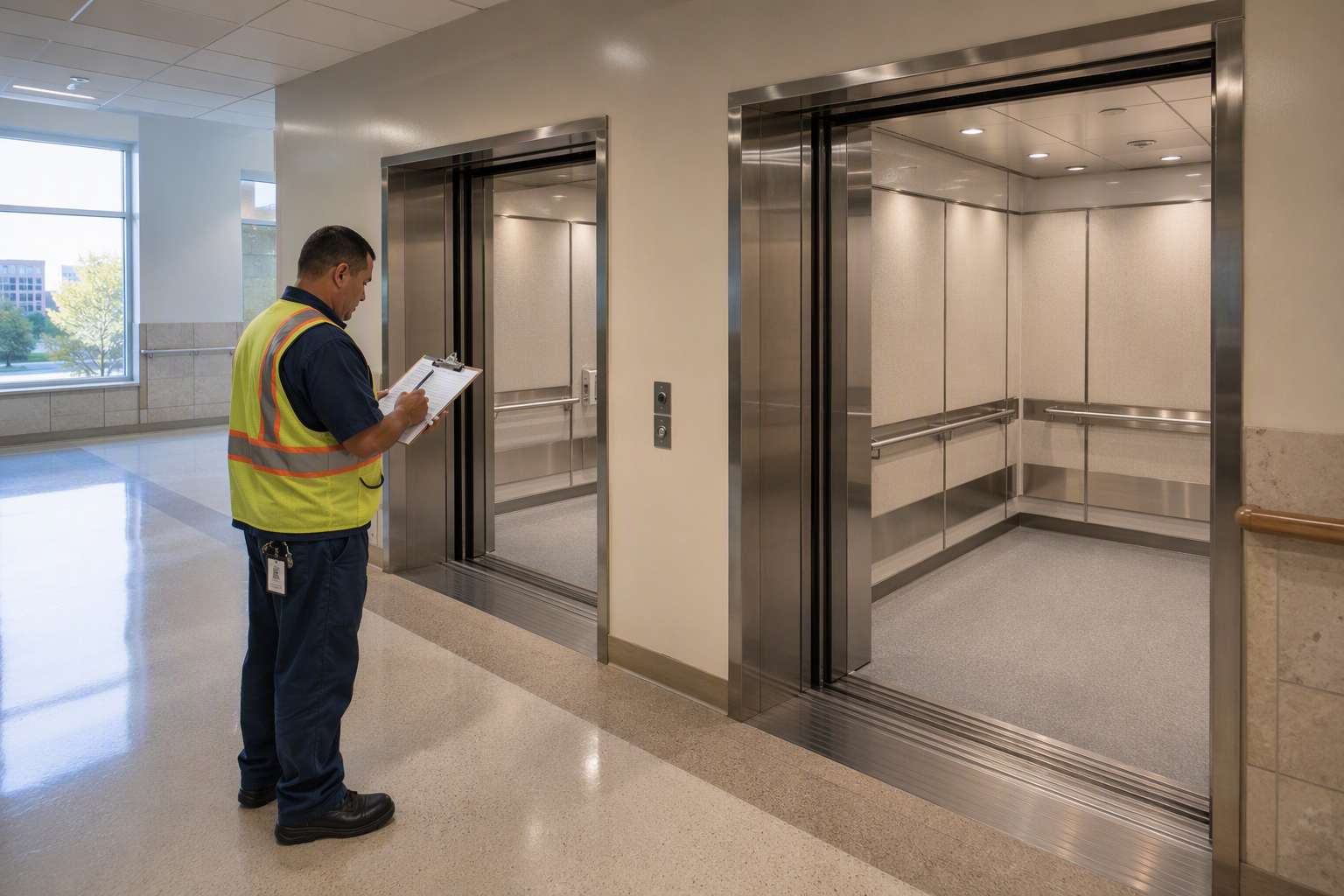
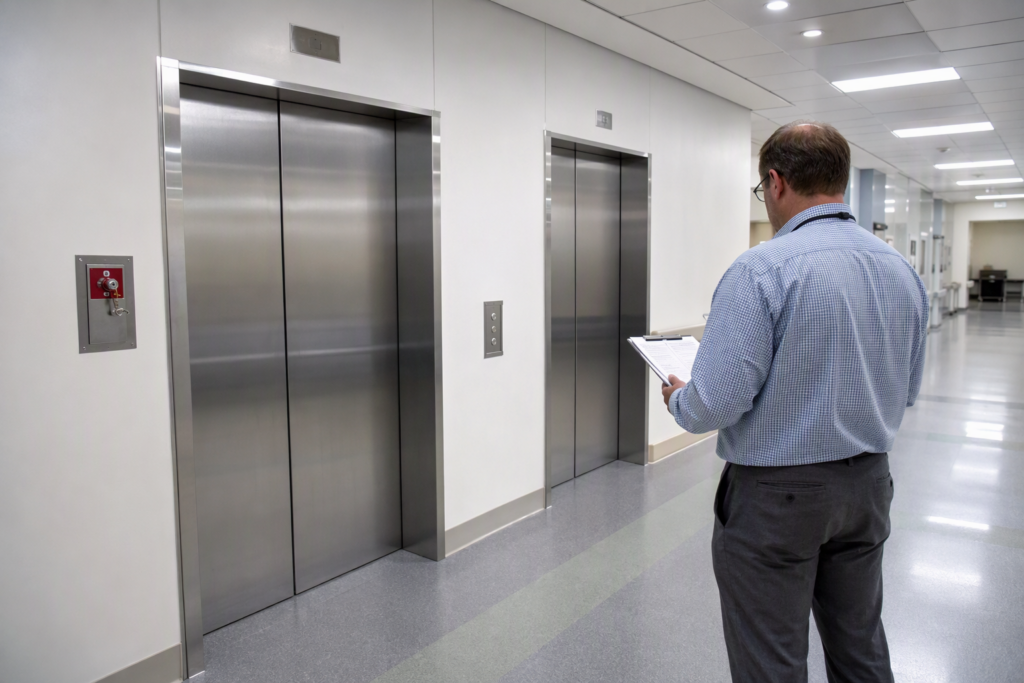
Healthcare facilities depend on elevators more than almost any other building type. Patients on gurneys, medical equipment on carts, clinical staff moving between floors, and visitors navigating multi-story hospitals all rely on elevators that are safe, accessible, and consistently operational. Commercial elevator maintenance in this sector is not optional — it is a regulatory obligation and a patient safety imperative. AmeriTex Elevator provides certified elevator maintenance services across Houston, Dallas, Austin, San Antonio, Los Angeles, and San Diego to keep healthcare vertical transportation systems compliant and reliable in 2026 and beyond.
Why Is Commercial Elevator Maintenance Different in Healthcare Settings?
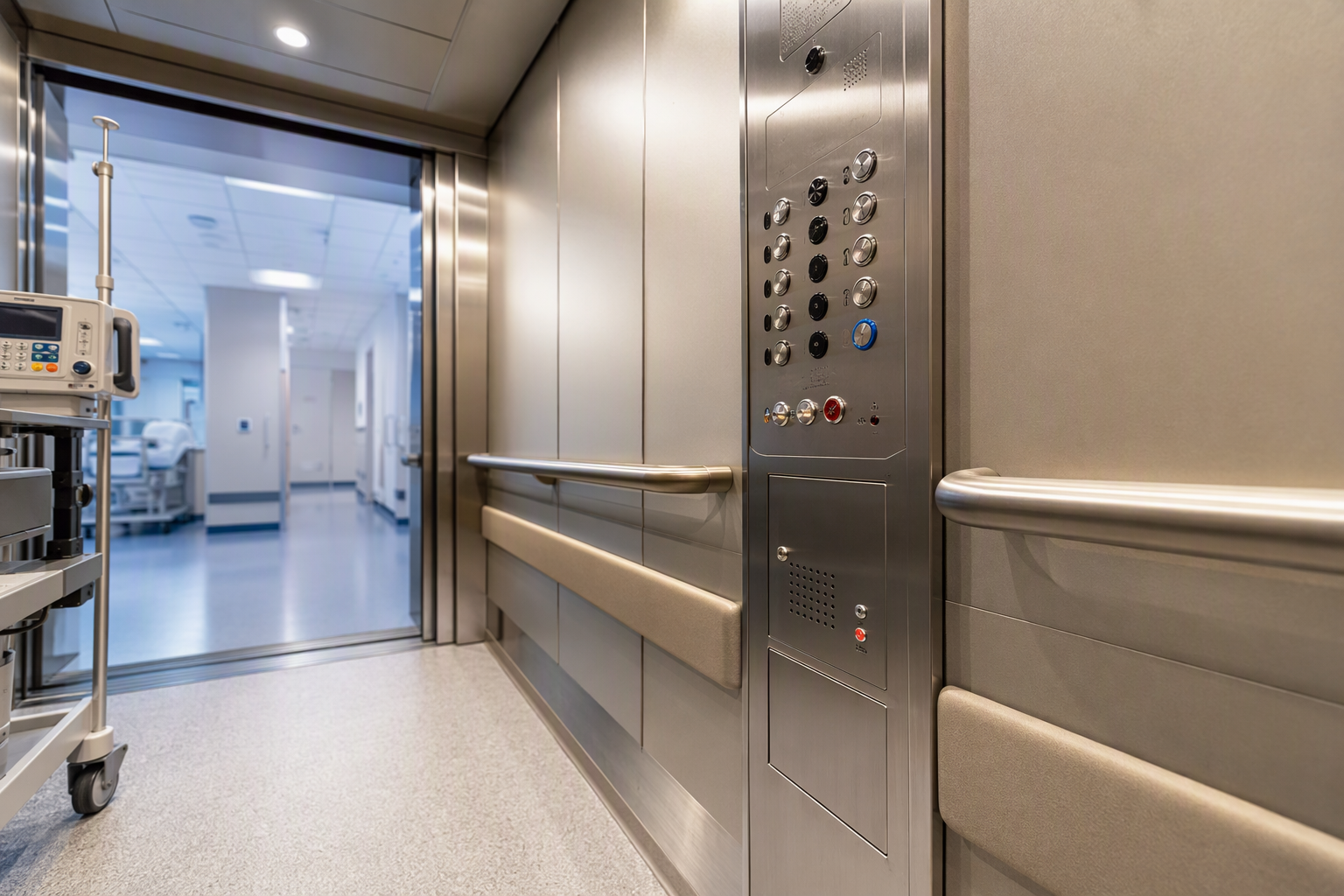
Healthcare environments place unique demands on elevator systems. Elevators in hospitals, outpatient surgery centers, medical office buildings, skilled nursing facilities, and clinics must accommodate:
- Oversized, heavy-duty cab loads including hospital beds, imaging equipment, and supply carts
- Continuous multi-shift operation, often 24 hours a day, seven days a week
- Infection control considerations that affect cleaning protocols and cab surface materials
- Emergency response requirements, including firefighter service phases and code-compliant communication systems
- ADA compliance for patients and visitors with mobility limitations
- Strict inspection and certification timelines tied to facility licensing and accreditation
Standard commercial elevator maintenance plans must be adapted for these conditions. Preventive maintenance intervals, load testing schedules, and documentation requirements all carry greater weight when elevator downtime can directly affect patient care.
What Code Standards Govern Healthcare Elevator Maintenance?
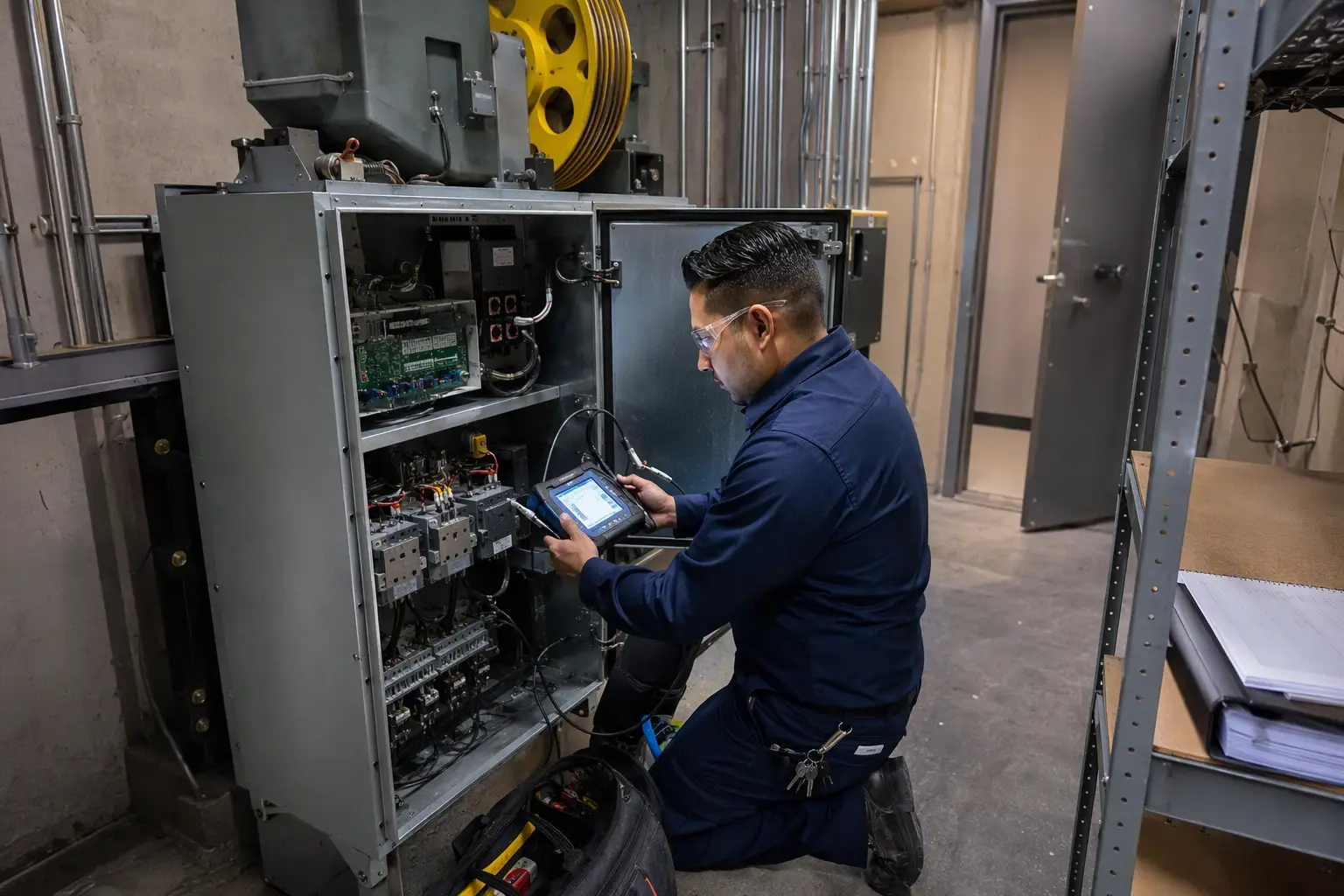
Healthcare elevator maintenance in Texas and California operates under a layered framework of federal, state, and local requirements.
Federal Standards
- ASME A17.1 Safety Code for Elevators and Escalators: The foundational national standard governing the design, installation, operation, inspection, testing, and maintenance of elevators. Both Texas and California have adopted versions of this code.
- ADA (Americans with Disabilities Act): Requires that elevators serving multiple floors in public accommodations and commercial facilities meet accessibility standards, including minimum cab dimensions, door width, control panel height, tactile markings, and audible signals — all critical in healthcare settings where patients and visitors may use wheelchairs, walkers, or other mobility aids.
- OSHA: Sets workplace safety standards applicable to elevator maintenance technicians working in healthcare facilities, including lockout/tagout procedures and confined space protocols.
Texas Requirements
In Texas, elevator maintenance for healthcare facilities falls under the Texas Department of Licensing and Regulation (TDLR), Elevator and Escalator Safety program, governed by Texas Health and Safety Code Chapter 754 and 16 Texas Administrative Code Chapter 74. Texas has adopted the ASME A17.1/CSA B44, 2016 edition (effective November 1, 2018) as the state code.
Key Texas compliance requirements for healthcare facility owners include:
- Annual inspection by a TDLR-registered elevator inspector
- A TDLR Certificate of Compliance for each elevator unit, valid for one year and displayed in a publicly visible area
- Any violations cited in the inspection report must be corrected or under contract for correction within 30 days, or a waiver or delay must be obtained from TDLR
- Any elevator accident must be reported to TDLR within 24 hours
- A Category 5 full-load test every five years on electric (traction) elevators — common in multi-story hospital towers
- Immediate removal from service of any passenger elevator without working door restrictors, or without functioning Phase One firefighters’ service
- All maintenance, repair, or alteration work must be performed by a TDLR-registered contractor
Houston Note: TDLR does not regulate elevators inside Houston city limits. The City of Houston operates its own elevator inspection program. Healthcare facilities in Houston should verify current requirements directly with the City of Houston.
California Requirements
In California, elevator maintenance for healthcare facilities is governed by the Division of Occupational Safety and Health (Cal/OSHA), Elevator Unit, California Department of Industrial Relations, under California Labor Code Sections 7300–7324.2 and California Code of Regulations, Title 8, Elevator Safety Orders (Sections 3000–3146). California has adopted the ASME A17.1/CSA B44, 2004 edition for installations covered by those orders.
Key California compliance requirements for healthcare facility owners include:
- No elevator may operate without a valid, current permit to operate issued by Cal/OSHA
- The permit to operate must be posted conspicuously inside the elevator car
- Every elevator must be inspected at least once per year; arranging reinspection is the building owner’s responsibility
- A Cal/OSHA permit may be issued for up to two years for an elevator in safe condition covered by a full maintenance contract with a company holding a C-11 contractor license — an incentive for healthcare operators to maintain comprehensive service agreements
- Only State of California safety engineers and Certified Competent Conveyance Inspectors (CCCI) may inspect elevators
- Only a Certified Competent Conveyance Mechanic (CCCM) working for a Certified Qualified Conveyance Company (CQCC) may maintain, repair, alter, or replace elevator components
Los Angeles Note: The City of Los Angeles, Department of Building and Safety (LADBS), operates its own elevator and conveyance inspection program. Healthcare facilities in Los Angeles should consult LADBS in addition to Cal/OSHA requirements.
What Does a Healthcare Elevator Maintenance Plan Include?
A thorough commercial elevator maintenance plan for a healthcare facility typically covers the following:
- Preventive maintenance visits on a scheduled basis to inspect, lubricate, clean, and adjust all mechanical, electrical, and hydraulic components
- Safety device testing including safeties, buffers, governors, door interlocks, and emergency stop systems
- Firefighter service testing to verify Phase I (lobby recall) and Phase II (in-car firefighter operation) function correctly — mandatory in healthcare facilities
- Door system inspection and adjustment — doors are the leading source of elevator-related injuries and a primary focus in high-traffic hospital environments
- Load weighing device calibration to ensure accurate operation under varying patient and equipment loads
- Emergency communication system testing to verify two-way communication capability as required by ASME A17.1
- Cab interior and accessibility inspection to confirm ADA-compliant controls, tactile indicators, and threshold gaps remain within code
- Maintenance records and compliance documentation retained for regulatory inspections and facility accreditation audits
AmeriTex Elevator structures maintenance agreements around the operational demands of healthcare environments, including scheduling work during low-census periods to minimize disruption to patient care workflows.
What Happens If a Healthcare Facility’s Elevator Fails Inspection?
The consequences of an elevator failing inspection in a healthcare setting extend beyond regulatory penalties. Non-compliant elevators can trigger issues with facility licensure, accreditation body reviews, and liability exposure if a patient or visitor is injured.
In Texas, violations identified in an inspection report must be corrected — or formally placed under a correction contract — within 30 days. Certain deficiencies, such as non-functioning firefighter service or missing door restrictors, require the elevator to be taken out of service immediately under Texas law. TDLR accidental injury reports must be filed within 24 hours of an incident.
In California, Cal/OSHA may revoke a permit to operate for elevators found to be unsafe. Operating an elevator without a valid permit violates California Labor Code Sections 7300–7324.2.
AmeriTex Elevator assists healthcare facility managers in understanding inspection findings and developing corrective action plans that meet regulatory timelines.
How Often Should Healthcare Elevators Be Inspected and Tested?
Healthcare elevator inspection and testing timelines are set by state regulation and the adopted ASME code:
- Annual inspection: Required in both Texas and California for all passenger elevators
- Category 5 full-load test (Texas): Required every five years for electric (traction) elevators under 16 TAC Chapter 74
- Two-year permit extension (California): Available to facilities with a full maintenance contract with a CQCC-certified company, reducing the administrative burden on healthcare operators who maintain comprehensive service agreements
In addition to state-mandated inspections, healthcare accreditation bodies and infection control standards may recommend or require more frequent internal maintenance checks. Facilities should consult their accreditation documentation alongside state elevator regulations.
What ADA Requirements Apply to Hospital and Medical Facility Elevators?
Under the Americans with Disabilities Act, elevators in healthcare facilities that serve multiple floors must meet accessibility standards. Maintenance teams must verify that the following remain compliant throughout the elevator’s service life:
- Minimum interior cab dimensions sufficient for wheelchair users and mobility equipment
- Door clear width and reopening device sensitivity
- Control button placement within ADA-specified reach ranges
- Raised and Braille character markings on control panels and jamb plates
- Visual and audible floor indicators
- Level landing tolerances at each floor to eliminate trip hazards for wheelchair users and patients on gurneys
Wear and environmental exposure in busy hospital lobbies and clinical floors can gradually degrade Braille markings, floor finish tolerances, and door timing — making ADA compliance an active maintenance task, not a one-time installation check.
What Should Healthcare Facilities Look for When Choosing an Elevator Maintenance Company?
When evaluating elevator maintenance providers for a healthcare setting, facility managers should confirm:
- State registration or certification: In Texas, the contractor must be registered with TDLR. In California, the company must hold CQCC certification from Cal/OSHA and employ CCCM-certified mechanics.
- Healthcare experience: Familiarity with the unique operational demands of hospitals, skilled nursing facilities, and medical office buildings
- Compliance documentation capability: Ability to provide maintenance logs, test records, and corrective action documentation suitable for accreditation audits
- Comprehensive maintenance agreements: In California, a full maintenance contract with a qualified company may qualify the facility for a two-year Cal/OSHA permit renewal cycle
- Coverage in your market: AmeriTex Elevator serves healthcare facilities across Houston, Dallas, Austin, San Antonio, Los Angeles, and San Diego
What Are the Most Common Elevator Deficiencies Found in Healthcare Facilities?
Healthcare elevator inspections commonly identify the following deficiency categories:
- Door operator wear leading to slow closing speeds or door reversal issues
- Firefighter service Phase I or Phase II malfunctions
- Emergency lighting and communication system failures
- Governor and safety device wear from heavy load cycles
- Leveling inaccuracies causing floor threshold gaps that exceed ADA limits
- Outdated or damaged cab interiors with non-compliant control panel markings
- Hydraulic fluid leaks in low-rise medical office building hydraulic elevators
- Incomplete maintenance records that create compliance documentation gaps during inspections
Proactive preventive maintenance schedules, tailored to the high-cycle demands of healthcare environments, are the most effective way to prevent these deficiencies from becoming code violations or service interruptions.
What Should a Healthcare Facility Do Immediately After an Elevator Incident?
- Ensure all occupants are safely evacuated from the elevator with trained personnel — never attempt self-rescue without professional assistance.
- Take the elevator out of service immediately and post clear out-of-service signage at all landings.
- In Texas, report the accident to TDLR within 24 hours as required by state law.
- In California, notify Cal/OSHA’s Elevator Unit per the applicable reporting requirements under California Labor Code Sections 7300–7324.2.
- Contact a registered or certified elevator maintenance contractor to perform an inspection and document findings before the elevator is returned to service.
- Retain all incident documentation, maintenance records, and inspection reports for regulatory review and liability purposes.
- If the facility is in Houston, follow the City of Houston’s elevator incident reporting procedures in addition to any applicable state-level obligations.
Questions Your Inspector Will Ask
Healthcare facility managers should be prepared to answer the following questions when a TDLR-registered inspector (Texas) or Cal/OSHA Certified Competent Conveyance Inspector (California) arrives on site:
- Is the current Certificate of Compliance (Texas) or permit to operate (California) posted and visible? Inspectors will verify this as a first step.
- Who is your elevator maintenance contractor, and are they registered or certified in this state? In Texas, the contractor must be TDLR-registered. In California, the company must hold CQCC certification.
- When was the last Category 5 full-load test performed? For Texas traction elevators, this test is required every five years.
- Are maintenance records available on site? Inspectors expect documented evidence of preventive maintenance visits, lubrication, adjustments, and parts replacements.
- Has firefighter service been tested within the required interval, and are Phase I and Phase II functions operational? In Texas, non-functional Phase I firefighter service requires immediate removal from service.
- Are door restrictors present and functioning on all passenger elevators? In Texas, a missing or non-functional door restrictor is grounds for immediate out-of-service order.
- Has any elevator accident or incident been reported to the applicable regulator within the required timeframe? Texas requires reporting to TDLR within 24 hours of an accident.
- Is the emergency two-way communication system functional and tested? Communication system operability is verified against ASME A17.1 requirements.
- Are all cab interior ADA markings — Braille, raised characters, and audible signals — intact and compliant?
- For California facilities: Is the maintenance agreement a full maintenance contract with a CQCC-certified company? This documentation supports a two-year permit renewal application.
How Does AmeriTex Elevator Support Healthcare Facility Compliance?
AmeriTex Elevator works with hospitals, medical office buildings, outpatient centers, and long-term care facilities across Texas and California to establish maintenance programs aligned with state regulatory requirements and the operational realities of healthcare environments. Services include scheduled preventive maintenance, compliance documentation support, Category 5 testing coordination, firefighter service testing, ADA accessibility inspections, and assistance preparing for annual regulatory inspections.
In California, AmeriTex Elevator operates as a Certified Qualified Conveyance Company (CQCC) with Certified Competent Conveyance Mechanics, meeting the requirements of Cal/OSHA for full maintenance contract eligibility. In Texas, AmeriTex Elevator is registered as an elevator contractor with TDLR, authorized to maintain, repair, and alter elevator equipment across the state’s regulated markets — and works within the City of Houston’s independent program where applicable.
Healthcare facility managers working with AmeriTex Elevator receive maintenance records structured for use in regulatory inspections, accreditation reviews, and incident documentation — reducing administrative burden while supporting continuous compliance.
Get a Free Elevator Assessment for Your Healthcare Facility
Elevator compliance in healthcare is too consequential to leave to chance. Whether your facility is in Houston, Dallas, Austin, San Antonio, Los Angeles, or San Diego, AmeriTex Elevator can evaluate your current elevator maintenance program, identify compliance gaps, and recommend a service plan aligned with Texas and California regulatory requirements.
Contact AmeriTex Elevator for a free elevator assessment: 844-646-9660
Need elevator service you can rely on? AmeriTex Elevator is ready to help.